
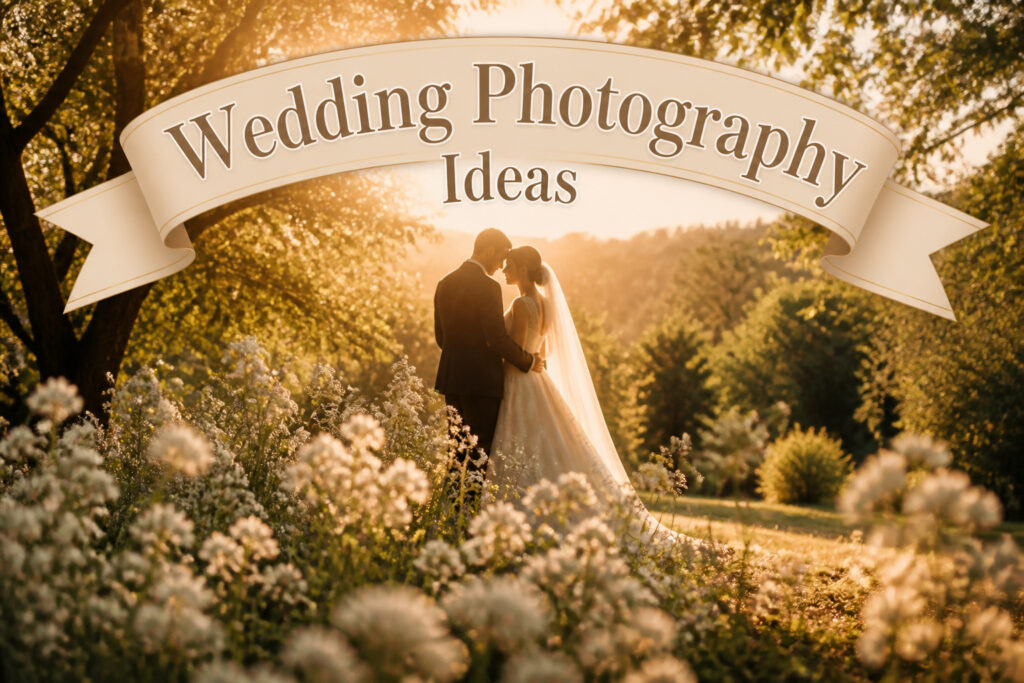
Your photography timeline matters more than your budget. Every shot on this list is possible with a competent shooter, but only if the right moment exists in the schedule. One Gainesville bride lost twenty minutes of portraits to a ring in the grass because the grass looked flat and wasn’t. Assign that time, separate the wedding parties, and most of what follows will happen naturally.
1. Wedding Stationery

Flat-lay photography of invitations, save-the-dates, menus, and place cards gives couples something tangible from a day that otherwise moves too fast to remember. I arrange these in Gainesville hotel rooms while the bride is still in hair and makeup, working with whatever soft window light the room offers rather than fighting it. A white sheet pulled across the bed usually beats the actual table surface, and I leave the envelope liner facing up if it has color worth showing. Ribbon, a ring, or a sprig from the florist’s extras adds depth without cluttering the frame. The detail that separates a usable shot from one the couple actually prints is spacing: too tight looks accidental, too loose looks empty, and the right balance changes with the size of the paper itself. I shoot these before the ceremony starts because once the timeline begins, no one wants to pause for stationery.

STYLISH DESIGN: Features our Garden Party design in elegant florals, printed in full color with a foil stamped logo. Paired with the modern design of the Carry All, this adds a touch of sophistication to any outfit. Usable as a fashion accessory on top of

📘 A5 Notebook: a5 sized journal measuring 6x8 inches, lightweight and portable enough to fit in most bags, perfect for on-the-go note-taking and daily journaling.

STYLISH NOTEBOOK SET: This set includes three coordinating stitched notebooks featuring Rifle Paper Co.'s elegant Mimi floral print with metallic gold foil accents, canvas-paper covers, and lay-flat sewn bindings, making them both beautiful and practical for everyday writing.
2. The Rings

Macro detail shots of the bands reward the time spent on them. A 100mm lens or a macro setting on a decent mirrorless body gets close enough to show the brushed finish on platinum or the way light catches inside an engraved date. The bouquet sits behind the rings more often than you’d think, not in front. The stems and ribbon trail out of frame, the flowers blur into color, and the metal reads sharp against something soft that already belongs to the day.
I learned the hard way why you stage this on a table. At a Kanapaha Botanical Gardens wedding, the ring slipped from a velvet pouch onto grass that looked flat and wasn’t. Twenty minutes of searching with my phone flashlight, the beam catching every dew drop and none of the gold, until it turned up pressed blade-deep where I’d already stepped. Now I keep a white handkerchief underneath, even outdoors, and I shoot the wide safety frame before I move anything closer.

【Professional Grade Fill Light for Macro Photography】 Specially designed for 37mm and 52mm threaded lenses, this macro LED light is your essential tool for capturing stunning details. Perfectly compatible with smartphone macro lenses, camera filters, and professional SLR lenses. Equipped with a USB Type-C port for convenient, anytime charging

New RGB Dynamic Modes and 3 Normal Colors: Selfie ring light has warm light,white light,daylight,red,yellow,green,sky blue,blue,purple,RGB light provide 39 dynamic, breathing and illusory color mode

Godox RING 72 Macro LED ring light is Perfect choice for photographers who require shadow-free illumination
3. Make-Up Moment
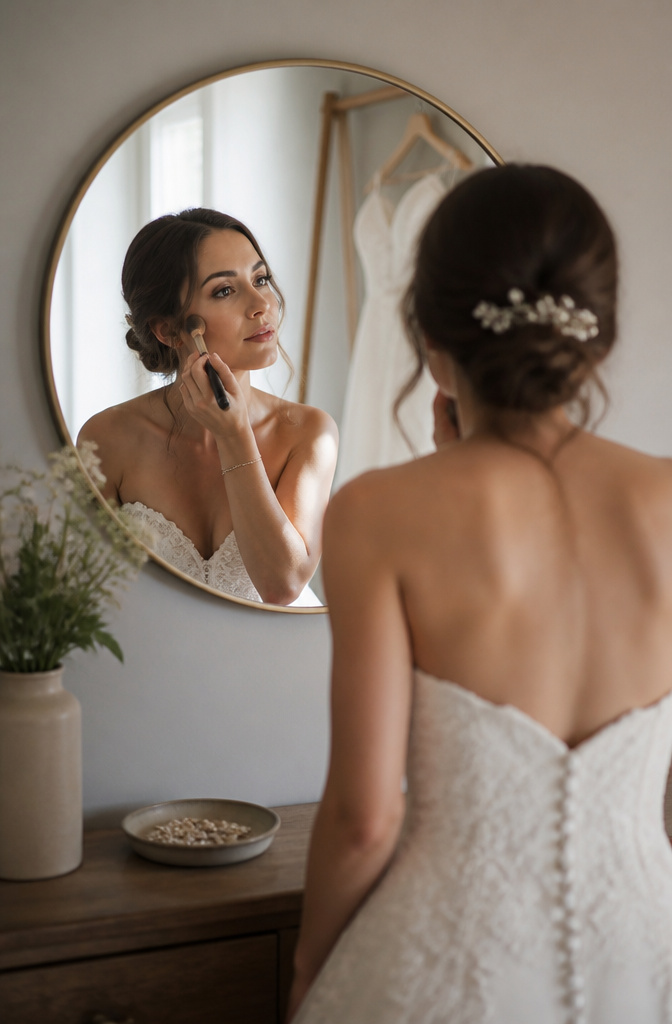
The mirror does the heavy lifting during make-up. A long lens, usually 70–200mm, lets me stand back far enough that the bride forgets I am there. The reflection catches her focus, the brush mid-stroke, the slight tension in her shoulders that disappears once the mascara goes on. I never use flash for this. The burst would flatten the soft window light that makes skin look like skin, and the surprise of it breaks the concentration that produces the real shot. Natural light from the side, a clean mirror without fingerprints, and patience matter more than any setting I could dial in. The best frames come right before she blinks, when she is studying her own reflection and the day ahead feels entirely real.

【 Macro Ring Light for Photography】This macro ring light works great for macro shooting of jewelry, plants, insects and studio still lifes, as well as portraiture, video and social media content creation. It delivers evenly diffused light that uniformly brightens subjects, eliminates shadows and prevents vignetting. When used for portrait photography, it creates attractive catchlights in subjects’ eyes, making eyes vivid, lively and expressive in portrait and video shots.

17mm Mount: Securely threads onto your smartphone’s 1x main camera via a 17mm threaded mount case / cage.

10X Macro Lens: The 100mm 4K macro lens meets the need for close up photography and HD detail, producing macro shots with precise focus every time. For best results, place the macro clip about 1/2‑1inch from the subject.
4. Getting Ready, Bride

The getting-ready sequence starts with robe shots before hair and makeup finish, when the bride still looks like herself and the room has energy. I hang back near the window or the doorway, never between the bride and her makeup artist; the artist needs the mirror more than I do, and stepping into that triangle kills the mood and the light. Forty-five minutes is the minimum I block for this, and I use every minute because the dress goes on faster than people think.
Buttoning shots work best with the mother or a bridesmaid’s hands in frame, not mine. I ask them to take their time on the final hooks so I can catch the motion without staging it. The last image I always grab is the mirror check: the bride alone, facing her reflection, with the room behind her in soft focus. That single frame usually outlives every posed portrait from the day.
Built in 21pcs LED lights, which is intelligent to adjust brightness by touch sensor switch, long press to dimmer the light.You can make up you in poorly light, without disturbing others.

【 Ajustable Brightness & 3 Colors Lighting Modes 】- The LED brightness of this hollywood lighted makeup mirror can be changed as you need. This LED makeup mirror provides 3 colors lighting modes so that you can also adjust different brightness to meet your different makeup needs, no matter it is early morning or late night.

Built in 76pcs Led lights which is intelligent to Off On brightness by touch sensor switch. Touch switch gently to change the color light modes between cold, natural and warm light. Long press to adjust the brightness, meet all your needs in different environments
5. The Wedding Shoes

Shoes read differently in a photo when they stand alone than when they carry a bride across a porch. Alone, they are still life: the curve of a heel, the texture of satin or worn leather, the tiny scuff that proves they were chosen, not rented. Worn, they become action, the moment before steps that matter.
The mistake I keep seeing is the dark hotel carpet. Someone sets the pair down in a shadowed corner of a chain room in Gainesville, and the shoes sink into the fibers and disappear. Black on charcoal, cream on taupe; the camera loses the shape, the light, the point of the shot.
Concrete steps work better, especially the worn limestone ones at the historic bed-and-breakfasts around Northeast 1st Street. The grit gives the shoes something to push against visually. A white bedspread in one of those same inns does the same job, the fabric bright enough to let a blush heel or navy Oxford hold its own color. Place them where the background fights back a little, and the photograph finally shows what you spent three weekends choosing.

Versatile Application:This light diffuser is compatible with any 7-inch/180mm standard reflector and can be securely mounted on an 18cm studio flash reflector.
![Lightdow 12 x 12 Inch (30 x 30 cm) White Balance 18% Gray Reference Reflector Grey Card with Carry Bag [Folded Version]](https://m.media-amazon.com/images/I/31GeGGNhEvL._SL500_.jpg)
Gray side: Reflectance 17.8%; Density 0.74
【5-in-1 Multi-Purpose Photography Reflector】 This portable reflector features gold, silver, white, black, and translucent surfaces, plus a soft light panel, allowing quick switching for different lighting effects. Suitable for photo studios, outdoor photoshoots, video recording, and more. A versatile camera accessory for photographers
6. Bridal Portrait

A formal bridal portrait before the ceremony still belongs in every timeline, but the stiff, grinning version from my early years needs to retire. I used to park brides against a plain wall and ask for a smile. The result looked like a driver’s license with better lighting.
Now I scout clean backgrounds that do the work for me. Paynes Prairie gives you that pale, endless sky at golden hour, or the boardwalk’s weathered gray lines if you want structure without clutter. Downtown, the murals along Southeast First Street offer color blocks that read as intentional, not accidental. The trick is standing far enough back that the pattern softens into texture.
The smile problem solved itself once I stopped asking for one. Hand a bride her bouquet to adjust, or the handwritten letter she plans to read later, or even the hanger with her dress. Something to hold gives her shoulders a natural placement, and the expression follows without being summoned. The best portrait from last season happened because a bee landed on the veil and she laughed at her own freeze, not at my direction.

Stationery set contains 30 premium letter sheets and 24 matching envelopes.

Vow Books For Everlasting Memories - Ultimate Wedding Keepsake: Wedding vows - the most important & cherished words you’ll ever write! Share lifelong promises to your one & only and celebrate your love with ZICOTOs’ gorgeous wedding vow books - a sweet & truly unique memento

【 Exclusive Original Cover Design】 Each ARESGSDGV notebook features a unique, artist-created cover that stands out from ordinary stationery. Designed to express personality and creativity, it adds a stylish touch to your daily writing.
7. The Veil
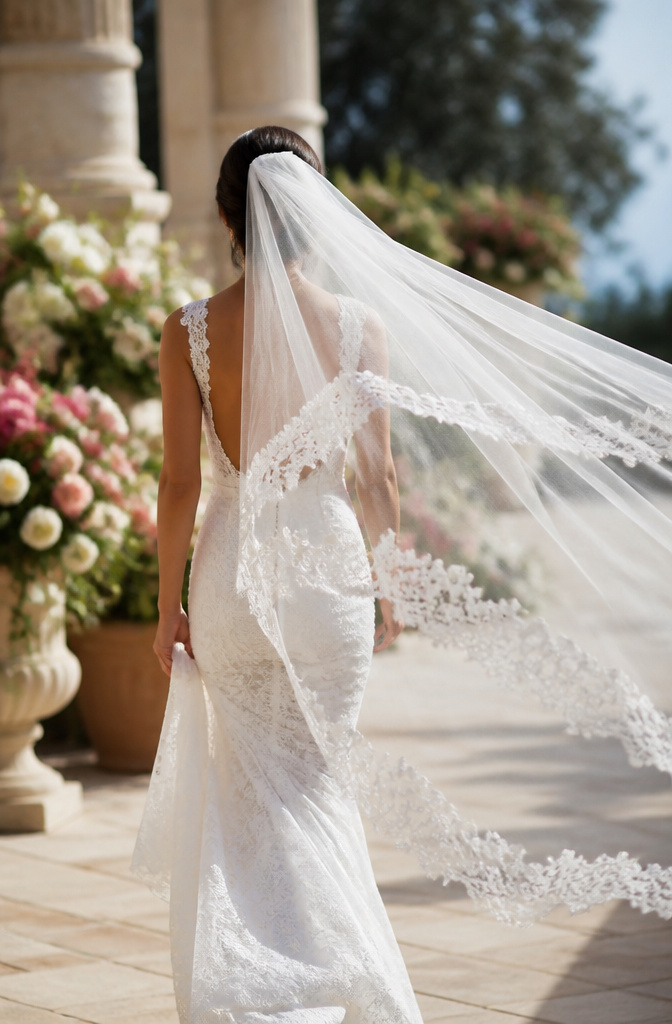
A veil in motion does what a still one cannot. The fabric catches light differently when it lifts, and a photographer who times the shot as wind pulls it horizontal gets a portrait that looks staged but is not. I have seen this happen once by accident at a Thornebrook wedding, where a cathedral-length veil snagged on a rose bush during the couple’s walk back from the garden photos. The bride turned to free it, the tulle billowed against the late sun, and the resulting frame had more life than every posed shot before it. The snag became the keeper.
For detail work, the same veil laid across bare shoulders gives the lace texture a scale reference that a mannequin or hanger cannot. Skin reads as soft against the embroidery, and the contrast draws the eye to the handwork rather than the garment alone. Ask your photographer to shoot this while you are in the getting-ready space, before the dress is on and the timeline has compressed. The light there is usually window light, which is forgiving on threadwork and on you.
The cathedral length demands the most space and the most patience. It pools, it tangles, it catches on anything with a thorn or a splinter. That is also why it photographs well: the volume creates its own weather.

Noted: ML150II doesn't support TTL functiuon. Noted: ML150II doesn't provide continuous light, it's only a flash light. Noted: ML150II power supply by 4 x AA batteries (not include) Noted: ML150II only compatibility with lens of diameters:49,52,55,58,62,67,72,77mm. Please check your lens size before Purchasing.

【Foldable 14-inch Ring Light】This 14-inch ring light features a clever foldable design, making it easy to store and carry, very convenient. Compared to common 10-inch or 12-inch ring lights, the 14-inch size provides a larger lighting area and superior lighting effects, making it perfect for photography, makeup, video recording, or any occasion that requires high-quality lighting.

【Introducing NEEWER BASICS】Simple and practical, NEEWER BASICS is an economical product line that focuses on essential functions and designs, without unnecessary extras and materials
8. Bridal Bouquet

A bouquet in the bride’s hands photographs differently than one sitting alone on a table. In her grip, the stems angle naturally, ribbons fall with weight, and the frame reads as an action rather than a still life. I shoot both, but the held version almost always wins for the album because the fingers add scale and a living imperfection.
Leave the brown leaf in frame. Florists hate me for this, but a single curled edge or spot of yellow proves the flowers were real and fresh that morning, not shipped silk from a warehouse. The ribbon matters more than most couples expect. Satin catches light in hard highlights that blow out; raw silk or velvet photographs with texture you can almost feel through the image.
Florida June weddings wreck peonies by 2 PM. The heat opens them too fast, petals brown at the edges, and the bouquet starts looking like yesterday’s grocery store bunch. I plan bouquet shots before noon, or I switch the hero flowers to orchids or tropicals that laugh at humidity. The bride never notices the swap until she sees the photos and thanks me for flowers that still looked alive at the reception.

100 mm focal length and 1:2.8 maximum aperture. The EF1.4X II/EF2X II extenders cannot be used with this lens. There are no compatible close-up lenses.

World’s First Medium Telephoto Macro Lens with a Maximum Magnification of 1.4x.
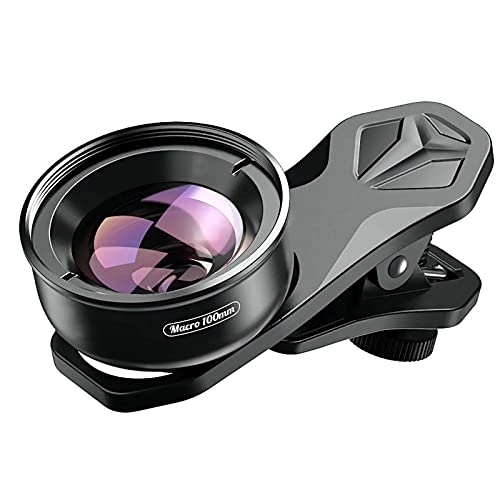
【High Definition】: Cell phone lens are made of glasses with multilayer green optics coating, make your picture more clearly,material enhanced durability, he will accompany you through all the good times.
9. Getting Ready, Groom

The groom’s morning moves faster than the bride’s, and that speed is exactly what makes it worth photographing. I always stage the guys in a different room, sometimes a different floor, so no accidental hallway crossing spoils the first look. The shots that matter are smaller: the tie being tied, cufflinks going on, the moment he checks his watch and realizes the timeline has already slipped. Those details fill out the wedding album’s story in a way the ceremony alone cannot. A black-and-white frame of the groom adjusting his collar, caught just before he exhales and heads out, often lands in the couple’s final selection even when they did not think to request it. The room separation is non-negotiable if you want genuine reactions later; once they have seen each other, the anticipation is spent and the photos show it.

Note: Use only the supplied USB-C cable; other cables may impair device performance.


【 Ajustable Brightness & 3 Colors Lighting Modes 】- The LED brightness of this hollywood lighted makeup mirror can be changed as you need. This LED makeup mirror provides 3 colors lighting modes so that you can also adjust different brightness to meet your different makeup needs, no matter it is early morning or late night.
10. Candid Moments

The best candid shots almost never announce themselves. A bridesmaid reaches over to straighten a stranger’s collar during cocktail hour, or a flower girl pockets a rose from the aisle, and the moment is gone before anyone thinks to call the photographer over. The trick is to stay visible enough to be ignored. I learned this after years of hovering at the edges of reception halls, camera up but eyes drifting past the obvious subjects.
My sharpest candid work happens when I am supposedly photographing something else entirely. The couple thinks I am still shooting table settings, so the groom’s grandmother actually laughs at his cousin’s story instead of freezing for the lens. The bridal party assumes I am occupied with detail shots, and the maid of honor lets her shoulders drop, exhausted and real, the second after the bride’s back is turned. These frames carry the weight that posed portraits cannot touch, because the people in them never performed for me at all.
A long lens helps, but the real work is patience. I plant myself where the light is right and wait for the room to forget I am there.

[ARC-SHAPED DESIGN & STUNNING CATCH LIGHTS] This reflector can refract part of light, which can better focus the highlight details you need, making you more charming and attractive. Eyes come to life with a gorgeous catch light that follows the natural curvature of the eyes; Suitable for enriching the light of photography from multiple angles in various scenes.
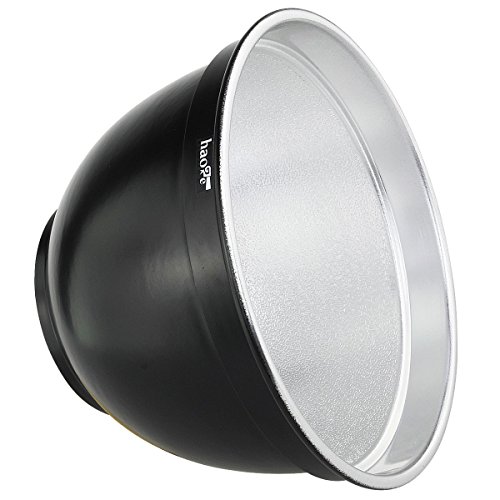
7" Standard Reflector for Balcar Mount Studio Light Strobe

Suitable for Portrait Photography: Whether traveling or in daily life, you can take out the 17 inch/45 cm reflector and use your phone or camera to take professional quality pretty portrait photos
11. Couple Portraits

The twenty or thirty minutes between ceremony and reception are the only window most couples get for portraits, and the light at that hour is doing you no favors if you waste it. I schedule these sessions at venues like The Historic Thomas Center specifically so the courtyard columns catch the late sun at an angle that hides the harshness rather than amplifies it. Golden hour portraits need movement, not posing; the couples who look stiff are the ones who stood still waiting for instruction. I send them walking toward me from about forty feet out, and while they close that distance I tell them to talk through their favorite meal in detail: where they ate it, what made it bad or great, whether they’d order it again. The conversation keeps their shoulders down and their expressions shifting, which means I get three or four usable frames for every one I’d salvage from a static smile-and-look-at-me setup. The ones who rehearse their "wedding face" beforehand usually throw it off by the second step anyway, which is the point.
12. The Wedding Party

The worst wedding party photo I ever saw was a straight line of seven groomsmen with their hands clasped at the belt buckle like they were waiting for a bus. Stack your wedding party in depth, not width; put the couple slightly forward and let the rest fill a shallow diagonal behind them. It takes forty seconds to arrange and reads as a group of people who actually know each other.
Inside jokes photograph better than matching socks ever will. One groomsmen crew wore identical pineapple-patterned socks because of a trip they’d taken together in college. The socks barely showed, but the laughter while they tried to hide them from the photographer gave me three usable frames. That energy beats a color-coordinated lineup.
The missing bridesmaid is almost always on a phone call near the coat check or the bathroom. I learned to send a groomsman to retrieve her instead of the maid of honor, because the maid of honor will start helping and both disappear. Give the searcher a two-minute deadline out loud; urgency gets people back faster than politeness ever does.
13. The Young Ones

Flower girls and ring bearers are the most honest photographers in the room because they refuse to perform. The shot I always reach for is the one where they have forgotten I exist: a ring bearer studying his own reflection in the brass candlestick, a flower girl mid-spin watching her skirt flare out. Those frames carry the day because the child’s face is not scrunched into the coached smile that adults wear.
That honesty comes at a price. Toddlers in the wedding party add roughly ninety minutes to a getting-ready timeline, and the backup plans multiply fast. No nap, sudden refusal to walk, a bathroom crisis fifteen minutes before the processional: each has derailed a ceremony I have planned. I tell couples straight that the cute factor peaks at about age four, and the logistics cost climbs steeply below that. If the child is under three, assign a dedicated adult who is not in the wedding party; otherwise the bride’s sister ends up sprinting down the aisle after a runaway bear.
The compromise that usually wins is inviting the young ones as guests with front-row seats rather than roles. The photos happen naturally during cocktail hour, and nobody misses the staged moment that might never arrive.
14. Drone Wedding Photo

Aerial shots of the venue and outdoor ceremony layout give couples the one perspective they cannot see on the ground: the full geometry of their aisle, the guest seating arc, the property lines they paid for. The wind in Florida grounds drones more often than couples expect, especially during afternoon ceremonies when seabreezes or storm cells build fast. I carry FAA registration and Part 107 certification, but paperwork does not override weather. The backup plan is straightforward: identify a balcony, upper-floor window, or even a tall ladder position during the venue walkthrough. One photographer stays elevated while the main shooter works the ground line. If your videographer already has drone clearance, coordinate with them for a still frame or two rather than running dual operations. That trade saves budget and reduces airspace conflict, particularly near Gainesville Regional or private airstrips where altitude restrictions tighten without warning.
15. Walking Down the Aisle

The walk down the aisle lasts maybe forty seconds, and every one of them is unrepeatable. A father who has held it together all morning will feel his jaw start to go right as the music swells. The bride’s fingers dig into his arm harder than either of them expected. The groom, if he is like most grooms, will look first at her face and then somehow not know where to look next. Two photographers catch this, not one: the second shooter at the front captures the groom’s reaction straight on, but my primary stays at the back of the room, up the aisle, shooting past the bride toward the altar.
Couples often ask for the reverse. They picture that dramatic front angle, the camera waiting at the altar to catch them coming toward it. What that framing actually gives you is a photograph of a bride walking at a camera. From behind her, shooting forward, you get the geometry of the aisle, the faces of the guests turning, and the groom still small in the frame but visibly arrested by what is walking toward him. The depth is the story. The front angle flattens everything into a greeting-card pose; the back angle lets the moment breathe and move.
I have had to sell this to couples who have already imagined their album a certain way. The compromise I offer is simple: the second shooter takes the front frame they want, and I keep the back position that will give them the photograph they will actually hang.
16. Wedding Ceremony Exit

The recessional carries a completely different energy from the processional, and that shift is what makes it worth capturing. Where walking down the aisle is nerves and anticipation, walking back up is the first time you are actually married. The grin is real, the relief is visible, and guests are already cheering.
Confetti, bubbles, or nothing at all each change the photograph. A tunnel of guests throwing biodegradable petals or tissue creates motion and color around you, but it needs coordination. One guest delegated to gather everyone and count them down keeps the toss from happening in ragged handfuls while half the crowd is still reaching into their pockets. Bubbles look ethereal until you realize they catch light unpredictably and can leave you half-hidden behind glare.
The shot that gets missed most often is not the exit itself but the setup. Guests stand the moment the kiss happens, eager to celebrate, and suddenly the aisle is a wall of shoulders and phones. I have seen photographers lose the recessional entirely because the couple is blocked by family members who rose too early. The fix is a quiet word with the officiant before the ceremony: ask them to hold the couple in place for a three-second pause after the kiss, then signal guests to remain seated until the pair passes. That pause costs nothing and buys the photograph.
17. Laughing at Weddings

The best man’s toast starts with a polite chuckle. Thirty seconds later, the groom’s shoulders drop, his head tilts back, and the laugh becomes something else entirely. That second sound is what I wait for.
During speeches, my finger stays on the shutter because the real moment lasts maybe two seconds. A polite laugh is easy to spot: the mouth opens, the eyes stay still. Genuine laughter pulls the whole face into it, eyes narrowing, crow’s feet showing. The chin sometimes drops, which photographers warn against for posed shots, but during a real reaction I let it happen. The double chin from a forced pose looks awkward; the same shape from a real breakdown during vows is the photograph they keep.
The uncle who thinks he can dance is another bet I take. By the third song, the moves get loose enough that someone nearby cracks. The bride’s reaction, the groom’s hand over his face, the grandmother’s disbelief: those frames sit between the staged and the forgotten, and they are usually the ones the couple asks for first when the gallery goes up.
18. The First Kiss

The first kiss lasts about one second, maybe two if the couple lingers. That is not much time for a camera to hunt for focus or for an officiant to step out of frame. Preset your focus on the couple during the final vow and lock your exposure then, while they are still standing in the same light. I watch the officiant’s body language; most will shift their weight or glance toward the couple right before they announce the kiss, and that is the cue to start firing.
One pair I worked with took this seriously enough to practice at home. They timed their kiss to three full seconds, which felt theatrical to them at first but gave me six or eight usable frames instead of one lucky shot. The groom dipped the bride sideways, and because they had rehearsed the angle, her bouquet did not swing up into his face and he did not lose his balance. The officiant had already stepped aside.
Ask your photographer to speak with whoever is conducting the ceremony beforehand. A celebrant who knows to clear the frame makes the difference between a clean shot and a composition you will crop for the rest of your life.
19. Table Decor

The wide shot of an empty reception room lands harder than most couples expect. After months of choosing linens and centerpieces, you finally see the whole scene at once, before anyone leans on a chair or moves a candle. That first glimpse is worth photographing from the doorway, then from a corner, catching how the light falls across the tables in rows.
Centerpieces photograph best with candles lit but before salads arrive. The flame adds depth that overhead lighting flattens, and the glass still catches reflections without water spots from poured drinks. I shoot these at table height rather than standing, so the blooms read at their actual scale against the plates.
Gainesville venues in October share a linen color I have learned to expect: a warm ivory that reads almost beige under tungsten light and shifts cooler near windows. It photographs cleanest in that twenty-minute window after candles are lit and before guests enter, when the room holds still and the color stays consistent across every table.
20. The Wedding Cake

The cake sits in the corner of the reception space for most of the night, and that timing matters. I always shoot it whole first: the piped buttercream catches the light differently than fondant, with those faint ridges where the spatula turned, and the texture reads as handmade rather than factory-sealed. Ask your baker to leave the frosting slightly imperfect if you want photographs that look like food rather than architecture.
The cutting happens after speeches, when appetites are already half-satisfied on bread rolls. Couples grip the knife awkwardly, laughing, and I catch the slice coming out. Here is the honest split: maybe one in five couples I watch actually eat that bite in front of me. The rest request the photo as tradition, then set the plate aside for dancing or conversation. Neither choice is wrong, but the ones who pause and taste it give me a moment worth shooting. The buttercream smudge on a lip, the surprised look when the flavor is actually good. That is the frame that outlasts the year.
Frequently Asked Questions
What are some unique wedding photography ideas?
Unique wedding photography ideas include flat-lay shots of stationery with ribbon and ring accents, macro detail shots of rings with the bouquet blurred behind them, and reflection shots during makeup using only natural window light. For couple portraits, movement works better than posing; try walking toward the camera while talking through a shared memory. Stack your wedding party in depth rather than lining them up straight across, and capture the recessional from behind the couple so you see the aisle geometry and guests’ faces turning.
How can I make my wedding photos more fun?
Make wedding photos more fun by incorporating movement into posed sessions, like having the couple walk and talk rather than stand still. Inside jokes photograph better than matching accessories; one groomsmen crew wore pineapple socks from a shared college trip, and the laughter while hiding them from the camera produced better frames than any coordinated lineup. Candid moments carry the most weight, so let your photographer stay visible enough to be ignored while guests forget the lens is there.
What should I include in my wedding photography checklist?
Your wedding photography checklist should cover getting-ready moments for both bride and groom in separate rooms, detail shots of rings staged on a white handkerchief even outdoors, stationery flat-lays before the timeline compresses, and the empty reception room before guests arrive. Schedule couple portraits during the twenty-to-thirty-minute post-ceremony window, and assign a dedicated non-party adult to any child under three in the wedding party. For the ceremony exit, ask the officiant to hold the couple in place for three seconds after the kiss so guests stay seated until they pass.