The span runs from a twenty-five-cent pair of party shades to a ten-thousand-dollar fireworks finale, and the single deciding factor is whether your venue will permit it. Most of these ideas fail not because the budget is wrong but because someone asked the coordinator the week before instead of during the walkthrough. Sara Monika has photographed the stilt walkers pouring drinks; the ceiling clearance and flat floor requirement is the first filter.
1. Stilt Walkers Pouring Drinks
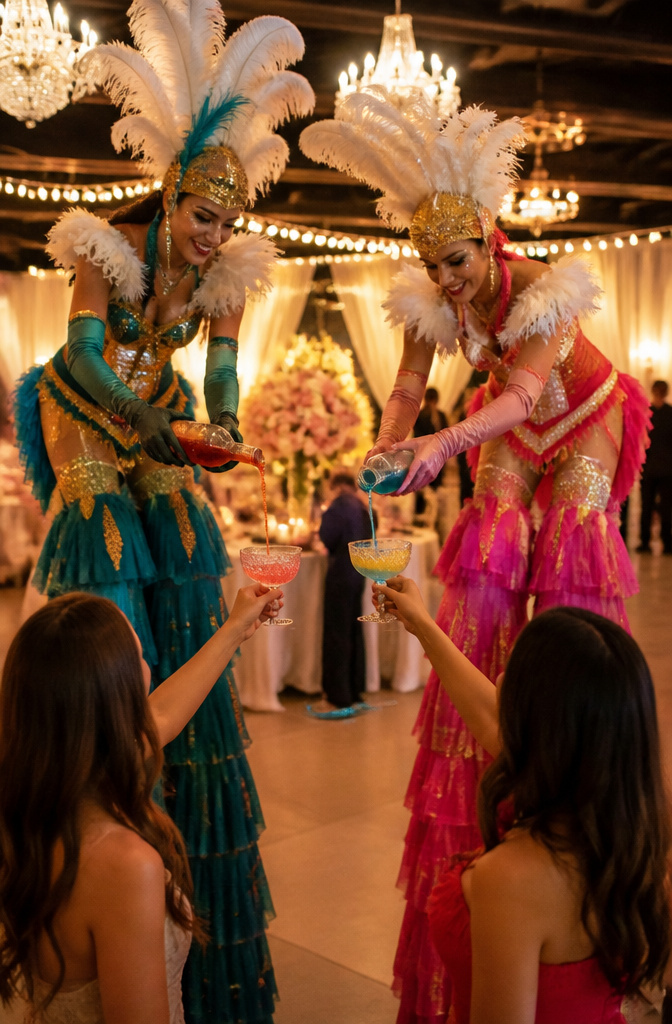
Stilt walkers pouring drinks at a wedding reception lands with the kind of visual impact that phone cameras can’t resist. Guests spot them the moment they enter the room, and the energy shifts immediately from polite mingling to actual conversation. Passed cocktails during the first hour are where this works best, before anyone has found their seat or their groove. The height makes every pour feel like a small performance, and people who don’t know each other suddenly have something to remark on. Sara Monika has photographed this setup and notes it photographs beautifully, especially if you want a subtle festival vibe running through the evening. One caution: the stilts need ceiling clearance and a flat floor, so this is a venue-check-before-you-book situation. Save it for spaces that can handle the physical requirements, and skip it entirely if your cocktail hour is outdoors on grass or packed earth.

SEXY AND CUTE: Shake things up and pay homage to one of history's favorite city girl cocktails when wearing this Cosmo Dress Costume!
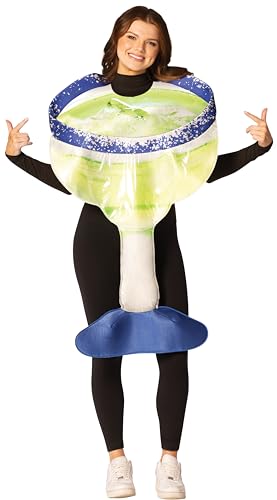
BE SUB-LIME: The only thing better than one margarita is two! Single or doubling it up this Margarita Glass Halloween Costume will be a hit!
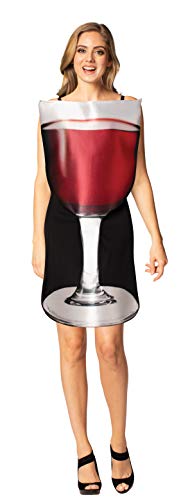
IT'S WINE O'CLOCK SOMEWHERE: It's Happy Hour somewhere and it's time to wine down! Wearing the Glass of Red Wine Costume will accomplish just that!
2. Drum Performer

A solo drum performer hits different depending on where you place them in the night. Background percussion during cocktails reads as sophisticated texture, easy to miss entirely. The same player stepping forward for your entrance or the shift to dancing becomes a featured act, and that distinction changes everything about the booking.
Featured drumming needs a dedicated cue, not a gradual fade-up. The performer should have a clear signal, a specific spot on the floor, and a thirty-second window where the MC steps back entirely. Without that, the energy diffuses into awkward overlap.
Cost runs higher for featured placement because you’re paying for showmanship, not just musicianship. A solo drummer commanding the room solo costs roughly what a small ensemble charges for background work, and the tradeoff is worth it only if the moment matters enough to own.
Background percussion pairs better with jazz or cocktail formats where subtlety flatters the conversation. Featured drumming suits couples who want the room’s pulse to spike, hard, at a single instant everyone remembers.


3. Midnight McDonald’s Run

By 11 p.m. your guests have been through three hours of speeches, dancing, and champagne that never quite filled the empty space a full dinner left hours ago. That is exactly when a McDonald’s run lands like a revelation.
The timing matters more than the menu. Most venues have a hard cutoff for outside food, or a kitchen that closes before the party does. Call your coordinator a week out and ask when the late-night window opens, usually between 10:30 and midnight, and whether the delivery driver can reach the loading dock or the front entrance. Some places charge a plating fee even for bags you open yourself. Find out, because a $200 surprise turns into a $600 one fast.
The reaction is the whole point. One couple I planned for had their planner slip out at 10:45 and return with forty burgers and twenty nugget boxes. The DJ killed the lights for thirty seconds. When they came back up, the smell of grease had already hit the dance floor. Guests abandoned the Cha Cha Slide mid-step. Within minutes the bride was sitting on the floor in her tulle skirt, dipping fries in sweet and sour sauce with her college roommate.
You do not need to match the catering. You need to break it.

[Focused Atmosphere Lighting] The 3W LED provides a precise, focused beam rather than a scattered glow. It’s the ideal "sweet spot" for washing backdrops or stage curtains with dramatic pillars of light without overpowering the room's romantic ambiance.


Compact & Complete Lighting Setup - This all-in-one DJ lighting stand features 4 compact PAR lights with 4-in-1 RGBW 3x8W LEDs, delivering vibrant color mixing and bright illumination. The set includes a lightweight stand and a convenient carry bag—everything you need for a professional lighting experience right out of the box.
4. Surprise Piñata
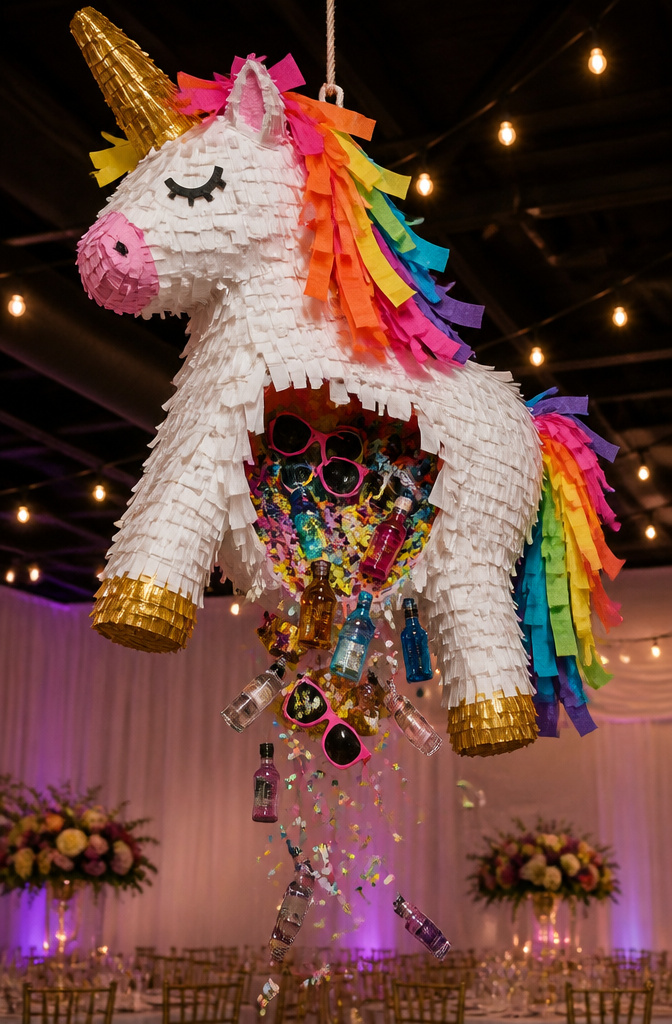
A reception piñata hangs best where the caterer’s clearing tables anyway, so the staff has brooms ready. I have watched this work twice and flop once. The one that flopped went up during the first dance hour, when half the room was still in line for the bar and the couple’s college friends had to swing at it alone. The two that landed right waited until after dinner, once the older guests had started saying goodnight and the remaining crowd was loose enough to cheer for a blindfold.
Fill matters more than shape. Candy gets left on the floor; mini bottles of hot sauce or lottery tickets get pocketed immediately. One bride stuffed hers with sunglasses that matched the neon signage she had rented for the dance floor, which turned the piñata into a transition moment rather than a sideshow.
The limit is the ceiling height at your venue. A rented hall with a dropped tile grid won’t cooperate, and rigging anything to a chandelier is a conversation you do not want to have with a coordinator in a historic building. Ask about load-bearing hooks during your walkthrough, not the week before.

Built-In Buffet Food Pans: Features multiple stainless steel food pans seamlessly embedded into the countertop, perfect for displaying cheese, meats, fruits, and cold dishes in an elegant way
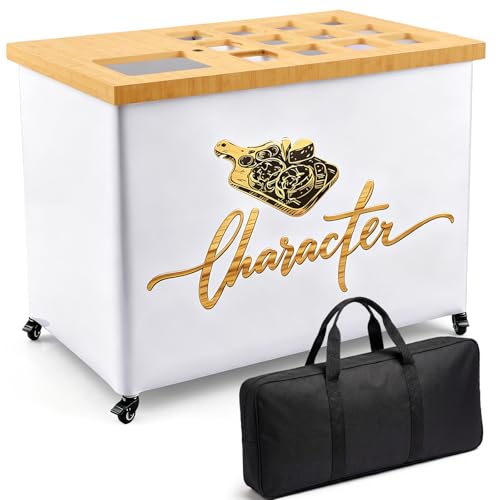
Foldable and Portable Design: the portable charcuterie cart features a foldable frame structure with a sturdy wooden top serving as a work surface, providing stable space for chopping, platting, and displaying food, also, the open shelves below conveniently store plates; Charcuterie cart is durable and easy to clean, comes with a storage bag for easy assembly and disassembly, saving space and making it convenient for outdoor parties, weddings

Foldable and Portable Design: the portable charcuterie cart features a foldable frame structure with a sturdy wooden top serving as a work surface, providing stable space for chopping, platting, and displaying food, also, the open shelves below conveniently store plates; mobile charcuterie cart is durable and easy to clean, comes with a storage bag for easy assembly and disassembly, saving space and making it convenient for outdoor parties, weddings
5. Crowd Surfing and Floaty Crowd Surfing
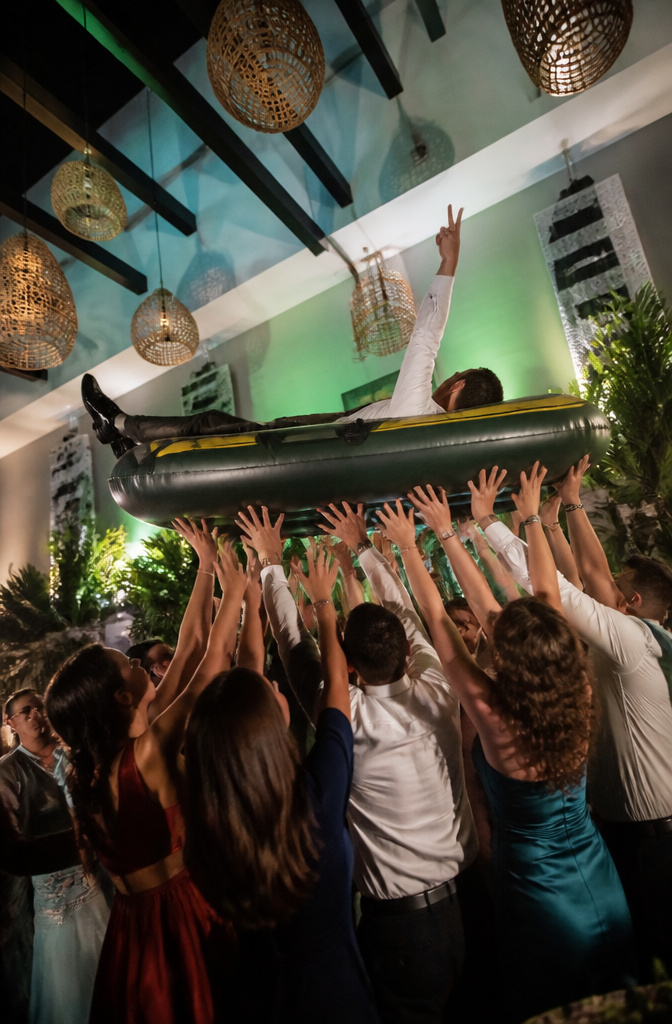
Crowd surfing at a wedding flips the energy from polite dancing to something the room will actually remember. The standard version works best late in the night, when the floor is packed and the crowd is loose enough to pass you overhead without hesitation. I’ve watched this unfold at receptions where the couple trusted their college friends to coordinate the lift, and the photos came back with genuine terror and joy on their faces, not the posed kind.
The inflatable raft or pool-float version is the safer bet for mixed-age crowds and for venues with liability concerns. You lie back on the float while guests guide you across the floor at waist height, no lifting required. It demands almost no planning; someone tosses the float into the crowd and the moment builds itself.
Not every venue permits either version. Historic ballrooms with crystal chandeliers have said no to me before I finished asking. Some require proof of general liability coverage that specifically includes crowd activities, and a few carriers treat any surfing as an excluded "athletic or hazardous event." Ask your venue coordinator directly, in writing, before you buy the float.

Costume Includes: 2 Costumes in 1 Bag! Tequila Costume, Lime Costume

TEQUILA, SIESTA, FIESTA, REPEAT!: Get your Tequila Bottle Party Costume ready and Fiesta, Siesta, Tequila, Repeat! A great costume set for all your fiestas, siestas, Cinco De Mayo or whenever someone needs a tequila! Promote your bar or restaurant in the Tequila Bottle Costume without fail!
6. Karaoke Moment
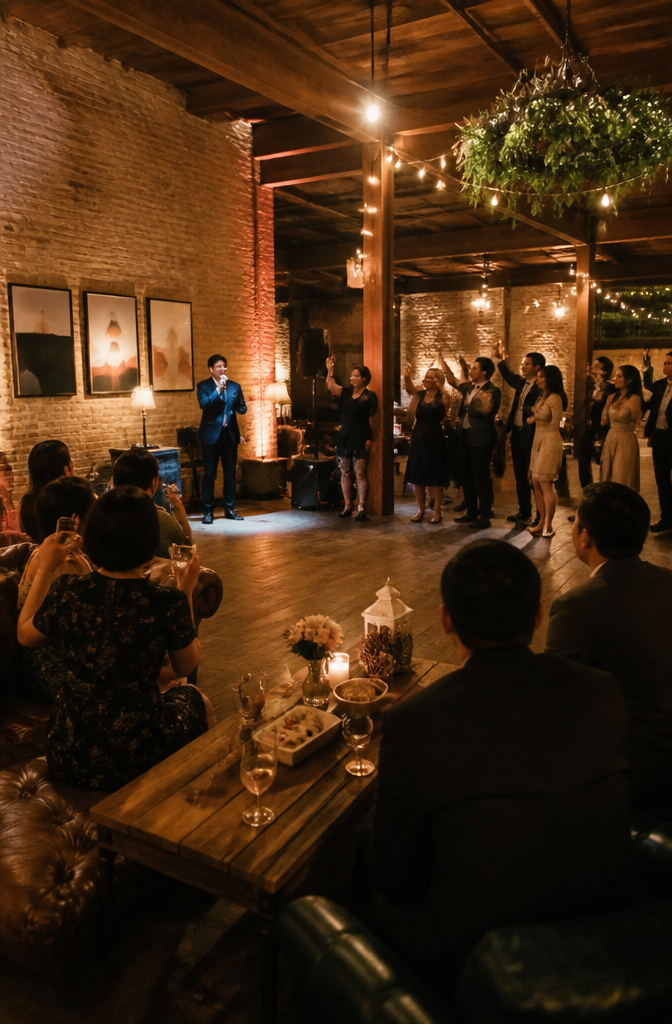
A karaoke station lives or dies on timing. Guests who would rather die than hold a mic at 6:30 will belt out Journey by 9:00 once the wine has done its work. I have seen a father of the bride, a man who gave a ten-minute speech without looking up from his notes, grab the microphone for "Sweet Caroline" and point the whole room at the chorus. The equipment itself is simple: a speaker with two wireless microphones and a screen showing lyrics, which most rental companies bundle for under what you’d spend on a single centerpiece. The song selection matters more than the sound quality. Load the system with crowd-pleasers people already half-know, the songs that play in sports bars, not the deep cuts that empty a dance floor. Some couples plan a duet in advance; others leave the list open and see who steps up. Either way works, though the open format usually produces the moments guests actually remember, the cousin who swore he never sang revealing a flawless falsetto or the bridal party turning "Livin’ on a Prayer" into a group scream. The off-key performances are not failures; they are the whole point. No one came for vocal perfection.


7. Acapella Performance
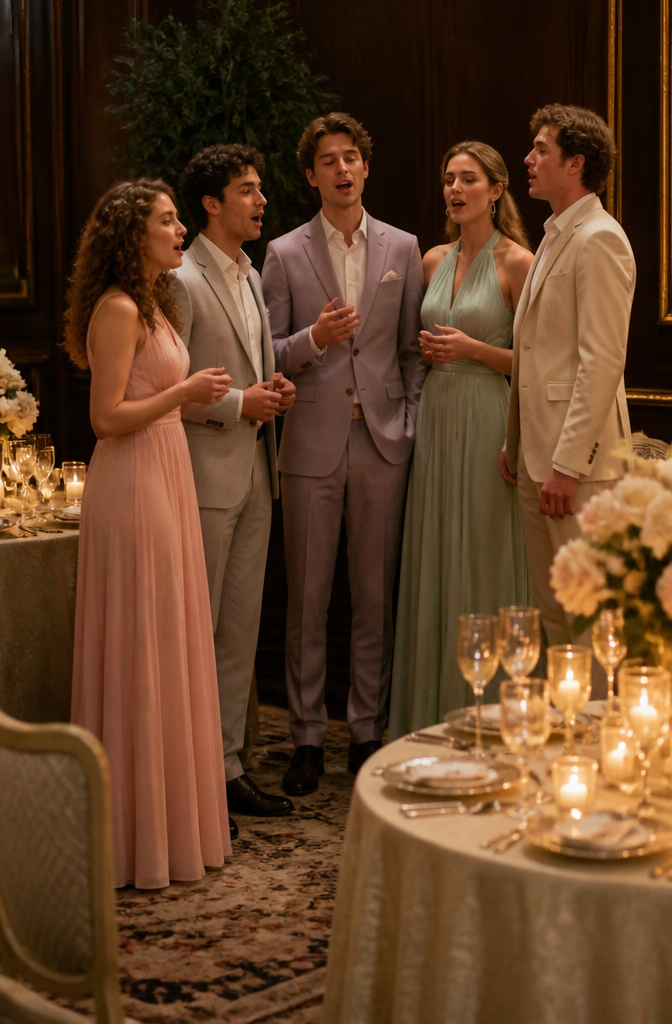
A cappella groups work best when you decide up front whether you want wallpaper or a centerpiece. Background harmonies during cocktail hour let guests keep talking without competing against a drum kit or amp hum. The singers blend into the furniture, which is fine if your budget is modest and you just want texture.
A featured performance is a different animal. The group steps into the center of the room, the beat drops out, and every conversation stops whether you planned it or not. That interruption costs you about twenty minutes of mingling, so slot it after dinner when people are already seated and ready to be entertained. I have seen couples book a stellar collegiate group and watch them drain energy from the dance floor because the timing was off; the singers were great, the moment was wrong.
Ask whether the group can do both in one booking: ambient sets for the transition, then one spotlight number later. Most will, but their rate structure changes, and you want that in writing before the day-of coordinator is negotiating in real time.

Comfortable Handle: The two handles on the side and back of the light provide a comfortable grip. The 4.4ft power cord allows you to have plenty of disposable lengths. Round...
8. Beer Pong Table
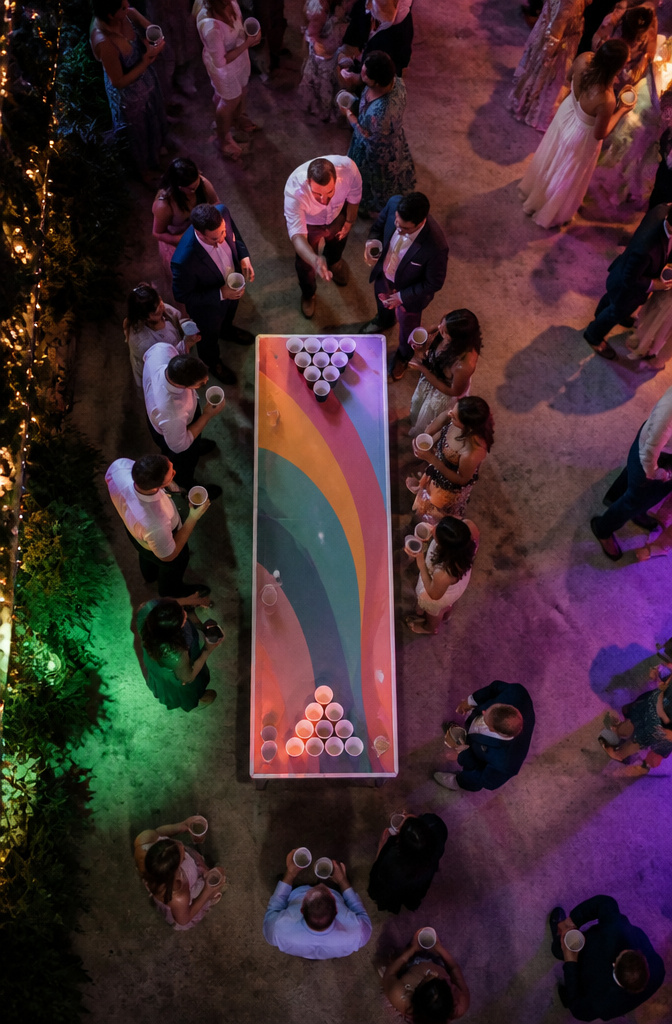
A beer pong station lands differently depending on what the rest of your night looks like. At a brewery gathering with no formal reception, guests barely blink; it is the natural next thing after dinner. At a seated ballroom affair, the same table reads like a prank and needs context, maybe a sign calling it the "late-night league," so people know when to shift gears.
The real headache is the table surface. I have learned to require floor protection and a spill clause in writing from every venue before the cups go out. One knocked-over cup seeps into linen, wood stain, or that rental company’s lacquered farmhouse table, and your deposit evaporates. Water works instead of beer if you want the game without the stickiness, though guests will still call it beer pong; the name is fixed.

Effortless Tool-Free Assembly: Our innovative snap-together design allows you to set up this sturdy cart completely by hand in about 15 minutes—no tools, no hassle, just...
9. Surprise Dance Mob
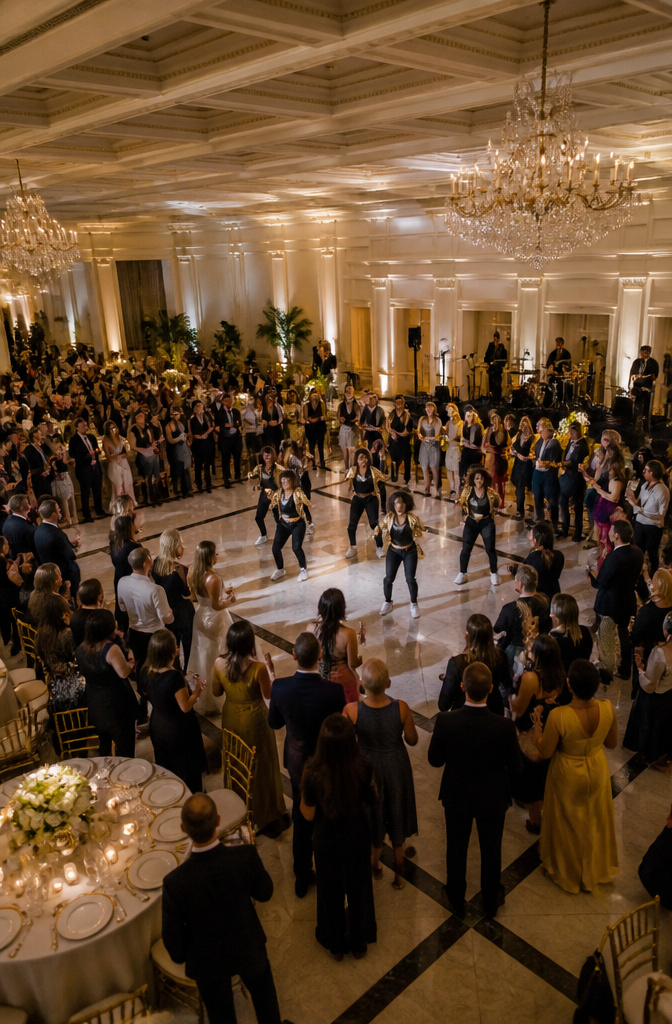
Nothing wakes a reception faster than half your wedding party suddenly breaking into synchronized movement while everyone else is still holding a drink and wondering what just happened. A surprise dance mob only works if it reads as chaos at first, then reveals itself as choreography, and the gap between those two realizations is what makes guests laugh and pull out their phones.
Rehearsal is where most couples trip up. You do not need every groomsman and bridesmaid in the same room for weeks. A few shared videos back and forth, maybe one run-through the morning of, usually covers it. The real mistake is over-polishing. Someone coming in late, someone forgetting a step, that slight hesitation before the second wave joins in, those are the moments that sell the spontaneity. From a planning standpoint, timing it about ninety minutes into the reception works best, when the dance floor is warm but not exhausted, and the energy has flattened enough to need a jolt.
The pressure release matters too. Once the mob hits, the rest of the night loosens. Guests who were watching from their tables suddenly feel invited into something, and the couple gets a breather from being the center of every minute.
10. Portable Bulbs and Glow Sticks
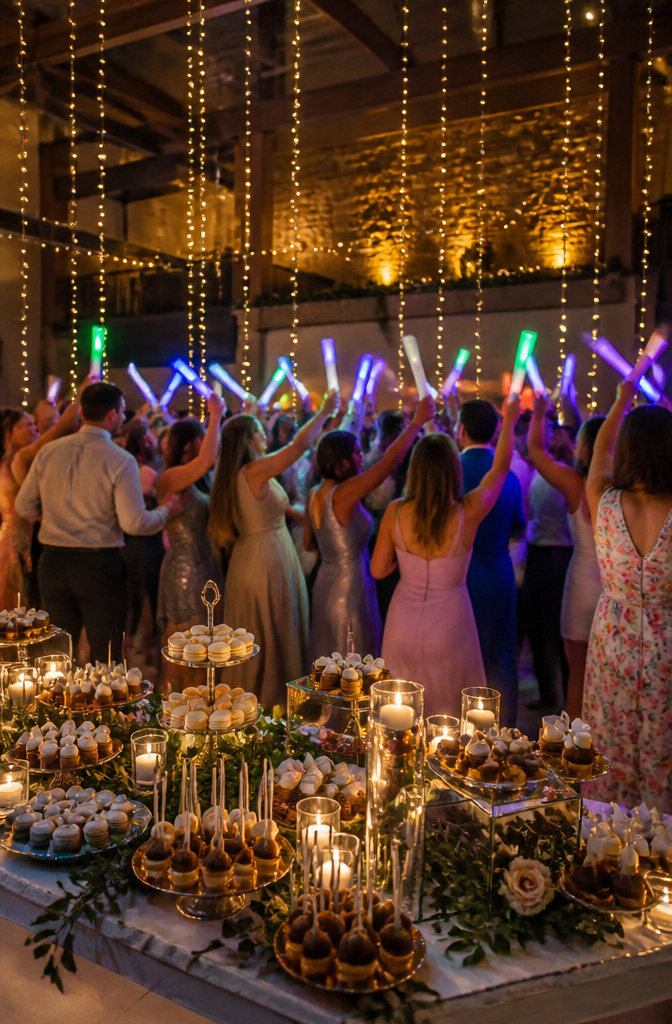
Portable bulbs and glow sticks are the cheapest way to turn a stiff dance floor into something guests actually move on. I hand them out once the DJ shifts into the open-dance set, not during dinner when they just become clutter on the table. The bulbs run on small watch batteries, and I learned the hard way to test every single one the morning of, not the night before when a dead batch sends someone to a drugstore that might already be closed. The glow sticks are safer, no battery to fail, but they dim after four to six hours and the cracked ones leave that faint chemical smell on hands.
The visual payoff is real. Guests who would never dance start drawing shapes in the air, using the bulbs as pretend microphones, smacking them against nothing in particular. The low room light plus those moving points of color gives photographers something lively to catch without staging a single shot. Cleanup is where this idea costs you. I have swept glow-stick fragments out of venue corners three days later, found cracked tubes under tablecloths, and once had a bride’s mother slip on a rolling bulb on the exit walkway. Assign someone to patrol with a broom the last twenty minutes of the night, not the next morning when the rental clock is running.


Used Book in Good Condition

Format: Book
11. Party Shades
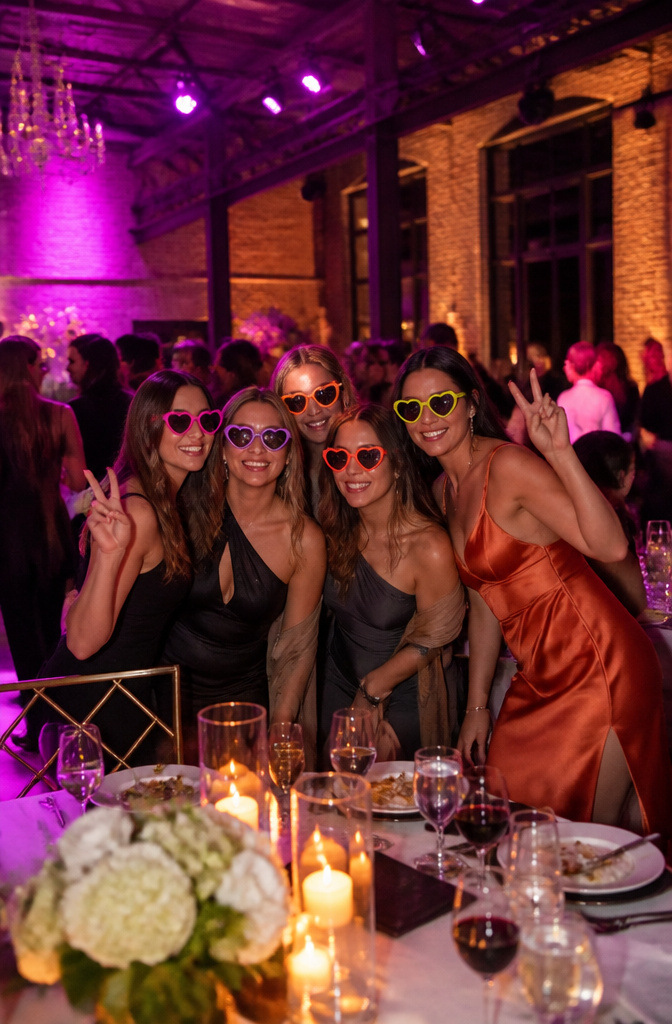
A bulk pack of neon wayfarers runs about twenty-five cents a pair if you order early enough, and that price is why this favor lands in every budget tier I plan. The frames come in classic black, electric pink, lime green, and the heart-shaped ones that always go first. I hand them out in two waves: a small bucket at the bar for anyone who wants them during cocktail hour, then the full box opened right after the cake cut when the DJ drops the tempo change and the floor needs a jolt of silly energy.
The real payoff hits around ten-thirty. Guests who would never dance start posing in clusters, arms around each other, throwing peace signs at the photographer. The shades do half the work of a photo booth without the line, the props, or the rental fee. One couple I worked with last spring had their names printed on the arms. Cute idea, but the minimum order jumped to two hundred pairs and they had ninety guests. Plain neon worked fine and every pair disappeared.
12. Burlesque Dancer
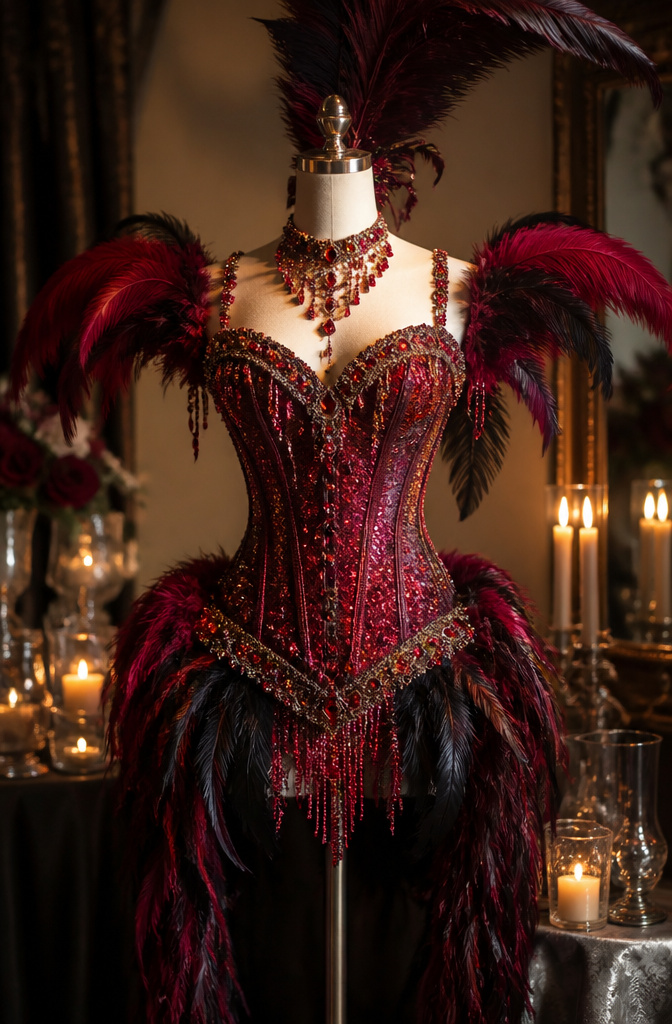
A burlesque performer can land beautifully at a reception with the right crowd and the right room. The feathers and sequins add a theatrical, flirty energy that works best when guests already expect the night to tilt playful, not formal. I always start the same conversation with couples: who is in those seats? A routine that charms a table of college friends can flatten entirely against aunts who drove in from church. Bill it on the timeline as a discrete act, not an open-ended wandering set, usually a single 10–15 minute spot after dinner when the energy needs a deliberate lift. The performer moves through the crowd, does the short routine, interacts just enough to make people smile, and exits before the moment overstays. That structure keeps the boldness fun instead of awkward, and it lets the DJ or band reclaim the floor cleanly.
13. Fire Dancer Performance
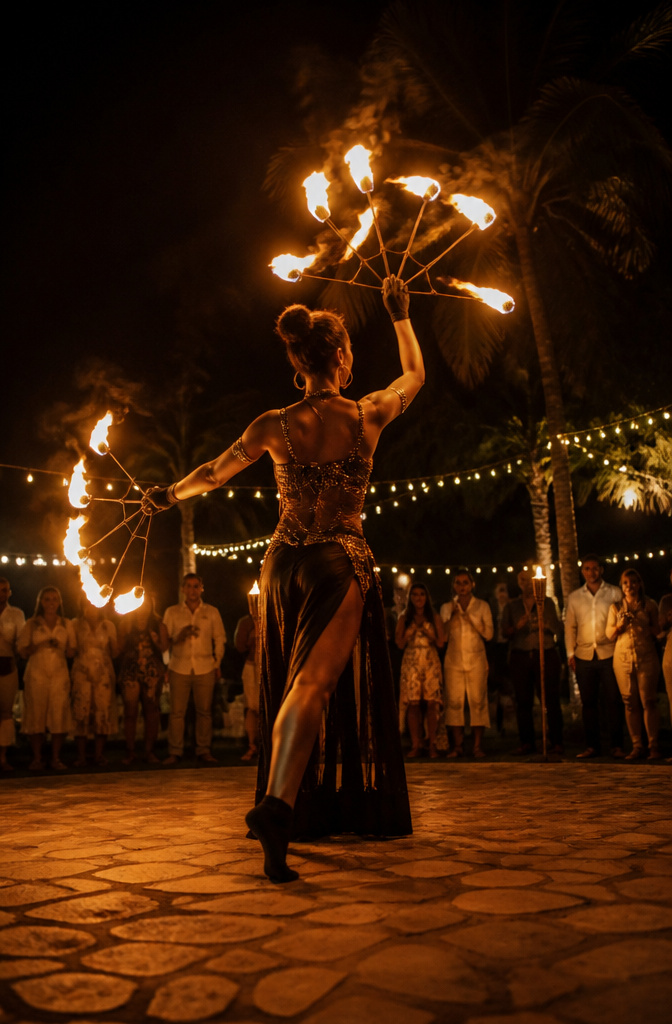
Outdoor fire dancer performances land hardest after dark, when the flame trails against black sky and guests who have been drinking for two hours suddenly go silent. The visual payoff is real, but the permit work starts months before anyone strikes a match. Plan three to six months out for the application, because most jurisdictions treat open flame as a special event permit with its own fire marshal review, not a standard venue add-on. Safety buffers vary by location, though 25 feet from any structure or combustible surface is the usual rule of thumb, and that distance has killed the idea at several garden venues I have looked at where the tent lines sit too close to the performance space. Historic sites with wood porches, downtown courtyards with overhanging trees, and any reception under a permanent canopy are typically impossible. You will also need to confirm that your venue’s insurance does not exclude pyrotechnic entertainment; some policies do, and the dancer’s own certificate may not fill the gap.
14. Ski Shot
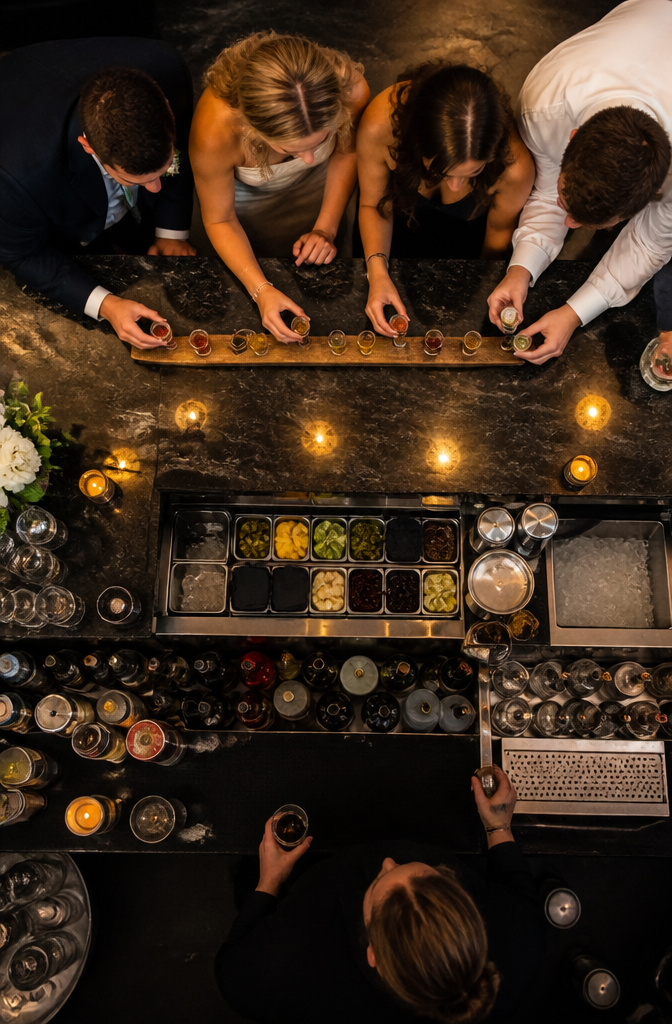
A ski shot lines up four shot glasses on an actual ski and challenges four guests to drink simultaneously. The physics are simple; the execution, less so. Someone always tilts early, someone laughs mid-pull, and the ski itself becomes a four-person trust exercise with liquor involved.
The setup needs a 48’x48′ indoor area to work safely. That footprint matters because inebriated guests need clearance to stagger, sway, and recover when their timing falls apart. Sawdust-covered floors help with traction, but the real coordination happens before the pour: assigning positions by height, briefing everyone to lift on a count, and having a spotter ready for the inevitable wobble.
Renting a proper ski from your bar or planner beats the DIY route. A rental usually comes with the harness or strap system that keeps glasses locked in place, which is the difference between a photo-worthy moment and a spilled round soaking someone’s dress. The photos almost make up for the chaos, though the best shots capture the failure, not the success: four faces in various stages of miscalculation while the crowd roasts them.
15. Red-Light Party Vibes

Red light washes over a dance floor differently than amber or blue. It hides the room’s edges, tightens the space around the guests, and signals that the formal part of the night is finished. Rental uplighting in the red spectrum runs roughly $15 to $40 per fixture, with most receptions needing eight to twelve units to saturate a standard ballroom. The effect is immediate and cheap compared to bringing in a full club rig.
The catch arrives in your photo gallery. Digital sensors struggle with heavy red gels, and skin tones shift toward ruddy, flat planes under that wavelength. A photographer shooting without flash compensation will deliver files that look like they were pulled from a darkroom accident. What convinced me, reading through a dozen venue portfolios, was the consistency of the complaint: couples loved the moment and winced at the proof.
If you want the vibe without sacrificing the album, keep the red to the last ninety minutes and ask your photographer to switch to direct flash or move toward cooler accent lights during cake and send-off. The color works best as a timed release, not a blanket.
16. Circle Sparkler Dance
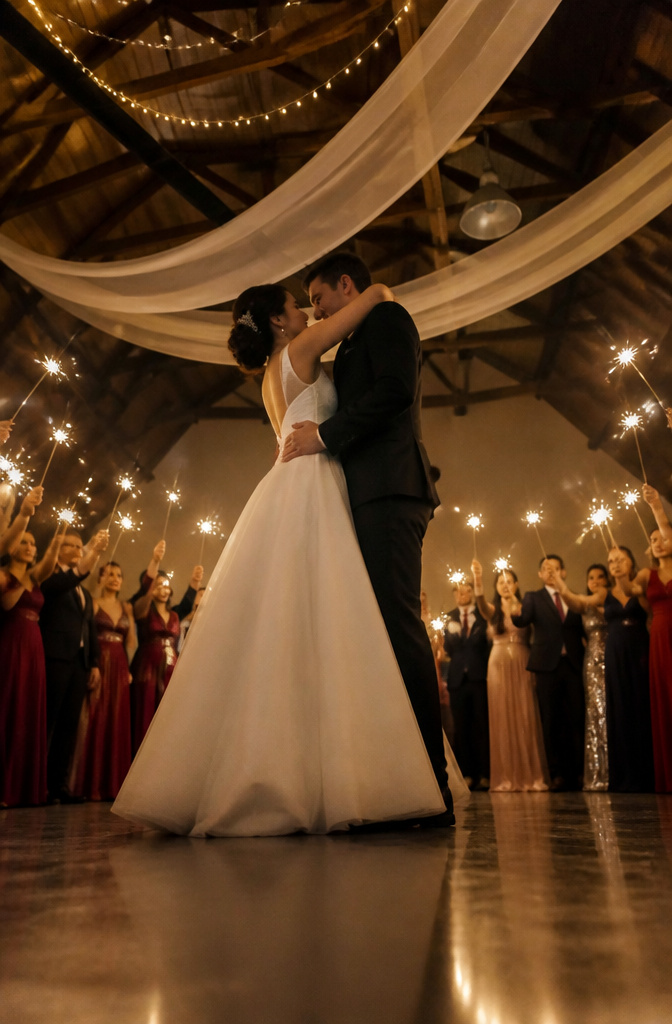
A sparkler circle turns your first dance into something guests actually participate in rather than watch from tables. I’ve seen couples use this to kick off dancing after dinner, or as a quiet moment together before the party ramps up. Everyone slows down, breathes, and feels the night instead of just documenting it.
36-inch wedding sparklers burn roughly 3.5 to 4 minutes, which is the minimum you want for this setup. Shorter ones burn out before guests finish lighting their neighbors, and the circle collapses into relighting chaos. For 100 guests, buy at least 120 sparklers. The math is simple: some will be duds, some guests will grab two, and a few will wander off with theirs before the moment starts. I order 130 to be safe.
Before you picture this, check your venue’s fire code. Outdoor spaces usually allow it; indoor spaces with sprinkler systems often do not, and some counties require a fire marshal permit for any open flame near crowds. I learned to ask this question before I sell the couple on the image, because a venue that says yes to sparklers but no to the 36-inch length changes the entire plan.
17. Fireworks Display
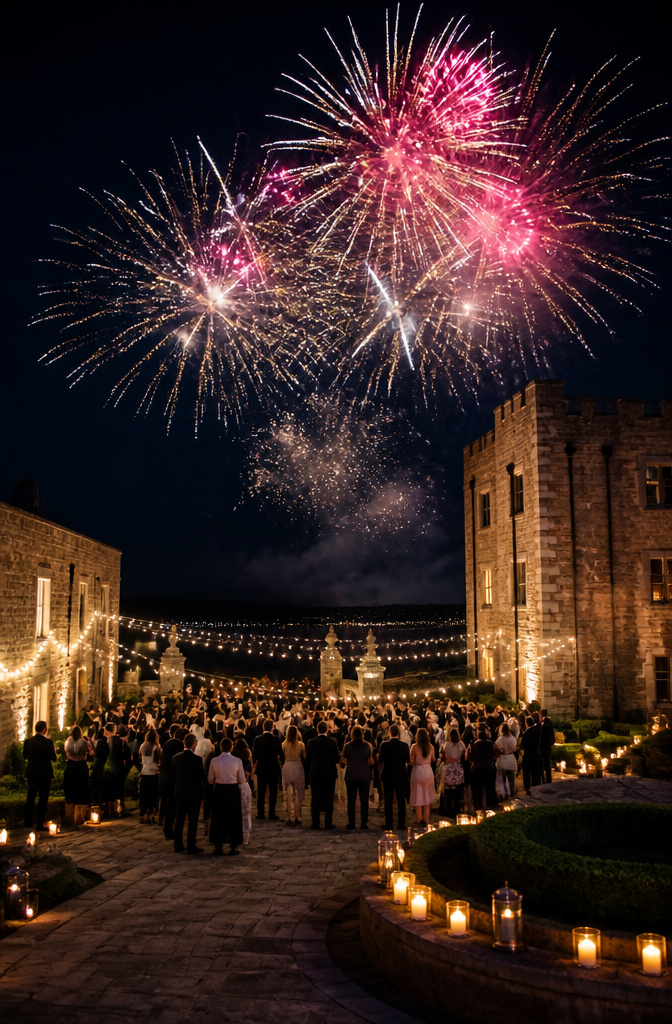
A 2–3 minute professional fireworks display runs $3,000–$10,000 in the weddings where I have coordinated one, and that window depends almost entirely on how complex the choreography gets and whether the pyrotechnics team has to travel to your venue. The show does not need to stretch longer. Two to three minutes is the sweet spot for holding every guest’s attention skyward without the spectacle becoming background noise.
The permit timeline is what catches couples off guard. Plan 3–6 months out for approvals, longer if your venue sits near an airport, wildlife refuge, or any municipality with seasonal burn restrictions. I have seen a June wedding lose its finale in April because the couple assumed the venue handled permits; most do not. The pyrotechnics contractor files the paperwork, but you pay the fee and you sign the liability rider.
A fireworks finale works best as punctuation, not prelude. Light the display after the last dance or during the exit, when guests are already clustered outside and the natural hush of the moment does the work for you. Mid-reception launches, timed to follow the cake cutting or a toast, tend to scatter the crowd and stall the dance floor recovery.
18. Mini Rave
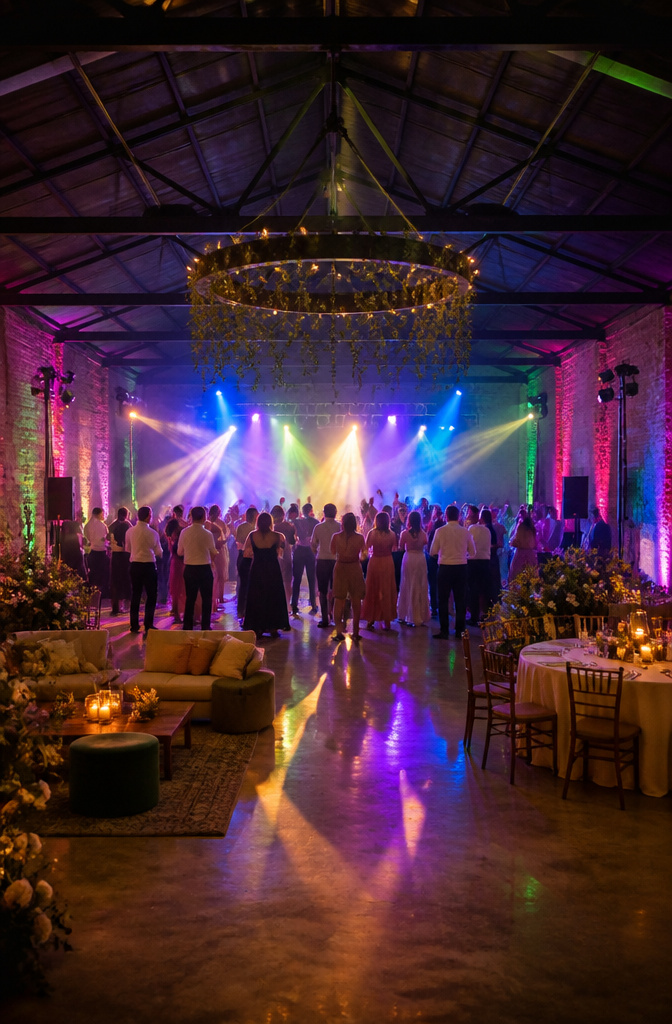
A contained rave atmosphere needs more planning than booking a DJ and hoping for the best. The fog machine, moving-head lights, and a dedicated subwoofer stack pull the room into something that feels separate from the rest of the venue, which is the whole point: guests step through a doorway and the temperature drops ten degrees from the haze.
Power is where couples get caught. A standard wall outlet handles the DJ booth and a few LED pars, but add a 1500-watt fogger, a hazer running continuously, and two or three moving fixtures, and you are suddenly drawing more than the circuit was built for. I have seen a breaker trip mid-first-dance because the caterer’s warmers were on the same line. The venue’s electrical map matters as much as the playlist. Ask for it in writing during your walkthrough, not the week before.
Renting the gear runs roughly the cost of a mid-tier photo booth, though delivery and a lighting tech who knows DMX programming push it higher. The fog residue can leave floors slick, so liability coverage and a stipulation in your vendor contract about cleanup time become non-negotiable details.
19. Outdoor Games
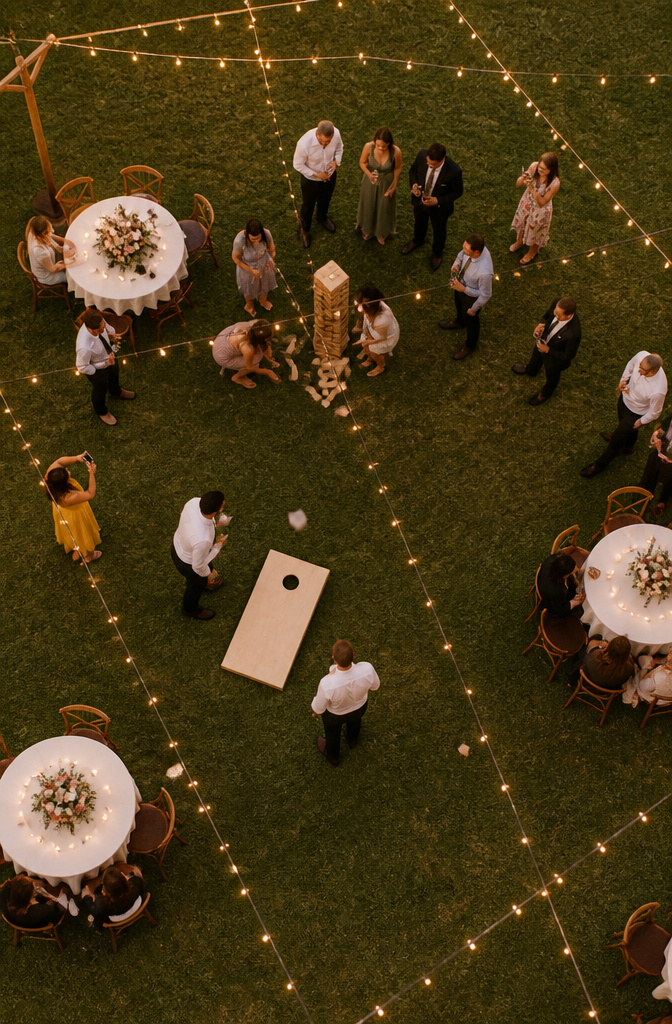
Lawn games turn the hour before dinner into something guests actually remember. Cornhole, giant Jenga, croquet, badminton, ladder toss, even horseshoes with soft rubber rings for safety: the mix matters more than any single choice. I set these up before the first guest arrives, never during cocktail hour when I am already managing fifty other moving parts.
The weather call has burned me twice. Now I walk every outdoor setup with a covered backup in mind. A sawdust floor in a barn or covered pavilion takes cornhole and Jenga without a hitch; the games do not change, only where they sit. Blankets for a cold snap, parasols or umbrellas for sun or sudden rain keep people comfortable enough to actually play instead of retreating to their cars. The games themselves are cheap rental insurance against a dull reception.
20. DIY Dessert Bar
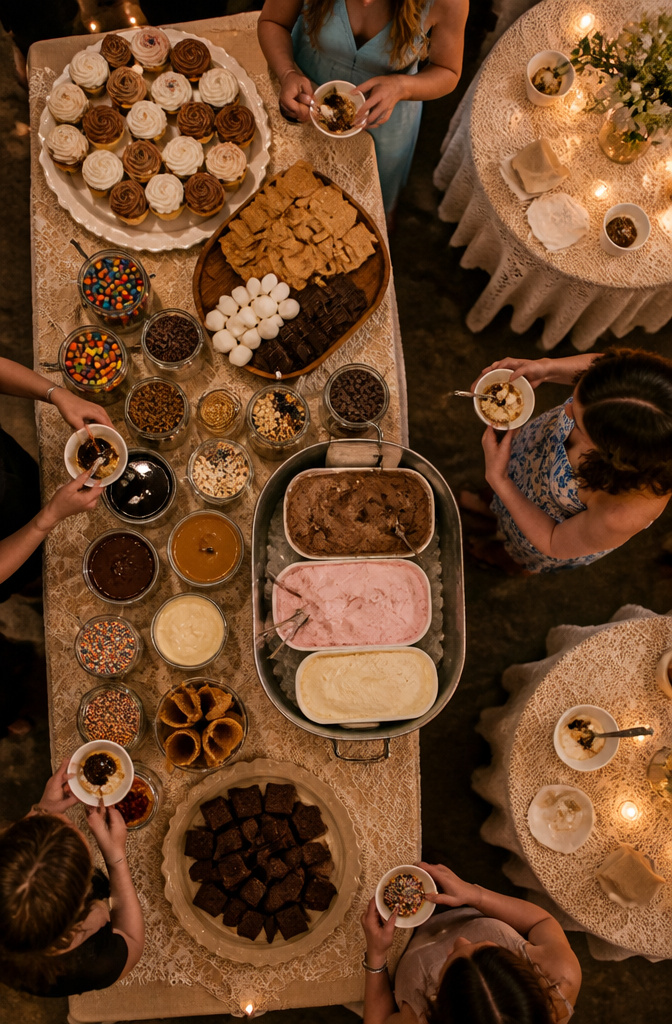
A self-serve dessert station turns the last hour of a reception into something guests actually remember. Cupcakes, s’mores fixings, and a build-your-own sundae spread give people three distinct textures to play with, and the act of assembling their own plate keeps them moving and talking rather than waiting for a slice of cake. The entertainment value is built in: watching someone else pile whipped cream three inches high is its own kind of icebreaker.
For couples working under $10,000, $400 to $800 covers the full spread if you source smart. Grocery-store cupcakes in simple flavors, bulk ice cream in tubs rather than single-serve novelty, and marshmallows with bamboo skewers from a restaurant supply house hit the same notes as premium catering without the per-person markup.
The mess is real. Guests abandon half-built sundaes on cocktail tables, trail chocolate across the dance floor, and leave napkins wadded into every corner. A dedicated bussing station near the bar helps, but assign someone to check it every twenty minutes or the sticky residue becomes the memory that outlasts the s’mores.
Frequently Asked Questions
What are some unique wedding reception ideas?
The article covers twenty specific ideas, including stilt walkers pouring drinks, a midnight McDonald’s run, surprise piñatas with custom fillings, inflatable crowd surfing, a karaoke station with wireless mics, a cappella performances, a ski shot for four guests, red uplighting for the last ninety minutes of dancing, and a mini rave with fog machines and moving-head lights. Each one is designed to create a moment guests will actually remember rather than just observe.
How can I make my wedding reception more entertaining?
Book featured entertainment rather than background acts, and time them for when the energy needs a deliberate lift. A drum performer stepping forward with a clear cue hits harder than subtle percussion during cocktails. A surprise dance mob about ninety minutes into the reception jolts a flattening dance floor. The key is owning the interruption, not letting it diffuse into awkward overlap with speeches or dinner service.
What are some fun activities for wedding receptions?
Karaoke stations with crowd-pleaser song lists open up once wine has done its work. Beer pong tables work best with floor protection clauses in writing and context like a "late-night league" sign. Lawn games such as croquet or oversized Jenga suit outdoor cocktail hours. Glow sticks and portable bulbs hand out once the DJ shifts to open dance, though you will need someone patrolling with a broom the last twenty minutes to handle cracked fragments.
How long should a wedding reception last?
The article does not specify a standard duration, but the ideas assume a timeline with distinct phases: cocktail hour, seated dinner, dancing, and a late-night window between 10:30 and midnight for surprises like a McDonald’s run. The average wedding reception lasts about 5 hours, including cocktail hour and dancing, according to common planning sources.
What food options are popular for wedding receptions?
The article emphasizes breaking formal catering rather than matching it. A midnight fast-food delivery lands as a revelation after hours of champagne and speeches. For earlier in the night, source passages mention taco bars, sushi stations, dessert tables, cocktail bars, and make-your-own sundae bars as alternatives to standard sit-down meals that let guests eat at their own pace.