Wedding games for a reception run from a pair of shoes and a willing emcee to a four-foot Jenga tower that takes an afternoon to paint, wedding bingo cards printed at home, and a circus company hired to run a coconut shy.
What decides which one belongs in your evening is whether your guests will be standing in grass heels or sinking into lawn games in flats, whether you need them broken into small groups or gathered as one crowd for a single moment.
The shoe game costs nothing; the Jenga set needs fifty-four two-by-four pieces cut equal, the bingo cards run through a home printer, and string bulbs overhead once the sun drops.
1. The Shoe Game
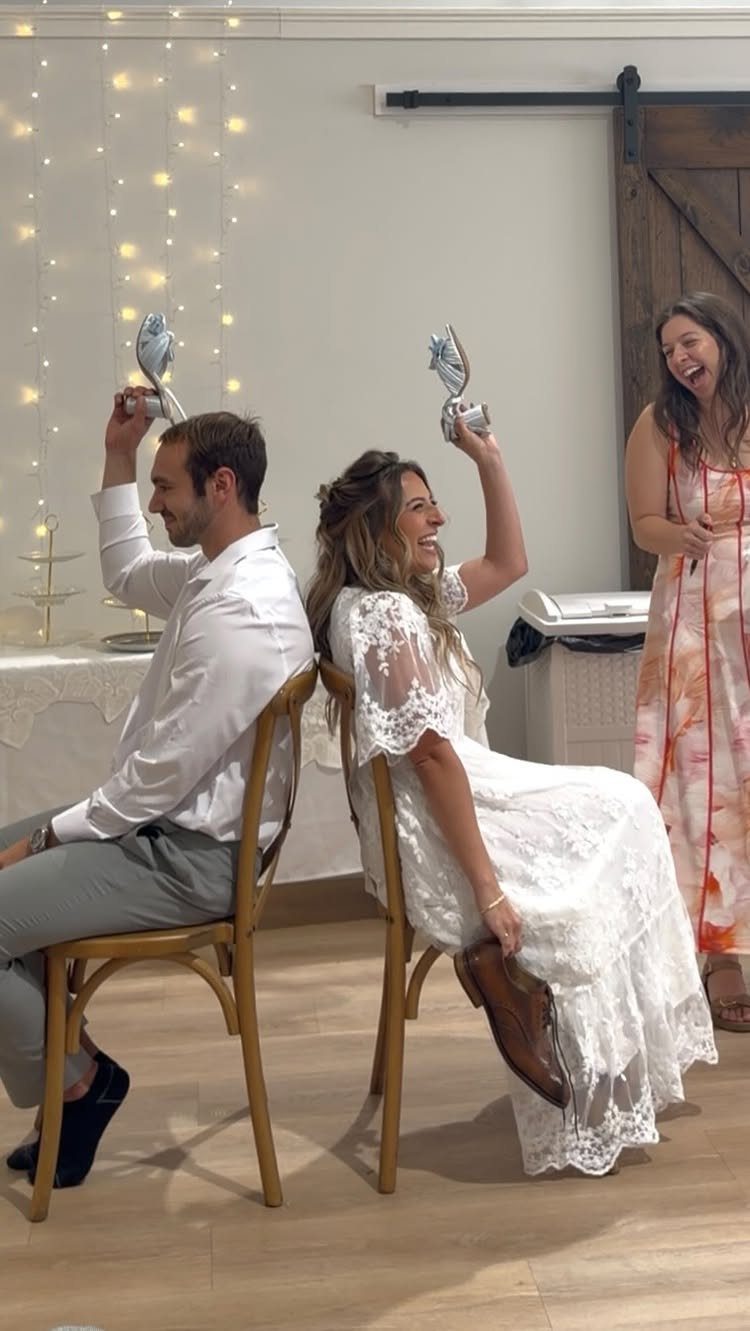
A DJ or emcee asks questions like "Who said ‘I love you’ first?" or "Who is messier?" and the pair raises the shoe that matches their answer.
Guests cheer when the answers line up and laugh harder when they do not.
It works for any size wedding and needs nothing but 2 chairs and a willing host. The questions can stay gentle or get more pointed depending on the crowd, so I would brief the emcee on the tone you want.
A short block during the reception is usually enough. The game gives everyone something personal to remember, and it costs nothing.
2. Giant Jenga
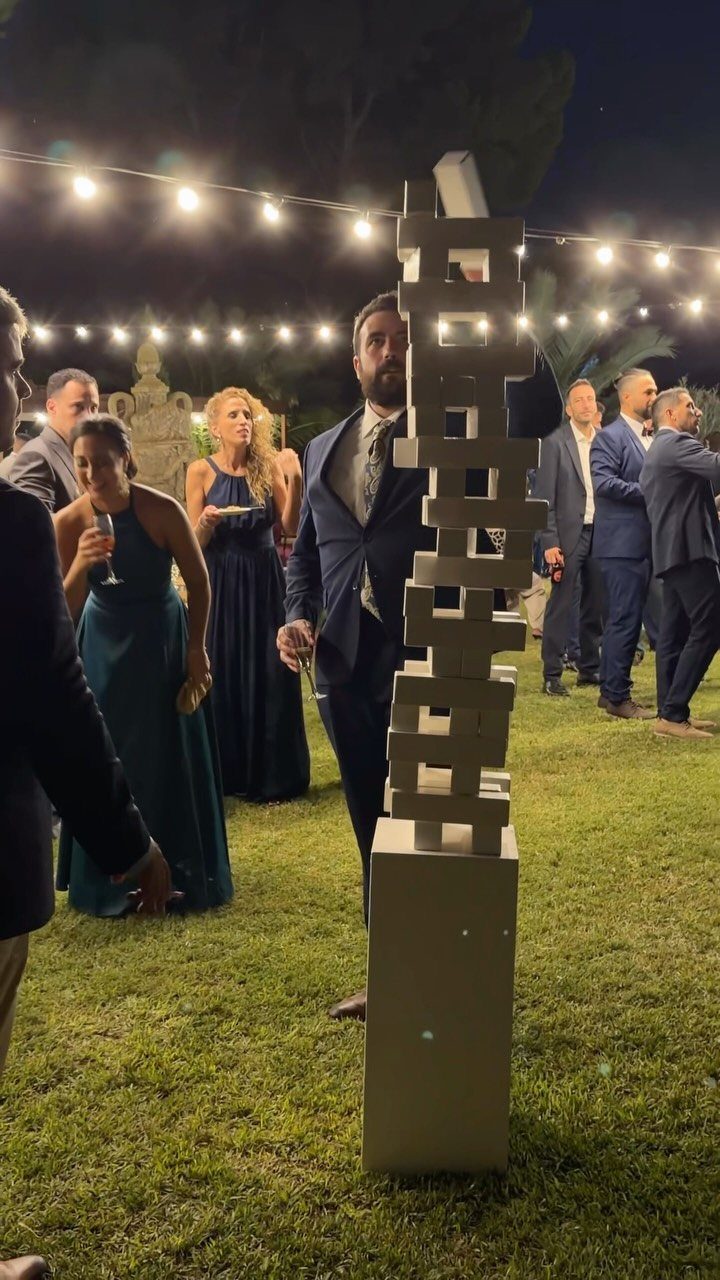
A tower of oversized wooden blocks stands four feet tall before anyone pulls a piece. Guests take turns sliding blocks free and stacking them on top, and the whole thing sways more with every move.
You can buy a set ready-made or build one from two-by-fours cut into 54 equal pieces. Painting the blocks in your wedding colors takes an afternoon and makes the setup look deliberate rather than borrowed from a backyard barbecue.
The rules are simple enough that guests can drop in and out, which matters when people are also eating, drinking, and catching up.
Night lighting helps a lot. String bulbs overhead let people keep playing after dark without anyone guessing which block might bring the whole thing down.
3. Wedding Bingo
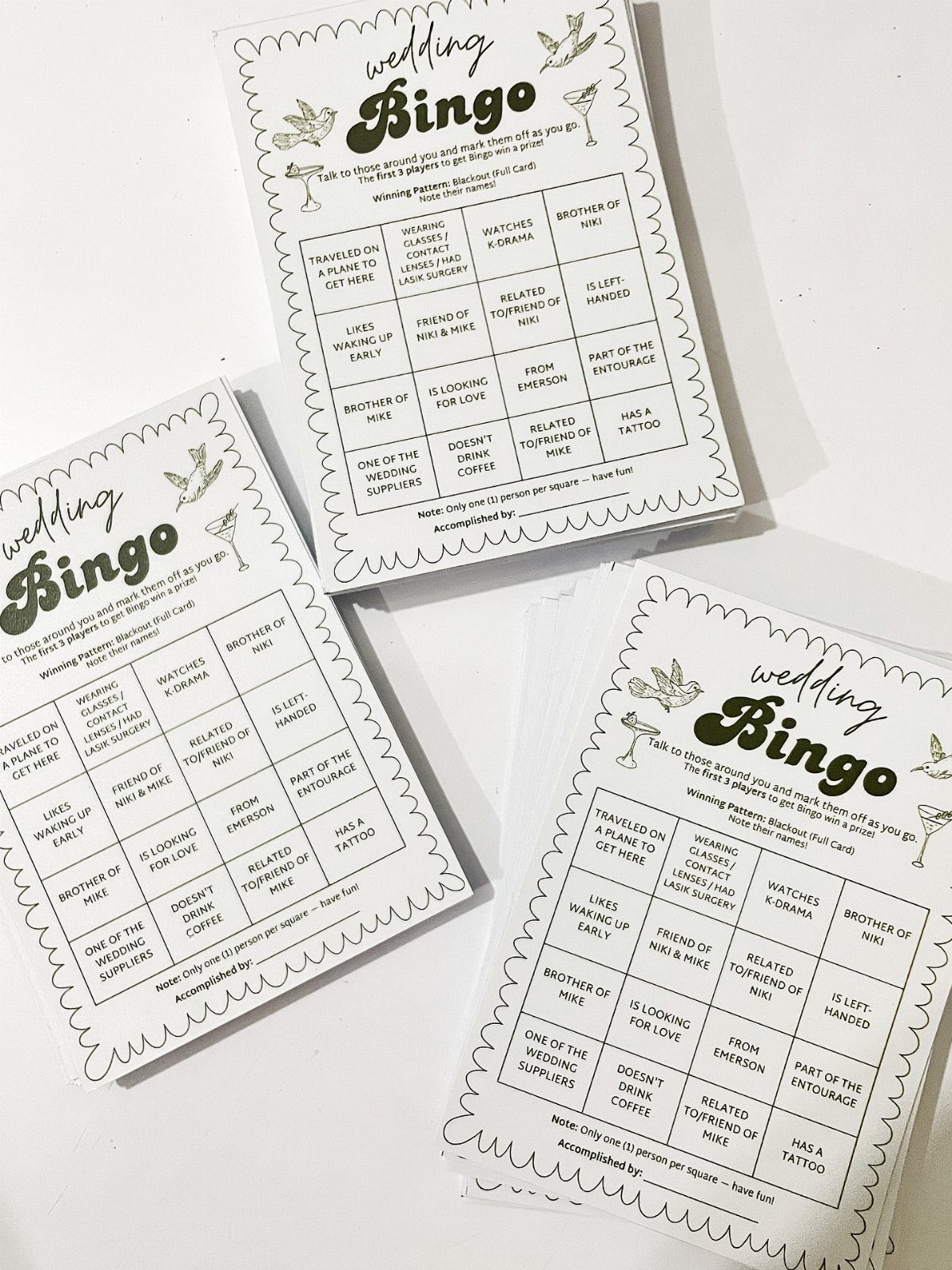
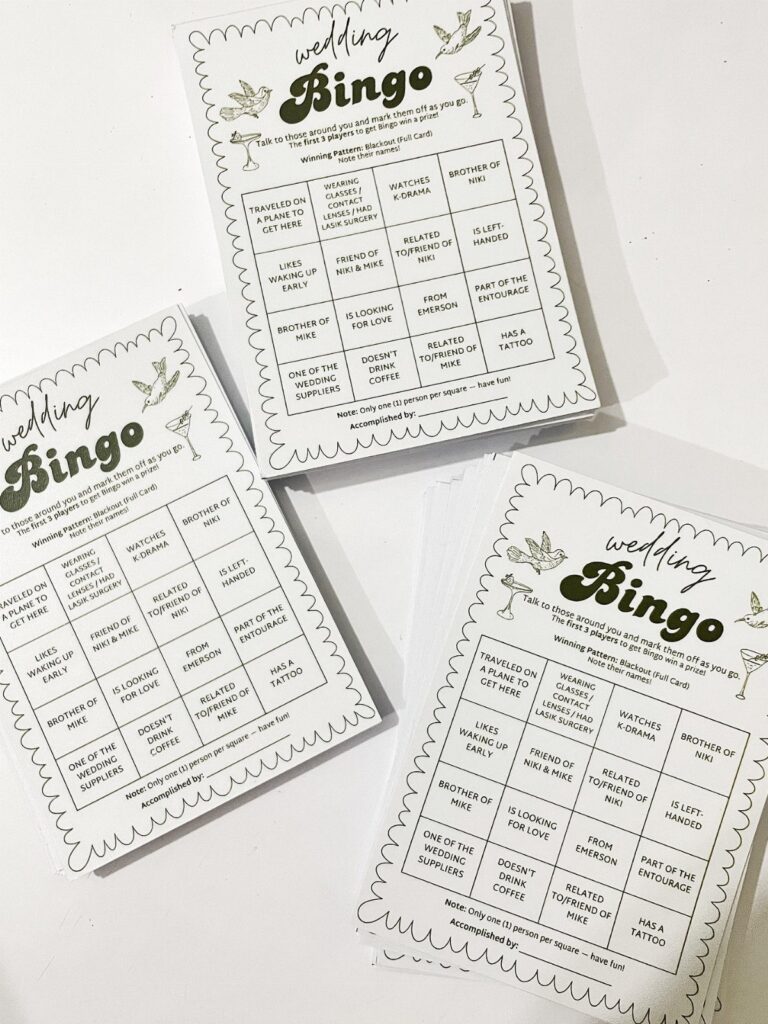
Guests receive cards printed with wedding-specific prompts and spend the reception hunting for matches.
One version marks off moments as they happen during toasts and dances; another sends people circulating to find guests who fit descriptions like "traveled on a plane to get here."
The first style keeps everyone alert during speeches that might otherwise drag.
The second breaks the ice between tables that might not mingle on their own. Either way, small prizes for the first few winners keep energy up without costing much.
I prefer the mingling version for receptions where half the guests are meeting for the first time. Print cards at home or through any standard service, and keep a few spare pens at the sign.
4. Giant Connect Four
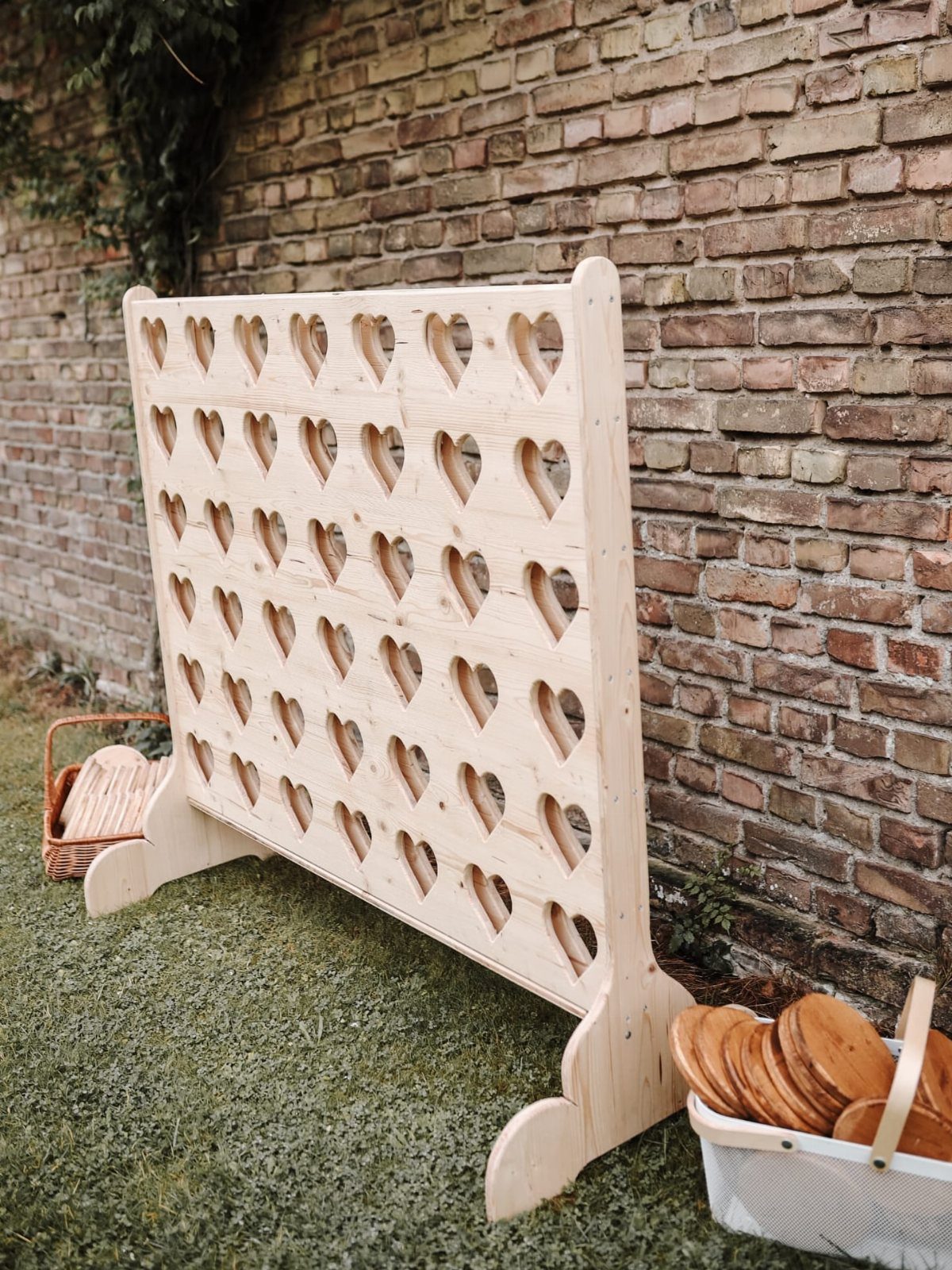
A freestanding wooden grid with heart-shaped cutouts lets two players drop colored discs from the top, aiming to line up four in a row before their opponent blocks them.
The standard build runs 7 columns across, though a smaller grid also works.
Discs slide in from above and stack at the bottom, so the frame needs to stand level on grass or pavement. You can buy a finished set or drill holes through a plywood board and finish the edges.
This one suits couples who want a game they can play together without rounding up a larger group. It also photographs well, which is not nothing.
5. Lawn Games
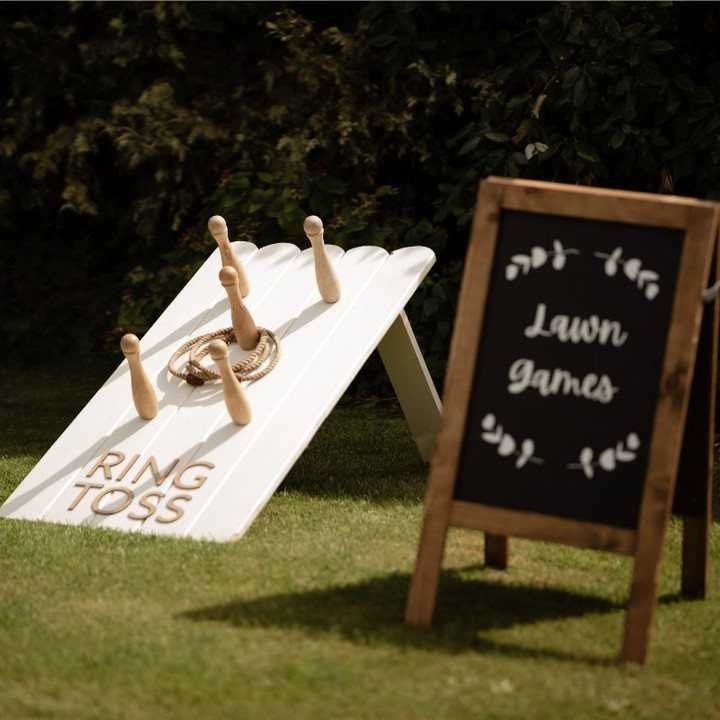
Open grass turns into something purposeful with almost no staging; a simple sign and a ring toss setup are enough to get guests moving.
Cornhole, ladder golf, and oversized bowling all fit the same idea: low-stakes competition that guests can join for a moment or settle into for longer.
The best approach is variety.
One fast-paced game, one that rewards patience, and one that needs no explanation at all covers most crowds. Assign someone to set each game straight if pieces scatter, because guests will not reset them themselves.
I would place these where they do not compete with the dance floor or the bar. Cocktail hour is the natural window, though they also give non-dancers something to do later.
6. Cornhole
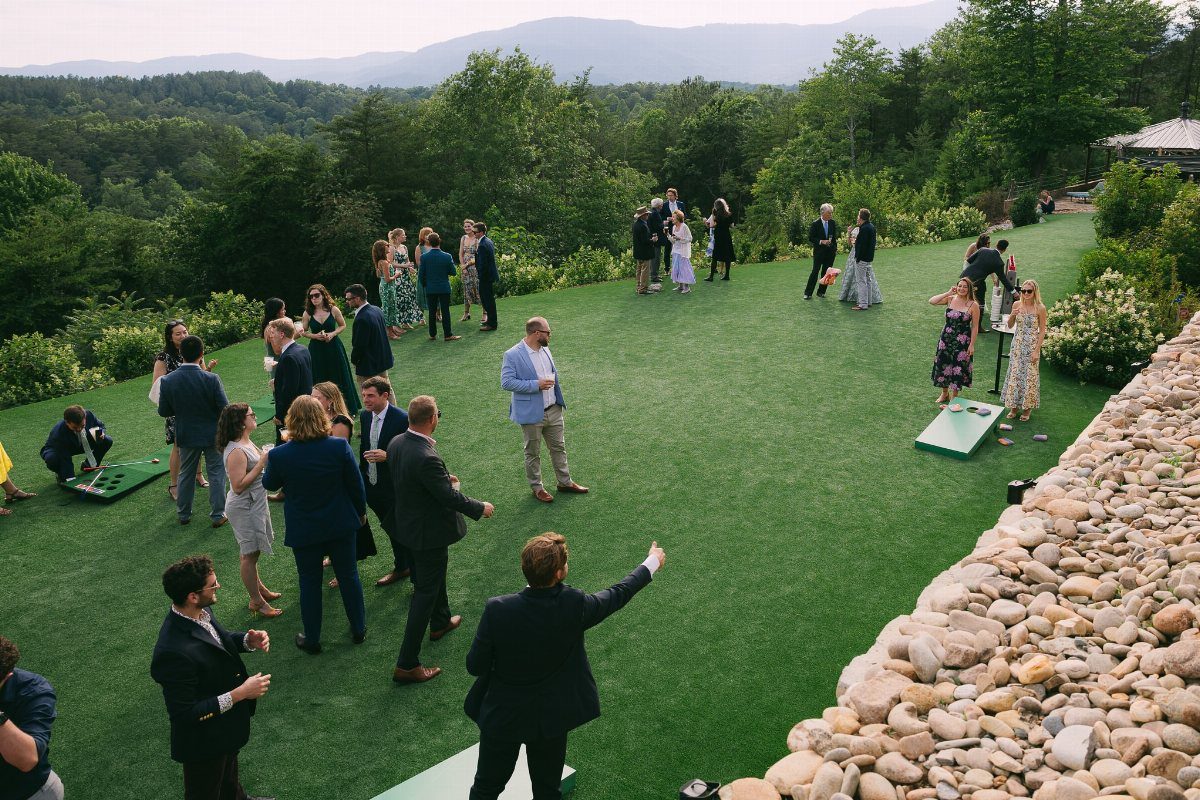
Two angled boards with a hole near the top, beanbags, and two teams. Players toss from a set distance and score three points for a bag through the hole, one for a bag that stays on the board.
The first team to reach the target score wins, though house rules vary and half the fun is arguing about them.
The game gets loud in the way that draws a crowd without drowning out conversation. Custom boards painted with your names or wedding date cost more than plain wood but double as keepsakes.
This one works on grass, turf, or any level surface. I have seen it at casual backyard weddings and at formal receptions with mountain views, and it fits both because the rules do not change.
7. Spin the Wedding Wheel
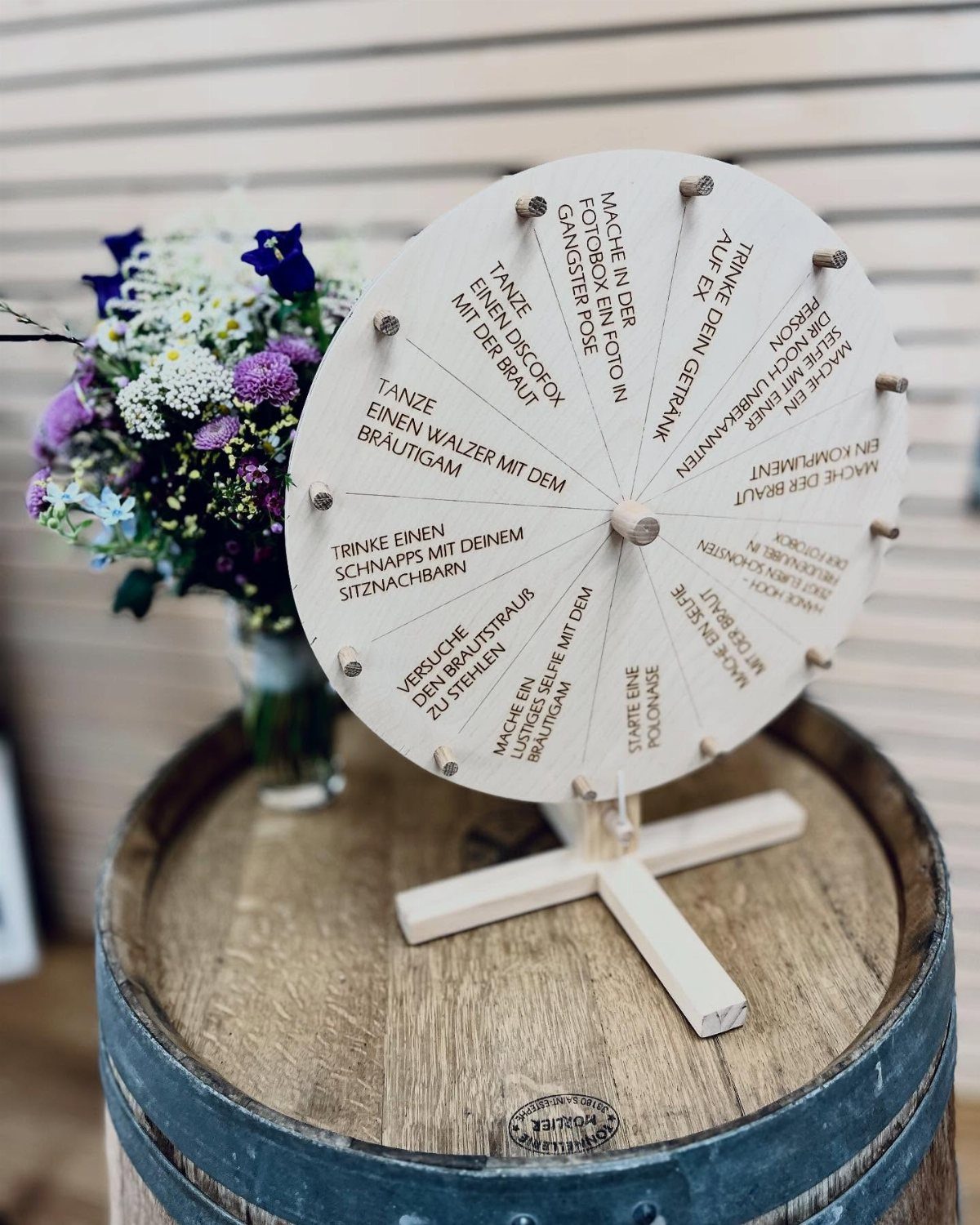
A prize wheel turns spontaneous challenges into running entertainment that needs no emcee standing by. Guests spin when the mood strikes, read the prompt themselves, and carry it out or pass it to a friend.
The prompts matter more than the wheel’s size. "Take a selfie with the bride" and "show your best dance move" land better than anything that embarrasses someone into refusing.
I would aim for twenty or so slots, with a few repeats of crowd favorites so the wheel does not feel thin.
Set it on a sturdy surface near the bar or the edge of the dance floor, where people pass often enough to keep it moving. No DJ announcement needed; the first few spins draw the rest.
8. Wedding Pinata
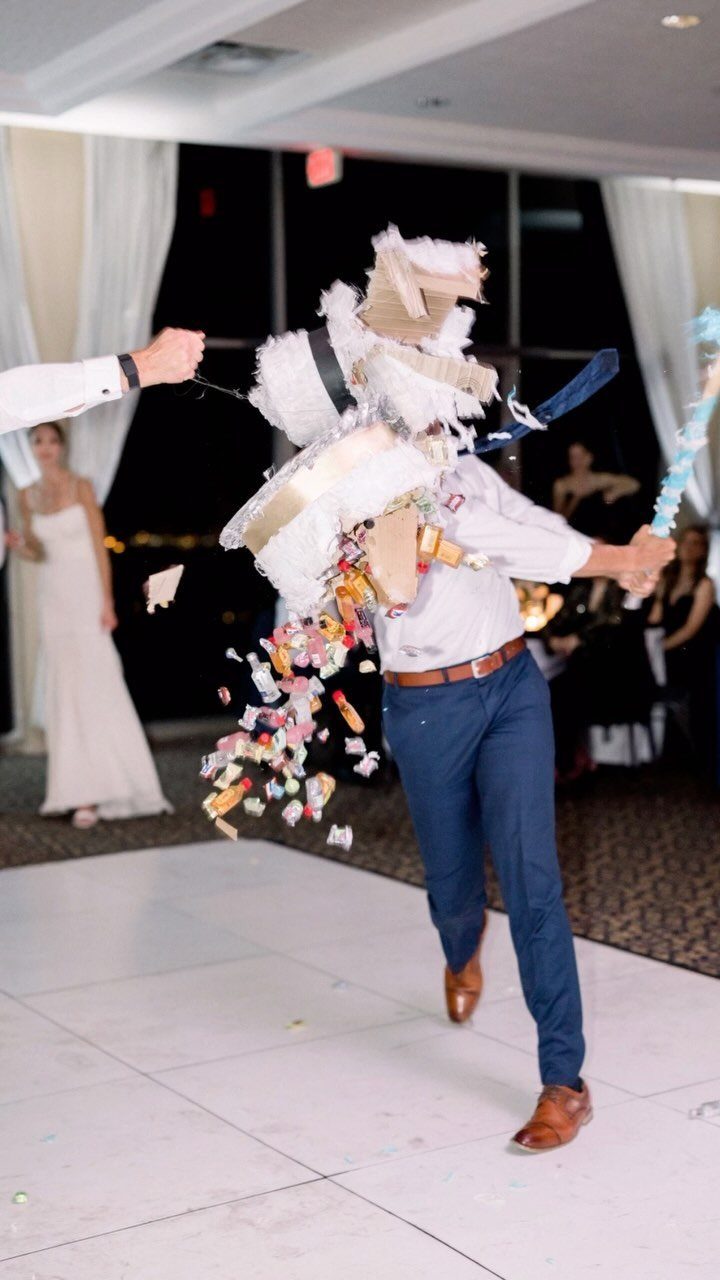
A tiered white cake that shatters instead of slices, spilling candy or mini bottles across the floor while guests cheer. The couple takes turns blindfolded, swinging until the shell cracks.
Fill it with something that will not stain clothing or skitter under tables where servers step on it. Mini liquor bottles photograph well and suit an adult crowd; wrapped candy is safer if children are present.
Check with your venue before bringing a bat indoors, and clear a wide radius so the blindfolded swinger does not clip a guest.
It is over fast and leaves a mess someone has to gather. Assign that person before you start.
9. Money Dance
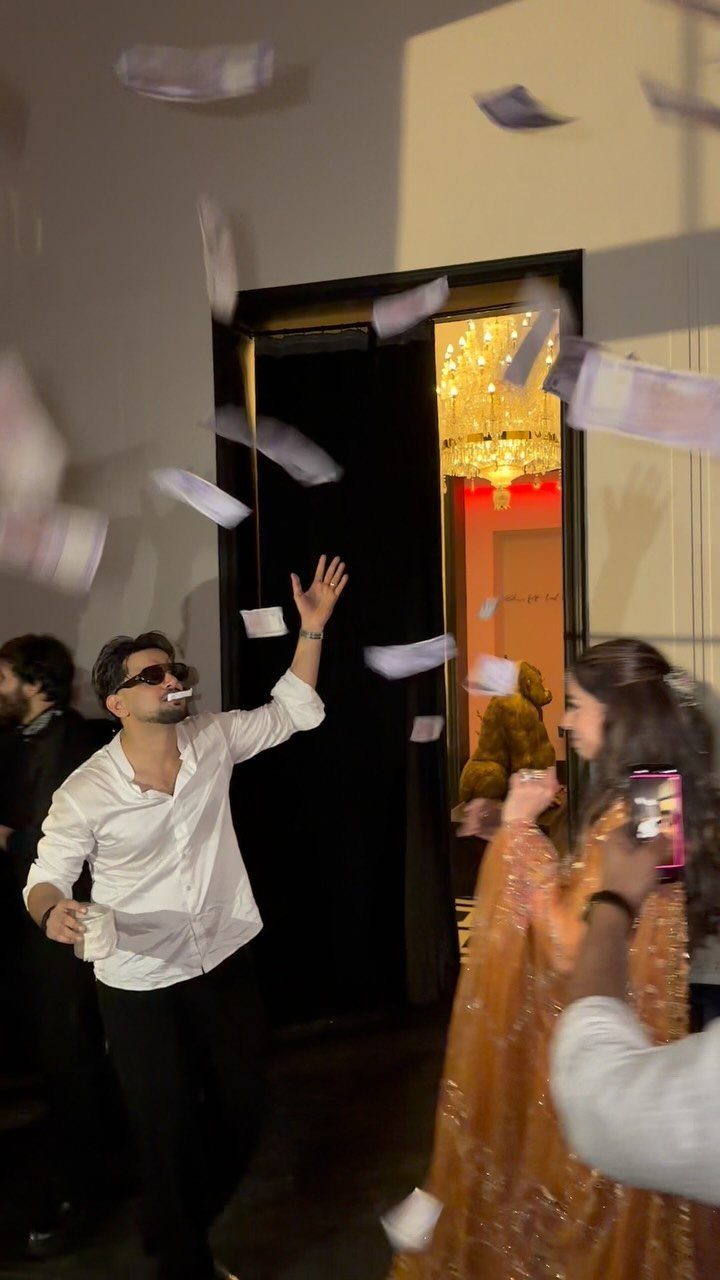
Guests line up to pay for a brief dance with the bride, the groom, or both, pressing bills into a hand or pinning them to clothing while the DJ runs one song.
A porcelain piggy bank by the floor collects what falls.
The custom varies by family and region, so ask older relatives what shape it took at weddings they remember.
Some guests find the tradition awkward; a brief, warm announcement from the DJ helps, and so does a set duration of one song so no one worries it will run all night.
The money offsets costs, but the real point is the queue of uncles and college friends waiting their turn.
10. Coconut Shy
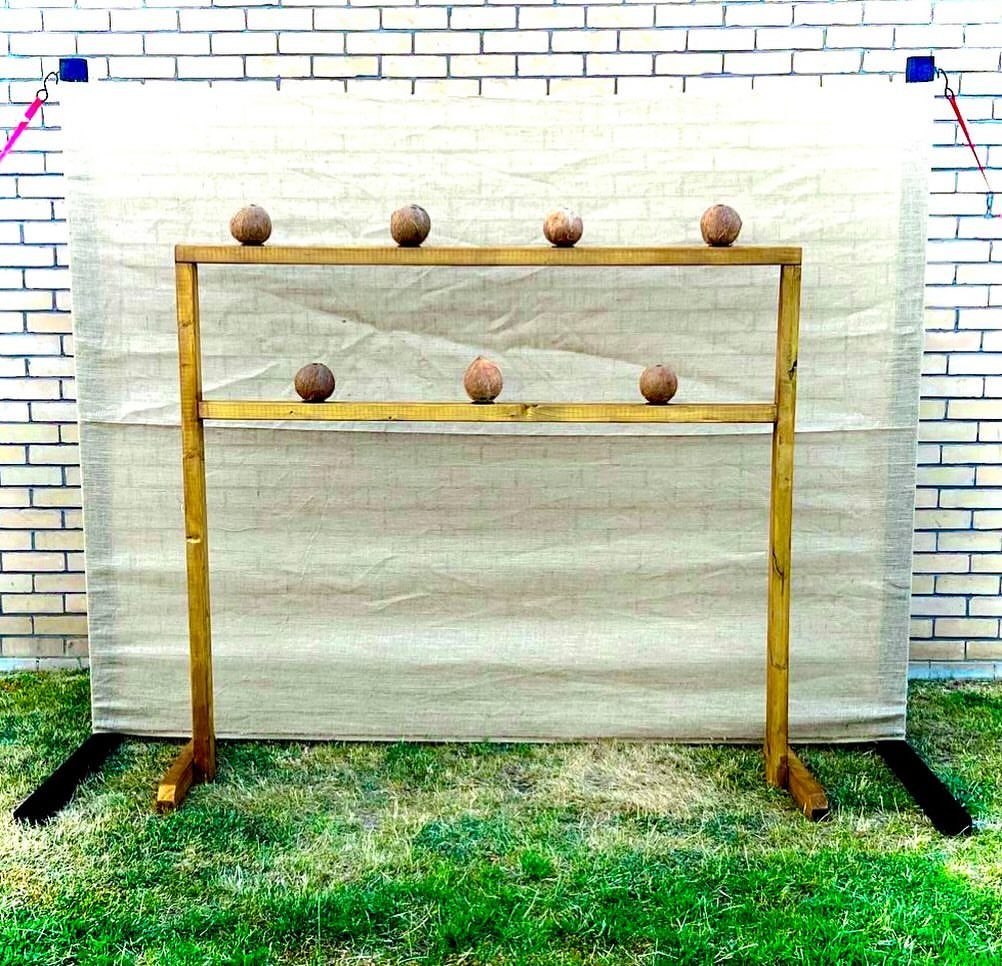
A wooden frame holds coconuts on bars at throwing height, and guests hurl balls to knock them free for prizes. The setup brings a fairground tone that works outdoors on grass, where a missed throw does not matter.
You can build the frame from two-by-fours and metal rods, though hiring a circus games company covers setup, breakdown, and enough balls that guests are not waiting. Prizes need not be large; the throw itself is most of the reward.
This one needs space and tolerates mud poorly. I would place it where the lawn is level and keep it away from the cocktail hour traffic, because a ball to the shoulder sours the mood fast.
11. Limbo
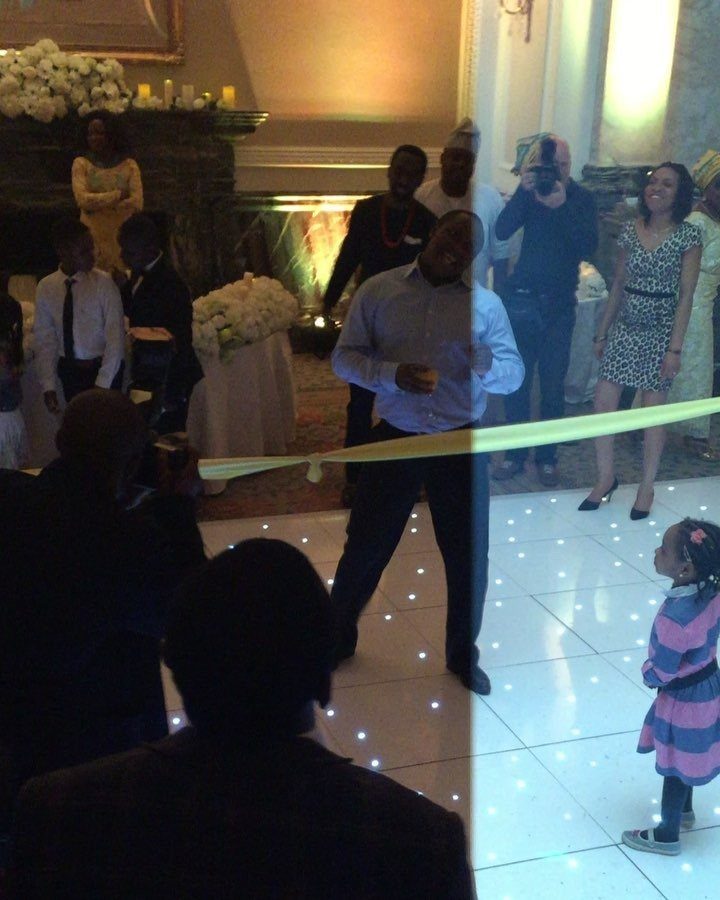
A stick held horizontal, guests bending backward to pass underneath without touching it, the bar lowered an inch or two each round until one person remains.
A yellow sash works; so does a bamboo pole or a pool noodle wrapped in ribbon.
The game turns on the fall. Drunk guests tip backward onto the floor, the crowd cheers, and someone photographs the moment.
That is the appeal and the risk: brief humiliation in exchange for group laughter. Choose your bar and your floor with both in mind; a slick surface and a hard stick make for worse falls than grass and foam.
One song is usually enough. Any longer and the line thins.
12. Board Game Table
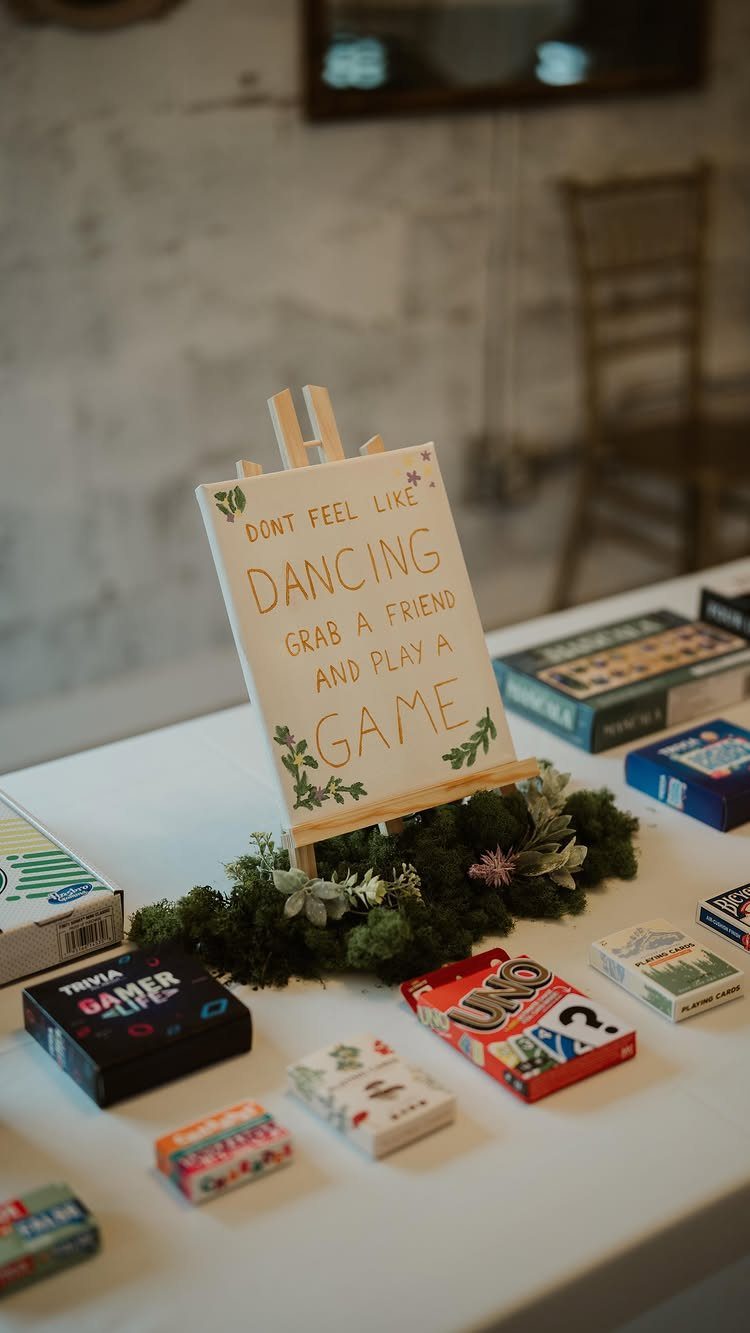
A table with cards, Uno, and trivia becomes a refuge for guests who would rather talk than dance.
Choose games that finish quickly, not ones that trap guests in a long commitment while the reception moves on.
Uno, a short trivia stack about the couple, or a card game most people already know all work. Leave a small dish of pens and a notepad for scorekeeping.
I would set this near the bar but not in the traffic lane to the restrooms, where passersby jostle the table. Check once during the night that pieces have not wandered off.
13. Hook a Duck
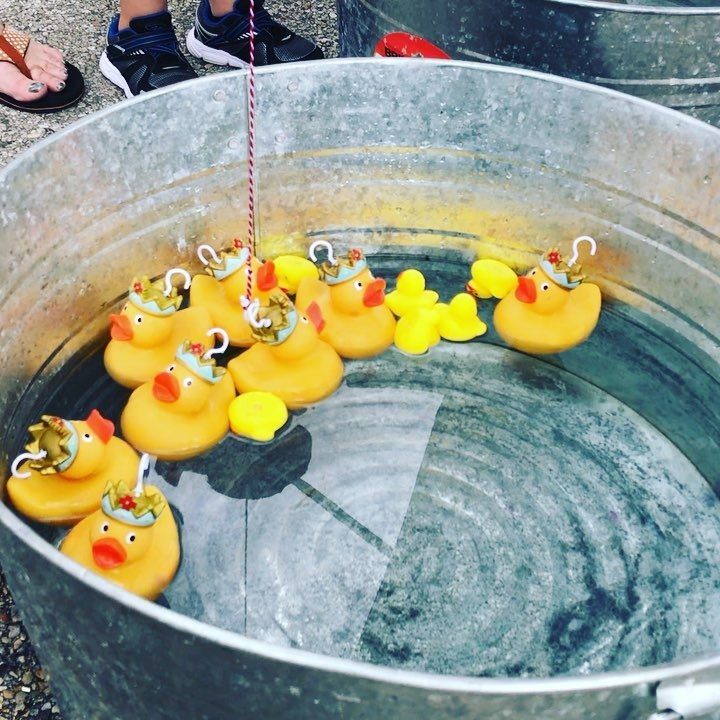
Guests fish with poles to hook a duck and claim a prize.
The version I like best swaps prizes for place cards. Each duck carries a guest’s name and table number, so everyone plays whether they want to or not, and the shared incompetence breaks ice between strangers.
You will need enough ducks that the first guests do not empty the tub, and someone to reset ducks that drift to the edges.
Small prizes work too, though the place-card version justifies the setup cost without adding a prize budget. Either way, keep towels nearby; wet sleeves are not the memory you want guests leaving with.
14. Wedding Hammerschlagen
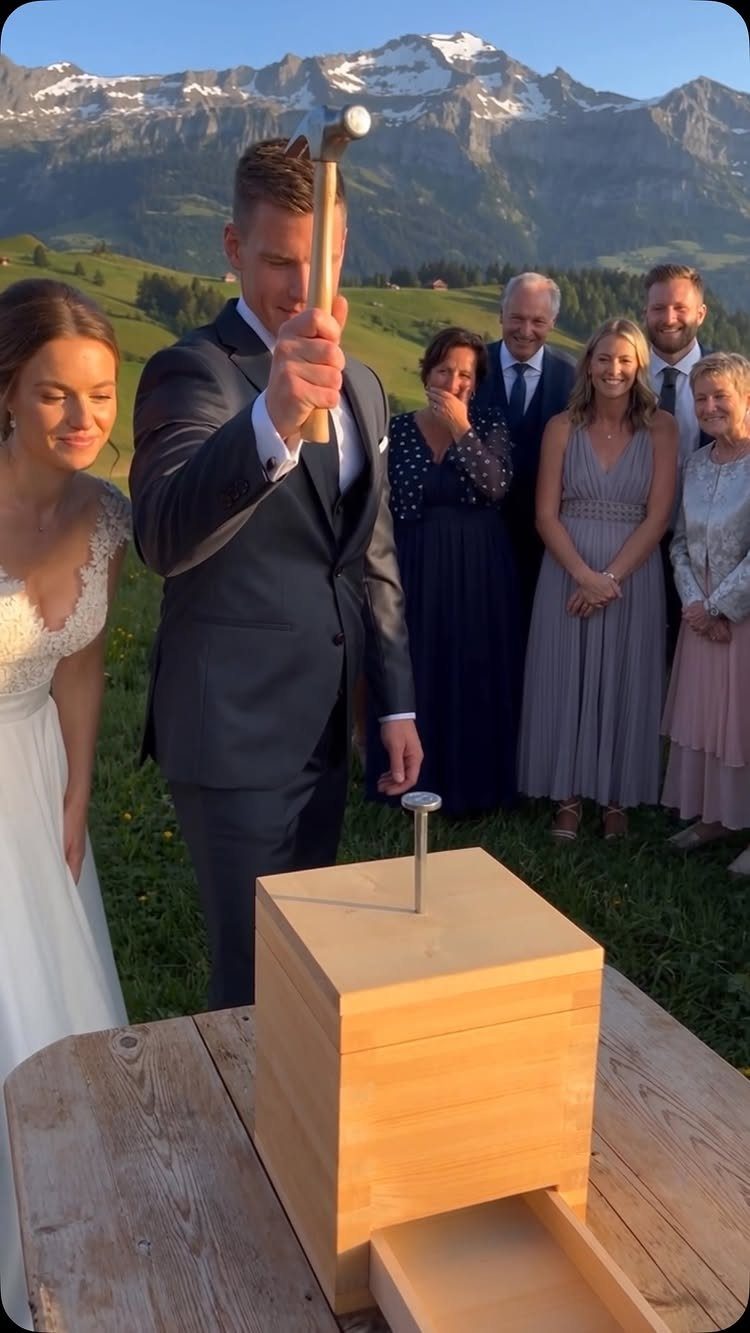
A wooden block, a nail driven part way in for each player, and a hammer passed from hand to hand. Guests take turns striking their nail squarely in one hit; the first to sink theirs flush wins.
Indoors, check with your venue about noise and damage to floors; a missed swing dents more than pride.
A soft wood like pine lets nails sink in a reasonable number of turns, and a cross-peen hammer, the kind with a wedge-shaped back, is traditional.
I would keep rounds short and let winners bow out, or the same few guests dominate while others watch. One block handles enough nails for several players at once.
15. Badminton Lawn Setup
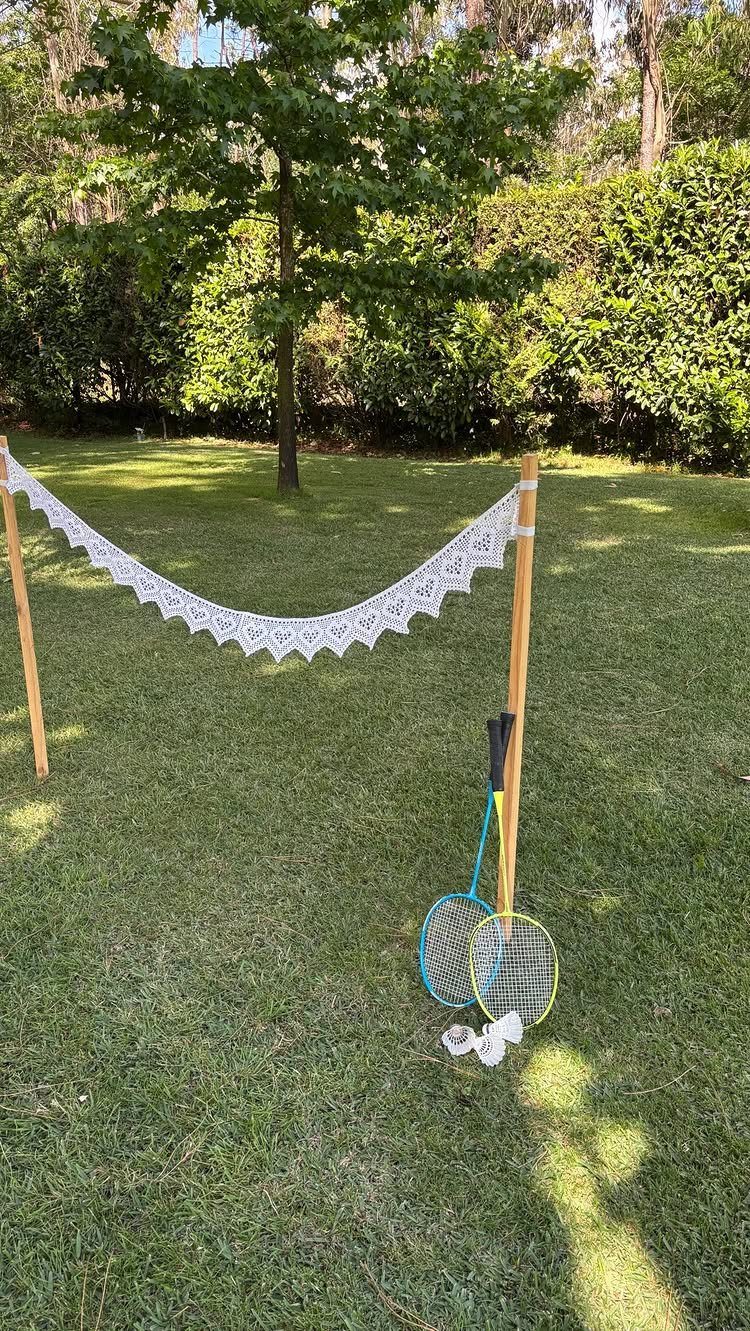
A net stretched between posts, rackets and shuttlecocks waiting in the grass. White lace netting photographs softer than standard mesh and fits a wedding’s tone better than bright nylon.
Lace sags more than sport netting, so the line needs tightening before play starts and possibly again after the first few rallies.
Wooden posts driven into grass hold well enough for casual volleys; concrete or decking needs weighted bases instead. Shuttlecocks wander in wind, so this one suits calm afternoons better than gusty ones.
I would set it where missed shots do not land in the aisle or the cake table, and post a sign that invites guests to rotate in rather than letting one pair monopolize the net.
Importance of Wedding Games
Games do more than fill time between the first dance and last call. They give guests who have never met a reason to stand shoulder to shoulder and laugh at the same thing.
The hour after the ceremony is the hardest stretch to pace. The couple is off taking portraits, the bar may not be open yet, and guests are stranded in that limbo of waiting with nothing to do.
A lawn game or a table setup turns that gap into something guests remember fondly instead of checking their phones.
Games also put the couple in front of everyone in a way the formal parts of the night do not.
The shoe game or the money dance lets guests see you relaxed and joking, not just posed for photos. That matters more than people admit when they are planning.
Your reception is a celebration of love, but it’s also a party. Wedding games are a simple, thoughtful way to help guests loosen up, laugh together, and connect throughout the night.
— Minted
Choosing the Right Games
Match the game to the clothes people are wearing. A guest in a rented tux or a long silk dress cannot dive for a frisbee, and they should not have to.
Keep participation optional.
Some guests will grab a cornhole bag the minute they see it; others came to talk to relatives they rarely see and will resent being pulled away. Set games where people can join or ignore them.
Have something for guests who would rather sit.
Incorporating Games Into the Schedule
Guests tend to wander between drinks and hors d’oeuvres during that first hour, so cornhole or ladder toss set out on the grass gives them something to do besides check their phones.
Guests are standing anyway, drinks in hand, and the energy is social without being fixed to tables yet.
Move table games and quieter options to after dinner, when older guests and non-dancers start looking for alternatives to the dance floor.
The board game table or the Connect 4 setup keeps them in the room and part of the night instead of slipping out early.
Announce anything that needs a crowd, like the shoe game or the money dance, between formal moments when you already have everyone’s attention. Do not interrupt a full dance floor to gather people; wait for a natural lull.
Prizes for Games
Small prizes turn a mild diversion into something guests commit to. Mini candles, gourmet chocolates, local coffee gift cards, or potted succulents all work, and none of them strain a budget already stretched thin.
The prize does not need to match the effort; a guest who wins a dollar-store candle still gets the satisfaction of winning.
For games where almost everyone plays, like hook-a-duck with place cards, skip prizes entirely. The place card itself is the reason to play, and adding a gift on top complicates what should stay simple.