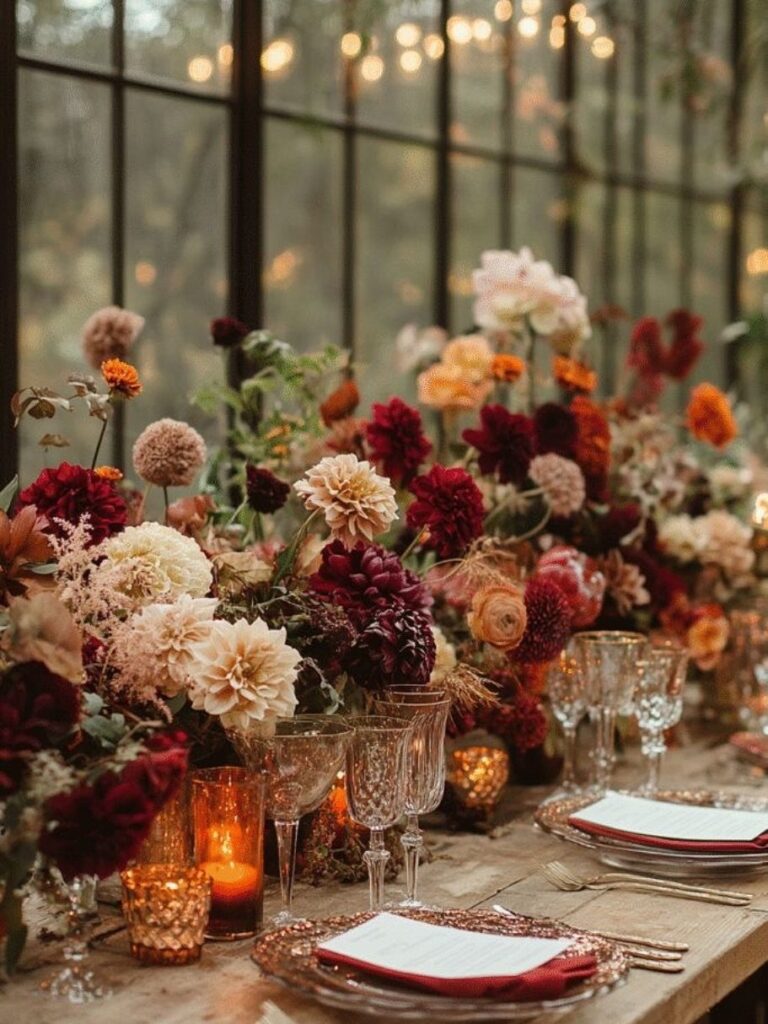
The 12 ideas below run from a few bud vases gathered from the grocery store to weighted gold bowls that need a table sturdy enough to hold them.
Your venue’s formality level, not your flower budget, is what narrows the field. A hollowed pumpkin with wet foam inside, for instance, only works if your florist has handled organic containers before the stems collapse before cake.
1. Deep Burgundy and Black Floral Centerpieces
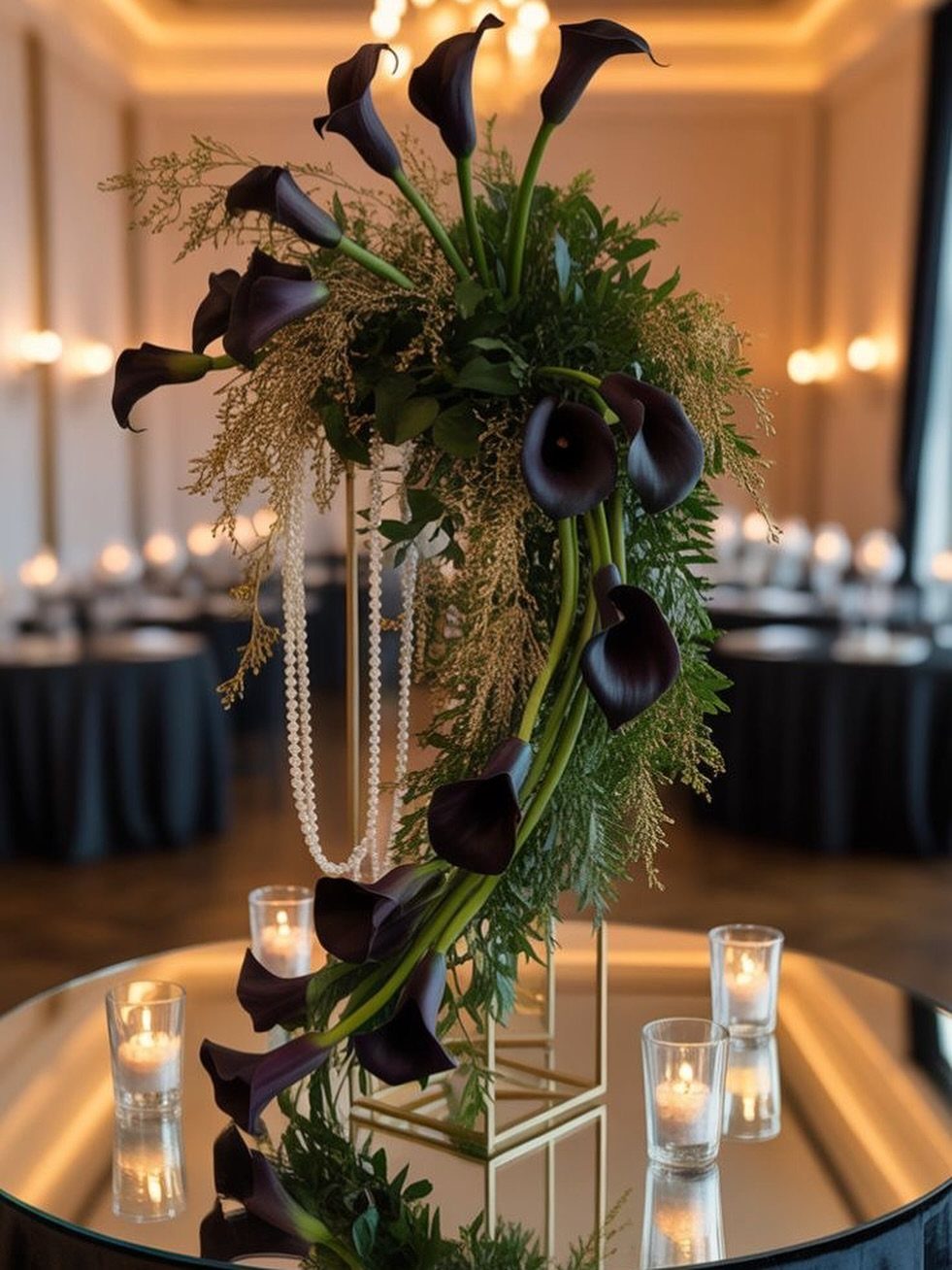
Deep burgundy and black florals carry a formality that works for evening receptions where you want the tables to feel dressed up rather than rustic.
The pairing reads as jewel-toned rather than gothic when you keep the blooms lush and the greenery minimal.
Gold stands or vessels warm the palette and keep it from flattening under venue lighting.
If burgundy feels too dark for your space, Aaron and Nicole’s wedding shifted toward dusty rose in the same family, which still coordinated with the deeper table linens without overwhelming a candlelit room.
2. Candles with Floral Centerpieces
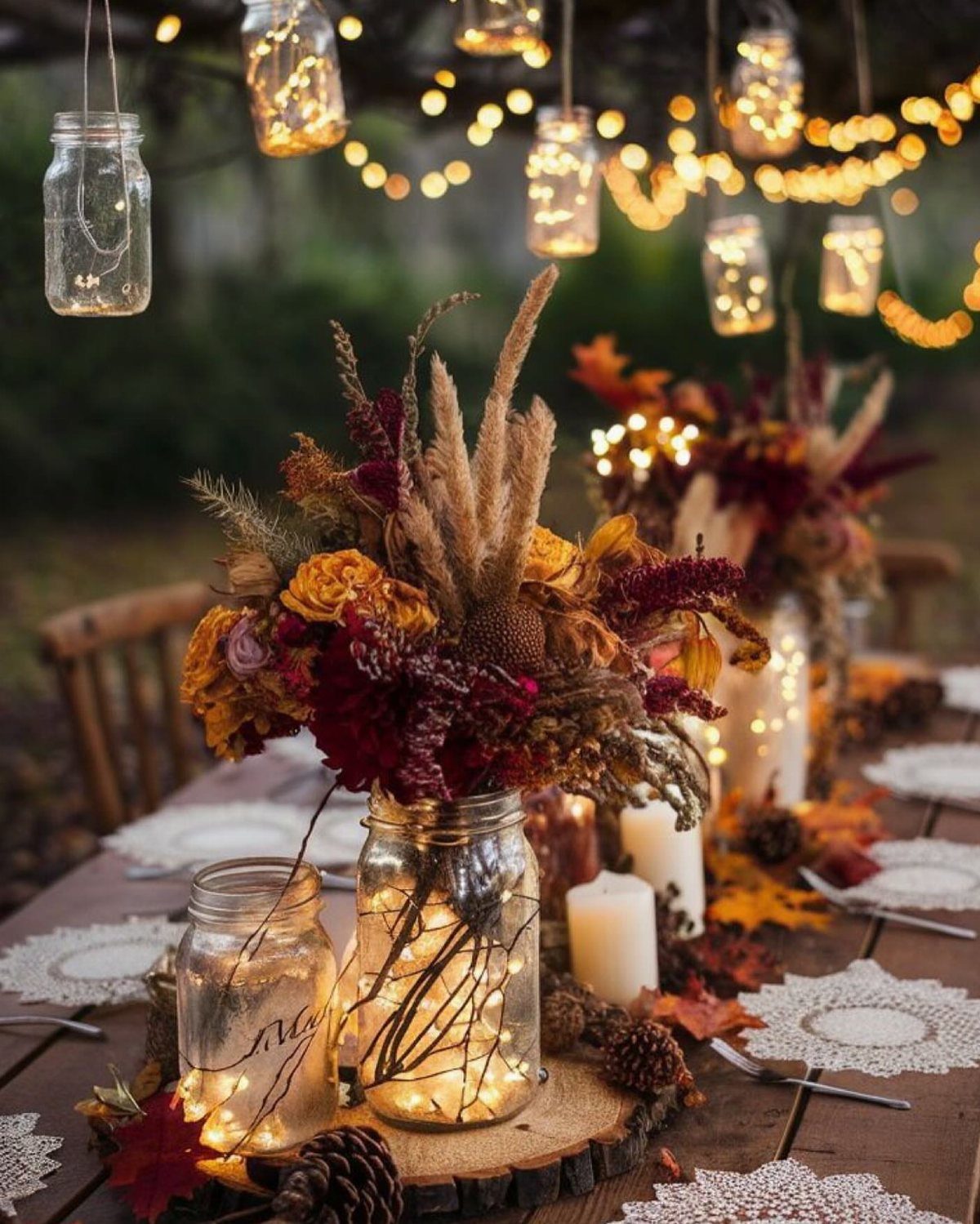
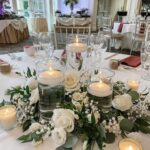
Candles turn a floral centerpiece into something that performs across the whole evening, not just the daylight hours of setup.
Height variety keeps the eye moving: votives tucked between stems, pillars standing clear, maybe a taper or two if your tables are wide enough that no one leans across flame.
Fairy lights inside mason jars alongside dried florals handle the outdoor problem where wind threatens open flame.
Indoors, colored wax in orange or deep red reads more deliberately seasonal than standard white. Water-filled votive holders catch light from nearby tables and double the glow without extra candles.
3. Dried Florals
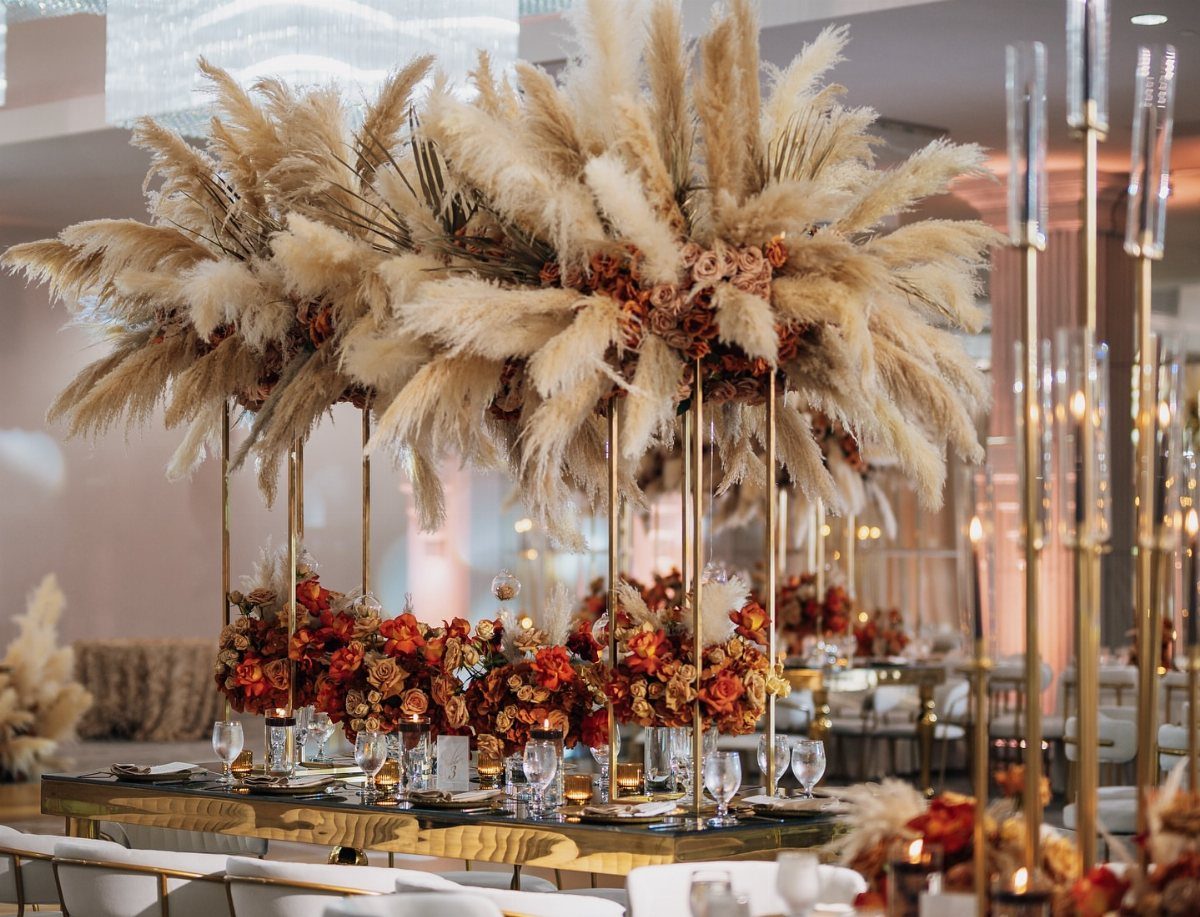
Dried florals mark fall as the season when abundance tips toward scarcity, and the arrangement carries that story without needing explanation.
Pampas grass gives the feathery volume that brides often want from dried materials, and it costs less than you’d expect for the space it fills.
Hang-dried flowers keep their shape better than pressed ones if you’re assembling this yourself.
Feathers mixed in push the texture toward something that reads as intentional rather than leftover. This style suits couples who want the boho note without importing full pampas trendiness into a traditional venue.
4. Lighted Centerpieces
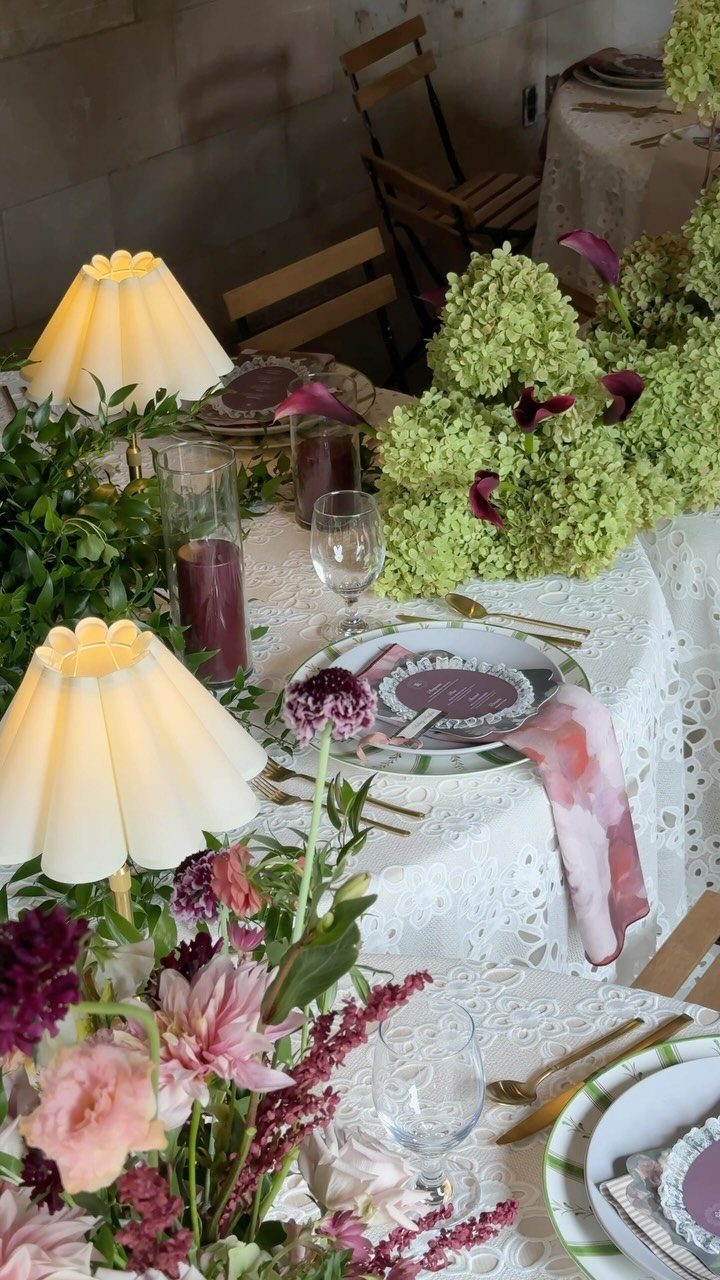
Small lampshades clipped onto votive candles give each table its own pool of light, which flatters faces and makes phone photography easier after dark. Pleated paper lanterns read as vintage without requiring actual antiques.
If budget keeps you from lighting every guest table, ceremony florals can migrate to reception tables with battery-operated fairy lights added.
The same flowers read as new when the lighting changes. Cylinder candles in glass hurricanes give a similar effect with less fuss, though they do not draw the eye upward the way a shaded lamp does.
5. Floral Garlands
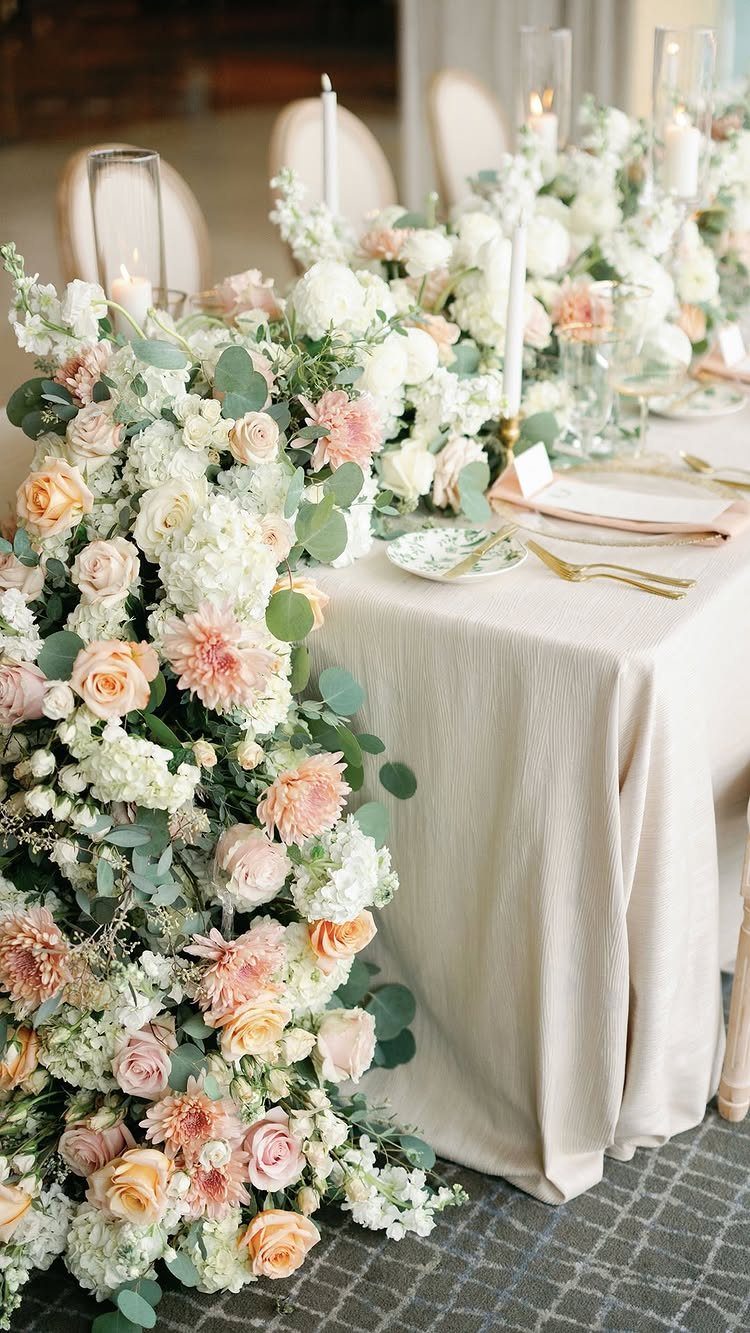
A garland that matches your centerpiece turns individual tables into one continuous display, which matters in venues where guests circulate rather than staying seated.
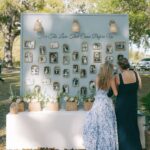
Cindy and Kelton ran theirs across a gift table where cohesion photographs well, but the same logic holds for long farm tables where separate centerpieces would fight each other.
A garland that spills to the floor requires checking your venue’s rules on open flame near fabric and their tolerance for petals dropping during the event.
Shorter garlands, or ones contained to the table surface, trade drama for practicality and easier cleanup.
6. Pumpkin Floral Centerpiece
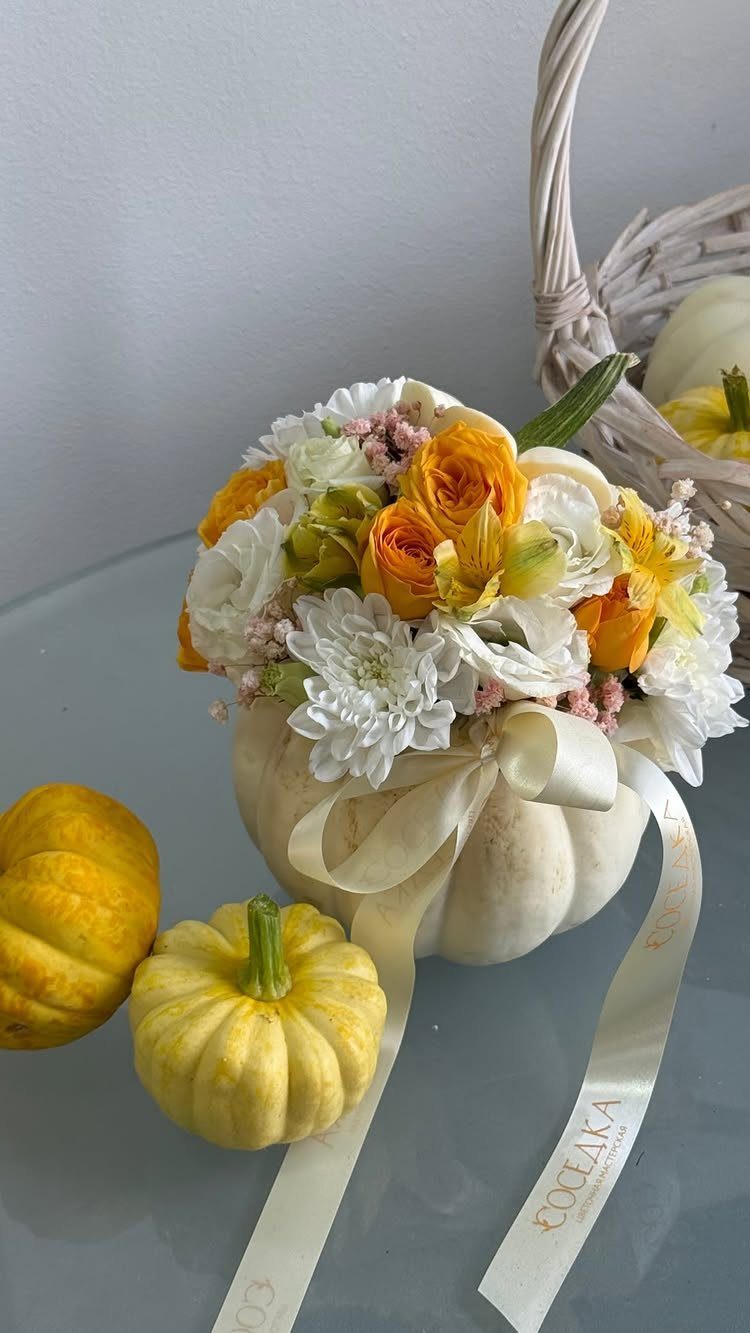
A hollowed pumpkin as vessel gives you the fall reference without the preschool craft aesthetic of painted orange gourds. White pumpkins read as neutral enough for formal settings, especially when the florals inside stay tight rather than sprawling.
Mini squash as satellite pieces extend the theme across the table without requiring more full arrangements.
The ribbon on this one carries branding, which suggests a corporate or sponsored event; for a wedding, I’d skip the logo and let the pumpkin speak for itself.
Check that your florist has worked with wet foam inside organic containers, or the stems will drink unevenly and the arrangement will collapse before cake.
7. Gold Bowl Autumn Centerpiece
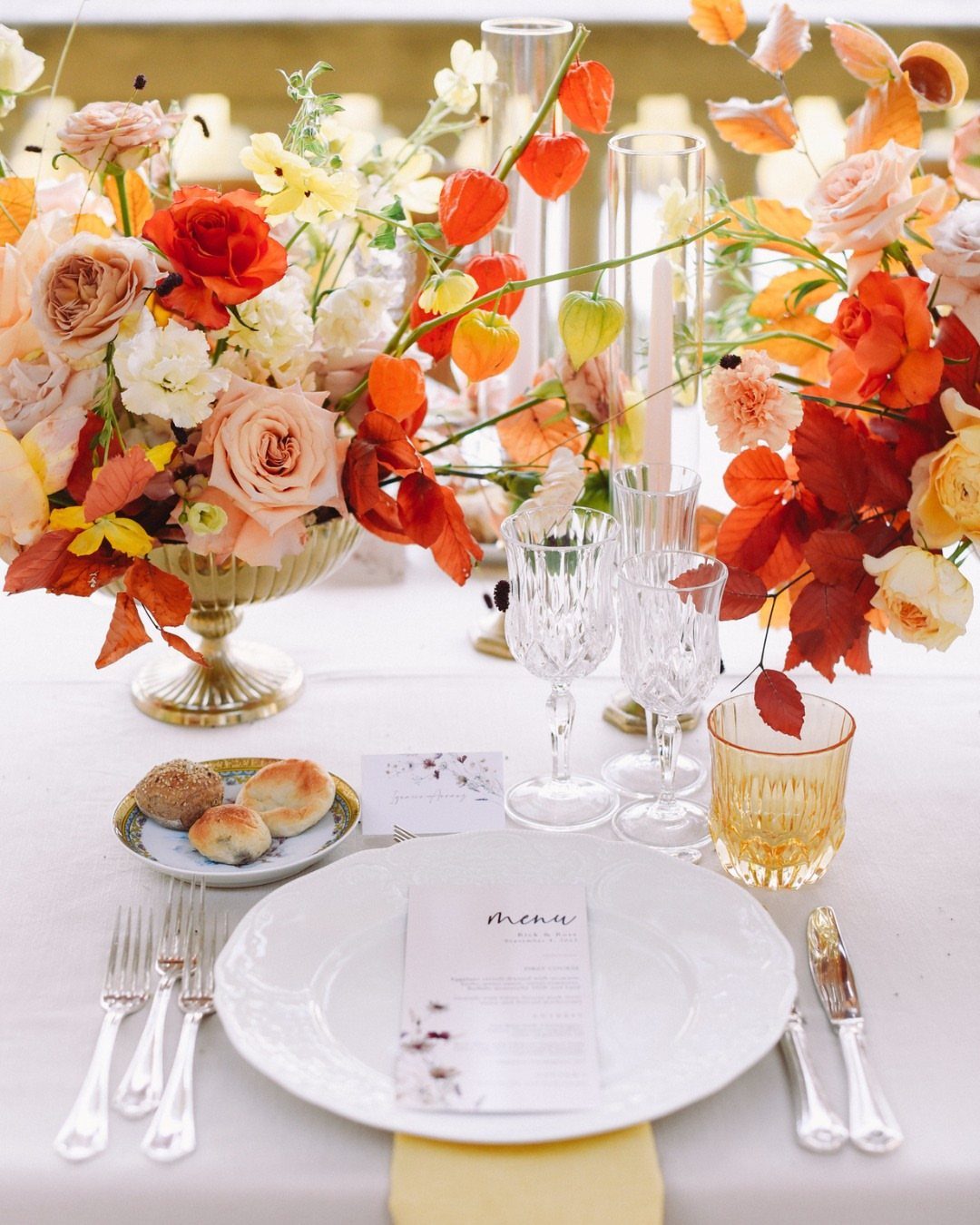
Gold bowls carry autumn centerpieces into formal territory where mason jars would feel out of place. The footed base lifts the arrangement to eye level across a seated table, and the metallic surface amplifies whatever candlelight sits nearby.
Amber goblets at place settings extend the gold thread without matching exactly, which keeps the table from looking catalog-ordered.
Check that your venue’s tables can handle the weight; a full arrangement in solid metal reads heavier than glass or ceramic. For a smaller guest count, this vessel works as a head table accent rather than repeating across every table.
8. Wood Slice Floral Centerpiece
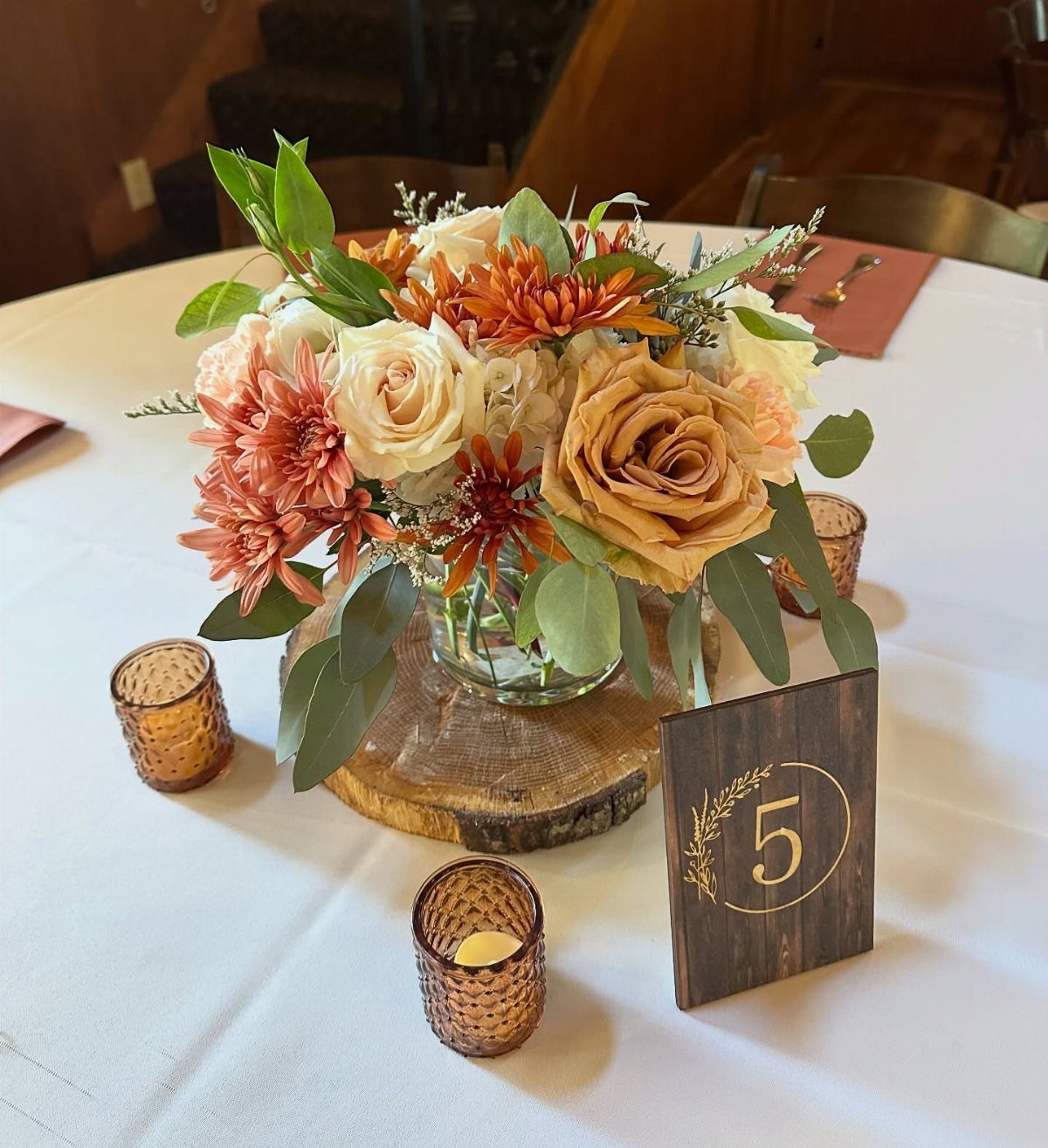
Wood slices ground a centerpiece in the rustic register that fall color already suggests, and they do it without building something that blocks sightlines across the table.
Sitting a glass vase on top of the wood slice protects it from water damage and keeps the arrangement stable.
Amber votive holders repeat the warmth in the wood and tie the whole piece together.
If your tables are round, measure the slice against your place settings; too wide and it becomes a plate obstacle. Simple wood slices cost less than finished chargers and serve the same visual purpose.
9. Tall Autumn Floral Stand
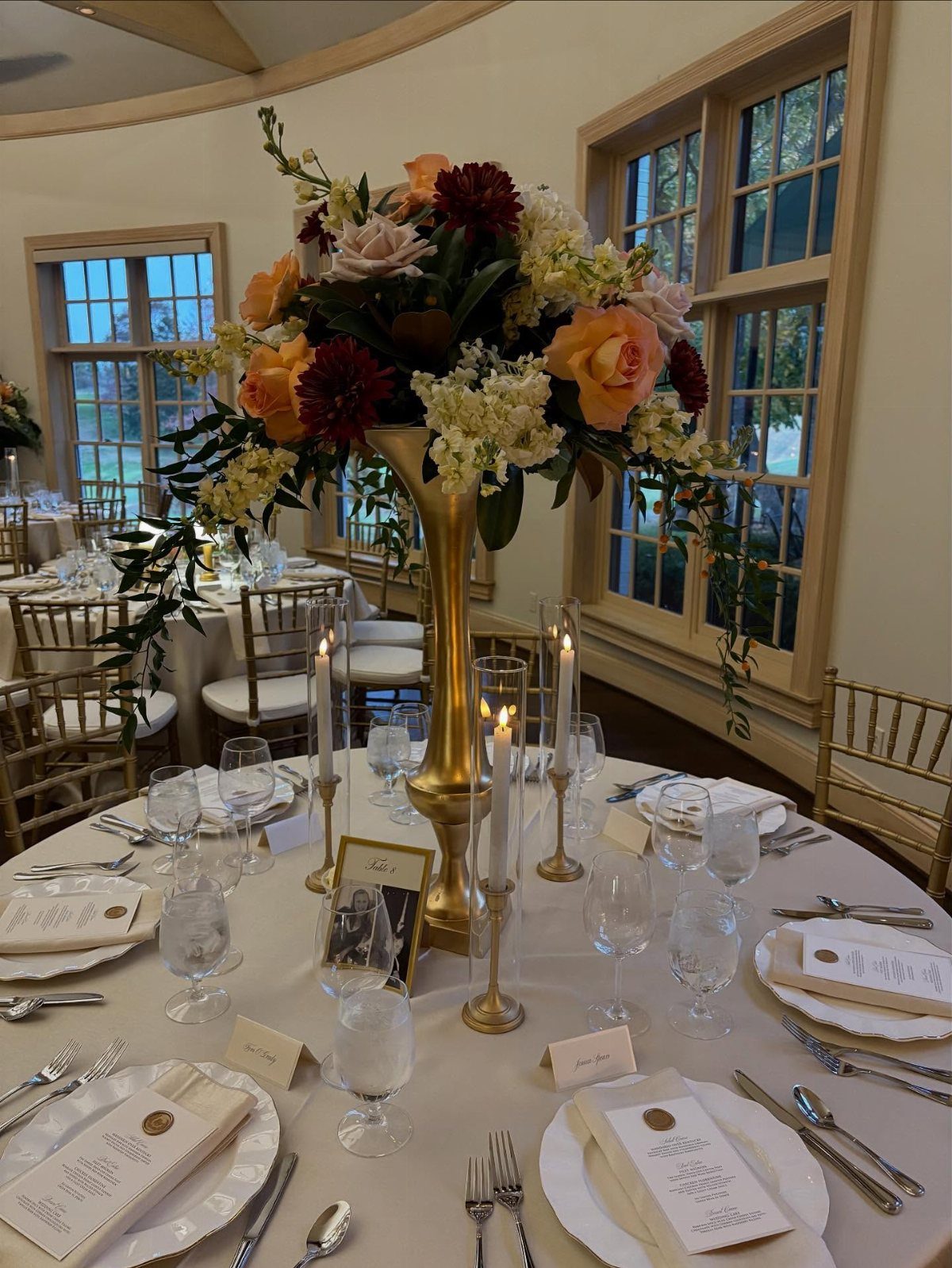
Tall stands solve the problem of centerpieces that need presence without swallowing table space needed for bread baskets and wine service.
The elevation puts flowers at face level for standing guests during cocktail hour, then performs as a vertical accent once everyone sits.
Gold keeps the autumn palette from drifting too country, though brass or bronze would read similarly. Seasonal stems like amaranthus and dried grasses hold up well out of water for the hours a stand arrangement requires.
Check ceiling height before committing; these need breathing room above the stand to avoid looking cramped. A shorter stand or a seated arrangement trades drama for safety in a tent with low poles.
10. Bud Vases with Fall Blooms
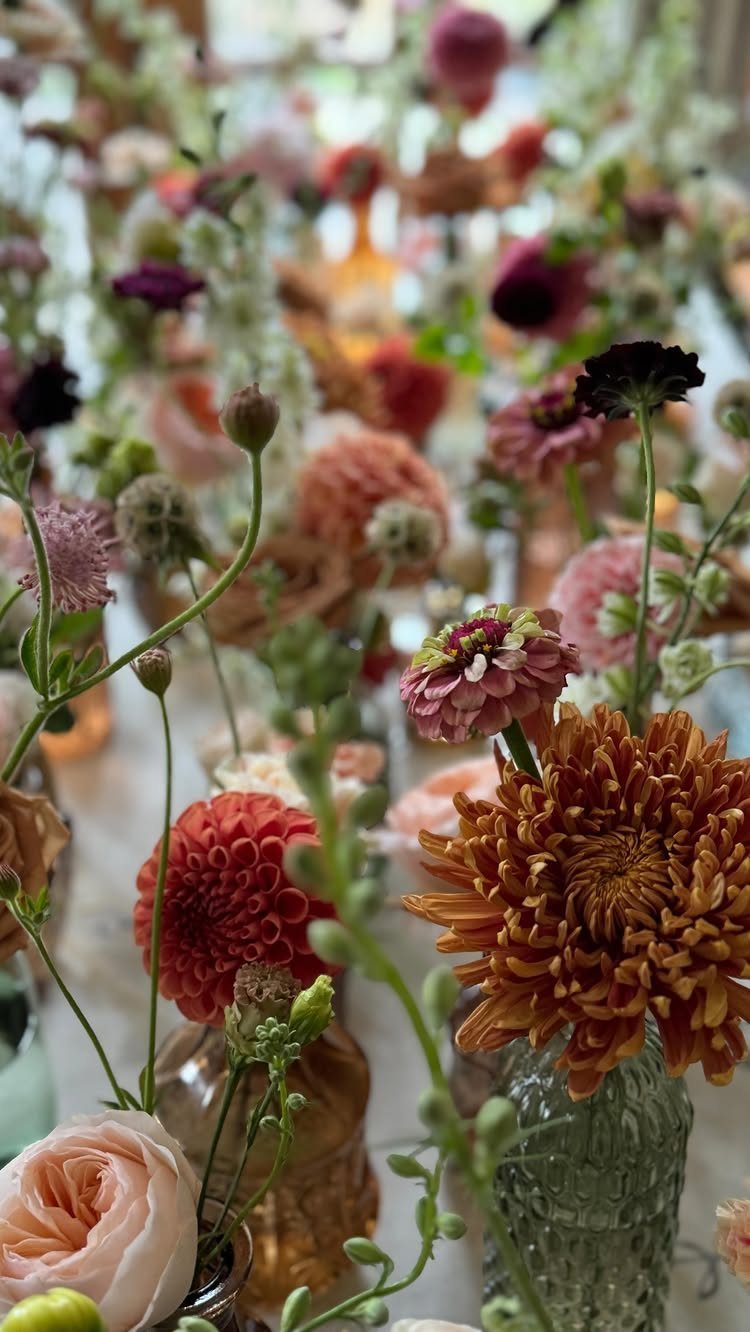
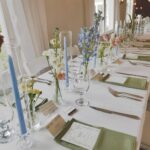
Bud vases let you assemble centerpieces from grocery store bunches or farmers market runs without trusting one large arrangement to carry the whole table.
Clustering several small vases along the runner gives guests something to look at from every seat, and the scattered rhythm reads more relaxed than a single formal piece.
Varying the glass color and vase height keeps the grouping from looking accidental. Orange, pink, and burgundy blooms mixed together can feel busy; unifying by flower type instead, one variety per vase, reads as more deliberate for a formal reception.
Cleanup is simpler than a garland, though a knocked-over bud vase means water on linen rather than on wood.
11. Rustic Wooden Box Centerpiece
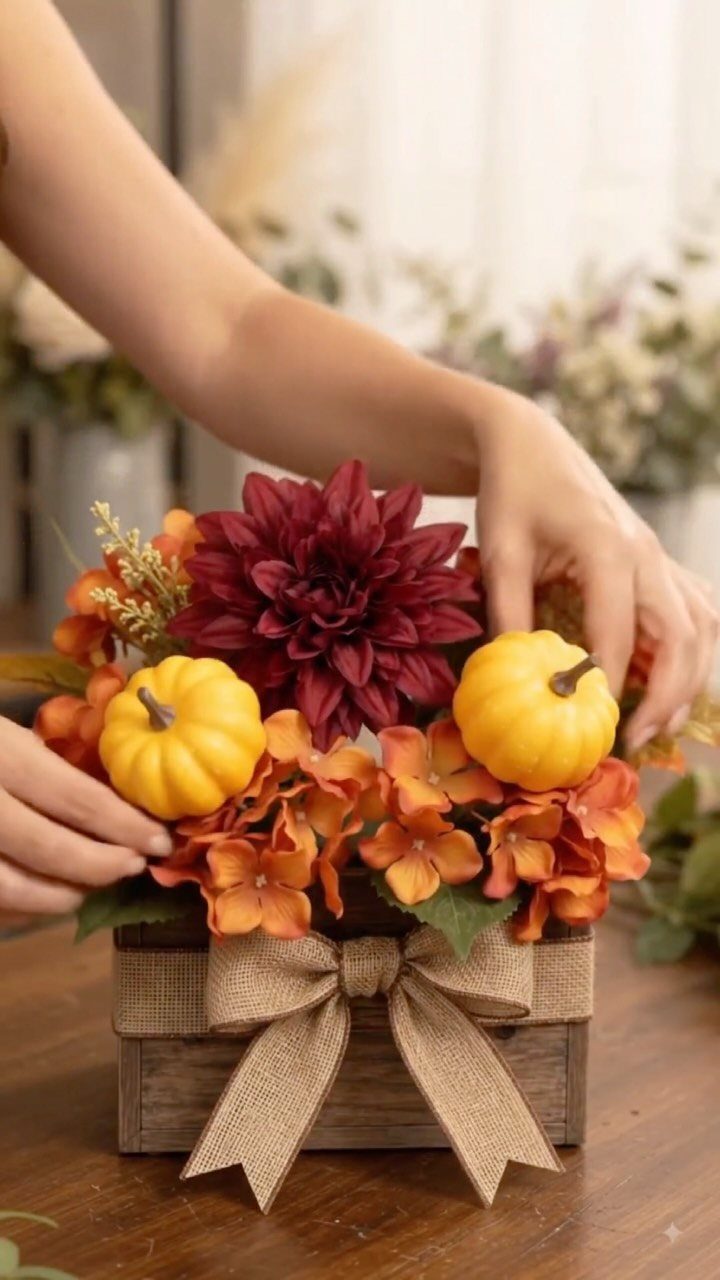
A wooden box with a burlap bow commits fully to rustic, which suits barn venues and outdoor tents where crystal would feel apologetic.
The miniature pumpkins tucked among the blooms make the season explicit without the hollowed-vessel trick of the earlier pumpkin centerpiece.
Burgundy dahlias against orange hydrangeas give the depth that single-color arrangements often miss in natural light. A small box keeps it from dominating a table meant for conversation.
Check that the wood is finished or lined; raw wood wicks water and can stain your linen before the night is over. Burlap sheds, so tie the bow tightly or expect fiber in the soup.
12. Maple Leaves and Magnolia Arrangement
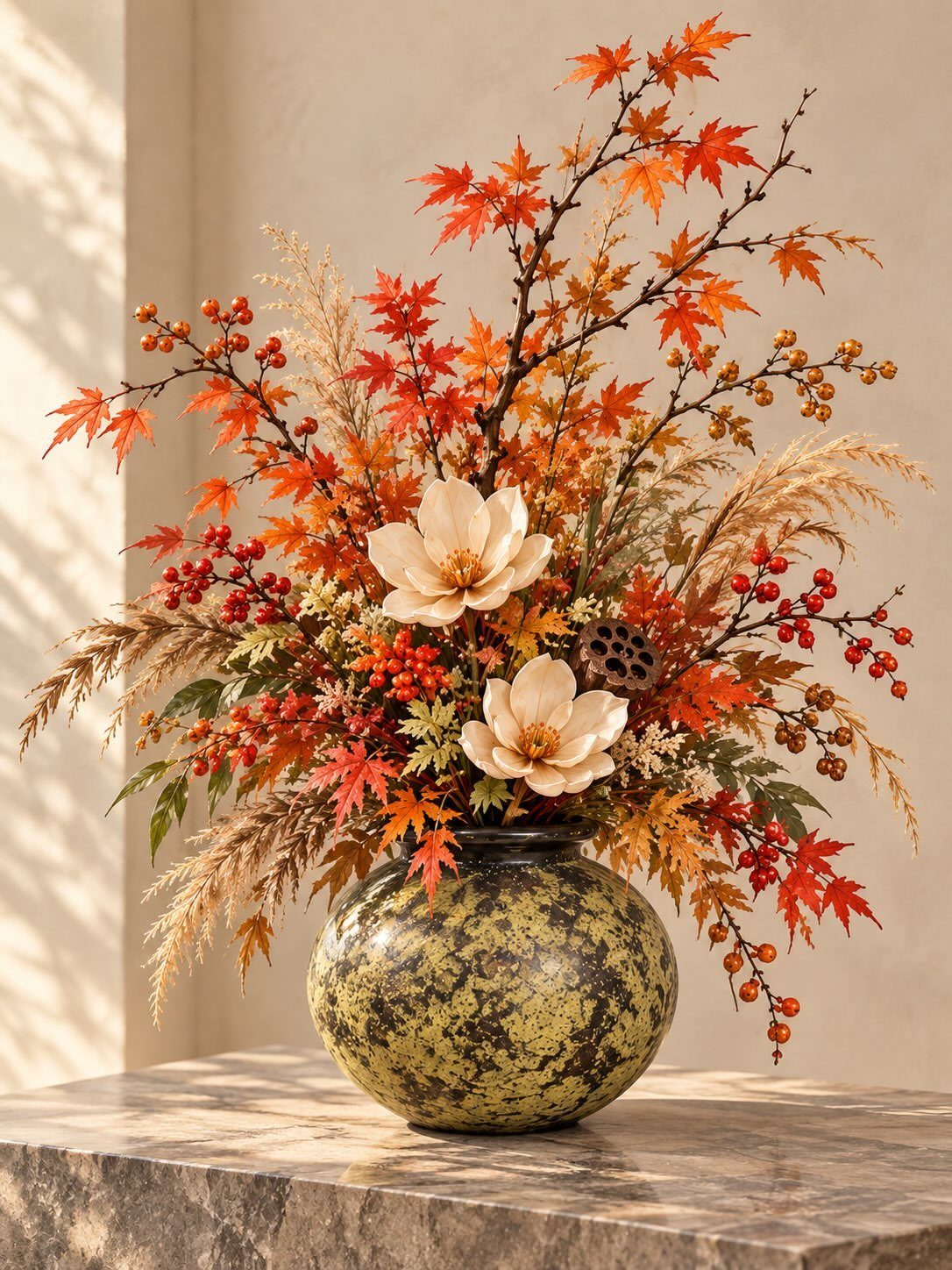
Maple branches and magnolia make a centerpiece from foliage rather than blooms, which lasts longer out of water and costs less at the florist counter.
The ceramic vase here is heavy enough to balance woody stems that would topple in glass, and the neutral glaze lets the color come from the plants.
Dried ornamental grasses and berries extend the texture range without adding more flower types. This arrangement suits the couple who wants fall reference without literal pumpkins or gourds on the table.
A single large piece like this needs room; on a standard round with a full guest count, it either shrinks or moves to a buffet or escort card station where traffic passes rather than pauses.
Seasonal Themes
Autumn’s color story writes itself from what is already dying back. The stems stay whole when you hang-dry flowers, so the shape stays recognizable even as the color drains.
The table underneath matters as much as what sits on it. Velvet or satin under a centerpiece reads formal where burlap reads barn.
Gauze or cheesecloth keeps things minimal without looking unfinished. A wicker basket as vessel brings the apple-picking afternoon into the room without requiring explanation.
Budget-friendly Options
Foraged elements cost nothing but the time you spend gathering them.
Maple branches, berries, and dried seed heads from a neighbor’s yard or public land extend a florist order without extending the invoice. Check local regulations first; some parks prohibit removal, and a fine erases the savings.
DIY arrangements skip the labor markup built into professional pricing.
You pay for stems only, not for the hours someone else spent in a cooler deciding which angle a dahlia faced. The trade is your evening and the risk of uneven results.
Dried materials bought in bulk keep for weeks without water, which means ordering early when prices dip rather than rushing the week before.
Layering Textures
A table runner is not background; it is the first layer the centerpiece sits against.
Burlap or macramé under a formal arrangement creates friction that makes both elements more interesting than either alone. Velvet under rustic flowers does the same in reverse.
Wood slices under glass vases protect the table and repeat the autumn reference without requiring another literal pumpkin.
Wicker baskets as vessels bring the apple orchard to the table.
The weave catches light differently than ceramic or glass, and the irregular surface forgives stems that would look crooked in a cylinder. Line them or the water stains; raw wicker wicks moisture the way raw wood does.
Repurposing Decor
Ceremony flowers can migrate.
The arch arrangements or aisle markers that read as backdrop at 4:00 PM read as fresh centerpieces by 6:00 PM with battery lights added. The same stems in changed light become a different decoration entirely.
This only works if someone moves them.
Assign the task or the flowers stay where the ceremony left them, wilting in a spot no guest sees again. A day-of coordinator handles the transfer; without one, a designated cousin with a cart and a checklist suffices.
Dried arrangements need even less transition. Pampas grass from the ceremony arches over the reception tables unchanged, the same feathery plumes performing in both rooms without water or careful handling.
Frequently Asked Questions
What are some good centerpieces for an autumn wedding?
Seasonal flowers, dried florals, and rustic elements all work well. Tall stands let dahlias and amaranthus stay fresh-looking even without water, and dried pampas grass stretches a centerpiece budget across more tables than you’d expect.
Candles in varied heights turn any floral piece into something that performs after dark, and hollowed pumpkins or wood slices ground the look in the season without feeling like craft projects.
What flowers are good for fall floral arrangements?
Dahlias, amaranthus, ranunculus, chrysanthemums, cosmos, and celosia all fit the season.
Sage blooms and lisianthus add softer notes if you want variety. Maple branches paired with magnolia leaves last the whole reception without a vase, and they read autumn without resorting to the usual table clutter of mini pumpkins.