Garden estate weddings run from a brick courtyard with uneven pavers to a hundred-acre property with tiered stone terraces, string lights, and a marquee tent on the lawn.
The single thing that narrows the list is whether your guests stay on site or leave after the last dance, because that decides whether you are filling a room block or renting grandeur no one sleeps under.
A working greenhouse in Arizona, for example, pushes past comfort by March afternoon unless you confirm HVAC capacity for your head count, not just square footage.
1. The English Manor
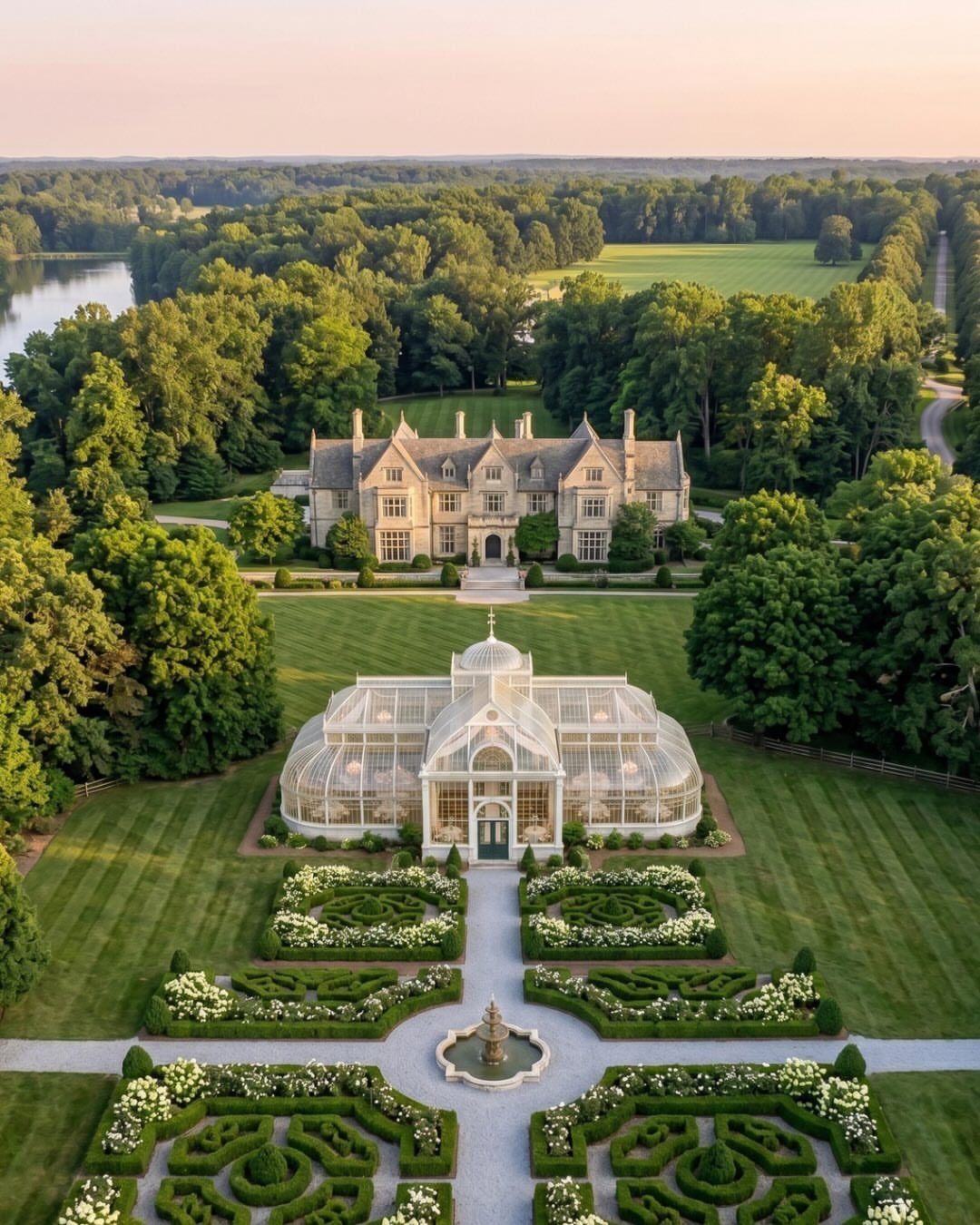
A stone manor with a working garden behind it gives you two ceremonies for the price of one site: guests gather on the lawn for vows, then drift through the same plantings with drinks in hand while the staff flips the chairs.
The parterre gardens and fountain at an English manor are the kind of detail that photographs itself, but its real value is giving guests room to wander during speeches.
Check whether the garden is maintained by the venue’s own staff or a separate grounds crew; the answer affects whether you can request specific blooms in season.
The manor house itself handles a rain plan without renting a tent. That trade-off, covered structure against open sky, is worth weighing if your date falls in hurricane season.
Indeed, across the weddings published by Vogue, a garden has served as a perfect backdrop for many couples, from the grand landscaping of historic Lake Como villas and the grounds of English country estates to the intimate backyard of a family home.
— Vogue
2. Mediterranean Garden Wedding Venues
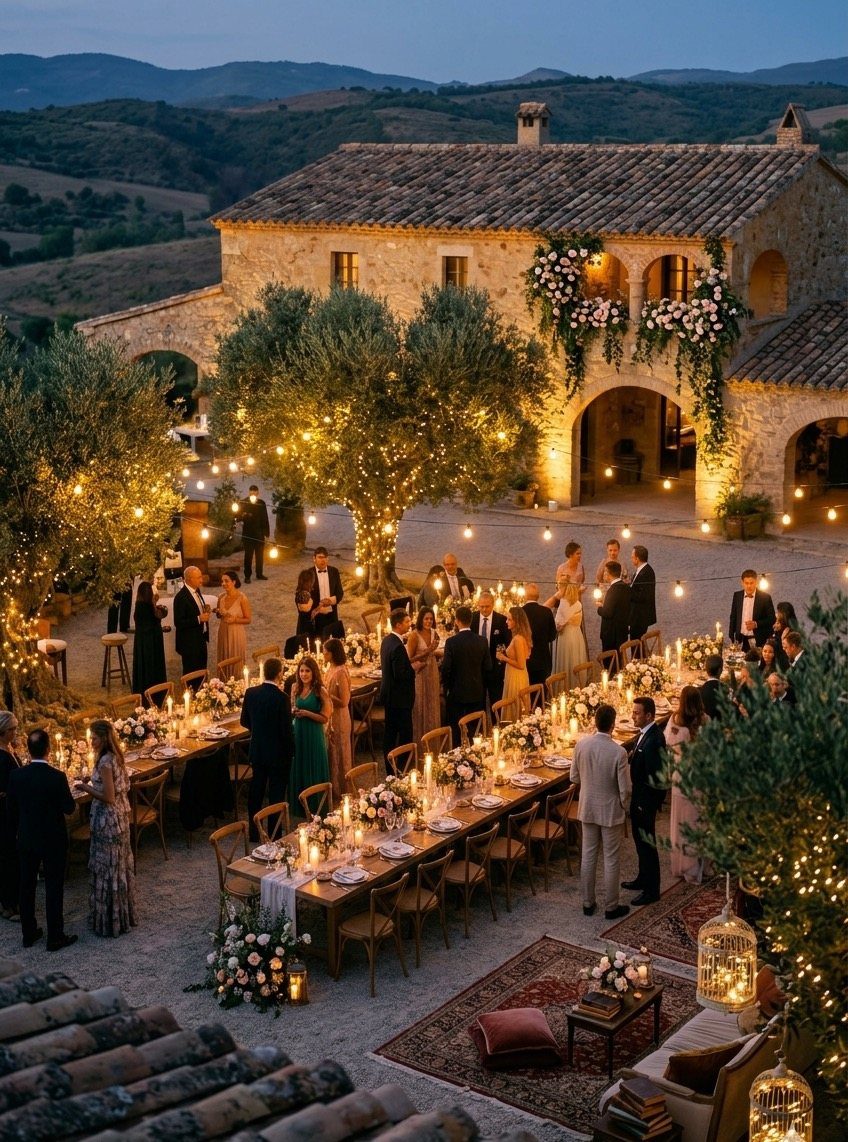
California’s garden venues sort into types that behave differently on the day. A working orchard gives you vendor freedom but requires more coordination; a Mediterranean property with full service costs more per head and decides your timeline for you.
Olive trees and stone walls are what "Mediterranean" now names in wedding planning, drawn from estates that were built or restored with events in mind.
Heat is the variable. Northern California inland valleys can run hot in September; coastal fog at Carmel or Santa Barbara can drop the same date by thirty degrees or more.
Ask specifically about afternoon wind, not just average temperature, because long candlelit tables with tall arrangements become a liability when gusts pick up.
I would book the multi-day estate only if enough guests need rooms to justify taking over the whole property. Otherwise you are paying for accommodation that sits empty while everyone drives home.
3. Lawn Ceremony Surrounded by Tall Hedges
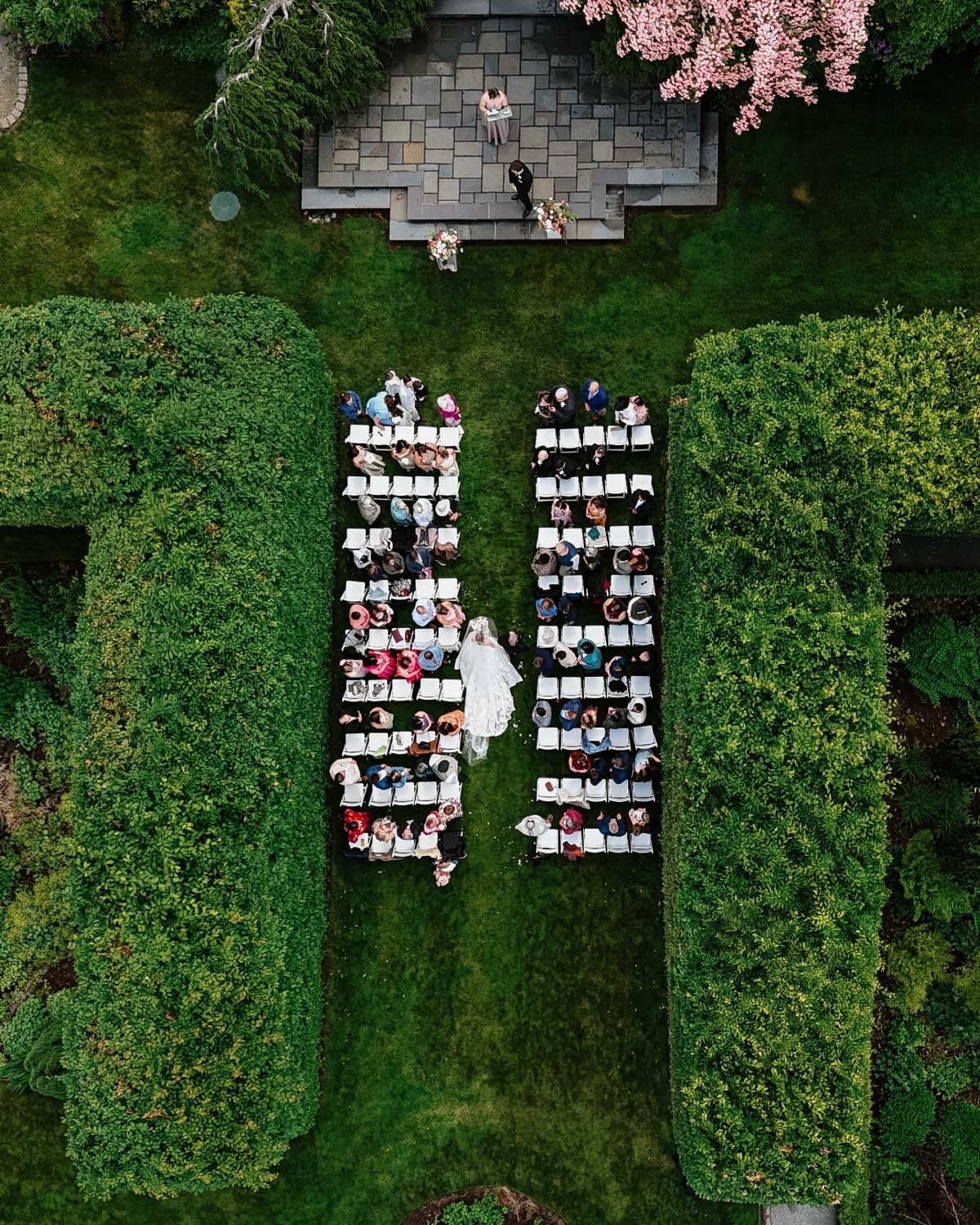
Tall hedges do two jobs: they block the view you do not want and frame the one you do. From ground level the effect is walking into a room with green walls and no ceiling.
A manicured lawn at this scale needs irrigation, which means soft ground after rain.
Ask the venue how many days of sun it takes to firm up, and whether they have a boardwalk or aisle runner that can carry the wedding party over wet grass without heels sinking.
The hedge variety matters for photos: yew photographs as solid black-green, hornbeam lighter and more textured. Either works, but the look differs enough that I would request a site visit at the same hour as the ceremony.
4. Garden Lawn Reception Under String Lights
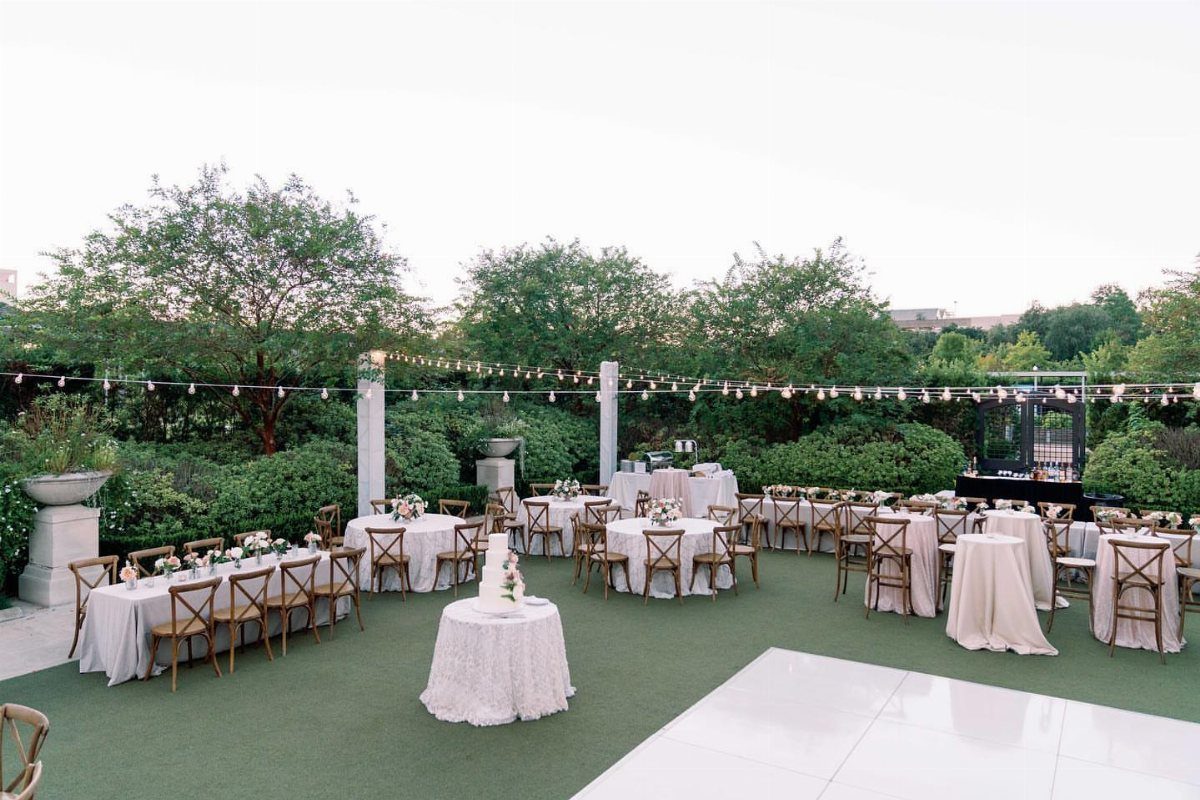
Bistro lights over an open lawn turn a reception site into a room after dark, but their real work happens during setup.
Mature trees at the perimeter are where the rigging goes, and the distance between them sets your table layout.
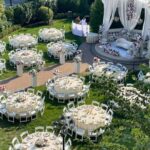
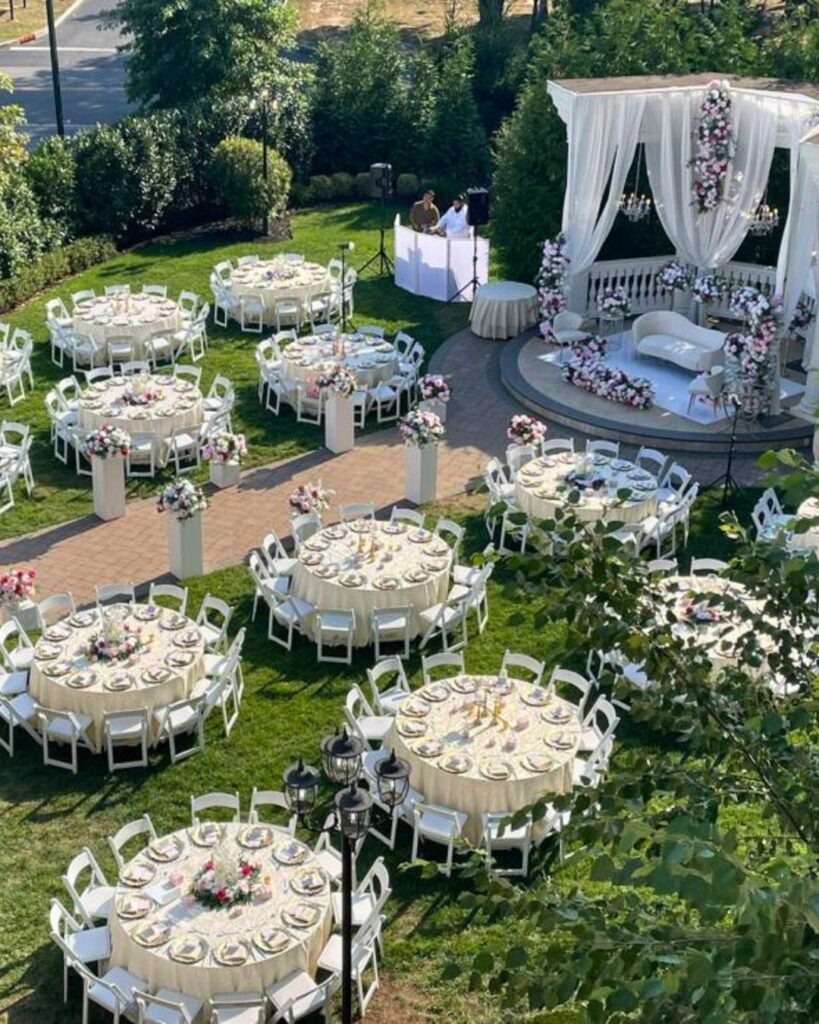
White linens on wooden chairs is the combination that reads garden-formal without renting upholstered seating.
I have seen this layout fail when the lawn slopes even gently toward the dance floor.
Water pools under white flooring after irrigation or rain, and the substructure warps. Walk the site after sprinklers have run.
5. Ceremony Under a Sprawling Estate Tree
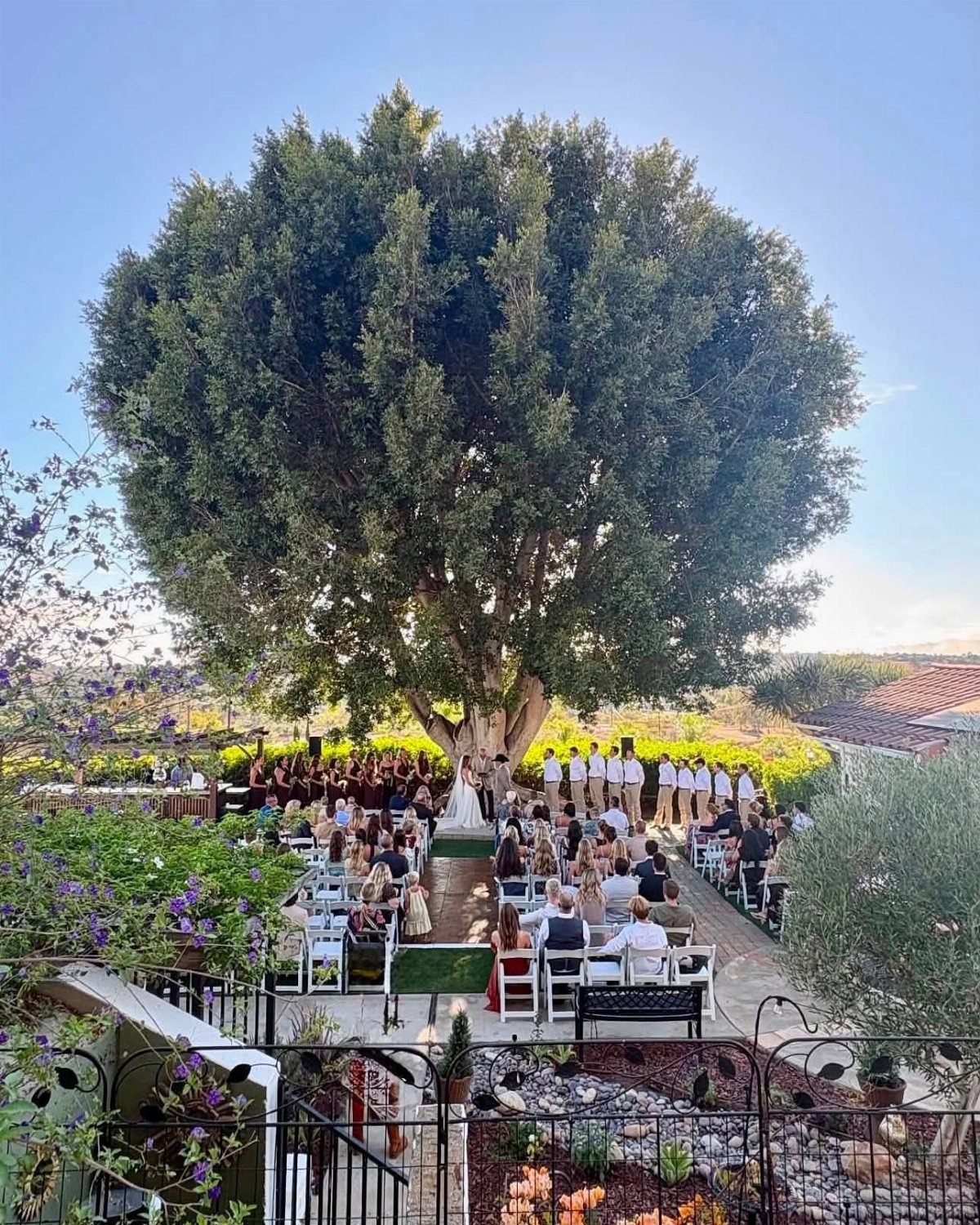
A single mature tree with a canopy wide enough for a full ceremony is decades in the growing, which means most venues have one at most.
Flowering beds at the perimeter are what separate this from a park wedding; they signal cultivated ground, not borrowed landscape.
Root systems dictate where stakes go for aisle runners, arch bases, or anything requiring support. Oaks and maples surface-root; ask before you order a structure that needs footings.
The Boojum Tree venue in Phoenix runs 50-200 guests depending on setup, which gives the range for this idea: below 50 the space feels empty, above 200 you need additional seating outside the drip line.
Afternoon ceremonies under full canopy lose light earlier than open sites. A 4:30 PM start in October can mean vows in shadow while guests at the back still squint.
6. Night Reception Along Stone Terraces
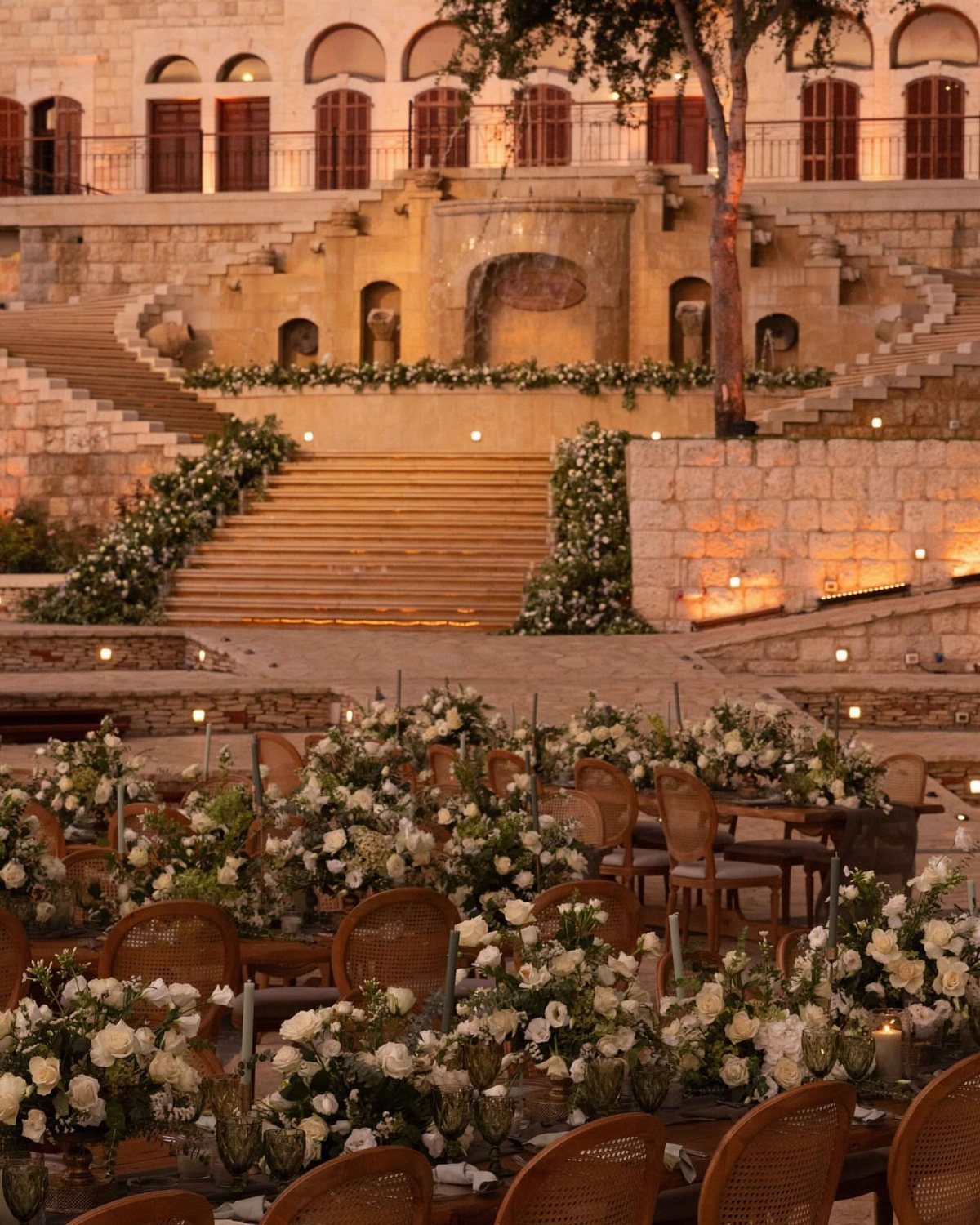
Stone terraces built for a house of another era were designed for viewing gardens from above, not for serving dinner on. Long tables belong on the broadest tread, with staircases behind them acting as backdrop rather than circulation.
Candlelight against limestone or granite reads warmer than the same setup on wood or concrete, but the stone reflects sound upward. A three-piece ensemble becomes audible; a DJ bouncing off hard surfaces becomes shouting.
The warm lighting in the architectural arches is almost certainly added for the event; historic estates rarely wire terraces for entertainment load. Confirm generator placement and whether the venue restricts open flame on stone that has been treated or sealed.
Skylands Manor in New Jersey offers 24 guest rooms across 1,000 acres, which is the scale where a terrace reception makes sense: guests stay on property, no one drives the terraces after drinking.
7. Brick Estate Courtyard Ceremony
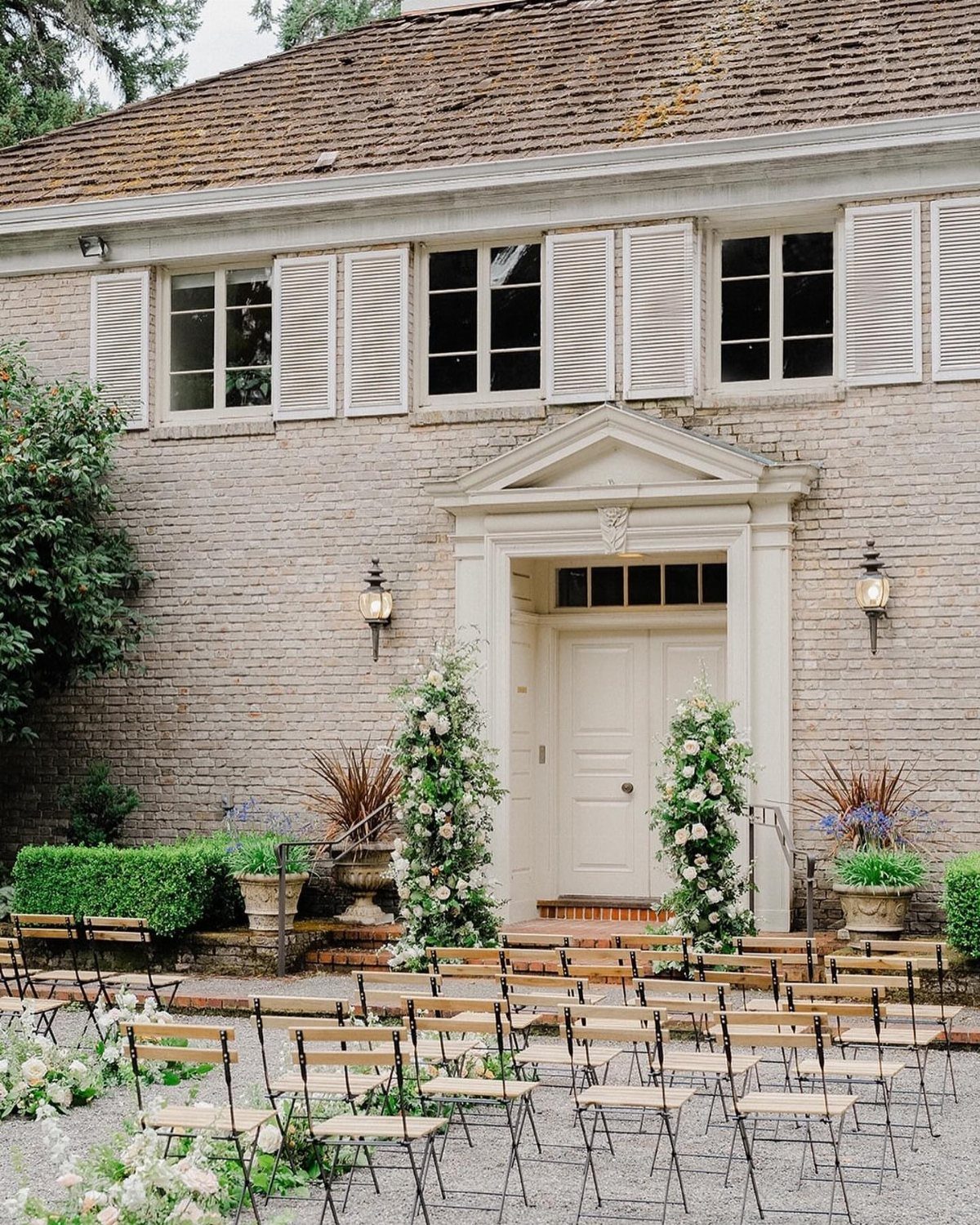
Brick courtyards carry sound differently than open lawn; vows spoken against hard walls reach guests at the back without amplification, but a string quartet becomes piercing.
Check the surface before ordering an aisle runner. Old brick is uneven, and a runner that cannot lie flat becomes a trip point.
The mansion doorway behind the couple frames the ceremony as architecture, not landscape.
That shift matters for photography: midday sun on pale brick blows out detail, while late afternoon warms it. I would schedule around the wall color, not fight it.
Florentine Gardens in New Jersey runs 4 acres of brick paths and gazebos; their Georgian mansion is the type. Ask whether the courtyard is shared with other events or reserved, since sound carries through archways you cannot close.
8. Estate Greenhouse Conservatory Venue
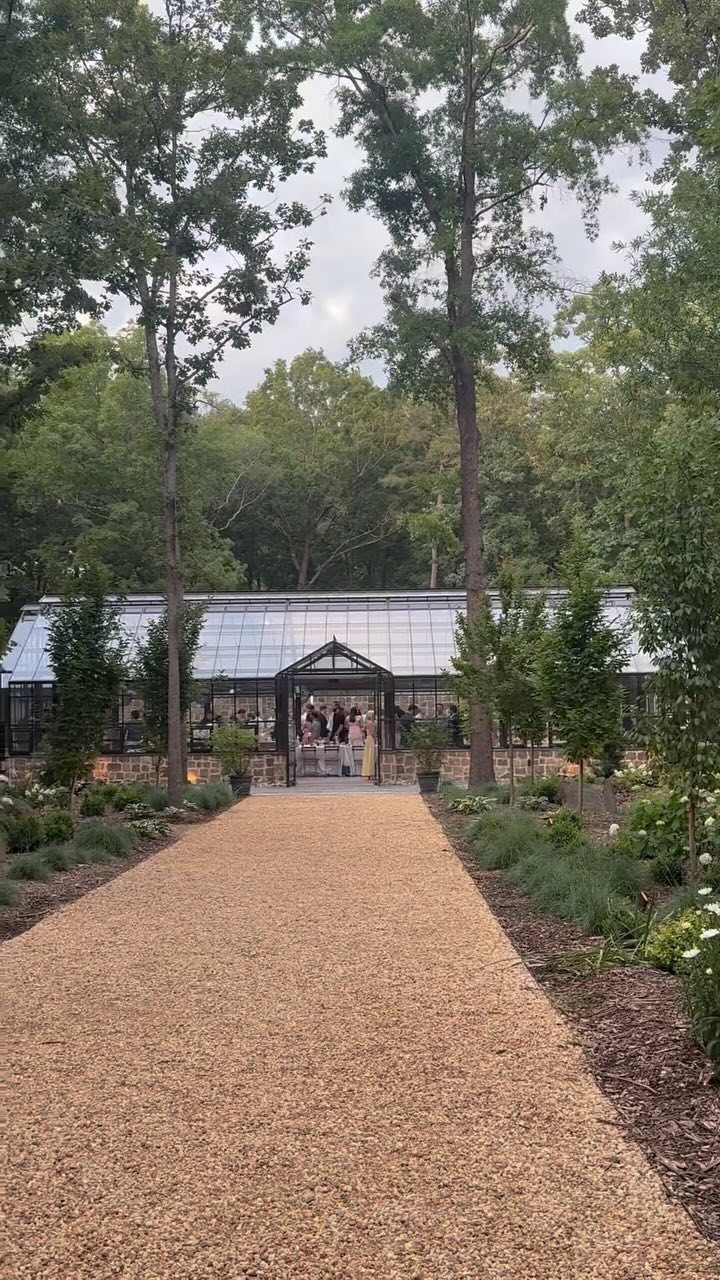
A working greenhouse holds heat and humidity that shift through the day. Glass roofs give daylight for photography until late, but afternoon sun in Arizona, where several of these venues operate, can push interior temperatures past comfort even in March.
Confirm HVAC capacity for your guest count, not just the structure’s square footage.
Gravel approaches mean heels and wheelchair wheels both need thought; ask the venue what surface they actually use and where it shifts. A stabilized path or boardwalk section from parking to door is worth requesting.
The plant collection itself is decor you do not rent, but also inventory you cannot move. Tall specimens between tables become sight-line obstacles; ask the venue which beds are fixed and which can be cleared for the event.
9. Glass-Walled Garden Pavilion Reception
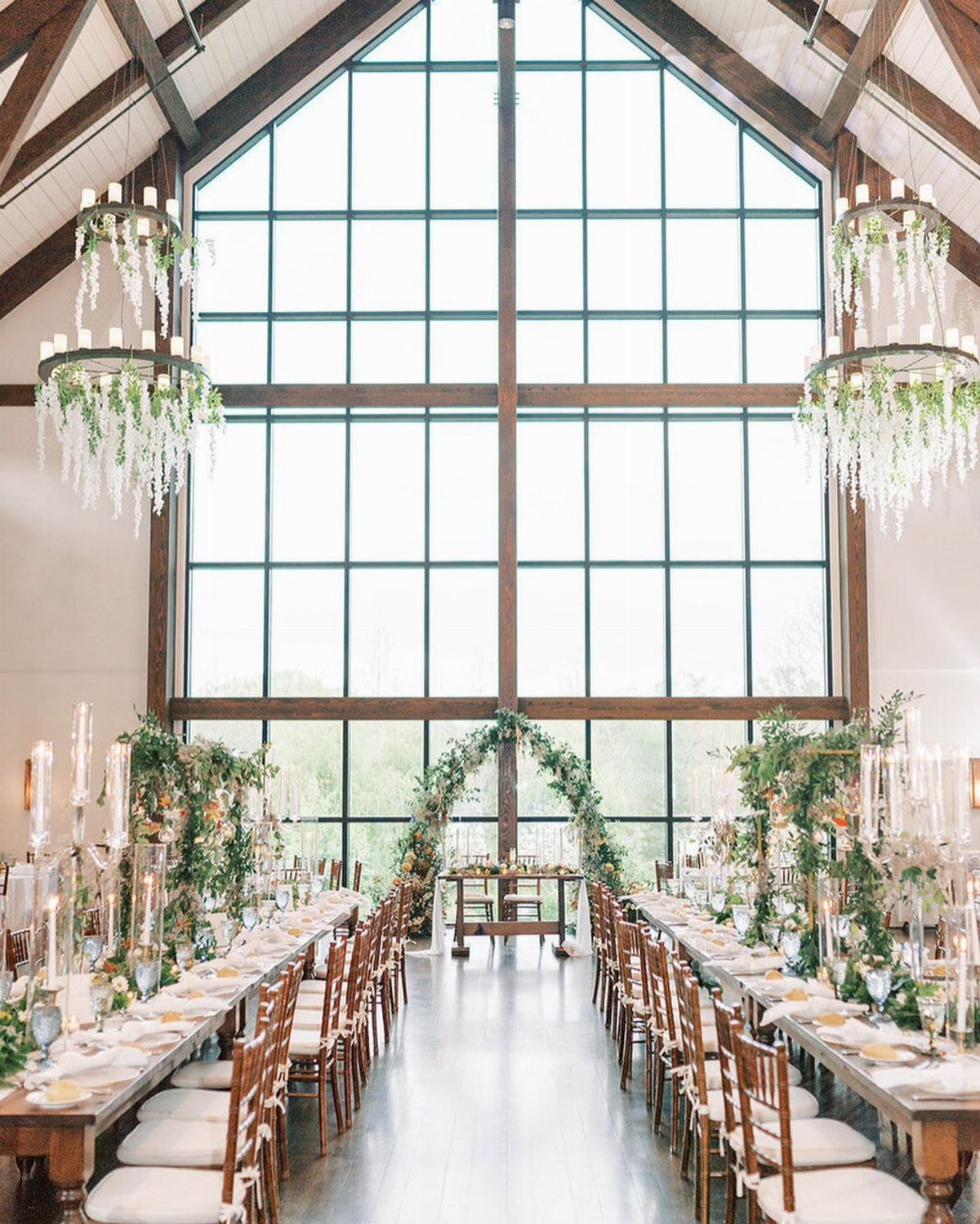
Floor-to-ceiling windows give you garden views without garden weather, but the wall of glass is also a wall of reflection. After dark, interior lighting must outbalance exterior darkness or guests see themselves, not the grounds.
Wooden construction warms what could read as cold modernism. Floral chandeliers bridge garden and interior: scale them to ceiling height, not table width, or they become obstacles.
Check whether the pavilion is purpose-built for events or adapted from another use. Purpose-built means power and plumbing where you need them; adapted means extension cords and portable bars.
10. Palatial Mansion Terrace with Stone Fountains
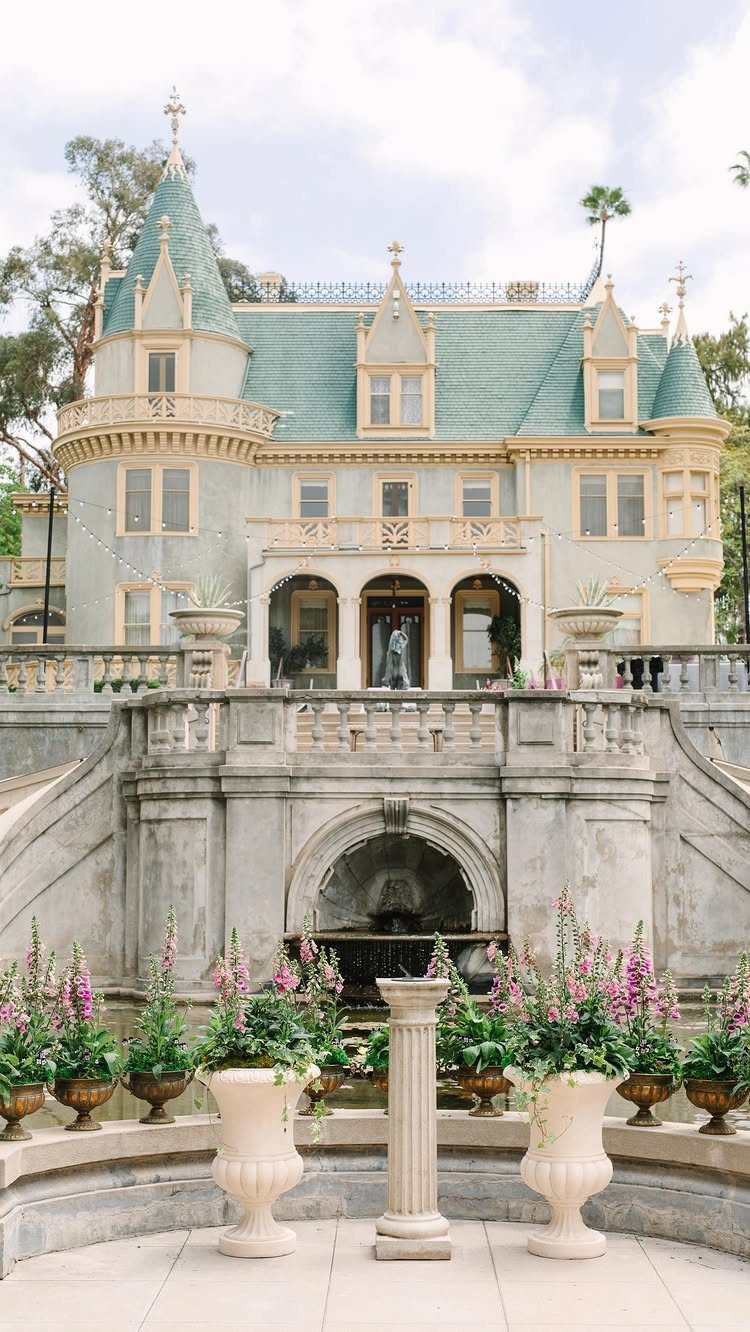
Tiered fountains provide white noise that covers kitchen clatter and conversation bleed between tables, but the same sound competes with speeches. A microphone becomes necessary at smaller guest counts than on silent lawn.
Classical urns with seasonal plantings, like the foxgloves visible, are maintained by the venue’s gardener. Request the planting schedule if you want specific colors in bloom; urns rotated for color may hold something else the week before.
The terrace scale here matches a property with guest rooms on site, which changes how you budget: you are paying for convenience, not just grandeur.
Without that, you are renting grandeur guests leave after the last dance. I would weigh whether the fountain and urns justify the per-head minimum against a simpler garden with no room block to fill.
11. Flowering Trellis Garden Walkway
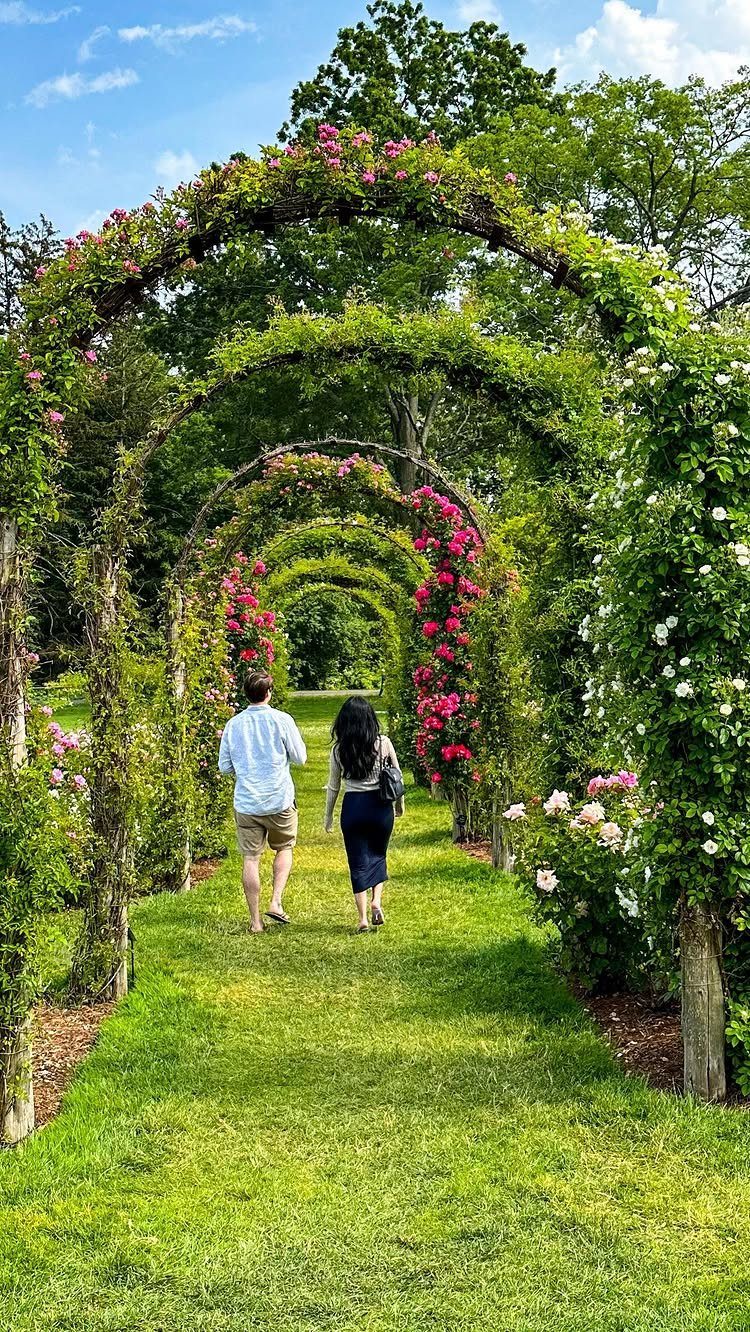
Arched trellises in sequence create processional architecture without an aisle runner problem; grass paths accept heels if mowed ahead, not the morning of, when dew or cuttings linger.
Climbing roses or clematis reach peak at different weeks.
Ask the venue’s planting calendar against your date, and what happens if weather shifts bloom. Green structure without flowers is still photogenic, but the promise of a flowering trellis is color.
A flowering trellis garden walkway gives a casual mood: less formal than a hedge-walled ceremony, more directed than an open lawn. A flowering trellis garden walkway suits a wedding where guests mingle through the space rather than sit in rows.
12. Lawn Marquee Tent Reception
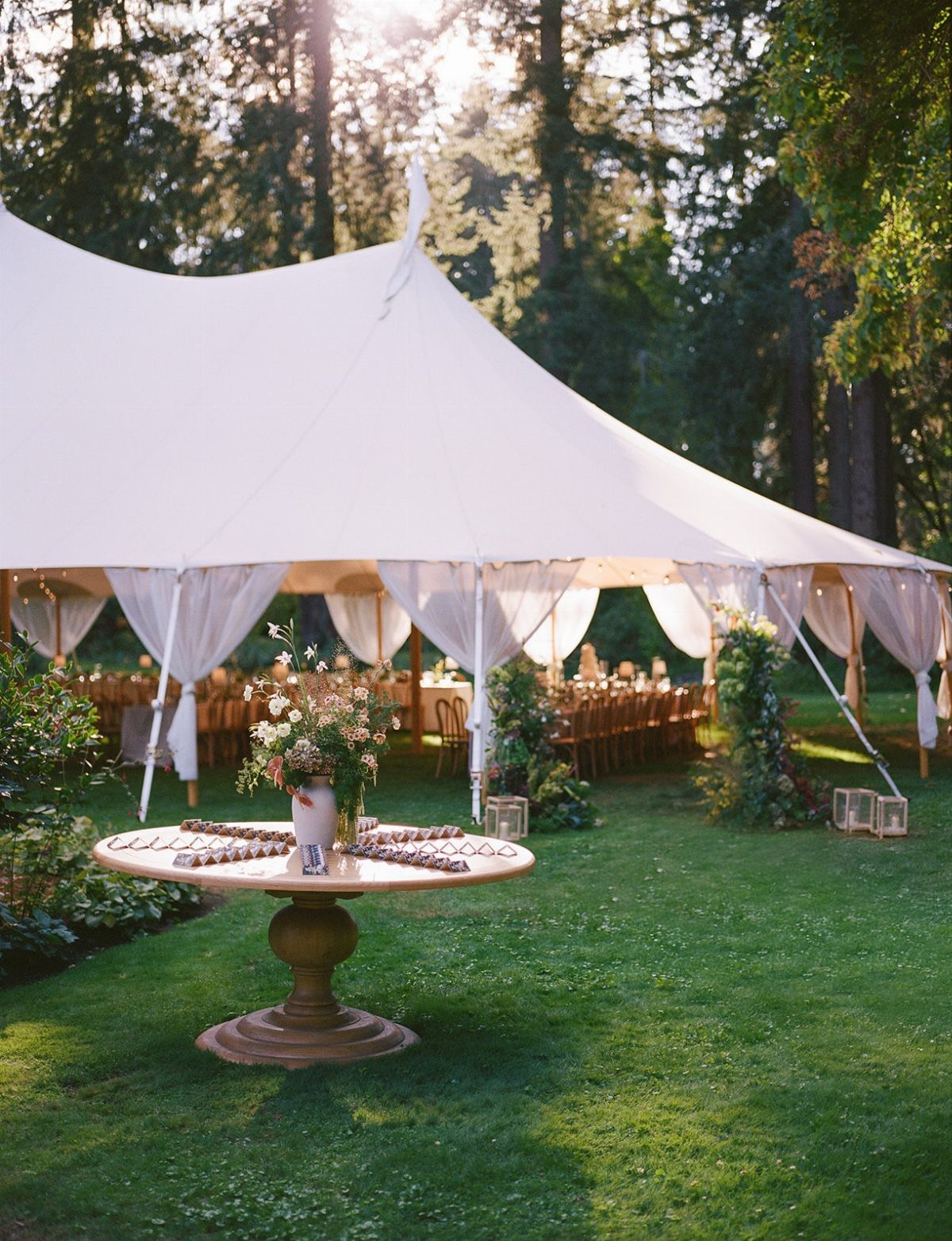
A marquee on lawn gives you blank space with garden perimeter, but the tent itself is the structure you must build. Flooring, climate control, and lighting are line items a permanent pavilion folds into rental; here they are separate decisions.
Draped curtains at openings, like those visible, soften the tent’s party-rental origin.
They also channel breeze usefully in humid climates and become liabilities in wind. Ask the tent company about sidewall options per forecast, not just the sales photo configuration.
The escort card table in the foreground signals a self-directed reception, which this format suits.
Without walls to hang seating charts, you need furniture for that function. I would place it where guests pause naturally, not in the flow from tent to lawn.
Choosing the Right Season
Spring and autumn are the 2 windows that work for California garden weddings, each for different reasons. March through May brings blossoms and mild temperatures; September through November gives golden light and the visual texture of harvest.
The specific estate you choose will have its own seasonal peak that does not match the calendar exactly.
One property’s wisteria may peak in April while another’s roses run late into June. A date that falls between 2 blooming cycles leaves you with green structure and no color, which is fine if you know it going in.
Southern California extends both seasons longer than the northern half of the state.
Vendor Access
The garden venues that produce the strongest weddings allow you to bring caterers and florists who already know how to work with that specific landscape.
Some venues lock you into their own packages.
You get their preferred florist, their caterer, their timeline. That works fine until you want something their team has never tried, or until you learn their baker has one speed and it is not yours.
You get consistency, but you lose the institutional knowledge that an independent vendor brings from repeat visits.
A flat lawn with flower borders is straightforward.
Add a hillside ceremony space, a shaded grove for cocktails, and a canopied path the guests walk to get between them, and the crew has to think harder about how to move food hot, keep bars stocked, and get a wheelchair from point A to point B. The progression from ceremony to cocktails to reception requires setup in multiple locations, each with different access, power, and load-in constraints.
A caterer who has worked the property knows whether to bring the golf cart or the long cart, and where the kitchen door actually is versus where it appears on the site map.
Logistics for Outdoor Events
Kitchen access, power, adequate restrooms, and parking are the 4 items I verify before signing a contract, because each is expensive to improvise later.
Ask whether the venue’s permanent restrooms are supplemented with trailers, and where those trailers sit relative to the reception area. A trailer tucked behind a hedge is different from one visible from the dance floor.
Power access means confirming amperage at specific locations, not just "outlets nearby."
A string quartet needs one circuit; a DJ with subwoofers needs two dedicated 20-amp circuits minimum. Generator placement matters for noise; confirm where the venue allows it and whether the contract restricts fuel type.
Natural Fragrance and Ambiance
Working gardens carry scent that indoor spaces cannot replicate. Citrus blossoms, lavender, jasmine, and native sage are the specific plants guests mention afterward, not as decoration but as memory anchors tied to the day.
That same working garden brings bees, bugs, and birds. A planned garden is not a controlled environment.
The peonies might be early, the roses might have black spot, and the boxwood that looked so sharp in March could be sporting bare patches by June. The scent alone shifts by the hour.
I would ask the property manager about spray schedules and whether they use timed-release systems or spot treatment. A bride with a specific allergy needs that information to plan timing, not to avoid the venue.
Heat releases the oils in flowers, so the late-afternoon air carries more perfume than the morning does.
That is one reason I like a ceremony that runs toward sunset. The photographer gets the light, and the guests get something the camera cannot record.
Morning dew suppresses scent; midday sun can overwhelm it. The window between 4:00 and 6:00 PM catches the lift without the flattening effect of full heat.
Frequently Asked Questions
What is the best season for a garden wedding?
Spring and autumn are the 2 windows that work, at least in California where I have seen this most often. Southern California extends both seasons longer than the northern half of the state.
Is $10,000 a lot for a wedding venue?
A modest total budget sits under 5 figures, which suggests that amount for the venue alone would consume most or all of a modest budget.
The palatial mansion terrace with fountains and on-site guest rooms runs higher per head, with the room block itself becoming a factor you pay for whether guests fill it or not.