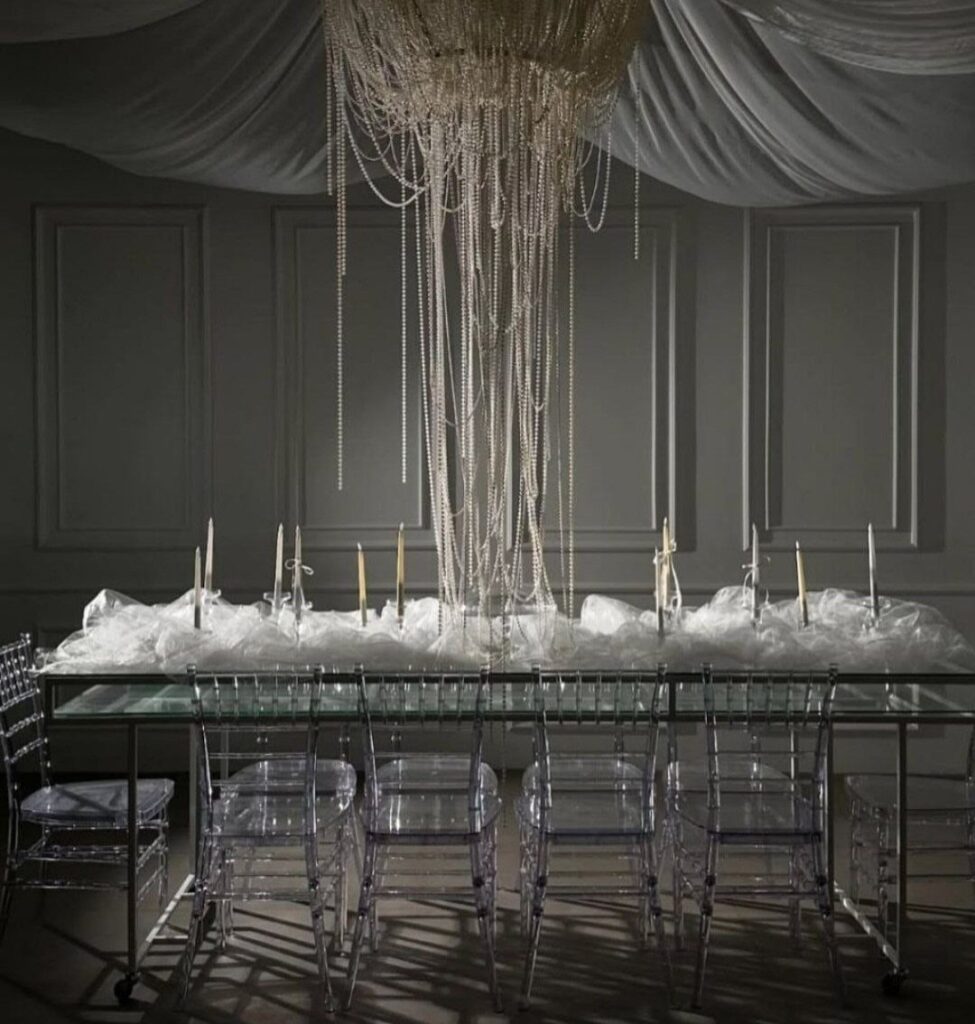
The 8 ideas below run from a few dollars in paper lanterns to the careful labor of stacking glass coupe against glass coupe for a champagne tower.
Which one belongs at your tables depends on whether your reception is seated and formal or circulating and casual; a champagne glass tower blocking sight lines ruins a dinner, while a charcuterie board guests cannot reach across does the same.
The common thread is that every piece here, from brass candleholders to paper lanterns, was chosen for couples working inside real budgets against hard deadlines, with no stems required.
1. Candle Wedding Centerpieces
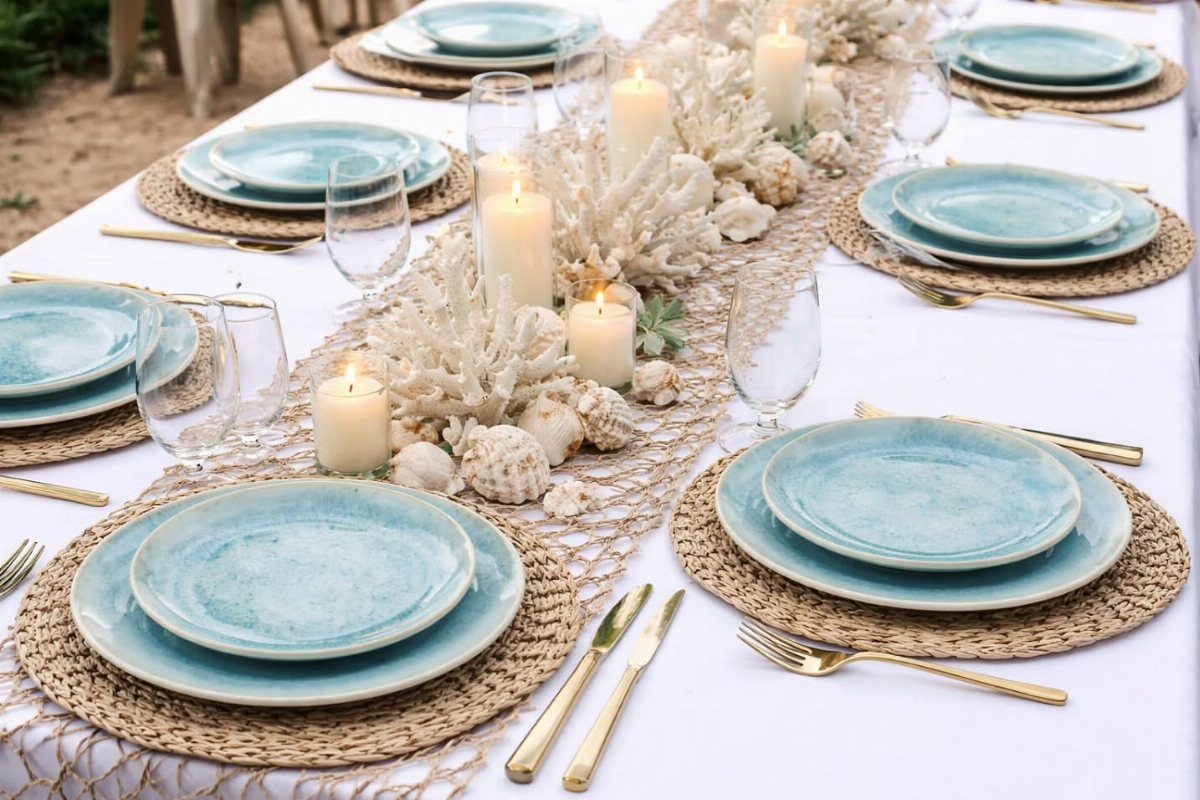
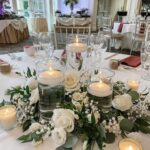
A candle centerpiece is the simplest way to bring warmth to a table without a single stem. Cluster pillar candles at staggered heights along a runner, then add texture with found objects: coral, shells, driftwood, whatever suits your setting.
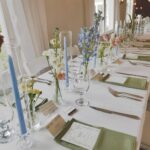
Votives fill the gaps and keep the light from going flat. Tapers in brass or ceramic holders work for a more formal table, though they need steady air; outdoors, pillars and hurricanes are safer bets.
The light photographs soft and golden, and guests can actually see each other across the table. My preference is mixing heights rather than matching them.
2. Fruit Arrangements
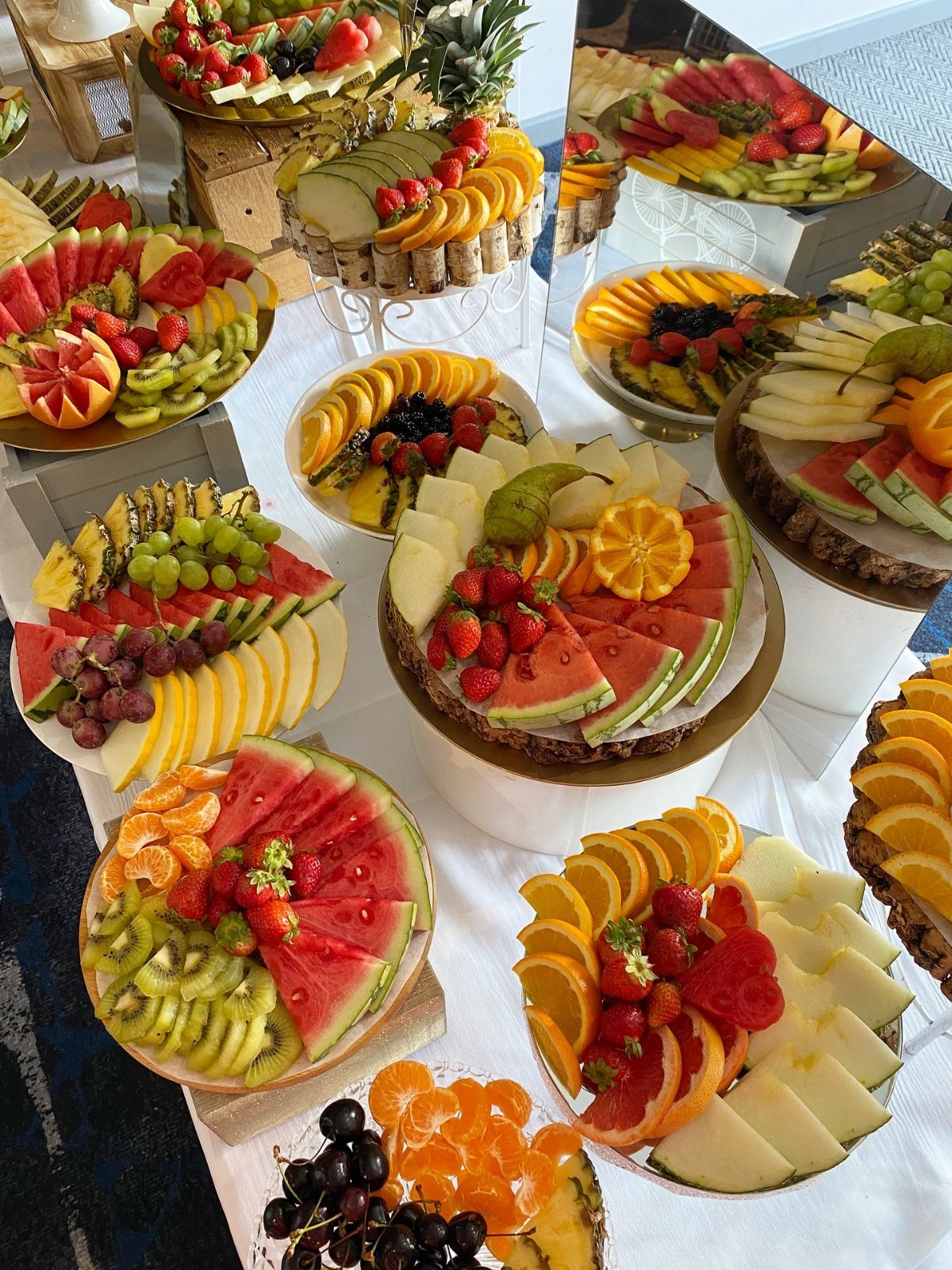
Fresh fruit arranged on tiered stands turns a centerpiece into something guests can actually eat.
Sliced watermelon, citrus, berries, and melon in repeating colors build a display that looks intentional without any florals. For a long table, run several platters end to end or alternate fruit with cheese boards.
This works best at a buffet or family-style reception where people serve themselves; the arrangement shrinks as the night goes on, which is part of the point.
Check with your caterer about refilling, and ask whether they will prep the fruit or if you are cutting it yourself.
3. Herb Accents
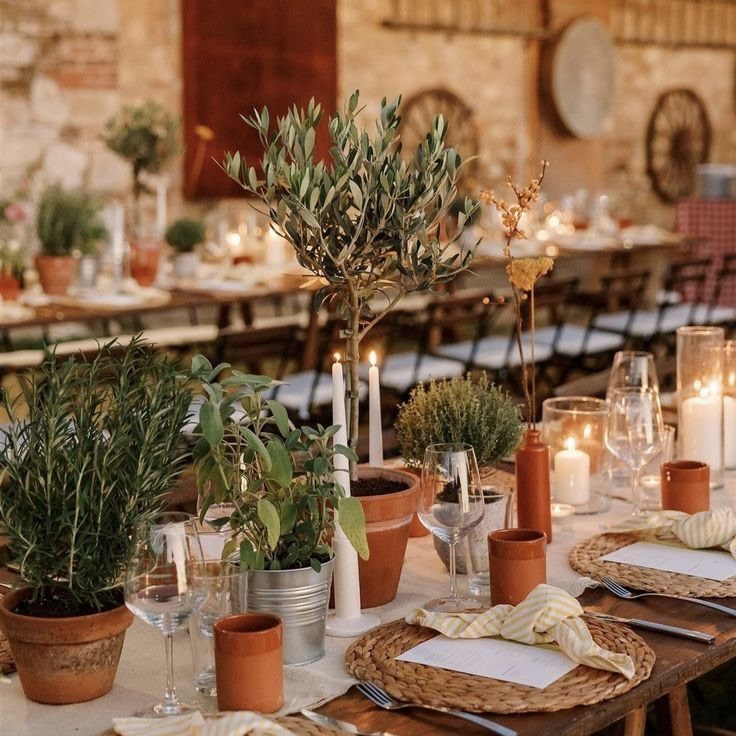
Potted herbs bring scent and life to a table without pollen or wilting. Rosemary, sage, and small olive trees in simple terracotta or weathered planters suit a rustic setup, and guests can rub a leaf between their fingers.
Before you commit, check whether your venue allows soil indoors and who waters them in the days before; dried herbs are the fallback if live plants are too much trouble.
The aroma is strongest in warm rooms, so place them where the dinner heat will rise.
4. Fabric Draping
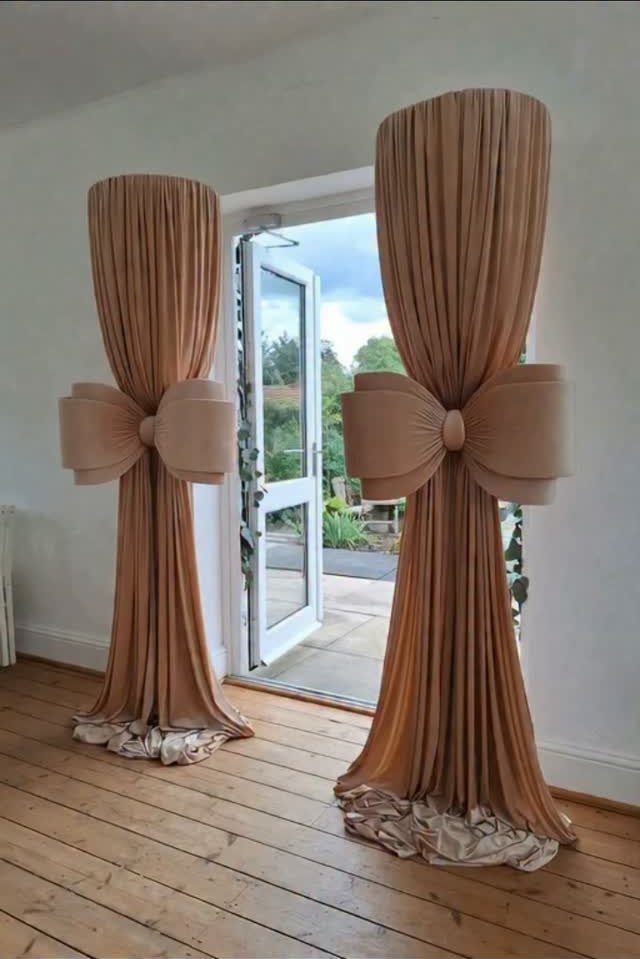
Gathered fabric on columns or across ceilings changes the shape of a room for the cost of the textile and the labor to hang it.
Champagne-toned panels cinched with oversized bows at the center soften hard edges and frame whatever sits between, in this case a glass doorway.
For your own space, decide first what the room needs: height, intimacy, color, or a division into smaller areas. Chiffon flows and catches light, velvet absorbs it and adds weight, silk and lace together read formal.
Layering two textures beats one flat swath. Test your knots or hardware before the event; slipping fabric mid-reception is hard to fix.
5. Paper Lanterns
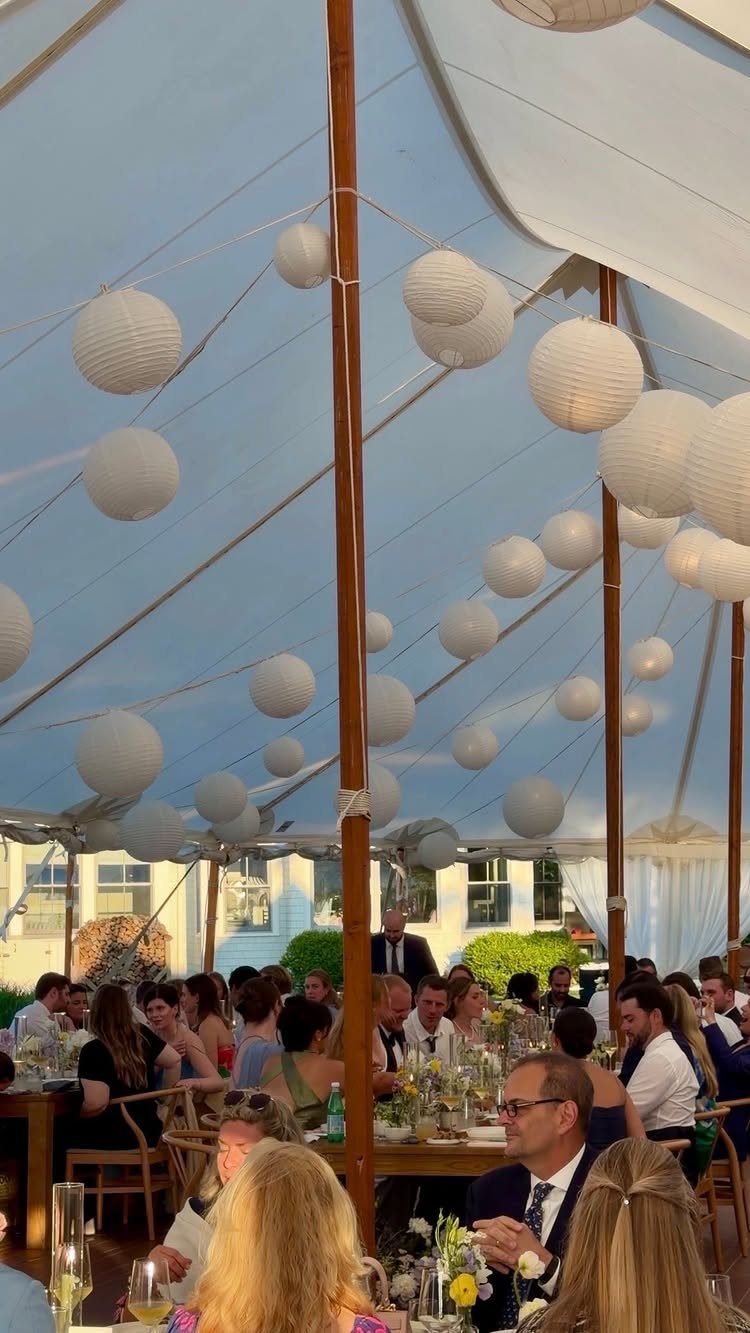
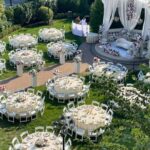
Paper lanterns hung at varying densities turn a tent ceiling into a sky of diffused light. White paper lanterns stay simple and uniform, but you can mix sizes or cluster them tighter over the dance floor for emphasis.
LED inserts are safer than real flame in a tent and last the evening; battery-operated fairy lights inside do the same job with a pointillist glow.
For a more crafted look, origami installations or cascading paper chains in your colors replace the round shape entirely. This is one of the lighter budget options, and breakdown is quick, which your venue staff will appreciate.
6. Birdcage Decor
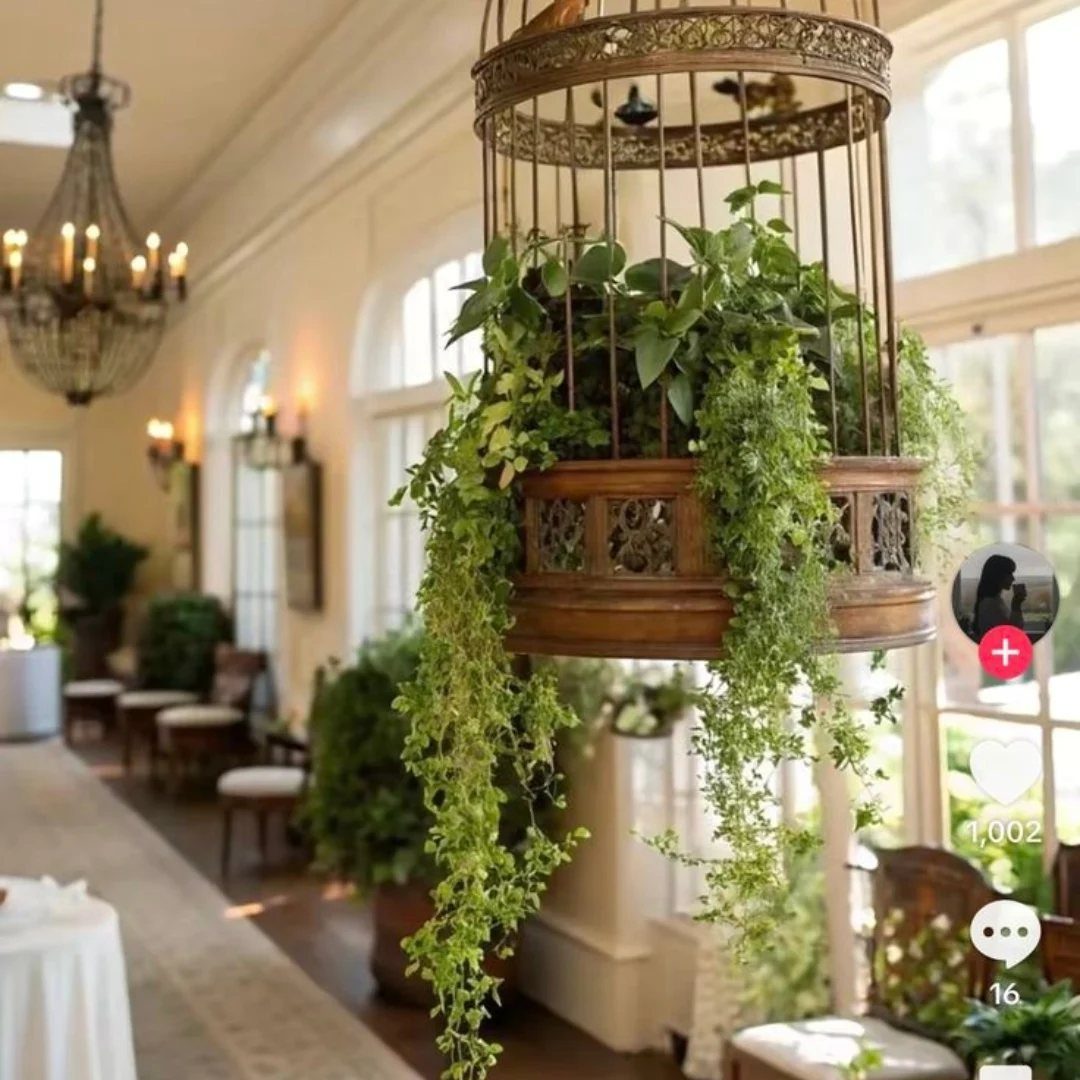
A vintage birdcage suspended from above, trailing with greenery, reads whimsical without trying too hard.
Birdcages hung in hallways make a first impression, but they work just as well on tables filled with battery lights or at the escort-card table as holders.
For a centerpiece version, nestle a small light inside and let the bars cast shadow patterns; for cards, clip them to the wires with clothespins or tie them with twine.
Check the weight of your cage against what the ceiling hook or stand can hold, and use artificial trailing plants if the real ones drip water on a rented floor.
7. Charcuterie Board Centerpieces
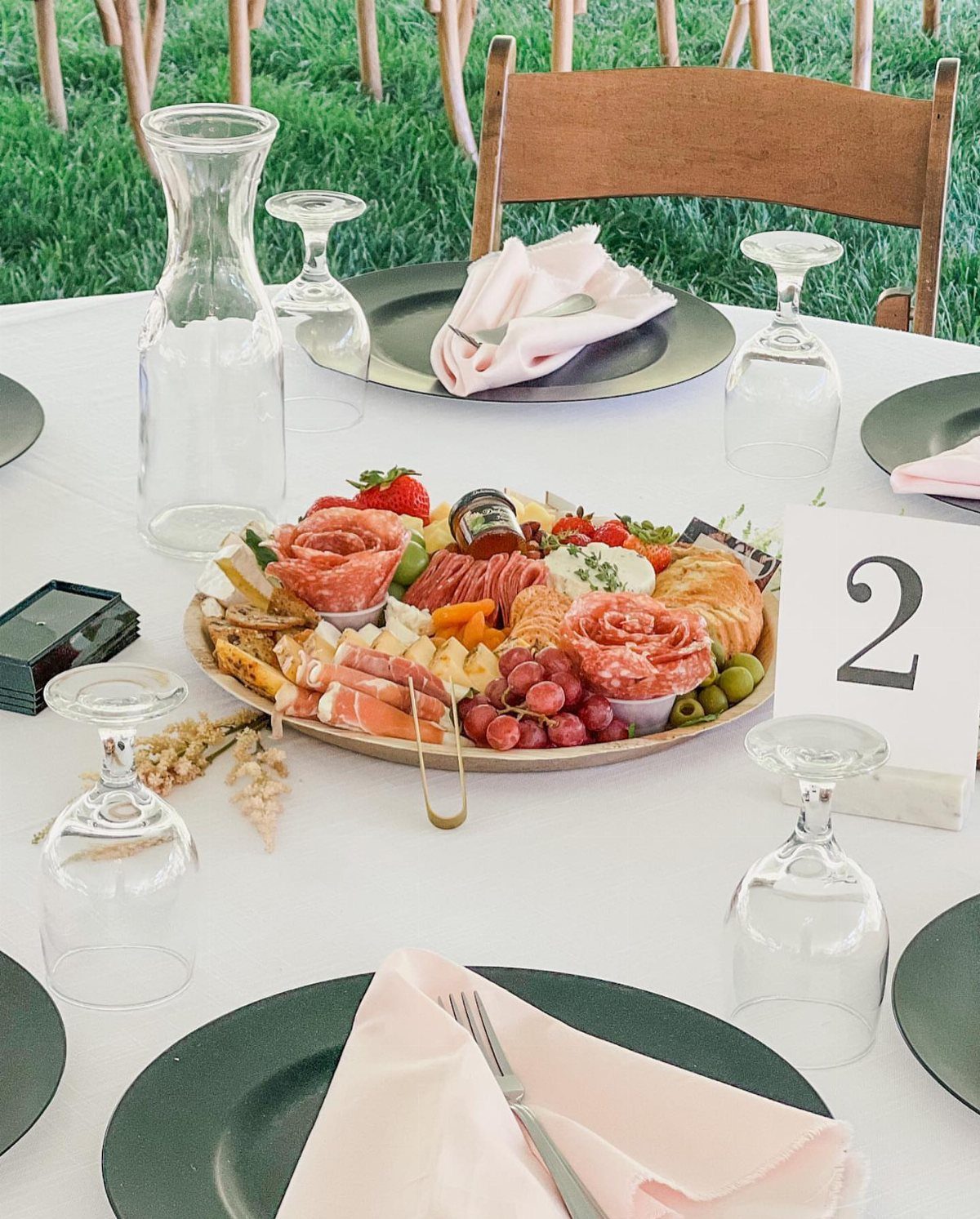
Charcuterie spread across a board at table center turns the meal itself into the decoration.
Meats, cheeses, and accompaniments arranged in rough abundance give guests something to do while speeches run long, and the display only improves as people pick at it.
This suits a family-style or casual reception where the food is part of the evening’s entertainment rather than a separate course served in the kitchen’s timing.
Ask your caterer whether they build the board or if you are responsible for the arrangement; pre-sliced meats dry out, so timing matters.
For a long table, run two or three boards end to end rather than one oversized platter that guests cannot reach across.
8. Champagne Glass Tower Display
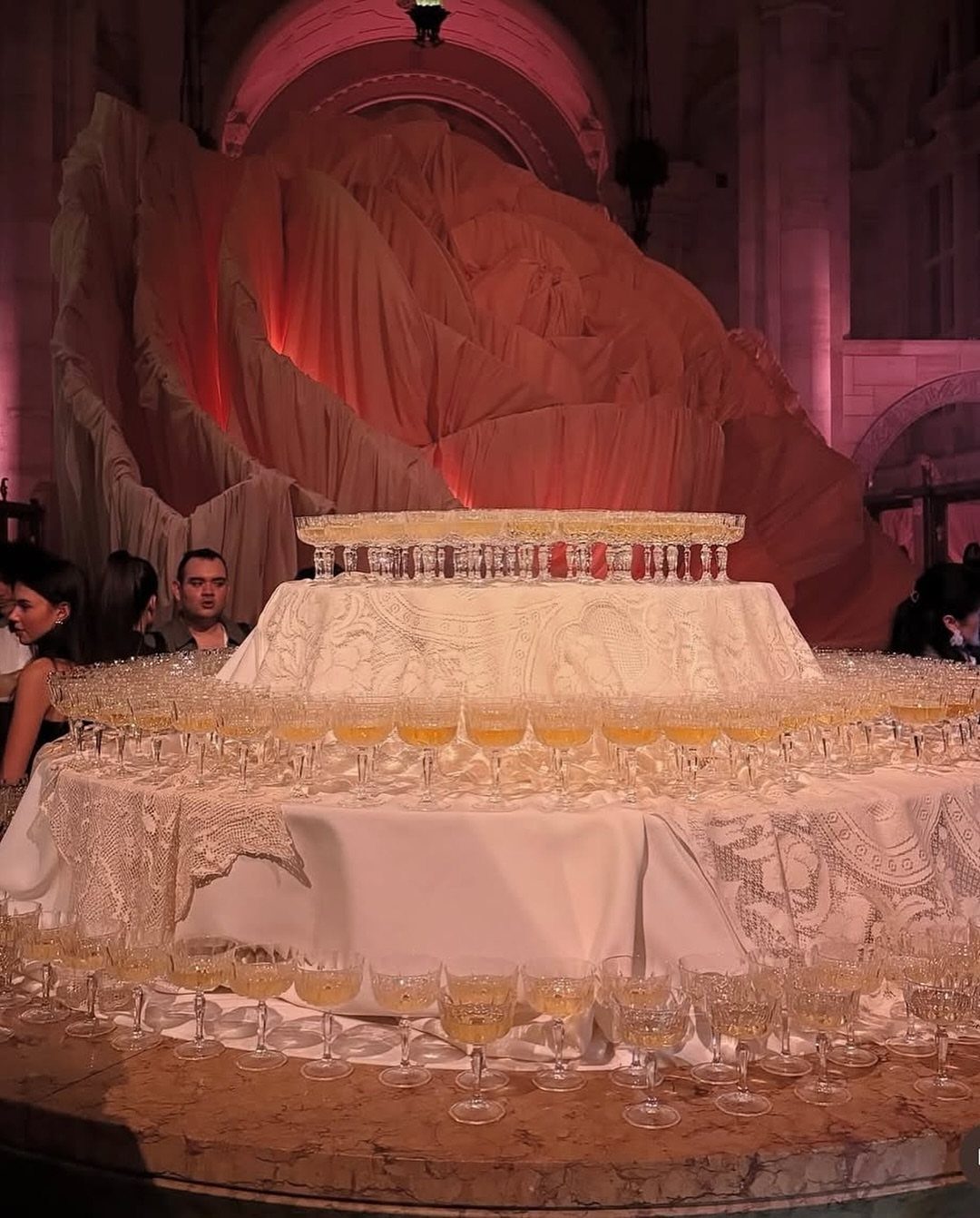
A pyramid of filled champagne coupes catches light from every angle and gives guests their first drink from a display rather than a bar line.
The structure needs a tiered frame or a steady hand stacking glass against glass; coupe bowls are wider and more stable than flutes for this, which is why they became the standard for serving this way.
Plan for breakage: order more than you need, and set the tower on a lace-draped table that hides any drips.
LED candles nearby are safer than open flame if someone bumps the cloth. This works best at a cocktail-hour reception where guests circulate, not a seated dinner where the tower blocks sight lines across the table.
Benefits of Non-Floral Centerpieces
Non-floral centerpieces give you room to build something that actually means something to you as a couple.
A stack of books from your shared shelves, a collection of shells from a trip you took together, a vintage find that reminds you of your first apartment: these carry weight that flowers grown on another continent cannot match.
The budget difference is real too. Elaborate floral installations run into thousands, while borrowed items, thrifted pieces, or simple DIY builds cost a fraction and often look more interesting.
For anyone with pollen allergies, skipping florals removes a genuine discomfort from the day; guests spend the reception breathing normally instead of sneezing through speeches.
Many non-floral pieces live on after the wedding, repurposed at home or gifted to guests, which matters if you are trying to cut waste.
Non-floral centerpieces are not only incredibly versatile, but they can also be surprisingly cost-effective and offer distinct advantages that flowers simply can’t.
Logistics for Non-Floral Decor
The physical weight of non-floral decor changes how your day runs.
A birdcage full of lights, a stack of ceramic candle holders, a wooden charcuterie board loaded for 10: these do not arrive in a florist’s van with a team to place them.
Before you commit, map who carries what from car to table, who has the key to the venue at what hour, and whether your contract includes setup help or leaves it to you.
Fragility matters too. Glass towers break, paper lanterns crush, fabric drags on the ground and picks up parking-lot gravel in transit.
Pack with the breakdown in mind; you will be tired, possibly tipsy, and working by phone flashlight when the last guest leaves. Assign one sober person to inventory what must come home.
Mixing Decor Elements
Single-element centerpieces read flat from a distance. Paper lanterns overhead with candle clusters below, herb pots flanking a fabric-draped doorway, a charcuterie board running through a field of votives: these pairings work harder than any single element alone.
Choose elements that share one quality, temperature, or era so the combination feels intentional rather than accumulated.
Brass candleholders with origami cranes both carry craft; velvet drapes and champagne towers both read the same era. What does not work is mixing every idea you liked online into one table.
Two textures or shapes per table is enough; three starts to look like you could not decide. If you are using greenery with any non-floral piece, keep it minimal and uniform so it reads as accent, not compromise.
Aligning with Wedding Theme
Your venue already has a voice; your decor should answer it rather than shout over it.
A raw industrial space with exposed ductwork suits geometric lines, metal finishes, and the honest weight of concrete or steel. A barn with hayloft beams wants wood, rope, and materials that age.
A hotel ballroom with carpet and chandeliers needs either to play along with formality or to contrast sharply enough that the choice reads as deliberate, not accidental. Color is part of this too.
Before you buy or rent, photograph your venue in natural light and hold swatches against the image. What looks correct on a Pinterest board against white walls may disappear into your actual room.
Frequently Asked Questions
What to do instead of flowers at a wedding?
Candles, fruit arrangements, potted herbs, fabric draping, paper lanterns, vintage birdcages, charcuterie boards, and champagne glass towers all replace flowers without looking like a compromise.
Clustered pillar candles at staggered heights, tiered stands of fresh fruit guests can eat, and a half dozen other setups below all work without a single bloom.
My preference leans toward elements that do something flowers cannot: provide light, scent, or food.
What to use for centerpieces instead of flowers?
For table centerpieces specifically, candles in brass or ceramic holders, tiered fruit displays, potted herbs in terracotta, loaded charcuterie boards, and birdcages with battery lights inside all work.
A champagne coupe tower doubles as first drink and display. The key difference from flowers is weight and setup: these do not arrive with a florist’s team, so map who carries what and who has the venue key.
Can I DIY non-floral centerpieces?
Many non-floral centerpieces suit DIY builds better than floral arrangements do. Stacked books from your shelves, simple candle clusters, potted succulents, or paper installations require no refrigeration or stem conditioning.
Will non-floral centerpieces still look elegant?
They can read more elegant than flowers when the materials are quality and the arrangement is intentional.
Brass holders with tapers, velvet drapes, champagne towers in coupe glasses, and silk fabric cinched with oversized bows carry formality without a single stem.
What are some simple but pretty decorations for a wedding?
Paper lanterns hung at varying densities turn a tent ceiling into diffused light and break down fast. Votives filling gaps between pillar candles add glow without complexity.
Gathered fabric panels in one tone soften hard edges for the cost of textile and labor alone. These run lighter on budget than elaborate floral installations and often look more interesting precisely because they are not the default choice.