Fun wedding activities range from a $30 McDonald’s run to a permitted fire dancer, and the right pick depends less on your budget than on which guests are actually in the room.
A burlesque dancer can charm a groom’s grandmother or silence her entirely; the same act lives or dies on audience calibration. That grandmother once cornered the planner for the dancer’s card.
1. Stilt Walkers
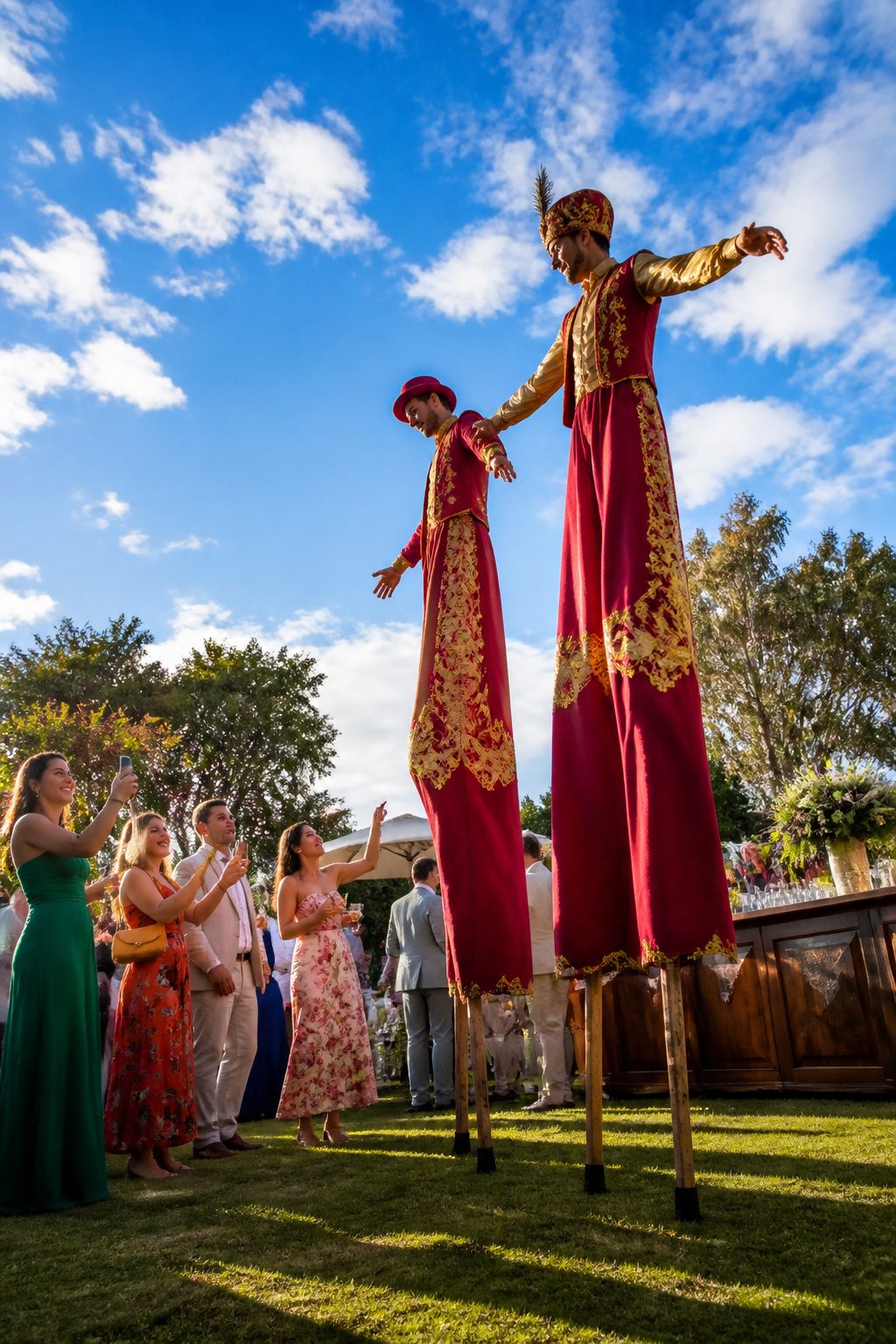
Stilt walkers create instant spectacle the second guests spot them towering above the crowd at arrival. That extra height turns heads across the entire space, so the energy lifts before anyone even reaches the bar.
I have seen this deployed two ways, and the timing changes everything.
Bringing them in during cocktail hour breaks the ice early; people loosen up faster when something slightly surreal is walking past with champagne. Saving them for later gives a fading reception a jolt exactly when energy typically dips.
For couples leaning whimsical, having stilt walkers circle the first dance adds a subtle festival feel that photographs beautifully.
It reads as playful rather than circus-heavy, and guests talk about it for years. The risk is overstay; book a shorter set than you think, because the surprise wears faster than the memory of it.


2. Drum Performer
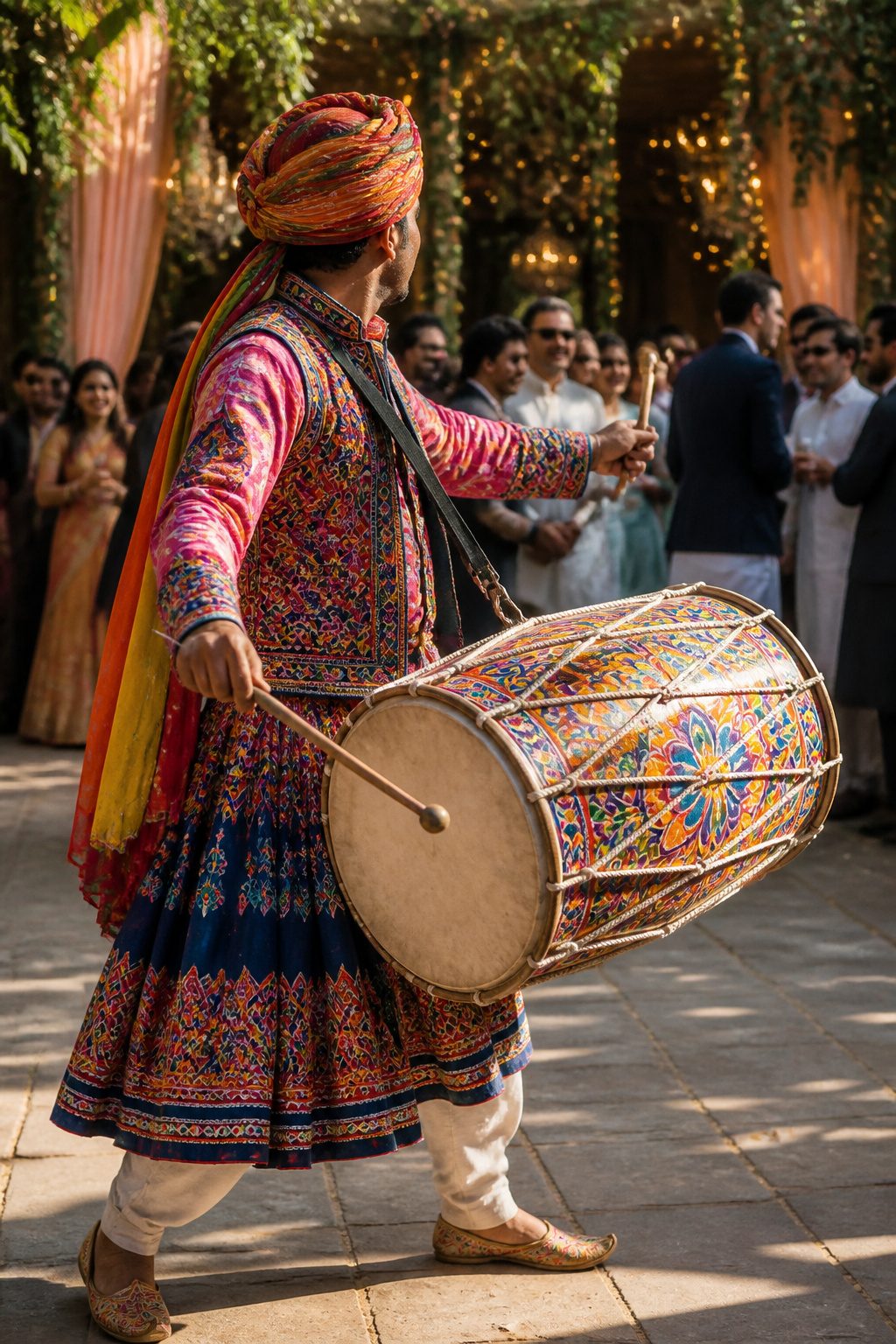
A drum performer wakes the room up before anyone has finished their first drink. The beat starts, lights flash a little, and guests loosen up without thinking about it.
That instinct to tune in, to move even a little, gives everyone permission to feel the moment instead of waiting for someone else to start the party.
I have seen this work best in the dead space between ceremony and reception, or right as guests enter the venue.
The transition is where energy usually dies, and a drum performer steps into that gap with momentum already built. Outdoor or indoor does not matter much; the sound carries the whole effect.
The risk is hiring someone who plays too long or too loud.
Fifteen minutes at the right moment beats a full set that competes with conversation. Book them for the entrance or the transition, then let the night breathe.

SEXY AND CUTE: Shake things up and pay homage to one of history's favorite city girl cocktails when wearing this Cosmo Dress Costume! PERFECT FOR ALL OCCASIONS: Suitable for...
3. McDonald’s at Midnight
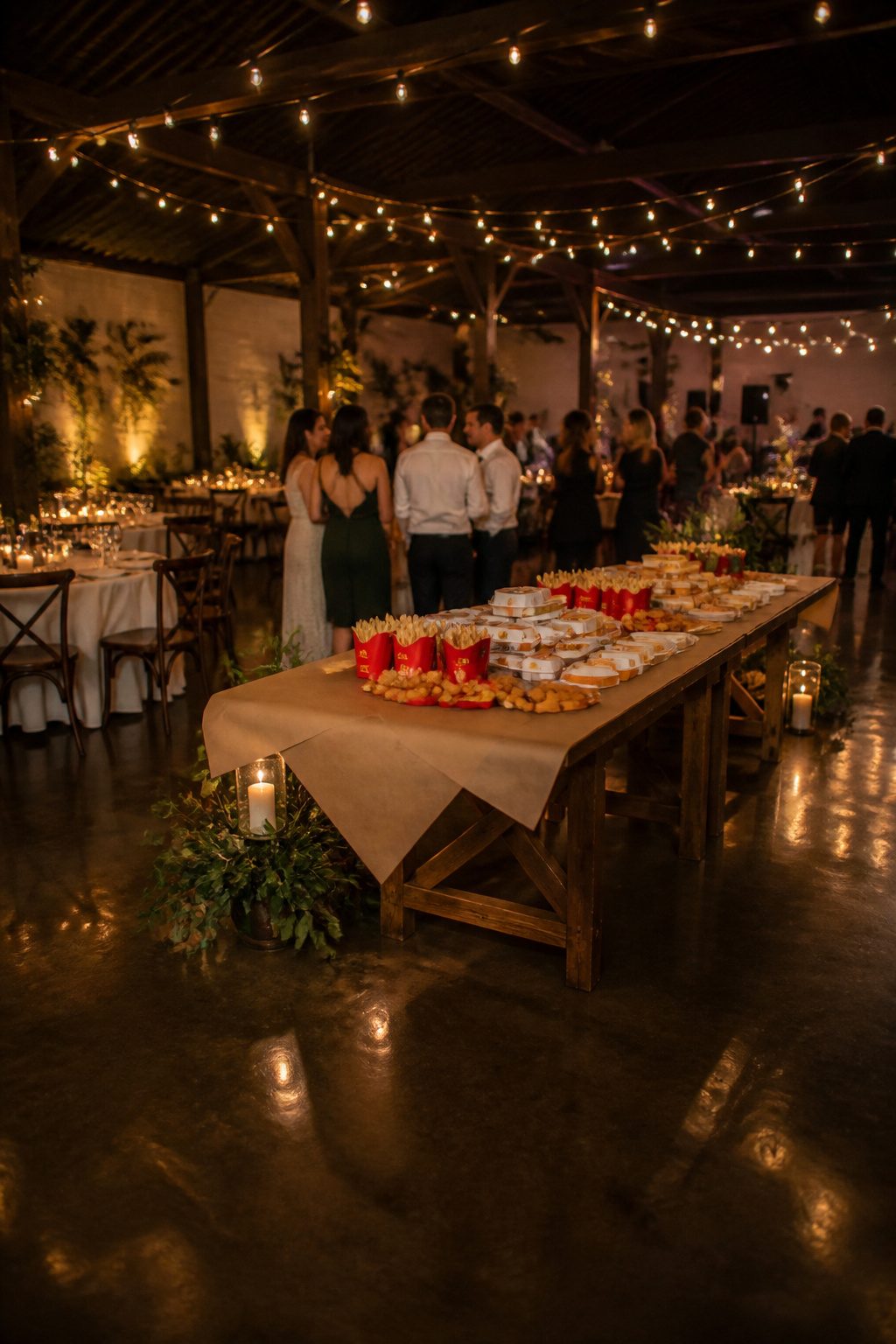
Energy at a wedding reception follows a curve.
The dance floor peaks around two hours in, then drops hard as blood sugar crashes and feet hurt. That is exactly when a box of warm burgers and nuggets hits different than any catered bite from six hours ago.
The psychology is simple. Comfort food after midnight triggers relief, not just hunger.
Guests who were checking their phones for Uber prices suddenly rally for another hour. Schedule the delivery for 11:00 p.m., not true midnight; by 12:00 a.m. half your crowd has already left or given up.
Coordinating the surprise takes one trusted person, not a committee. A bridesmaid or your planner slips out with the order, pays in advance to avoid fumbling at the window, and walks back in like it was always the plan.
Do not warn the venue staff. Most contracts have a preferred-caterer clause, and even a $30 McDonald’s run can trigger a fee if someone spots it early.
Stack the bags in a back hallway, hand them out fast, and let the smell do the announcement. By the time anyone official notices, the wrappers are already on the table and the crowd is too happy to care.


4. Surprise Piñata
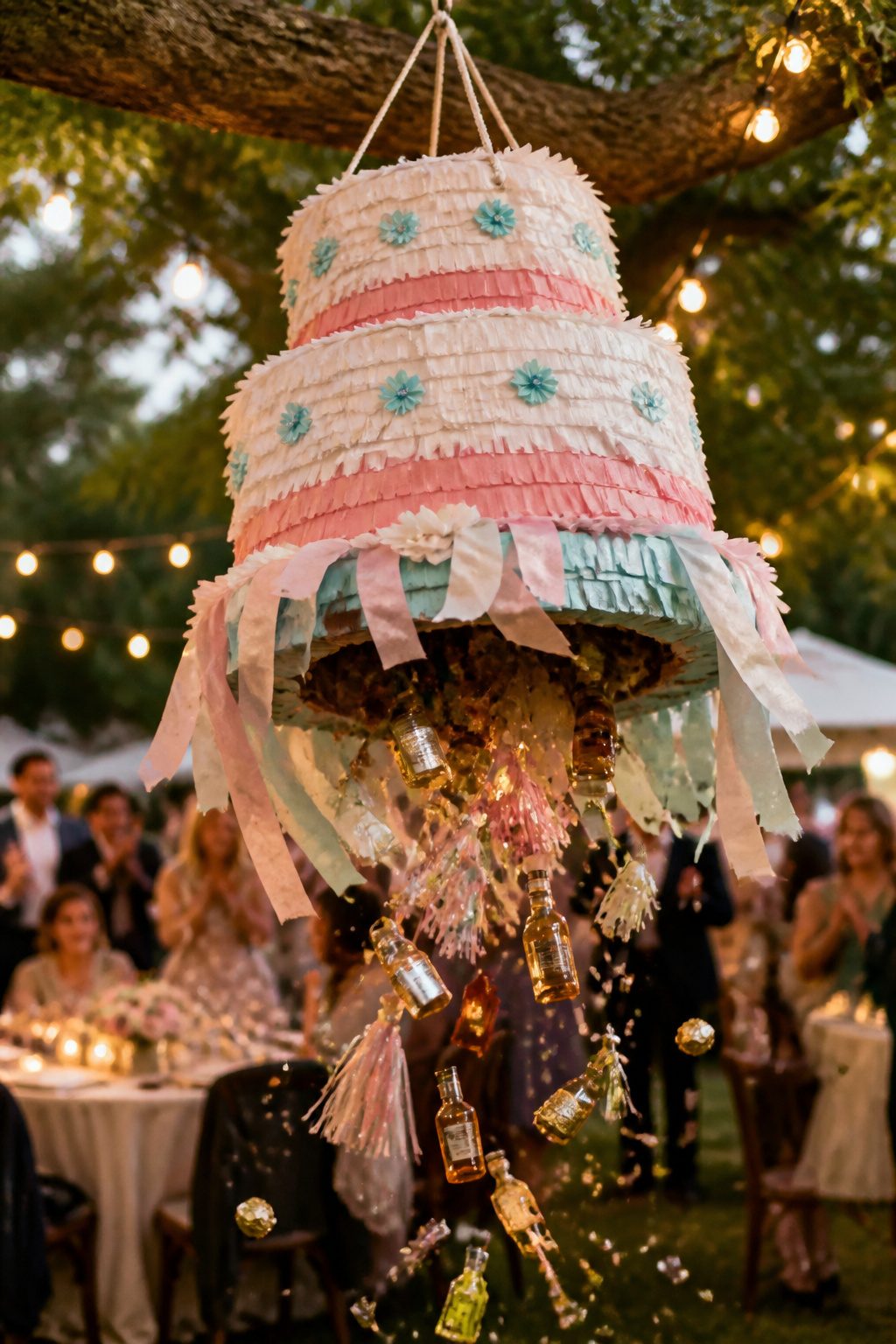
A piñata at a wedding lands exactly the way the first one I read about did: a split second of confusion, then the whole room commits. Someone swings and misses completely.
Someone else treats it like a sport. The laughter comes fast, and the formal pretense drops even faster.
The timing matters more than the object itself. Late in the evening, when the older guests have headed home and the dance floor is thinning, a piñata becomes an energy release that pulls everyone back in.
It breaks the rhythm of standing and drinking without forcing anyone to dance.
What goes inside separates a wedding from a children’s party. Candy is obvious, but adult guests respond better to a mix: mini bottles, lottery tickets, sunglasses, temporary tattoos, small chocolates.
The surprise of the contents matters more than the value. One couple filled theirs with handwritten notes about the bride and groom; guests traded pieces like souvenirs.
The risk is minimal. A piñata costs little, hangs from any beam or tree, and needs no vendor.
The reward is a moment no one planned for and everyone remembers, which is the entire point of adding something unexpected to a night that already has a schedule.
5. Crowd Surfing
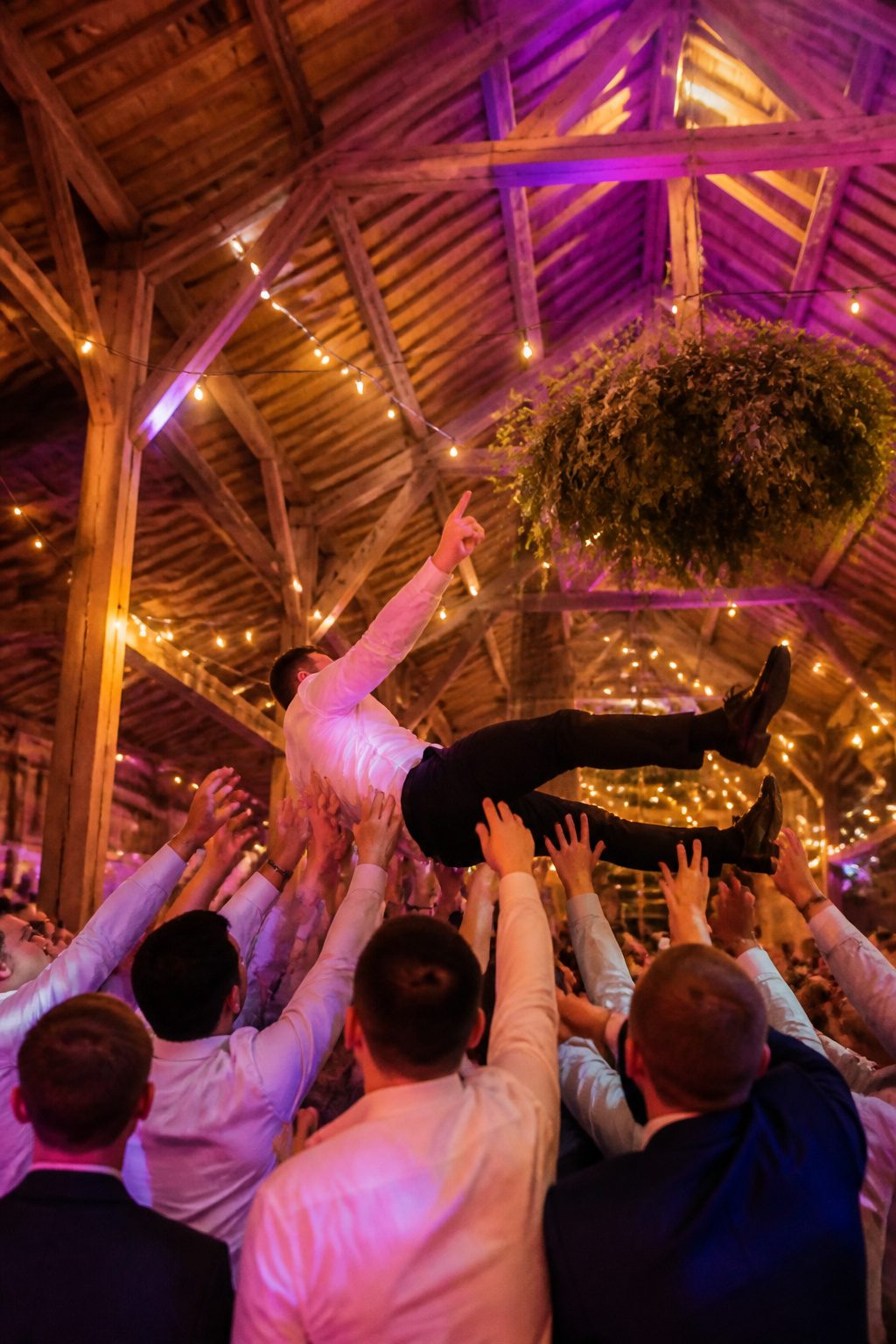
Crowd surfing at a wedding works best once the dance floor is already packed and the energy has tipped past polite dancing into real party territory.
The physics are simple: you need enough bodies that the hands form a continuous surface, not a sparse collection of fingertips that lets the person drop through.
The sources describe two versions, and the distinction matters for timing. The classic hands-only style needs a dense cluster, maybe thirty people minimum, and thrives during the last hour when guests have lost their self-consciousness.
The "floaty" alternative, with an inflatable lounger, spreads the load wider so a slightly thinner crowd can manage it.
I watched the hands-only version fail once at a reception with maybe forty guests total. The bride’s brother launched himself during the second song, and the crowd parted like a curtain.
He hit the floor hard enough to rattle the subwoofer. The crowd was too thin by half, and the ones who were there were not drunk enough to commit.
Everyone stood still while he picked himself up. The mistake was trying it before the floor had filled and before the drinks had done their work.
6. Karaoke
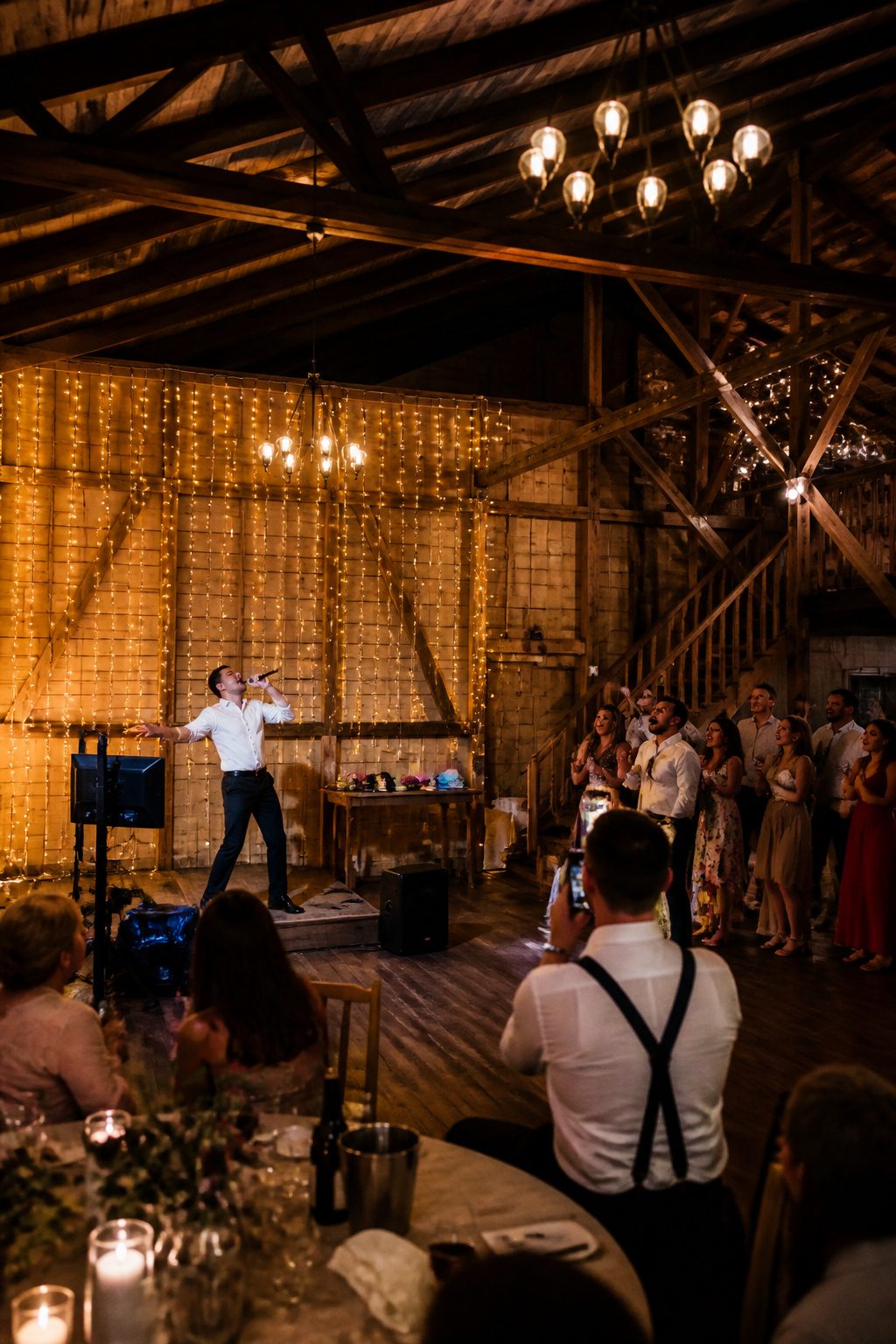
The real magic of karaoke at a wedding starts when someone you’d never expect grabs the mic. I’ve watched a groomsman’s off-key serenade of "Don’t Stop Believin’" draw more genuine cheers than the first dance.
The song list is what makes or breaks participation: load too many ballads and you get polite applause from seated guests; keep it to uptempo crowd-pleasers and the line forms behind the shy aunt who finally feels brave enough.
Equipment is simpler than couples fear. A basic karaoke machine with two wireless mics runs most rentals, and the newer ones pair to a phone app for the library, which beats hauling a binder of discs.
The mistake I see is timing. Karaoke works best as a bridge, not a takeover: after dinner when the older guests are still present but the dance floor hasn’t peaked.
Start it too late and you split the room, half watching singers, half waiting for the DJ to drop the beat. Kill it after 45 minutes or when the first real dance anthem queues up, whichever comes first.
7. Acapella Performance
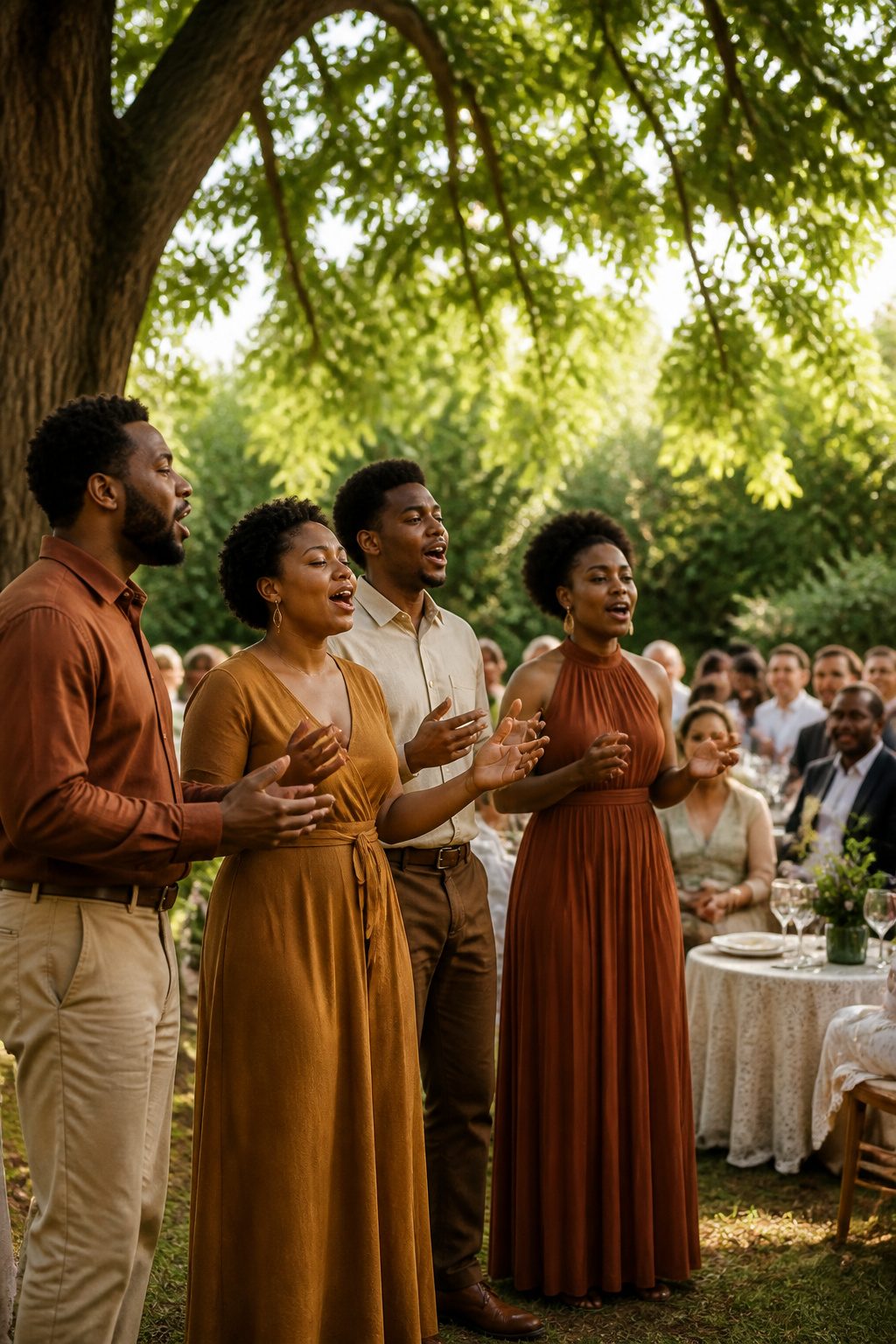
An acapella group hits different from karaoke because the risk sits entirely on trained shoulders instead of your college roommate’s.
I watched a six-voice ensemble walk into a Gainesville garden reception last spring, no sound check, no backing tracks, and fill a forty-guest tent with harmonies that stopped mid-conversation in its tracks.
The energy they brought was structured enough to feel like a show, loose enough to read the room; they pivoted from a Stevie Wonder opener to something slower when they noticed grandparents leaning in.
Booking one means vetting their repertoire against your crowd’s age spread, not just their pitch. Ask specifically whether they arrange their own transitions or stop between songs; dead air kills momentum faster than a flat note.
I schedule them for the lull that hits about ninety minutes into open bar, when dinner plates have cleared but the dance floor hasn’t committed.
Twenty minutes is the practical ceiling. They finish, the DJ fades back in within eight beats, and guests who were leaning against the bar are suddenly remembering why they came.
8. Beer Pong
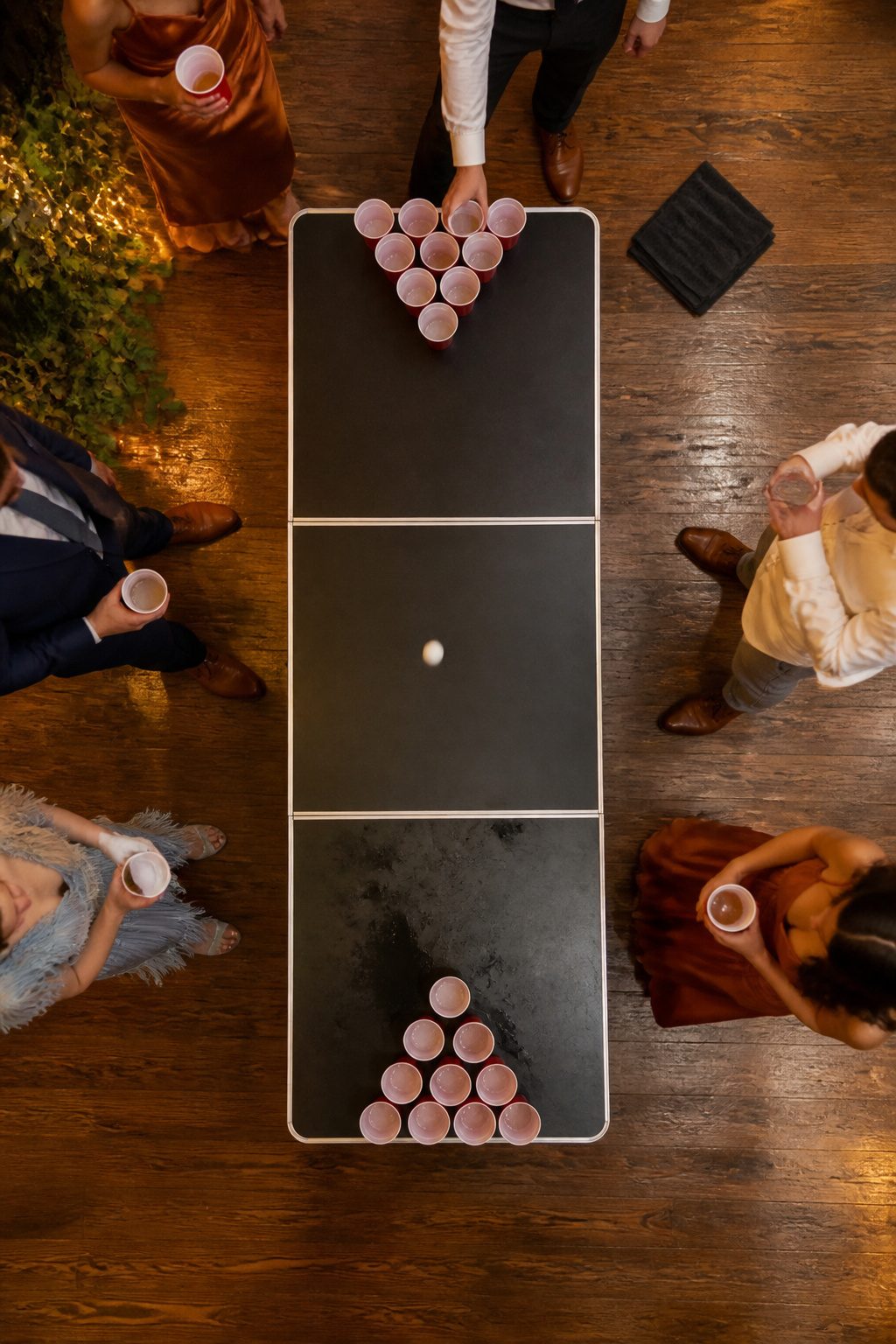
A beer pong table at a wedding sounds like a joke until you watch the first guest wander over "just to watch" and ten seconds later call for a partner.
The game runs itself from there. People drift in and out between songs, someone always gets obsessed with sinking that one cup, and soon the whole room is invested.
Spilled beer on formal attire is the real risk here, so I set the table on a hard surface away from the dance floor and keep a stack of dark towels within arm’s reach.
The crowd it draws is exactly who you want to reach: the college friends, the uncles who claim they haven’t played since college, the people who do not dance.
A table with ten cups on each side, water in the cups and beer on the side to drink, keeps the stakes friendly and the dry-cleaning bill manageable.
Your wedding can be a great reflection of your personality; you don’t need to throw a formal affair if that’s not you.
That permission matters because someone at every wedding will side-eye a beer pong table until they see it working. The ones who hesitate longest often become the most vocal players by the end of the night.
9. Dance Mob
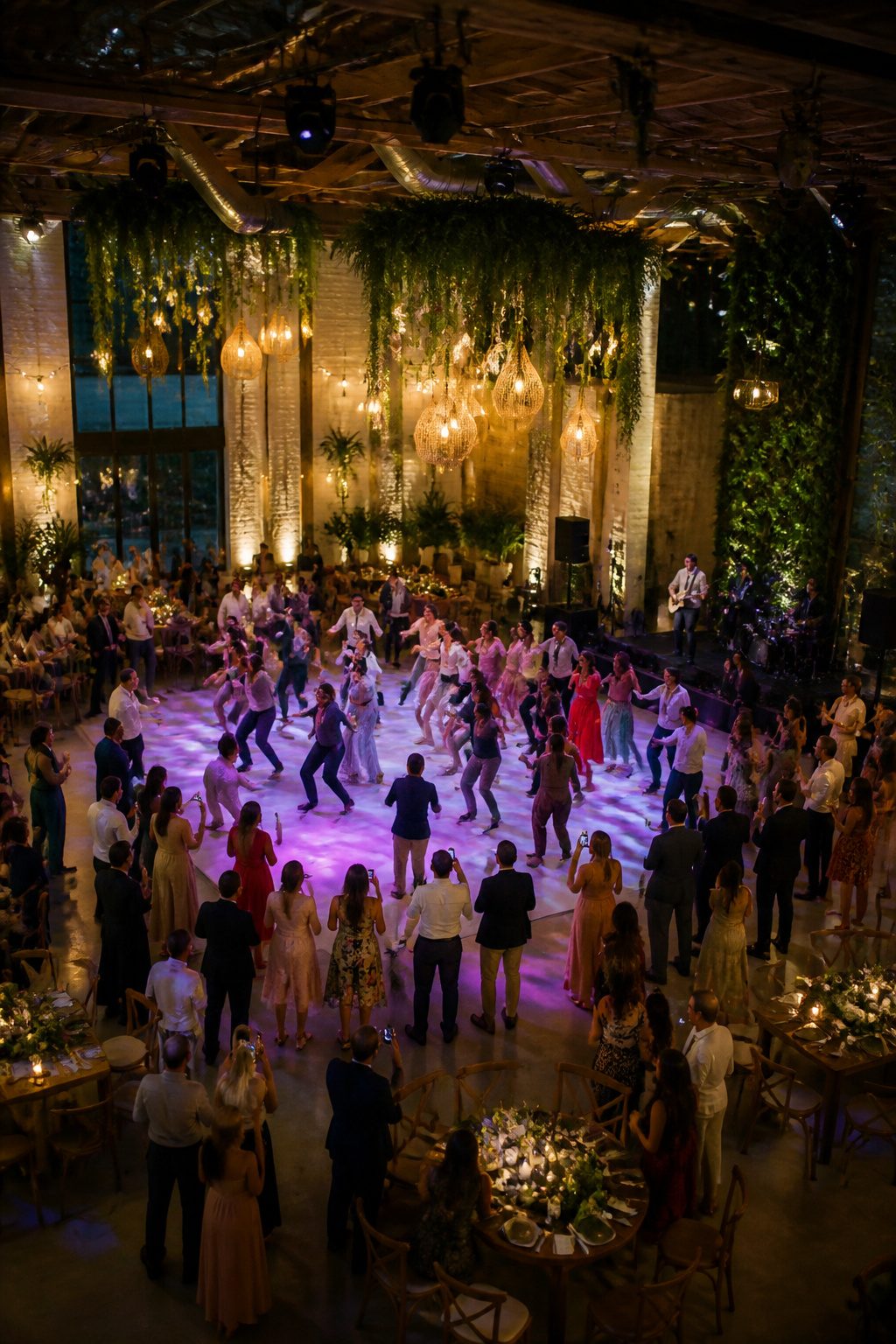
A dance mob works best when the guests are not sure whether it is staged or not.
I have watched the difference between a routine that feels planted and one that reads as a genuine eruption, and the gap comes down to rehearsal and who is in it.
You need at least six people moving together before the room registers it as a group event rather than a few drunk cousins.
Eight to ten is better. Fewer than that, and the energy collapses before it spreads.
Rehearsal is where most couples overthink it.
The sources suggest two paths: full practice sessions, or simply trading videos in a group chat and trusting the mess. Both work.
The half-remembered version often plays better because the slight chaos sells the surprise. A too-sharp routine looks like a TikTok stunt; a wobbly one looks like your friends actually lost their minds for three minutes.
The real trick is the setup. If you plant the song early in the night and let people forget about it, the break hits harder.
If the DJ announces something special, everyone waits for the bit and the tension deflates. Hide the song in plain sight, then let the bodies move before the brains catch up.
10. Portable Bulbs or Glow Sticks
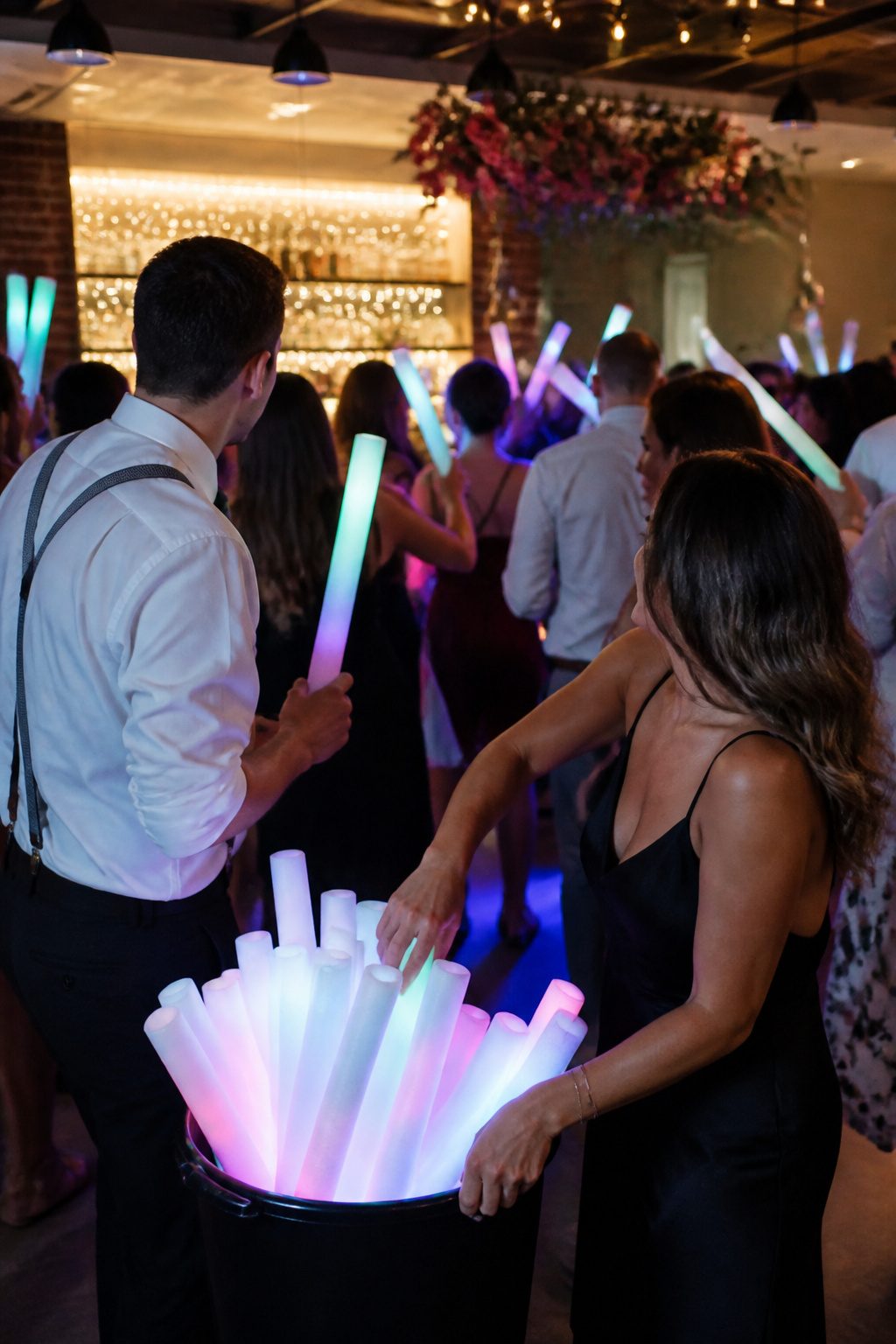
The cheap glow sticks that snap to life work, but they fade within hours and the color turns muddy.
LED finger lights and foam batons last the whole reception on a single battery set, and the white or color-change modes photograph cleanly instead of bleeding into a yellow-green blur.
Battery logistics decide whether this is a five-minute favor or a headache.
Finger lights run on watch-style cells that guests pocket by accident; foam batons take AA or AAA and feel substantial enough that people set them down on tables instead of walking off with them.
My read: allocate one per guest plus twenty percent for the ones that roll under chairs or get claimed by the wedding party.
Distribution timing matters more than distribution method.
Handing props out before the first dance feels forced, like assigned fun. The move that actually works is stationing them in buckets near the bar or DJ booth right after dinner, when people drift toward the floor on their own.
Guests pick them up casually, the lights spread organically, and the shift from dinner conversation to dancing happens without anyone making an announcement.
11. Party Shades
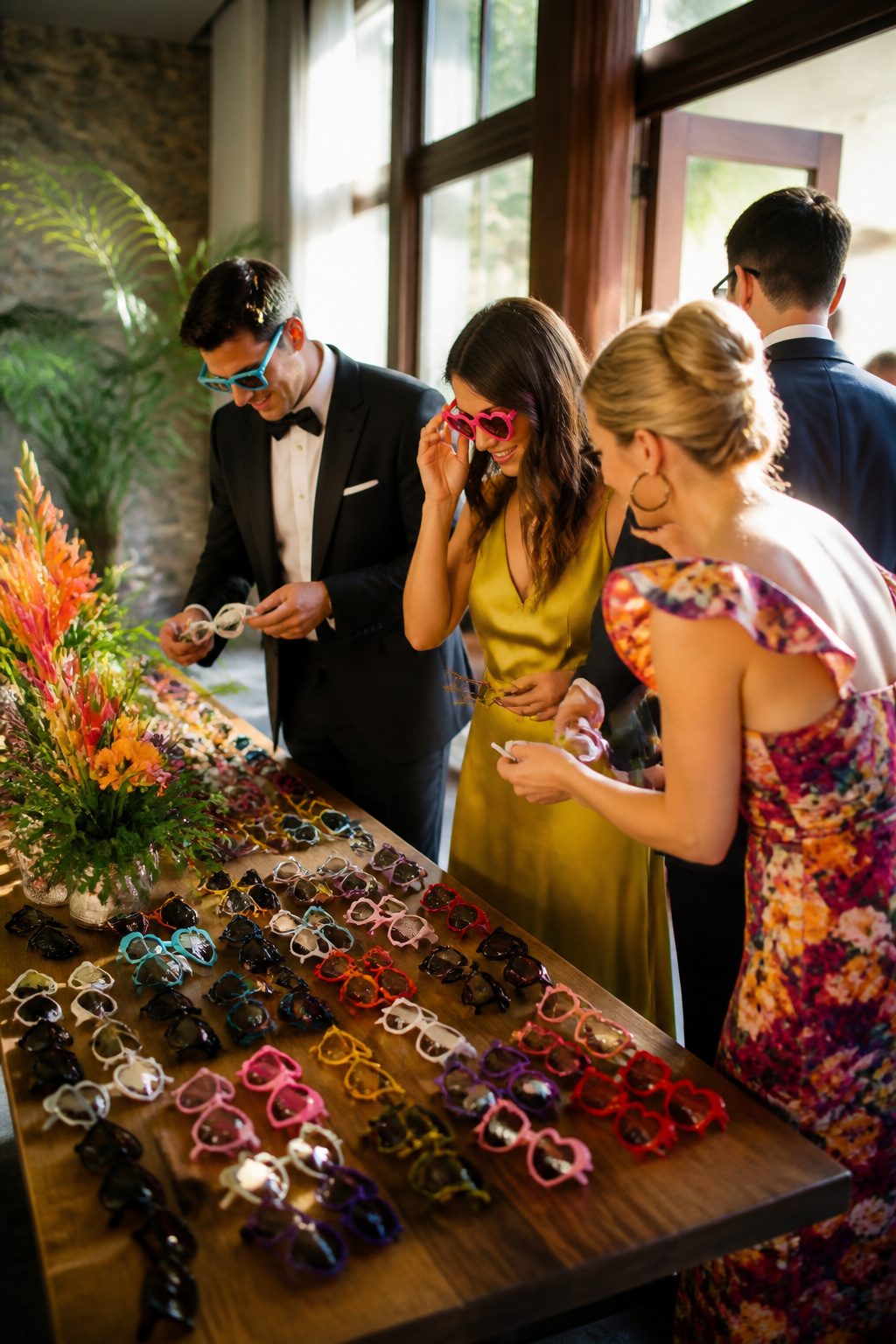
The cheapest route is a bulk pack of classic black frames from any party-supply site, usually running well under a dollar per pair when you order a few hundred.
I have tried hats, leis, and even those plastic maracas, and they all share the same problem: guests set them down by the second song.
Sunglasses stay on because the light in a reception hall is already bright, and once people have them over their eyes, the costume shift feels natural rather than forced.
Hand them out right after dinner, not during cocktail hour. Earlier distribution means guests will absentmindedly leave them at tables or stuff them in purses before the dancing starts.
A basket by the DJ booth with a sign works, or have the catering staff drop a pair at each place setting once salads are cleared.
The frame style matters less than you would think. Neon 80s colors, heart shapes, even custom-printed lenses with your names, they all get the same result because the real prop is the anonymity.
People who would never dance in front of coworkers suddenly move like they are in a different room entirely.
12. Burlesque Dancer
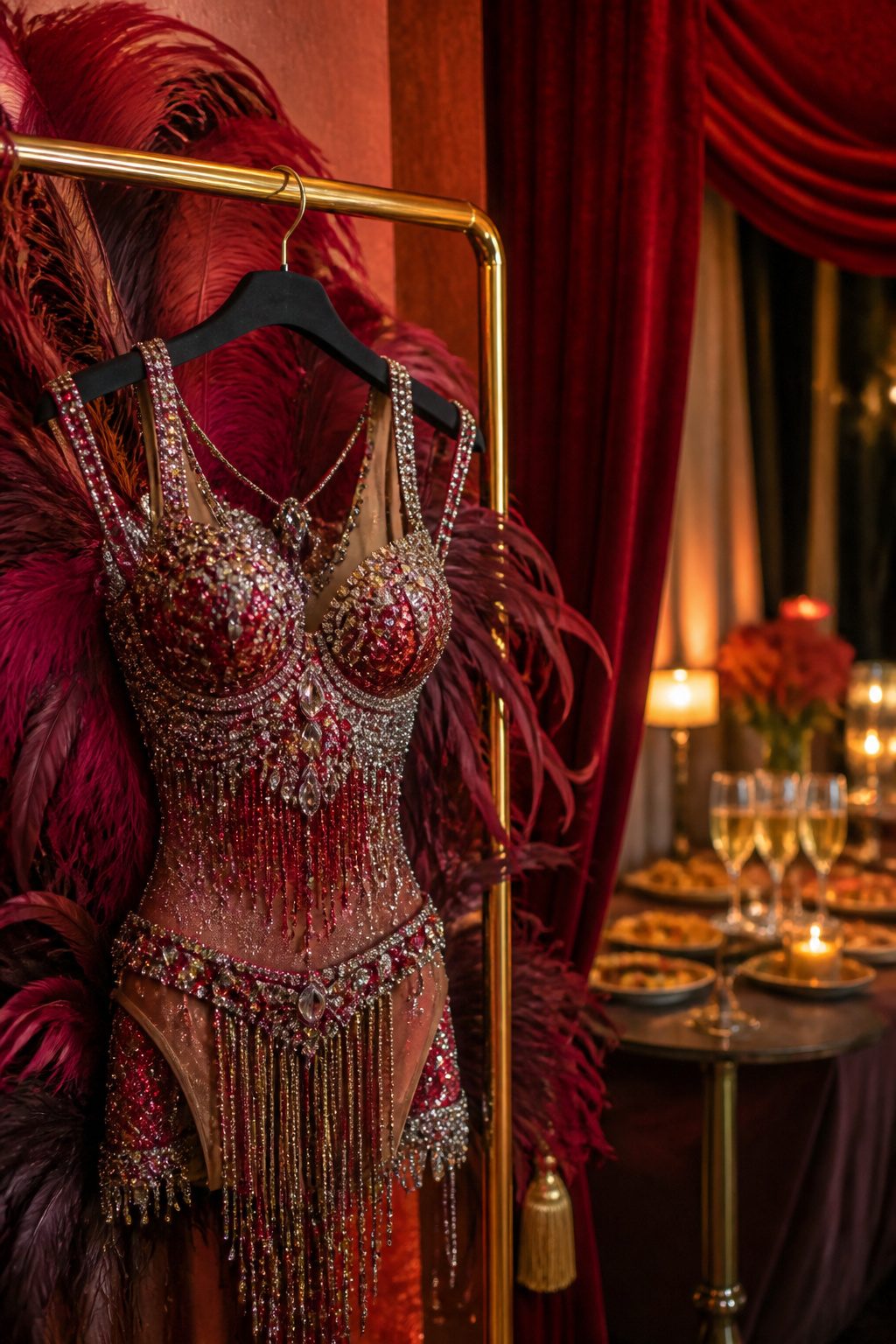
A burlesque dancer lands somewhere between cocktail-hour curiosity and full cabaret, and the difference is the audience you already have, not the one you hope shows up.
I start every conversation about booking by asking who is actually coming: a room of college friends reads the act one way, three generations of family reads it another, and the groom’s grandmother will surprise you either way.
The booking itself runs through specialty agencies, not your usual entertainment broker.
You want someone who books private events, not club residencies, because the choreography and costume changes are built for a stage with wings, not a parquet floor between the salad course and the cake cutting.
Ask for video of their full wedding set, not a highlight reel, because the pacing of a twenty-minute act is what separates a gasp from a yawn.
At one wedding I planned in downtown Gainesville, the groom’s grandmother became the loudest cheerleader in the room.
She had grown up on Vaudeville revivals and recognized the classic moves underneath the modern remix. The bride had been terrified of offending her; instead, the grandmother cornered me during the last dance to ask for the dancer’s card.
That is the calibration that matters. If your oldest guest can read the performance as craft rather than provocation, you have booked right.
13. Jump in the Lake
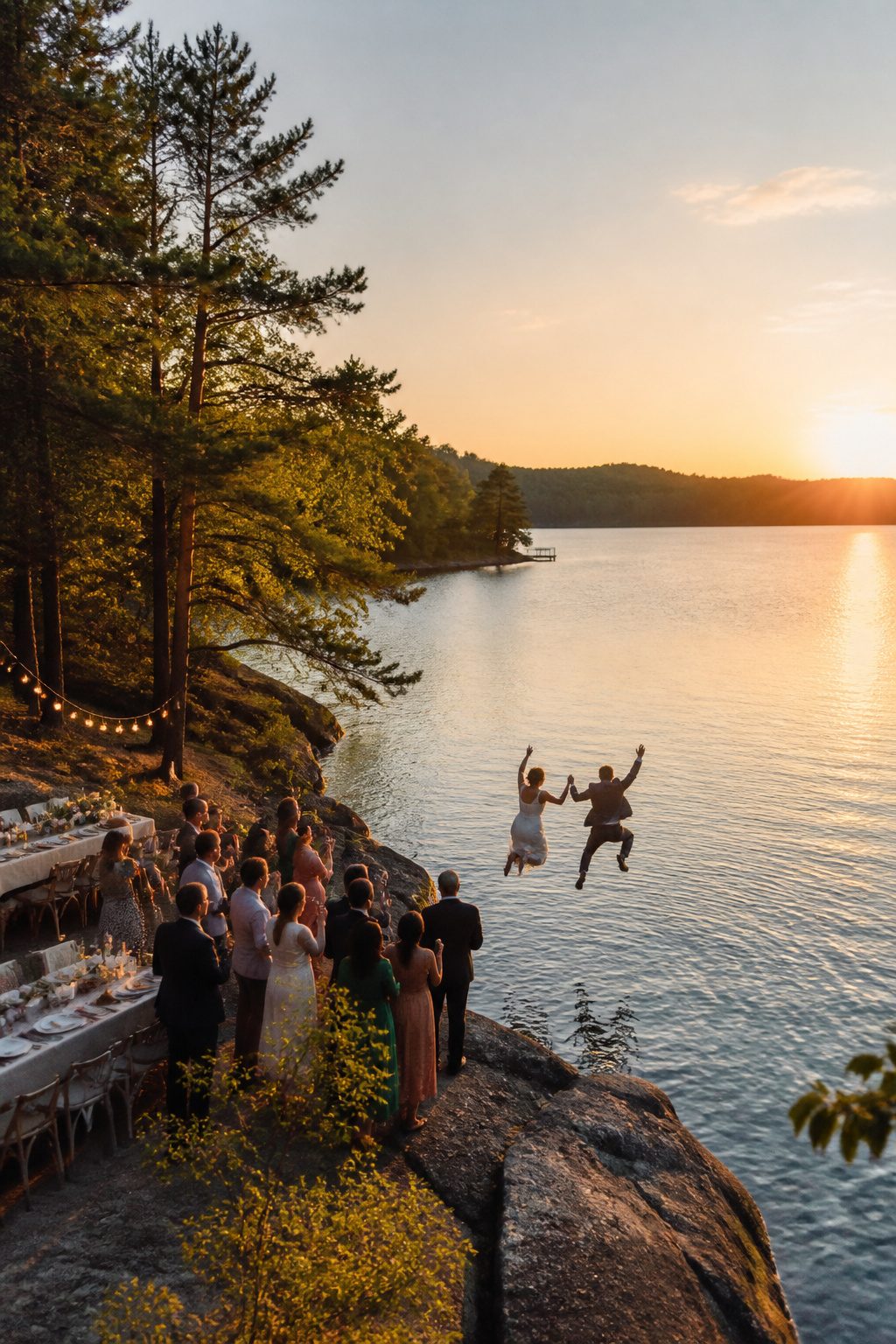
A lake jump only works if the venue actually allows it, so that phone call to the coordinator comes before anything else.
Most lakeside spots in the Gainesville area carry liability waivers for swimming, and some require a certified lifeguard on duty after dark.
The couples I have seen pull this off planned it as the night’s final act, not a mid-reception detour, because wet formalwear takes forty minutes minimum to change out of and the tent drops temperature fast once the dancing stops.
The photograph justifies a lot. Sara Monika’s couples who went straight in dress and suit got the kind of unguarded joy that the posed portraits earlier in the evening rarely catch.
But the logistics run the other direction: guests who follow you in need towels they did not pack, and the heated tent that felt generous at 9 PM turns clammy at 10:30 with damp hair and lake-chilled skin.
My read is that this works for a small wedding where everyone is staying on-property, and falls apart for anyone with a shuttle home.
14. Fire Dancer Performance
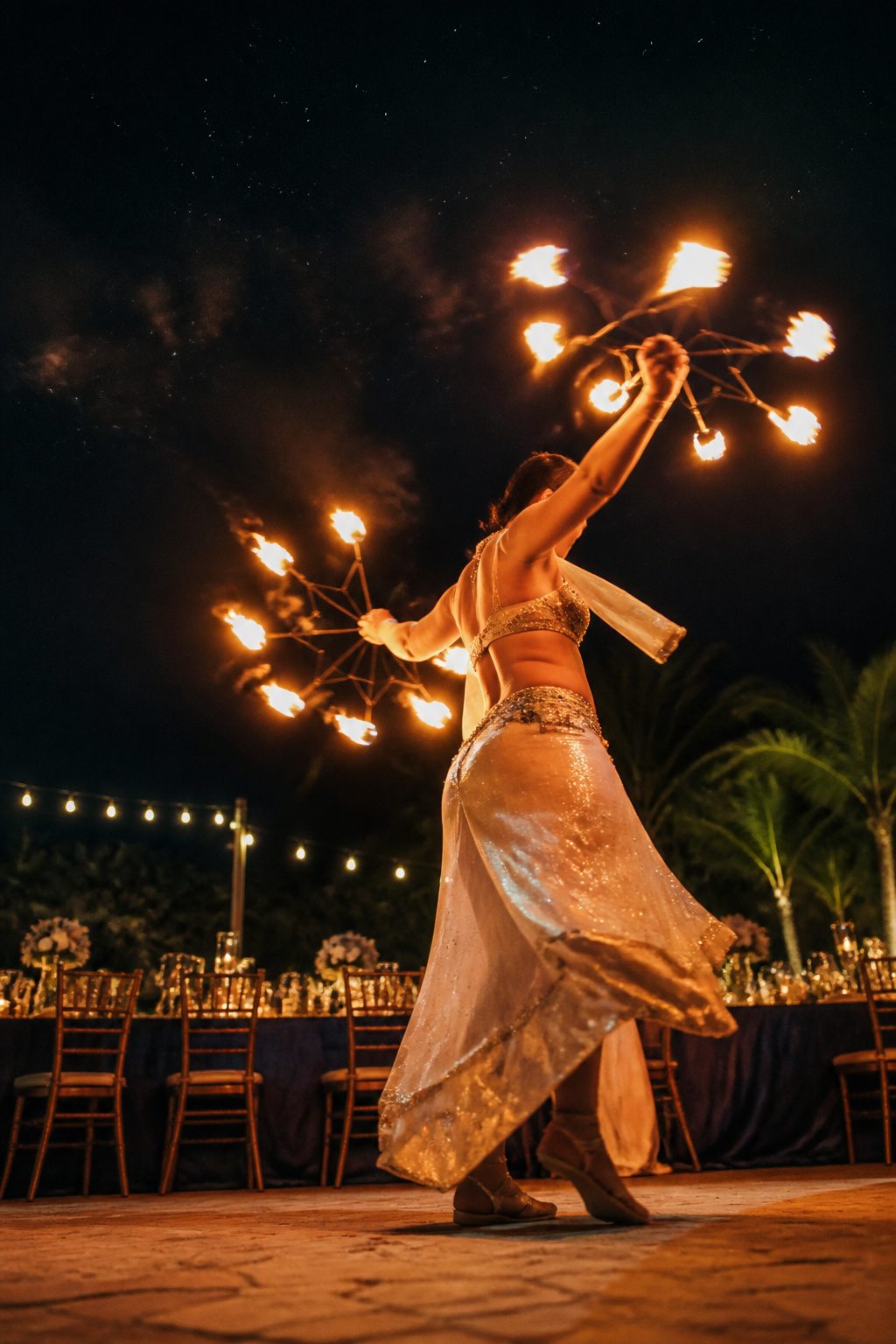
A fire dancer belongs outside, full stop. Indoor venues carry insurance riders that make this act cost-prohibitive, and the open sky gives the performer the margin they need for the fuel, the wicks, and the wind.
Ask your venue about permits before you book anything; some Florida counties classify fire performance as a special event requiring paperwork filed weeks ahead.
The insurance conversation is non-negotiable.
The dancer carries their own liability policy, but your wedding insurance needs to name fire performance specifically, not just "entertainment." Gaps between those two categories have left couples exposed when a spark found dry grass.
Weather contingency means more than rain. Wind above a certain threshold grounds the act, so build in a late decision point with your timeline, not a hard slot that leaves you choosing between safety and an empty dance floor.
Distance rules are strict and sensible. Tents, fabric draping, and alcohol service all need buffer zones measured in feet, not inches.
The performer sets these boundaries and enforces them; your job is making sure guests understand that the roped-off area is not a suggestion. I have seen a groomsman try to hand a fire dancer a drink mid-spin.
The dancer stopped, the music cut, and the couple lost five minutes of their reception to a safety lecture. Plan the bar on the opposite side of the space and save everyone the interruption.
15. Ski Shot
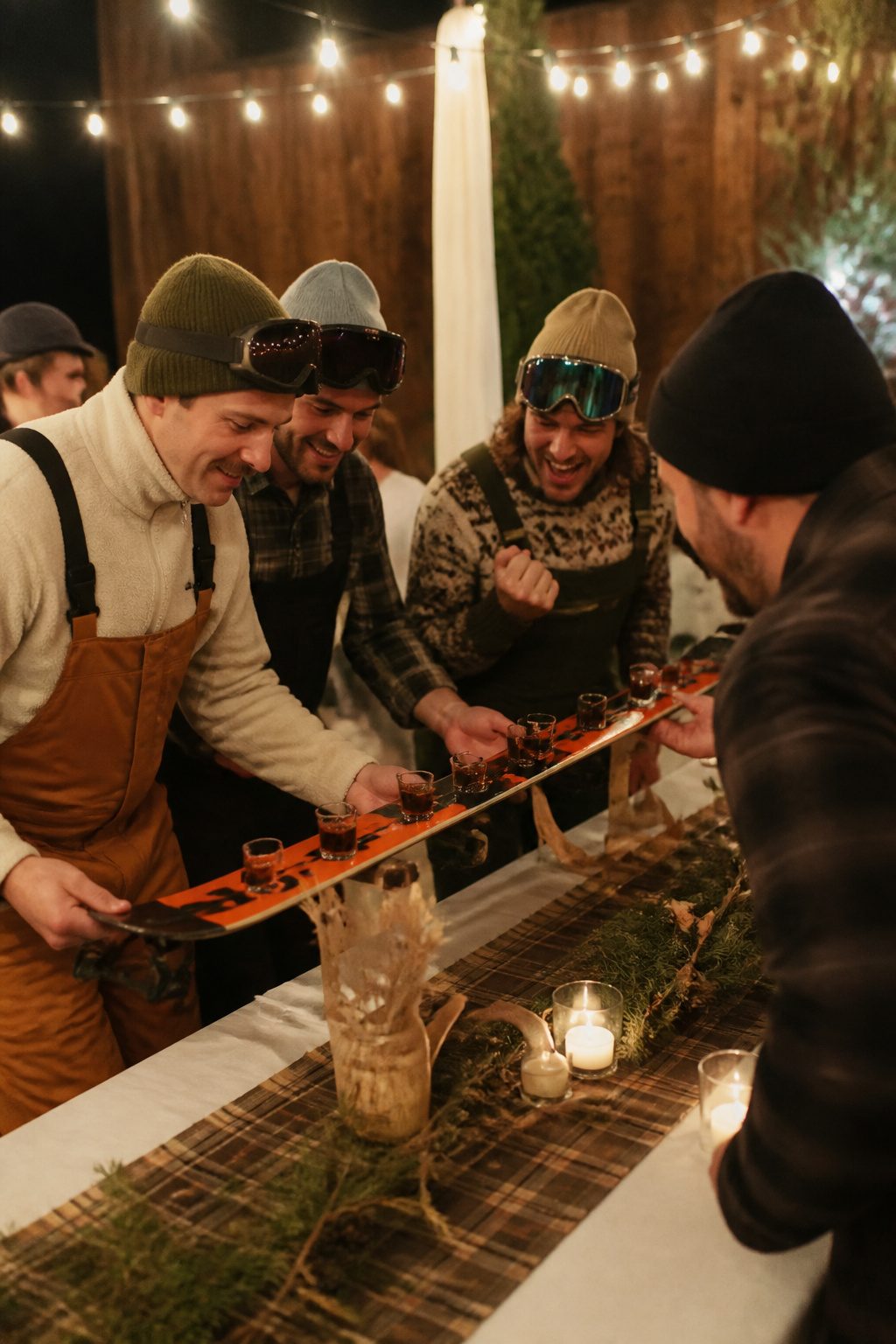
A ski shot is a four-shot drinking glass fused into the shape of a small ski, meant to be passed from guest to guest in quick succession during the reception.
Each person takes their slot along the ski, tilts, and drinks in one motion so the liquid runs downhill into their mouth.
The physics only work if the whole apparatus has spent at least a couple hours in a freezer beforehand.
Warm glass lets the shot pool in the valleys between cups, and someone ends up with three times the pour while their neighbor gets a dribble.
I have seen a bride’s uncle try to MacGyver the fix by holding the ski at a sharper angle, which emptied the remaining shots onto the groom’s cousin’s linen shirt.
If your venue has limited freezer space, that detail alone can kill the idea, since a room-temperature ski shot is not a fun wedding activity, it is just four sticky glasses and a dry-cleaning bill.
16. Red-Light Party Vibes
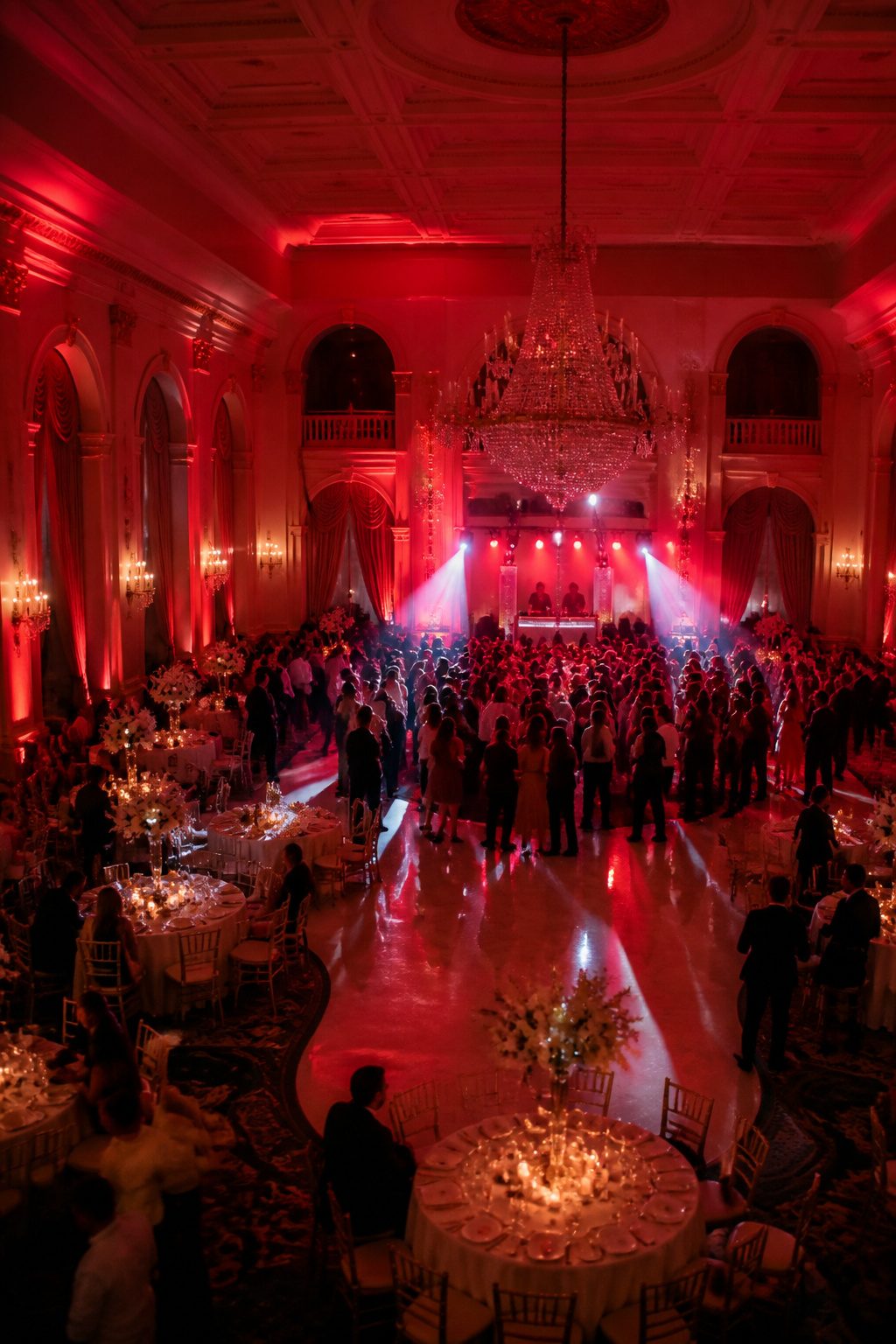
Most DJs default to purple or blue once the dancing starts, and the room cools into something that feels like every other hotel ballroom you’ve sat in.
Red does something different. A gel the color of a darkroom safelight, dropped over a PAR can or moving head aimed at the dance floor, pushes the energy up instead of flattening it.
Skin reads warmer, movement looks faster, and the whole room tilts toward the reckless side of fun.
I noticed this at a reception where the switch happened right after cake, around 9:30 when the older guests were already peeling off.
The band had been under standard warm white for dinner; the moment that red cut in, people who hadn’t danced all night were pulling each other up.
Red light hides sweat and softens the self-consciousness that keeps guests in their chairs; purple, by contrast, throws every flaw into relief and turns a dance floor into a fishbowl.
The fixture matters less than the timing. A single uplight with the right gel does the work if it hits the ceiling and bounces back down.
The mistake is leaving it on all night; red for three hours goes from bold to exhausting. Use it as a phase, not a setting.
17. Circle Sparkler Dance
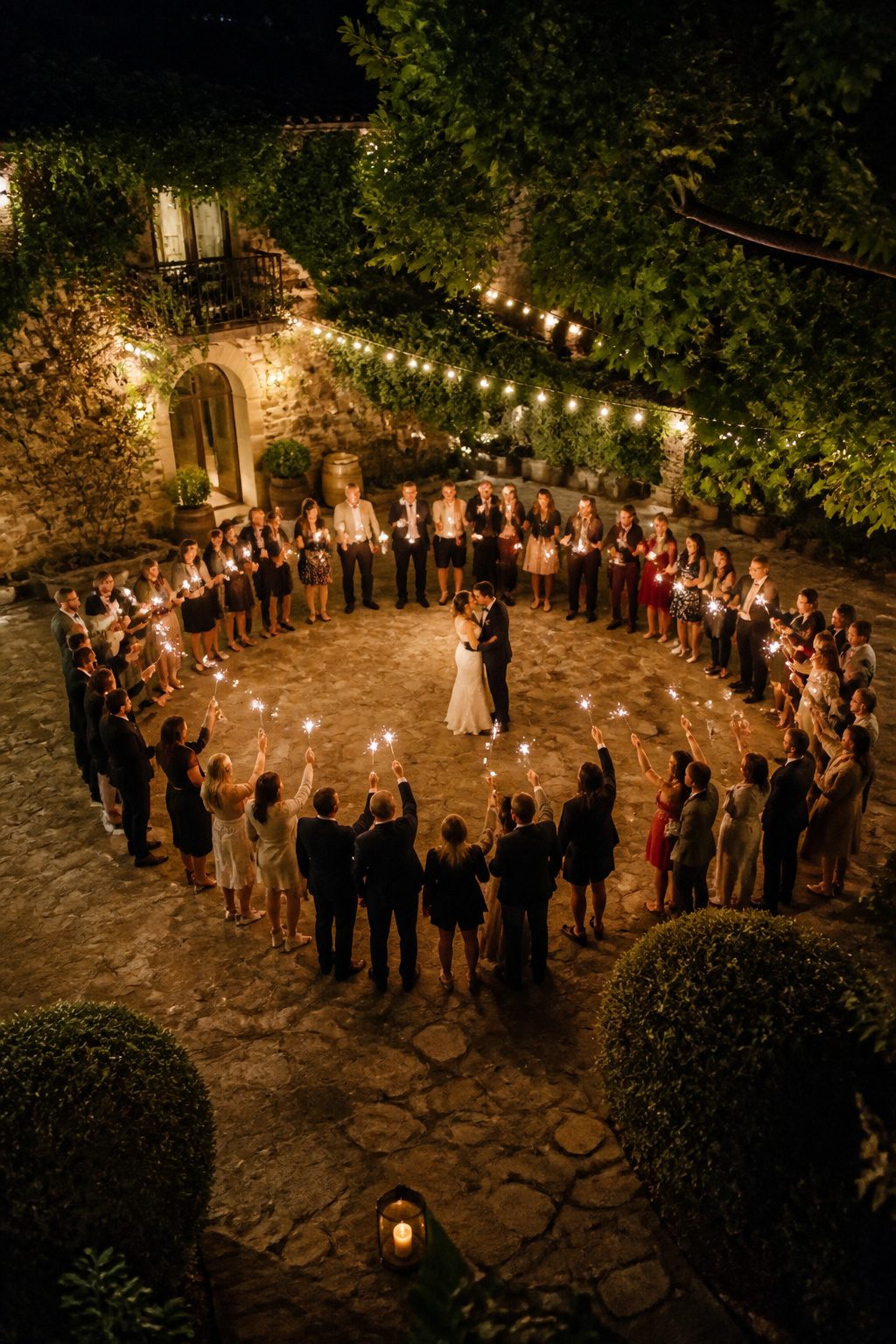
A sparkler circle works best as a late-night pivot, not a formal exit. Guests form a ring around the couple, lit wands facing inward, while the two of you share one slow dance before the DJ pushes tempo again.
The photograph that results, every face visible in warm light, is the reason planners keep suggesting it.
The 36-inch wedding sparklers are the only ones that make sense here.
Standard party sticks burn thirty to forty-five seconds; the long version gives you three to four minutes, which is the difference between a relaxed formation and guests fumbling with lighters while the song starts without you.
The coordination is real. Someone has to station themselves at the circle’s edge with a butane torch, lighting guests in sequence so the first lit sparkler does not expire before the last one catches.
I have seen a bridesmaid take this role, moving clockwise with a calm voice and a flame that never wavers. Without her, the circle arrives in pieces.
The risk is polyester and tulle.
A spark at chest height on a satin bridesmaid dress does not ruin the night, but it ruins the dress, and the photograph you want becomes the one where someone is brushing ash from a shoulder.
Cotton or linen separates for the inner circle, or simply holding the sparklers at full arm’s length above head height, shifts the odds. The image loses nothing; the light falls the same way.
18. Fireworks
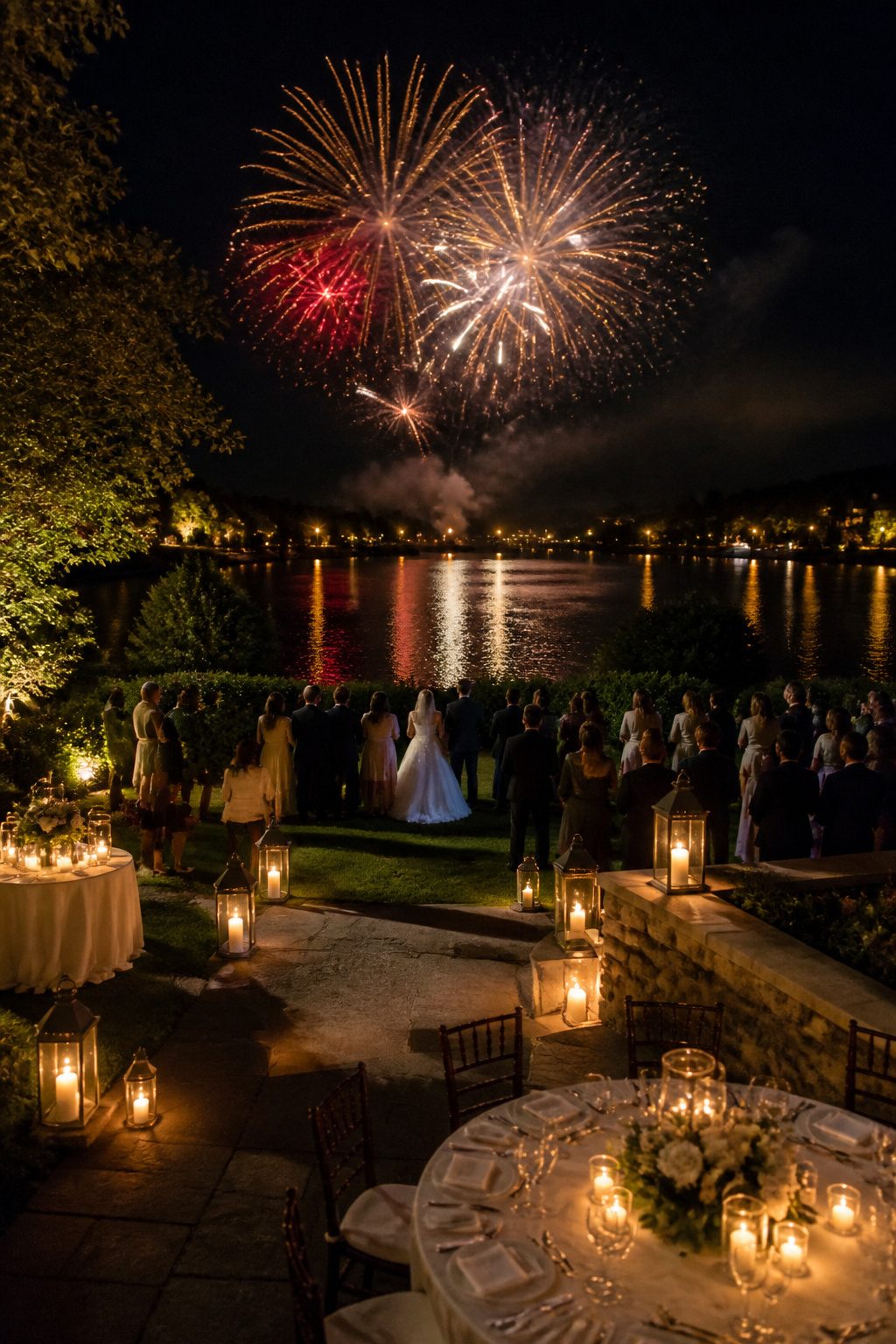
A fireworks send-off looks magical in photos, but the permit process eats up more time than most couples expect.
City and county offices usually need applications weeks in advance, plus proof of liability coverage from your vendor, and some jurisdictions ban aerial displays outright within city limits.
Rural venues simplify the paperwork, though noise still matters: a 10-minute show at 11 p.m. will strain relations with neighbors who have work the next morning, and farms with horses or cattle can see animals bolt through fences from the percussive thump even at legal distances.
The cost curves steeply with duration.
One planner told me she stopped recommending anything under five minutes because guests keep their phones raised the whole time and barely experience it in person; seven to ten minutes hits the sweet spot for memory without ballooning the quote.
If your venue sits near houses or agriculture, a quiet sparkler exit costs a fraction and carries none of the permitting risk.
19. Mini Rave
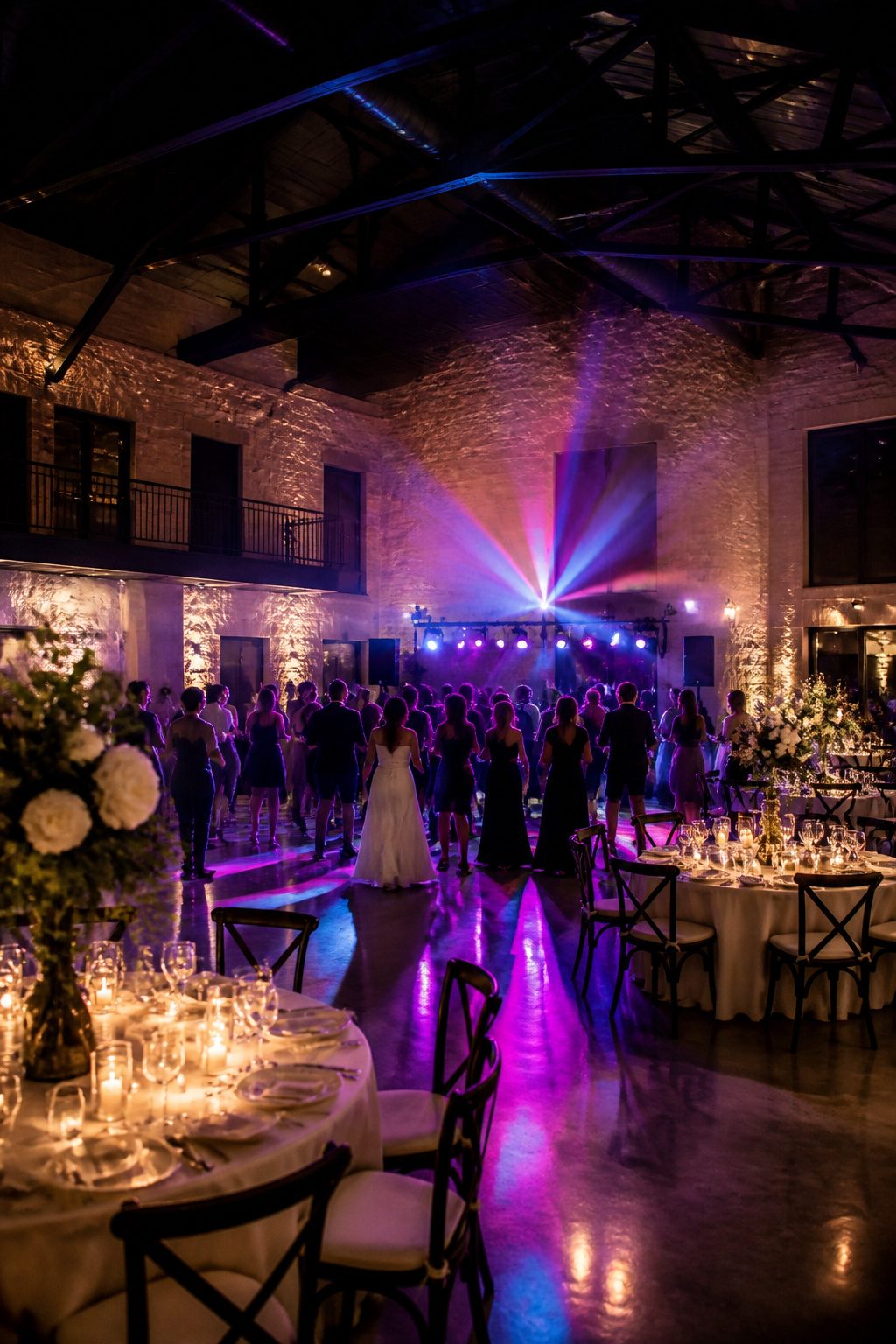
A mini rave is a condensed late-night dance experience, not just keeping the regular reception open longer.
The difference is intentional: you ask the DJ to build the music toward a drop, swap the warm-white uplighting for color-changing lights, and hand out glow sticks at a hard transition point, usually after the cake and bouquet rituals are finished.
The DJ conversation matters more than the glow sticks.
You want someone who reads a room well enough to sense when the older guests have thinned and the energy is flagging, then can shift genres and tempo rather than coasting on the same playlist.
Ask specifically about their experience with build-and-drop structures; a wedding DJ who only smooths between cocktail-hour jazz and Motown will flatten the moment.
Physical space needs are modest but real.
You need enough floor area that guests can move without bumping tables, and you need the lighting rig positioned so it washes the dance floor without spilling onto seated guests who might want to talk.
If your venue won’t let you touch the house lights, the effect dies; confirm that policy before you book.
20. Floaty Crowd Surfing
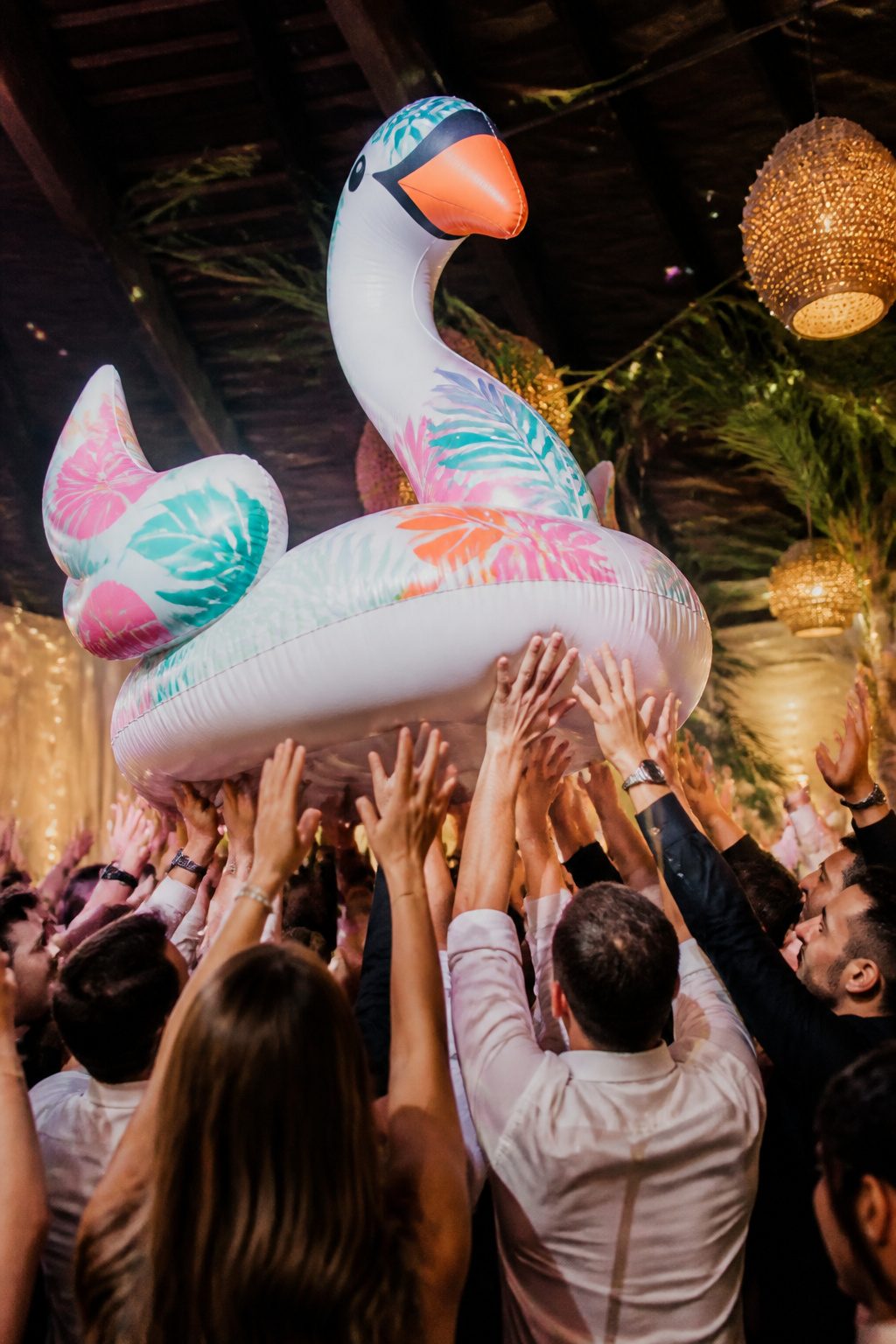
An inflatable crowd surf trades the danger of hands-only lifting for the stability of a raft or giant swan that spreads weight across multiple guests.
What convinced me, reading through a dozen of these, is how much the weight limit printed on the valve actually matters; most hold 200–250 lbs, and a couple that tried to push past that ended up with slow leaks by the end of the night.
The pool version runs on water physics that forgive a lot. A dance floor version needs more air, thicker vinyl, and someone watching the corners where a heel could punch through.
Round floats survive better than long loungers because the weight centers naturally and guests do not have to coordinate who holds which end.
I would skip anything with a single air chamber.
One puncture and the whole thing folds. Two chambers at minimum, three if you can find it, so a guest gets lowered gently instead of dropped.
Interactive Food Stations
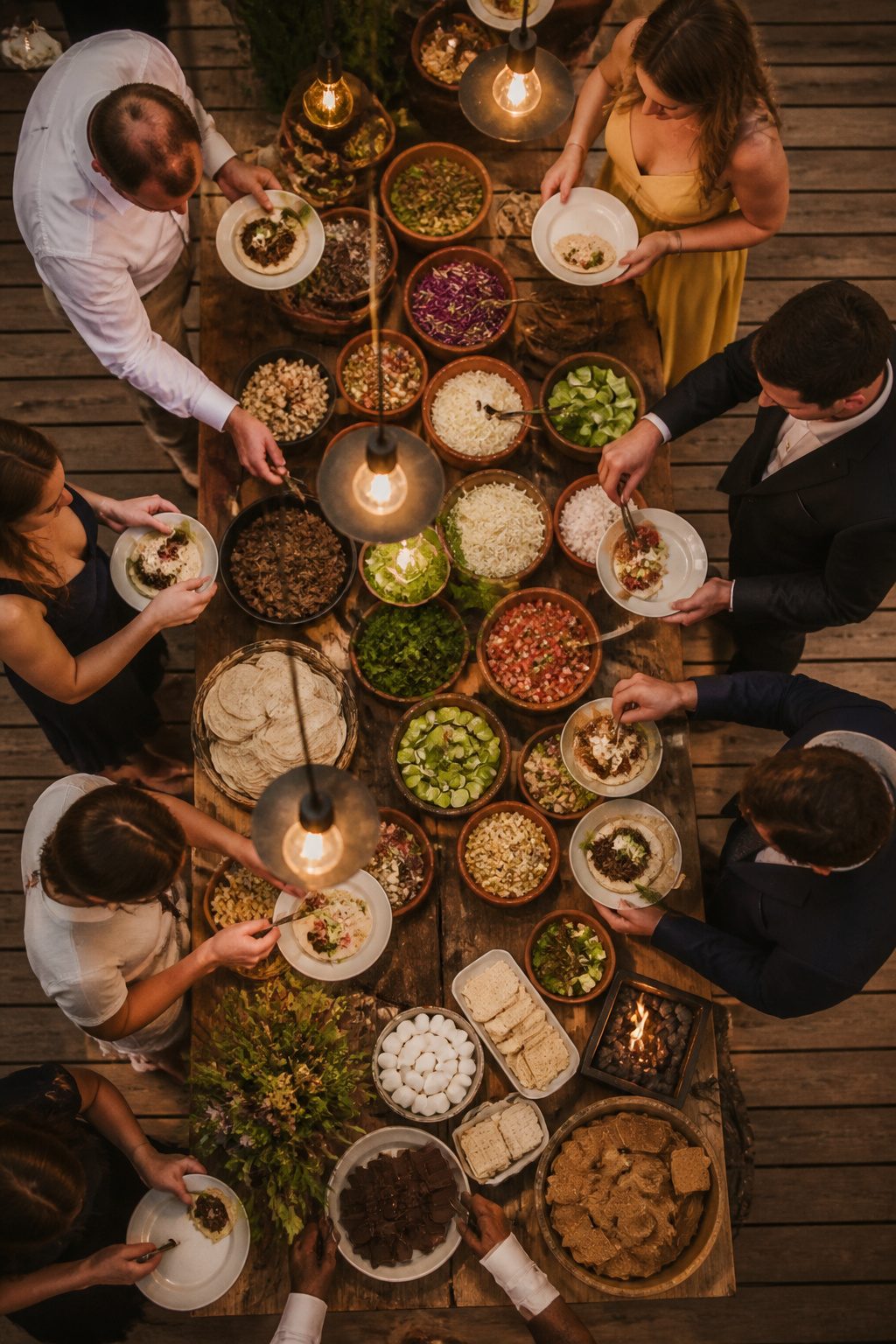
A build-your-own taco bar or s’mores station keeps guests moving between the dance floor and the bar without needing a separate entertainment slot.
The food itself becomes the activity: people debate whether to double the guacamole or torch their marshmallow to actual flame, and the line becomes its own social moment.
The staffing requirement most couples miss is that someone has to restock, troubleshoot, and keep the flow moving. A unattended chocolate fountain turns into a single-file bottleneck fast.
I watched a DIY poke bowl station at a Gainesville backyard wedding generate the longest line I have seen, forty minutes at peak, because the couple had budgeted for the ingredients but not for a second server to keep the rice bowl full and the spoons clean.
The guests loved the idea; they just loved it all at once.
If your catering package offers a station, ask whether it includes dedicated attendant time or if that runs extra.
The stations that actually work, from espresso carts to popcorn bars, are the ones where a person is standing there to hand you the next step before you have to ask.
Photo Booths
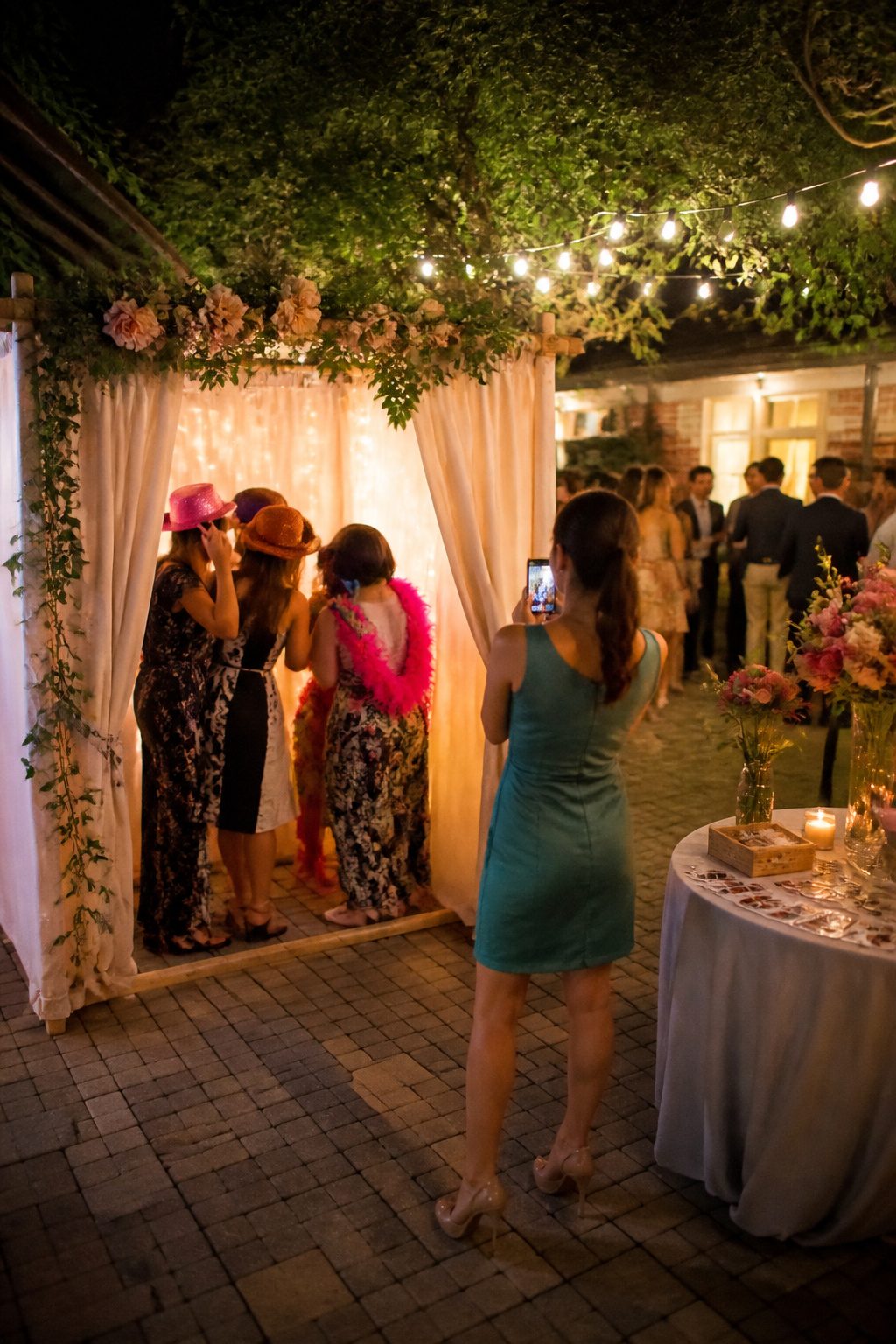
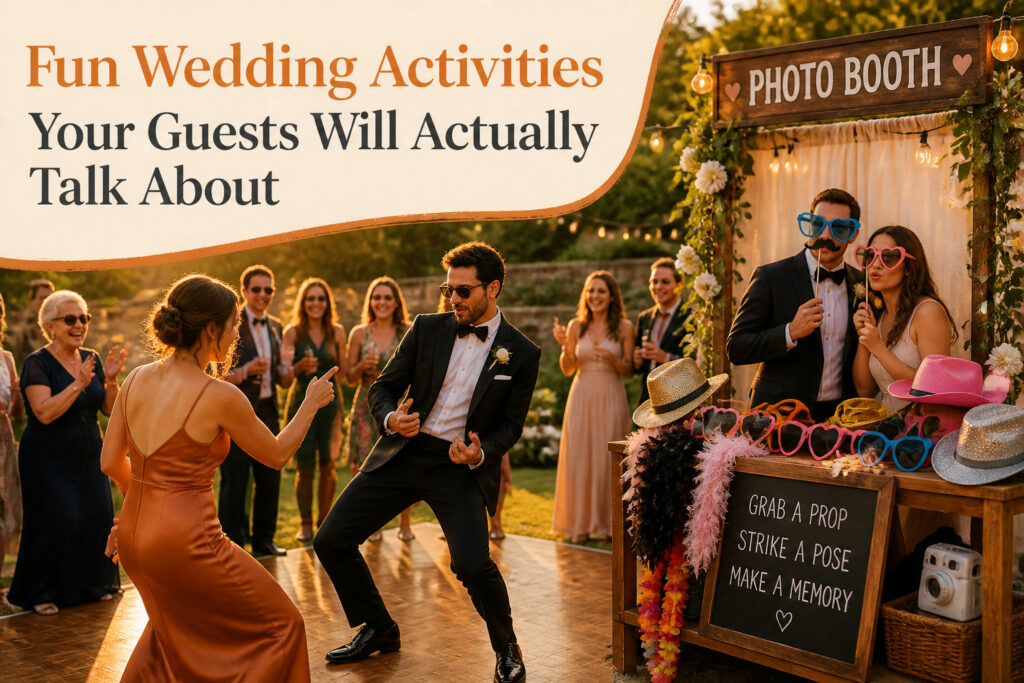
A photo booth still lands on almost every list of fun wedding activities for one reason: guests leave with a print they can hold.
I have paid between $400 and $900 for booth rentals, and the gap mostly comes down to whether someone stays to run it. The prop box is where couples usually cut corners, which is a mistake.
Feather boas and cardboard signs migrate under tables, get stepped on, and vanish by hour three of the reception. Assign a specific person, even a teenager willing to work for cake, to patrol that pile.
The real difference in participation comes from booth shape. Enclosed booths, the kind that fit four people behind a curtain, create a bottleneck.
Guests queue, peek inside, and half the room never bothers. Open-air booths, with a camera on a stand and a visible backdrop, pull in stragglers.
People walking past see someone mid-laugh and join the line. That visibility matters more than the prop quality.
Games
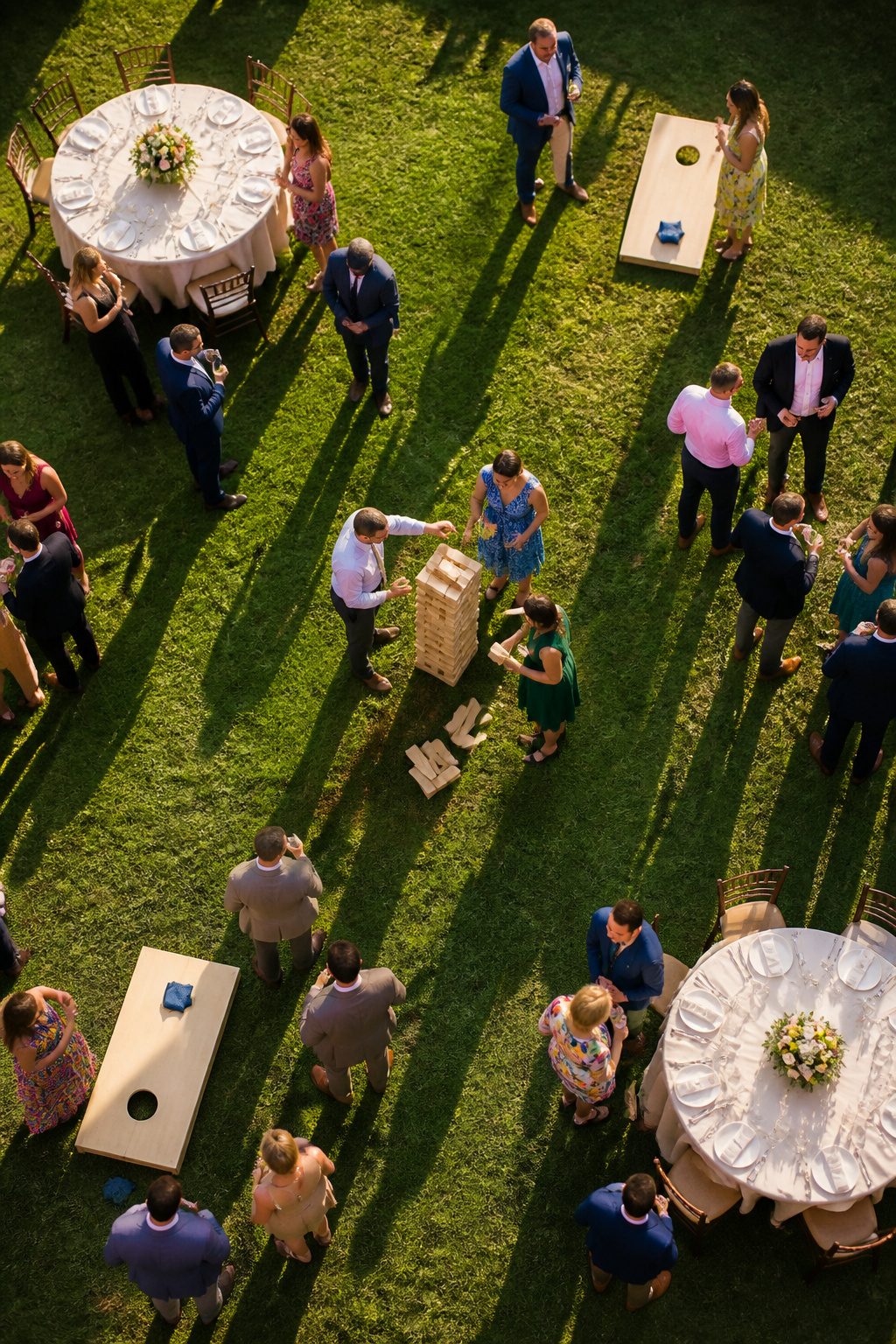
Lawn games sound like a guaranteed hit until you watch guests walk right past a perfectly good cornhole set to get back to the dance floor.
I’ve seen it happen: giant Jenga stacked and ready, the build-up genuinely fun to photograph, but half the tower left standing while the DJ played "Shut Up and Dance."
Cornhole and giant Jenga work best during cocktail hour, when people are still mingling and looking for something to do with their hands.
Both adapt easily indoors if the weather turns; cornhole just needs a hallway with decent clearance, and Jenga fits on any table. A local library loan program can cover the set if you’re not keen on buying.
For guests who simply do not dance, card tables and wedding trivia about the couple give them somewhere to land. Trivia cards get strangers at a table talking to each other without forcing it.
The mistake is booking too many games and guarding them like a host.
Set them out, mention them once, and let guests choose. Some will choose the dance floor every time, and that is not a failure of the games.
Live Performances
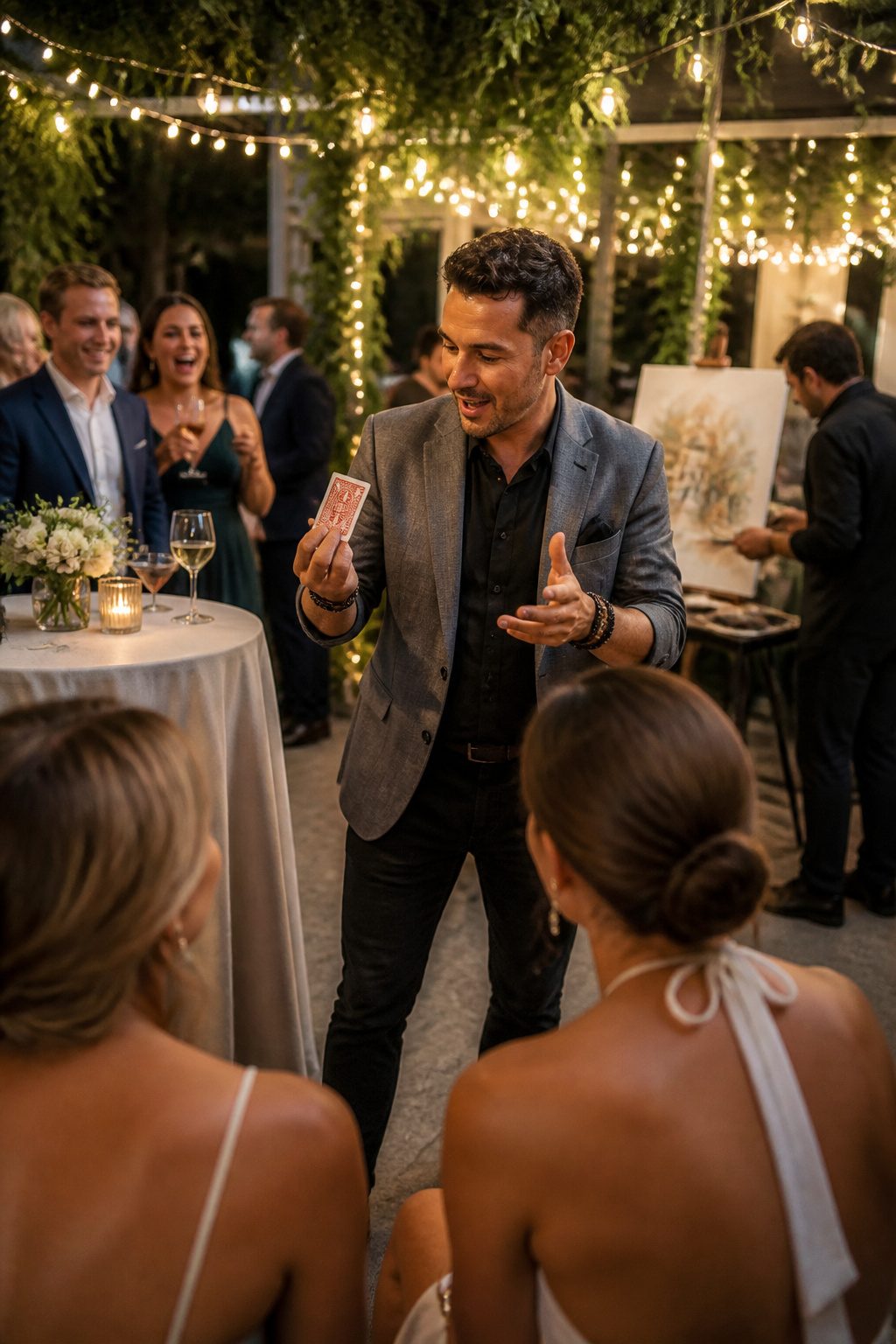
A roaming magician works the room during cocktail hour, moving from group to group with close-up sleight of hand that breaks the ice faster than any assigned seating chart.
Kids cluster fast, but the real payoff is watching two strangers who arrived alone compare notes after the same card trick left them both baffled.
Book this six to eight months out in Gainesville; the good ones, the ones who actually read a crowd instead of running through a set routine, have limited weekend slots and the university calendar swallows half of them during fall.
A live painter turns the same window into a keepsake. Guests pose for individual watercolor portraits they take home as favors, or one artist captures the whole reception on canvas while they watch the scene develop between dances.
Either way, it solves the favor problem and the entertainment problem in the same hour.
Caricaturists fit the same slot, and musicians during cocktail hour are standard for a reason. The mistake is booking any of them too late and getting whoever is left.
Guest Participation
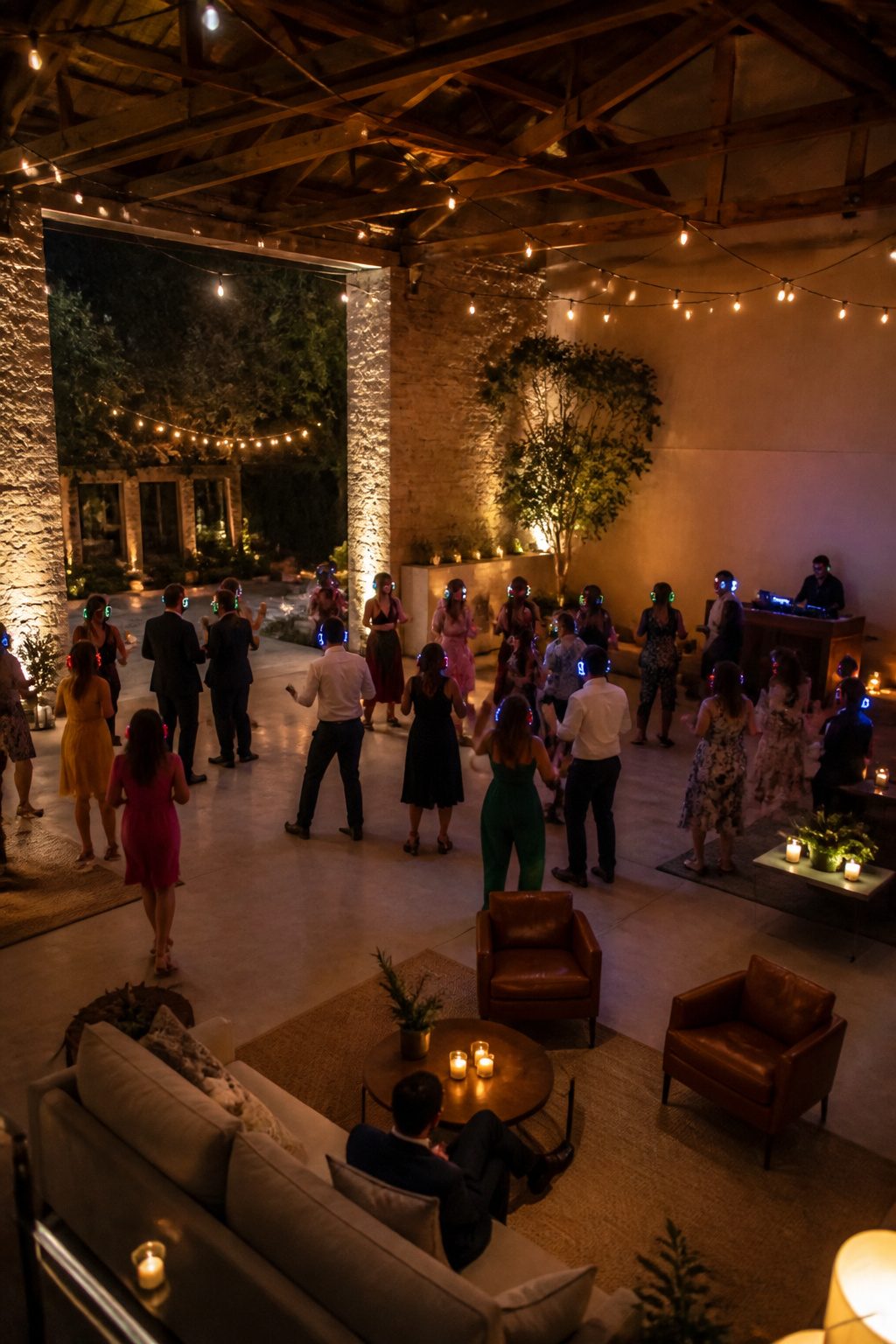
A silent disco lets guests keep dancing after the venue’s noise curfew kicks in, each person wearing wireless headphones that switch between multiple music channels.
The same rig works during open dancing if your crowd spans generations and no single playlist will hold them.
I looked into rental packages from Silent Disco Vibe, which ships the headphones, transmitters, and charging gear for about two hundred headsets at a time.
The per-head cost usually runs in the mid-single-digits for a weekend, though freight to Gainesville adds a flat fee that stings less if you split it with another couple on a nearby date.
Three channels sounds generous until you watch guests spend half the night hunting for the one song they want instead of dancing. That is the exhaustion point: more participation options do not always mean more energy.
Two channels, or even one channel and the choice to pull the headphones off and talk, keeps the floor fuller longer. Karaoke and a talent showcase layered on top of the same evening hit the same wall.
I would pick one participatory moment and let guests own it rather than schedule a mic, a dance-off, and a guest DJ set all in the same reception.
The off-key yelling at karaoke works, by the way, because everyone expects it. The charm is the vulnerability, not the skill.
Frequently Asked Questions
What are some fun wedding activities guests will actually enjoy?
Karaoke, stilt walkers, drum performers, beer pong, and surprise food deliveries like late-night McDonald’s all create moments guests talk about for years.
The key is timing: slot each activity for the exact moment energy would otherwise drop, not when the schedule has room for it.
How can I keep kids entertained at a wedding?
Set up a dedicated activity table with coloring books, crosswords, crayons, and small toys.
A custom wedding coloring book works even better. This keeps children occupied while parents stay on the dance floor instead of leaving early.
What unique entertainment options work for wedding receptions?
Fire dancers, live drum performers, acapella groups, and magicians all break the standard DJ-and-dinner routine. Fire dancers require outdoor space, venue permits, and specific insurance naming fire performance; magicians work anywhere and double as icebreakers between tables.