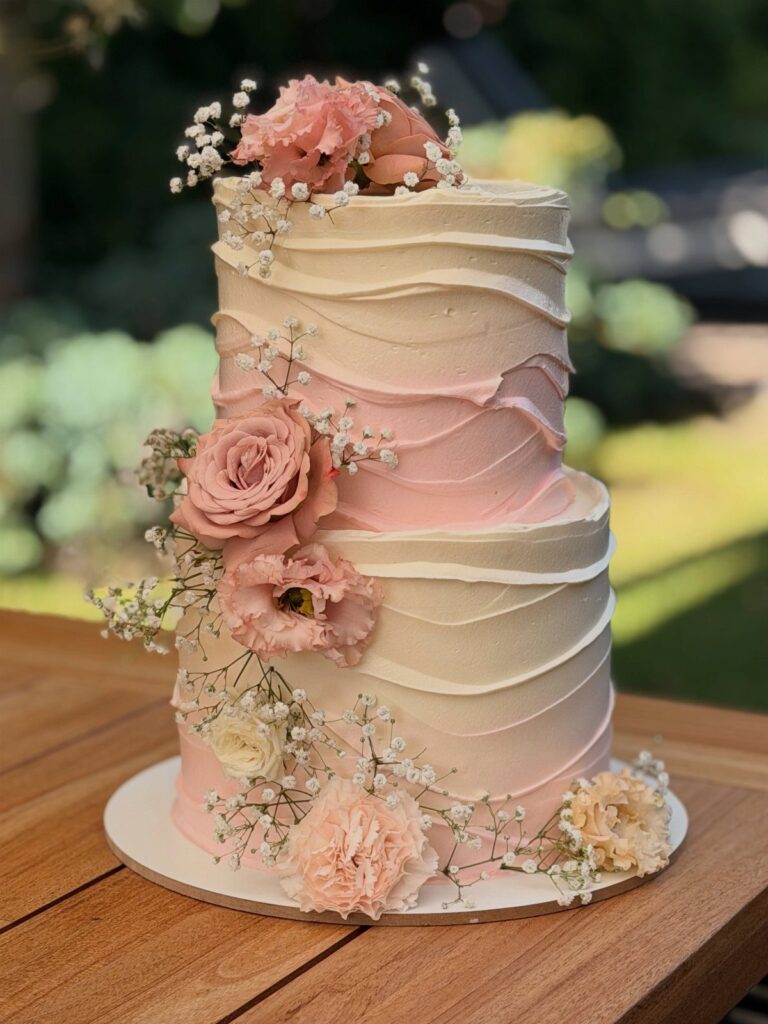
Wedding cake buttercream covers everything from a single-batch layer cake you frost at midnight to a three-tier smooth finish that needs a thermometer and a bench scraper held steady.
The deciding factor is not skill level but where you are frosting and for how many: a warm Gainesville June reception demands a stable buttercream and chilled transport, while an indoor fall wedding lets a simpler recipe do the work without extra equipment.
1. Buttercream Frosting Recipe
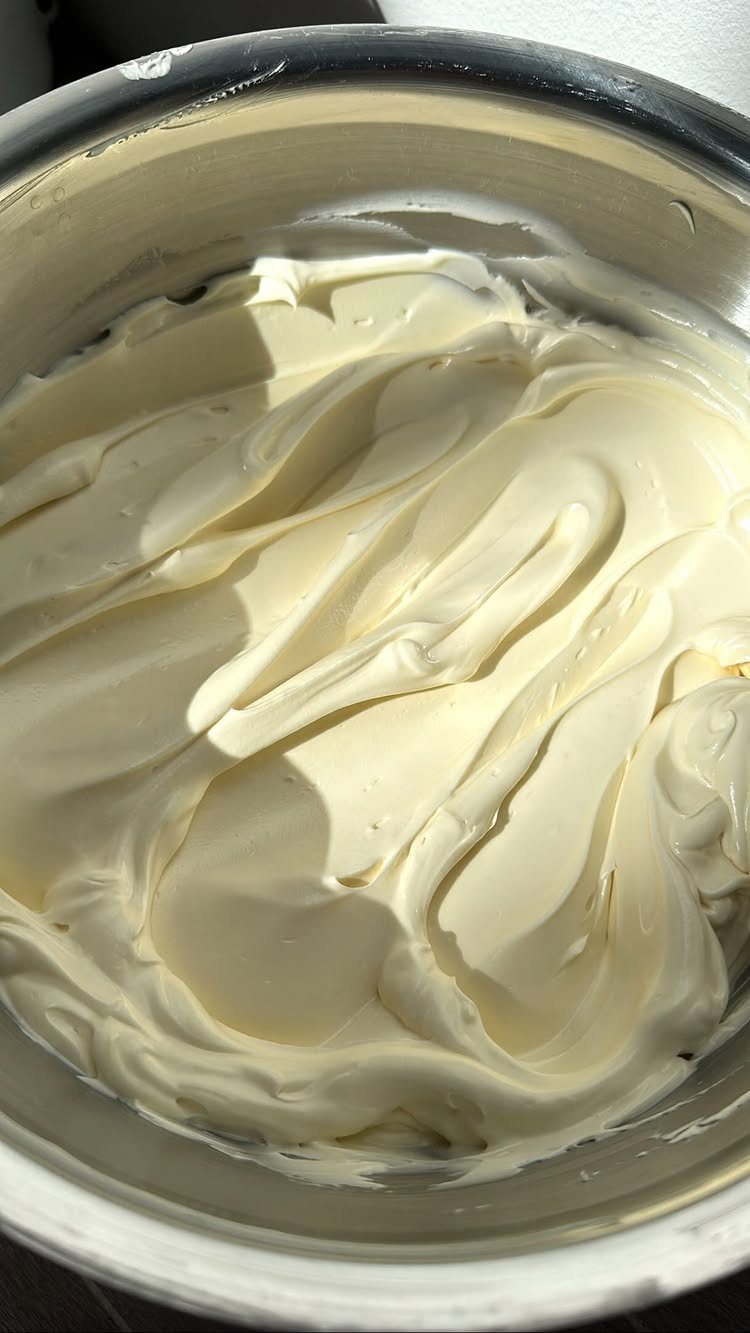
American buttercream comes down to three ingredients in a 1:2 ratio by weight: one part butter to two parts powdered sugar, plus vanilla and a splash of cream to thin.
Room-temperature butter creams fastest in a stand mixer before you add sugar slowly; patience here beats rushing. Gel food coloring works better than liquid for wedding white, which throws the consistency.
This scales.
A single batch covers a layer cake with enough left for simple piping. For a tiered cake, make 2 batches separately rather than doubling, or the sugar flies everywhere.
2. Textured Buttercream Cake
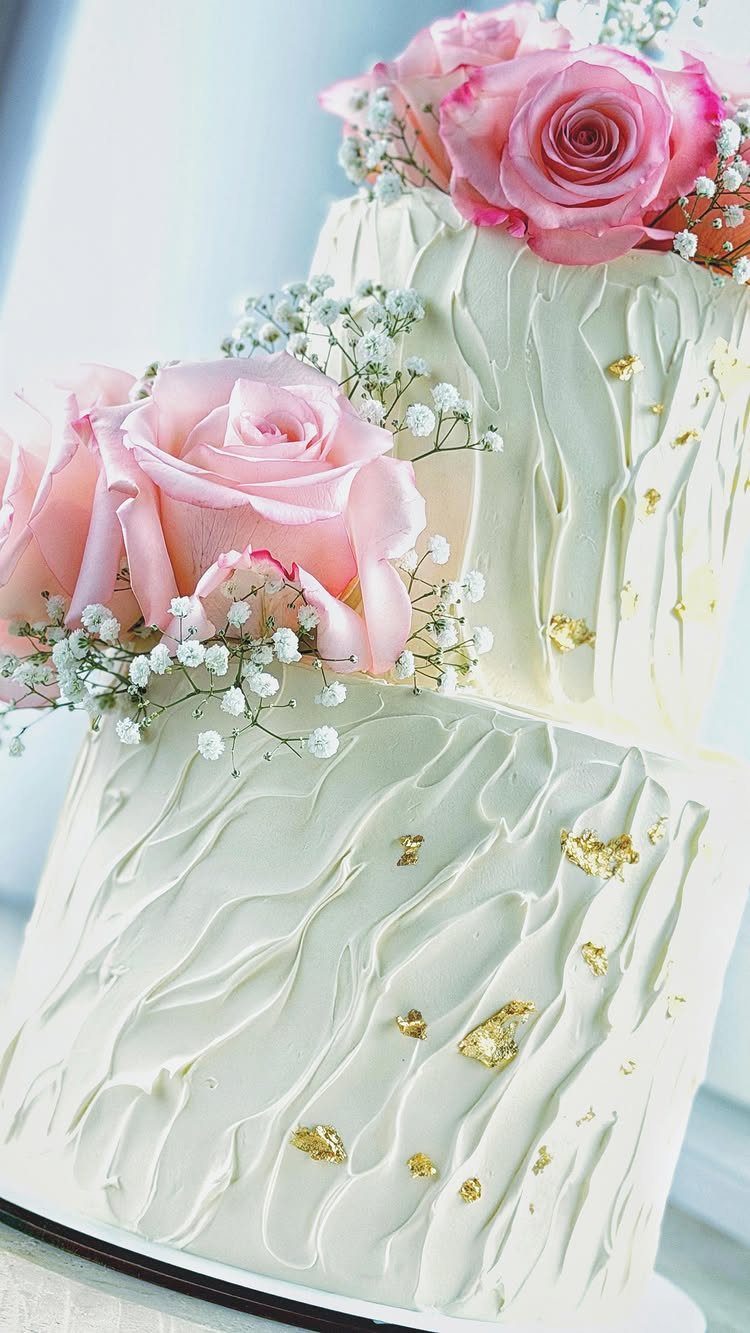
Spatula texture hides flaws that smooth frosting exposes, which matters when you are frosting at midnight the week before the wedding.
The technique is simple: apply a base coat, chill until firm, then drag a small offset spatula in wavy horizontal strokes from bottom to top, turning the stand as you go.
Each pass stays visible; that is what gives the texture its character.
Gold leaf flakes stick to fresh buttercream without adhesive, though tweezers help placement. Fresh flowers need food-safe stems, wrapped in floral tape, not plunged bare into the cake.
3. Buttercream Flower Cake
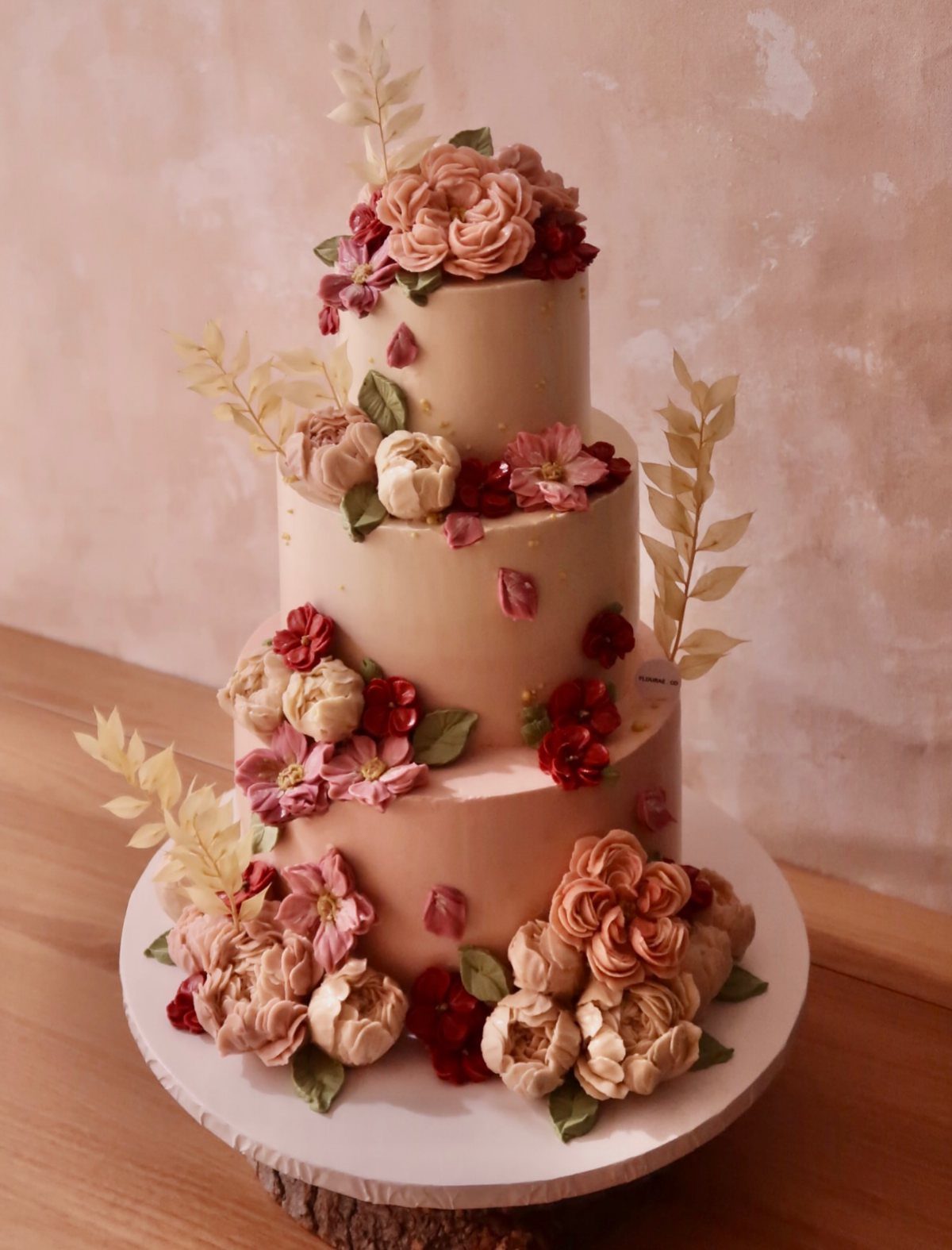
Piped buttercream flowers take practice, but they do not take a bakery budget.
A single Russian piping tip, the kind with a cut-out petal shape, produces a full bloom in one squeeze; a cluster of them on a tier reads as abundant.
Peach and lavender tones come from gel color mixed into separate batches of stiff buttercream, the kind that holds a peak when you lift the spoon.
Start piping on parchment a week ahead, freeze the flowers hard, then lift them onto the cake with a small spatula. They thaw to the texture of fresh in the time it takes to set the cake table.
4. Simple White Buttercream Wedding Cake
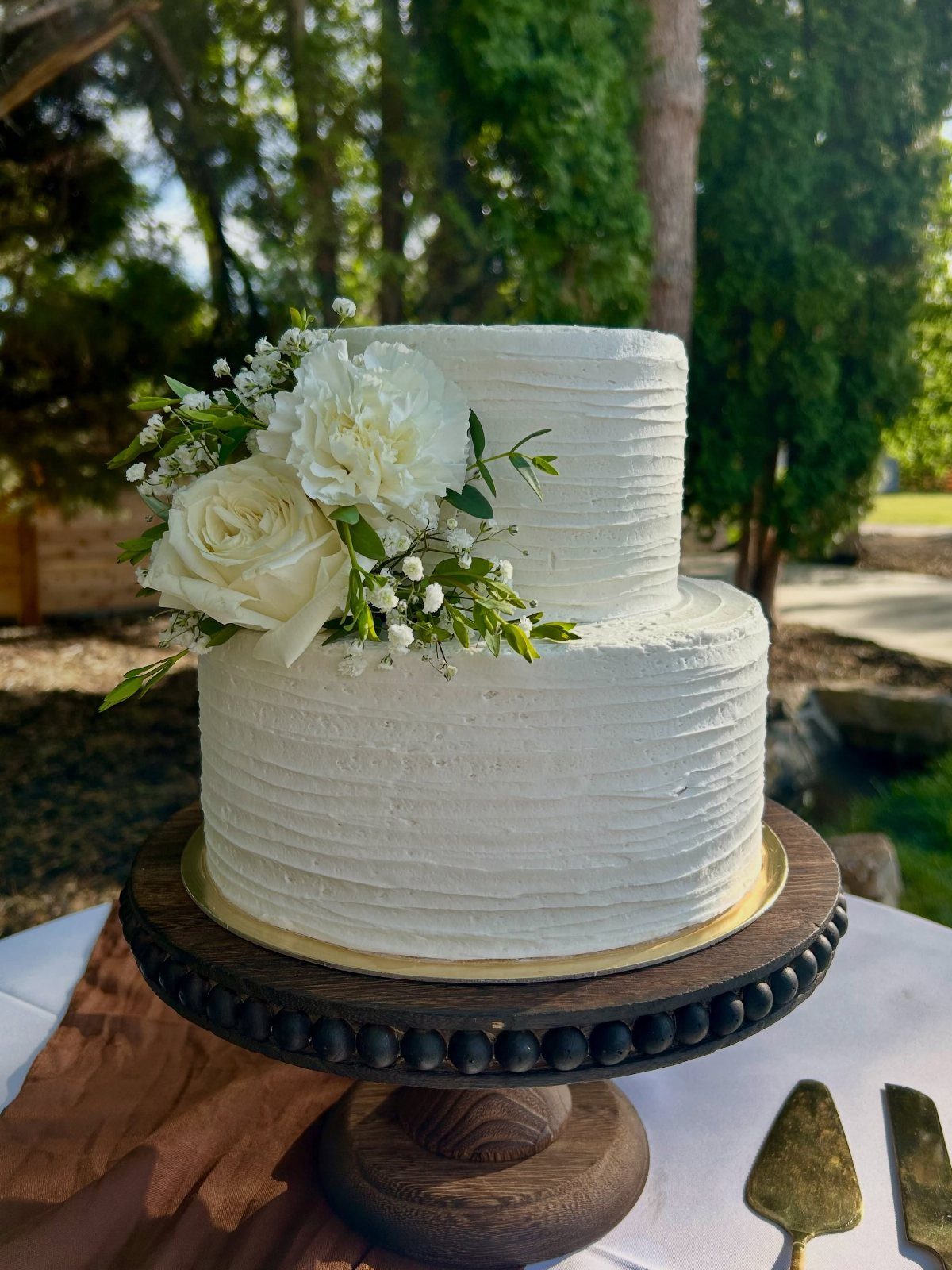
Horizontal ridges read as modern without reading as complicated. A cake comb, the plastic scraper with teeth, dragged once around the chilled base coat gives you even lines fast.
White-on-white roses and greenery keep the palette restrained; any florist can replicate this with seasonal whites if peonies are out of season or out of budget.
2 tiers suit most guest lists without the cost of a third layer of cake, board, and doweling. Transport chilled, as buttercream softens in summer heat or a warm van.
5. Three-Tier White Buttercream Wedding Cake
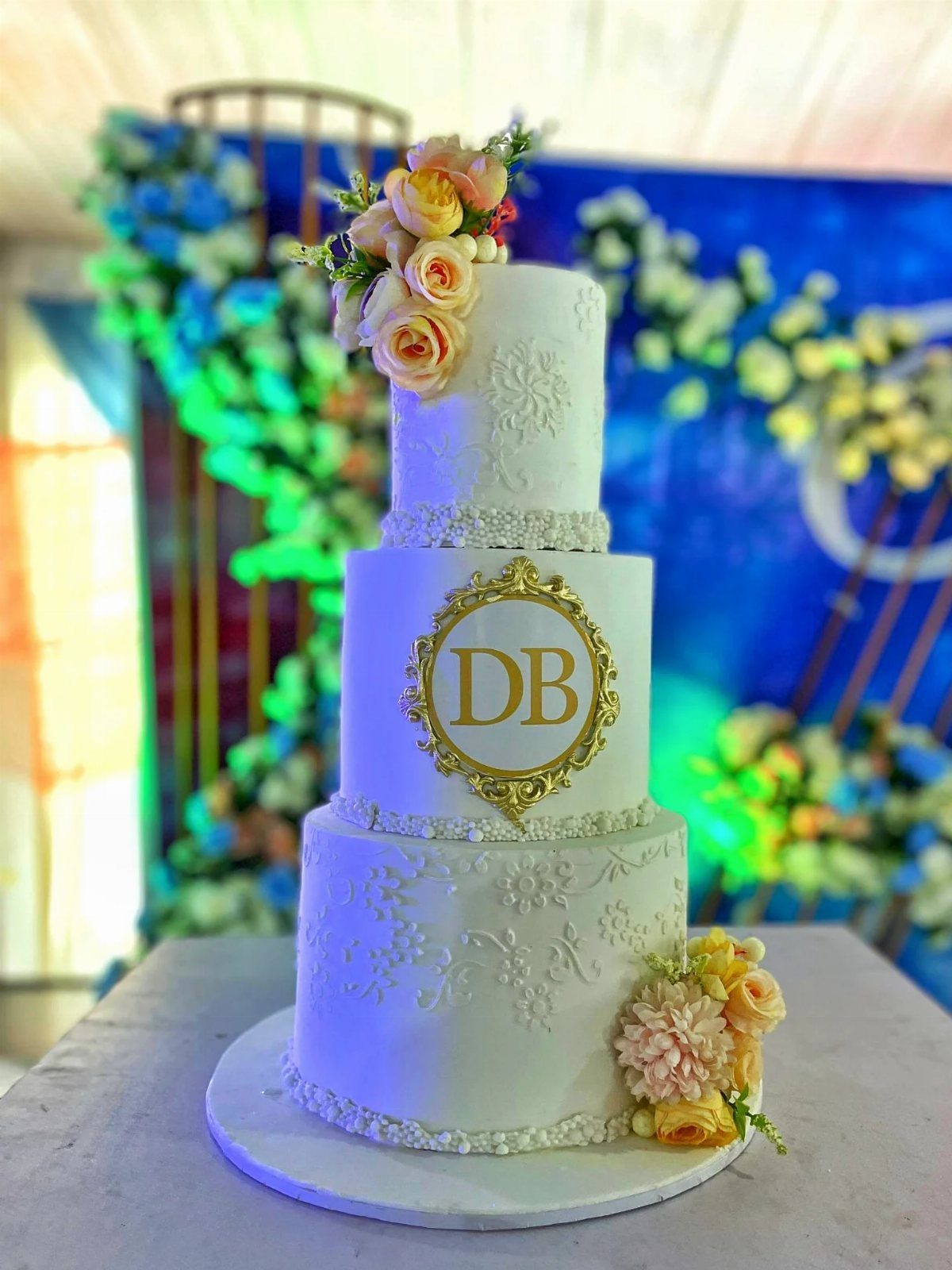
Three tiers signal "wedding" the way two sometimes reads as birthday. Horizontal ridges, same as the simple version, unify the look without demanding fondant skills.
The gold monogram is a custom acrylic or metallic paper piece from any invitation vendor; order it with the invites to match fonts. That detail runs extra, or skip it and let the flowers carry the visual interest.
6. Rustic Buttercream Cake
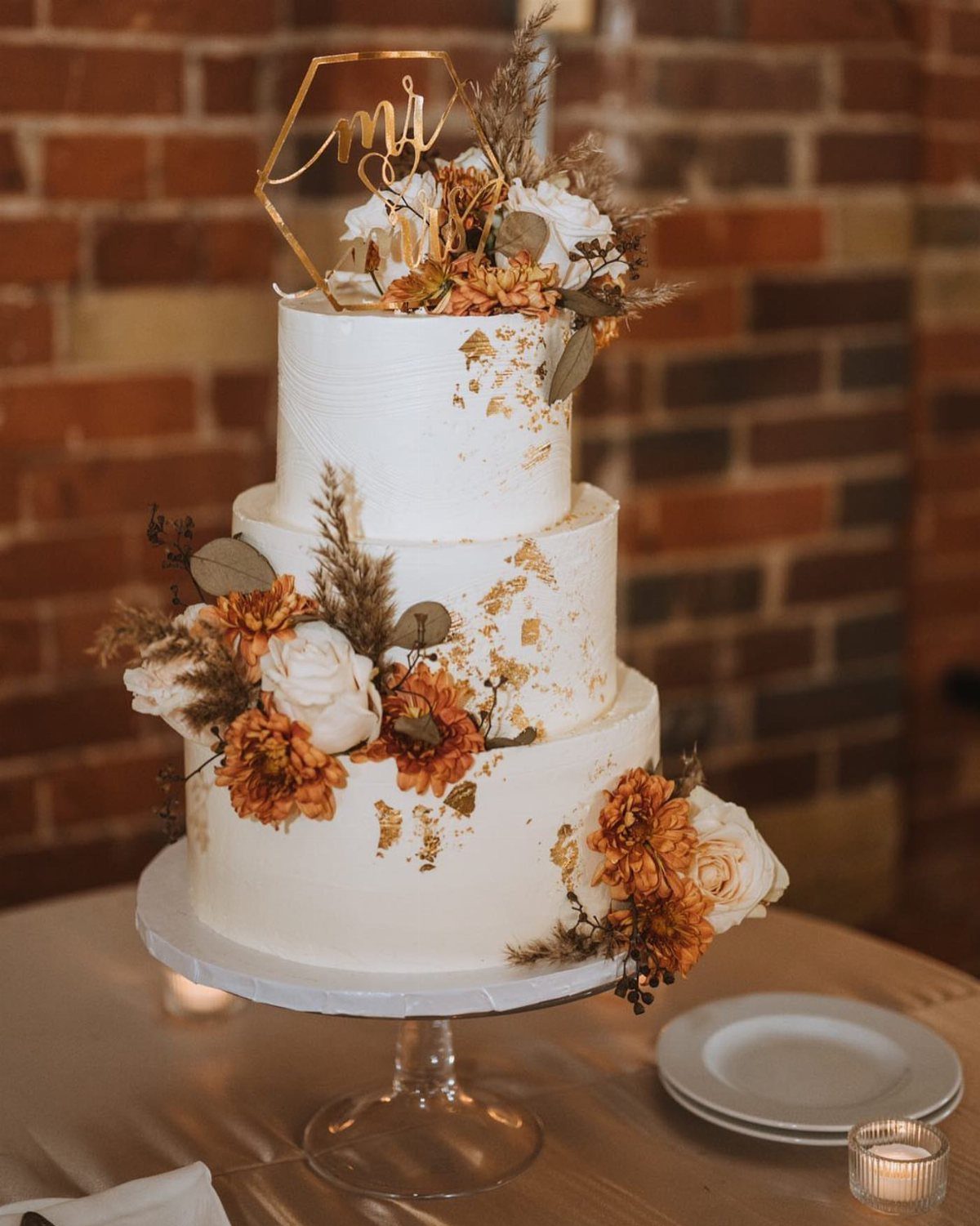
Rustic buttercream is the textured look taken further: thicker strokes, less uniform, with the palette knife left visible.
The technique suits outdoor or barn venues where perfection would look out of place. Dried flowers and pampas grass last the full reception without wilting; fresh flowers in September heat do not.
A glass stand elevates the cake visually but requires a level surface and a cautious caterer. The "Mr & Mrs" topper is acrylic or wood, widely available, and reusable if you keep it.
7. Smooth Buttercream Cake with Floral Accents
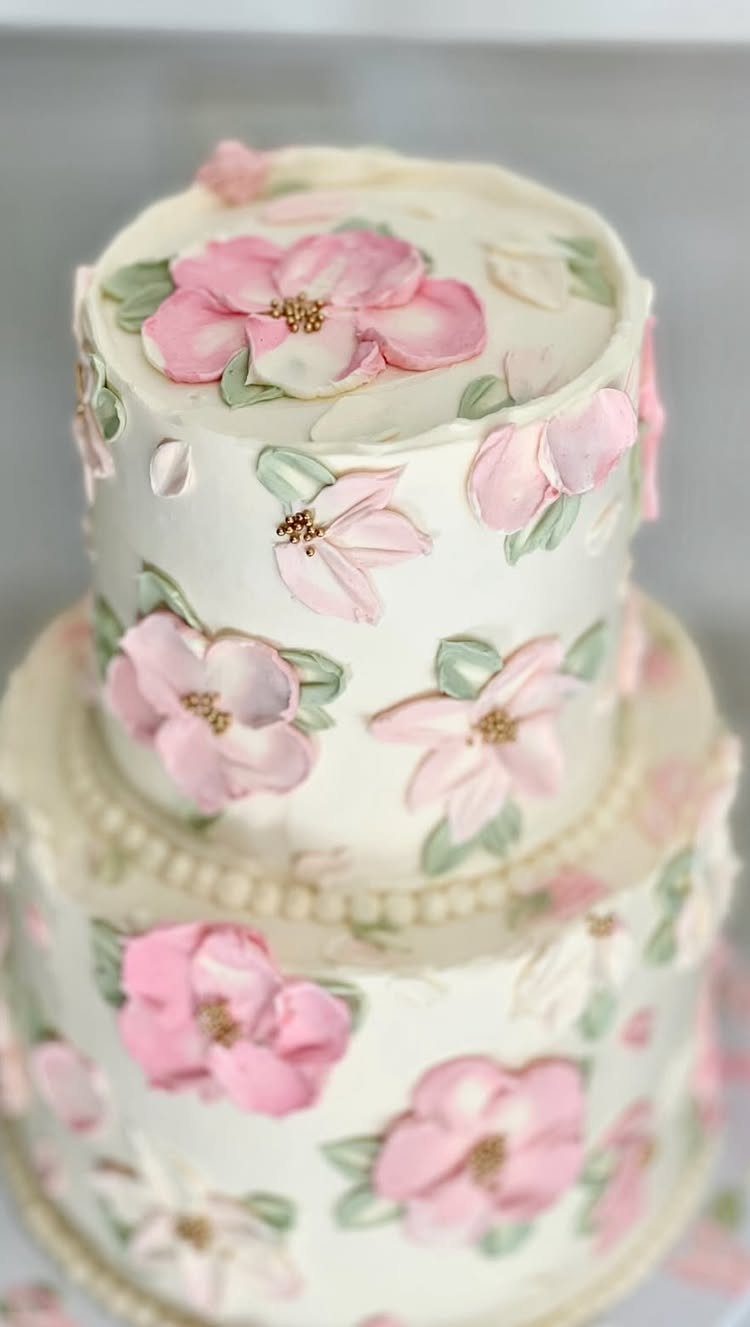
Smooth buttercream demands a chilled cake and a bench scraper held at a fixed angle, turned slowly on the stand. The surface shows every flaw, so the base coat must set firm in the refrigerator before the final pass.
Piped flowers in pink sit flat against the finish, not proud of it, which keeps the look clean. Sage green leaf vines, piped or painted with a palette knife, need stiff buttercream that holds a thin edge without drooping.
A two-tier cake on a white stand carries this without the engineering of a third. The smooth finish reads as formal; it suits indoor receptions where wind and heat are not factors.
Best Buttercream for Wedding Cakes
Swiss meringue takes longer because you heat egg whites and sugar before whipping, then beat in butter. The silkier finish holds up better in outdoor heat, which matters for a Gainesville summer reception.
Swiss meringue needs a thermometer; American does not. For a DIY couple frosting at home, that equipment cost and the extra step are worth weighing.
Both take color and pipe well, though Swiss meringue accepts gel more evenly without the grainy risk that comes from adding sugar too fast in American.
Buttercream Vs. Fondant
Fondant gives the smoothest surface, the kind that looks poured.
The trade is flavor and texture: many guests peel it off. Buttercream stays edible all the way through, which matters when you are paying per slice.
Buttercream also costs less in ingredients and in the time to apply it. A fondant cover needs to be rolled, lifted, and smoothed without tearing; the skill level is closer to upholstery than to frosting.
Making Buttercream Wedding Cake
Quality butter matters more than brand.
European-style with higher fat content creams faster and holds shape better in warm kitchens. Powdered sugar should be sifted if it has lumps; unmixed sugar leaves grit in the finish.
Piping practice is not optional. Russian tips speed the flower work, but even they need a feel for pressure and angle.
Freezing the cake a week ahead works because same-day piping on a tiered cake goes wrong easily. Parchment practice flowers are cheap insurance; butter and sugar cost less than a ruined top tier.
Decorating with Fresh Flowers
Fresh flowers on buttercream need more than visual taste.
Not every bloom is food-safe; lilies, hydrangeas, and baby’s breath can irritate skin or worse. Florists who supply wedding cakes should know which stems are safe for contact; if yours does not, ask specifically.
Floral tape wrap is the minimum. Bare stems wick cake moisture and can carry pesticide residue.
Place flowers just before display, not hours ahead, and keep the cake refrigerated until then. Buttercream softens faster with flowers pressing into it, especially in June through September outdoor setups.