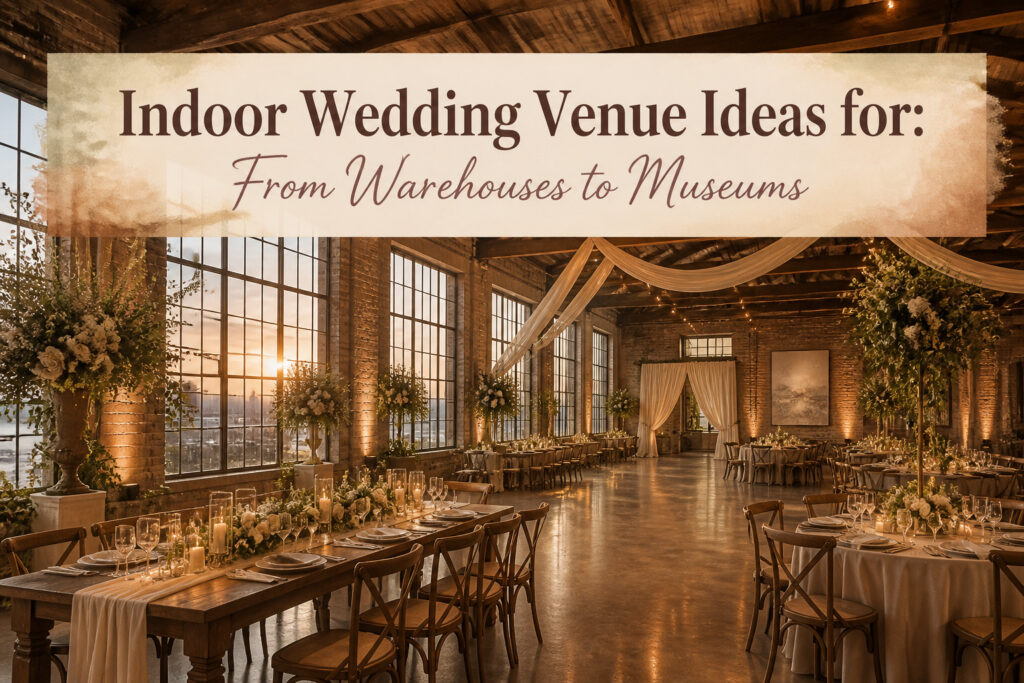
The best indoor wedding venue for 2026 is a raw urban warehouse, if your rental budget can absorb furnishing a blank canvas built for 720 guests. Otherwise, book a historic grand hotel and let the chandeliers do the work.
That blank canvas costs you at Block 41 in Seattle, where exposed brick and original wooden beams from its ice-wagon days cap out at 720 guests across two floors.
The couple who wins there cares more about floor plan than finish; the one who wants soft uplighting and built-in romance will fight the architecture all night.
1. Chic Urban Warehouses
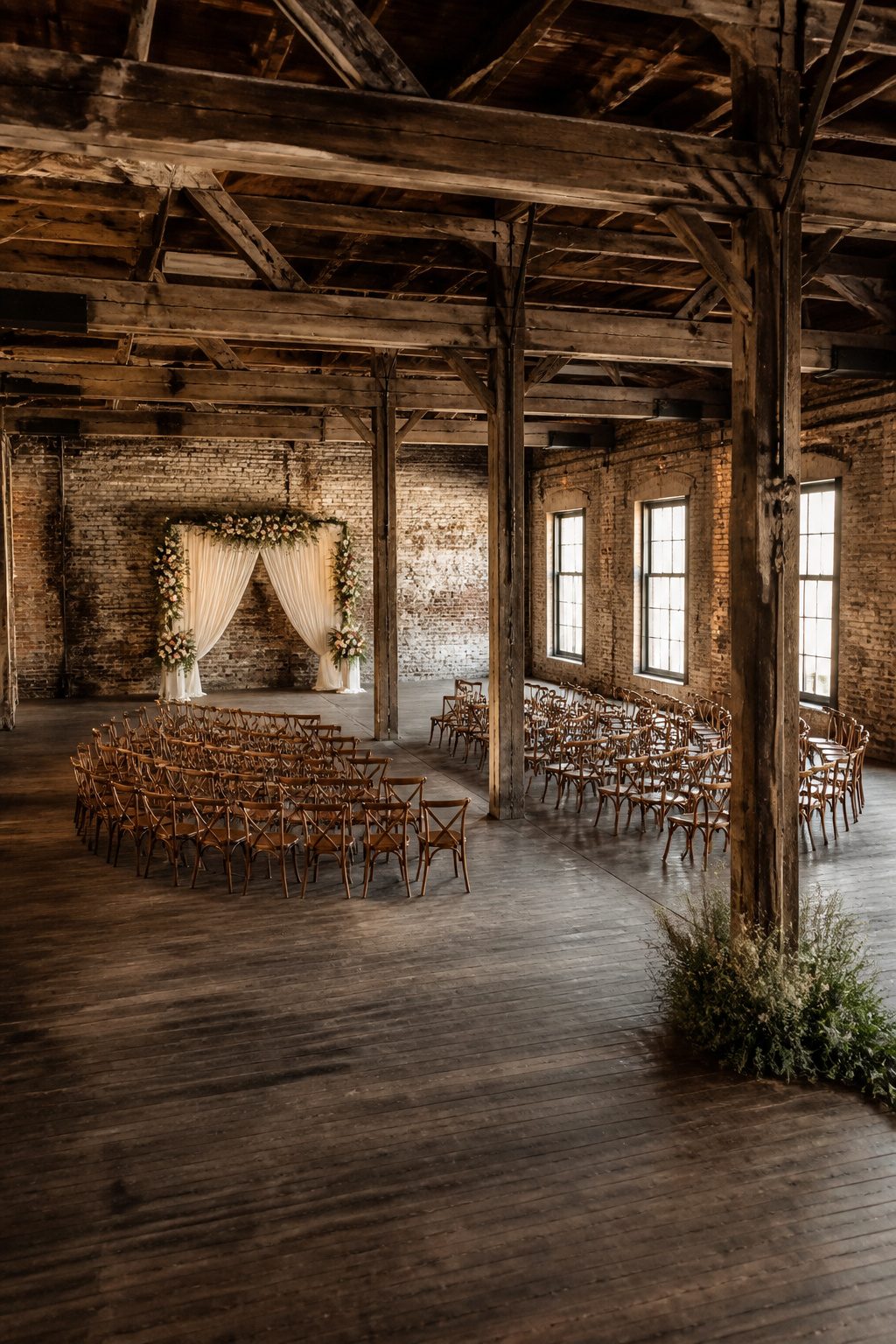
Raw warehouse spaces trade polish for possibility. Block 41 in Seattle’s Belltown neighborhood caps out at 720 guests across exposed brick and original wooden beams from its days as an ice delivery wagon depot.
That same upstairs-downstairs flexibility lets you stage ceremony, cocktails, and reception without repeating a single room.
The Pacific Northwest stacks similar options at smaller scale. Castaway Portland, ten thousand square feet from 1929, runs painted white brick and reclaimed beams behind walls of restored windows.
A private courtyard there buys you outdoor breathing room while keeping the industrial frame. The Evergreen in Portland, also brick and vaulted ceiling, holds up to 300.
These venues suit couples who want to build a wedding rather than inherit one. The blank canvas costs you: you furnish everything, you hide nothing, and a 150-guest headcount can feel swallowed in a space built for seven hundred.
Skip it if your vision runs to soft uplighting and built-in romance; the architecture fights you there. Book it if you care more about floor plan than finish, and if your budget line for rentals can absorb the transformation.

LED Par Lights: This led uplight has no fan and dissipates heat through the aluminum material, creating a comfortable and quiet atmosphere for you. The durable construction and lifespan of the LED ensure long-lasting performance and reliability, reducing the need for frequent replacements
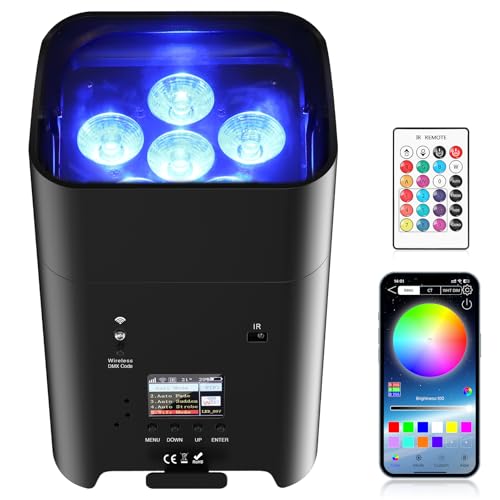
【Built-in Battery】9600 mAh Built-in Battery wireless uplighting. 100% true wireless! Built in 2.4GHz wireless DMX 512 receiver allows you to link multiple lights together without wires. Built-in Battery allows you to use the lights without plugging

LED Par Lights: This led uplight has no fan and dissipates heat through the aluminum material, creating a comfortable and quiet atmosphere for you. The durable construction and lifespan of the LED ensure long-lasting performance and reliability, reducing the need for frequent replacements
2. Historic Grand Hotels
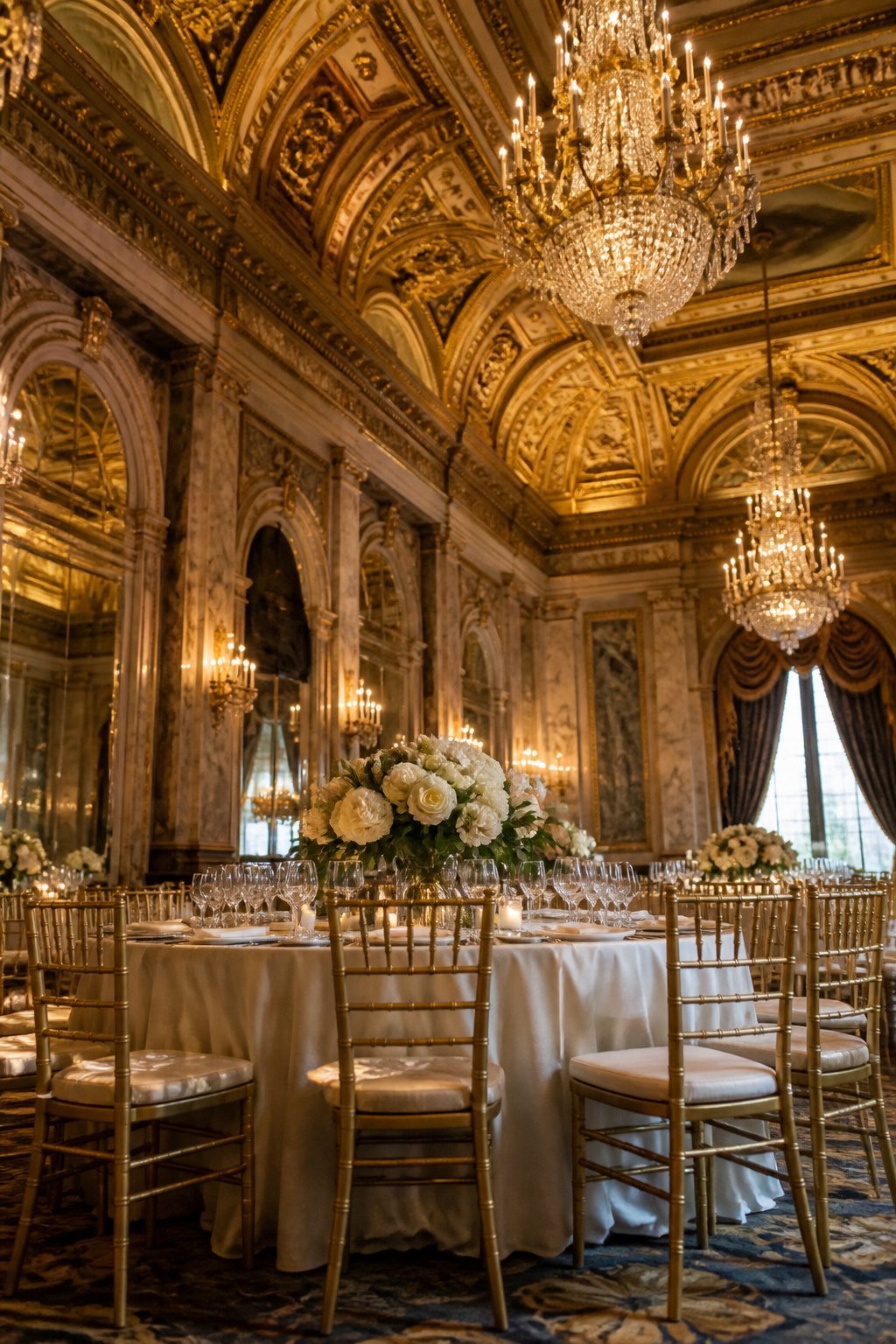
Historic grand hotels carry a particular kind of weight, the kind you notice when 350–400 guests fill a ballroom and the chandeliers still read as intimate rather than cavernous.
The Jefferson Hotel in Richmond, Virginia, handles exactly that scale, its grand staircases and classic ballrooms built for the moment when a wedding stops feeling like a party and starts feeling like an event.
Smaller guest lists have their own counterpoint in Milwaukee, where Villa Filomena operates out of a historic mansion.
The shift from hotel to mansion is not just a matter of fewer rooms; it changes who greets you, how the timeline flexes, and whether the bridal suite is a corner of a hallway or a wing you actually control.
Seattle’s Rainier Club, designed in 1904, sits somewhere between those two poles.
The art deco motifs, gold-leafed molded ceilings, and century-old woodwork are preserved rather than reproduced, which matters when you are paying a premium for history you can touch rather than history a designer approximated.
The premium lands hardest here, and it is worth it only if those details photograph in a way your guests will actually notice, not just a way your photographer will.
I have seen couples justify the cost by trimming elsewhere, sometimes well, sometimes to the point where the venue outclasses everything inside it.
The ones who get it right come in knowing which moment they are buying: the first look against carved millwork, or the entrance down a staircase that was already old when their grandparents married.

Size:This red retro brick wall backdrop is 120x80cm(47.2x31.5 in),perfect for professional studio settings, offering an elegant background that enhances portrait photography.

[Package Details]: Available in multiple sizes. Each order includes one backdrop only. Item ships folded. Stand, pole pockets and clips are not included.
[Package Details]: Available in multiple sizes. Each order includes one backdrop only. Item ships folded. Stand, pole pockets and clips are not included.
3. Rooftop and Skyline Rooms
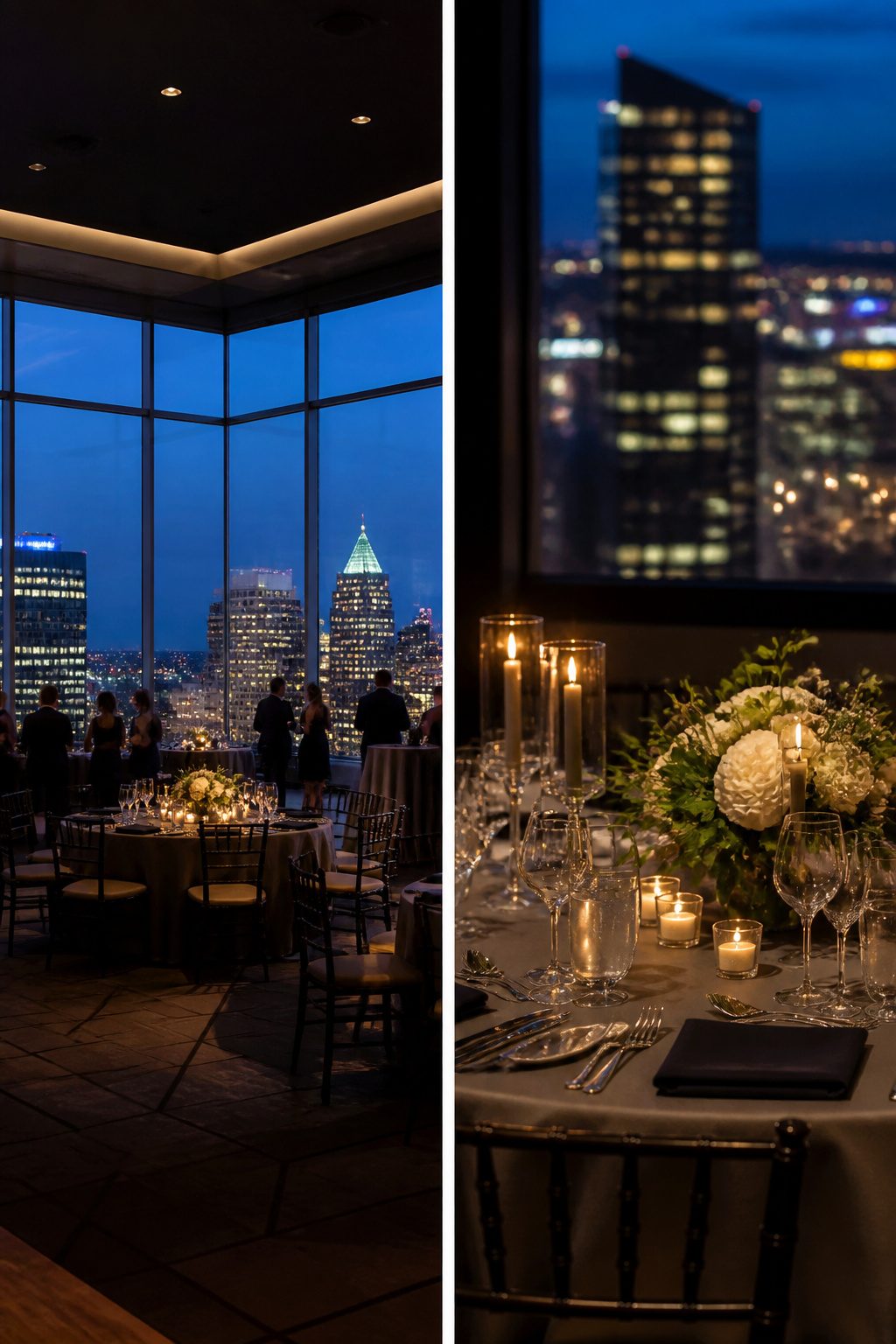
A rainy forecast turns what starts as an outdoor rooftop ceremony into a scramble for cover, which is exactly why indoor rooms with open sky views have become the practical pivot for couples who still want height and horizon.
The Olympic Rooftop Pavilion in Seattle’s Ballard neighborhood keeps that feeling through a gigantic skylight and floor-to-ceiling windows; guests get the Olympic mountain range and marina views without the weather risk, and the attached Hotel Ballard means no one drives afterward.
The space reads intimate, almost cozy even in a storm.
The Columbia Tower Club plays the same hand with a completely different energy.
The top two floors of the tallest skyscraper in Washington put you 75 floors above Elliott Bay and downtown, with city lights after dark that compete with anything open-air.
In-house catering and proximity to downtown hotels keep logistics simple, but the scale is modern and exclusive rather than tucked-in.
Two valid directions: the warmth of a neighborhood rooftop room, or the drama of a skyline perch where vertigo comes free with the floral install.

PROJECTION DISTANCE- Projection up to 33 feet in darker environment,A brighter environment can project up to 16 feet.

[Free Custom GOBO Lens Included] Personalize your projector with a complimentary custom lens! After ordering, simply email your logo or design file (JPG, PNG, PDF, PSD, AI, CDR) to [email protected]. Please note: The projector and custom lens ship separately. The total lead time for your custom lens, from production to your doorstep, is typically 7-10 business days after we receive your file.

【FREE Custom GOBO Lens】We will customize a GOBO lens for each projector light for free. After placing the order, please send us your LOGO file via customer messages in time (or to our official email: [email protected]), it can be JPG,PNG,PDF,PSD,AI,CDR, etc. (The GOBO will be sent separately, not together with the projector). Remember to contact us ASAP if you need it urgently
4. Rustic Lodges and Barns
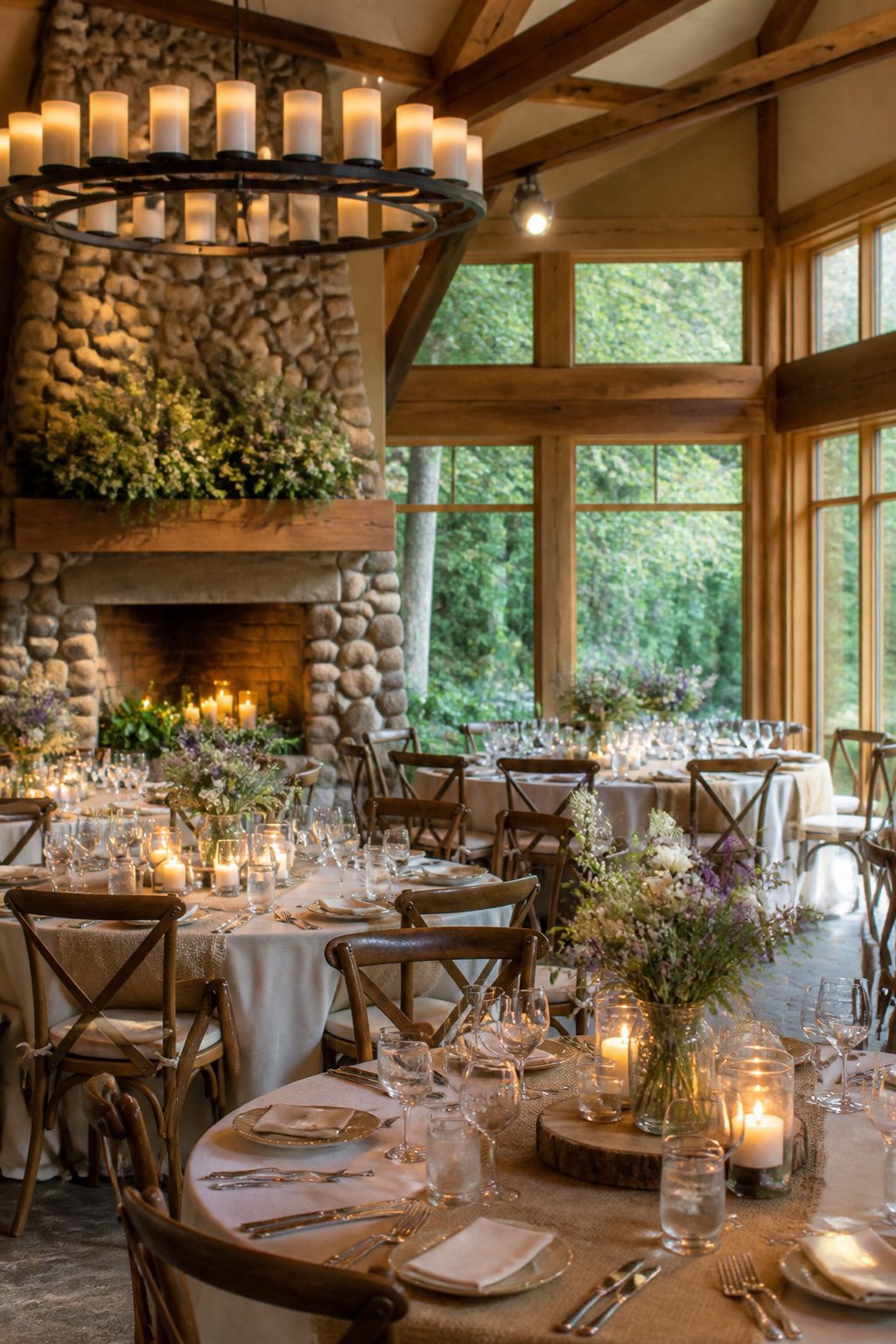
Rustic lodges and barns sell a feeling: warm wood, a fire somewhere, the idea that your people will kick off their shoes and dance until the fiddle stops.
The Willows Lodge outside Seattle delivers the mood without the headache. Its gazebo room holds up to 180 guests indoors, with windows that pull in actual daylight and heaters that keep the space usable in January.
The ballroom in the main building carries the same lodge character, and the spa package means you can soak off the planning stress on-site.
Willowbrook in Delaware plays the same game differently, mixing indoor ceremony space with outdoor access so the weather only decides half your day.
That flexibility matters because barns, for all their charm, come with a truth that the styled photos skip. Hay leaves dust on dark suits.
Temperature swings mean your grandmother is either shivering or fanning herself with the program. The couple who imagines a square dance and doesn’t mind a little grit gets their night.
The one who pictured candlelit formality and arrives to find a drafty box with string lights will spend the evening questioning every choice that led them there.

USB Powered: Universal USB interface can connect to various power sources such as power banks computers sockets etc. plug and play more flexible for mobile use and adaptable to multiple scenarios.

Size: Approximately 7 inches (17.8 cm) in diameter.

Wedding Proposal Theme Design: Features "she said yes" handwritten font paired with a diamond ring silhouette (a core engagement/marriage symbol), fitting the romantic vibe of wedding/engagement events and echoing the joy of proposal moments.
5. Waterfront All-Inclusive Hotels
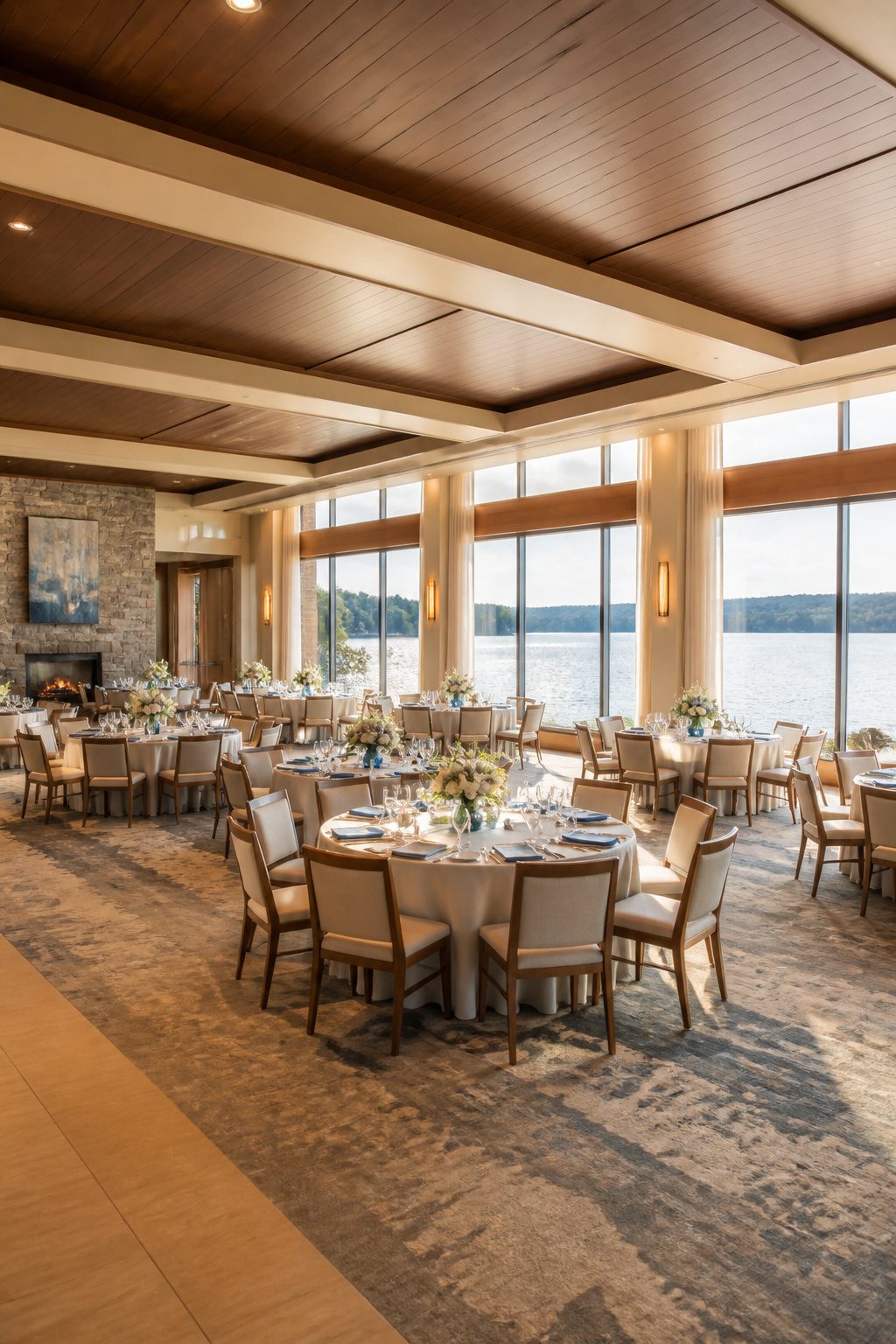
The Woodmark Hotel & Still Spa sits on Lake Washington in Kirkland, about 45 minutes from Seattle, with the Olympic mountains visible across the water.
An all-inclusive package here covers the ceremony and reception space, in-house catering, guest rooms, and access to the spa, plus an elopement option that bundles an officiant, florals, cake, and sparkling wine for up to 70 guests.
The surprise usually lands in what the package restricts, not what it includes.
Couples who want to bring a favorite outside caterer or design their own floral arrangements hit walls fast; the convenience trades away flexibility on vendor choice, timeline adjustments, and menu customization.
A complimentary rehearsal walk-through and optional day-of coordination soften the edges, but the hotel’s structure works best for pairs who would rather hand decisions off than tailor them.
The indoor spaces keep the waterfront view even in winter, which matters in the Pacific Northwest, though the same lake that photographs beautifully can lock in fog that hides those mountains entirely. That risk sits outside the package, unpriced.

WIRELESS FREEDOM - Experience ultimate cordless convenience with our battery-powered stage lights! The built-in 9600mAh rechargeable battery offers extended runtime, and intelligent fast charging provides 40% power in just 10 minutes. Ideal as wireless dmx uplights for venues without direct power access, these par light fixtures ensure uninterrupted performance. Perfect as uplighting for events and reliable uplights indoor.

【Multiple Working Modes】U`King stage par light(Corded Electric) consists of 36 high-quality 36x1W LED lamp beads. There are 5 control modes on our dj lights: remote control, sound-activated, DMX 512, automatic, master-slave

【Multiple Working Modes】U`King stage par light(Corded Electric) consists of 36 high-quality 36x1W LED lamp beads. There are 7 working modes: Static color, strobe, automatic, voice control, master-slave, DMX, gradient mode. Ultra-high brightness, more stable, lower power consumption.
6. Large Conference Centers
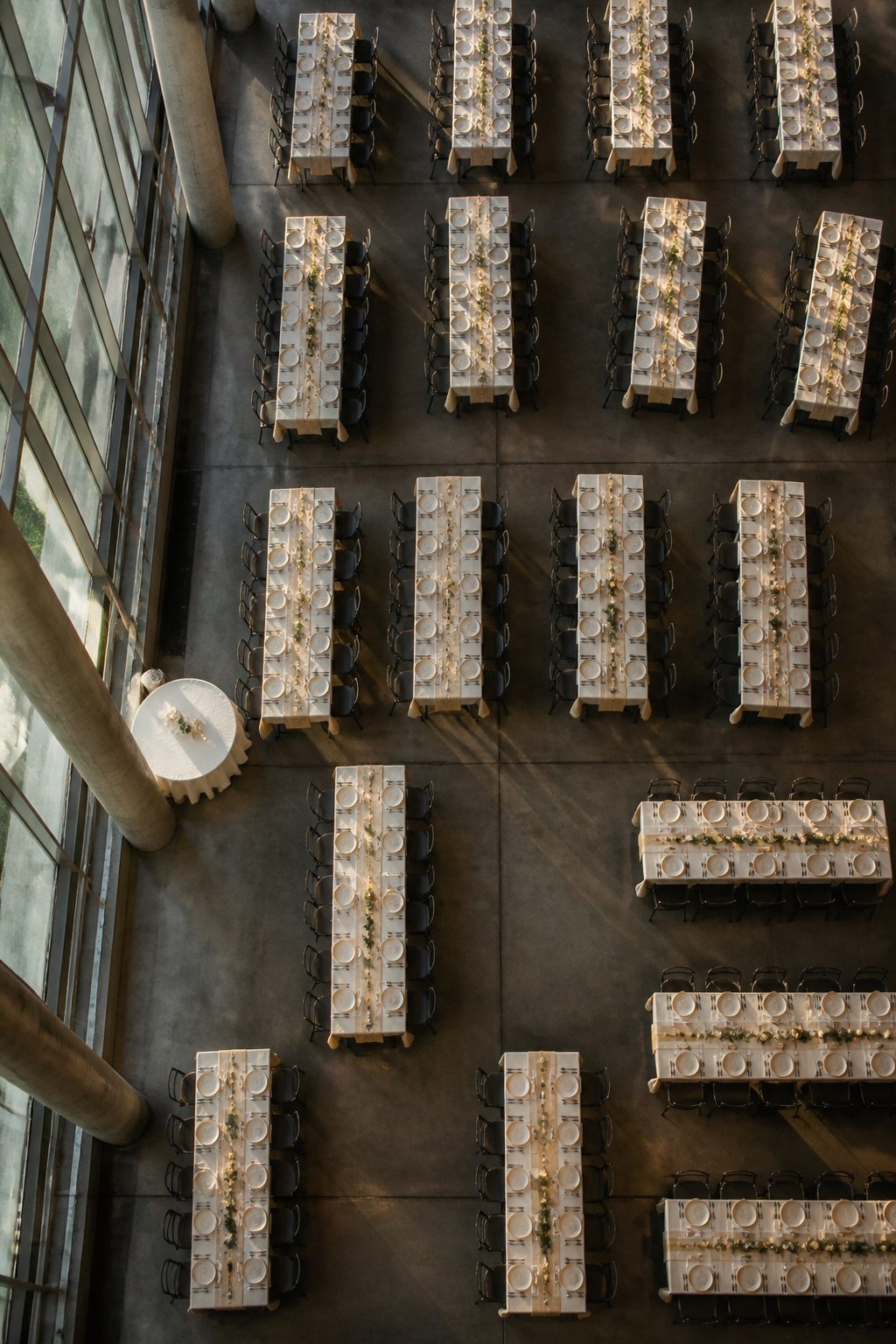
The Bell Harbor International Conference Center in Seattle is the kind of space that separates couples who actually need room from couples who just think they do.
Their smallest room holds 110 guests, which tells you the scale they are working with. You are buying square footage and Elliott Bay views, not built-in character, and that blank-slate problem cuts both ways.
A space this size only makes sense if your guest list genuinely clears 150, preferably closer to 200. Below that, the room swallows your crowd and the rental fee stops looking like a value.
I have seen couples in the 80-to-100 range book a grand ballroom because they pictured the photo, then spend their decor budget trying to shrink the place with draping and uplighting. The math never works.
Block 41, also in Seattle, caps at 720 and at least brings exposed brick and wooden beams with the square footage.
Bell Harbor gives you less of that history. What it does give is flexibility across seasons: rooftop and pier options when the weather holds, then a clean move indoors for winter without changing your address.
The downtown waterfront location means your out-of-town guests can walk to hotels after the last dance, which matters more at large counts when you are already coordinating transportation for thirty people.
The couples who win with this venue come in knowing exactly how many people are attending and what they want to build from scratch.
The ones who struggle arrive with a Pinterest board and a hope that the room will feel cozy on its own.
[Package Details]: Available in multiple sizes. Each order includes one backdrop only. Item ships folded. Stand, pole pockets and clips are not included.
[Package Details]: Available in multiple sizes. Each order includes one backdrop only. Item ships folded. Stand, pole pockets and clips are not included.
[Package Details]: Available in multiple sizes. Each order includes one backdrop only. Item ships folded. Stand, pole pockets and clips are not included.
7. Urban Wineries and Taprooms
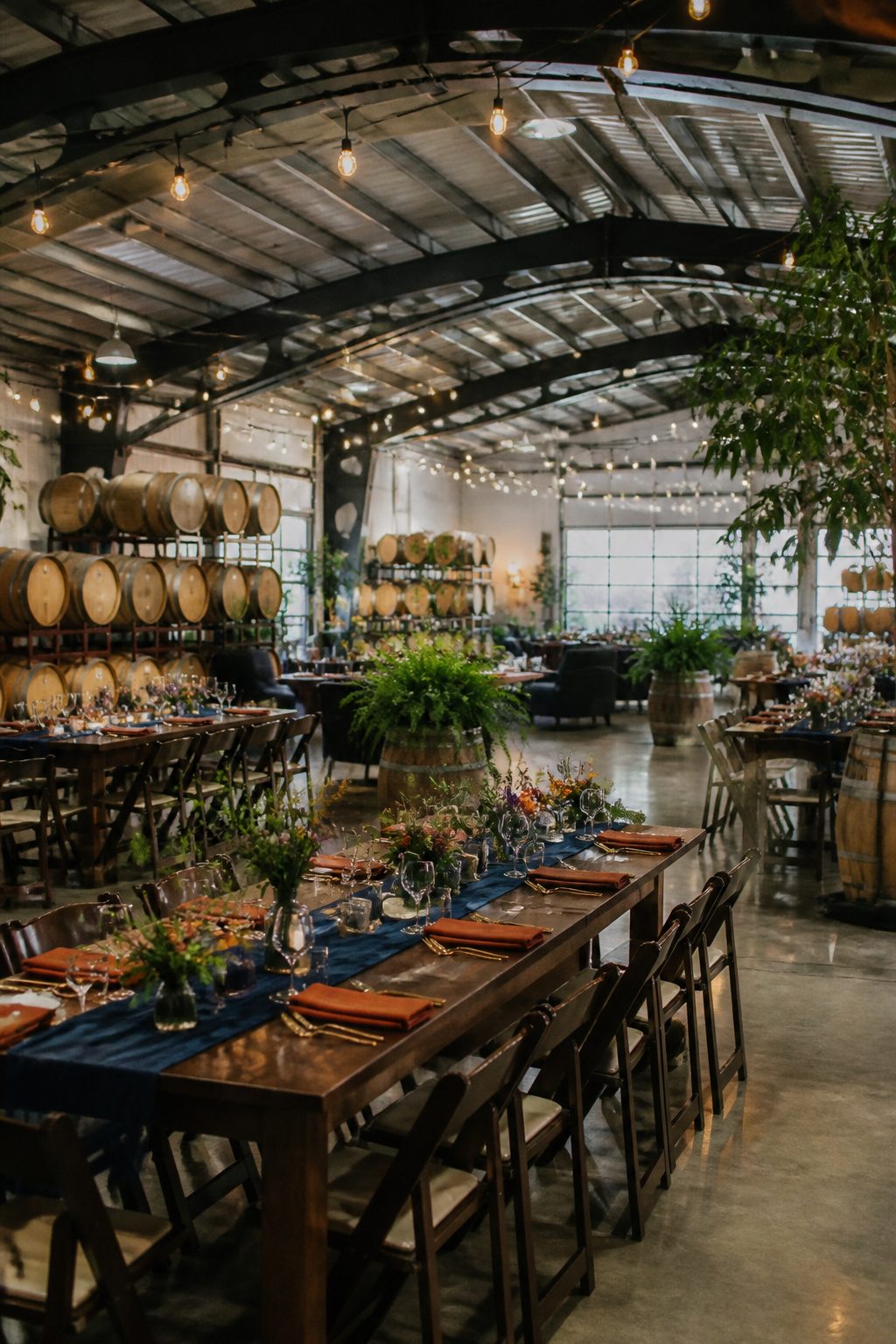
Coopers Hall Winery & Taproom in Portland occupies a converted auto shop with arched metal ceilings and a cement floor, which gives the space its industrial bones.
Massive windows on the north and west sides pull in enough natural light to make the wine barrels and hanging greenery visible without feeling like a factory floor.
The built-in bar is the real draw here; guests pour from an extensive tap list curated to the event rather than a standard cash bar tacked onto a blank room.
The catch is that this remains a working production space. Noise from equipment, the ambient smell of fermentation, and access limitations during active hours are risks a couple signs off on when they book.
The Mezzanine overlooking the main Taproom works for smaller guest counts who want the energy of the room below, while the main hall under string lights scales larger.
I would ask for a walkthrough during a production day, not a polished showing, before putting down a deposit.

Gobo Projector with DIY Custom Patterns: This LED logo projector includes 6 pre-made holiday pattern films for direct use and 2 blank films(housed in the clear bag with instructions) , allowing you to print and make exclusive custom patterns as you like. It delivers high-resolution images with 360° adjustable rotation speed, perfect for shops, hotels, corridors and more places.

[Custom Logo Projection] 50W gobo logo projector for business storefronts, brand displays, weddings, bars, cafes, stages, parties and commercial events.

Button control:COLIFINE Gobo projector ,there with a button on the lamp body that can control logo images static or rotating ,Easy to control the status of logo pattern
8. Elegant Climate-Controlled Halls
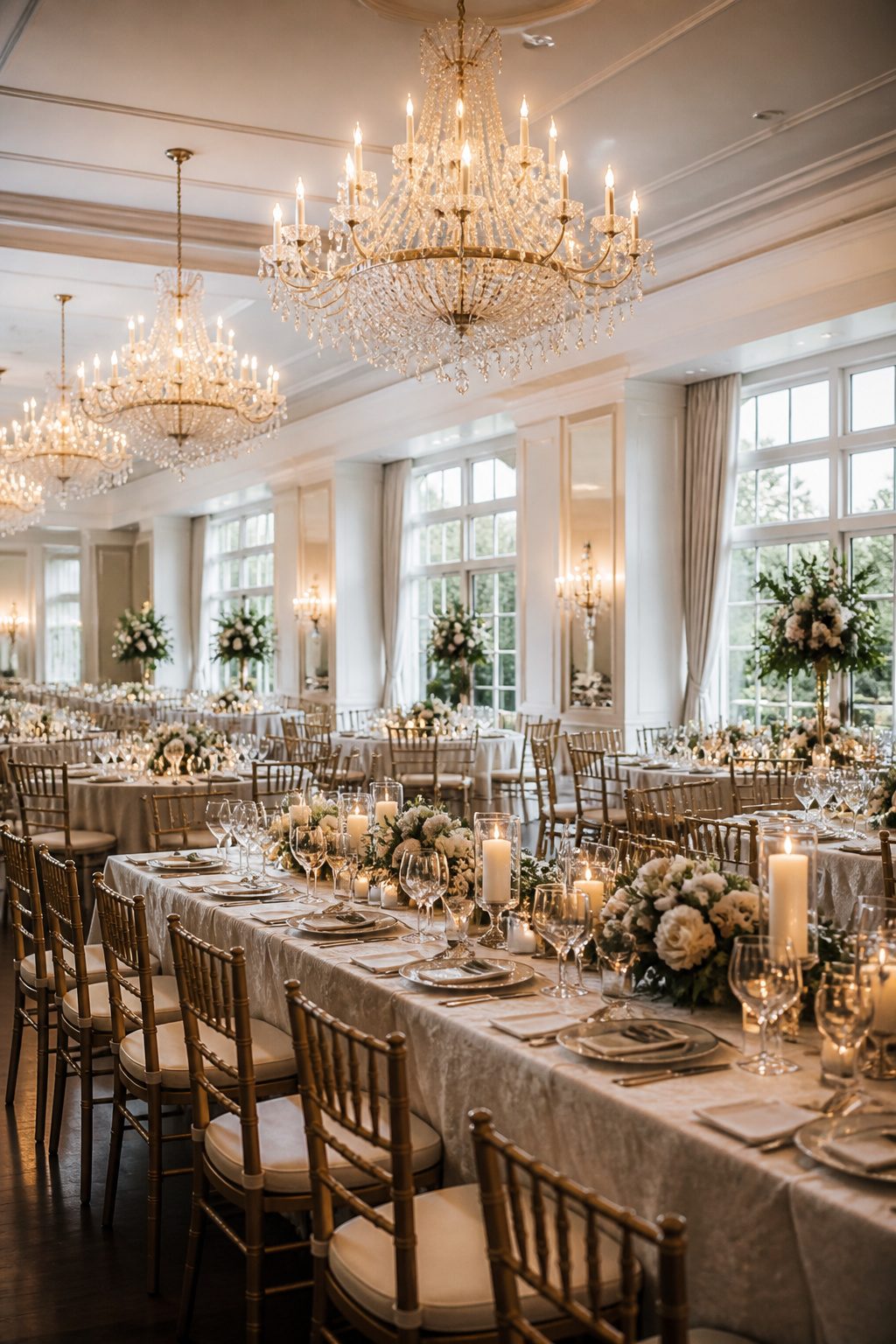
A July wedding in Raleigh can push 95 degrees with humidity thick enough to wilt peonies before the processional.
Chandelier Event Venue runs state-of-the-art HVAC systems that hold temperature and humidity steady year-round, which matters more than most couples realize until they watch a buttercream cake weep or a grandmother wilt in her seat.
That climate control protects things you have already paid for: fresh flowers keep their structure, makeup stays where it was set, candles burn reliably instead of guttering in a breeze.
The venue handles fifty to a hundred-fifty-plus guests, so the system scales for intimate dinners or full receptions without dead zones near the kitchen or drafts by the entrance.
You pay for that assurance. Indoor climate control is not a free add-on; it is built into the rental and into the peace of mind that lets you skip the backup tent budget entirely.

Size: Approximately 7 inches (17.8 cm) in diameter.

Size: Approximately 7 inches (17.8 cm) in diameter.

USB Powered: Universal USB interface can connect to various power sources such as power banks computers sockets etc. plug and play more flexible for mobile use and adaptable to multiple scenarios.
9. Private Clubs with Impeccable Service
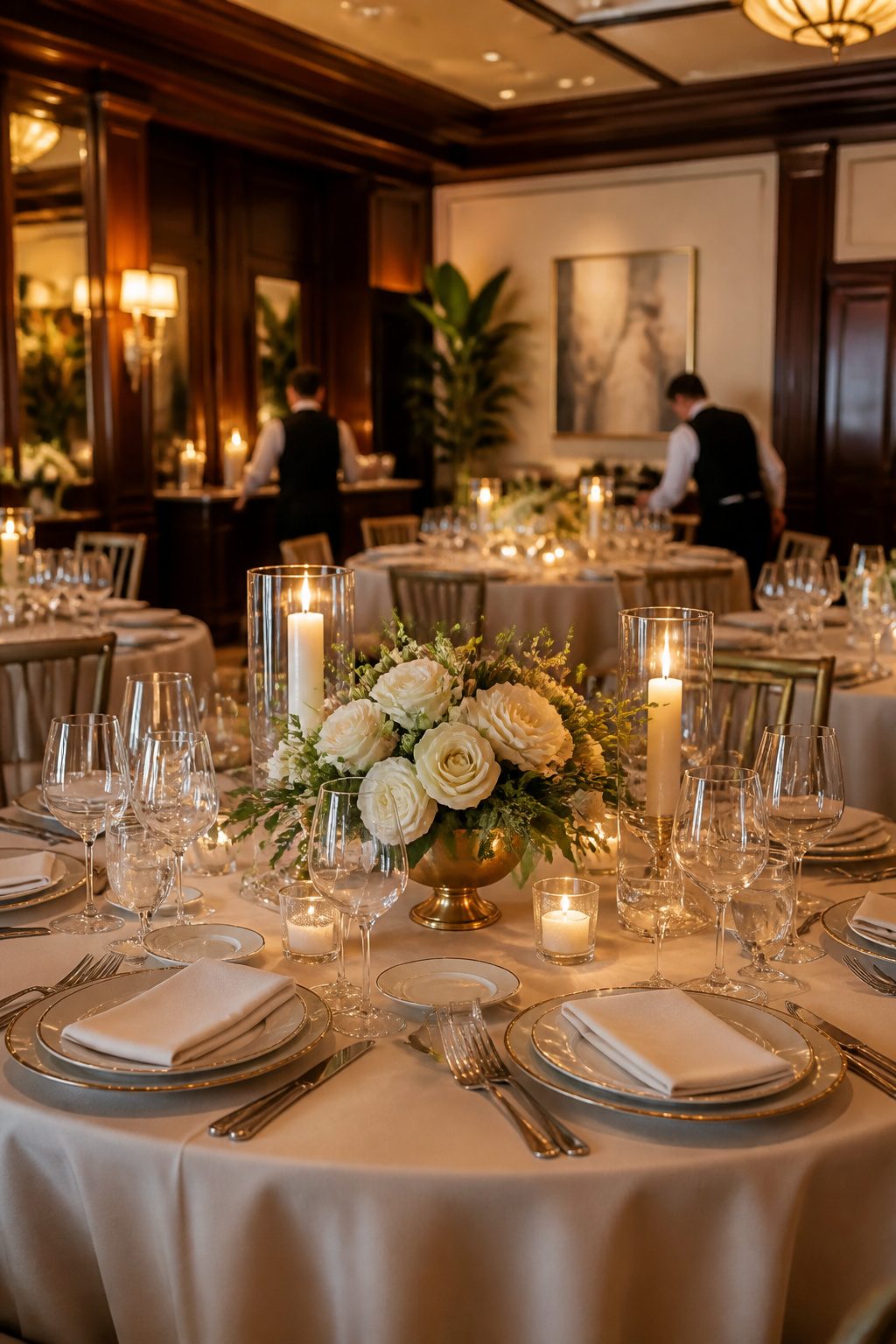
The Madison Club in Madison, Wisconsin sits at the intersection of luxury and affordability, but the real draw is service that actually shows up when the timeline slips.
Member-or-sponsored access means a couple needs a current member to vouch for them, or they need to join themselves, which runs roughly $2,000–$5,000 in initiation fees depending on membership tier plus monthly dues.
That hurdle filters out casual inquiries, and the club prefers it that way; they are not running a public event hall.
Non-members can book, though practically speaking they will not unless they have a member contact willing to sponsor the event and sign the contract.
The club’s catering and events team handles everything in-house, so the "impeccable" label refers to staff who know the room, not outsourced vendors meeting you for the first time at load-in.
What the brochure promises is white-glove presentation and seamless transitions; what you actually get is someone noticing the groom’s grandmother needs a chair moved before she asks, and the kitchen pacing courses to a speech that started twenty minutes late.
The difference matters because a lot of venues sell service and deliver a binder.

Wireless par lights with built-in large capacity battery for continuous use more than 12 hours. And without the trouble of cluttered wires, making your space clean and tidy.

【High quality stage lights】The stage light uses 36 high-quality LED lamp beads as the light source, with low power consumption and stable lighting performance.The shell is made of durable high-quality ABS,and the double bracket design makes the stage light more stable.You can hang the LED lights anywhere or on the floor as you like, and then adjust their angles as you want.

【IP65 Waterproof & Professional Wireless Design】Built with a durable aluminum housing and IP65 waterproof protection, these battery powered stage lights are designed for reliable indoor and outdoor use. The adjustable base allows flexible placement on the floor, truss, or other surfaces, making them ideal wireless uplights for weddings, events, concerts, and outdoor performances.
What Indoor Venues Fix and What They Cost
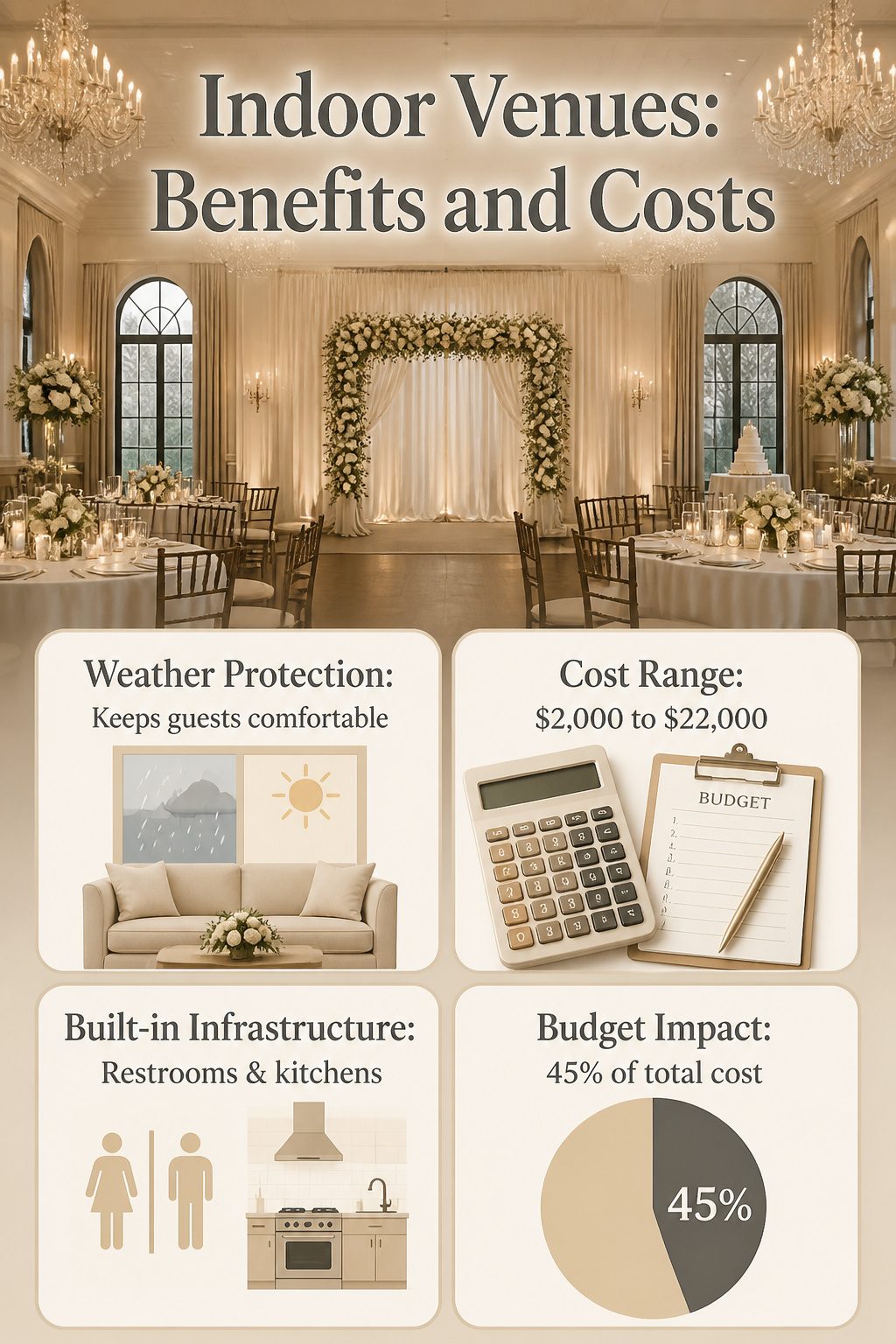
Weather protection is the clearest win with an indoor venue. Rain plans for outdoor ceremonies can swallow a noticeable slice of budget, and temperature swings that stress guests simply do not exist inside four walls.
Climate control keeps the space comfortable from first guest to last dance, and built-in infrastructure like restrooms, kitchens, and power removes the rental logistics that turn tented or remote sites into coordination puzzles.
Cost spreads wide. National averages run from roughly $2,000 to over $22,000 depending on location, guest count, and season, with the venue typically consuming about 45% of total wedding budget.
Some spaces include tables and chairs; others leave you renting matching sets. Packages that bundle basic furniture or ambient lighting do exist and are worth comparing, but decor like arches and specialty sparklers almost always sits outside the base rate.
The real comparison is not indoor versus outdoor, it is indoor versus the full cost of making an outdoor space functional in a climate you cannot control.

[Package Details]: Available in multiple sizes. Each order includes one backdrop only. Item ships folded. Stand, pole pockets and clips are not included.

[Package Details]: Available in multiple sizes. Each order includes one backdrop only. Item ships folded. Stand, pole pockets and clips are not included.
[Package Details]: Available in multiple sizes. Each order includes one backdrop only. Item ships folded. Stand, pole pockets and clips are not included.
Hotel Ballroom Through Museum: Matching Your Guest Count
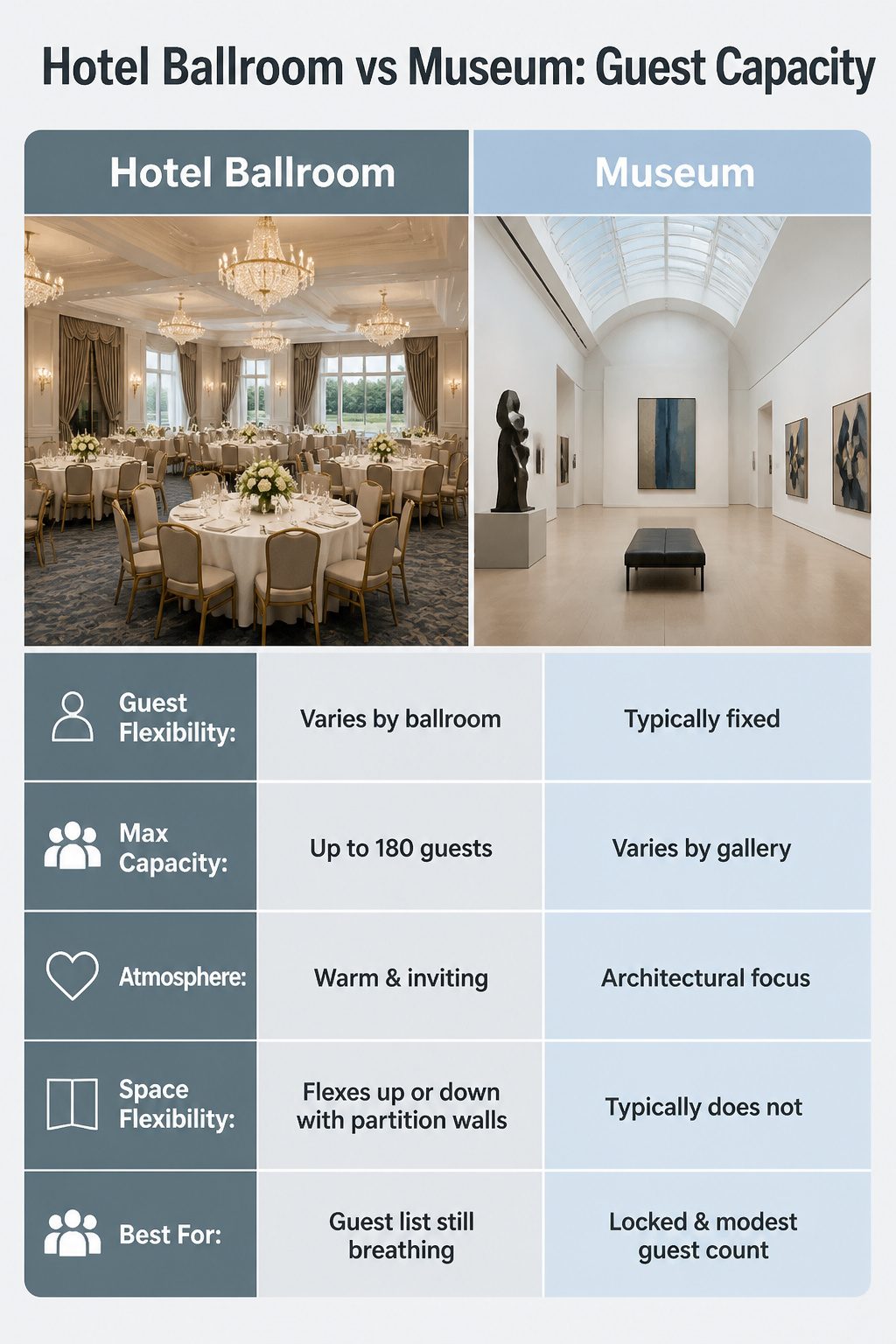
Hotel ballrooms and museums sit at opposite ends of the same decision.
One couple I worked with started with 200 names on their list and kept bumping against capacity notes that read "varies by ballroom," which really means you will not know your ceiling until you walk the specific room with the events manager.
That same uncertainty can work in your favor if your count drops.
A museum like the Taubman in Roanoke keeps its guest capacity unlisted publicly, so your first call is to ask whether your number fits their galleries or if you are paying for a space that swallows fifty people awkwardly.
Rustic lodges with a ballroom inside, like Willows Lodge outside Seattle, solve the atmosphere problem without sacrificing the headcount. They host up to 180 indoors while the windows and heaters keep the PNW feel.
A pure museum wedding trades that warmth for walls that need almost no decoration; the architecture does the work. The real split is whether your guest list is fixed or still breathing.
A ballroom flexes up or down with partition walls. A museum gallery or a historic hotel event space usually does not.
If your count is soft, book the flexible room. If it is locked and modest, the museum’s clean lines reward a smaller crowd that can actually move through the art without clustering at the edges.
Lighting and Decor That Belongs Inside
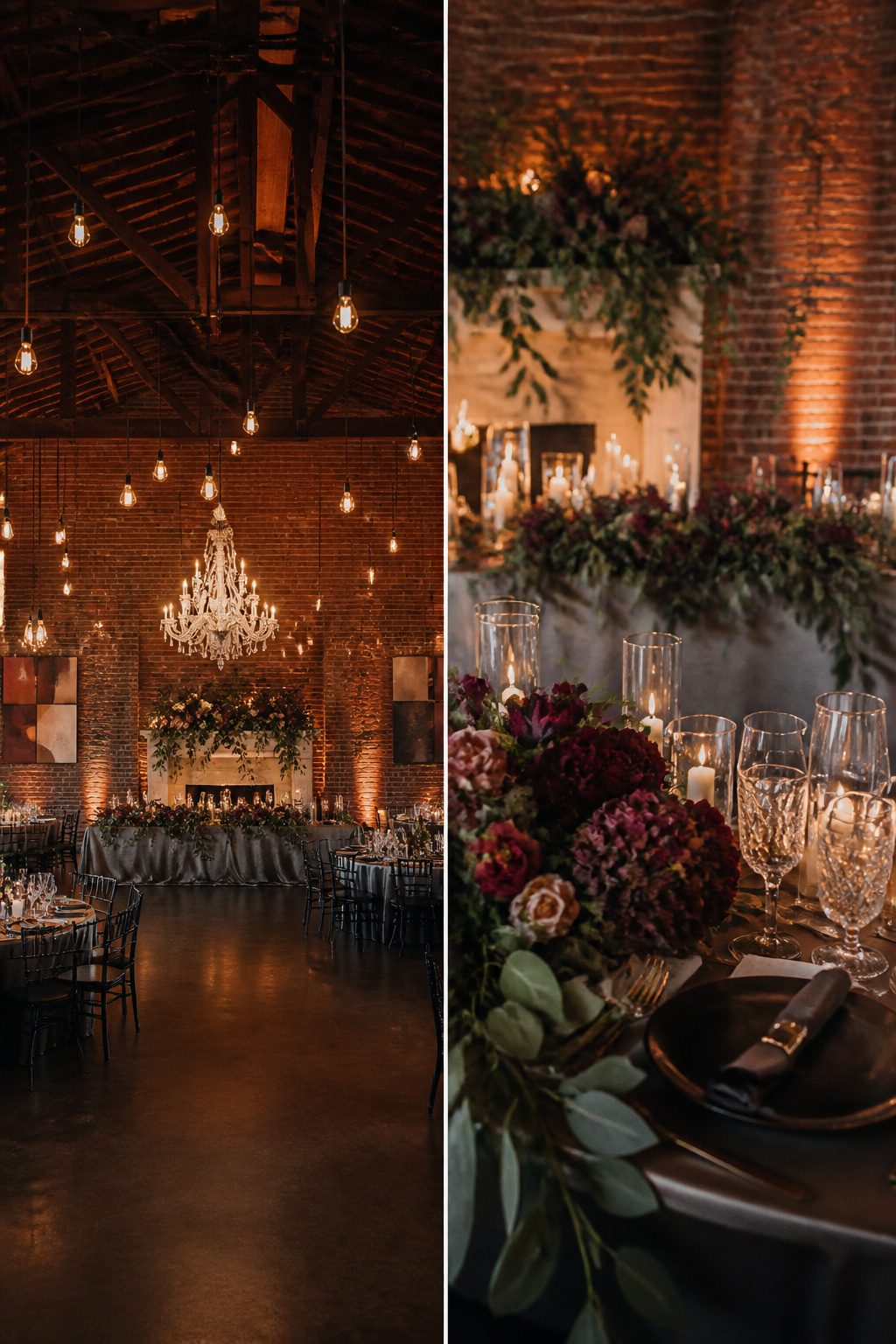
Walls and ceilings do things to light that open air never does.
Bounce it, trap it, kill it dead in corners. The first time I walked a raw warehouse with a couple, they saw Edison bulbs and floor-to-ceiling draping.
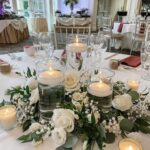
I saw three times the candle budget of any outdoor ceremony to get that same glow, because brick swallows warm light like a sponge.
Floral arrangements shift too. Sun coming through windows at four o’clock is a spotlight you did not rent.
It bleaches pale roses to paper and throws hard shadows across the tablescape. You need blooms that read in variable light, deeper tones with texture, or you spend on uplighting to compensate.
One bride chose peonies for a loft with north-facing windows; they looked perfect at noon and muddy by the time guests sat down.
We moved the head table under a chandelier that pooled enough warm light to save them, but that fixture was a line item she had not planned.
Personalized touches work harder indoors because the space gives you nothing for free.
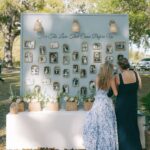
No sunset, no horizon line. Family heirlooms on a mantle, handwritten vows framed at the entry, a keepsake arch you build yourself; these become the visual anchors that nature would have provided.
The trade is control for effort. You decide every mood, and you pay for every decision.
Seasonal Comfort Without Outdoor Risk
Peak summer heat in Gainesville hits different when your grandmother is fanning herself with a ceremony program.
Indoor venues keep guests comfortable without the guesswork of a backup rain plan, and that temperature control extends your date options well past the narrow outdoor window most Florida couples fight over.
January through March indoor dates often open up vendor calendars at reduced rates, since photographers and caterors are not stretched across three simultaneous outdoor ceremonies.
The blank canvas most indoor spaces provide works year-round with the right approach.
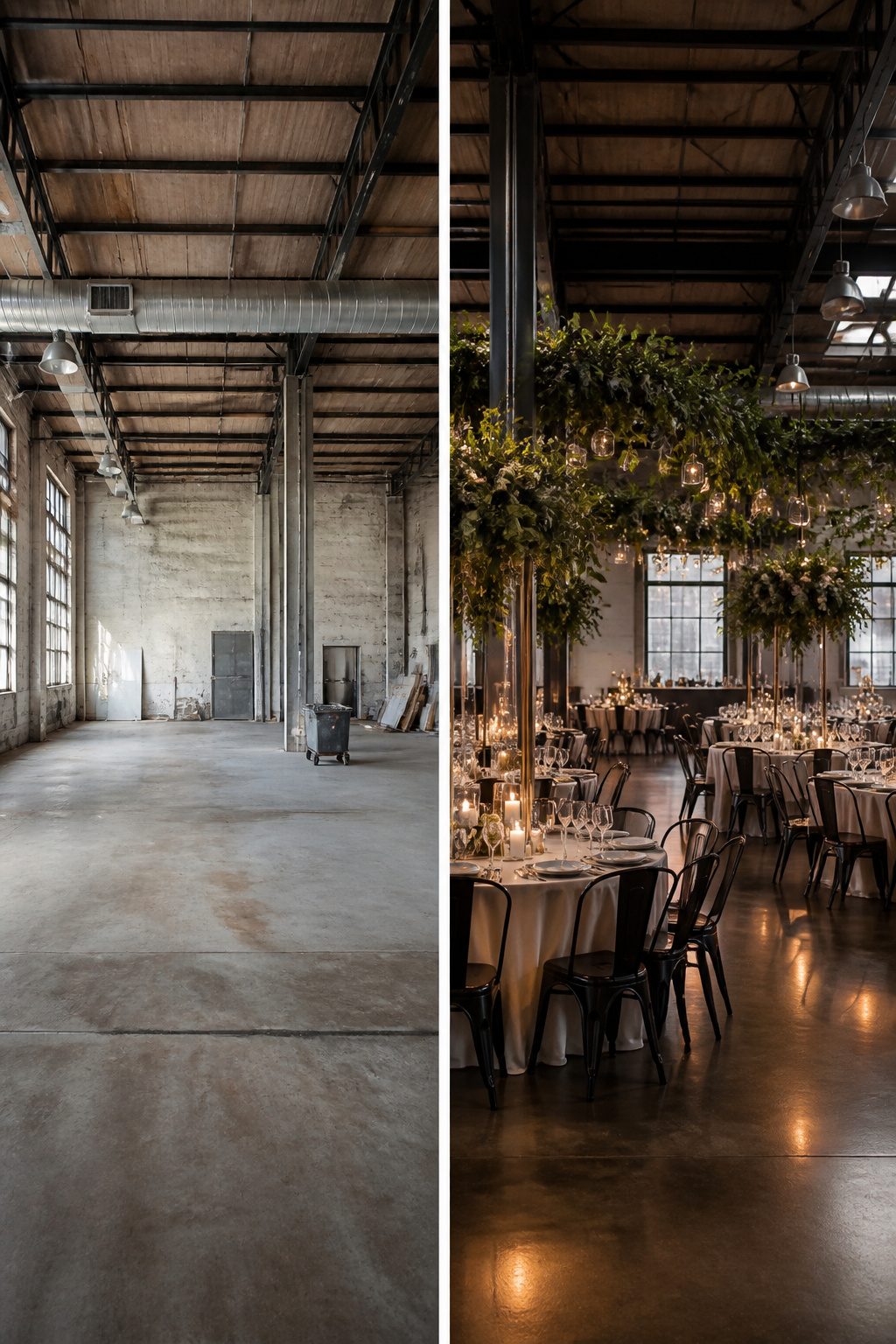
A warehouse or museum hall in December carries the same structural bones as in July, so your greenery installations or candlelit tablescapes do not compete with seasonal landscaping.
You also avoid the built-in decor of peak-season outdoor spots, where garden roses or autumn foliage dictate your palette whether you planned for it or not.
What shifted my own thinking was watching a couple move their March date to late August after securing an industrial hall with existing kitchen infrastructure.
They kept the same florist and cateror, both suddenly available, and spent the savings on upgraded bar service instead of tent sidewalls and portable restrooms.
Frequently Asked Questions
What are the benefits of an indoor wedding?
Indoor weddings remove weather risk entirely and keep guests comfortable through heating and cooling no tent can match.
You also inherit built-in infrastructure such as restrooms, kitchens, and power, which avoids the rental logistics that outdoor sites demand. That stability lets you book shoulder-season dates when vendors may offer better availability and rates.
What types of indoor wedding venues are available?
The article covers nine main indoor options, from raw urban warehouses and historic grand hotels to rooftop rooms, rustic lodges, waterfront all-inclusives, conference centers, wineries, climate-controlled halls, and private clubs.
Museums also appear as a clean-lined alternative for smaller guest counts. Each type trades something different: warehouses give floor-plan freedom but little built-in character, while hotels and clubs bundle service at a higher price.
How much do indoor weddings cost?
Indoor wedding venues in the United States typically average from about $2,000 to more than $22,000, with the venue consuming roughly 45 percent of the total wedding budget.
That figure usually covers the space itself and sometimes basic furniture, but decor such as arches, specialty lighting, and sparklers almost always costs extra.
A warehouse or conference center may also push spending toward rentals since you are building the look from scratch.
How can I personalize my indoor wedding venue?
Indoors you replace the sunset and horizon with details you place yourself, such as family heirlooms on a mantel, framed vows at the entry, or a keepsake arch.
Lighting and florals need extra attention because window light can bleach pale blooms and dark walls absorb candle glow. Choose deeper, textured flowers and plan a candle or uplighting budget that matches the room’s appetite for warmth.