The keepsakes worth keeping after the wedding run from a $20 Jenga set to full audio equipment rentals, and the deciding factor is not price but whether the object earns its place in daily life afterward.
Most couples abandon traditional guest books to closet shelves because ink on paper, however heartfelt, does nothing once the night ends.
The alternatives that survive a decade are the ones you touch, hear, or sit on: a wooden bench sealed with oil-based paint pen signatures, a vinyl record you can still spin, a Lego tower rebuilt on anniversaries.
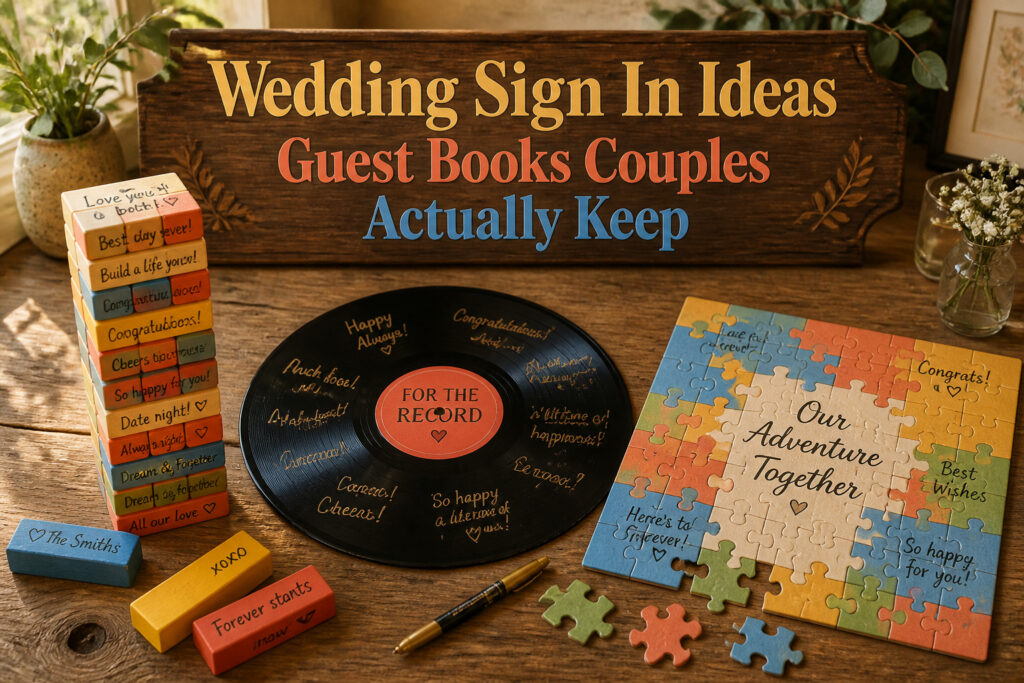
One detail from the article makes the difference between decoration and clutter: a 54-block Jenga tower becomes a working time capsule, while a puzzle piece guest book demands two to four hours of assembly you may never complete.
1. Audio Guest Book
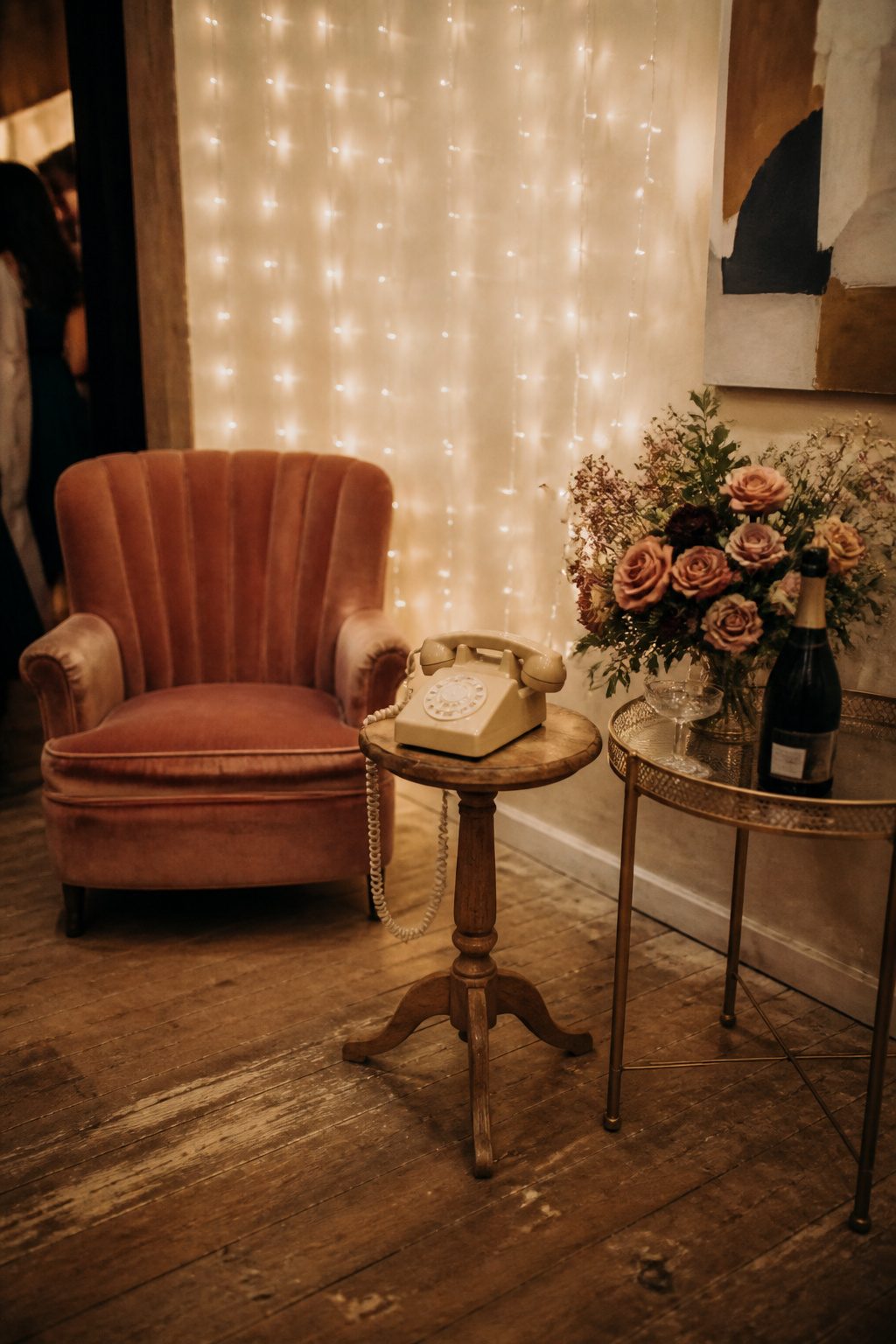
Vintage phones at the reception let guests leave voicemail messages that capture tone, laughter, and the actual energy of the evening in ways ink on paper never manages.
The setup works best as a small lounge moment or tucked-away booth near the bar, where guests find enough privacy to speak freely without stepping out of the celebration’s flow.
After the wedding, couples receive a collection of recorded messages, from heartfelt toasts to the increasingly hilarious messages that tend to arrive later in the night.
The nostalgic appeal runs deeper than aesthetics: these devices preserve voices and spontaneity that a standard guest book flattens into handwriting alone.
Multiple rankings now list this among the top alternatives to traditional sign-in books, and the vintage styling doubles as intentional décor rather than purely functional equipment.
Services like After the Tone provide the phones and handle the digital compilation, so the keepsake arrives ready to replay.
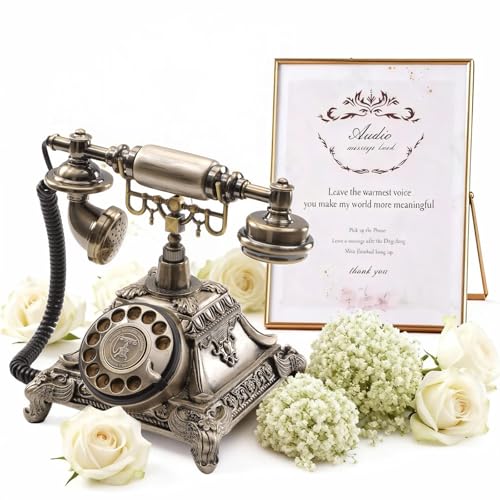
☎ Unique Audio Guest Book for Unforgettable Moments; Capture heartfelt messages from your guests with our unique audio guest book. Unlike traditional guest books, this innovative device allows your guests to leave personalized voice messages after the tone, creating a lasting and memorable keepsake for weddings, parties, and graduations.

【Real Voices, Real Memories】Guests leave heartfelt (or hilarious) voice messages you can replay forever — belly laughs, tearful toasts, and everything in between. A great alternatives to traditional guest books!

☎ Unique Audio Guest Book for Unforgettable Moments; Capture heartfelt messages from your guests with our unique audio guest book. Unlike traditional guest books, this innovative device allows your guests to leave personalized voice messages after the tone, creating a lasting and memorable keepsake for weddings, parties, and graduations.
2. Polaroid Guest Book
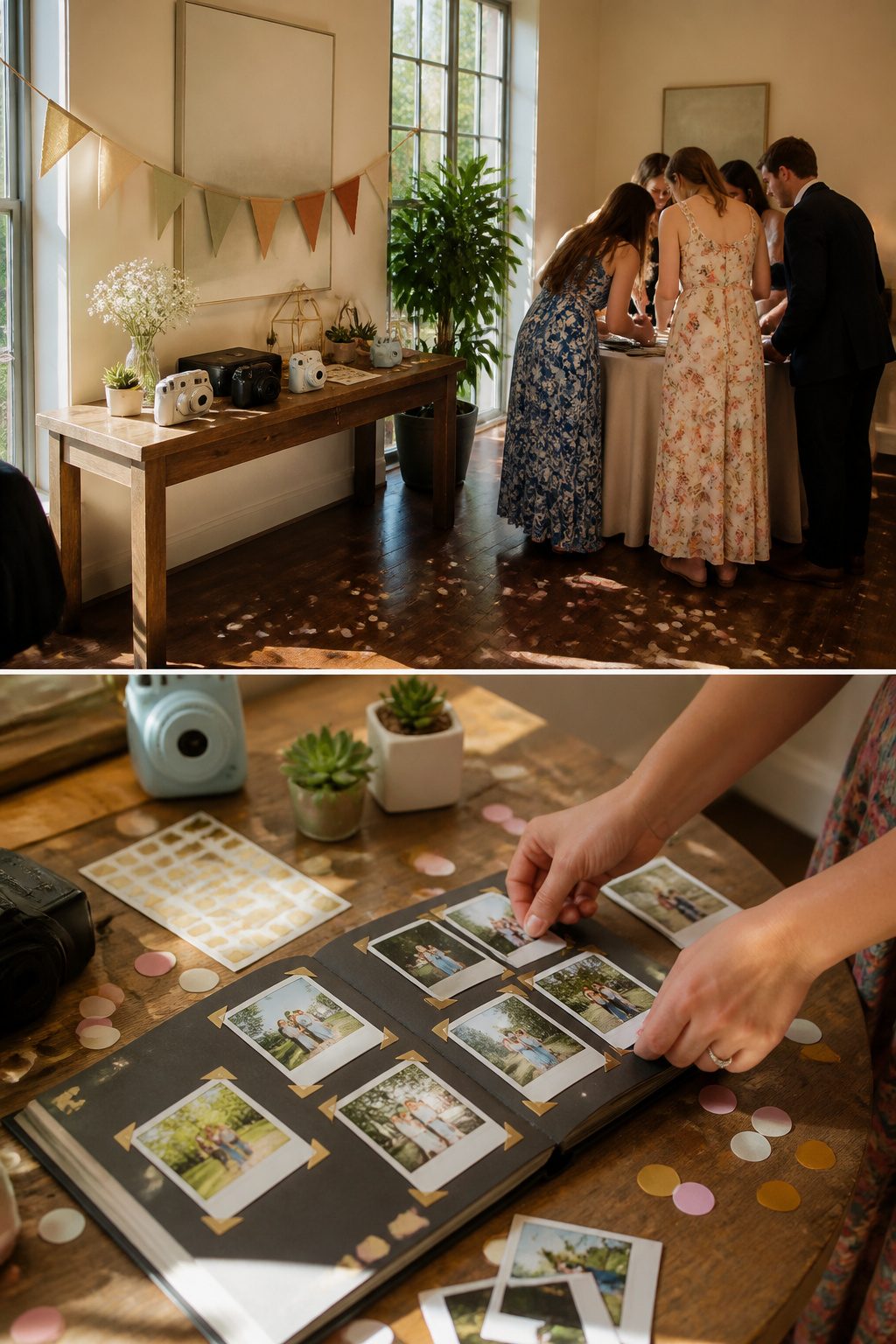
Guests at a Polaroid station take a photo, stick it in an album, and write a note beside it.
The finished book ends up chaotic and personal in a way a standard guest book rarely manages. Instant cameras and film are the core expense, plus an album, adhesive, and pens that will not smear on the paper stock.
Fine-tip or medium-tip ballpoint and roller ball pens work on most paper; skip gel pens on uncoated or textured pages.
One camera can bottleneck a big guest list, so two helps keep the line moving during cocktail hour. Someone needs to check the station now and then, reload film, and keep pages from getting stuck together.
Order extra film past your head count for retakes and group shots. Adhesive corners or photo-safe tape save guests from figuring out how to attach anything themselves.
This idea shows up on nearly every list of wedding sign in ideas guest books for a reason: it gives people something to do, and the couple keeps a face with every message.

Instax Mini Photo Album: Size-8.2x6x1.25 inches. Compatible with polaroid picture from 2"x3" up to 2.6"x3.5", fitting for Polaroid Hi-Print/Snap/Snap Touch, Fujifilm Instax Mini 12/99/SE/7+/40/90/EVO/Instax Liplay/Link 3/ Link 2 /Link Series, Polaroid I-TYPE / 600 / SX-70 Series Films, Kodak Mini 3-Inch Film [Not for Fujifilm Instax Wide / Square.

Writing Space for Every Photo: High GSM writable pages let you add dates, names and special stories beside your instant camera photos, creating a personalized Polaroid guest book
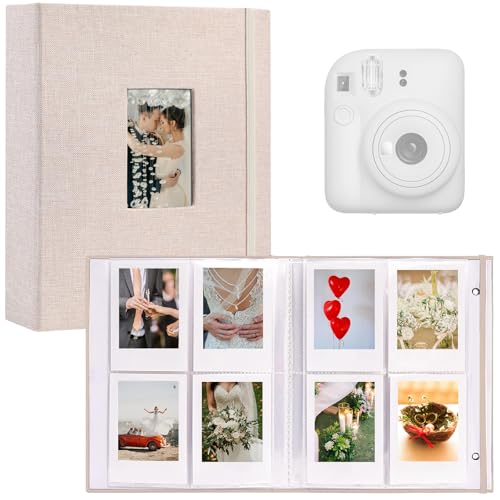
1. Perfect Fit for Instax Mini & Popular Instant Photos: Designed for your 3.5"x2.5" instant prints! Fits Fujifilm Instax Mini (7s/8/9/11/25/40/50s/70/90/Evo), Polaroid Snap/SnapTouch, Kodak Mini SHOT, and all instant printers (SP-1/SP-2/ZIP). Each pocket (3.55"x2.65") gives photos a little breathing room—easy to slide in, no forced squeezing
3. Vinyl Record Guest Book
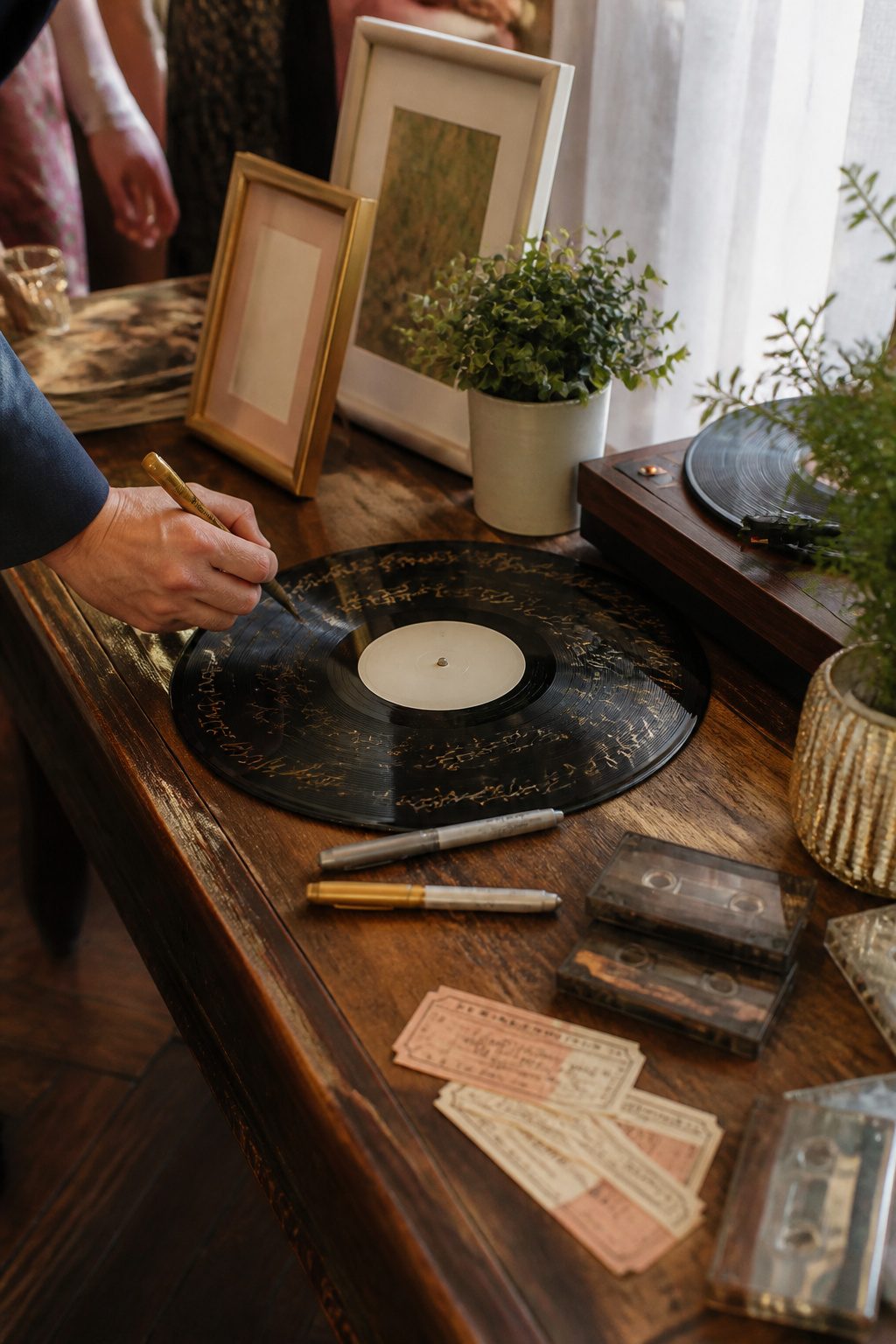
The vinyl record guest book works best when the album itself means something: the first record you bought together, the artist you saw live on your third date, the soundtrack from the year you met.
Guests sign with metallic paint pens, and the dark glossy surface makes the messages stand out in a way paper never manages.
Test your pens on the actual record beforehand, because some markers smear for hours and others dry fast enough that no one leaves with silver fingerprints.
Couples go two ways on sourcing. Vintage shops yield original pressings with worn sleeves that look great propped on an easel, while custom-printed records let you put your names or wedding date right on the label.
Either route, the display matters. A single framed record behind glass protects the signatures and fits a hallway wall.
Multiple albums arranged together need more space but tell a fuller story, especially if you stack them in a shadow box with ticket stubs or set lists tucked underneath.
The record player nearby is a nice touch if your venue has the room.
It turns the guest book table into something guests linger at instead of just pass through. Afterward, this lives on a shelf and gets read on anniversaries, which is more than most traditional sign-in books can claim.

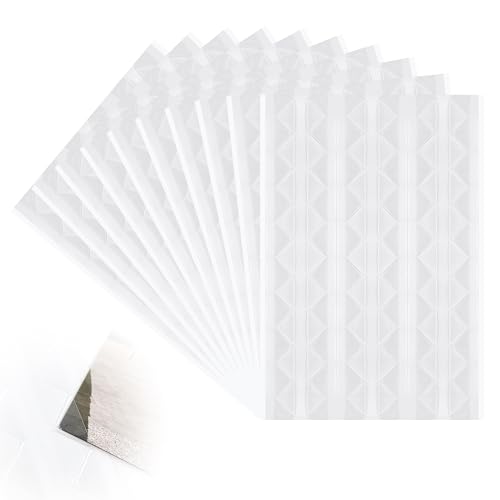
Our self-adhesive photo corners are easy to apply, stick well, and hold photos in place. They are perfect for repaging photo albums, making photos easier to remove and replace without damaging them.
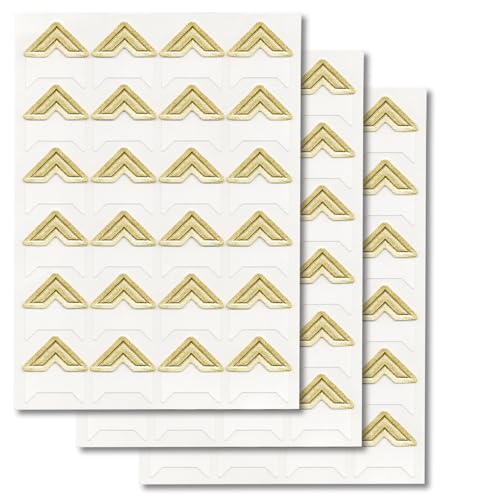
Size Color: 240 shiny gold photo corners, each sticker's size is 2 x 2 cm (0.79 x 0.79 inch), each sheet size is 12.5 x 9 cm (6.3 x 4.1 inch)
4. Jenga Guest Book
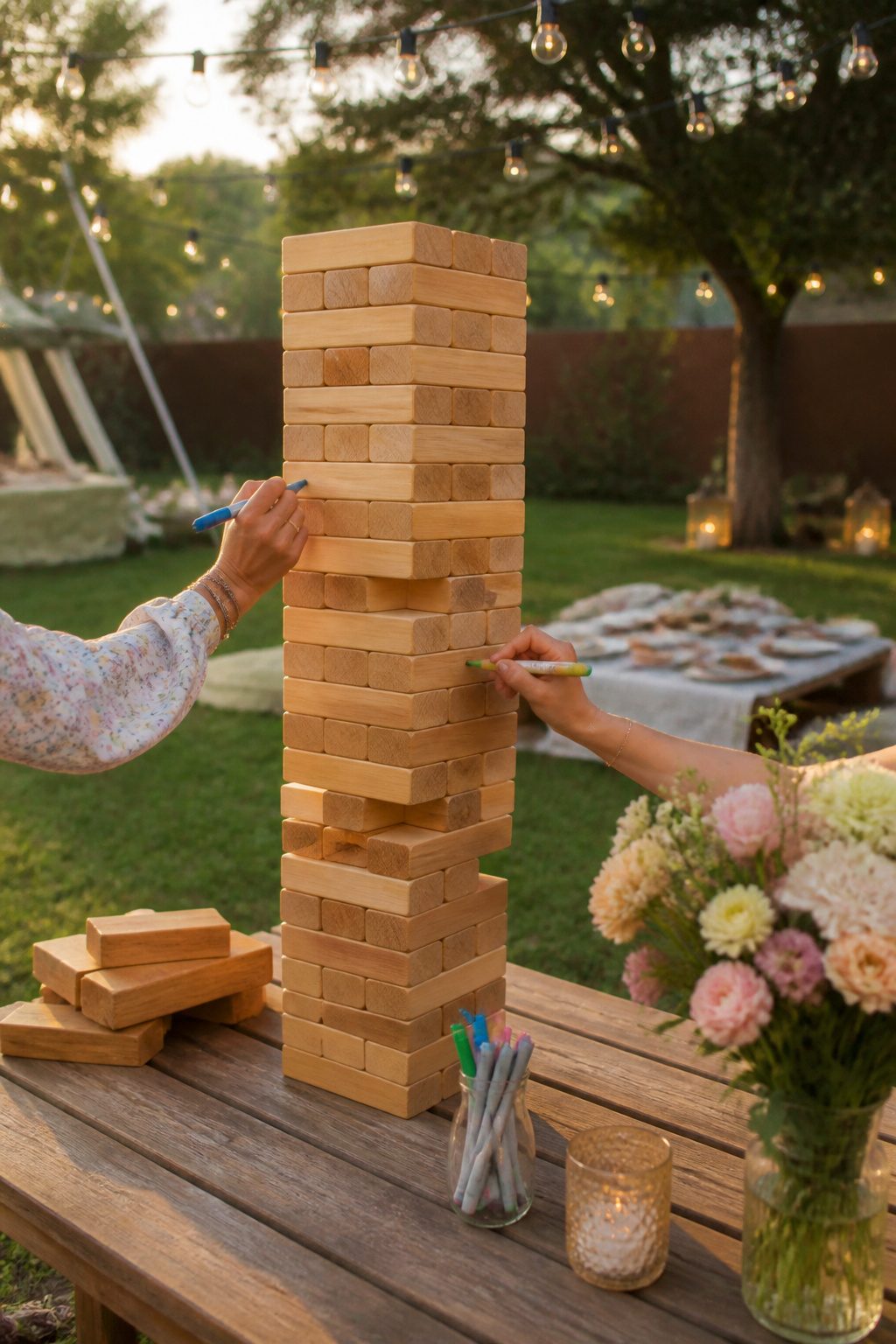
A standard Jenga tower runs 54 hardwood blocks, each about three times as long as it is wide, which means guests have room for more than a signature.
They write advice, inside jokes, tiny drawings, the kind of thing a traditional book’s margins can’t hold.
The couple plays with the signed set later, and the blocks become a working time capsule. Seeing "Uncle Ron was here" tumble out during a living-room game keeps the night alive in a way a shelved album does not.
Jenga works especially well for outdoor receptions where guests already drift toward lawn games.
Younger guests treat the signing as entertainment while adults leave longer notes. The setup stays visible, easy to understand, and the casual feel keeps the line moving without formal pressure.

Vintage Charm and Modern Creativity: unleash your creativity with this vinyl record guestbooks, designed with a classic vinyl record appearance; Ideal for weddings, back to school, birthdays, or any event, these guestbooks offer a nostalgic yet delicate way for guests to leave their mark; The 12 inches diameter ensures ample space for signatures and well wishes, blending elegance with creativity

【Package Includes】You will receive 4 vinyl record guestbooks, including 4 black record guestbooks, 4 display stands, 8 colored pens, and 4 sticker sheets. This tasteful design serves as both a functional guestbook and a conversation piece, adding an extra layer of elegance to any occasion; You can write messages or draw simple creative designs in them.
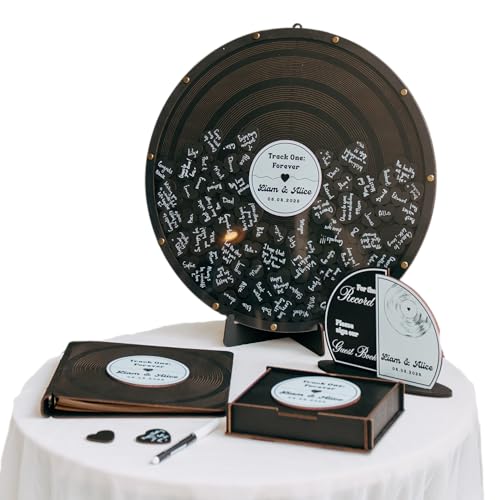
❤️ UNIQUE DESIGN: Beautifully crafted Vinyl Record-style Guest book with personalized center label featuring couple's names and wedding date
5. Recipe Guest Book
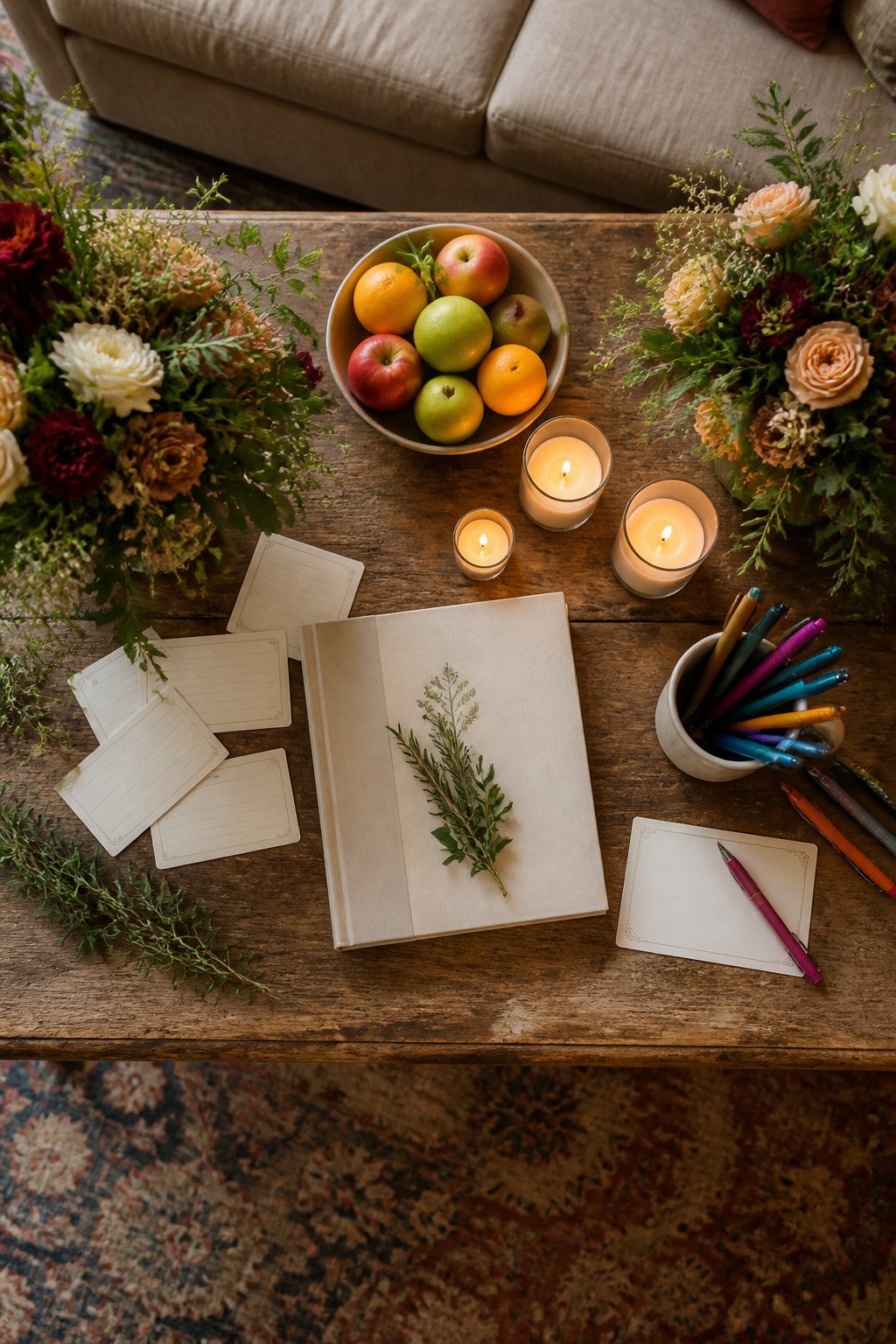
A recipe guest book turns every guest into a contributor to something the couple will actually open on a Tuesday night.
Guests write a favorite recipe on a card, sometimes with a note about who made it first or why it matters, and the collection becomes a cookbook built from real family history rather than algorithm search results.
The prompt on the sign-in table matters more than the book itself.
"Leave us a recipe you’ll want us to cook for you" gets guests thinking about shared meals instead of generic well-wishing. One couple used a note that read, "Please sign our recipe guest book.
We’ll think of you for every meal we make together." That framing changes what people write, moving the result from scattered index cards to a collection with stories attached.
Some pairs start with a blank recipe journal.
Others pick a cookbook they already cook from and let guests fill the margins. The second route risks cramped handwriting and limited space, but it anchors the guest entries in a book that already carries the couple’s own sauce stains.
The family-history angle is what saves this from feeling like a shower activity. A grandmother’s handwritten meatloaf recipe, complete with her note that "the oven runs hot," carries weight that a store-bought guest book signature never matches.
The book becomes a working kitchen object, not a shelf decoration, which means it survives the purge when the couple moves or downsizes decades later.

PRESERVE Keepsakes - Save your most important mementos and memorabilia from your first year of marriage. Then, on a date of your choosing, decades in the future, open the time capsule again and reminisce about what life was like the first year you were married.

🎁 Complete Wedding Memory Set: Includes 1 premium stainless steel time capsule and 50pcs elegant floral greeting cards, perfect for capturing heartfelt wishes, predictions, and memories from your wedding day to relive on your 10th anniversary.
6. Puzzle Piece Guest Book
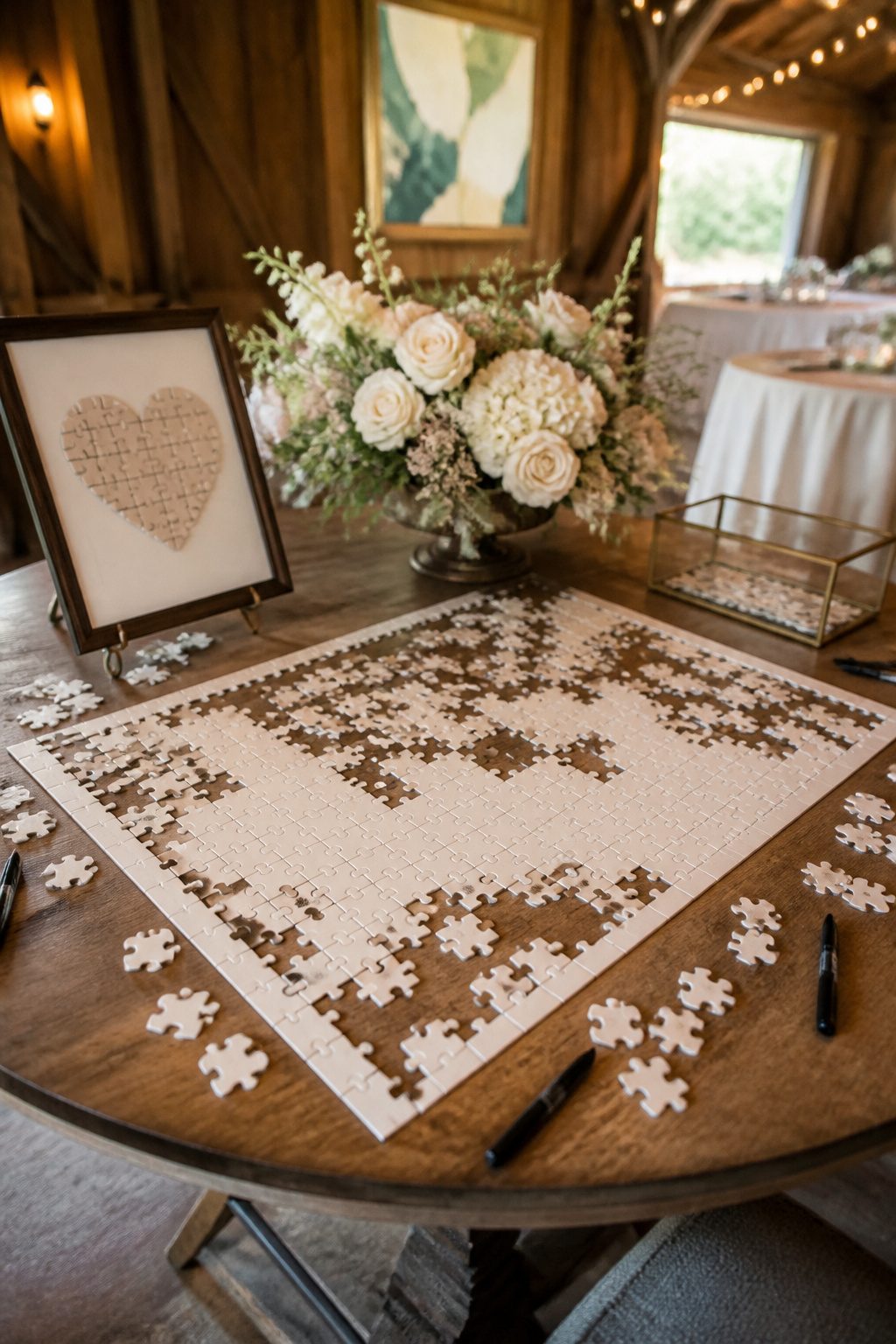
A puzzle piece guest book turns the signing itself into something guests remember.
Each person writes on one piece, and after the wedding the couple puts it together to reveal a complete image. The picture matters more than most couples first realize.
A map of the city where you met, the skyline from your first apartment, or even a portrait of your dog gives the finished puzzle a reason to stay on the wall.
Without that personal anchor, it risks becoming the kind of decor you hide when company comes.
The frame needs planning before the wedding.
Museum putty, mentioned by the vendors who sell these, keeps pieces from shifting without gluing them permanently. That matters because some couples want to disassemble and re-read messages later.
Others seal the whole thing behind glass and hang it. Either way, the backing has to hold irregular edges; a standard frame built for flat photos leaves gaps where pieces meet.
Assembly works best as a deliberate activity, not something you squeeze into a Sunday evening. The sources suggest treating it as a post-honeymoon project, which also filters out the guests whose handwriting you cannot decipher.
Count on two to four hours for a 100-piece set, and do it on a table large enough to lay every piece face-up.
The couples who enjoy this most seem to be the ones who already do puzzles together; if neither of you has finished a jigsaw since childhood, the guest book version may frustrate more than it charms.

【Real Voices, Real Memories】Guests leave heartfelt (or hilarious) voice messages you can replay forever — belly laughs, tearful toasts, and everything in between. A great alternatives to traditional guest books!

✨ Easy & Fun for Everyone: Guests simply pick up the handset, hear a prompt, and start recording. With intuitive buttons and clear playback, everyone—from grandparents to kids—can leave a message with no tech stress

💝【Preserving Emotions, Through the Power of Voice】Say goodbye to the monotony of traditional paper guestbooks! Capture the heartfelt blessings of every friend and family member at your wedding with the intimacy of sound. Their laughter, well wishes, and words of advice will be preserved forever in their own unique voice. Each message becomes a deeply personal keepsake, adding a layer of genuine emotion and warmth to your celebration.
7. Message in a Bottle
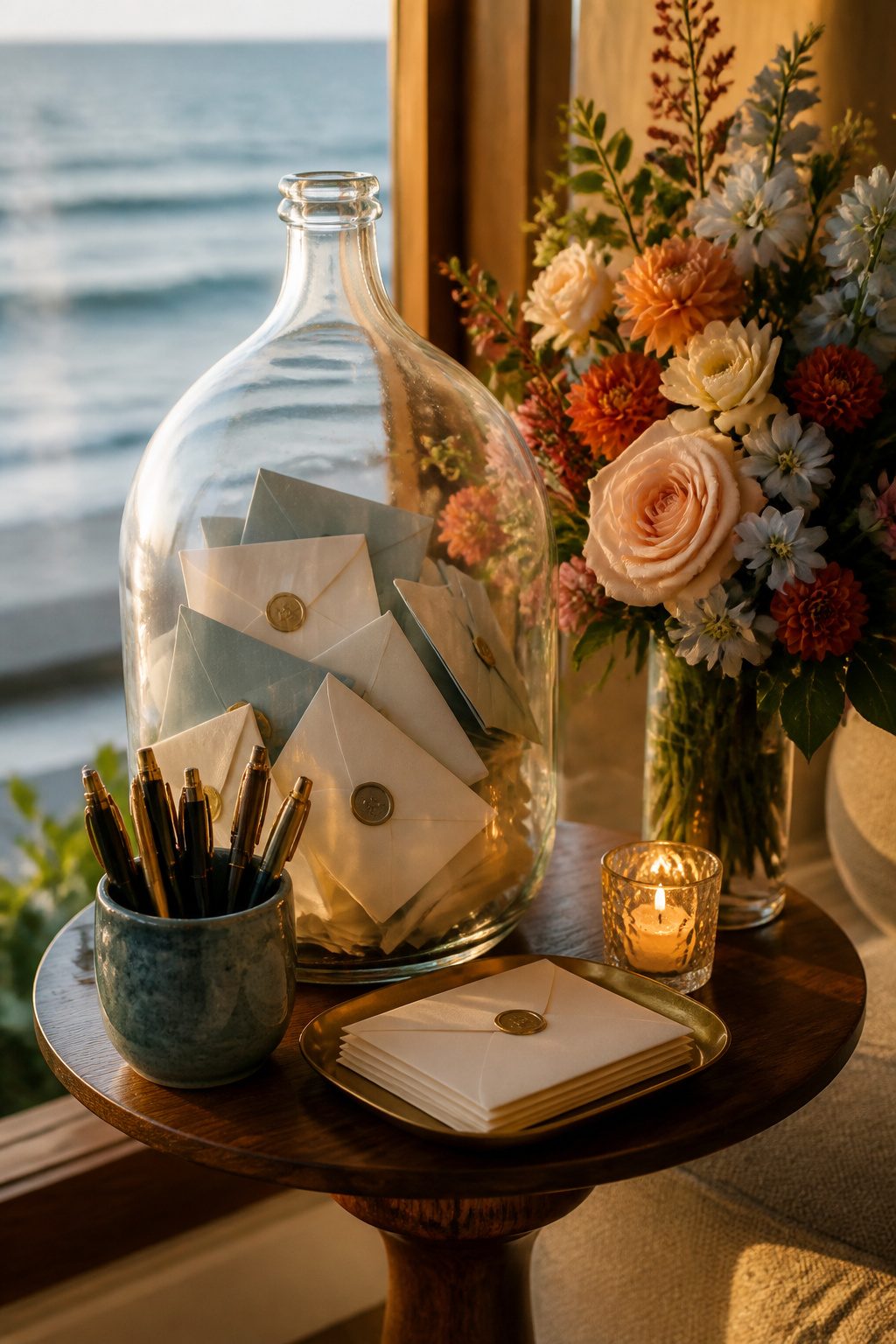
A sealed bottle of notes sits on a shelf like a promise you made to your future selves. Guests write whatever they want, no audience but the two of you, and you choose when the moment comes.
Some couples open everything on the first anniversary; others wait until the first real fight, or the fifth year, or a morning when you need to remember why you started.
The container matters less than the sealing. A magnum wine bottle signed with metallic markers becomes part of a home bar until its day arrives.
Corks collected in a glass vessel or shadow box stay visible but the messages stay hidden. Envelopes labeled for Year 1, Year 5, Year 10 stretch a single evening across a decade.
Private messages carry a different weight than a guest book left open on a table. Guests write more honestly when they know the couple alone will read it.
The trade-off is exactly that: you lose the decorative piece, the immediate browse-ability. What you gain is a stack of moments that land exactly when you need them, not when etiquette says to look.
Setup is simple but not thoughtless.
Enough pens, enough writing space, a display that signals what to do without a paragraph of instruction. The evening flows better when participation feels obvious.

Large Capacity: The inside pages of the guestbook are beautifully printed, and each page has plenty of space for 2 guests to paste Polaroid photos and leave their wishes, with a total of 60 sheets/120 pages for up to 240 guests' wishes and photos. Note: Photos need to be attached with corner stickers or glue, no photo pocket

MEMORIES TO LAST A LIFETIME - BVSSX's personalized wedding guest book is compatible with Polaroid photos to capture precious moments. From photo snapshots to heartfelt messages, this guest book is more than just a guest sign-in book - it's a unique keepsake that preserves the essence of your special day, Completed kit with 4 sheets of picture corner stickers(216pcs) to secure the special photos of your precious emotional,comes along with a heartfelt table sign, encouraging guests to share memories.

Instax Mini Photo Album: Size-8.2x6x1.25 inches. Compatible with polaroid picture from 2"x3" up to 2.6"x3.5", fitting for Polaroid Hi-Print/Snap/Snap Touch, Fujifilm Instax Mini 12/99/SE/7+/40/90/EVO/Instax Liplay/Link 3/ Link 2 /Link Series, Polaroid I-TYPE / 600 / SX-70 Series Films, Kodak Mini 3-Inch Film [Not for Fujifilm Instax Wide / Square.
8. Wishing Tree
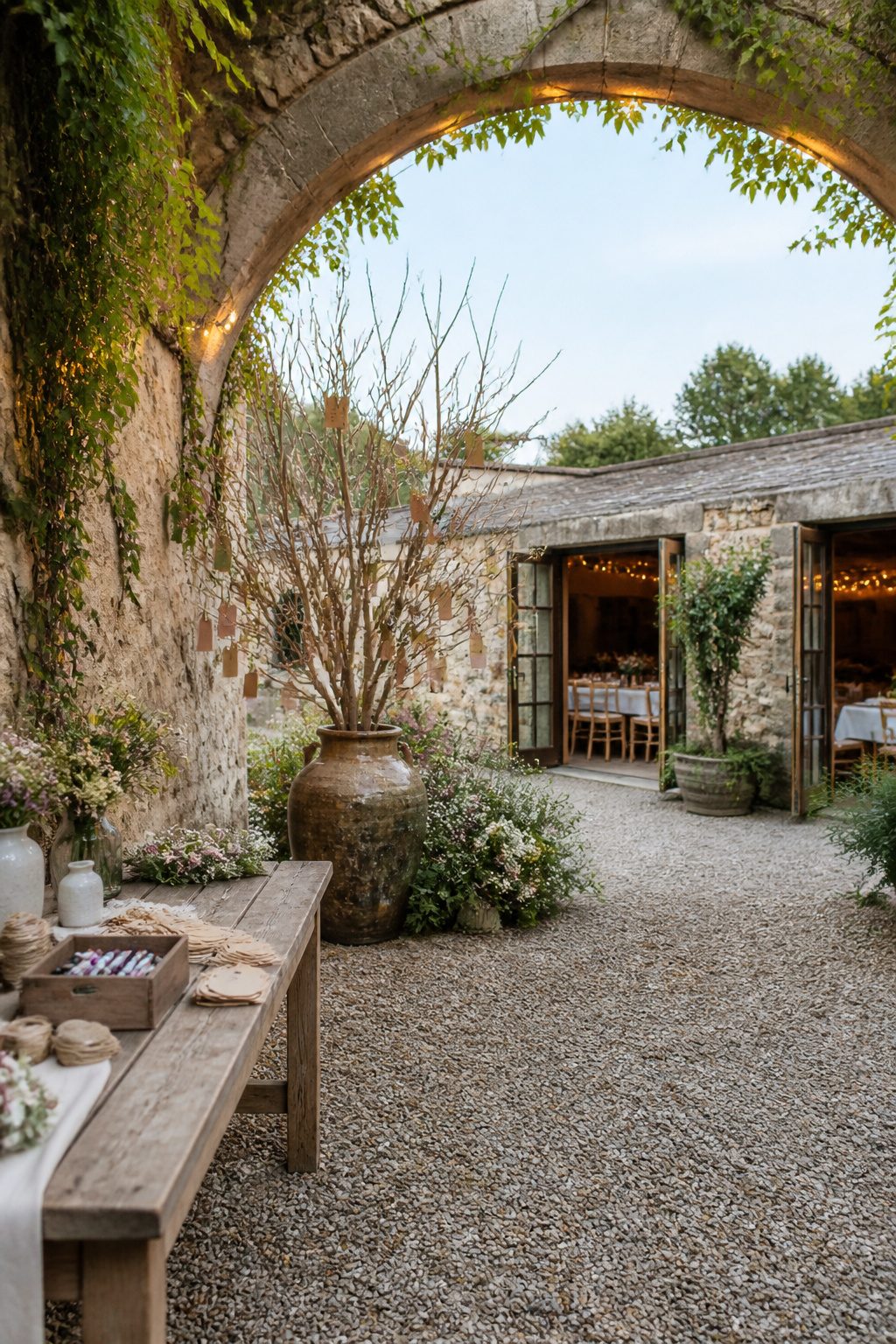
A wishing tree starts with bare branches set into a weighted vase or a wire frame shaped like a small tree.
Guests write on tags, then loop string or ribbon through a hole punched at the top and hang their wishes until the whole thing is full.
By the end of the night it is reception decor that grew itself, denser and more personal as the hours passed.
Tag material matters. Cardstock holds up through humidity in a crowded room, but lighter paper tags in ivory or kraft brown keep the whole thing from looking heavy before guests arrive.
A hole punch and twine at the station saves someone from fishing for supplies mid-reception.
The sources split on what goes in with the branches. One approach pairs them with wildflowers from the couple’s own region for an earthy, informal look.
Another keeps the tree spare and sculptural, letting the handwritten tags carry all the color. The spare version reads better in a modern venue; the wildflower tie-in suits a rustic space or an outdoor tent.
What the couple keeps afterward is the question.
The tags can be stored in a book or box, but the branches themselves are harder to preserve. Most couples photograph the full tree, then save a handful of meaningful tags and compost the rest.
If every guest message matters for decades, a bound guest book still wins. The wishing tree trades permanence for presence; it is beautiful that night, and that is the point.

📦 【Bulk 1530 Pcs Value Pack】: You will receive 15 sheets of pre-cut photo corner stickers, with 102 corners per sheet and 1530 pieces of photo corners in total. Each photo corner measures 1.0 cm on the straight edge and 1.5 cm on the beveled edge. The compact sheets are easy to store and help you complete multiple album projects and daily DIY crafting needs.

【Easy-to-Use Photo Corner Stickers】These photo corners self adhesive are easy to apply and help organize photos neatly in albums or scrapbook pages. The clear photo corners allow photos to be removed or replaced without damaging precious memories

Sufficient Quantity: contains 500 pieces of photo stickers, providing you with an ample supply to meet a variety of needs; whether you're making a scrapbook, organizing a photo album, or crafting with friends or family, this generous quantity is ideal for both personal use and sharing
9. Globe Guest Book
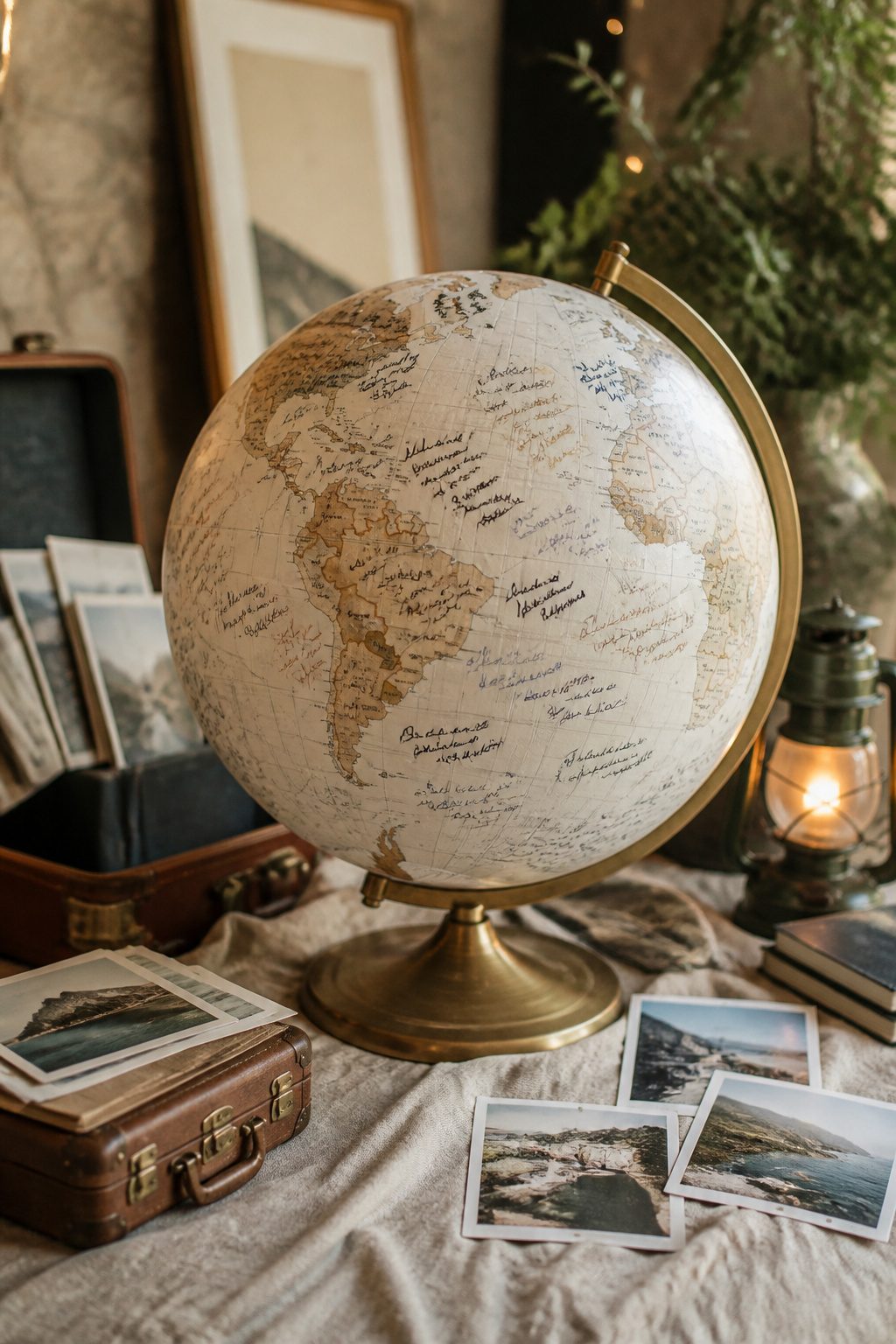
A globe guest book works best for couples who already measure their relationship in stamps and boarding passes.
Guests sign directly on the curved surface with messages tied to places you have been or hope to go, turning the object into a map of your community’s well-wishes spread across continents.
The pen choice matters more than most couples expect. A fine-tip paint pen grips the curved surface better than a standard marker, which tends to skip where the latitude lines rise.
Test your pen on the southern hemisphere of a cheap desk globe first; the ink behavior changes on a glossy finish versus a matte one.
After the wedding, the globe earns its keep on a shelf or in a home office, a daily reminder that works without any additional framing.
At Adler Ranch, couples often set it near the Grain Bin Bar or vintage gas pumps so the travel theme carries through the whole reception.
The same logic applies at home: a corner with a few road-trip photographs or a stack of old passports turns the signed globe from a leftover centerpiece into a deliberate design choice.

Create a Unique Wedding Keepsake: Transform classic 12-inch vinyl records into a memorable wedding or celebration keepsake. The set includes 4 vinyl records, decorative center labels, creative accessories, and a display stand, offering a distinctive alternative to traditional guest books.

Record Guestbook Wedding Sign:Add a unique and memorable touch to your special day with this record guestbook wooden sign. Designed for a record themed guestbook table, entrance greeting station, wedding welcome display, or bridal party decor, this sign helps invite guests to leave their names, wishes, advice, or sweet messages in a creative way. The record guestbook theme brings a stylish, nostalgic, and meaningful detail to your celebration.

Unique Personalization: This acrylic record wedding guest book alternative is custom-designed with your family name, wedding date, and the title of your first dance song, making it a timeless keepsake for your special day.
10. Typewriter Guest Book
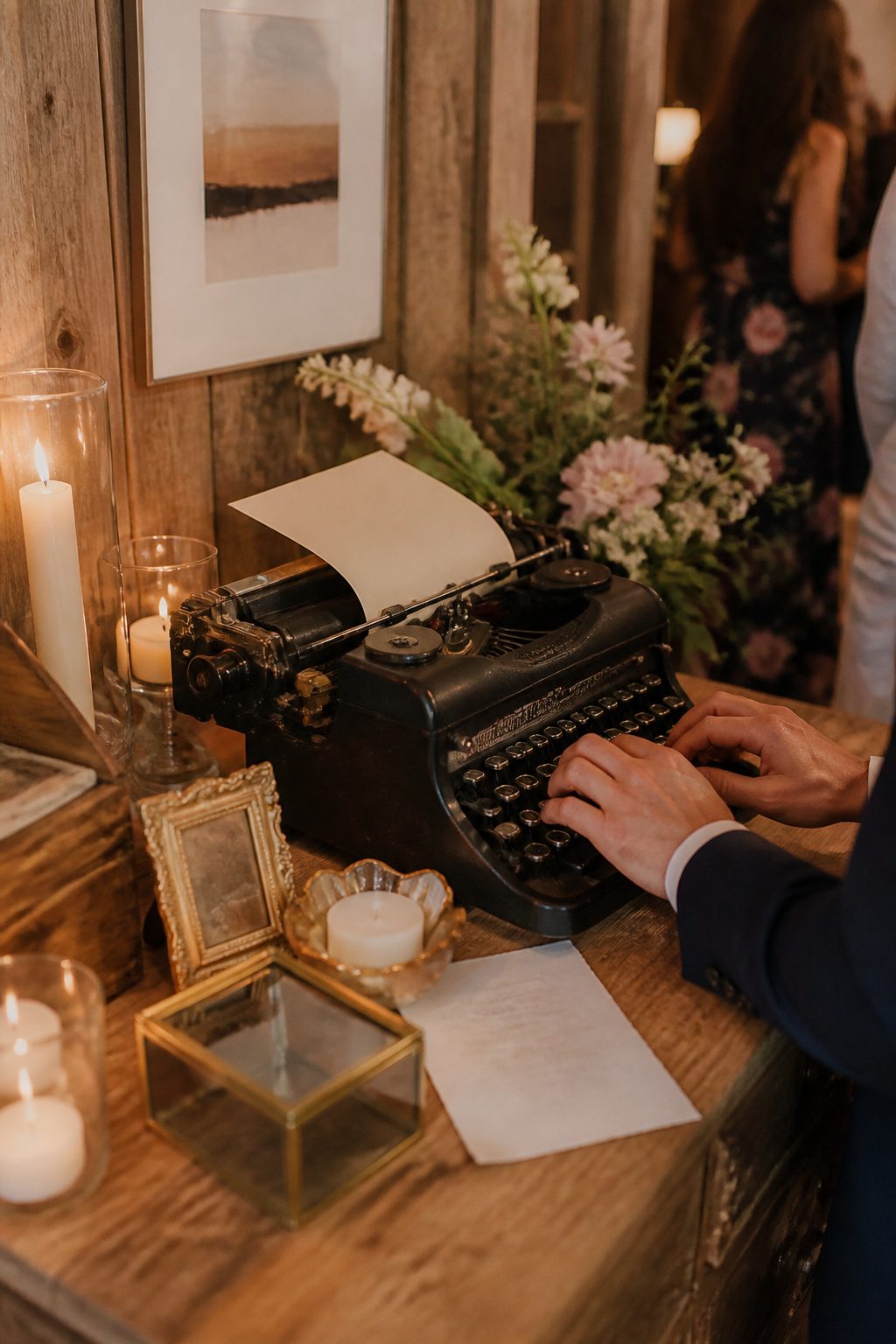
A vintage typewriter sits on the guest book table and guests clack out messages in real ink on real paper, the mechanical noise becoming part of the memory itself.
The charm is immediate and physical: the resistance of each key, the ding of the carriage return, the slight imperfection of letters that do not quite line up.
Sources describe guests crowding around, laughing as they remember how to backspace, which on most older machines means reaching for white-out or simply striking through and starting over.
Paper setup matters more than you might expect. Standard sheets feed through the platen, but the roller can chew lightweight paper or leave track marks.
Heavier bond or even cardstock cut to size runs cleaner and gives guests more room to type than the narrow strips that look cute on Pinterest but frustrate actual fingers.
Error handling is where this idea lives or dies. A working typewriter is ideal, but even a broken machine can anchor the table if you place fresh paper and a pen beside it.
The visual of the typewriter does the nostalgic work; guests write by hand and you avoid the risk of a jammed ribbon mid-reception.
For old Americana or retro décor, this option earns its keep without customization costs.
A second-hand machine from online marketplaces or Etsy runs the gamut from functional to purely decorative, so test before the wedding or plan around a non-working unit from the start.
11. Travel Map Guest Book

A travel map guest book works because guests already know what to do. Hand them a pin or a fine pen and they mark where they have been, where you should go, or the road trip they think you need.
World maps cover couples who want the full range; a single country or regional map keeps the focus tighter and fills faster.
Marking methods shift the whole feel.
Push pins give you a physical, layered texture you can read from across a room. Ink signatures let people add short notes, a date, or a restaurant they swear by.
One couple I read about had guests draw paths from the wedding location out to their chosen spots, which turned the map into something closer to a conversation than a guest list.
The real payoff comes after the wedding.
You hang it, you live with it, and the marked spots become your shared list. Some couples keep a running note on their phones, adding the destinations that got the most votes or the most emphatic underlining.
A map heavy with out-of-state guest marks, the kind you see at Minnesota weddings with scattered family, doubles as proof of how far people traveled to be there.
12. Heart Drop Guest Book
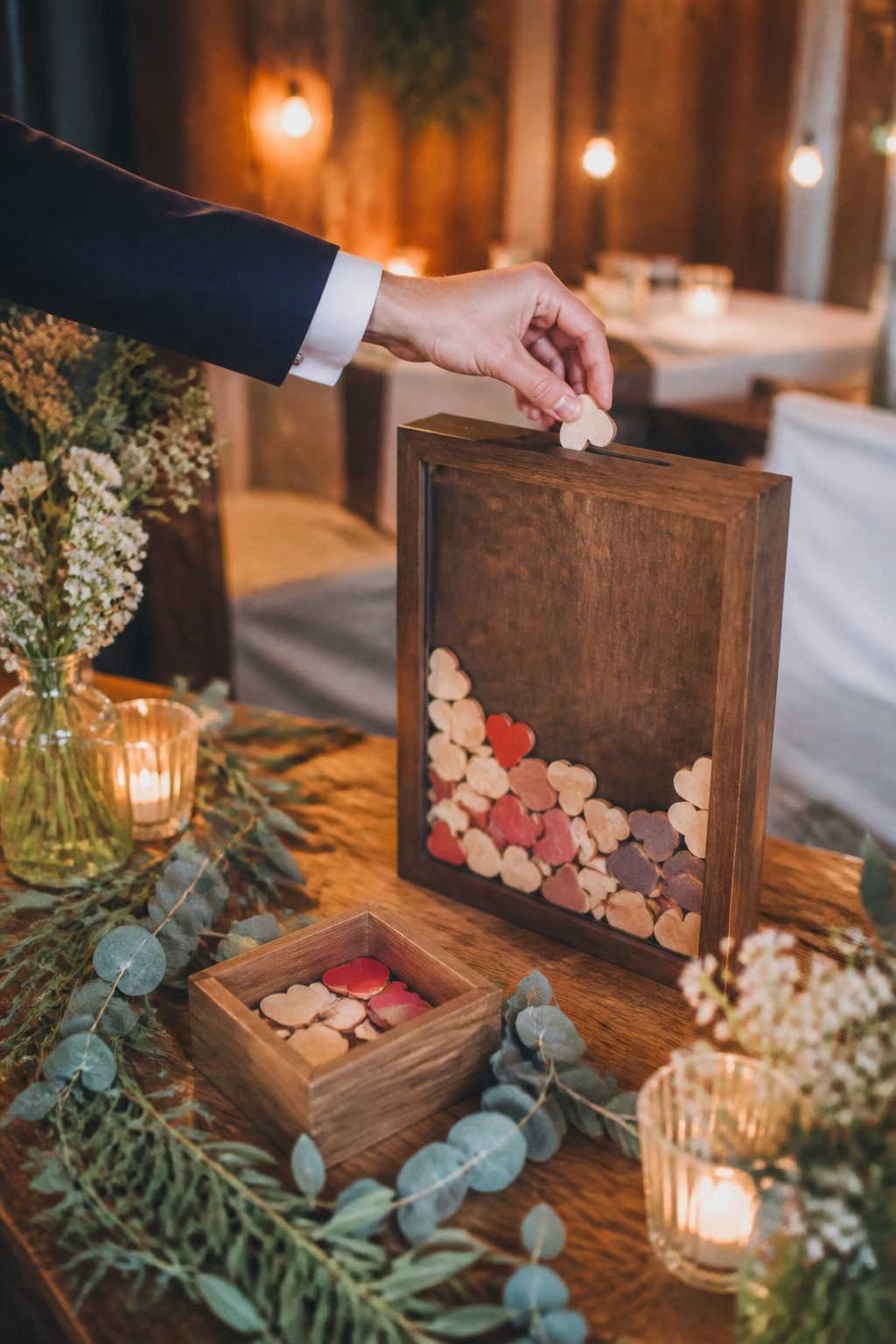
A shadow-box frame with a slot at top gives guests a wooden heart to sign and drop inside. The hearts collect in layers, overlapping like fallen leaves until the frame fills with color and handwriting.
The best versions use a glass front deep enough to let the hearts shift slightly, so the texture stays dimensional even after transport home.
Most couples choose a frame in a finish that matches their reception tables, then hang it in a hallway or above a dresser where the messages stay visible without demanding attention.
The construction matters more than the shape of the hearts: a shallow box leaves the pile looking flat, while one with real depth turns the signatures into something you notice differently from across the room.
13. Date Night Ideas Jar
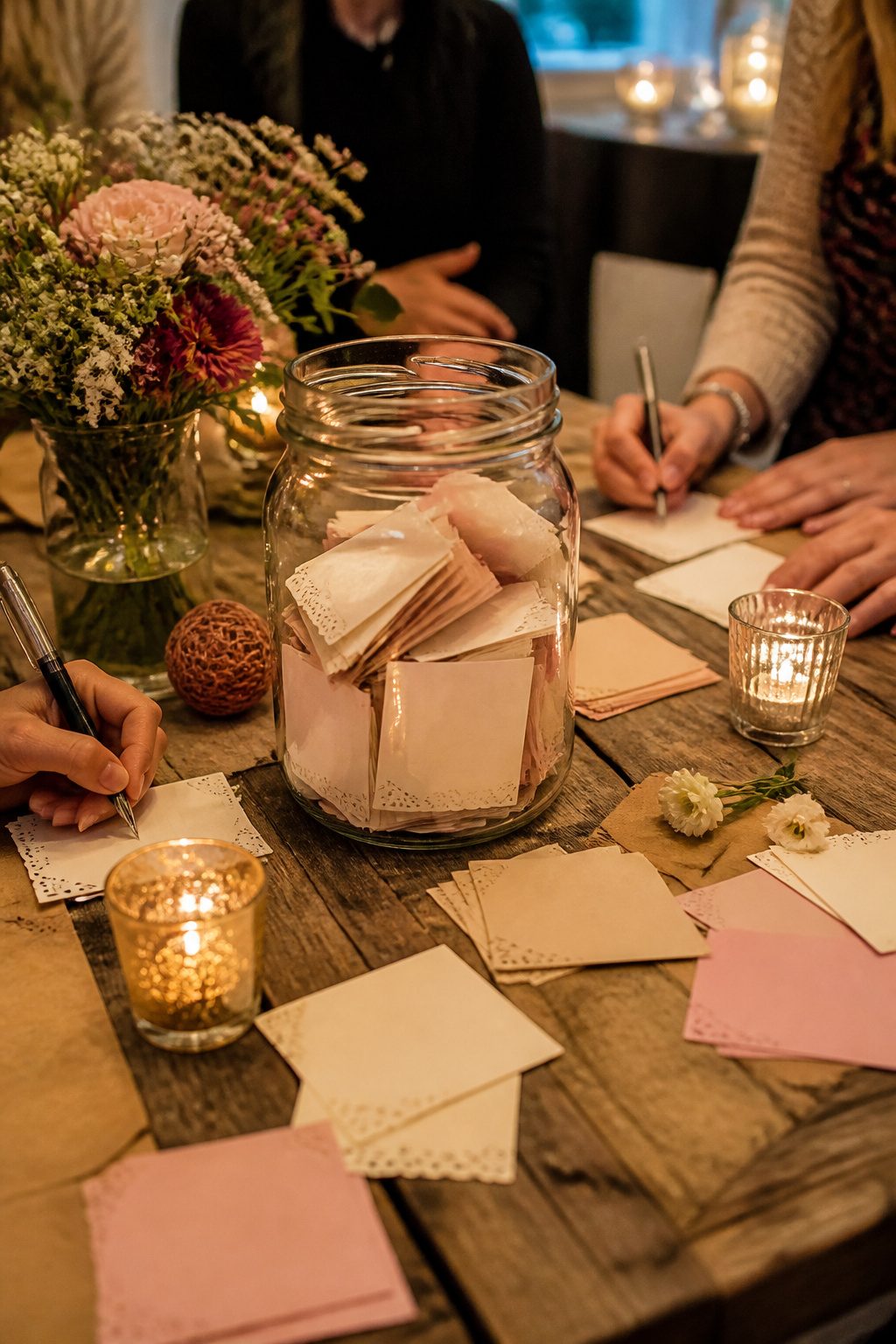
A plain mason jar works fine, but a wooden box with a slot cut in the lid feels more like furniture than craft supplies.
I have seen couples use a vintage card box painted to match their palette, and one pair borrowed the Grain Bin Bar setup from their venue so guests could drop ideas while grabbing drinks.
The container matters less than the prompts you put beside it. Blank cards intimidate people; printed cards with starters like "Recreate your first date but make it backwards" or "Sunset picnic" get the pen moving.
The real payoff comes six months later, when a Friday night arrives empty and you pull "go to a Minnesota Wild game" from the stack.
The jar becomes a practical tool, not shelf clutter, because your friends’ personalities are mixed in with the advice.
14. Thumbprint Artwork
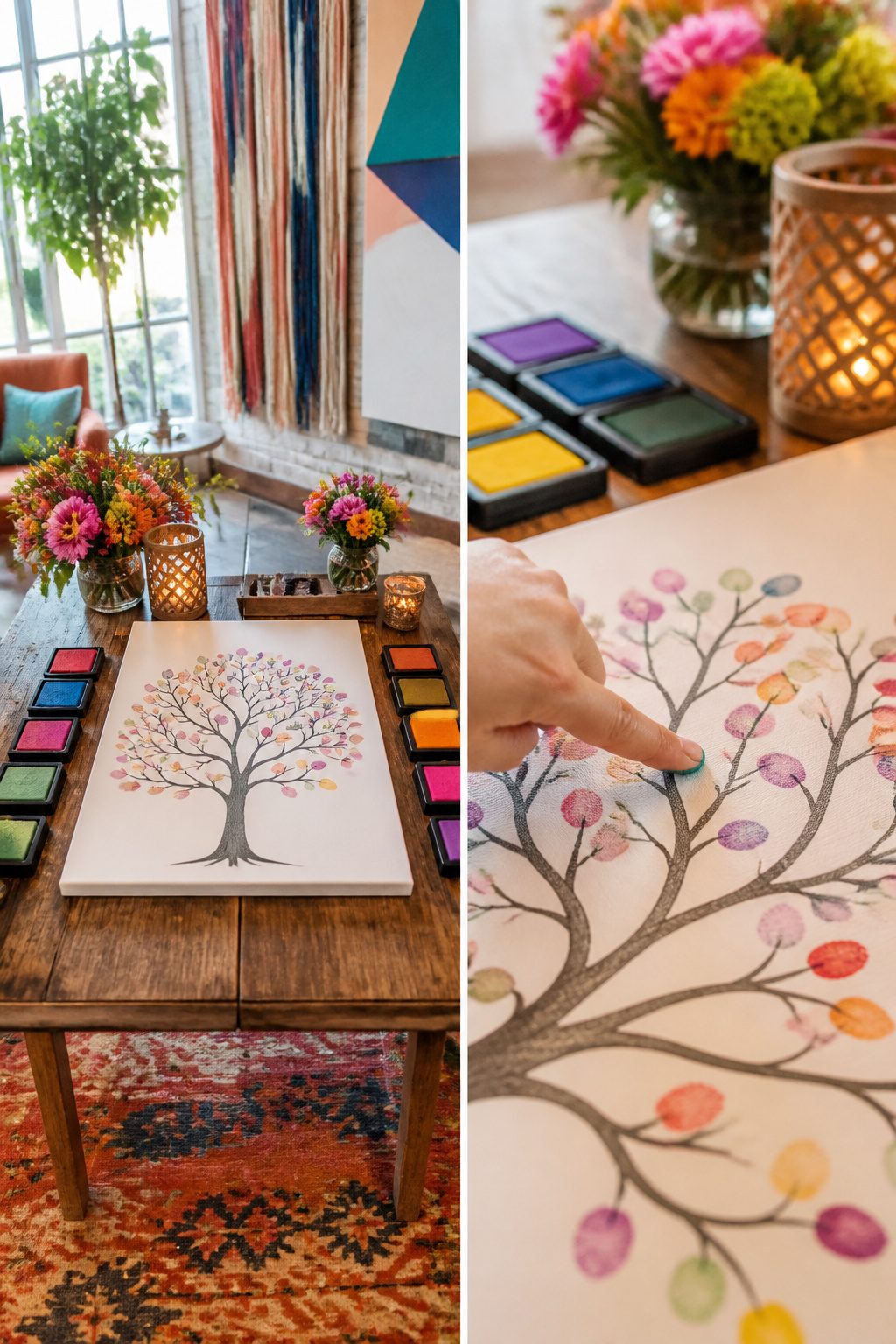
A pre-drawn design turns thumbprints into something you will actually hang. Trees are the familiar shape, but balloons or a constellation map give guests the same prompt with a silhouette that matches your wedding.
Each guest presses a thumb to an ink pad, leaves the print on a branch or inside a balloon outline, and signs their name beside it.
The finished piece reads as collaborative artwork rather than a list of names in a book.
Ink pad color is where the design locks together or falls apart.
A single pad in forest green keeps a tree coherent; a night-sky print needs navy or black. Some couples hand each guest two pads, one light and one dark, so the constellation gains depth.
Baby wipes belong on the same table. The moment after someone prints their thumb, they will want their hand clean before they shake another guest’s or pick up a drink.
What convinced me, looking through the options, is that this guest book solves the storage problem on the spot.
A canvas or wood board goes straight to a wall. The constellation or tree silhouette makes it personal enough to read as art, not as a souvenir you feel guilty throwing away.
15. Wooden Bench Guest Book
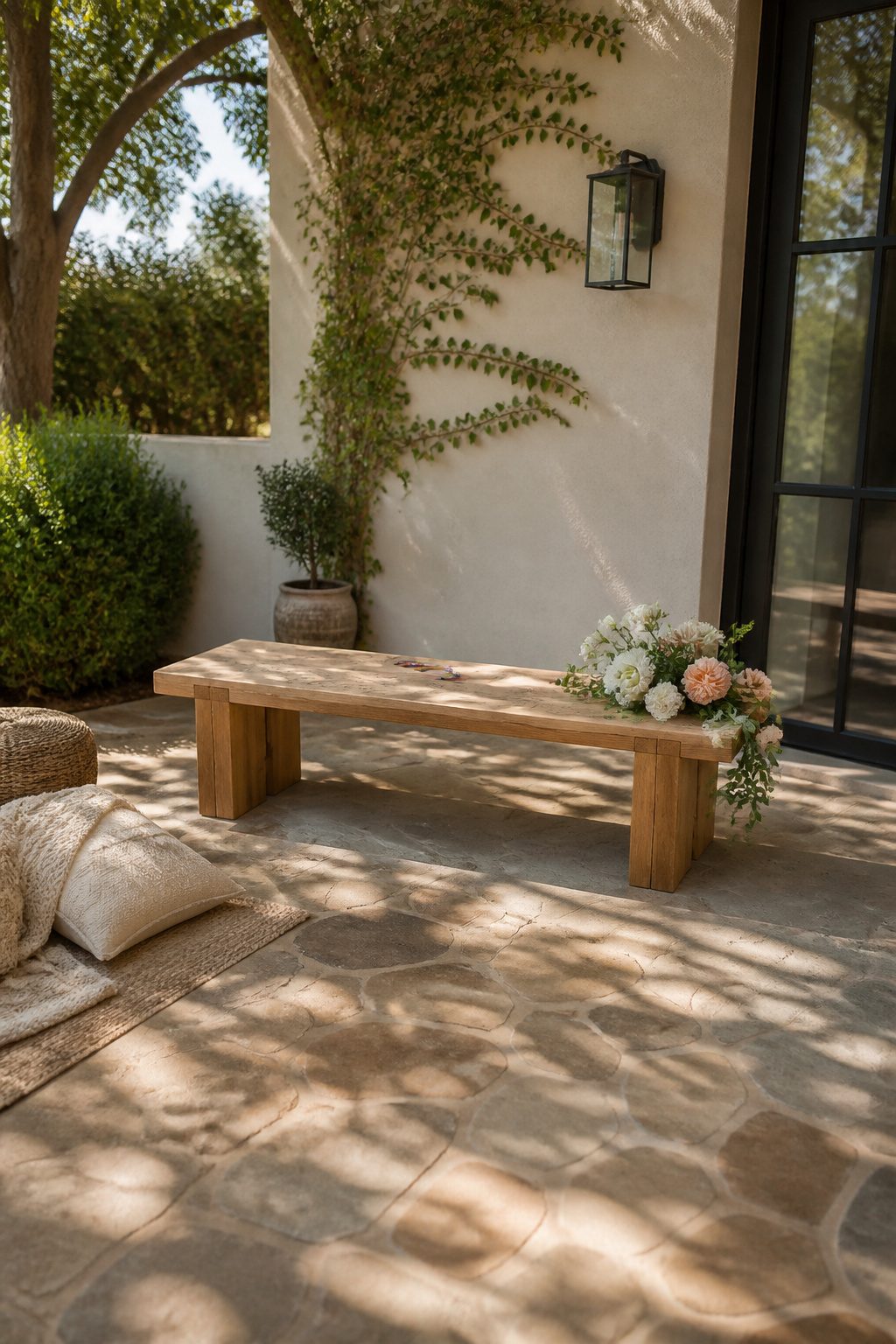
A wooden bench guest book starts with the right surface.
Maple or birch take pen cleanly without the splintering you get from pine, and a light sanding to 220 grit keeps the ink from feathering. I have seen couples skip the prep and lose half the signatures to bleeding grain.
Guests sign with oil-based paint pens, not Sharpies. The pigment sits on top instead of soaking in, so the writing stays crisp once you seal it.
Two coats of a water-based polyurethane, brushed thin and sanded between with 320 grit, protect the signatures without the amber tint oil-based sealants leave. Let each coat cure fully; rushing it traps the smell in your living room for months.
What convinced me, reading through a dozen of these, is that a bench ends up in daily use instead of a closet. The messages live where you see them, not in a box you unpack once a year.
One couple I follow keeps theirs at the foot of their bed; another moved it to the porch once the entryway got crowded. Storage stops being a problem because the guest book is the furniture.
The downside is weight.
Moving it to a new apartment costs you a rental truck item, not a shoebox. And the surface area limits how many guests can sign, so a wedding pushing 150 heads needs a longer bench or a second piece.
16. Planting Seeds of Love
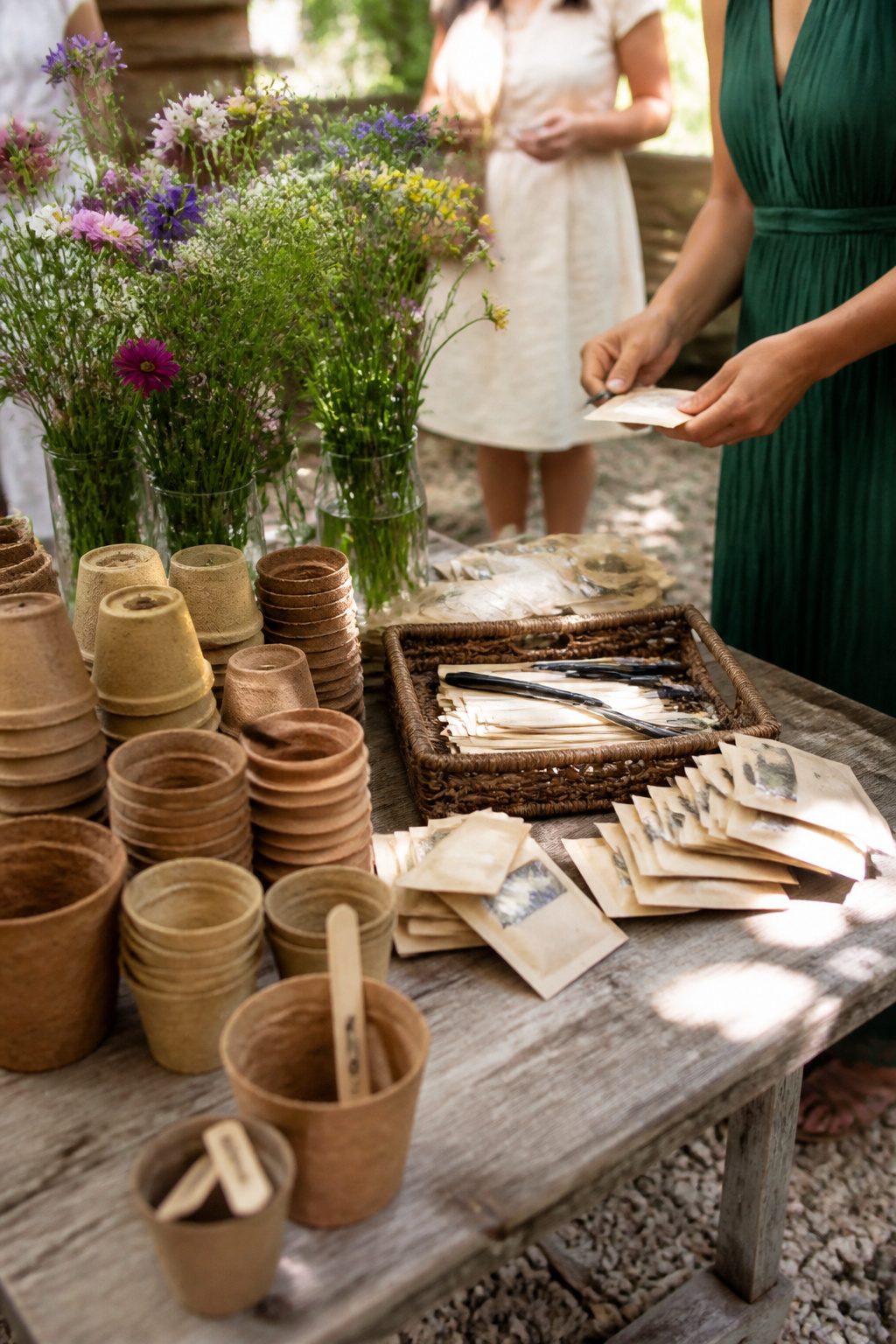
One couple I worked with set out biodegradable pots and seed packets with tiny wooden stakes for guests to write on.
The stakes went into the soil, the message stayed with the plant, and guests took home a living thing that kept growing.
The pots matter more than you’d think.
Standard plastic sits in a landfill; peat or coconut coir pots break down and let you plant the whole container. I have seen guests skip the message entirely when the pot looked like trash they would have to deal with.
Seed choice shapes whether this becomes clutter or a ritual. Herbs like basil or rosemary survive most windowsills.
Wildflowers work for couples with actual garden space. A tree seedling is bold, but only if the couple has land and the patience to wait years for shade.
The living outcome is what separates this from a book that gathers dust.
A guest book gets opened on anniversaries, maybe. A plant on a kitchen sill gets watered daily, seen constantly, and eventually outgrows the original pot with the stake still legible.
Few roundups include this option, which is strange. It demands slightly more setup than a signature frame, but the return is an object that ages with the marriage rather than yellowing in a closet.
17. Lego Guest Book
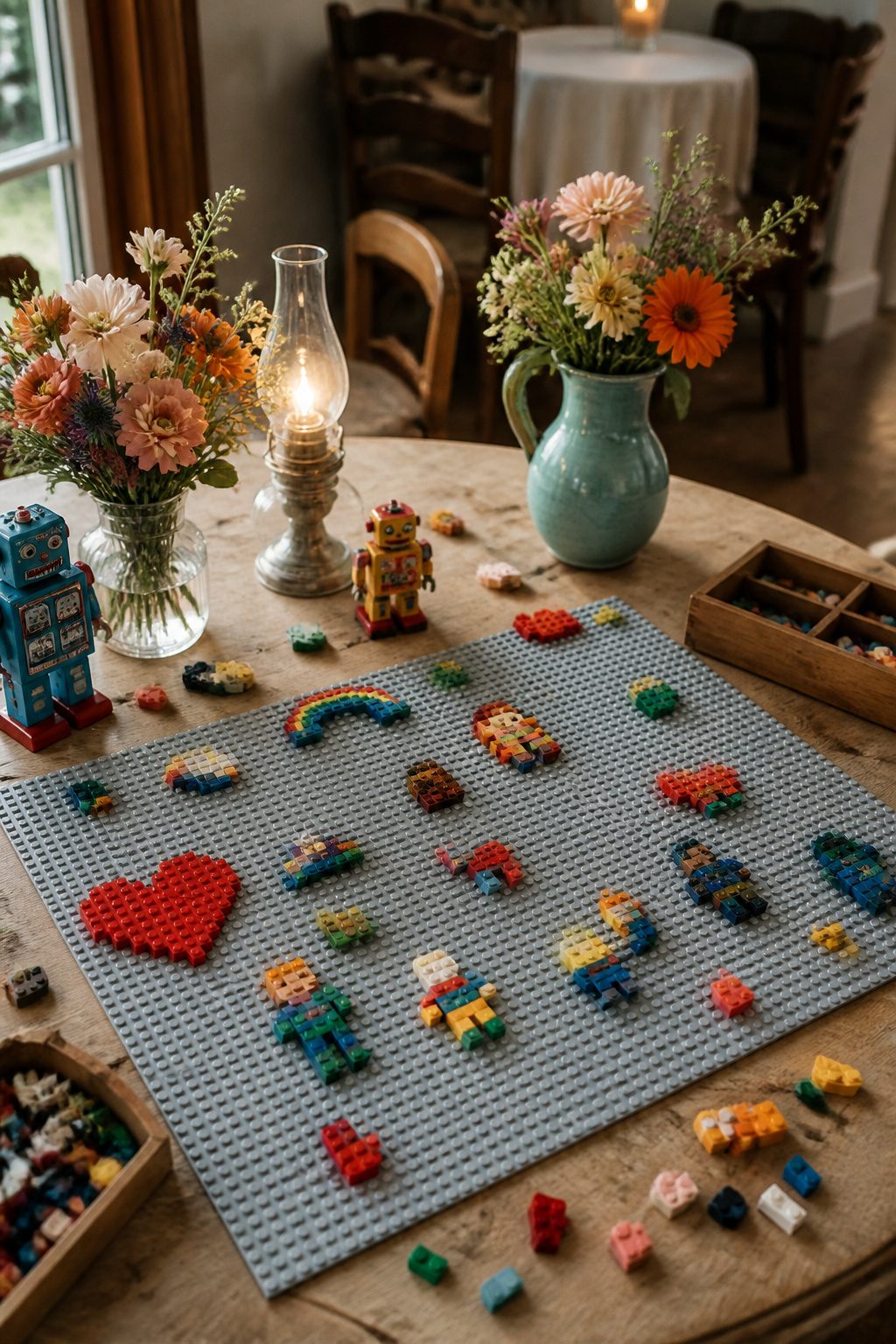
A Lego guest book hands guests bricks instead of a pen, and the result is a keepsake you can rebuild for years.
The setup needs a baseplate large enough to anchor creations without crowding; a 32-by-32 stud plate or larger gives guests room to work without knocking over their neighbors’ minifigures.
Brick color choices set the tone: a restricted palette of two or three colors keeps the finished piece looking intentional, while a rainbow spread encourages the chaotic energy that some couples want.
Guests tend to spend longer at this station than at a standard sign-in table, so placement matters.
Tucked near the bar or cocktail tables works better than a hallway bottleneck; people drift over between conversations rather than queuing like it’s a formality.
Some couples ask guests to build figures representing themselves, others hand out themed accessories for personal touches. Either way, the finished display reads part guest book, part art installation.
The real payoff comes after the wedding.
Unlike a book that sits on a shelf, this one comes apart and rebuilds. A guest’s tiny self-portrait with its attached note can become a Christmas ornament, a desk buddy, or a reminder reassembled on your anniversary.
That reconstruction is what makes this option memorable, though it is less common than the Polaroid or vinyl routes.
18. Tea Towel Guest Book
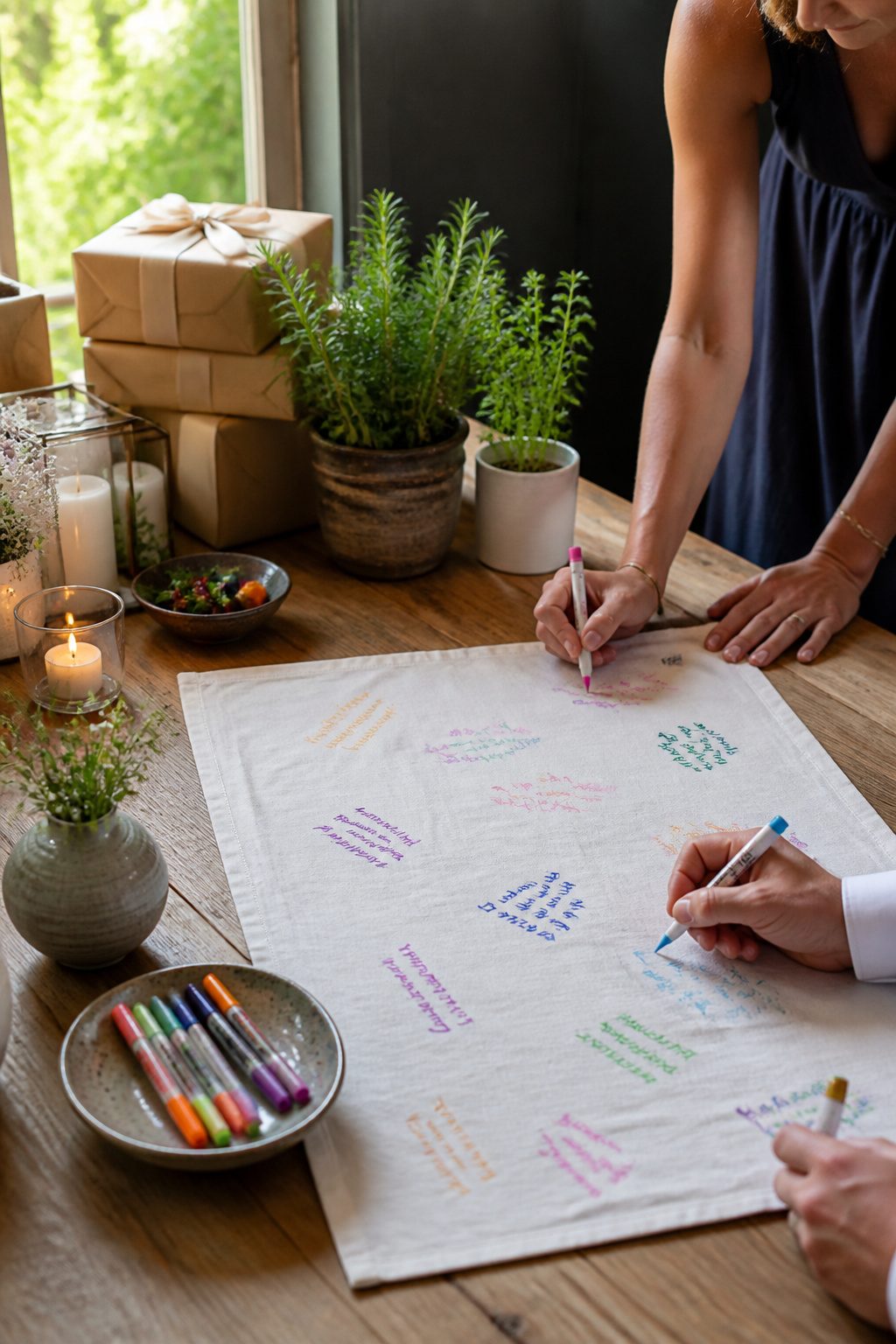
A tea towel guest book works best for couples who actually cook together, not just ones who like the idea of looking domestic on a shelf.
Pre-wash the fabric before the wedding so guests aren’t signing through factory sizing that will wash out later.
Fabric markers hold fine on cotton or linen, though the texture means handwriting runs larger and loopier than on paper, which limits how much anyone can fit.
The real trade-off is display versus use.
Framed flat, it reads as a textile print you never touch. Hung in the kitchen, it collects grease and eventually fades; the messages become part of the patina or they become illegible, depending on your tolerance.
I think the value is in the using: pulling out a pan and catching a signature from your college roommate while you cook.
But that only holds if you cook often enough for the towel to circulate through regular rotation, and if your guest list was small enough that the towel isn’t crowded into unreadability.
The domestic angle can feel performative if it isn’t already your habit.
A couple who orders takeout four nights a week ends with a relic that doesn’t match their life, whereas two people who met in a kitchen or cook every Sunday have a natural fit.
The markers cost little, the towel itself less than most bound guest books, and the whole thing packs into nothing for travel home.
Just don’t expect to read every message in five years. Some will have worn to ghosts, and that may be exactly what you wanted, or it may not.
19. Comic Book Guest Book
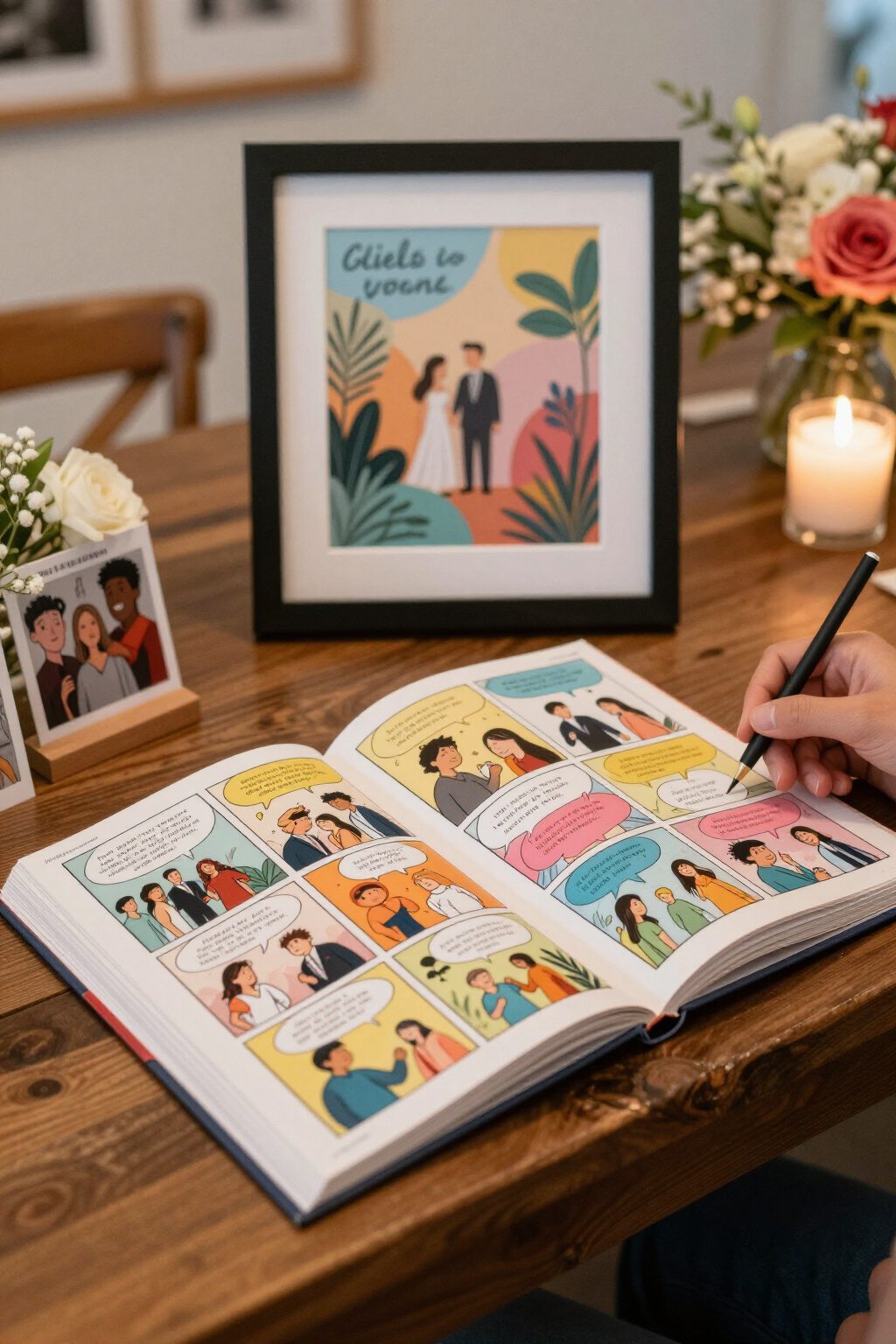
A comic book guest book works best when the couple chooses a title they already own in duplicate or would display on a shelf regardless.
Guests sign inside the cover or in designated margins, but pre-drawn speech bubbles on blank pages give shy writers a place to start and keep messages from drifting into the art.
The real draw is collector appeal: a first-edition Saga volume or a signed Ms. Marvel issue becomes something the couple keeps for the book’s value as much as the signatures inside.
I have seen this go wrong when the chosen graphic novel runs thin on blank space; a dense, panel-heavy volume leaves guests cramming tiny handwriting into gutters.
A collected edition with back-matter pages or an oversized treasury format fixes this without looking like an afterthought.
Fandom-specific weddings get mileage here that a generic pop-culture reference cannot match; guests who recognize the title tend to write better notes, and the finished object earns its spot in the living room rather than the closet.
20. Bucket List Guest Book
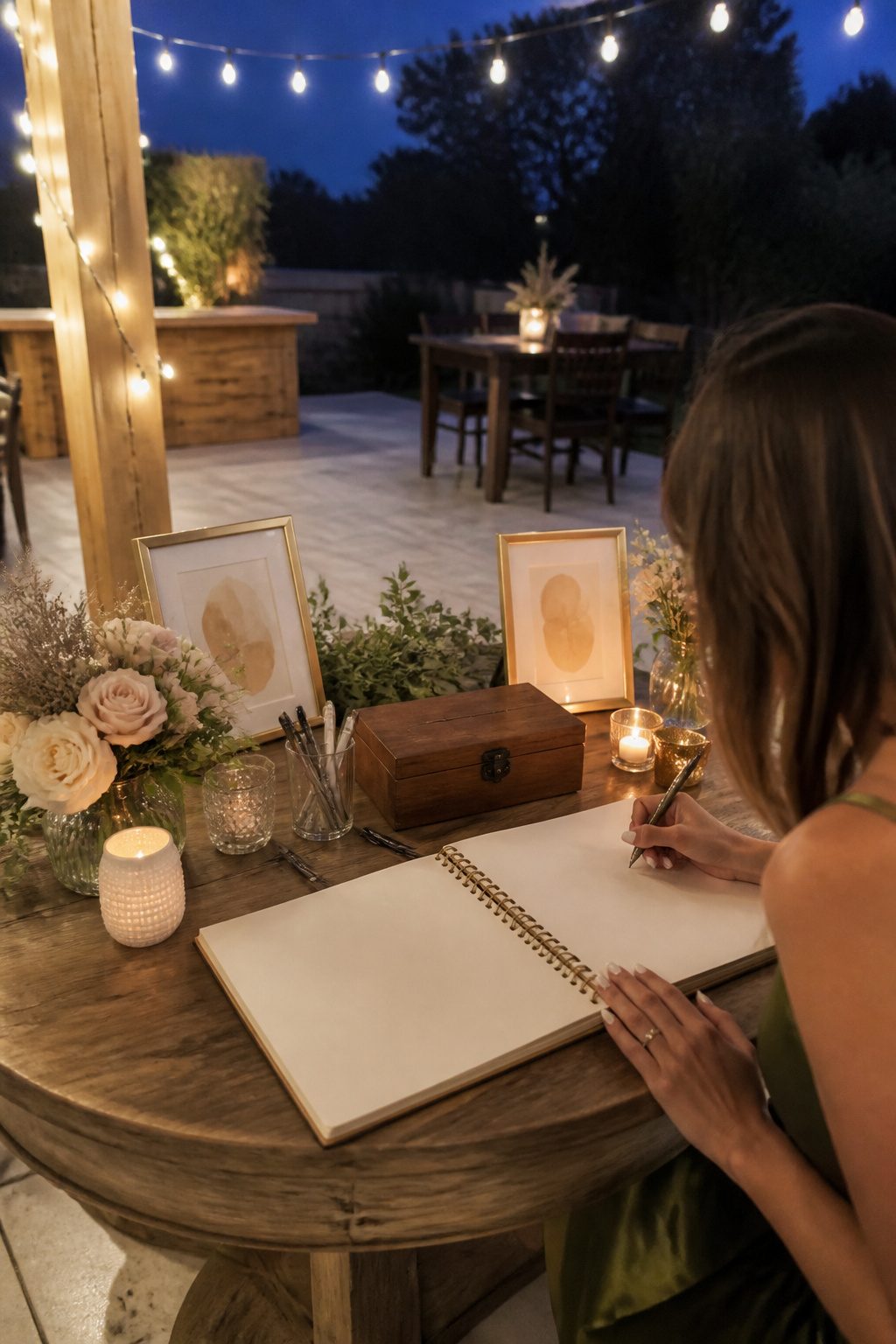
A bucket list guest book flips the script: instead of guests recalling the past, they map out your future.
The prompt is simple enough to write on a small sign, something like "What should we do once we’re married?" but the answers split wide open.
One table might suggest a sunset picnic or recreating your first date in reverse; another will push you toward something you would never have booked yourself, like a Minnesota Wild game or a trip built around a specific national park.
The range is what saves it from feeling like homework.
Practical entries give you a ready-made date night when the budget is tight; wild ones sit on the page for years, waiting for the right season or the savings to match.
Either way, the book stays alive after the wedding. A standard guest book goes back on the shelf; this one becomes a working list you thumb through on anniversaries.
The prompt matters more than the binding.
A blank page gets you names and congratulations. A specific request for a bucket list item gets you stories, inside jokes, and a reason to keep the book out where you will actually open it.
What Guests Actually Write
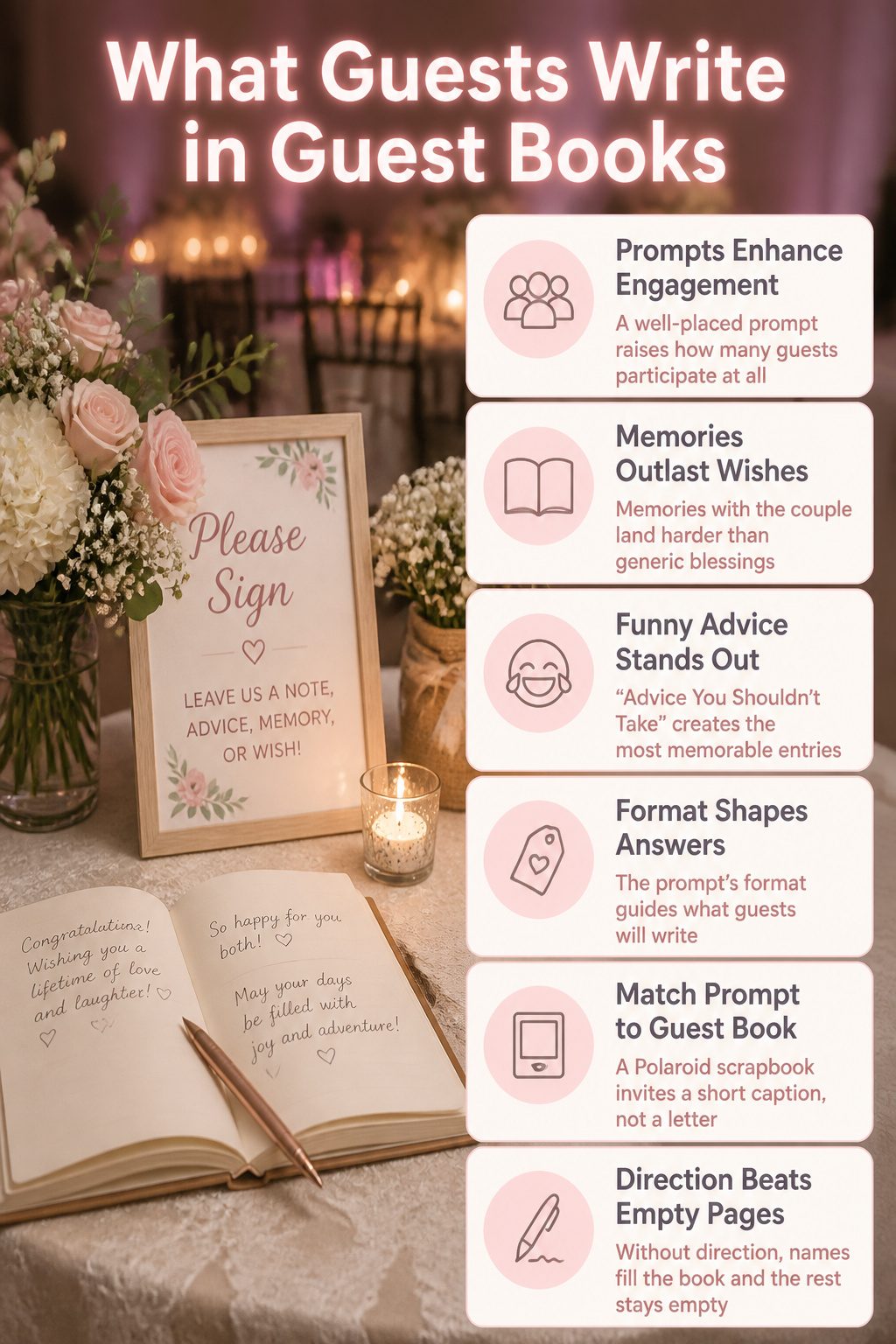
Guests almost never know what to write when they hit a blank page. A prompt on the sign turns "Congratulations" into something you will want to reread on your fifth anniversary.
"Share your best piece of advice," "write your favorite memory of us," or "leave us a wish for our marriage" takes seconds to add but produces entries with actual stories behind them.
Without that direction, names fill the book and the rest stays empty. A well-placed prompt also raises how many guests participate at all; unclear stations get ignored during cocktail hour while the bar stays busy.
Well-wishes work, though they blur together after the fifteenth "Best wishes for a happy life."
Advice gets more interesting when you flip it: one couple I read about asked for "Advice You Shouldn’t Take," and guests wrote terrible tips like "Never share dessert" and "Always let the cat decide."
The sillier entries became the ones they reached for first later. Memories with the couple land harder than generic blessings because they bring a specific night or trip back into the room.
Personal notes, the ones that reference an actual conversation or a moment the guest witnessed, are the entries that survive moving boxes and storage units.
The prompt shapes the tone.
Ask for a bucket list and you get dreams. Ask for wishes on a tag hung from a branch and the format itself limits the answer to something concise and keepable.
Match the prompt to the guest book form: a Polaroid scrapbook beside the photo invites a short caption, not a letter, and that constraint is useful.
Making It Yours
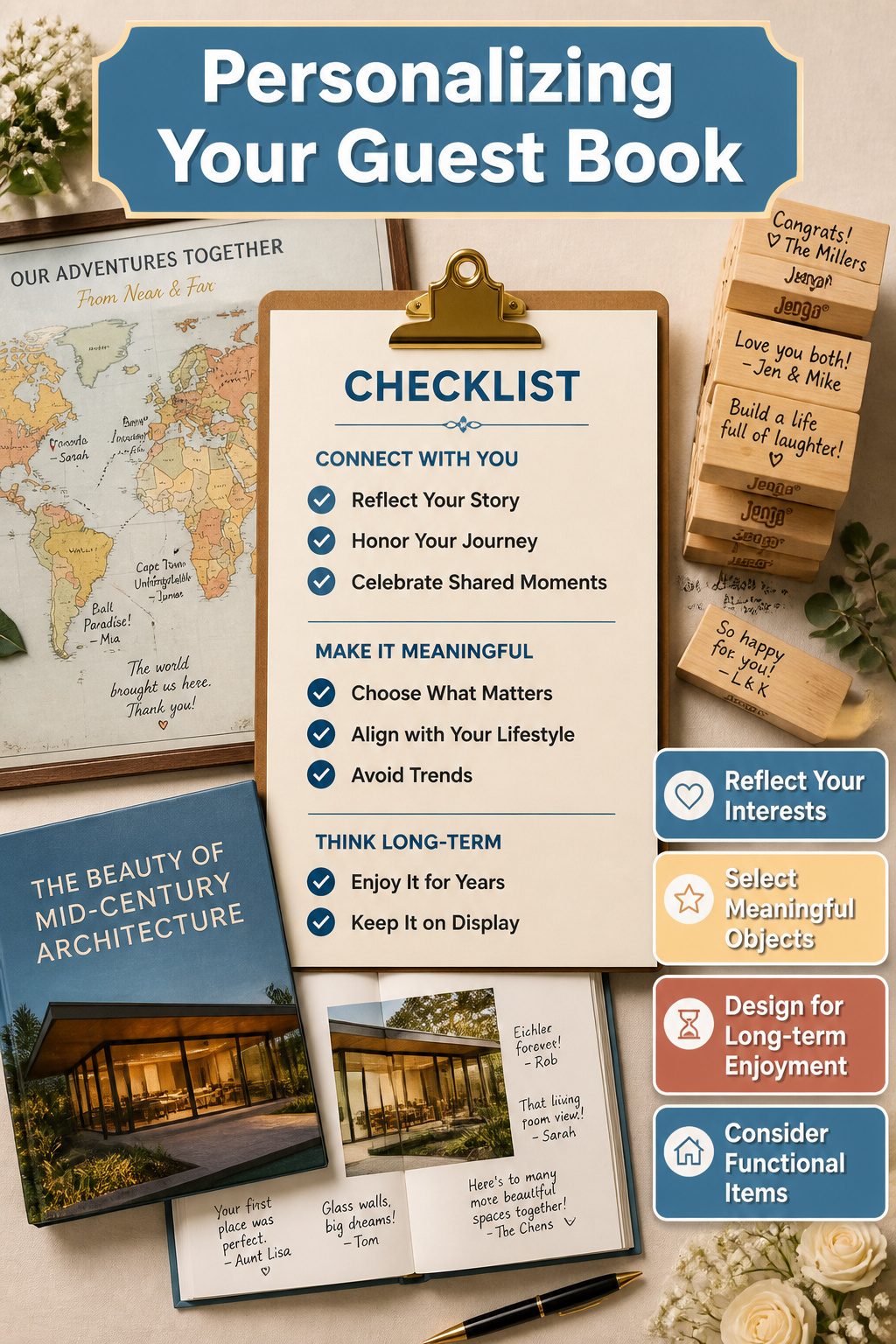
A guest book you keep is one that already looked like your life before the wedding.
A travel-obsessed couple might lay out a world map where guests mark favorite destinations and draw paths from their homes to yours; later it hangs in the hallway as proof of the shared wanderlust that started everything.
Homebodies who host game nights get more mileage from a Jenga set or puzzle that guests sign piece by piece, turning well-wishes into something you actually pull out on rainy weekends.
The first step is to decide what is of importance to you as a couple, and go from there.
That single decision filters out half the Pinterest board.
A vintage typewriter station sounds charming until you admit neither of you collects old things; the resulting notes feel borrowed, not lived. The same goes for a recipe book of love, which only earns its keep if you cook.
One couple I planned for chose a coffee table book on mid-century architecture because their first apartment hunt had been spent arguing over Eichler listings.
Guests wrote in the margins, and now it sits on their actual coffee table, full of inside jokes about floor-to-ceiling glass.
The object should need no explanation when you open it five years later. If you have to tell the story of why you picked it, you picked wrong.
The Station Setup
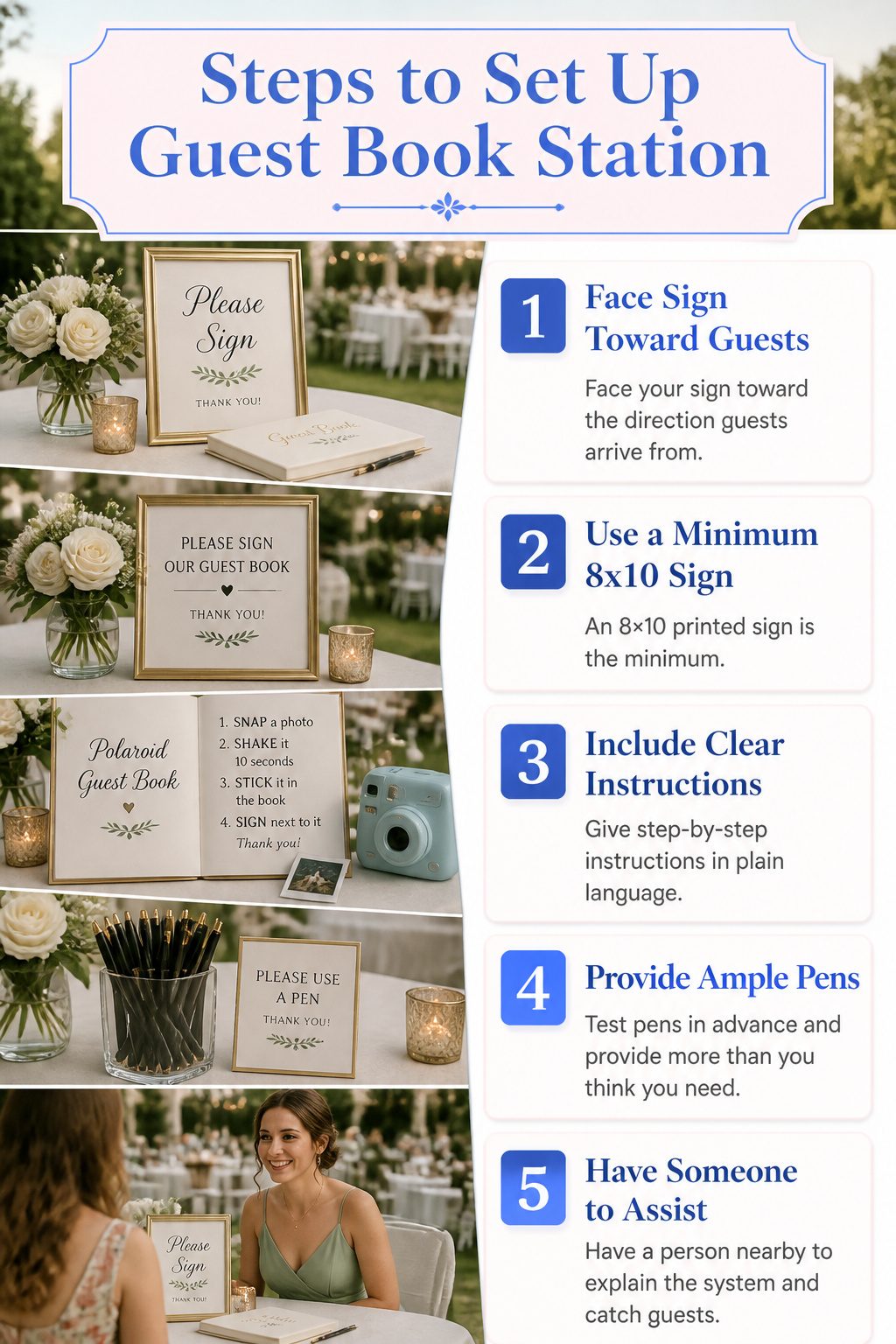
A guest book station only works when guests notice it, understand it, and actually stop.
Face your sign toward the direction guests arrive from, not the wall behind the table. An 8×10 printed sign is the minimum for most reception rooms; anything smaller disappears in the ambient light and conversation noise of a crowded cocktail hour.
The wording itself needs two parts: a short decorative headline and one plain instruction line below in a smaller font.
Do not load everything into calligraphy. For a standard book, "please sign" suffices.
For a Polaroid station or audio guest book, you need step-by-step instructions in plain language: what to do, in what order, how long they have. Generic wording fails here; guests skip formats they do not immediately understand.
Pens matter more than couples expect. Test them in advance on your actual surface, and provide more than you think you need so several guests can sign at once.
Coordinate the sign style with your guest book cover so the table reads as one designed moment, not a collection of leftover pieces.
A family member or friend stationed nearby to explain the system catches the guests who walk past the sign entirely. Without that person, the table often ends up half full by the time the couple thinks to check it.
Frequently Asked Questions
What are some unique wedding guest book ideas?
Audio guest books with vintage phones, Polaroid photo stations, vinyl records signed with metallic paint pens, Jenga towers with messages on each block, recipe collections from family and friends, and puzzle piece assemblies that form a personal image all offer alternatives to standard sign-in books.
Each captures the evening differently: voices and laughter, faces beside handwritten notes, or working objects you use after the wedding. The article covers sixteen options total, from thumbprint artwork to Lego builds.
How can I make my guest book more interactive?
Set up activities that give guests something to do beyond writing a name. Jenga blocks invite advice and drawings; a vintage typewriter lets people clack out messages with mechanical noise; a Lego station has guests build figures of themselves.
Polaroid stations need two cameras for big guest lists so lines keep moving. The key is placement near bars or cocktail areas where people drift over between conversations rather than queue formally.
What should guests write in a guest book?
The prompt you provide shapes what guests write. A recipe guest book asking "Leave us a recipe you’ll want us to cook for you" moves responses from generic well-wishing to stories about shared meals.
Message-in-a-bottle setups get more honest notes because guests know only the couple will read them.
Jenga blocks hold advice, inside jokes, and tiny drawings that margins cannot contain. Wishing tree tags and date-night idea cards also work better with printed starters than blank spaces.