A spring wedding theme can run from a brunch reception with finger sandwiches to a garden estate with imported ribbon drapes and a floral arch that needs its own water source.
What picks one idea over another is whether your venue is booked yet, because the walls and windows decide what palette reads true and what decoration fights the light.
The tea-length gown that clears wet grass, the pressed wildflowers on buttercream, the peach glassware that deepens at sunset: each of these starts with what your space already gives you.
1. Pastel Color Palettes
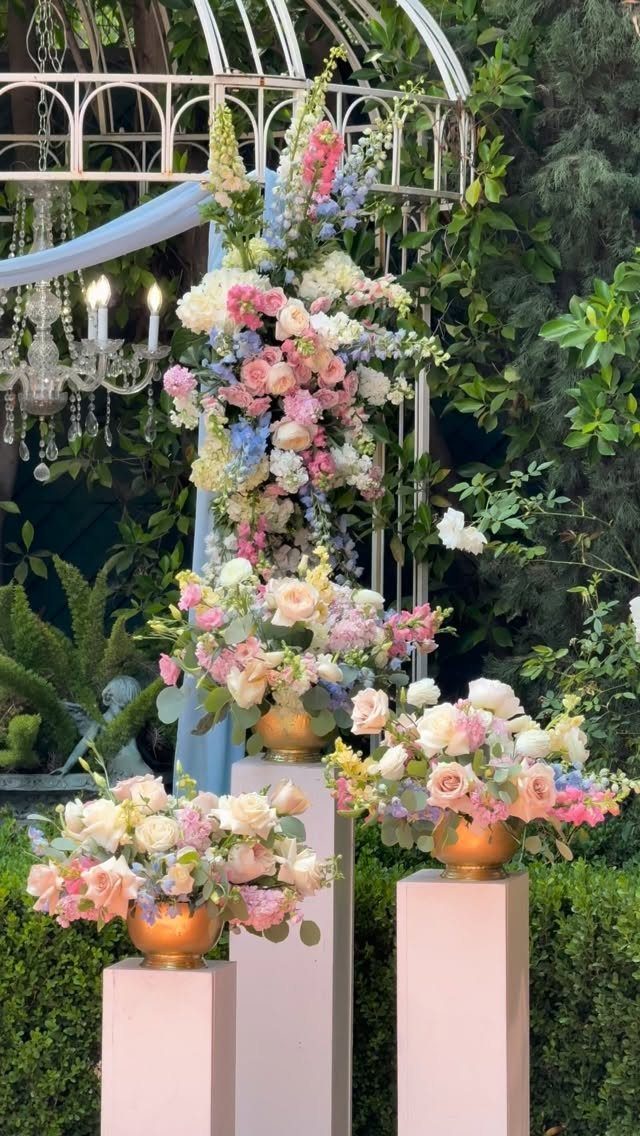
A pastel palette lives or dies by the fabric, not the flower.
I have seen blush bridesmaid dresses photographed against baby blue table linens and the whole scene looked washed out; the same tones in silk or velvet held their own.
If you want the mix-and-match look, give each bridesmaid one pastel shade and a bouquet to match her dress.
The monochrome effect reads as depth instead of clutter. Spring blooms in the same hue family tie it together.
Mint green and lavender suit outdoor light best; pale yellow can turn flat indoors without warm bulbs. Test your pairings at the venue, at the time of day your ceremony runs.
2. Pressed Flowers on Wedding Cakes
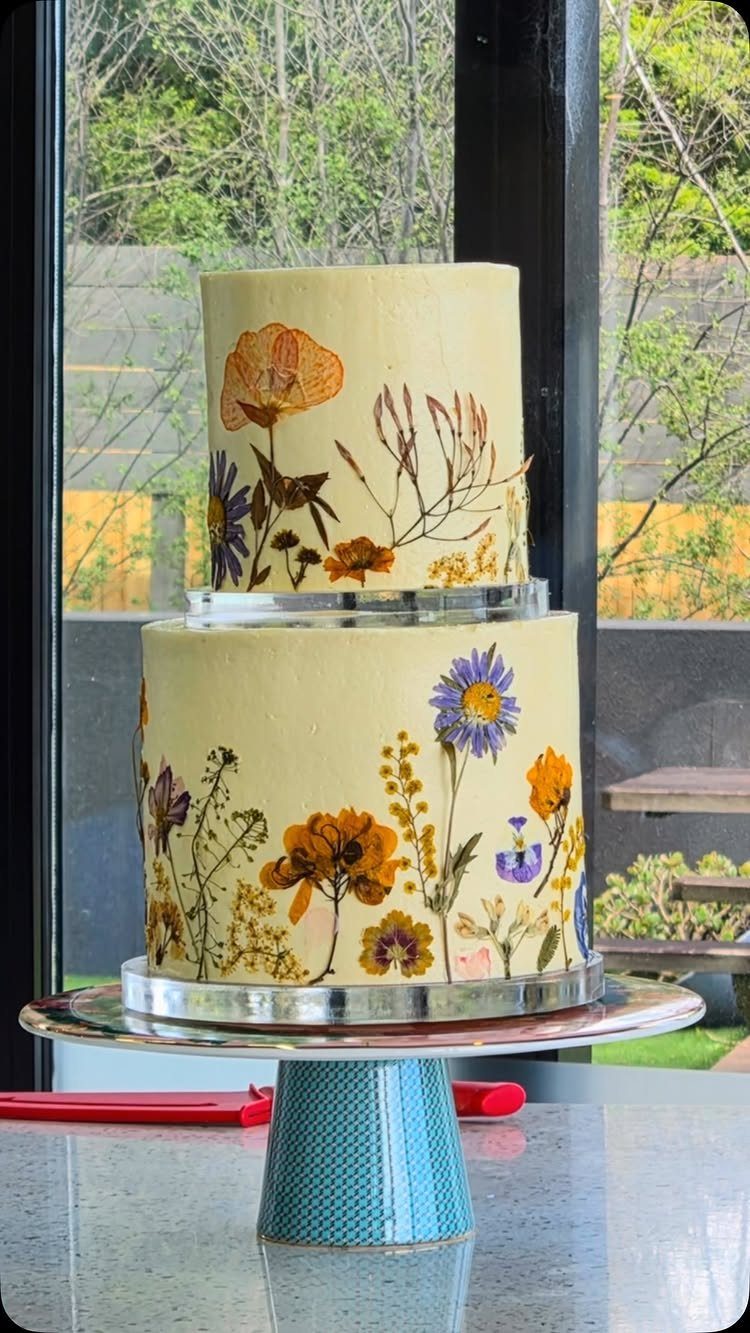
Pressed flowers on a cake look like something you found in a field and sealed there, which is the point.
The technique works on buttercream or fondant; fresh petals would wilt and bleed, but pressed ones stay crisp through the reception.
A pale yellow base lets the flower colors do the work without competing.
Wildflowers press flatter than roses, and stems add structure a petal alone cannot. You can press your own months ahead, or buy from a supplier who does the work for you.
A small station with presses and blooms also gives guests a keepsake to take home. It takes space and someone to run it, so weigh that against your head count.
3. Open-Air Venues
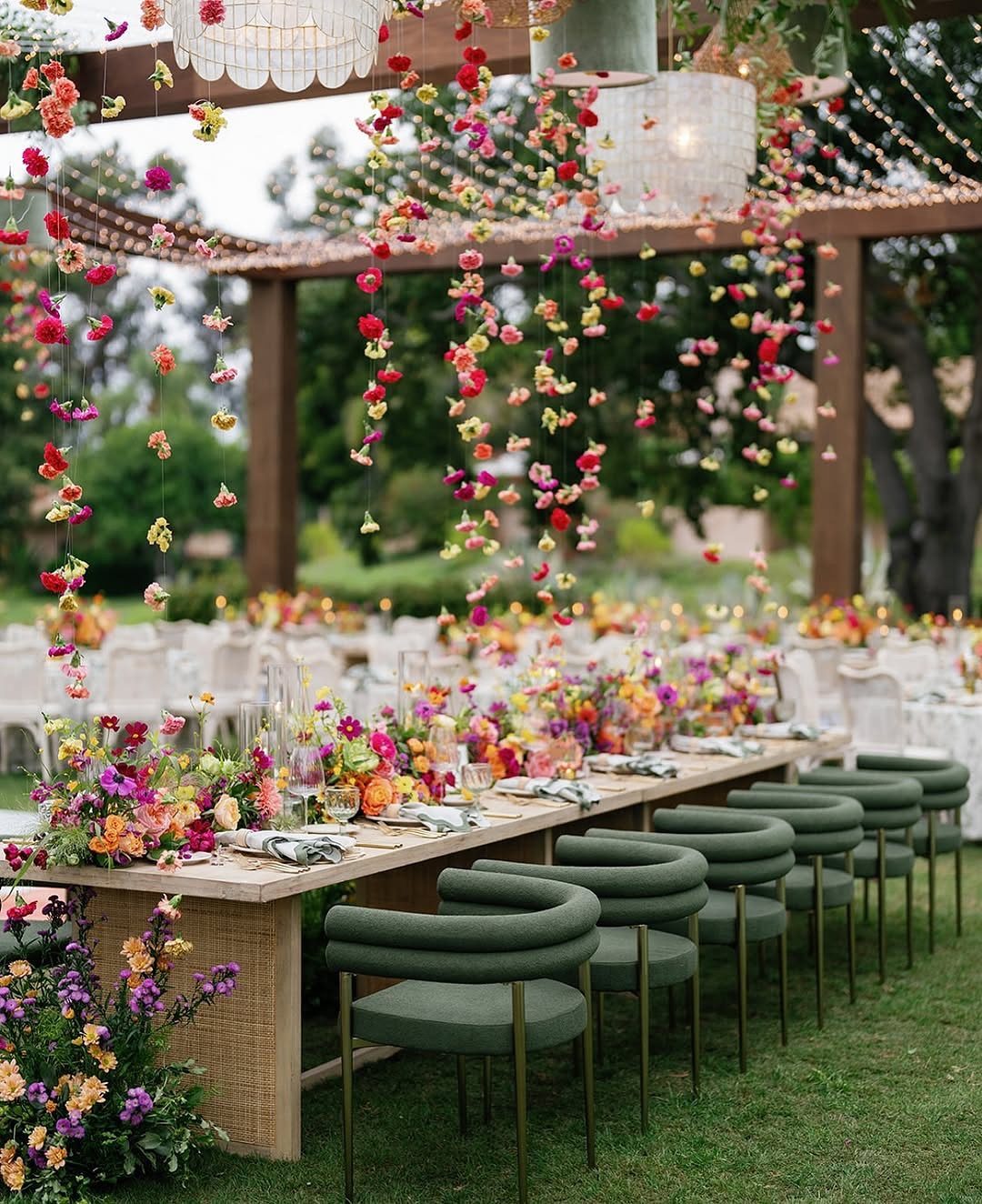
Garden weddings in spring bank on weather that does not always arrive. Open beams and hanging flowers need a tent or indoor backup reserved from the start, not negotiated in a panic when the forecast turns.
Greenery does the heavy lifting here.
Local spring blooms cost less than flown-in exotics and look more at home against actual grass and trees. String lights and chandeliers extend the usable hours past sunset.
Outdoor space gives you less control: wind moves table runners, sun shifts color temperature in photos, and bugs arrive uninvited.
A lawn with some tree cover gives you partial shade without full exposure. Check what your venue allows for stakes, stakes, and open flame before you plan around either.
4. Cherry Blossom Decor
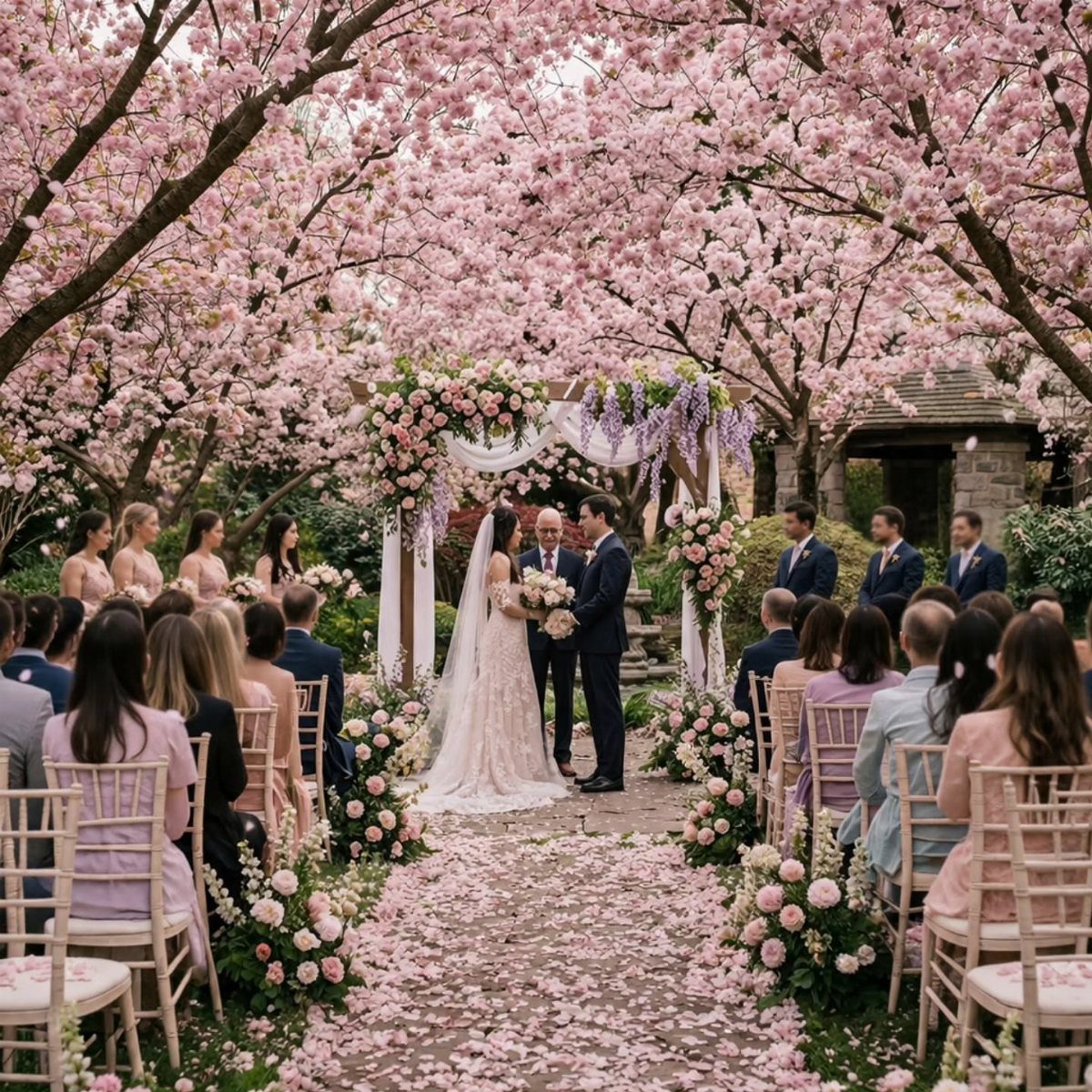
Cherry blossoms bloom briefly, and those weeks move by latitude and temperature.
A March date in Washington, D.C. hits different from a March date in Boston. If your heart is set on live trees, build your date around peak bloom forecasts, not the other way around.
A natural canopy of pink over the aisle is what you are after. Faux branches work for structure and color if timing fails you, though they read differently in daylight than at dusk.
Destination weddings in Kyoto, Stockholm, or Paris can chase the season across hemispheres, but local parks and botanical gardens often plant varieties bred for staggered blooming. Ask your venue what they have and when it runs.
5. Violet, Lavender & Cool Pink
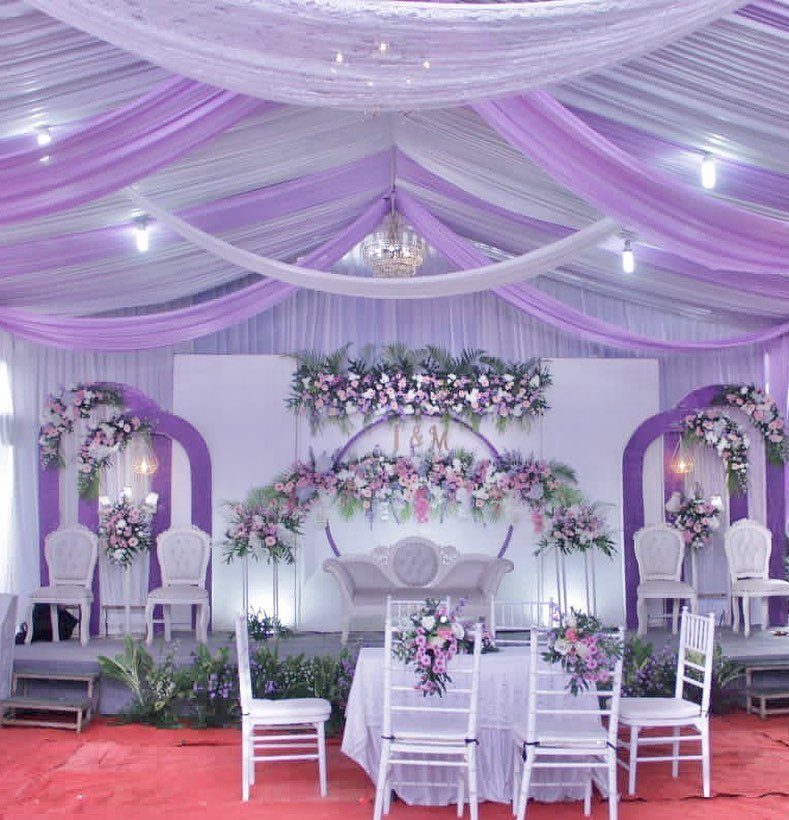
Purple reads as luxury or as bruise, depending on saturation. Draped white and violet stays on the right side by keeping lavender pale enough to function as a neutral base.
Botanical gardens and historic estates already carry the formality this palette expects; a bare ballroom needs more help.
Pale lavender table linens instead of white, groomsmen shirts in the same tone, then violet and cool pink in concentrated doses for energy. The floral arch with initials shows one way to anchor the space.
This palette photographs cool-toned; warm venue lighting will fight it. Test your linen samples under the bulbs you plan to use.
6. Peach and Gold Florals
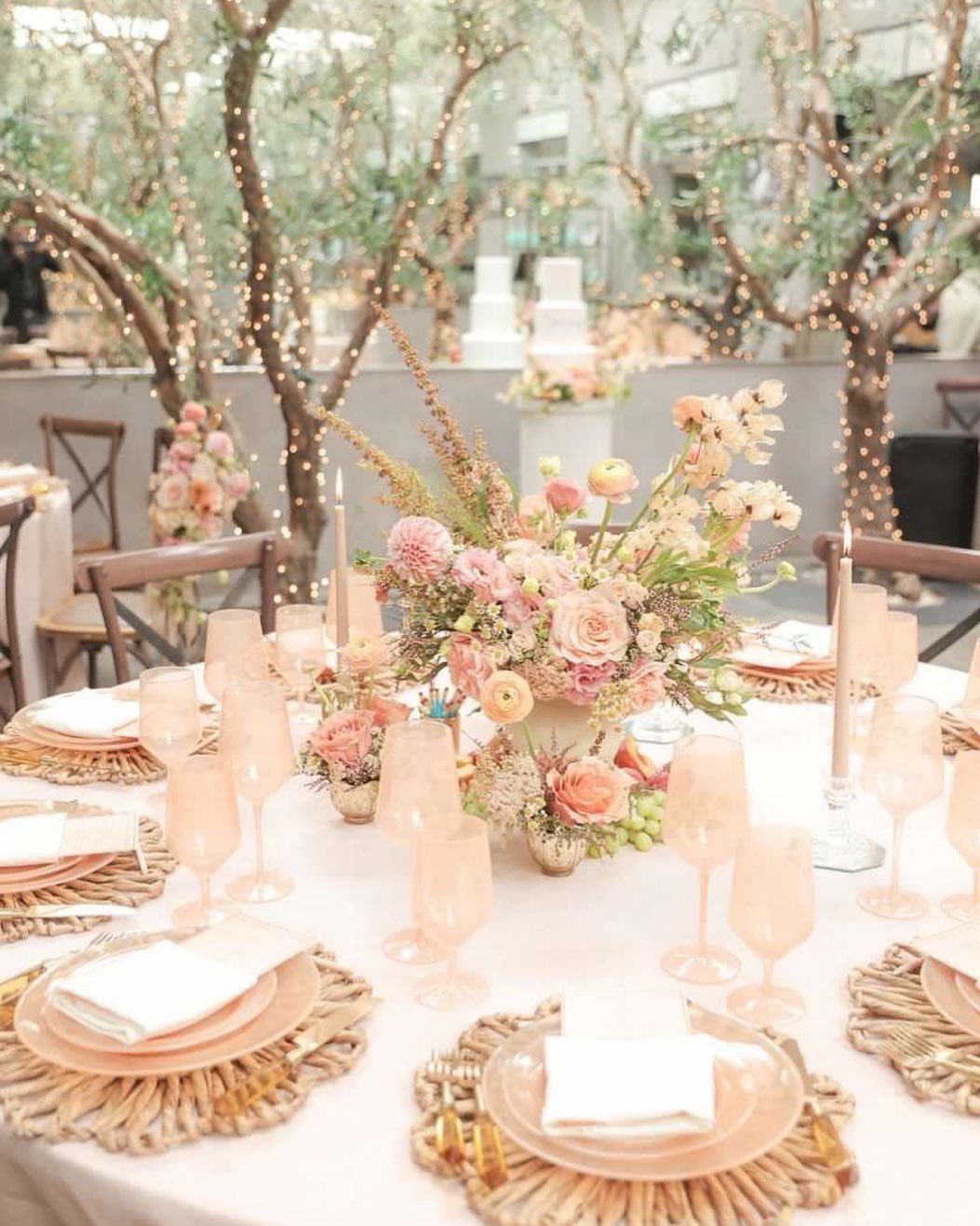
Peach glassware catches light in a way white or clear cannot, and the gold chargers underneath warm the whole table. Woven placemats keep it from feeling too polished; the mix is what makes the palette feel spring instead of summer.
This works for sunset ceremonies because peach deepens as natural light fades. Apricot and gold pair the same way if peach reads too pink for your taste.
The risk is sweetness: too much peach and the scene turns confectionery.
The greenery in the centerpiece and the woven texture on the table are what balance it. Keep those, even if you simplify everything else.
7. Floral Arches
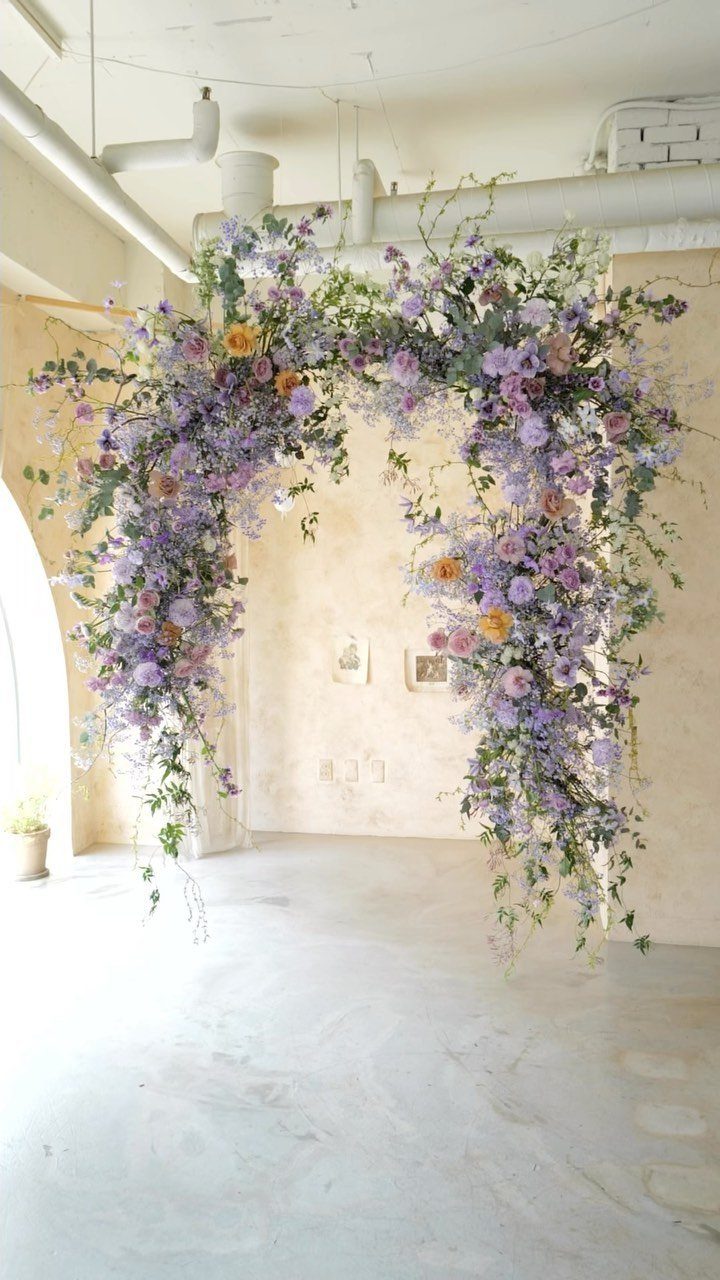
A floral arch turns an empty room into a ceremony space by hanging color where there was none. Suspended purple, lavender, pink, and yellow blooms with trailing greenery mark the threshold you cross together.
Spring blooms for this structure need water sources or excellent conditioning; an arch out of water too long wilts visibly. Hardy varieties like snapdragons and stock hold up better than delicate sweet peas.
This suits indoor venues with plain walls that need the arch to do all the visual work. Outdoor versions anchor in weighted bases, but wind is your enemy; check gust patterns before you commit to a tall installation.
8. Rustic Barn Venue
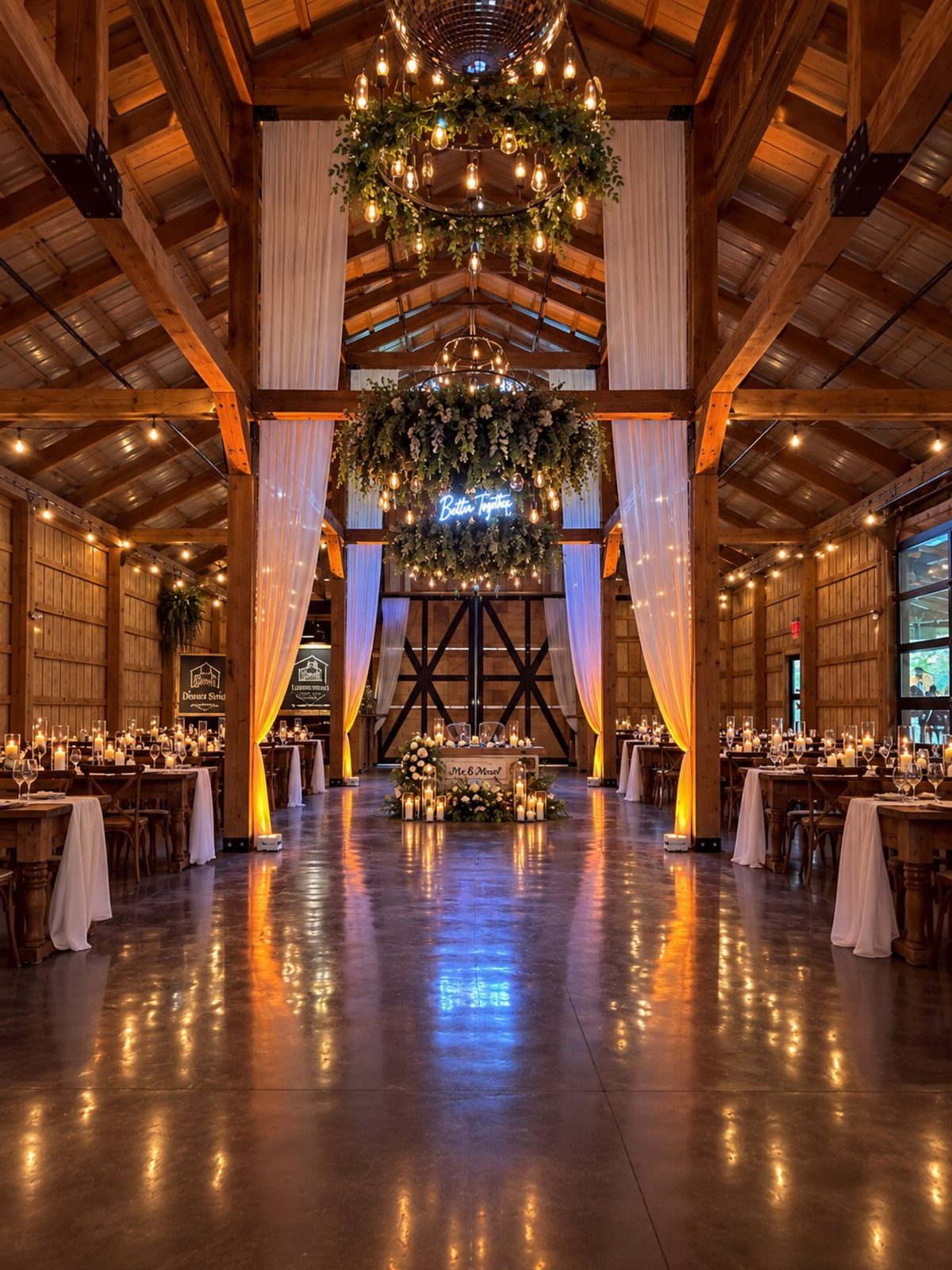
Barn venues in spring carry their own decoration: exposed beams, the smell of old wood, light that shifts as the afternoon moves.
Chandeliers, hanging greenery, and a neon sign dress up the space, but the bones are what you pay for.
Spring growth outside the doors matters as much as anything inside. Windows facing east or south give you green fields or flowering trees as backdrop; a barn surrounded by mud season or dormant pasture reads differently.
Ask when the property greens up, not just what the interior looks like in peak season.
Acoustics are the hard part in these spaces.
Hard surfaces bounce sound; a string quartet can turn harsh without fabric or greenery to absorb it. Draping helps, and so does placing the dance floor away from the band.
9. Interactive Flower Bar
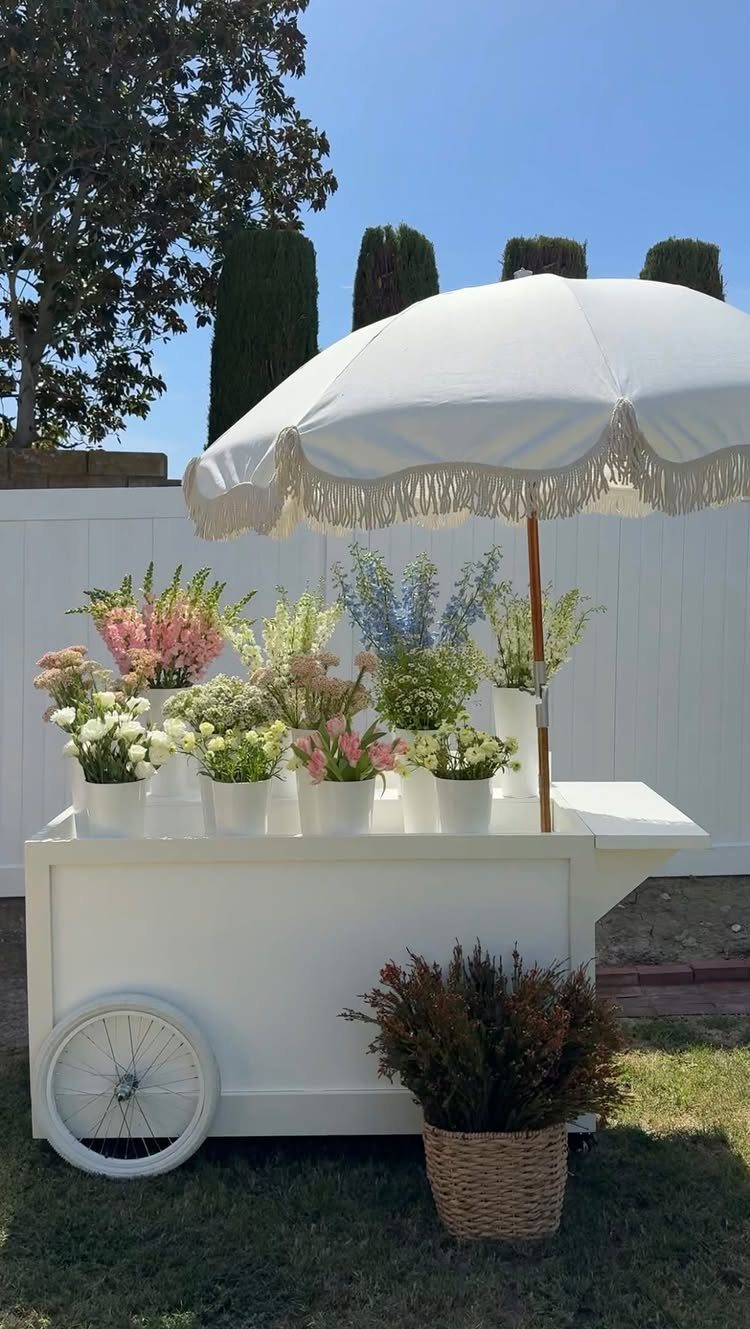
A flower bar gives guests something to do with their hands during the cocktail hour lull. A cart on wheels with an umbrella for shade, stocked with blooms in vases ready for arranging, lets guests build their own.
Spring gives you the freshest local options at the lowest cost; tulips and daffodils in March, ranunculus and anemones by April.
Mini bouquets need a handful of stems each, floral crowns more with wire and tape. Enough staff to keep the line moving also stops the panic of someone choosing wrong.
This works best when your crowd likes making things. Guests who want only to drink and talk will skip it, and the leftover buckets become your problem.
10. Fruit Centerpieces
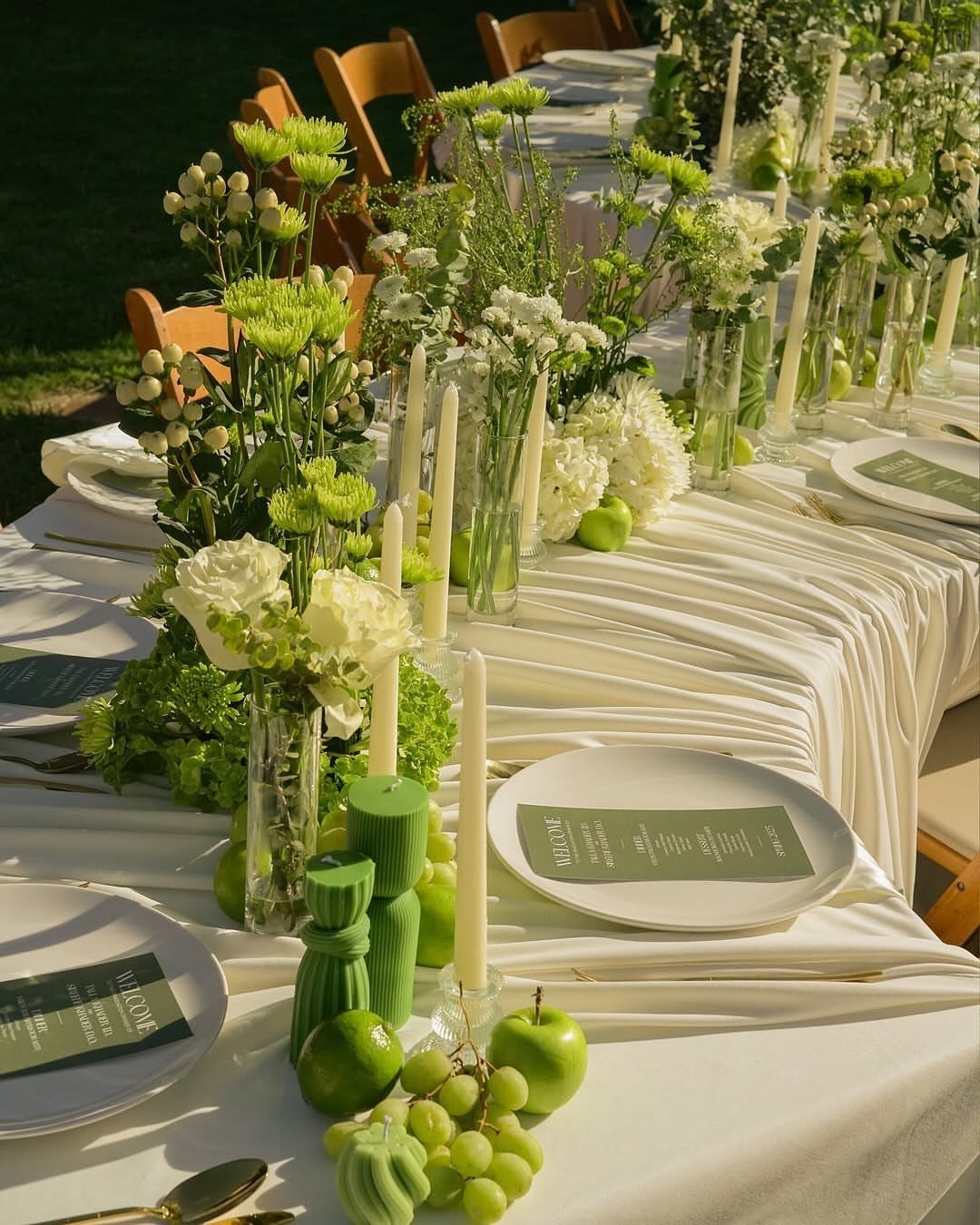
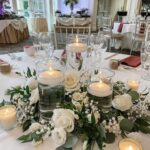
Fruit on a spring table reads as harvest before summer heat arrives. The green apples, grapes, and limes above sit among white flowers and tall tapers, the color coming from produce instead of dyed blooms.
Citrus keeps for days; berries do not.
Build your centerpieces with the harder fruits as base and add strawberries or figs the morning of, or skip the perishables entirely. A white and green palette avoids oranges and lemons, which would shift the season toward summer.
This suits long tables where guests pass dishes family-style. Round tables with individual place settings split the visual impact too small; the run of repeated fruit needs length to register.
11. Picnic-Style Lounge Areas
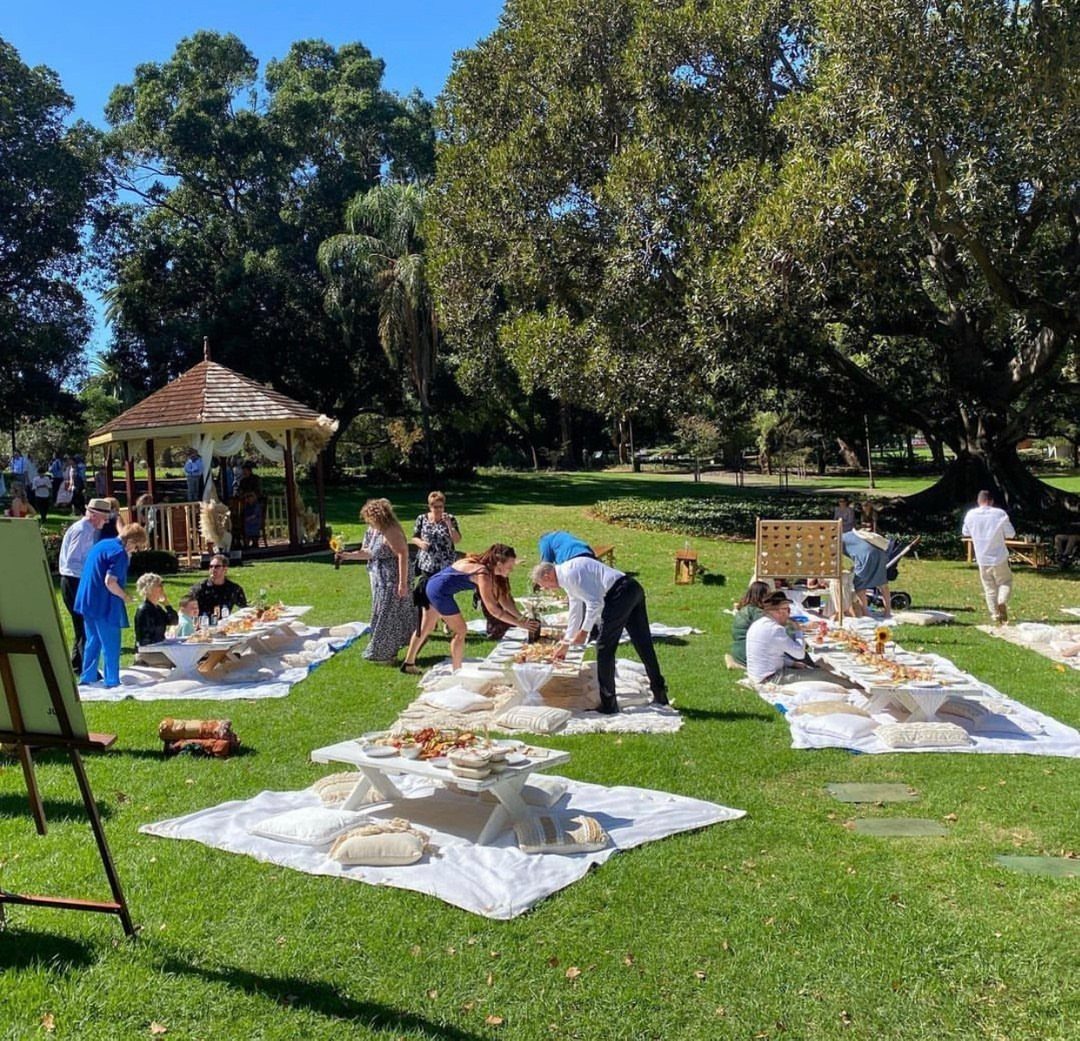
Low tables on blankets ask guests to sit on the ground, which half your crowd will not do gracefully.
The pillows help, but hips and knees are the reality; add a few standard-height tables at the edges for anyone who needs them.
Spring grass is often damp until midday, even when it looks dry.
A ground cloth under each blanket saves the fabric and the guests. White reads clean against green but shows every stain; choose blankets for a wedding, not for reuse.
This format suits daytime receptions with casual food and no formal dancing. Once the sun sets, the temperature drops and the ground loses appeal fast.
12. Colorful Cocktail Drinks
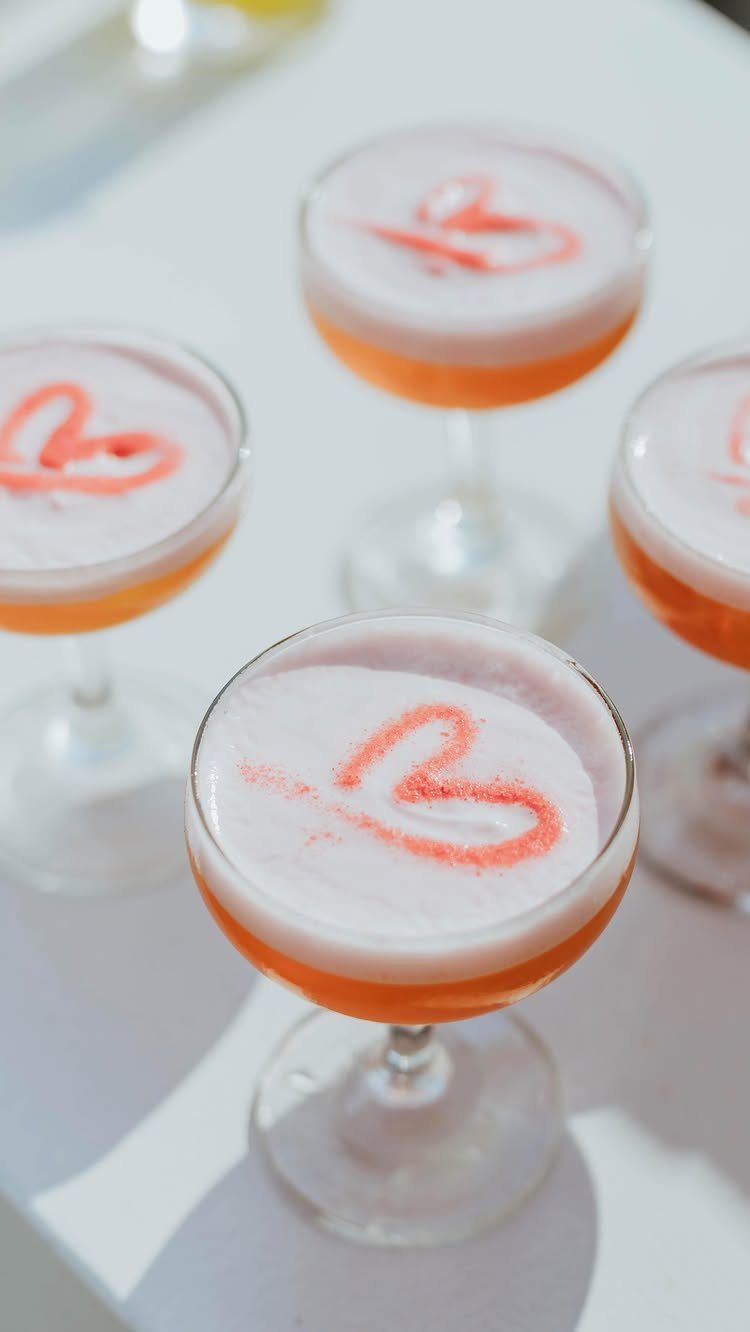
Orange cocktails with foamed tops and sugar hearts are spring in a glass: bright, a little silly, not trying to be serious. A heart detail in colored sugar, dusted through a stencil, is something any bartender can manage with warning.
Fresh herbs do more than fruit for complexity. Muddled basil or thyme in gin carries the garden theme further than citrus alone, and edible flowers frozen into ice cubes add the slow-reveal moment as they melt.
Floral ice sculptures as statement pieces take a freezer and a sculptor, and the melt rate in outdoor April heat is not your friend.
Cost stays reasonable if you pick 2 signature drinks rather than full open bar. Name them after the couple, the dog, the street where you met; guests remember that longer than the recipe.
13. Oversized Whimsical Garden Florals
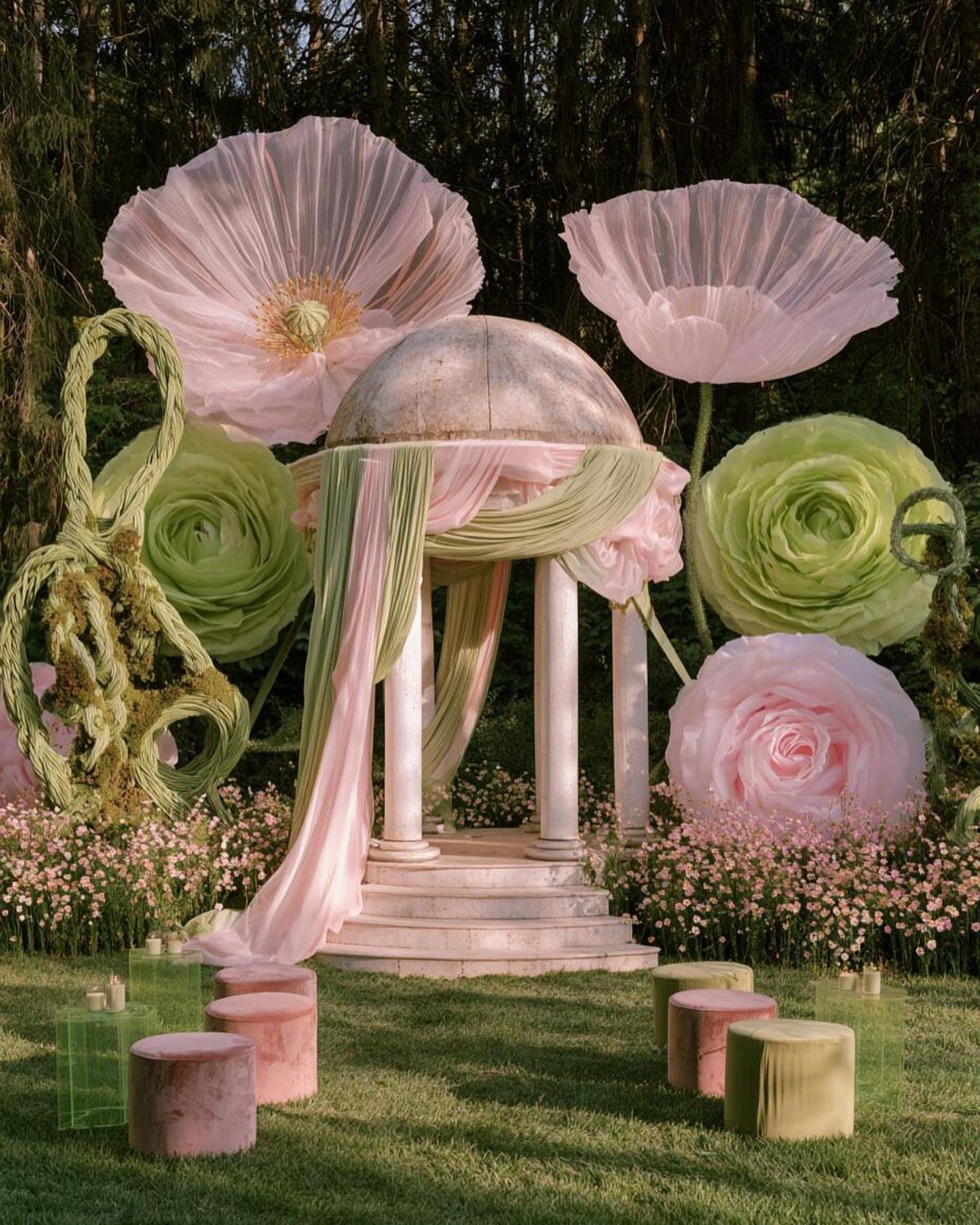
Giant fabric flowers turn a garden gazebo into something from a storybook, and they last the whole weekend instead of wilting by cocktail hour.
The sculptural blooms in pink and sage green sit on the grass like set pieces, not arrangements; guests move around them rather than leaning over them.
This scale needs space to breathe.
A small lawn turns crowded fast when blooms hit shoulder height, and the fabric traps heat in direct sun. Stone rotundas or existing structures give you anchors; freestanding versions need weighted bases that turf may not allow.
Pastel fabrics photograph softer than saturated ones against real grass. The draped fabric overhead completes the room effect; without it, the flowers read as scattered props rather than one environment.
14. Lace and Wildflower Tablescapes
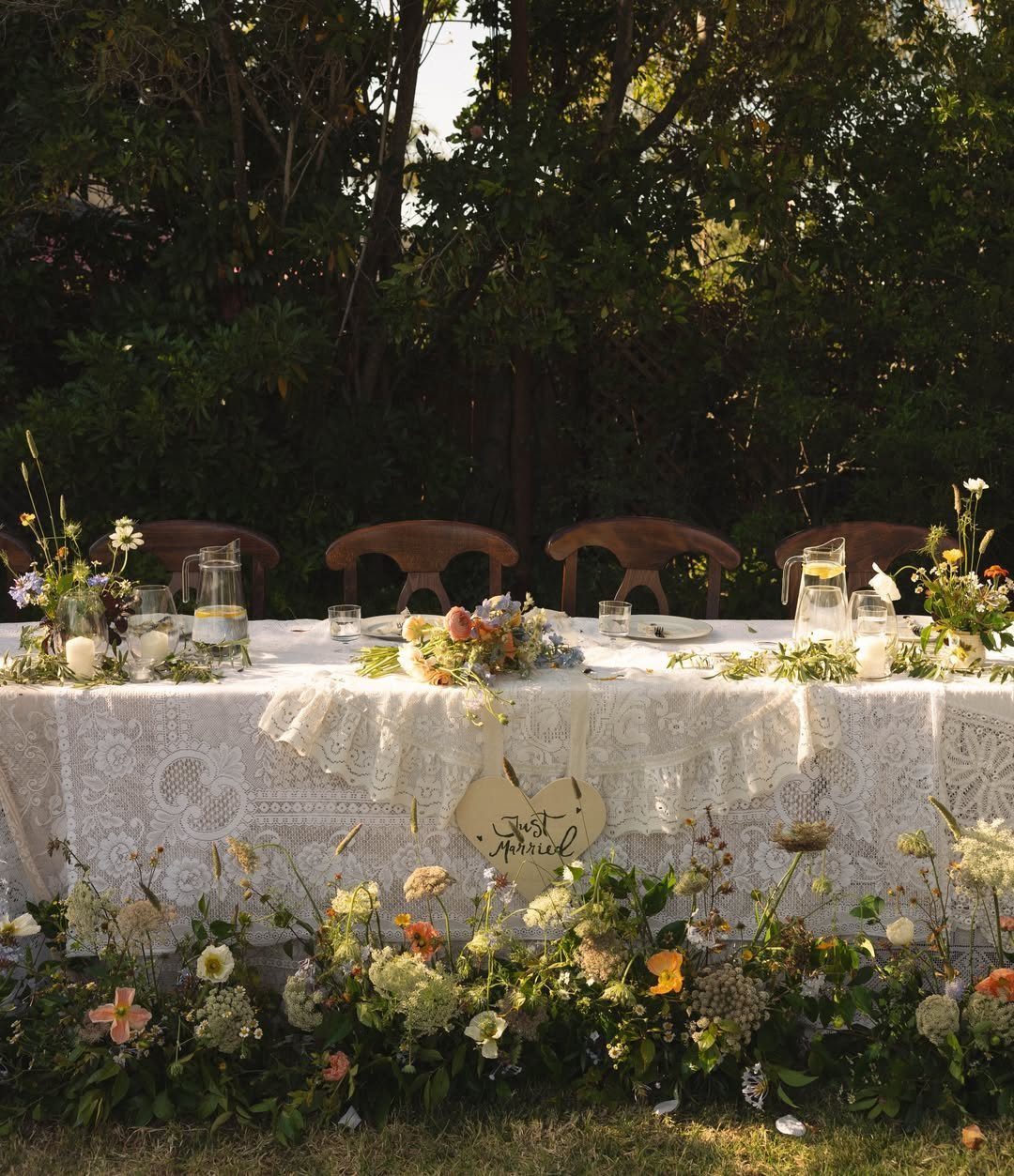
Lace tablecloths under wildflowers give a long table the feeling of a meadow brought indoors, or a kitchen garden dressed up for company.
The wildflowers here are scattered, not arranged; that looseness is what keeps the lace from reading as formal.
White lace shows soil and water marks before guests arrive.
A runner over a plainer cloth gives the same look with less risk, or choose lace you are willing to lose. The wildflowers need stems short enough to lie flat; tall arrangements fight the tablescape instead of completing it.
This suits daytime receptions where guests can see the detail. After dark, candles do the work and the flowers recede; add more light than you think, or let the lace carry the scene alone.
15. Vibrant Spring Ribbon Drapes
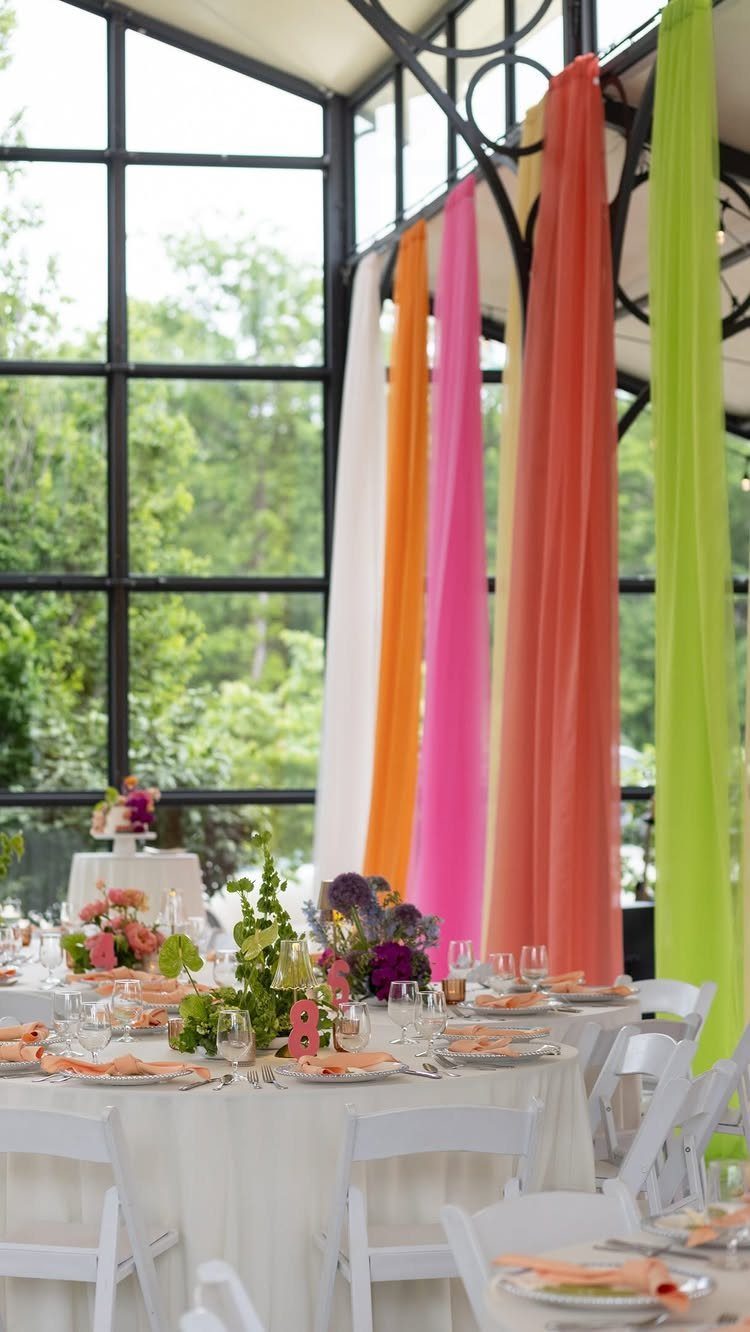
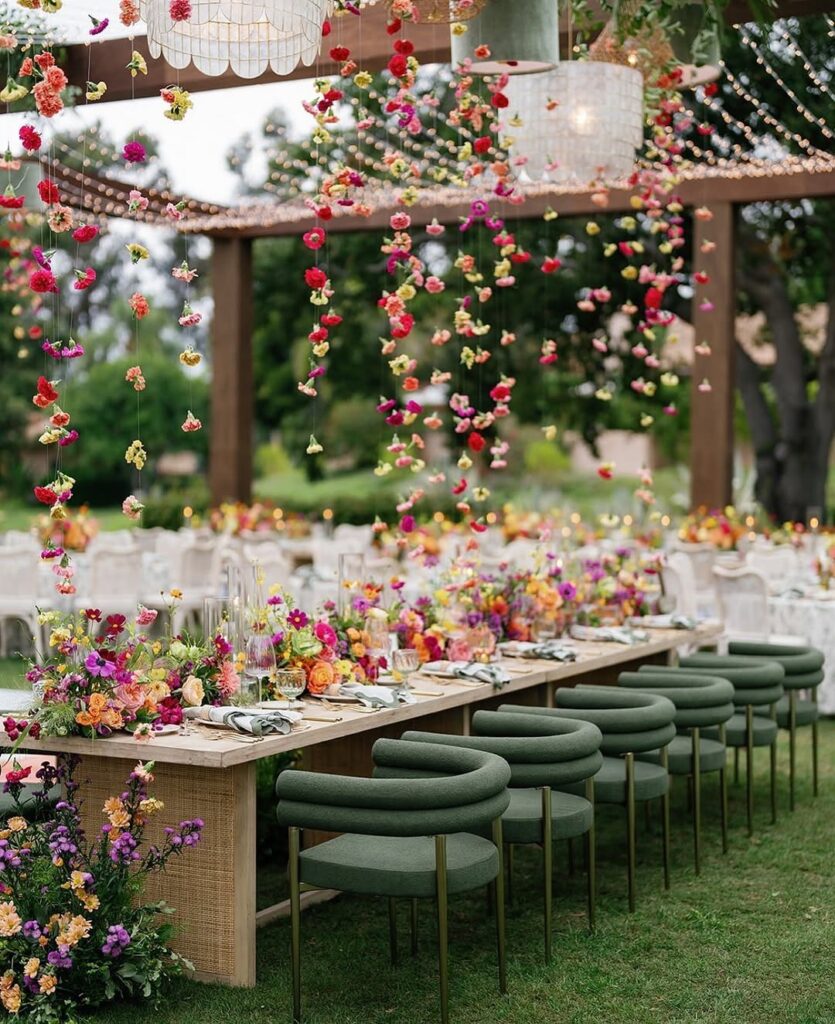
Ribbon drapes in coral, lime green, and pink turn a glass greenhouse into a color field that changes as the light moves. The fabric hangs behind the tables, not over them; guests face the color instead of working underneath it.
This palette demands commitment. Magenta, orange, and cornflower blue carry the same saturation as that bright drape with different undertones; pair one with neutrals so it reads intentional, not accidental.
Indian wedding traditions often use these brights in dress and decor; the maximalist approach borrows that confidence without the cultural specificity.
Ceiling height matters.
Low greenhouses tangle the fabric in structure; tall windows let the ribbons fall clean. The fabric weight determines the drape; lightweight silk moves in ventilation, heavy velvet does not.
16. Spring Garden Staircase Florals
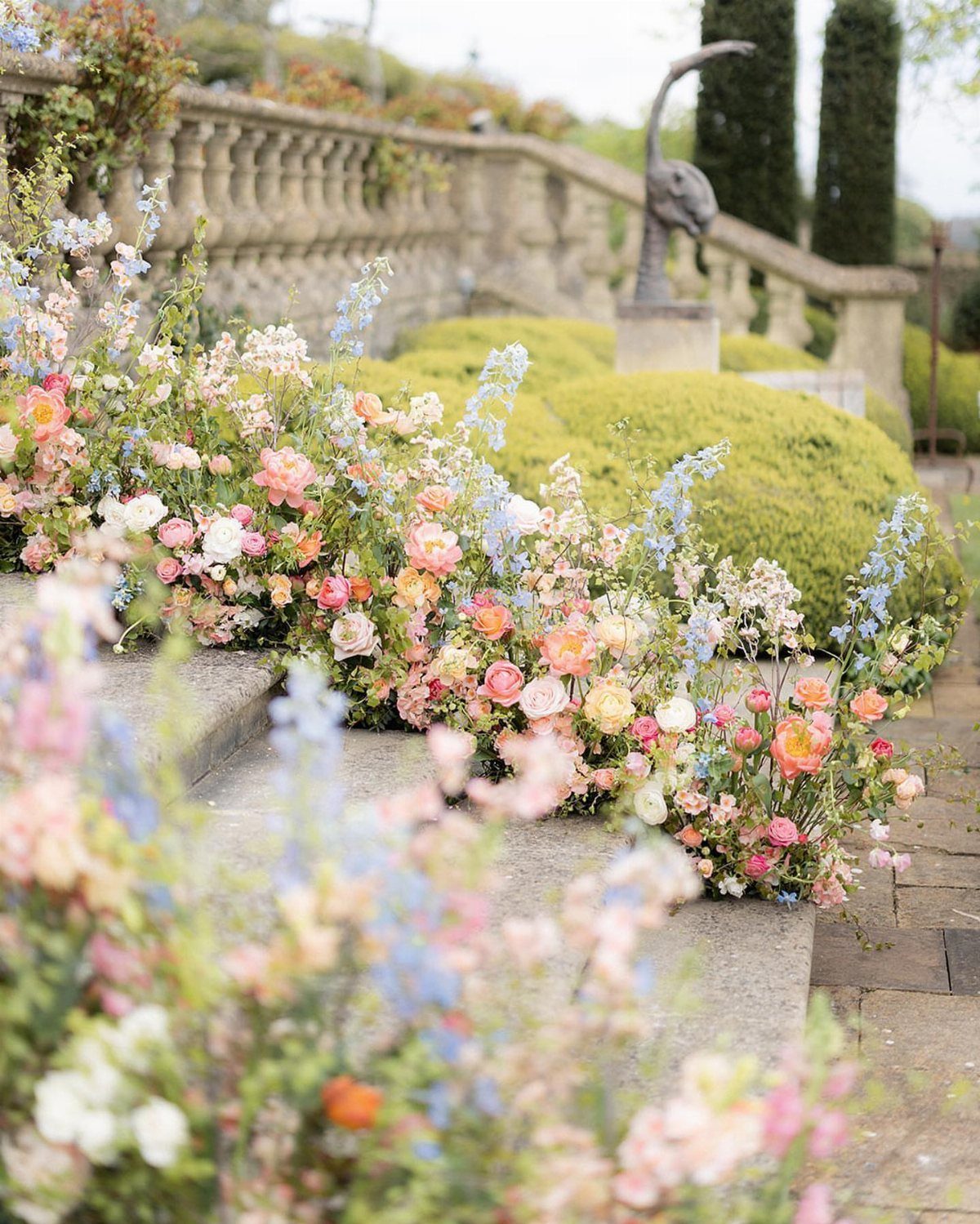
Stone stairs with balustrades give floral arrangements architecture to climb against. The pink, peach, and blue blooms here follow the line of the steps rather than blocking them; guests still walk through.
A garden with existing stairs saves the cost of building the moment. The flowers need tying or weighting; stone absorbs water and heat, so stems in direct contact dry fast.
A maintained garden with sculpted shrubs and a statue calls for flower density that matches the formality, not wild growth that fights it.
17. Handfasting with Flower Cords
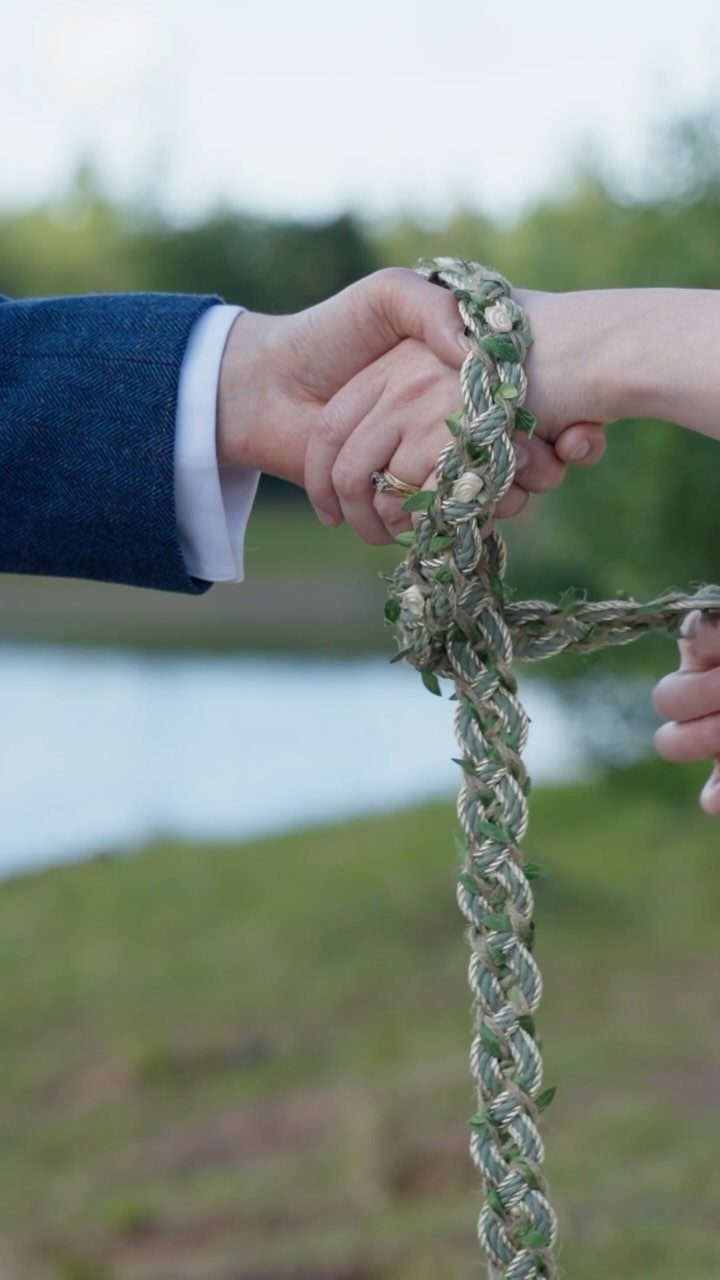
A handfasting cord woven with fresh blossoms binds the couple’s hands during the vows, then comes apart to keep. The white flowers in the braid are tiny; larger ones would snag and tear as the cord tightens.
This works outdoors where the setting carries some of the ceremony’s weight. The cord material matters more than the blooms; vines need flexibility, dried grasses hold shape but cut skin.
Someone has to make it beforehand, or teach a wedding party member the weave. The lake in the background suggests the setting, not the requirement; any outdoor space with enough room for guests to see will do.
18. Brunch Reception
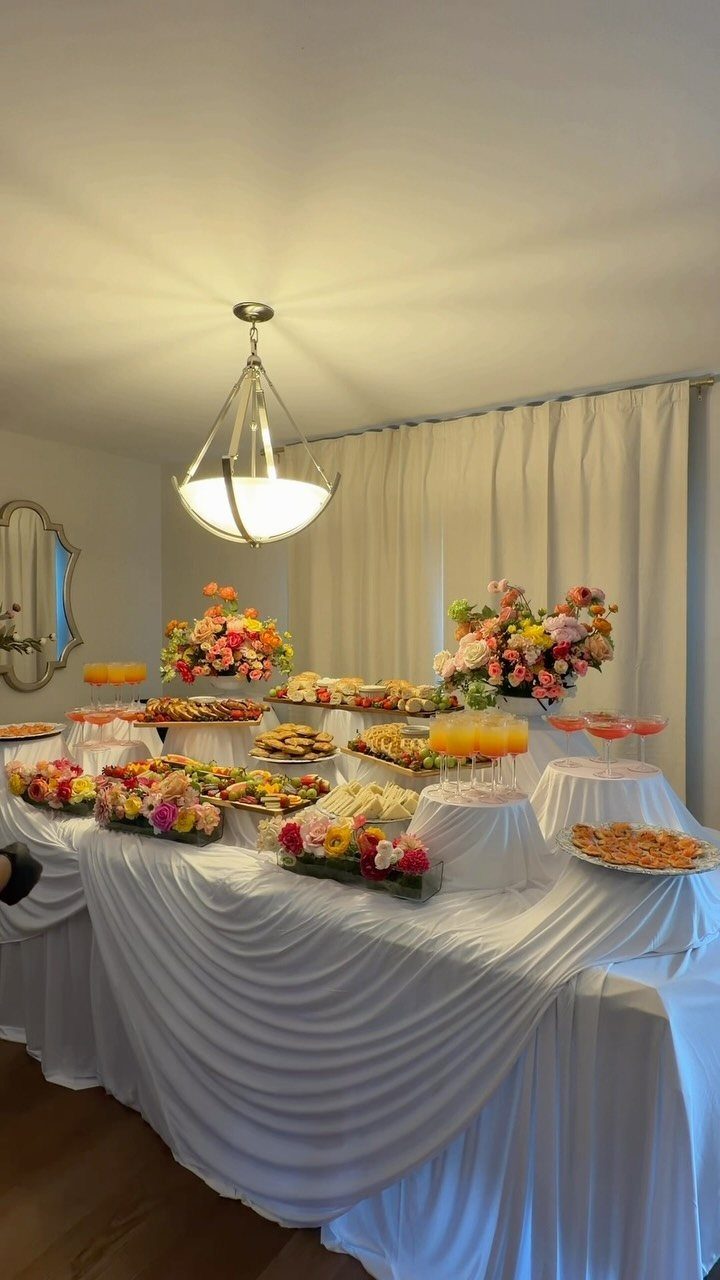
A brunch reception trades the pressure of a seated dinner for the pace of a buffet line and daylight that ends the party naturally.
The orange juice and pink drinks here are poured by guests themselves; the bartender’s job is setup and refill, not mixing on demand.
Finger sandwiches and pastries hold at room temperature better than hot entrees, which matters when service runs across hours instead of a single bell.
The white curtains and hanging light show an indoor space dressed to feel temporary, like a tent without the weather risk.
This suits couples who want to talk with everyone and dance with almost no one. The format ends; guests leave fed, not waiting for a sparkler exit they are too tired to hold.
19. Tea Length Gown
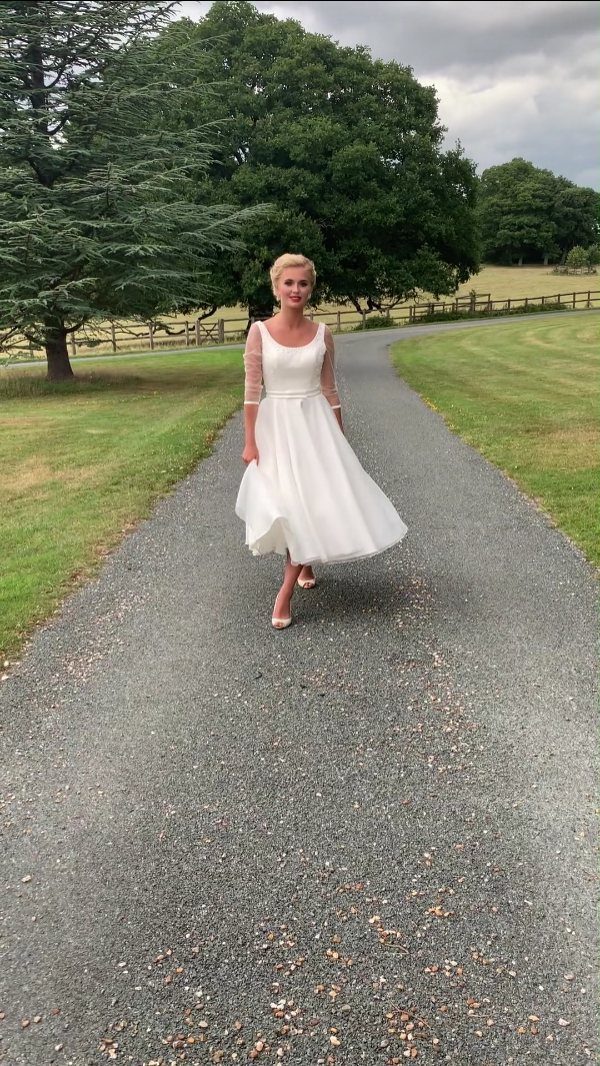
A tea-length hem clears grass and gravel without gathering mud, which is the practical reason it keeps showing up at spring ceremonies.
The cut hits above the ankle, low enough to keep the silhouette bridal, high enough to let you walk a garden path without lifting your skirt.
The vintage association comes from the mid-century line, but the real appeal is movement; you can dance without stepping on hem.
Shoes become part of the look, not hidden under it, so the pair you spent money on actually gets seen.
This is the last chance to buy in a size UK 20, according to the maker. Outdoor venues with uneven ground are where it earns its keep; a full cathedral train on wet lawn is a liability you carry all day.
20. Floral Wedding Attire
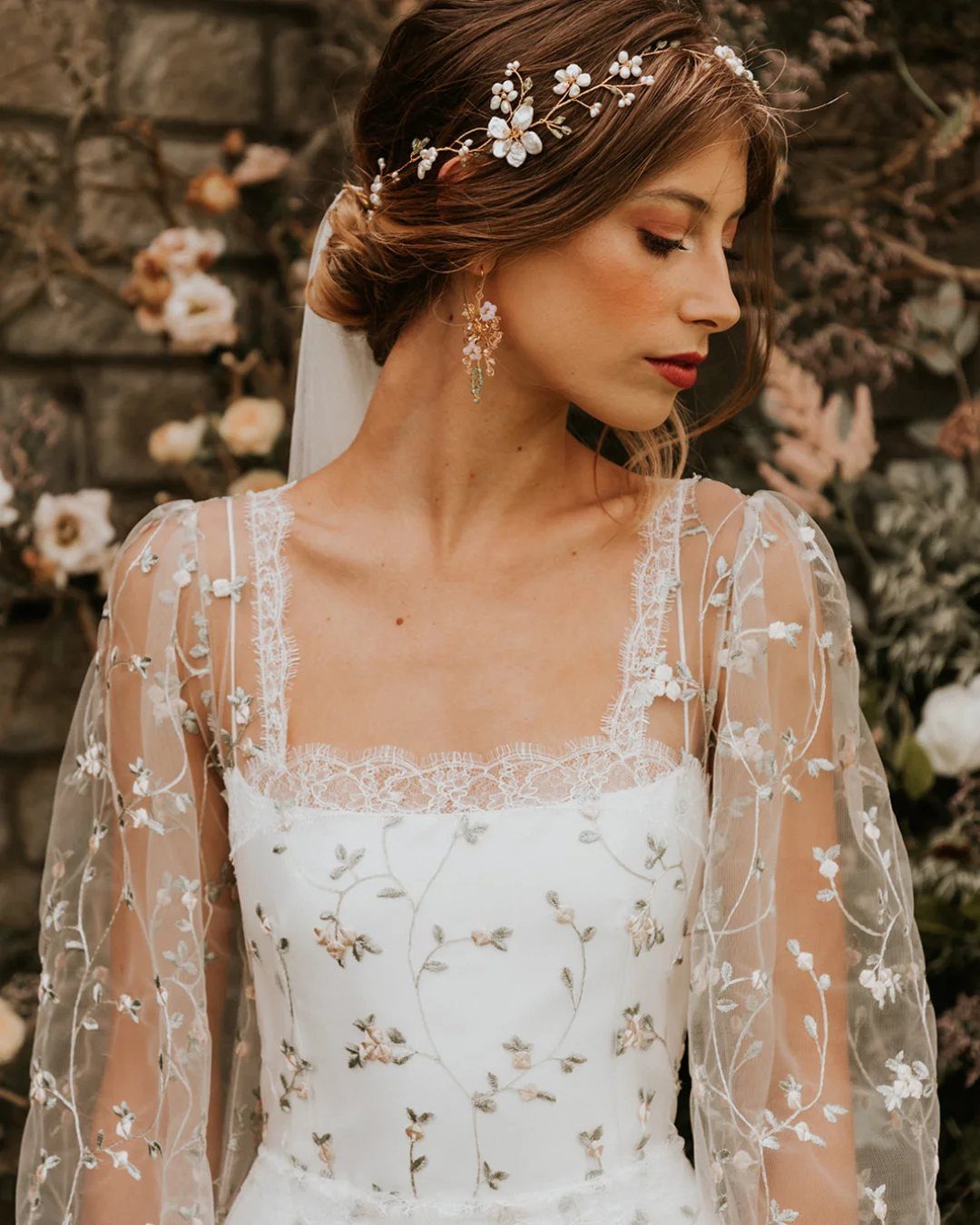
Embroidered vines on a square-neck gown carry the garden inside without reading as costume. Sheer puff sleeves and a floral hair vine keep the motif consistent without matching; one piece embroidered, one piece wired, both floral but not identical.
Grooms have the easier job here. A floral tie or pocket square nods to the season without the commitment of a full printed suit, and the groomsmen can match at whatever level the group decides.
The maker of this gown suggests the same subtle approach for anyone hesitant; formal accessories carry the theme without the risk of overstatement.
A spring dress code request lets guests participate. Soft pastels or small prints on their own clothes extend the visual into the crowd, though you need to say it plainly on the invitation; "spring attire" alone reads as optional.
Choosing a Color Palette
Start with the season itself, then narrow.
Spring gives you soft pinks, baby blue, mint green, lavender, and the light browns and tans that keep pastels from floating away. Three to five colors is the workable range; more than that and the eye loses the thread.
Your venue steers the choice more than most couples expect. Outdoor settings in Gainesville pull toward earthy tones that belong where you stand; ballrooms can carry cooler, more formal hues.
The cohesion comes from assigning roles.
One primary, one or two secondary, one accent. The accent does the work of energy; without it the palette sleeps.
Spring Wedding Themes
Garden romance, bohemian chic, vintage elegance, rustic farmstead, watercolor whimsy. These are starting points, not prescriptions.
A spring theme can shout or whisper.
Blooming blossoms and pastels announce themselves; floaty materials and subtle floral accents let the season in without naming it. The choice is yours, but make it deliberate so your guests feel the intention rather than guessing at it.
What separates a spring wedding from a wedding that happens in spring is consistency across the decisions.
The invitation paper weight, the cocktail garnish, the bridesmaid dress fabric. Each one either carries the thread or drops it.
Venue Considerations
Book the venue first; everything else arranges itself around what the walls and windows give you.
Gardens, barns, stately homes. Each carries its own decoration before you spend a dollar.
Exposed beams and shifting afternoon light in a barn; sculpted shrubs and stone stairs in a historic garden. A barn surrounded by dormant pasture in early April reads differently than the same barn in May.
An outdoor space already brings in dirt and bark colors, so I work with those instead of fighting them; a ballroom is a different job, where the walls are neutral and the couple wants something that reads as formal.
The venue’s surroundings do half the color work if you let them.
Incorporating Nature
Flowers, greenery, outdoor settings. These are the obvious tools, which means they need more thought, not less.
Spring palettes lean light because the season does.
The flowers growing in April and May do half the color work for you; I pull from what local growers actually have that season rather than forcing a palette that needs dye or shipping from another climate.
The longer days and warming weather are practical facts, not atmosphere alone. Use the light; plan the ceremony hour for what the sun does that week.
Nature coming back to life is the metaphor, but it is also the literal condition you are working in. Work with it, not around it.
Frequently Asked Questions
How do you know your wedding theme?
Your theme comes from the aesthetic you want to live inside for one day, not a checklist you found online.
Start with a color palette and a mood, formal or bohemian or romantic, then let every choice after that point back to those 2 things.
Spring palettes like pastel or peach and gold carry through from linen to glassware to cocktail color; that consistency is what makes a theme readable to guests.
Which theme is good for a wedding?
The one that matches the setting you actually booked and the budget you actually have. A barn venue already reads rustic; fighting that with crystal and satin wastes money.
Spring themes work because they use what the season gives you, local blooms, longer days, green growth outside the windows, instead of importing looks from another month or climate.
What is a spring wedding?
A wedding held in spring or styled around spring elements regardless of date.
The overt version leans on blossoms, pastels, and garden settings; the understated version uses floaty fabrics, subtle floral accents, and fruit-forward cocktails to suggest the season without literal bunnies or lamb motifs.
Spring is a material condition, what blooms when, what light does at 4 p.m., what grass feels like underfoot.
What colors are best for a spring wedding?
Pastels hold up in spring light if you test the fabric, not just the swatch. Brighter saturations like coral, lime green, and magenta work in ribbon drapes or single-statement pieces against neutrals, not spread across every surface.