These 11 table ideas range from a few dollars in baby’s breath and floating candles to the cost of gold-rimmed dinnerware and crystal stands, and the deciding factor is where your venue already stands on formality.
A plain rented hall needs wood slice chargers to supply character, while a barn venue fights polished formality and asks for eucalyptus garlands and amber glass instead.
The neon accents and battery-operated strips that turn candlelight sharp are here for couples who want after-hours energy, not traditional evening warmth.
1. Flower Centerpieces
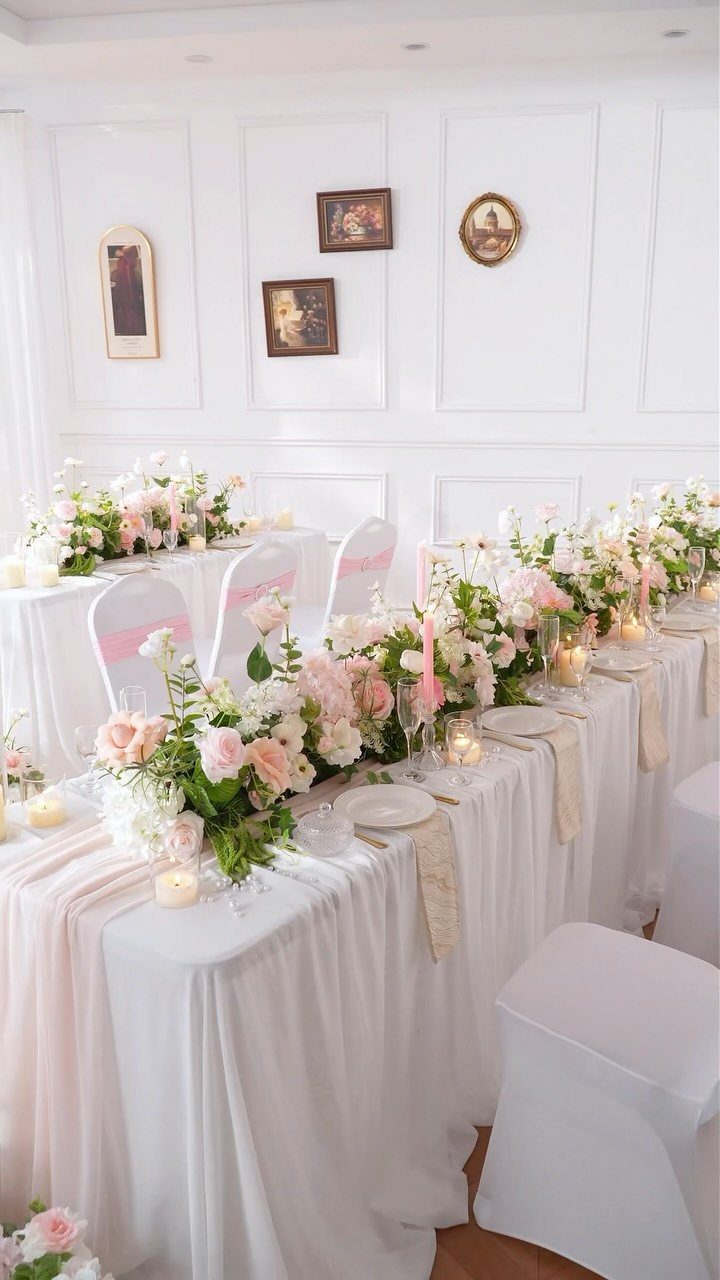
Fresh flowers turn a rented table into something alive. I have seen garlands of white hydrangea and rose with trailing green vines turn a plain white cloth into the kind of table guests photograph before they sit.
For a long banquet table, a runner of blooms costs less than full centerpieces at every seat and reads as more generous.
Rose petals scattered between place settings fill gaps without extra vases. Weight garland greens down for outdoor receptions so wind does not shift them toward the soup.
This is the option I would pick if the budget allows one splurge on the table itself.
2. Gold Dinnerware Table Settings
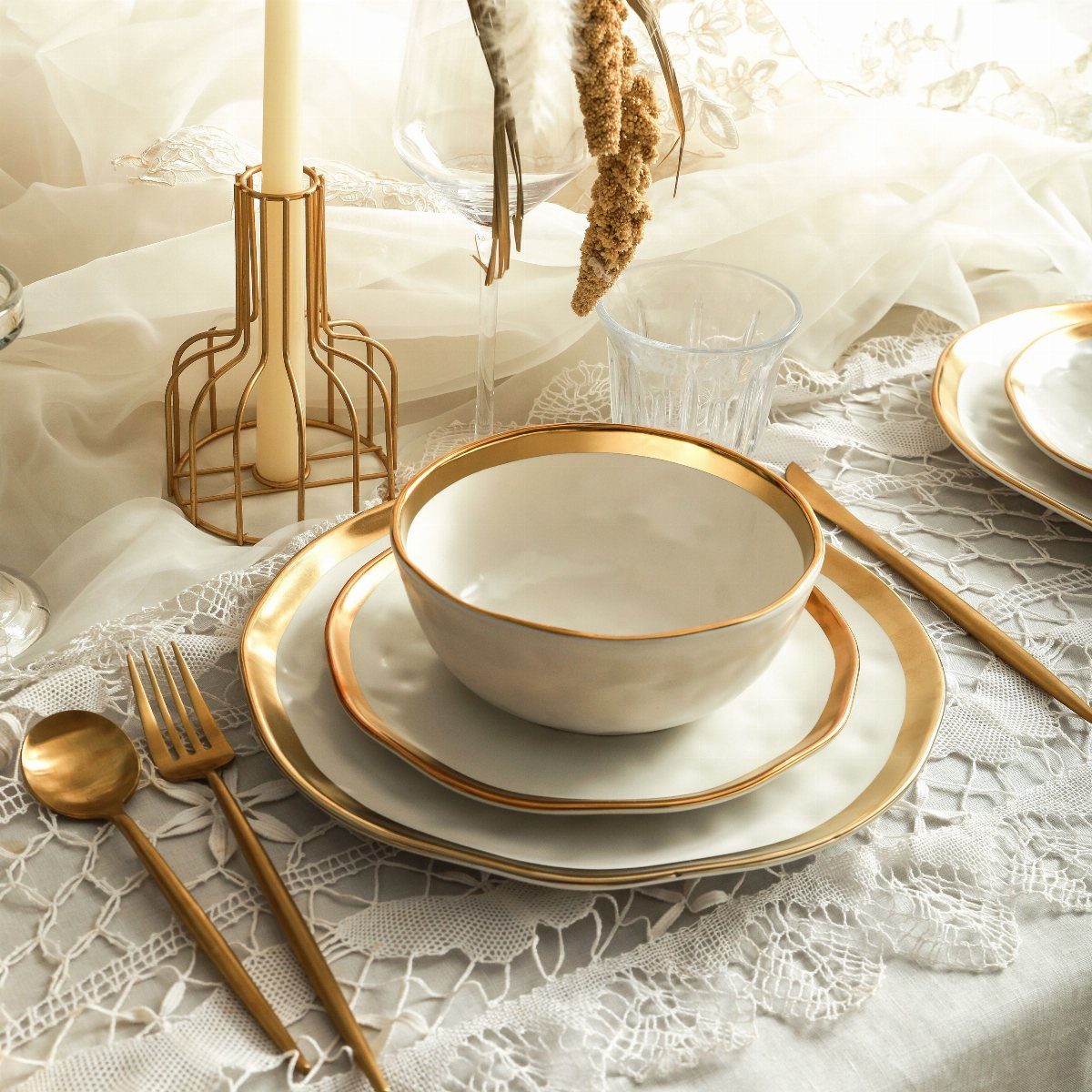
Gold-rimmed plates read as luxury without the weight of solid gold. White ceramic with thin gold bands, gold flatware, and a lace runner reads formal without turning heavy.
I would start with the plates and build out. Gold utensils show fingerprints faster than silver, so have someone wipe them during setup.
The lace runner here is a choice that softens the metal; a plain cloth underneath keeps it from sliding. For glassware, clear works, but the photo’s palette suggests champagne-tinted goblets if you want to continue the warm tone.
This suits evening receptions where candlelight will catch the rims.
3. Table Runners
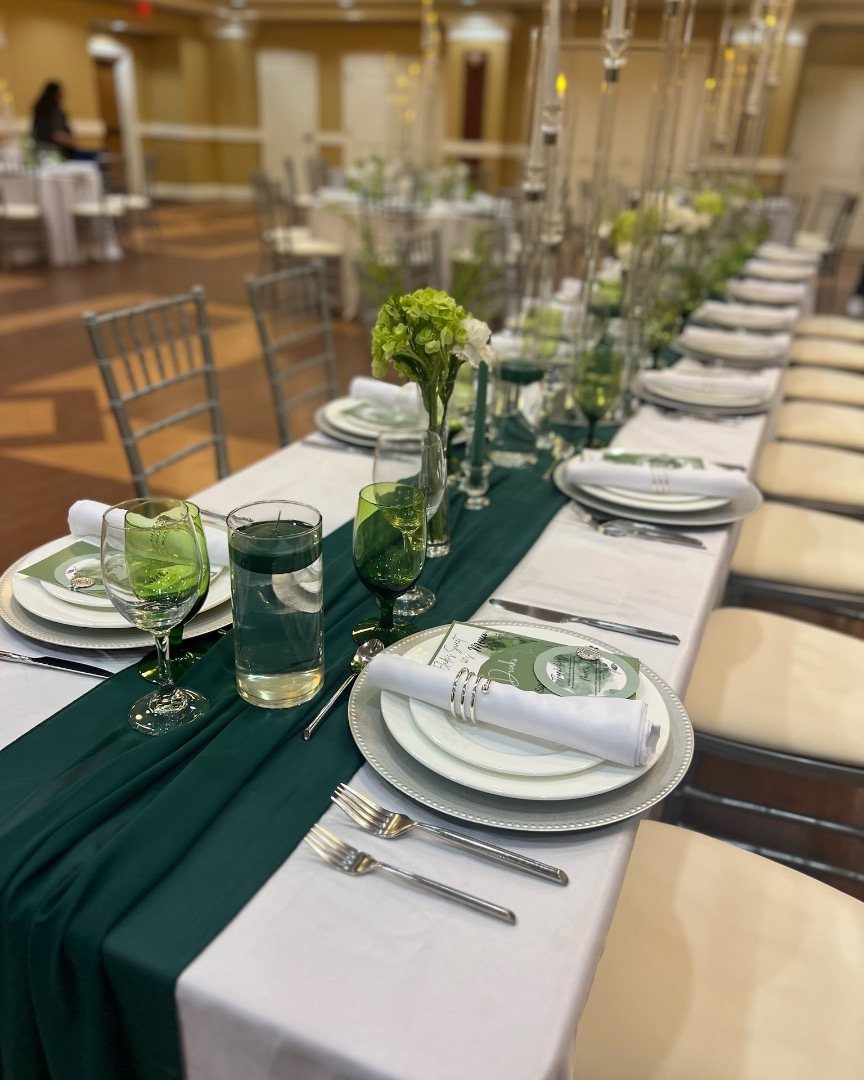
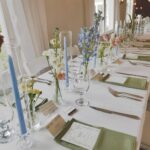
A runner does the work of a full tablecloth at a fraction of the cost. Dark green fabric against a white drape, with green glassware and small floral arrangements, lets color carry without covering every surface.
Sheer cloths, burlap, and patterned fabrics each set a different mood. Burlap works for barn venues but snags on rough table edges; sheer needs a solid cloth beneath it or the table shows through patchy.
The sage green runner I have seen used vertically across a shorter table, which changes the sight lines and leaves more room for shared platters.
Measure your tables before ordering; standard runners leave overhang, and banquet lengths vary.
4. Welcome Table Decor
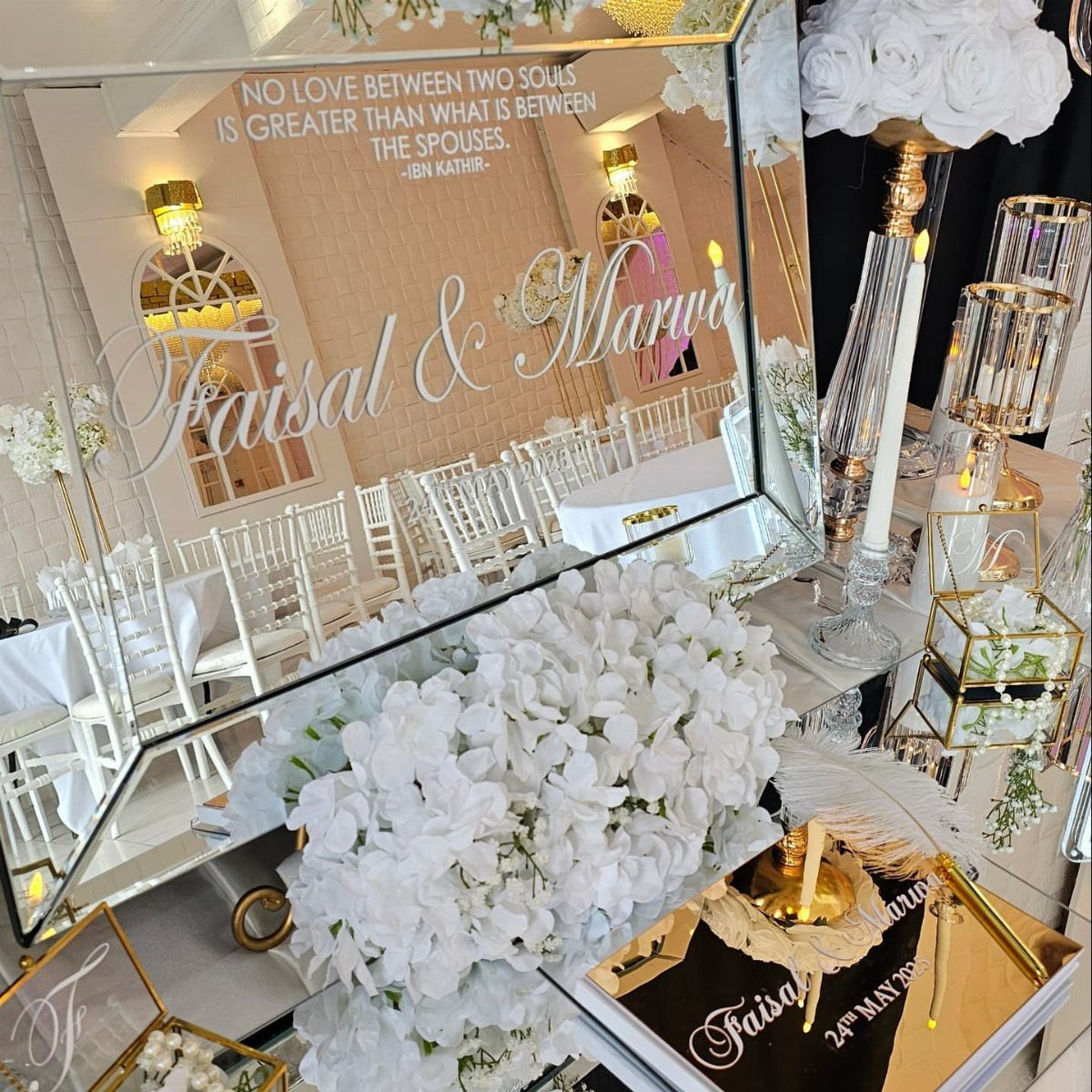
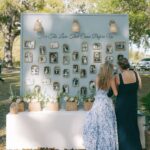
The welcome table is where guests pause between ceremony and reception, and it sets the tone for everything after. A mirror sign with the couple’s names gives guests something to do while they wait: read, admire, photograph.
I would keep the layout shallow so late arrivals can reach the guest book without blocking the door.
Tall candleholders work against a wall; in open space, they become obstacles. Family photos, if you use them, need frames that match the weight of the floral arrangements or they look like afterthoughts.
This table also holds practical items: the seating chart, the card box, the favors. Plan the surface in zones so the pretty parts do not get buried under envelopes.
5. Geometric Centerpieces
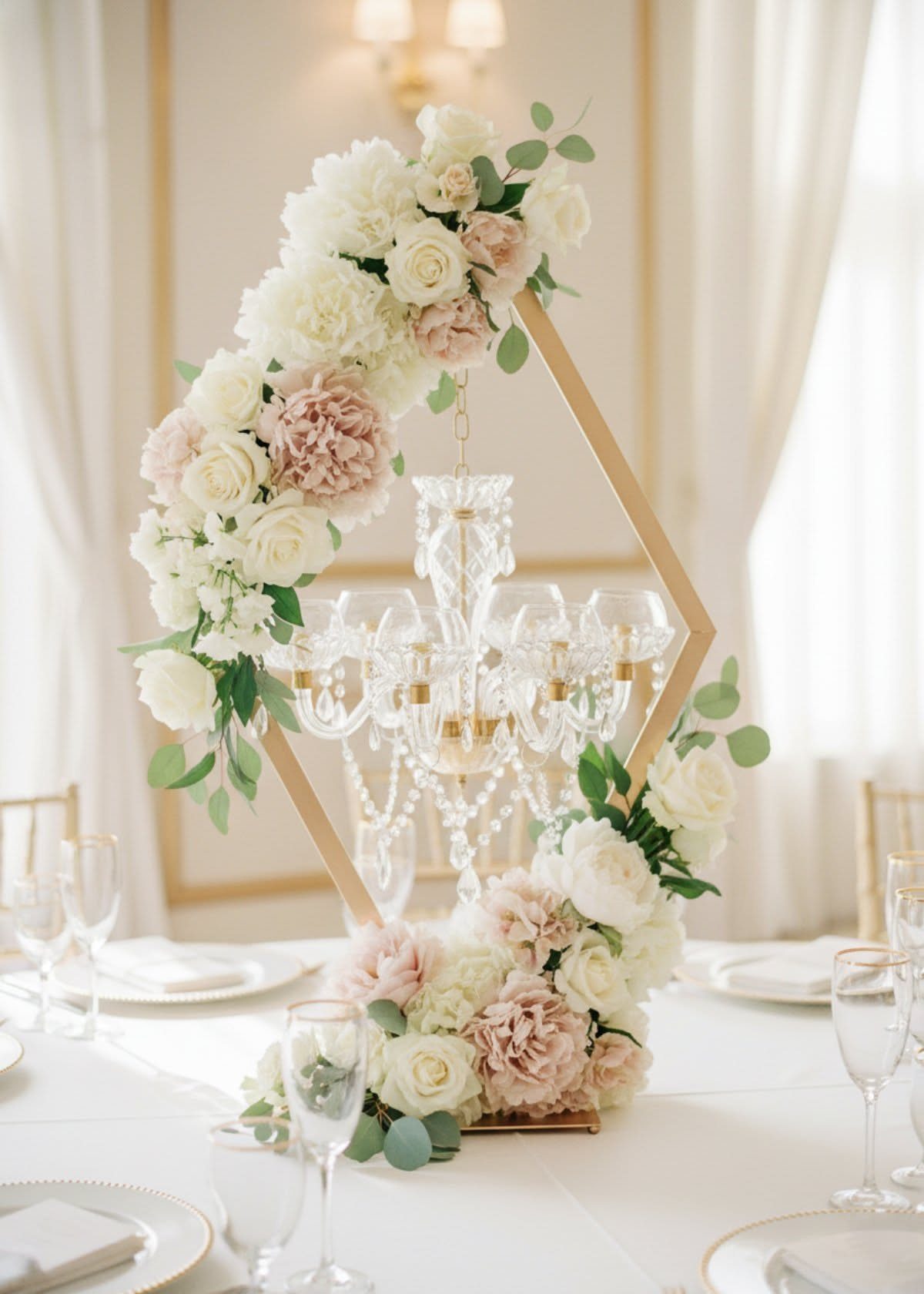
Geometric frames give flowers a structure that reads modern without going cold. A gold diamond stand holding white and blush blooms around a hanging crystal candelabra keeps angular shapes warm through the materials.
These work best when you build them yourself.
Gold metal frames, faux floral garlands, and battery-powered lights are the core; the lights matter because geometric shapes cast odd shadows without them. Skip the butterflies and keep the lines cleaner.
Round tables suit this better than long ones; the frame needs center placement to look intentional, and a single strong shape holds attention in a way a stretched garland does not.
6. Rustic Decor Elements
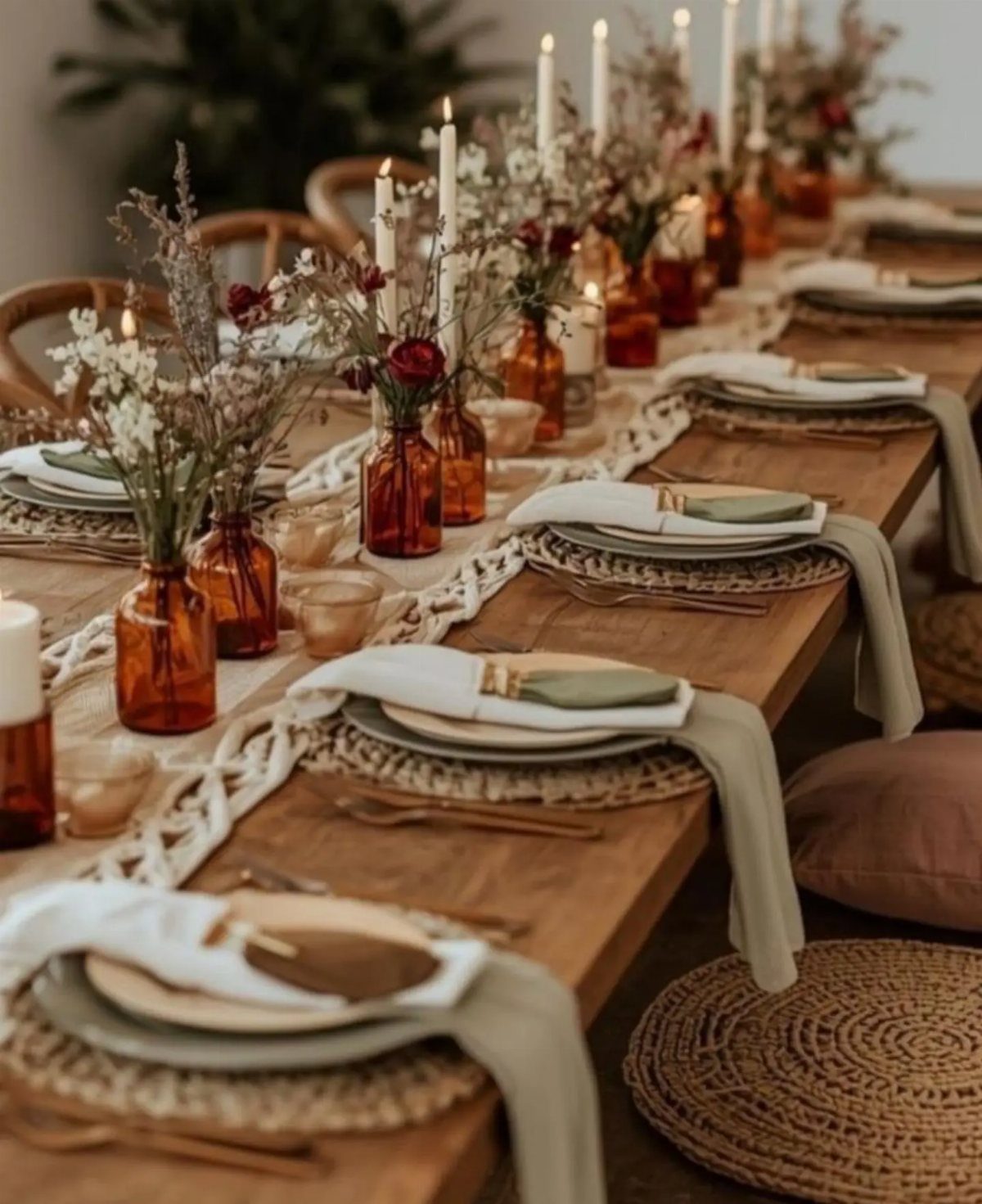
Wood, woven fiber, and amber glass bring in the textures of a place rather than fighting it.
Mason jars with fairy lights are the budget version, though I prefer the amber glass for evening light. Burlap runners fray; seal the cut ends with a line of clear glue or they will shed threads into the salad.
Woven placemats, like the seagrass ones I have seen used, protect the table and add warmth, but they are not perfectly flat; use a charger or plate with a rim to keep wine from tipping.
This suits outdoor or barn venues where polished formality would feel out of place.
7. Eucalyptus Garlands
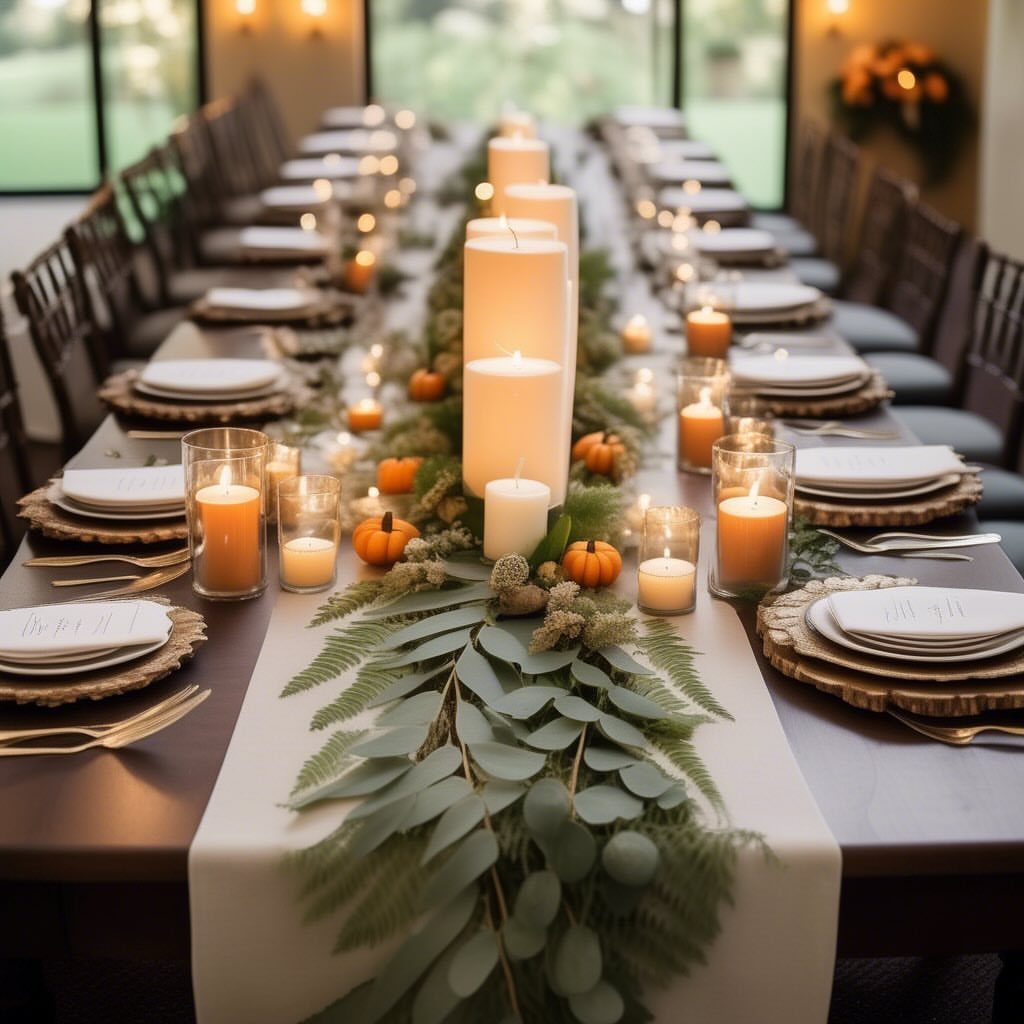
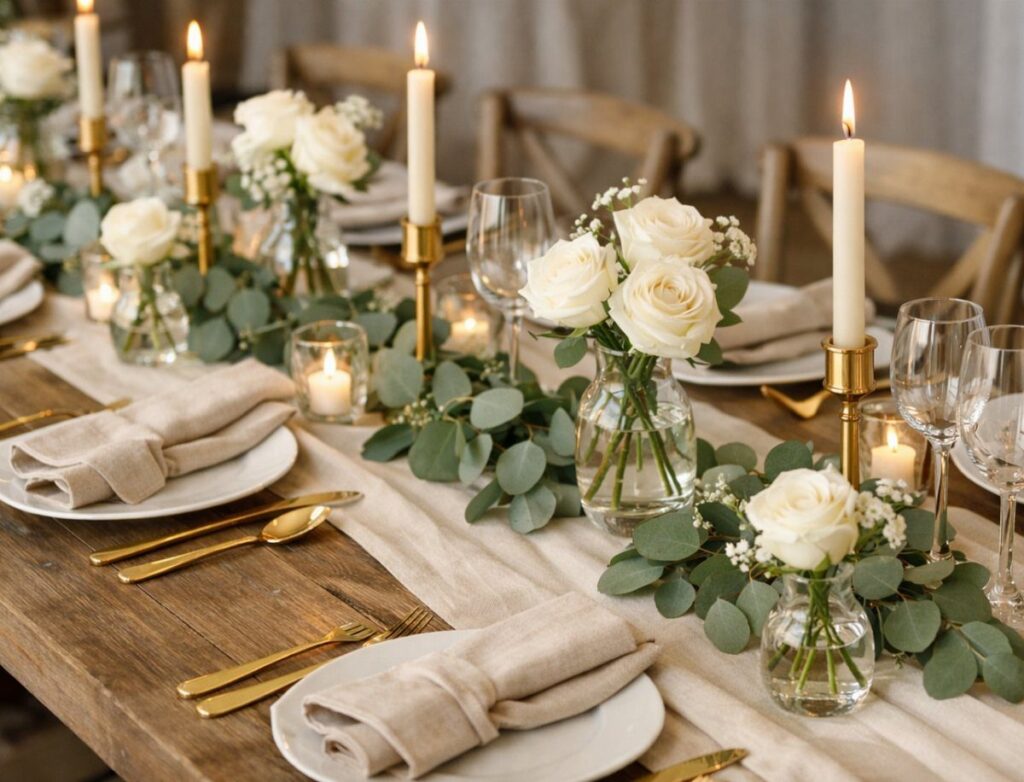
Eucalyptus carries a muted gray-green that photographs well against white or wood without fighting other colors for attention. Ferns add body; together they run the length of a table without the cost of full floral centerpieces.
Eucalyptus garlands laid flat make natural trays for pillar candles in glass holders, no risers needed.
Weight the greens if you use them outdoors, and check that stems are not sappy; some eucalyptus stains cloth. Miniature pumpkins, visible here, carry the line through October weddings.
A long table with flat greenery skips the fuss of water tubes or foam and still reads lush.
8. Floating Candles
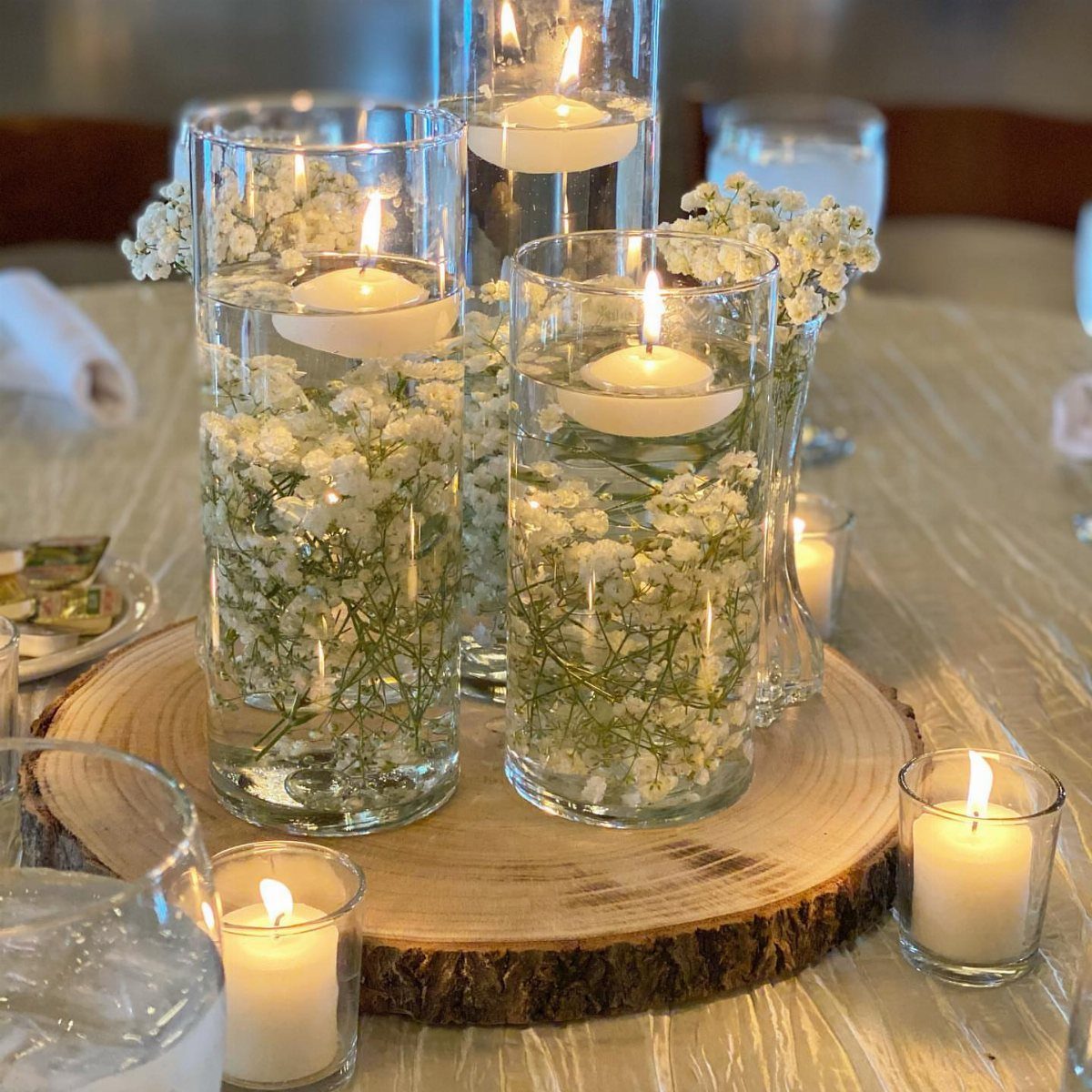
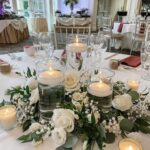
3 cylinders of different heights, water, and floating candles give light at varied levels without wiring. Baby’s breath submerged in the water stays pale and reads as texture rather than color.
The wood slice base ties the arrangement to rustic tables; without it, the glass can look stranded on linen.
Fill to within an inch of the rim so movement does not slosh water onto the table. Votives around the base extend the glow without competing.
This is the option I would pick for a venue that bans open flames on fabric but allows contained candles.
9. Large Centerpiece
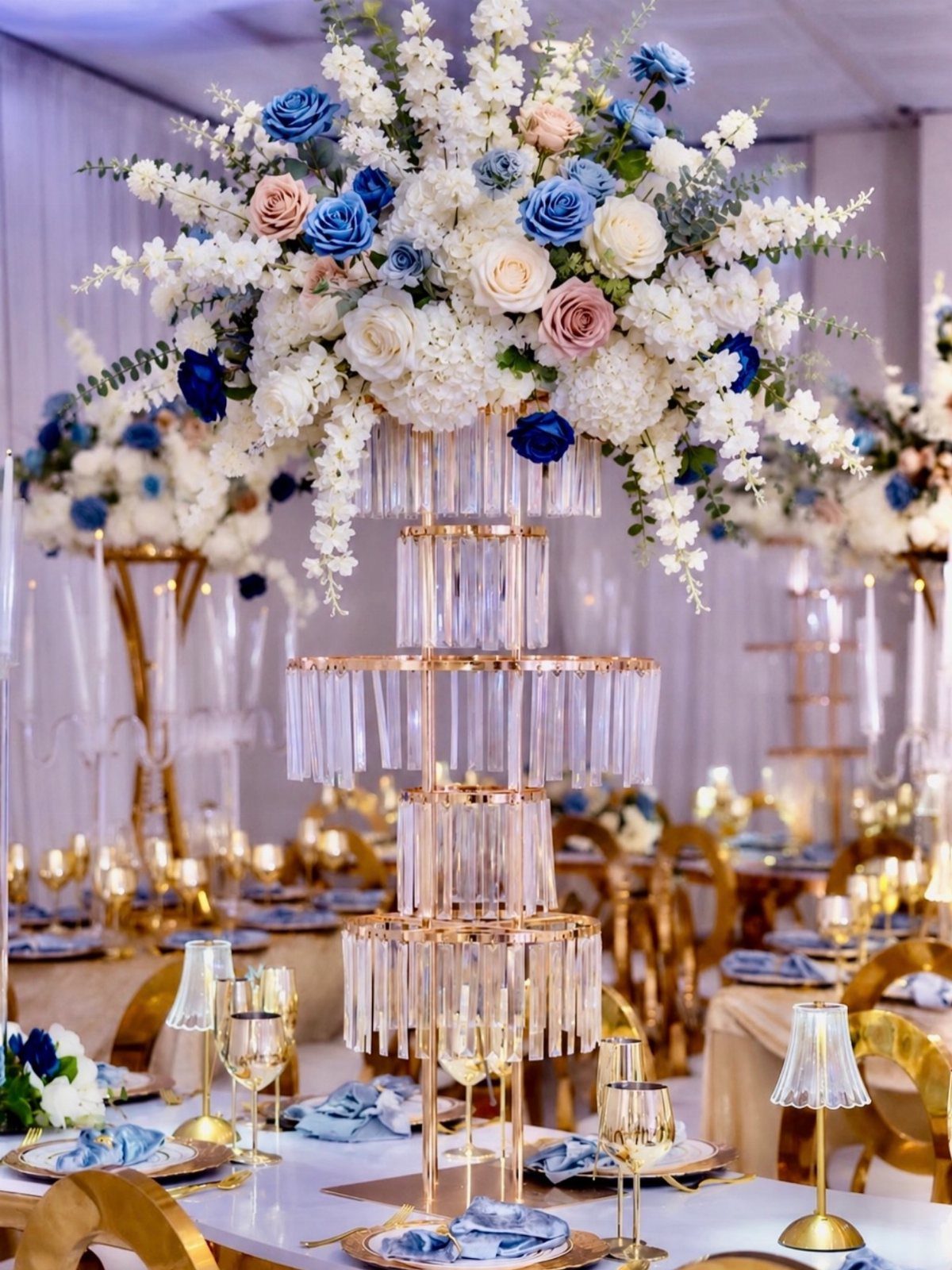
A single tall piece commands a banquet table in a way scattered small arrangements do not. The gold and crystal stand here lifts flowers well above eye level for seated guests and clears sight lines across the table.
Tall centerpieces need weight at the base; a stand this size without it will sway when the table is bumped.
Deep blues paired with blush read formal and suit evening light. Round tables can handle one strong piece, but long tables need rhythm; either repeat the centerpiece at intervals or use it only at the head table.
10. Neon Accents
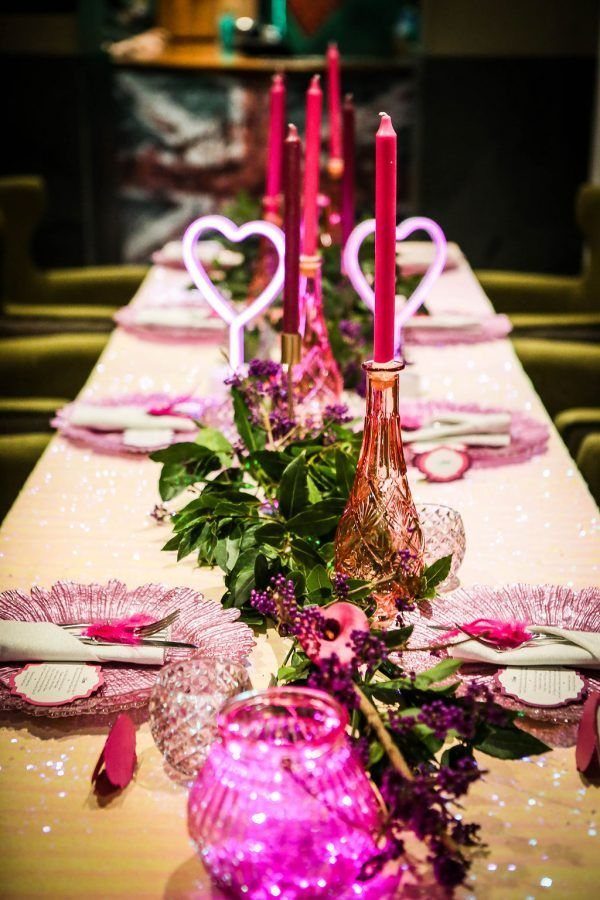
Neon turns the expected glow of candlelight into something sharp and contemporary. Small neon hearts repeated down a long table work as punctuation, not signage with a message to read.
Battery-operated neon strips are safer than glass tube neon and travel better; check that the color temperature matches your other pinks or it will look like a repair shop sign.
Greenery between the units keeps the line from reading as purely graphic.
This suits a couple who wants the reception to feel like after-hours rather than traditional evening.
11. Wood Slice Chargers
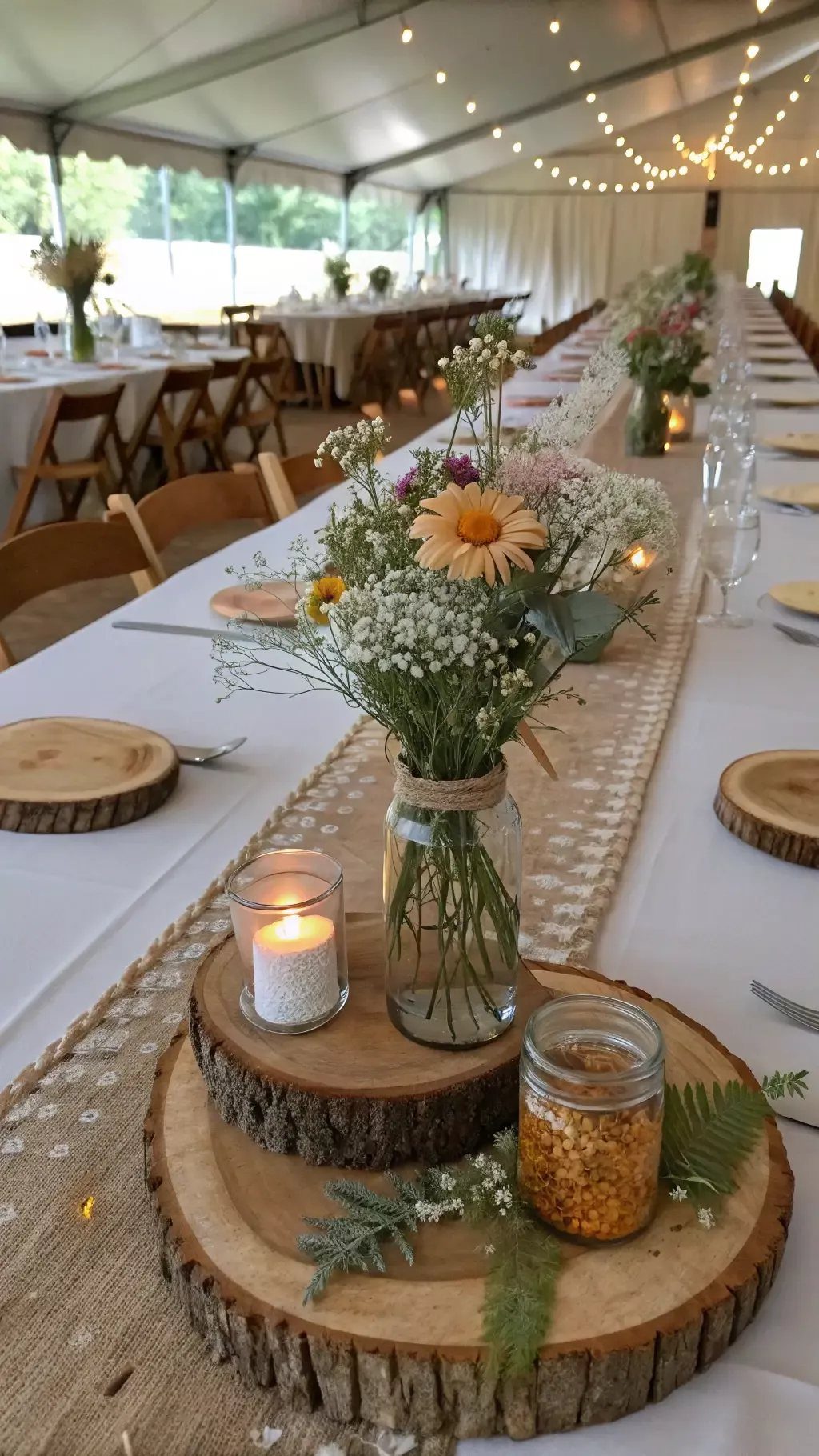
Wood slices beneath plates bring the grain of the table up to each guest. Thick wood slices lift the dish slightly, which changes how the place setting reads without adding another color.
Bark edges vary; some shed. Seal them or choose slices sanded smooth.
Burlap runners, visible here, repeat the rough texture, but burlap snags; a runner down the center avoids the plate zone. Jars with wildflowers and tiered wood stands for candles complete the look without competing.
I would use this where the venue itself is plain and needs the table to supply the character.
Creating a Cohesive Theme
A table reads as one piece when the same three or four elements repeat. Warm metals, cool greens, raw wood, and neon can all work in pairs if you name your palette early and reject what sits outside it.
I would pick the element that costs the most and let it set the rules. Gold dinnerware means gold repeats in the geometric frames or the large centerpiece stands; eucalyptus means the green carries to runners or garlands.
Wood slice chargers and rustic decor pair naturally, but wood slices under gold-rimmed plates would read as 2 weddings sharing a room.
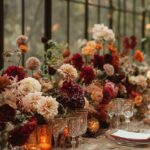
The notes from Ling’s couple on repurposing an arch show the principle: the burgundy florals tied the head table back to the ceremony. One color carried across spaces does the work of matching every item.
Budget-friendly Options
What none of the entries mention is moving an item from one job to another.
Nicole and Aaron turned their wedding arch into a backdrop for the sweetheart table after the ceremony.
The florals already paid for framed the couple again, and the color matched without a second purchase. I would look at ceremony aisle markers, altar arrangements, or even the welcome table sign after guests have seen it.
Baby’s breath, noted on Pinterest in brown paper wraps, costs less than roses and fills space with volume rather than color.
The white pillar candles in clear cylinders there pair with the floating candle entry above; water and a wick cost less than a florist arrangement.
DIY here means choosing materials that do not need craft skill to look finished.
Eucalyptus garlands laid flat need no arranging skill. Wood slices need only sealing.
Personalization Tips
For the tables where guests sit, personalization needs a lighter hand or it becomes clutter.
I would use one item per table that connects to the couple, not the individual guest.
A small framed photo of the venue’s first event, if it has history, or a pressed flower from the proposal location carries meaning without the work of customizing forty place settings.
The notes do not mention place cards, but if you use them, a single line about the guest’s connection, written by hand, does more than a printed monogram.
The risk is time; handwriting forty cards is a task for a willing friend, not the night before.
The welcome table zones already separate pretty from practical. I would extend that discipline: one personal item per table, placed where it does not block water glasses or shared platters.
Lighting Importance
Candles appear in 7 list entries: floating, geometric, rustic, eucalyptus, flower centerpieces, gold dinnerware, and table runners.
Each solves a different problem, and the common thread is that light at table level flatters faces in a way overhead fixtures do not.
The Ling’s notes mention lanterns as accent pieces or centerpieces themselves.
The same applies to any LED substitute. Warm white and cool white are different products, and mixing them at one table looks accidental.
Varied height matters more than varied source.
The floating candles use 3 cylinders; the large centerpiece lifts flowers to eye level. Light that comes from one plane reads flat.
Frequently Asked Questions
What do I put in the middle of my dining table?
A floral centerpiece is the most common choice, and you can scale it up or down depending on what you have left after the venue and food deposits clear.
For long banquet tables, a runner of blooms costs less than individual centerpieces and reads as more generous.
What are some good ideas for a wedding entrance table?
A mirror sign with the couple’s names gives guests something to read and photograph while they wait. Family photos need frames that match the weight of the floral arrangements, or they look like afterthoughts.
What is a head table for a wedding?
The head table is where the couple and their wedding party sit during the reception. Nicole and Aaron repurposed their ceremony arch as a backdrop for the sweetheart table, which framed them again without a second floral purchase.