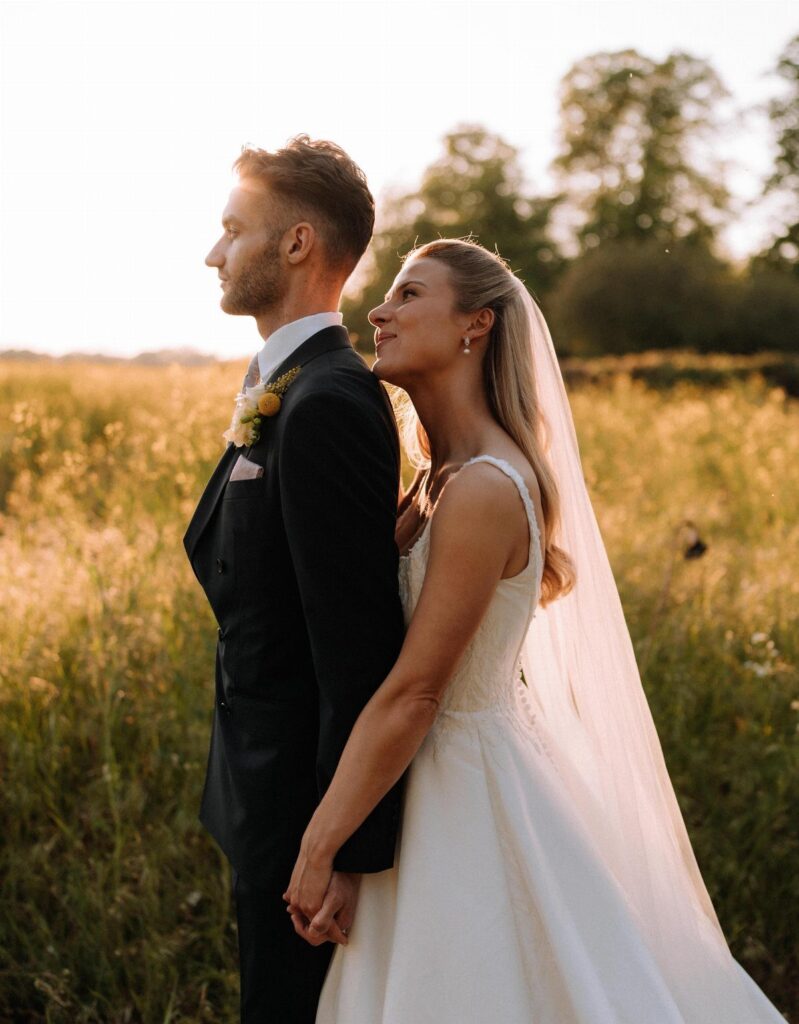
These wedding inspo pics run from a quiet first touch around a doorframe to a vintage getaway car that books out months ahead.
The one that fits your day depends on whether your venue allows open flame for a sparkler exit, has the space for a cold sparkler and fog setup indoors, or sits near urban backdrops for city shoots.
A single June sunset in Gainesville lands at 8:30 PM, and that window decides whether your sparkler exit is real or staged with a side-door loop.
1. Couple Portraits
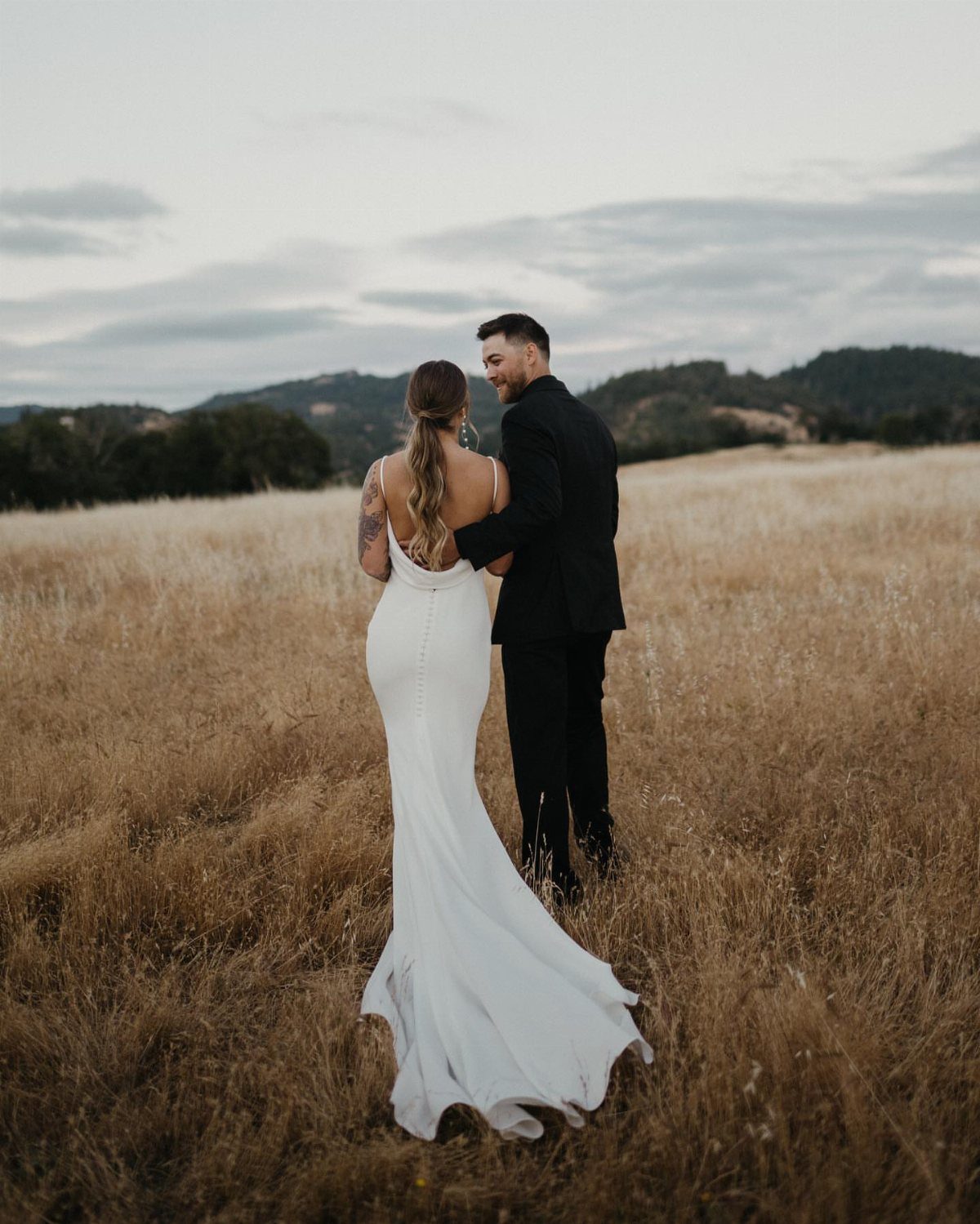
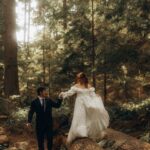
Couple portraits give you a pocket of quiet in a day that otherwise moves fast. Most photographers block out time for couple portraits while guests are at cocktail hour or right after the ceremony.
The best shots come from movement: walking, not posing.
Tell your photographer what backdrop matters to you, whether it is a field like this one or a city street you met on. Bring a flats option if you are crossing uneven ground.
2. Dancing Photos
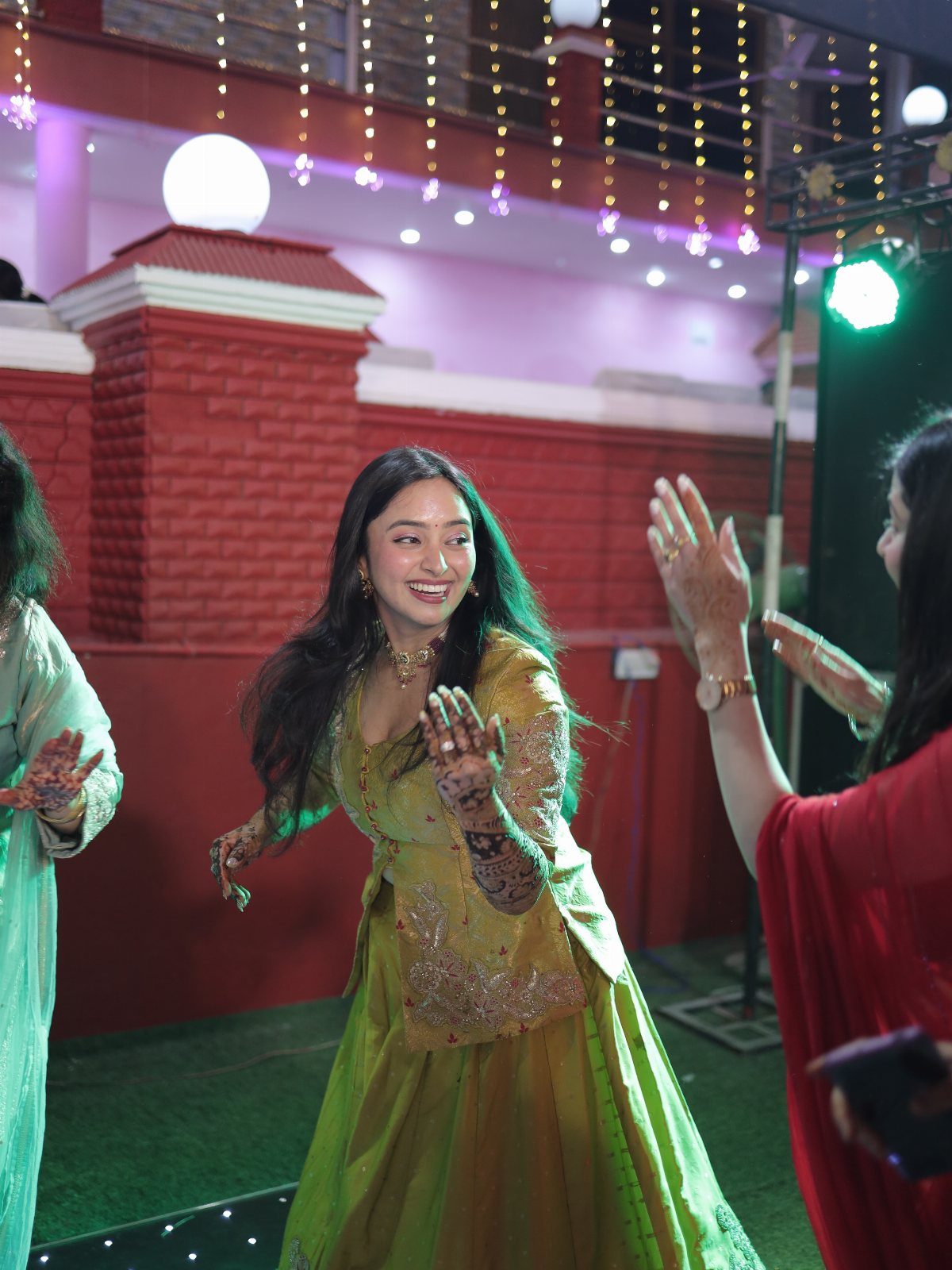
Dancing photos are where the posed part of your album ends and the real party begins. A photographer who knows reception lighting is worth asking about up front; flash work on a dark dance floor is its own skill.
Give your DJ or band a heads-up when you want the floor captured at peak energy. The first 3 songs after dinner usually deliver the mix of loosened-up guests and intact outfits that photographs best.
3. Sparkler Exit
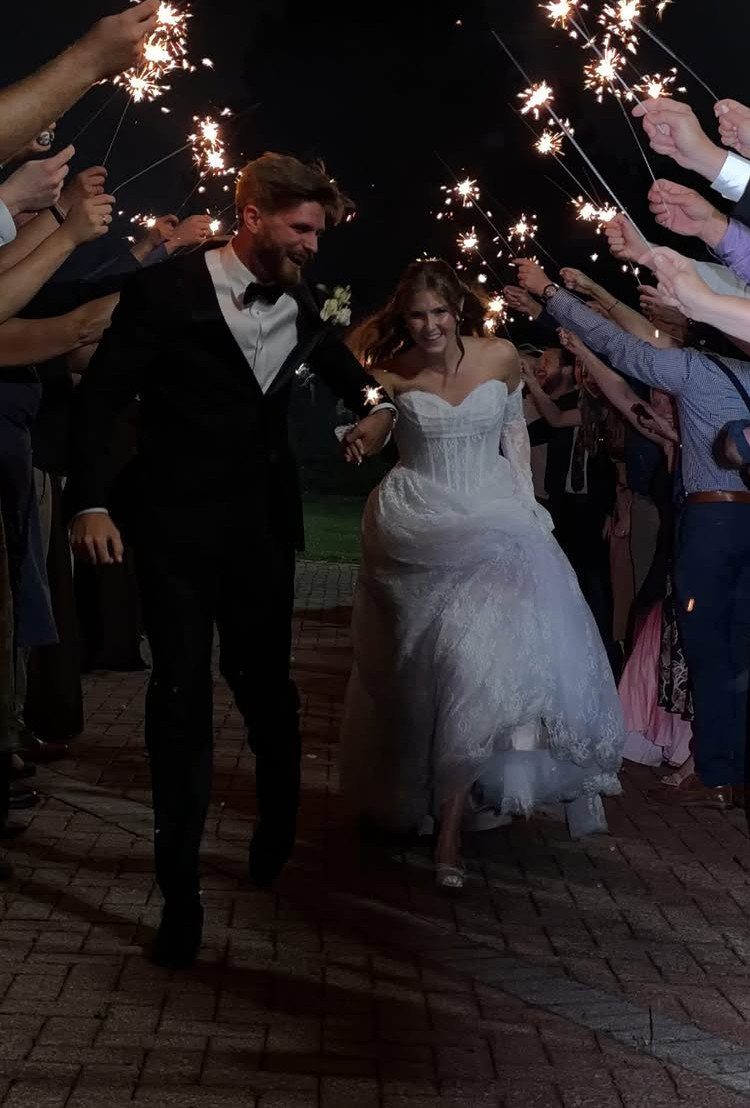
A sparkler exit trades the ordinary end-of-night goodbye for something your guests actually remember.
Summer weddings run into the real problem: in Gainesville, June darkness does not arrive until late, and by then your crowd has had hours of open bar.
Fix it by faking the exit. Step out early, loop back through a side door, and rejoin the party.
Your planner coordinates the tunnel, your photographer pre-scouts the light, and your guests get their moment without knowing the trick. Long sparklers burn long enough to let you walk through twice if someone blinks.
4. First Look Photos
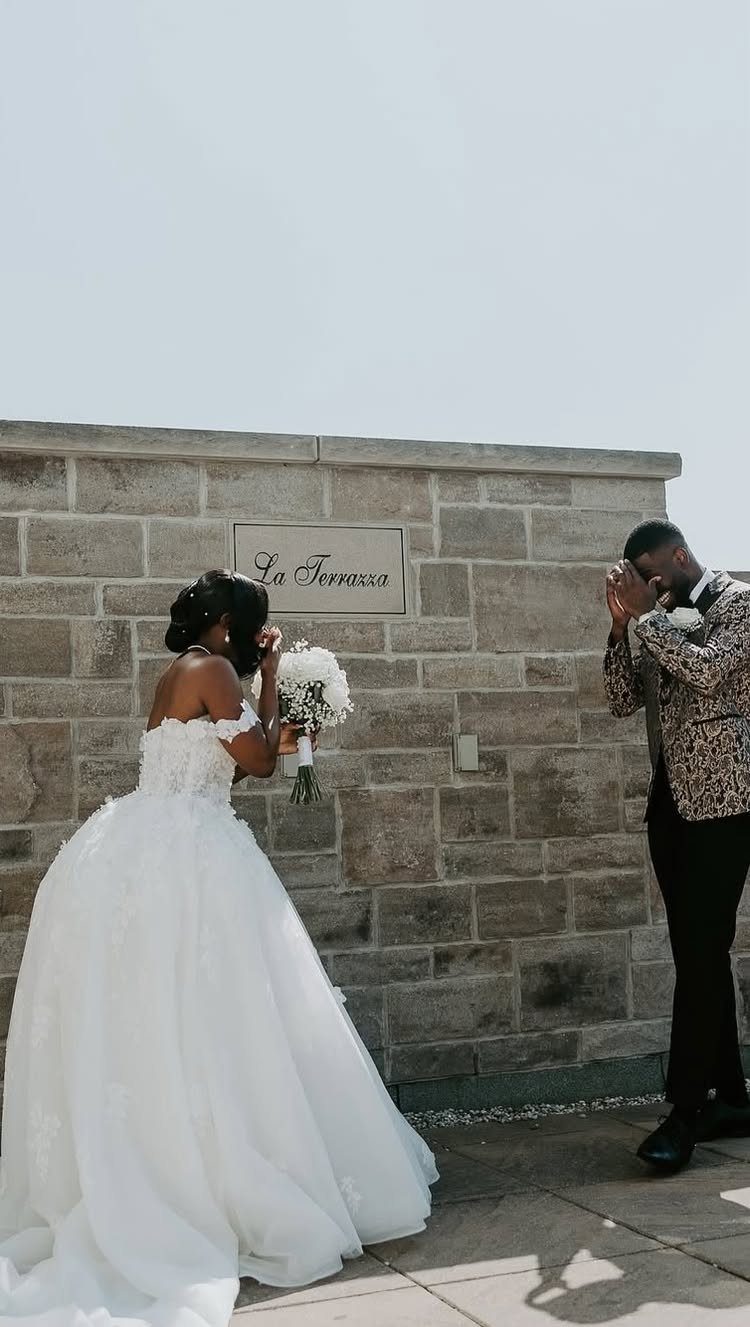
First look photos give you the reaction shot in private, which is why couples who hate being watched choose them. You still get the aisle moment; it just becomes about your guests instead of your face.
The trade is time. Doing portraits before the ceremony means you join cocktail hour, but it also means you are in hair and makeup earlier.
If you are keeping the traditional aisle reveal, a first-touch around a corner, holding hands without looking, gives some of the same calm without the schedule shift.
5. Bridal Portraits
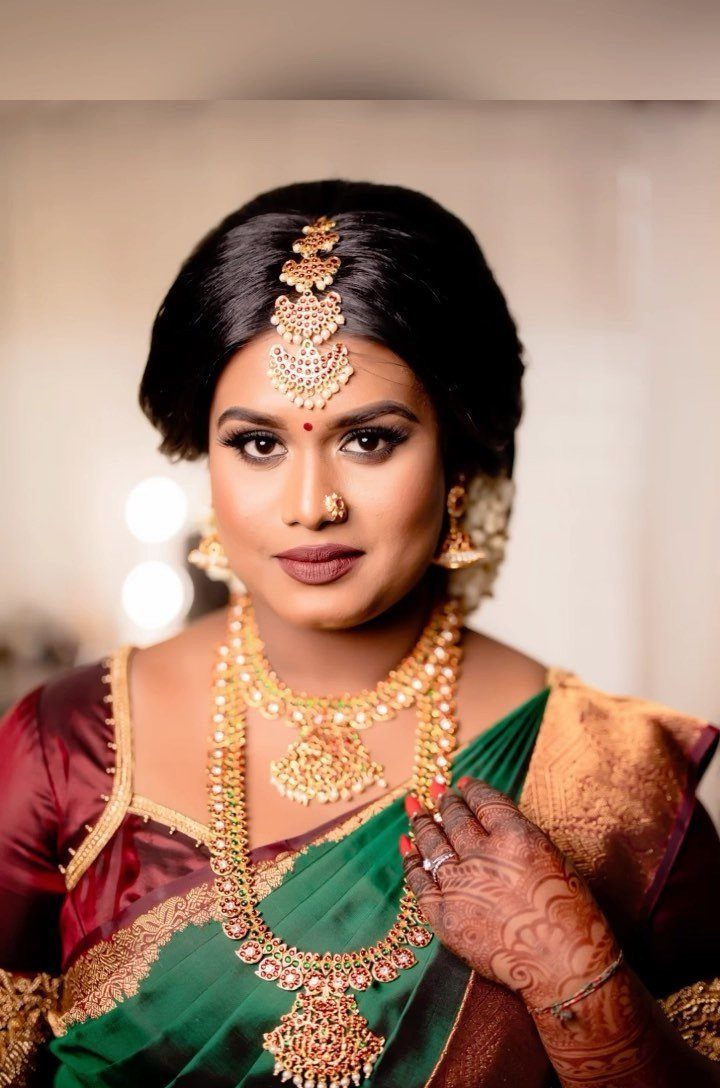
Bridal portraits are the one time your whole look exists together: dress, jewelry, the hours of hair and makeup. A good photographer does not need you to perform; documentation matters more than acting.
Ask for a few minutes near a window right after you are dressed.
Natural light shows texture in fabric and skin better than flash. Your partner should get the same solo treatment, though most grooms need reminding to ask.
6. Wedding Detail Photos
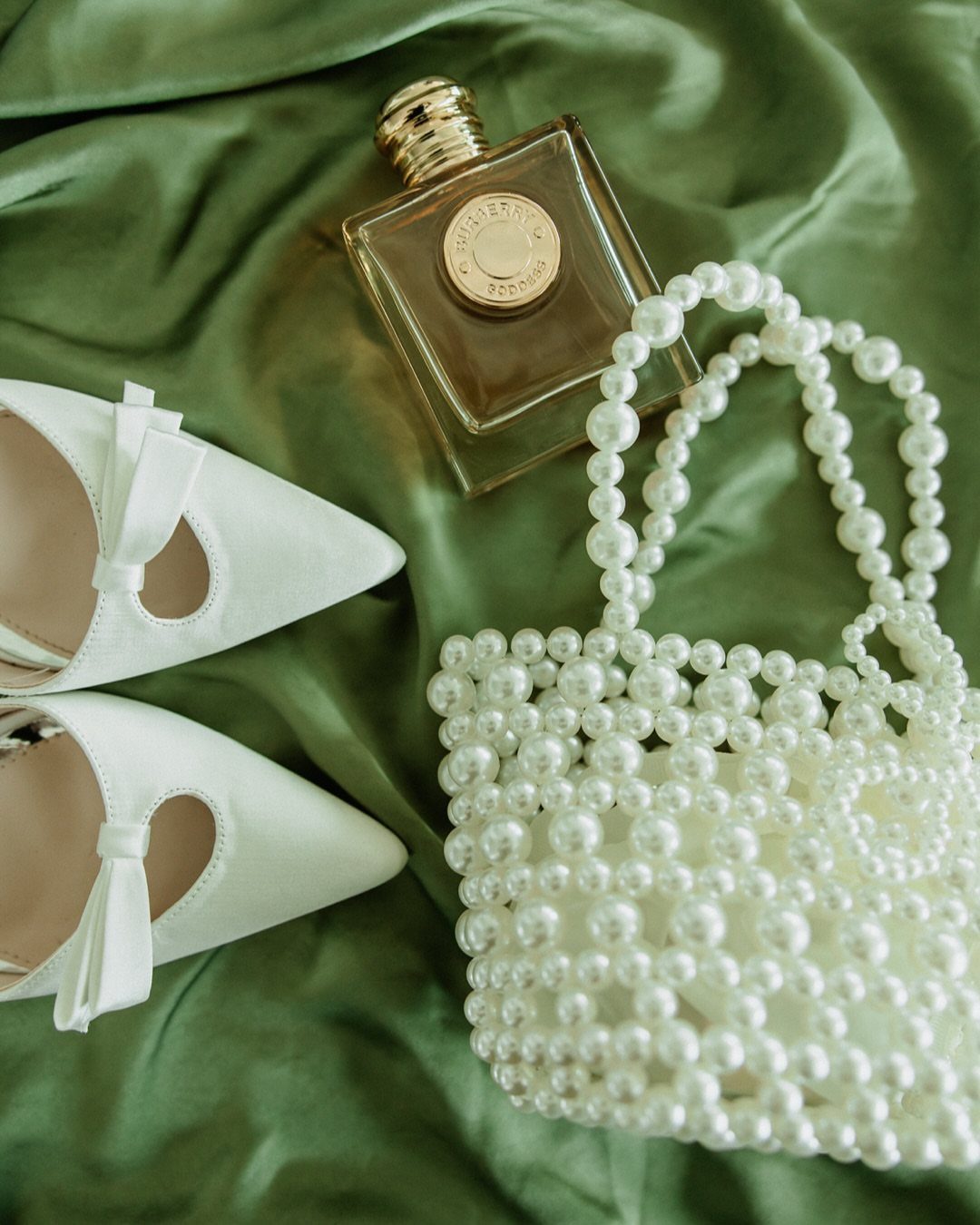
Detail photos are how your album keeps the parts you spent months choosing after the day itself is gone.
Gather everything the morning of: shoes, perfume, jewelry, invitation suite, any heirloom piece. Ribbon or a few stems from your florist turn the flat lay from clutter into composition.
A photographer who arrives well before you are dressed has time to style this without rushing your getting-ready shots.
If you are doing your own prep, assign one bridesmaid to keep the pile together and hand it over when they arrive.
7. Cake Cutting Photos
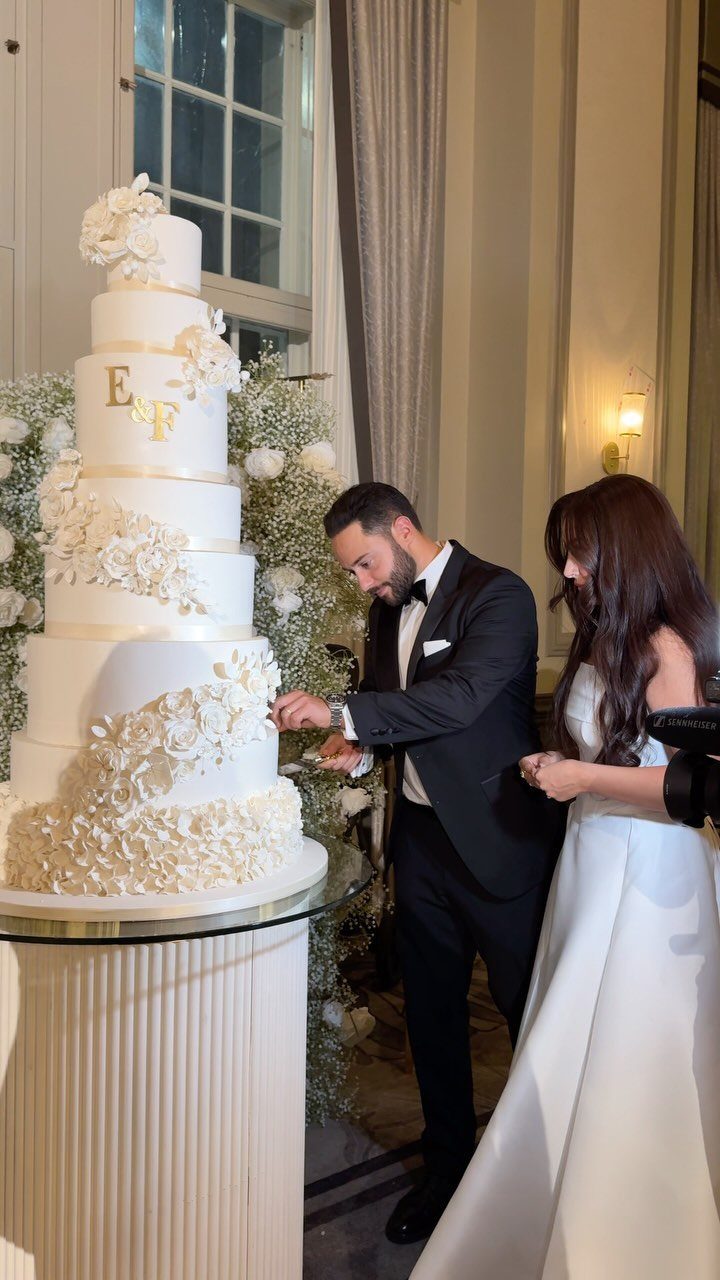
Cake cutting photos mark the last formal moment before your reception loosens into dancing.
Your photographer needs time to find the right light for this; a flash-flat shot of white icing against white dress is what happens when they do not.
Tell your DJ or band to pause the music and let guests gather close.
A simple slice keeps the moment clean, though going messy works if that fits you. Either way, agree beforehand so your partner does not misread the cue.
8. Candid Moments
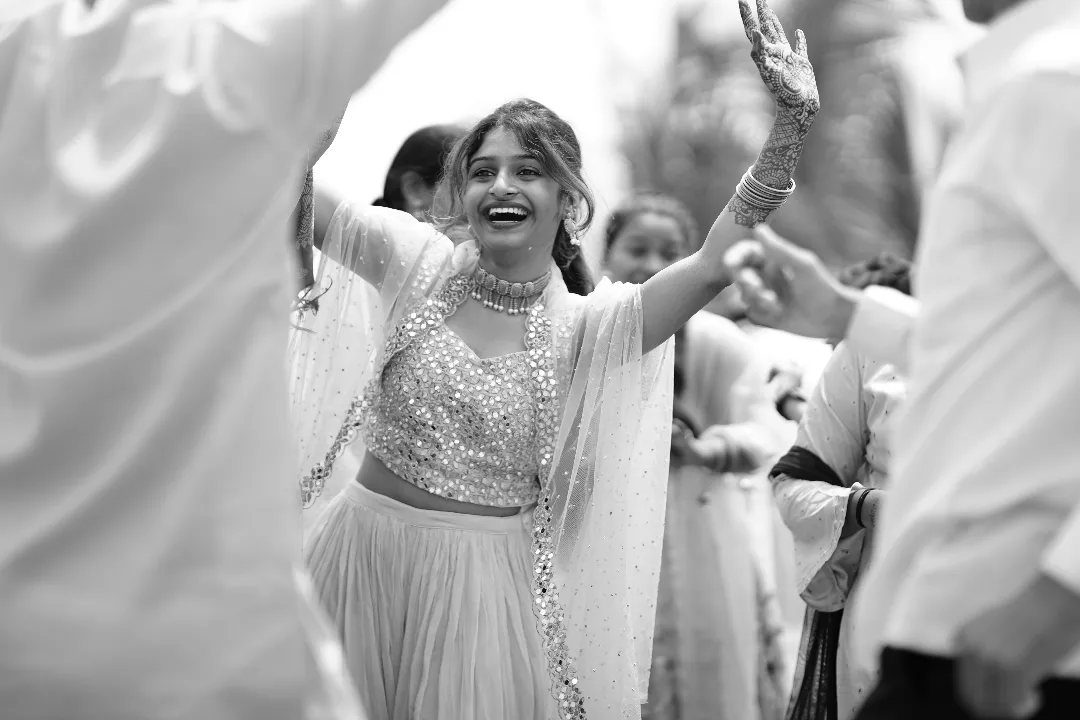
The best wedding albums hold the moments nobody staged: a bridesmaid mid-laugh, your uncle sneaking a pint, the late-night pizza that revives the dance floor.
A photographer who shoots candids as a priority catches what you miss while you are greeting guests.
If you feel stiff in front of a camera, this is your answer.
Tell your photographer which unscripted parts matter most to you. The trade is that some posed shots, the ones your parents frame, get less time.
9. Wedding Party Photos
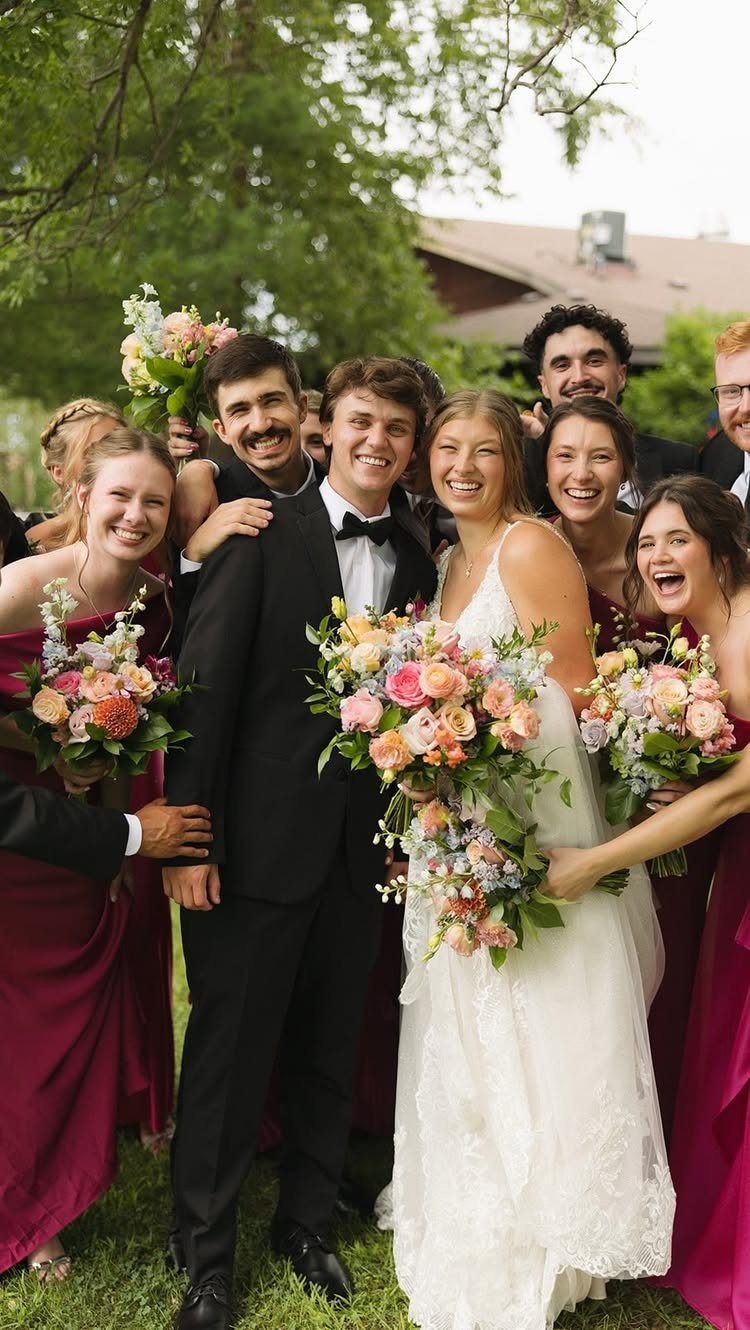
Wedding party photos are the one chance your whole group exists in one frame. Gather everyone right after the ceremony while outfits are still crisp and the emotional high carries over.
Your own palette works the same way, or you can keep it neutral.
Formal shots go fast; the fun ones, where people actually laugh, run longer. A bridesmaid with a phone list keeps stragglers from wandering off to cocktail hour.
10. Smoke Bombs
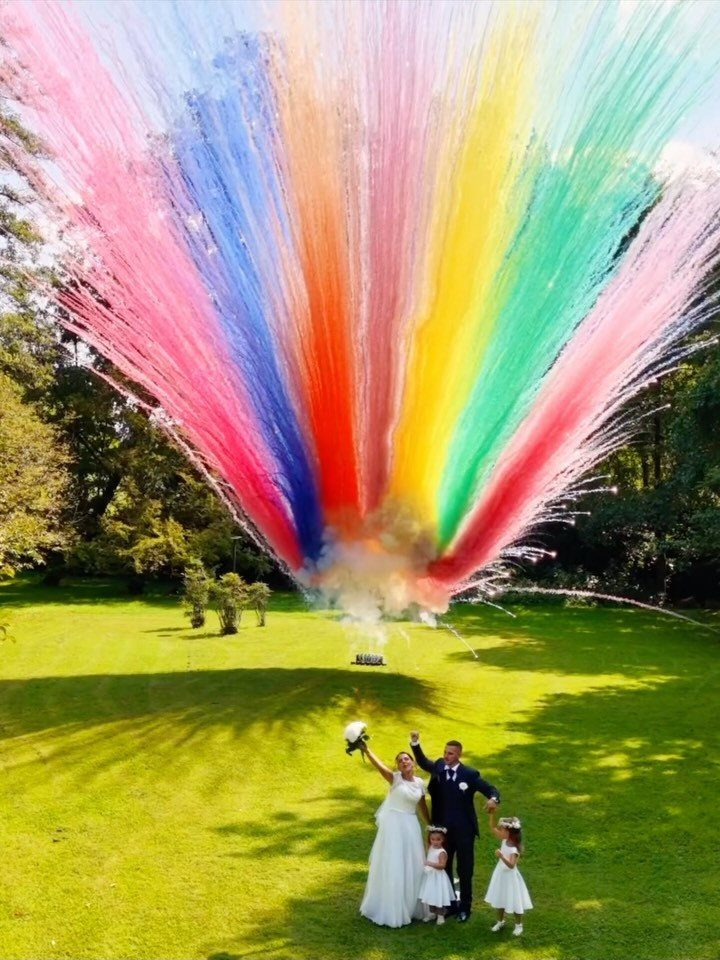
Smoke bombs turn an ordinary lawn into something your guests talk about for years. A rainbow burst is one way to go; single colors read cleaner if your palette is already set.
Check with your venue before you buy anything. Some outdoor spaces ban them outright, and the ones that allow them often require a specific distance from buildings.
Wind direction matters more than you think, so your photographer needs a test run, not a first attempt during your portrait window.
11. First Touch Photo
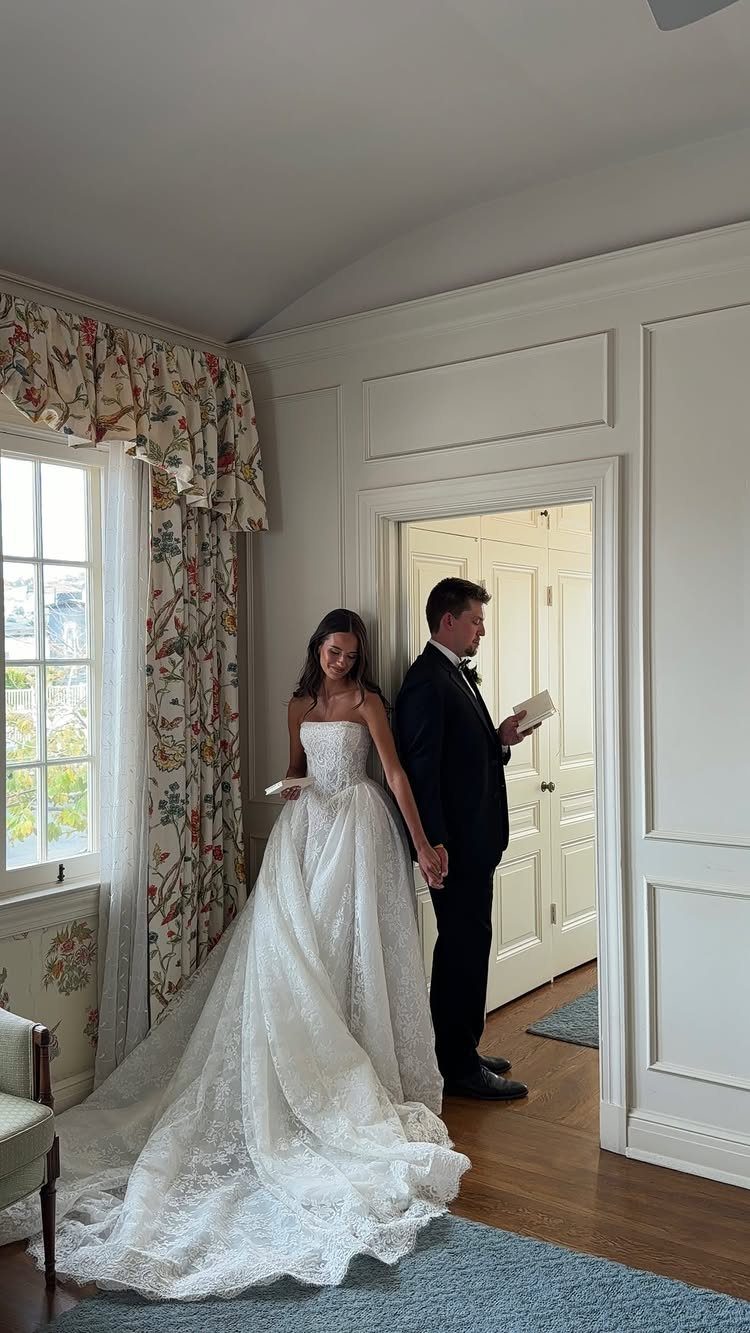
A first touch gives you the calm of a first look without breaking the aisle reveal. You stand back-to-back, holding hands around a doorframe, sometimes reading letters you wrote that morning.
Your own version needs only a private corner and something to separate you, not an ornate room.
A musical couple can sing or play through that gap instead. This trades the full sight of each other for a moment that still feels like yours alone, and it costs nothing from your schedule.
12. Urban Backdrops
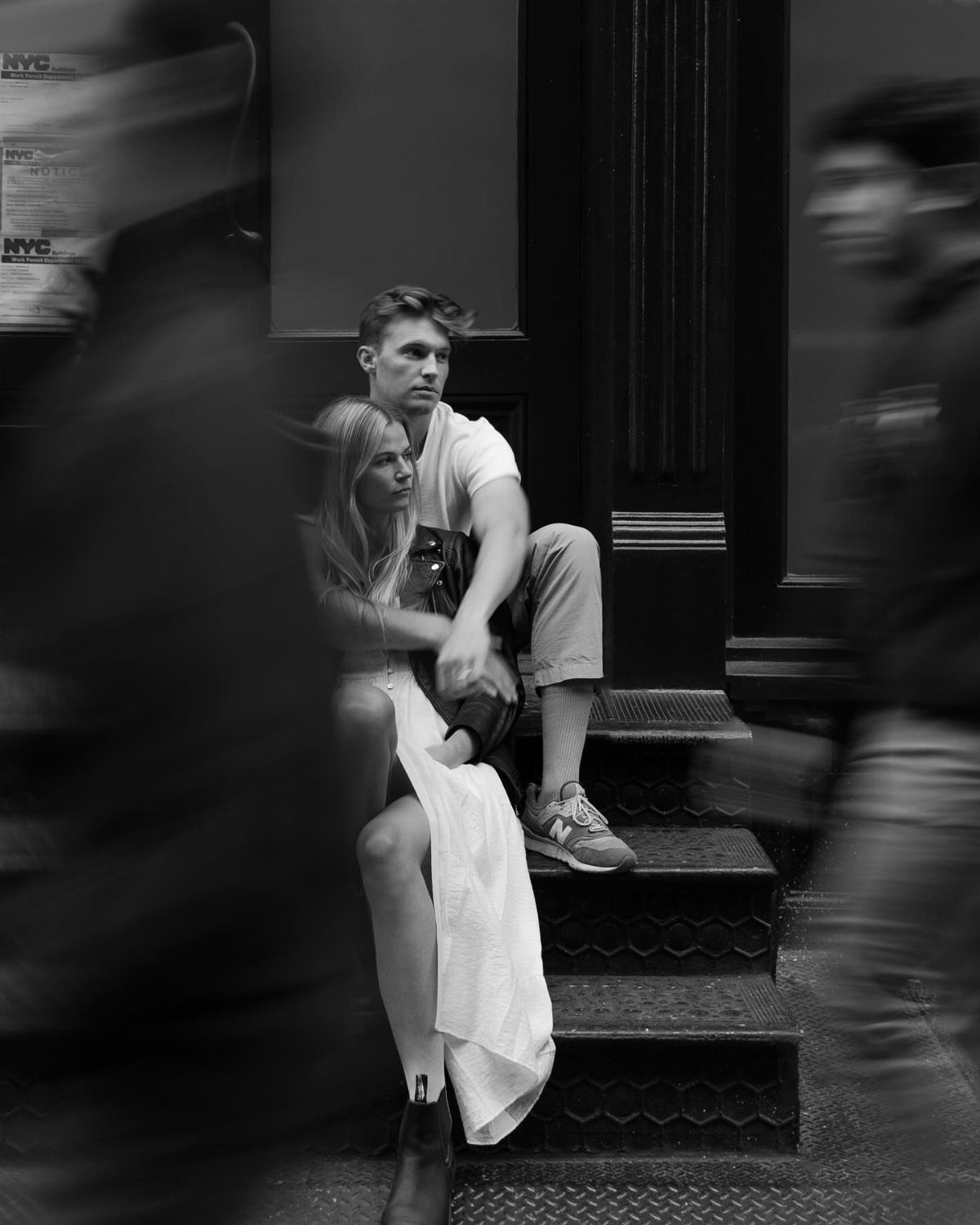
City streets give you texture that no decorated tent matches: grit, scale, the accidental framing of strangers passing through. City steps work for portraits, though permits for the spot are your problem to solve ahead of time.
Check whether your location requires a photography permit.
Most city governments post requirements online, and the fine for skipping one falls on you, not your photographer. Rush hour delivers motion blur in the background; early morning gives you the architecture alone.
13. The Dip Kiss
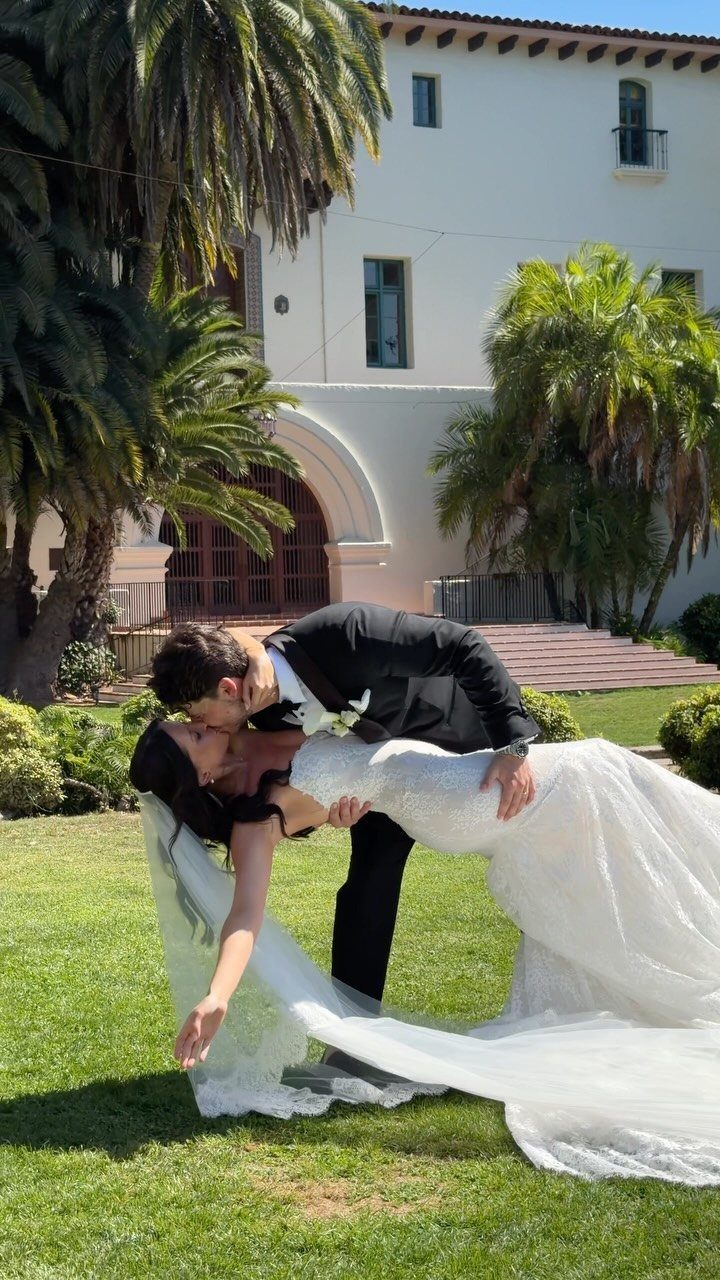
The dip kiss is the one pose that reads as staged but feels earned when the moment is already there. Your photographer catches it after the ceremony or during portraits, not as a cold start.
Weight distribution matters: the dipper needs a solid stance, the dipped needs to trust the lean.
A lawn like this one forgives a stumble; concrete or a dress train that drags does not. Practice once in flats if you are wearing heels.
14. Cold Sparkler and Fog Effects
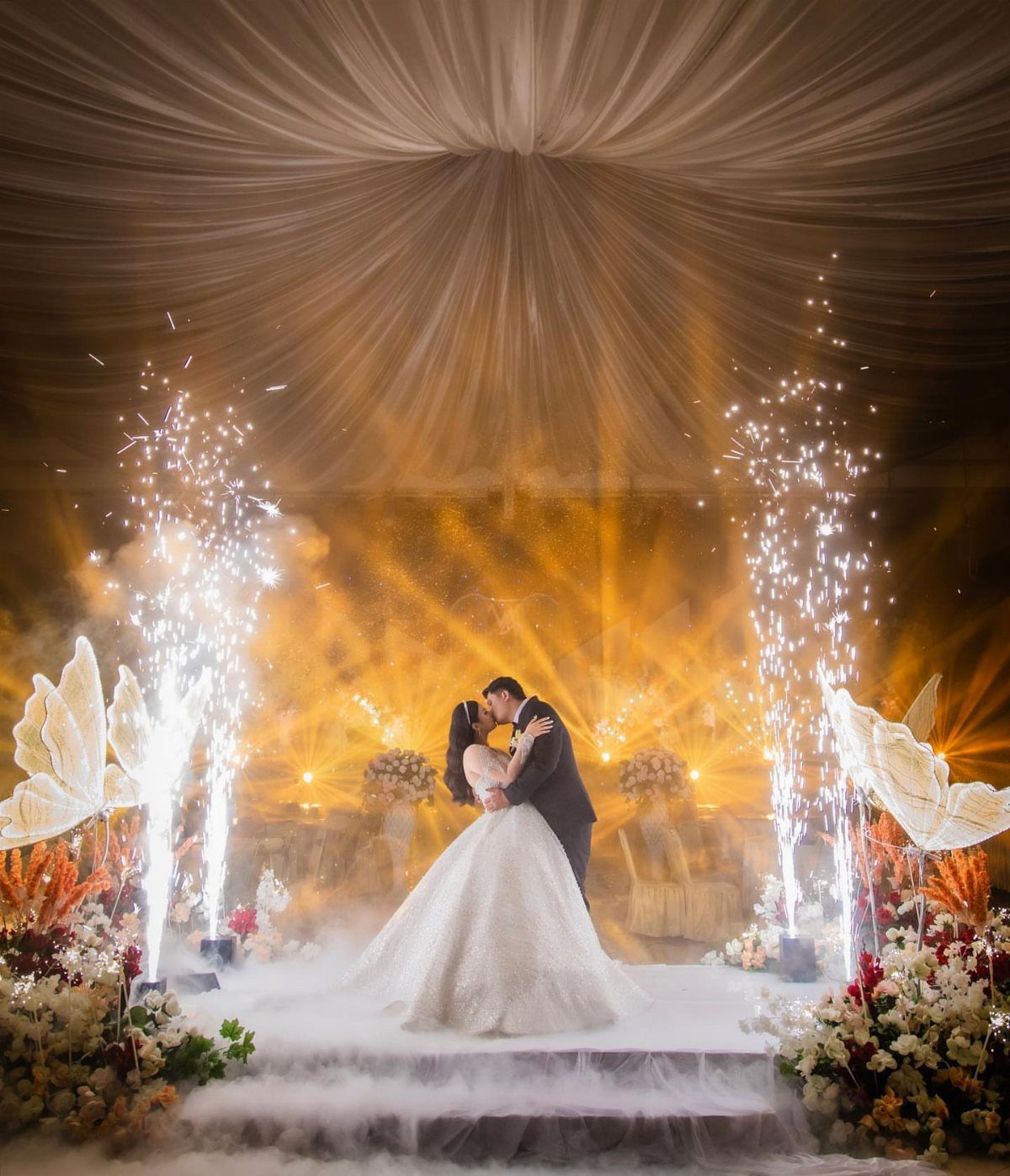
Cold sparklers and ground fog let you stage a sparkler exit indoors without the fire marshal’s concerns. The machines run on electricity, not flame, so venues that ban open sparklers often allow these.
Your photographer needs to white-balance for the gold light or everything goes orange. Fog machines eat fluid fast; budget for a refill if your first dance runs long.
This setup trades the raw energy of real sparklers for predictability, which is worth it if your crowd skews older or your exit is before full dark.
15. Vintage Getaway Car
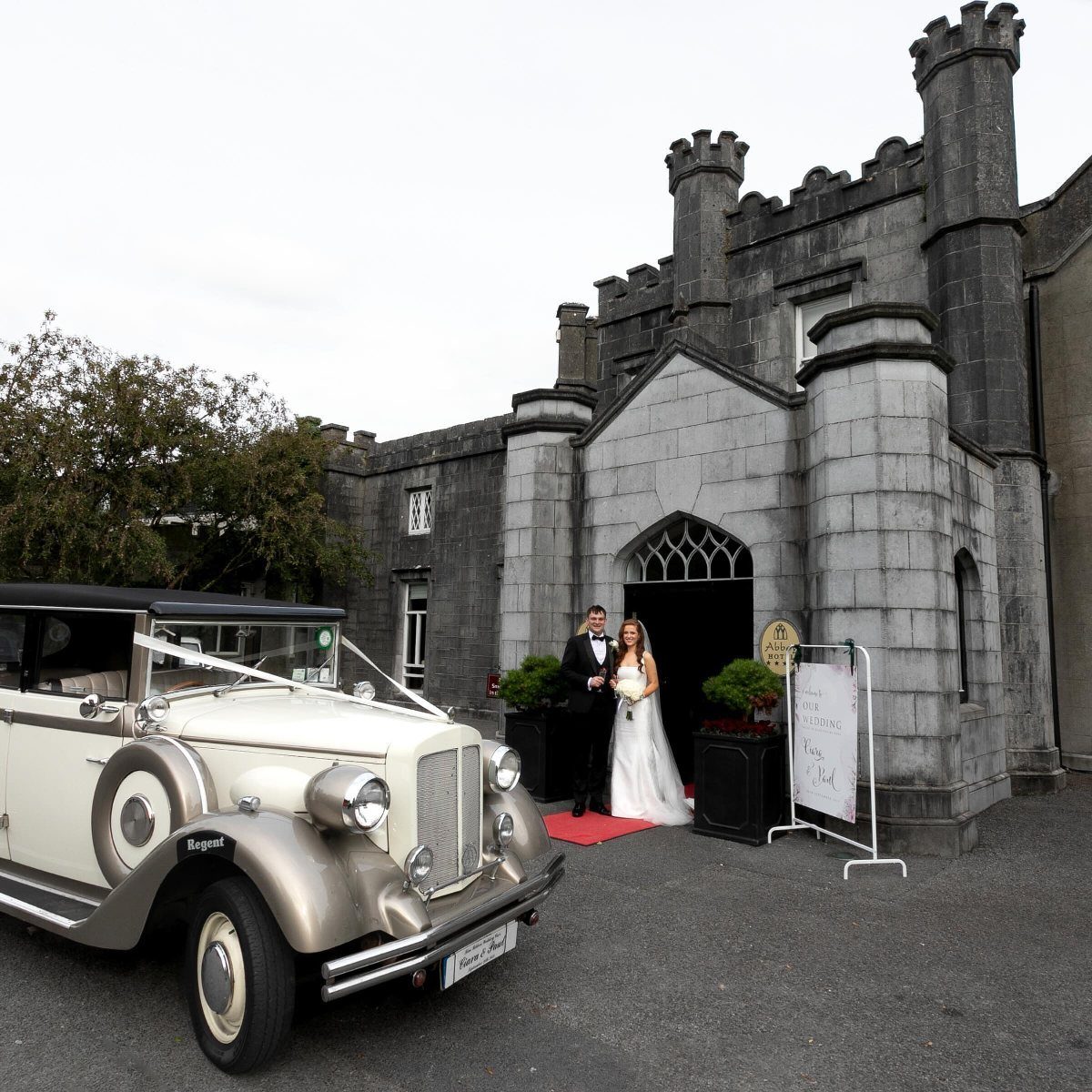
A vintage getaway car gives your exit the weight of an ending, even if you are only driving to a hotel nearby.
Book early: specialty fleets in Florida thin out fast during spring wedding season. Ask whether your contract includes idle time for portraits; the car can serve as a prop as much as transport.
If the budget is tight, a friend’s restored vehicle with a detail and a tank of gas works the same way for the album.
16. Scenic Mountain Backdrop
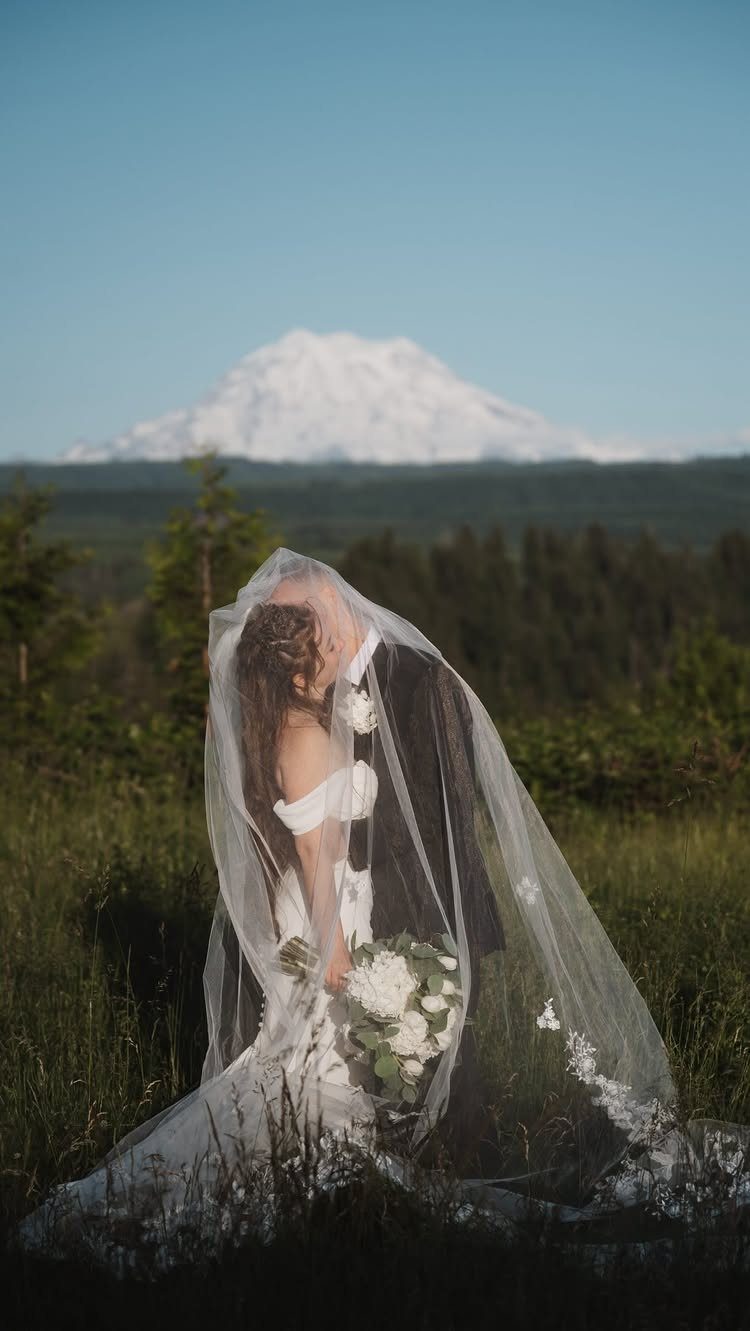
A mountain backdrop does the work for you: scale, color, a reason to keep the couple small in frame. This one needed travel to reach, which is the real cost, not the setup itself.
Check your date against snowmelt and wildfire season.
A June meadow looks different from September dust, and smoke haze ruins what you came for. Local photographers know the hour when the light hits the peak; build your portrait window around theirs, not the other way around.
Choosing the Right Photographer
Start with the work, not the name.
Scroll through full galleries, not just highlight reels on Instagram, because every photographer posts their best 10 shots. A second shooter costs more but covers the getting-ready rooms on both sides and catches expressions from angles one person cannot reach.
Ask whether they bring one.
Some photographers reserve a second shooter for larger weddings; others build it into every package. If your budget is tight and your guest list is under seventy-five, one skilled photographer who moves fast may cover it.
Once your guest list grows past the size of an intimate dinner, the math changes; one photographer cannot be in two places at once, and a second shooter becomes less a luxury than a way to keep the day from slipping past uncaught.
Style alignment matters more than personality in the consultation, though both help. A photographer who shoots dark and moody will not turn light and airy because you asked.
Their editing is baked in. Pick someone whose finished work already looks like the album you want.
Planning for Lighting
Schedule portraits for the hour before sunset when you can. In Gainesville, that golden window shifts from roughly 7:30 PM in June to 5:15 PM in December, so check your date rather than guessing.
Midday sun is the enemy of open eyes and intact makeup.
If your ceremony lands at 2 PM in August, scout shade near the venue for family formals. A spot with even, reflected light flatters skin more than dappled tree cover, which reads as spots in print.
Indoor ceremonies need the most planning. Ask your photographer whether they bring continuous light or bounce flash; churches with tall windows often read as caves in camera.
The fog and cold sparkler effects from the list need white-balancing for their gold cast, or your skin goes pumpkin. Your photographer should handle this, but confirming beforehand beats discovering in post.
Creating a Photo Checklist
Write your must-haves in 3 groups: people, things, and rooms. People covers formal combinations; things covers rings, shoes, paper goods, and any heirloom you brought; rooms means wide shots of the ceremony and reception before guests enter.
Send the list early enough that your photographer has time to read it, not the morning of when everyone is already moving fast.
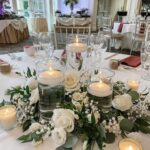
A photographer needs time to slot your priorities into the schedule they are already building. Detail shots of table settings, for instance, only happen during the gap between setup and guest arrival.
Do not list every possible shot. A checklist with eighty items guarantees rushed execution and a stressed photographer.
Pick fifteen to twenty that you would notice missing. The candids, the unplanned moments, happen when your photographer is not working down a clipboard.
Incorporating Personal Elements
Your photos carry more weight when they include objects that existed before the wedding itself.
A ring from your grandmother, the street where you first lived together, the song lyrics you printed for place cards: these become reference points that keep the day yours long after the flowers have dried.
The location list already covers meaningful backdrops. For objects, gather them with your detail pile the morning of.
A photographer cannot shoot what they do not know exists. Tell them the story in one sentence; the caption writes itself later.
Family heirlooms need a backup plan.
Outdoor portraits with a borrowed pendant risk loss or damage. Your photographer can shoot it on a flat lay first, then you wear the replica for the rest of the day.
Frequently Asked Questions
What are some good ideas for wedding pictures?
Movement shots like walking together, first look or first-touch moments around a corner, and candids of guests mid-laugh or sneaking a pint.
Ask your photographer to prioritize unscripted moments if you feel stiff posing, and tell them which backdrops matter to you, whether that is a field, a city street, or the place you first lived together.
Is $4000 a lot for a wedding photographer?
A second shooter is a cost to weigh against how many people you need in frame at once, not a fixed line item.