
Church wedding decor runs from satin ribbon bows on pews to cherry blossom trees arching overhead, and the deciding factor is not your budget but your church’s rules.
Some churches ban adhesives, open flame, or weight on floors, so the first item on this list is checking your church’s rules before you buy anything.
The call you make to the church office, checklist in hand, eliminates some ideas and shapes everything that follows.
1. Church Wedding Signs
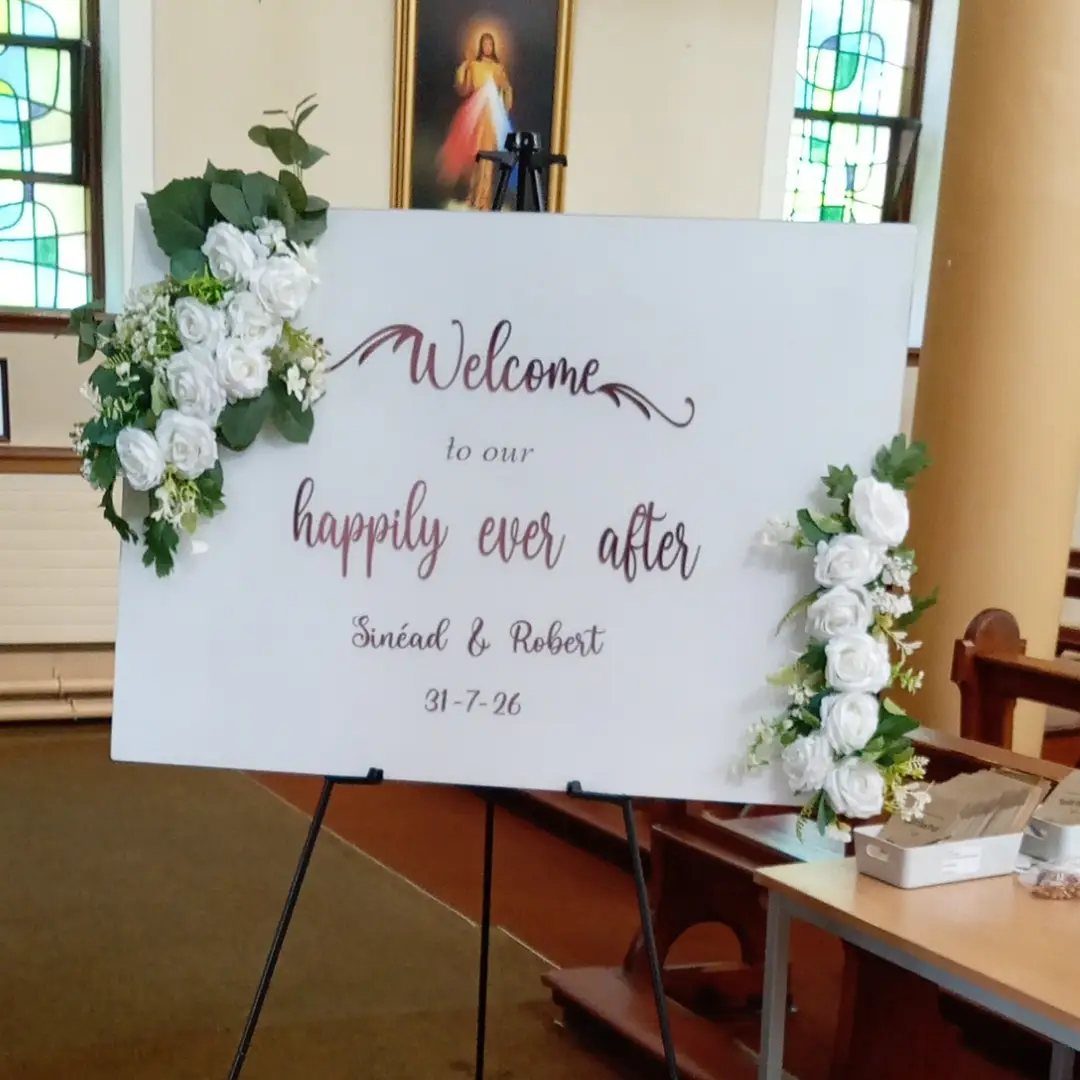
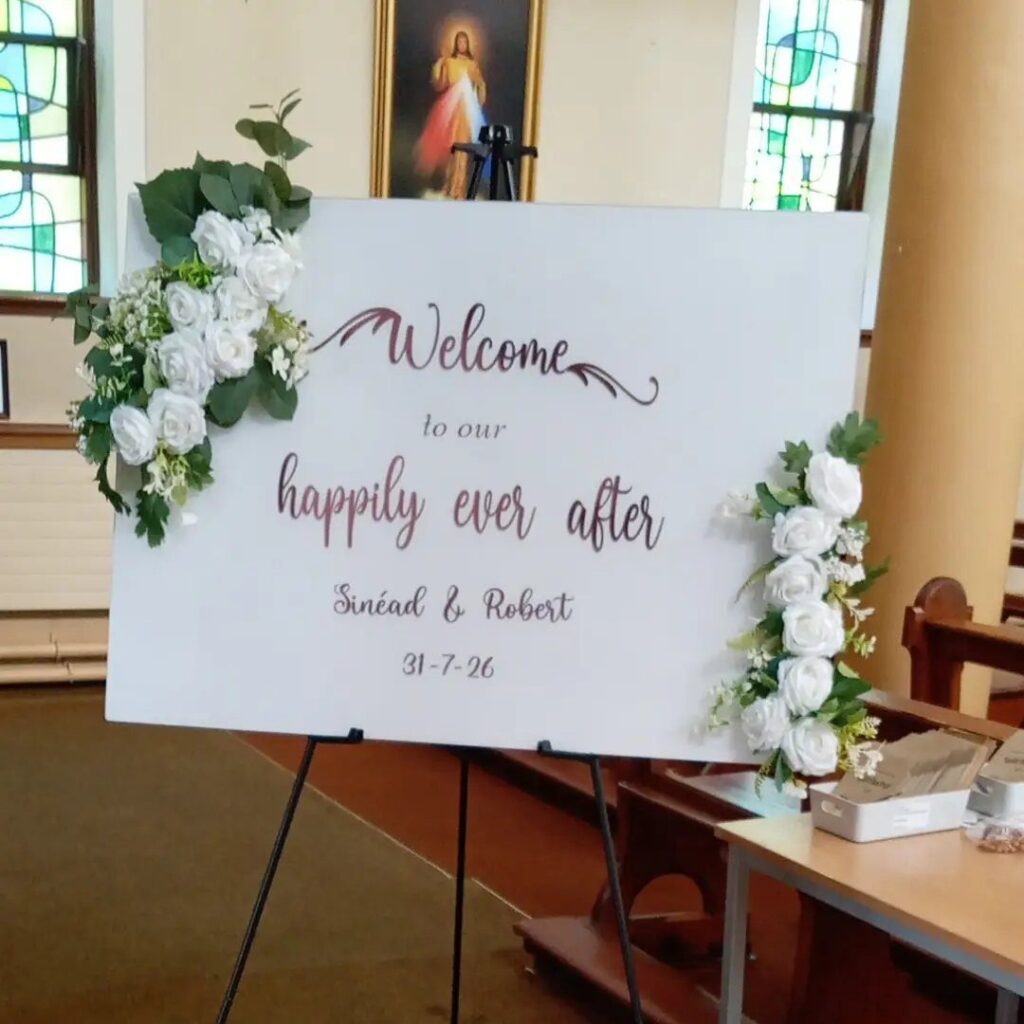
Church wedding signs do more than greet guests. They point the way to seats, restrooms, and the reception, which matters in buildings with odd layouts or when elderly relatives arrive early and need to settle.
I like the couple who kept theirs simple: one welcome sign, one seating direction, and a favorite verse printed plain. The verse sat near the program table, so guests read it while waiting.
Check with your church before ordering anything with stands or easels.
Some require freestanding pieces, others ban them near certain walls. Ask early, design around the answer, and you will not be reprinting the week before.
2. Ribbons on Pew Handles
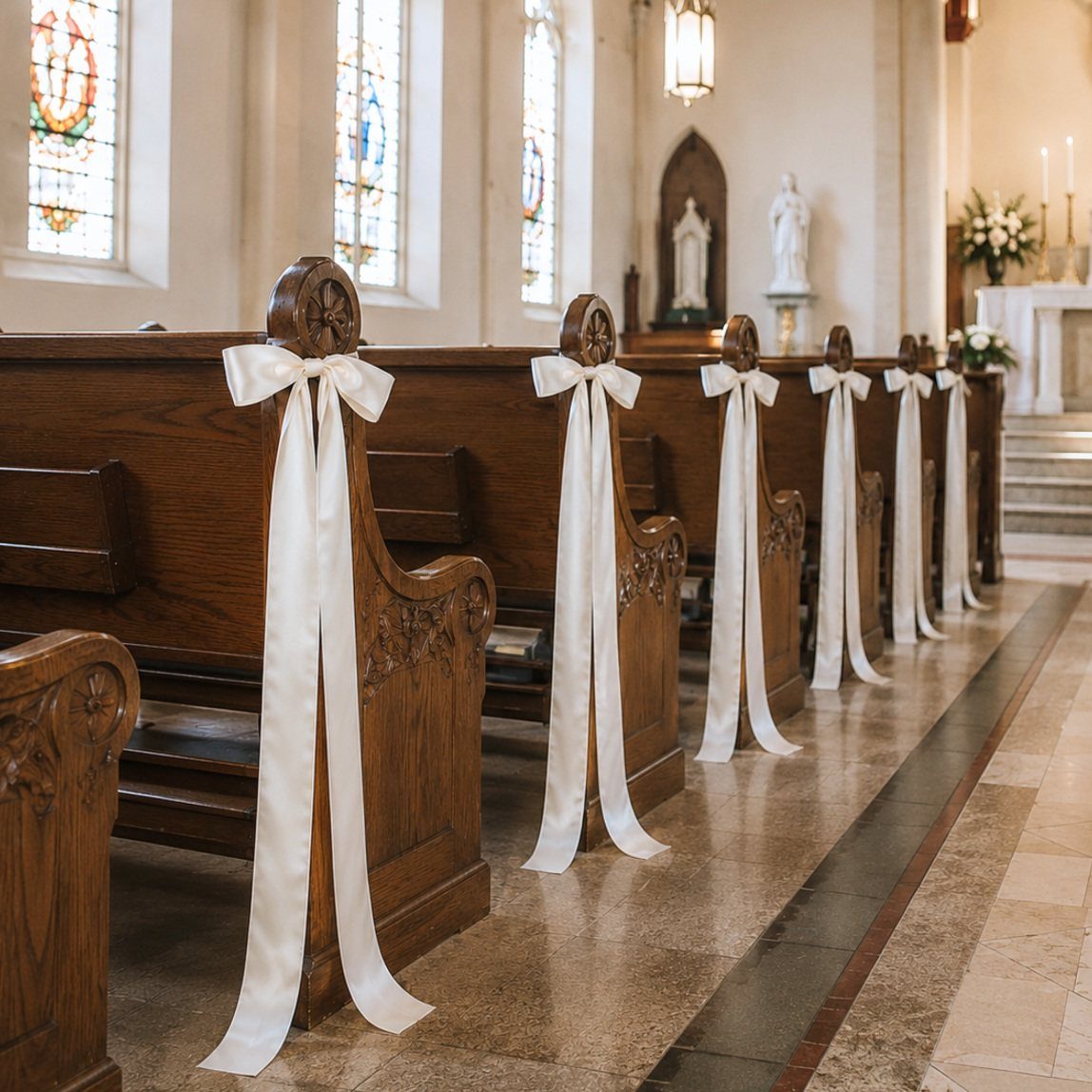
Satin ribbon bows give you the most look for the least work. Wide white satin with long tails ties neatly where the pew end curves.
A bow on every pew handle, tied neat and small, runs the full length of the aisle.
The rhythm carries the eye down the aisle without cluttering the space, and your budget stretches further. Wind matching ribbon around pillars if the church has them; the material carries, and the look holds together.
Satin catches light even in dim churches, which is part of why it photographs well.
Matte ribbon would disappear in the same space. Choose your finish with the church’s lighting in mind.
3. Tealights and Candles
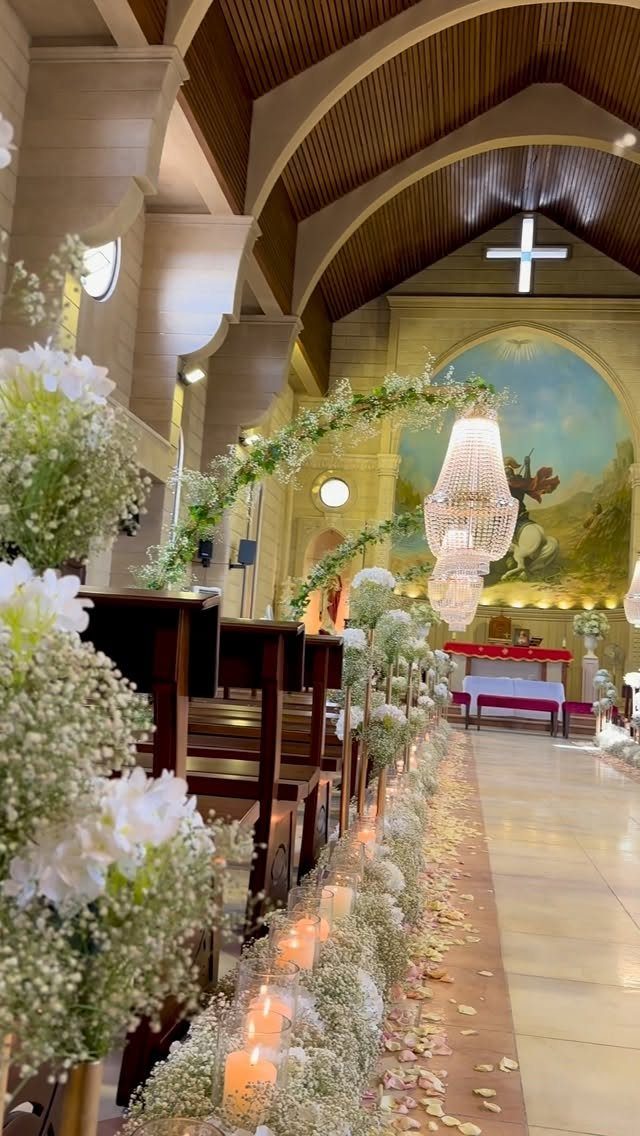
Real flame changes a church’s feel, but many venues prohibit it. Battery-operated tealights in glass holders give the same warm flicker without the negotiation, and they stay lit through a long ceremony.
Dot them along windowsills where they reflect off glass, or cluster them in lanterns if the church allows.
Pillar candles mixed with florals down the aisle are what most couples picture; electric versions now mimic flame closely enough that guests rarely notice.
Check your church’s policy first.
If open flame is restricted, ask specifically about enclosed lanterns versus loose candles. The distinction matters to them, and it shapes what you rent.
4. Meaningful Tribute Corner
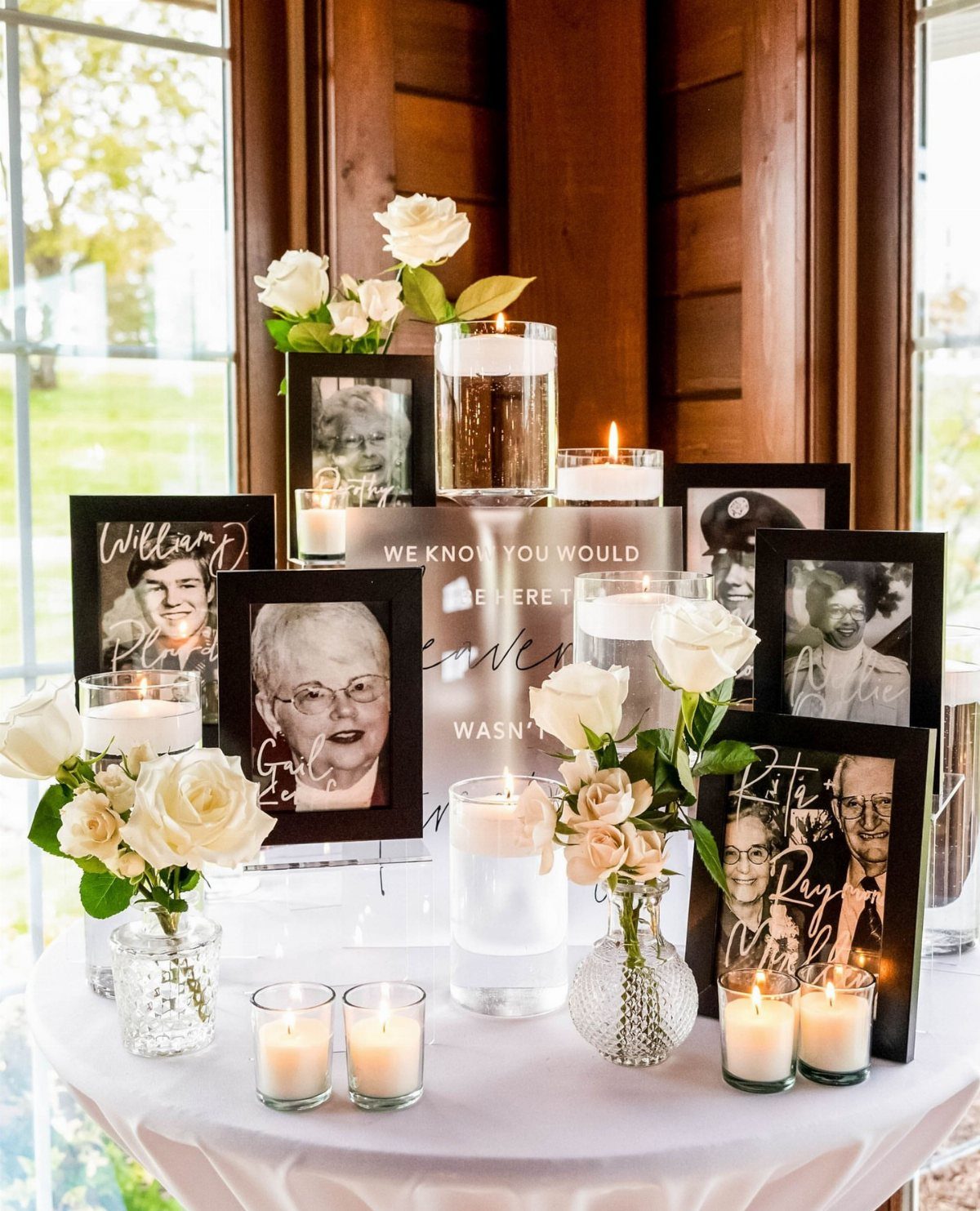
A small table near the entrance, set with framed photos and a single vase, lets guests pause without turning the ceremony into memorial service.
Black-and-white portraits, white roses kept low, and a brief acrylic sign make a quiet corner that does not compete with the ceremony.
I would keep the text short. A line or 2 suffices; this is not the place for paragraphs.
One framed photo per person, one flower type, and no more than three candles if flame is permitted. Electric votives work here too, and they remove the worry of a draft from the door.
The tribute sits apart from the main flow so guests choose to engage. That restraint is what makes it land.
5. Personalized Church Aisle Runner
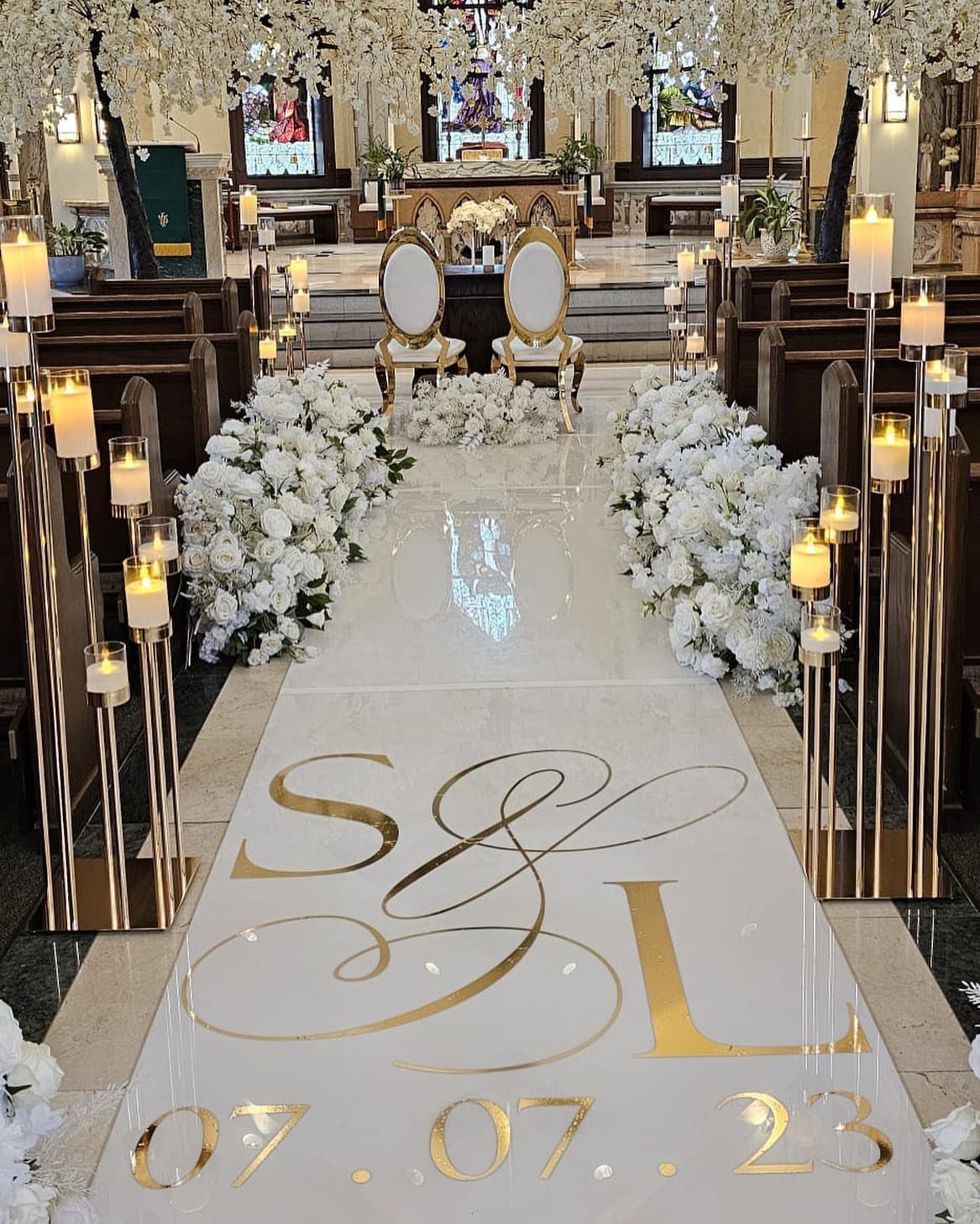
A monogrammed aisle runner marks the path in one clean gesture. Glossy white with gold lettering, initials and date centered, flanked by tall arrangements and candlesticks that repeat the gold.
Some prohibit adhesives or tapes that leave residue; others restrict loose petals, which you might pair with the runner or use instead. The runner itself needs securing at both ends so it does not shift when the wedding party walks.
I prefer runners in white or ivory that read as part of the architecture rather than bold colors that fight the space. The church already has its own palette; work with it.
6. Church Aisle Floral Arch
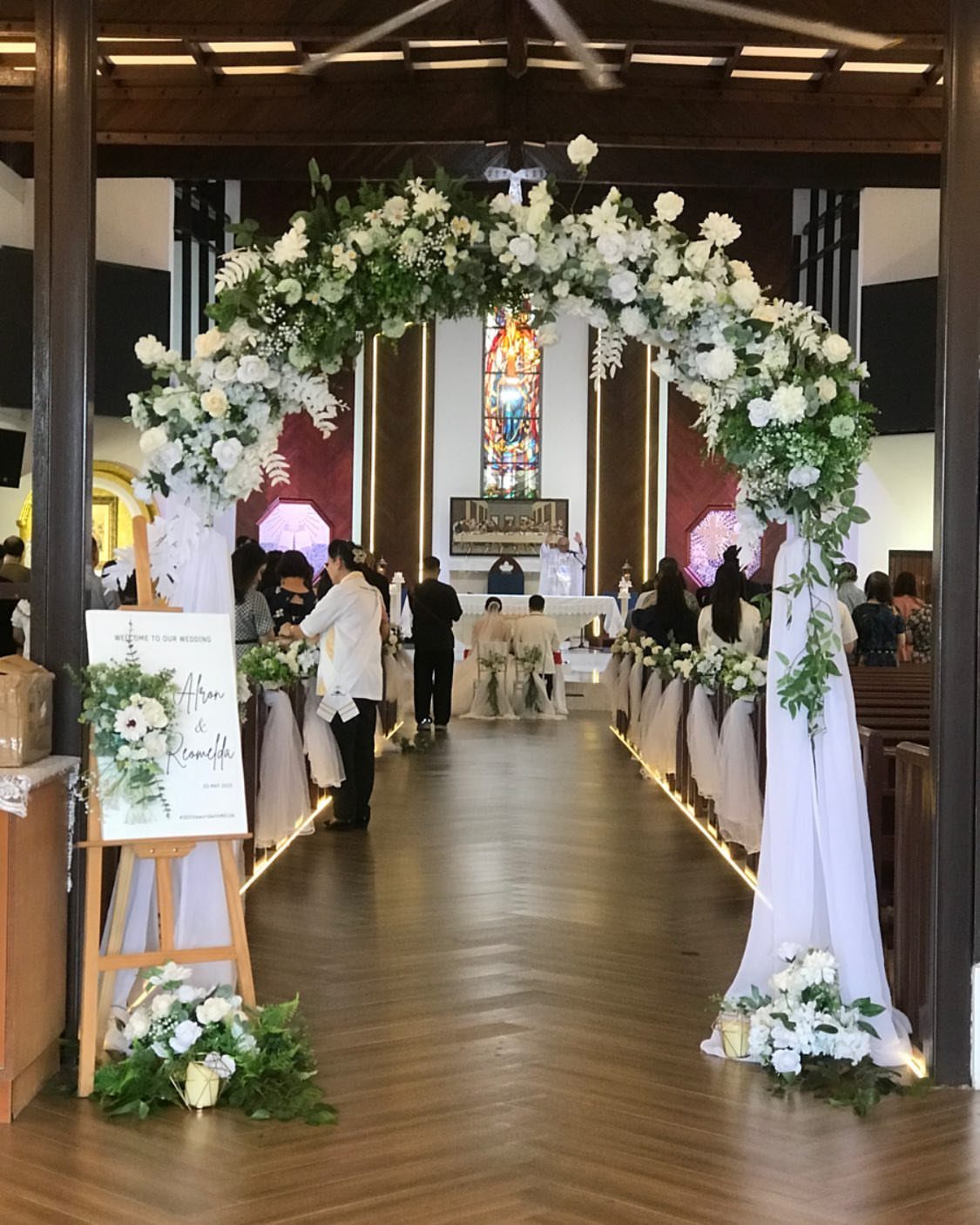
A floral arch at the aisle entrance frames the procession and gives guests their first view of the ceremony space through greenery and bloom. White flowers with dense greenery, freestanding at the threshold rather than attached to anything permanent.
Tape down or weight every stand, and leave the aisle width you started with.
The arch sits to the side or above the aisle, not in it; train and veil need room, and a bridesmaid catching a stand mid-procession ruins the moment. Where flame is prohibited, skip candle accents near greenery.
Ask your florist about foam-free builds if the church has environmental restrictions. More venues do now, and the question shows you have done your homework.
7. Cherry Blossom Pew Trees
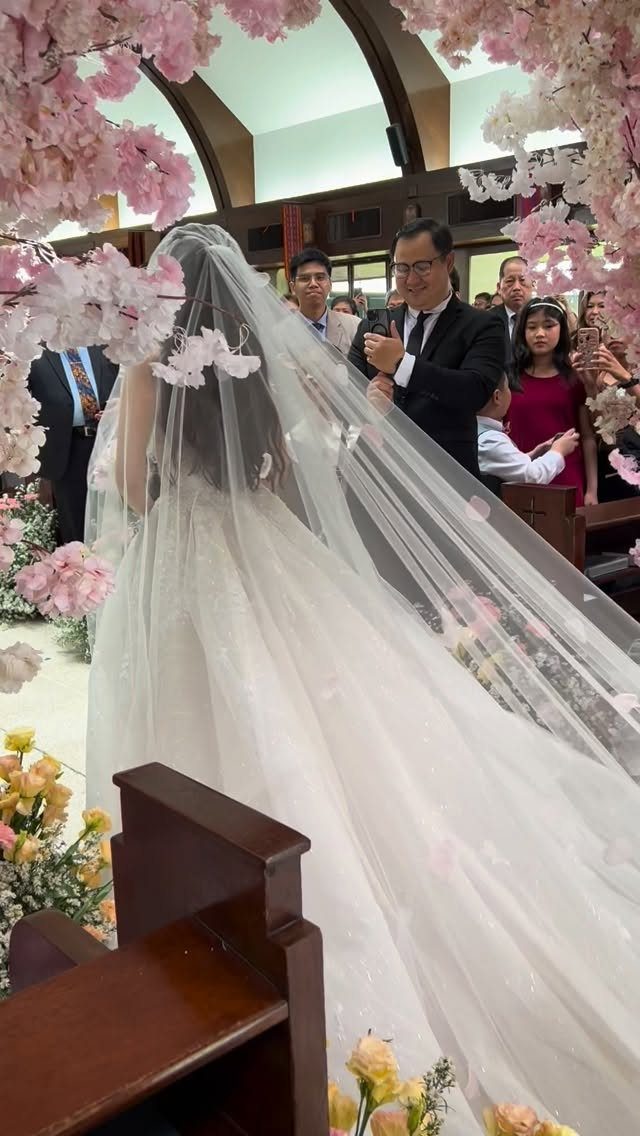
Cherry blossom trees turn a church aisle into an indoor garden. Tall pink arrangements sit at intervals between pews, their branches arching overhead so the bride passes through color rather than past it.
These need floor space you may not have.
Narrow aisles and fixed pews leave no room for weighted stands, and the trees block seated guests’ view of the ceremony. Check aisle width against stand diameter before committing.
I would reserve this for churches with generous spacing and high ceilings. The scale demands it, and cramped placement looks apologetic rather than grand.
8. Decorated Couple Ceremony Chairs
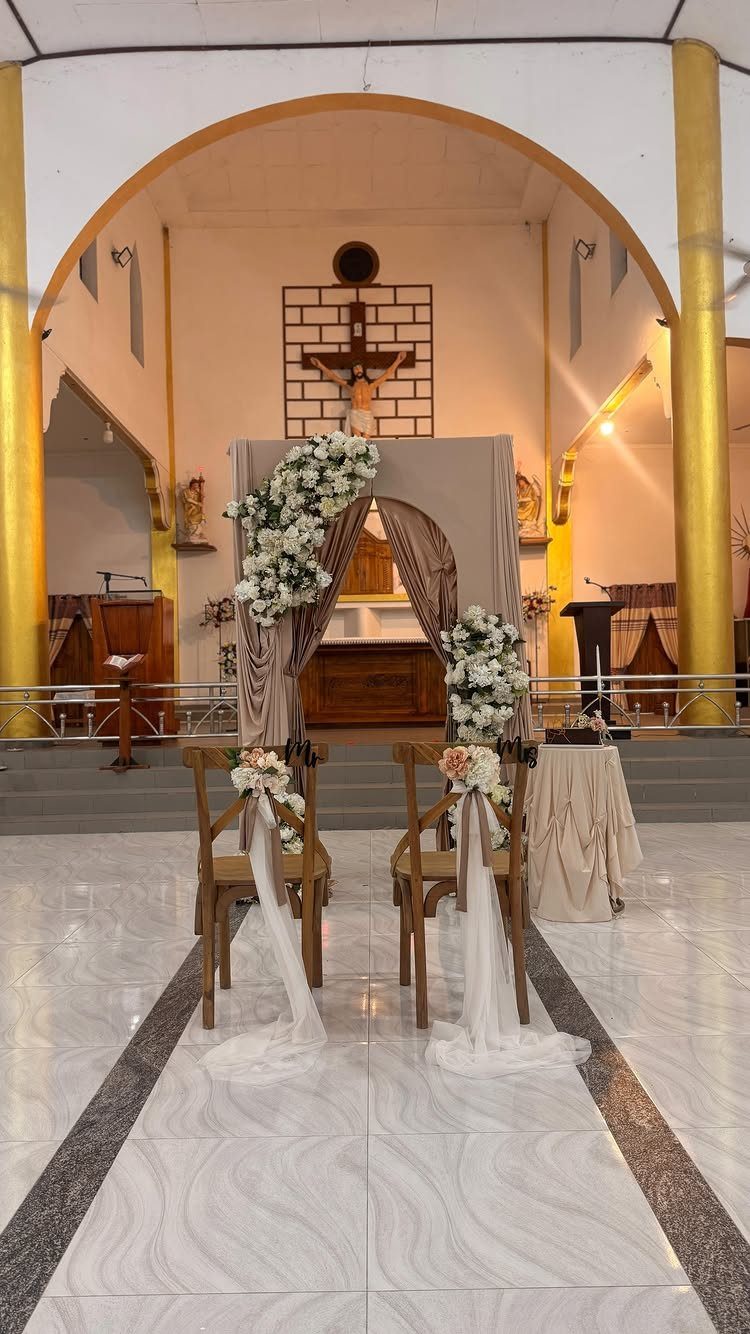
2 wooden cross-back chairs, marked "Mr" and "Mrs," give the couple a defined spot within the church’s existing seating. White fabric drapes the backs, anchored by small floral arrangements that tie to the altar arch behind.
The chairs face forward like the guests’, not each other, which keeps the couple in the ceremony rather than a private conversation.
Signs should be readable from the aisle but not shout; painted wood or acrylic on ribbon works better than anything with its own stand.
Ask your church whether you may swap their chairs or must cover them. Some require the couple to use provided seating; a drape over the existing chair backs adapts the idea without the swap.
9. Floral Pew Markers with Fabric
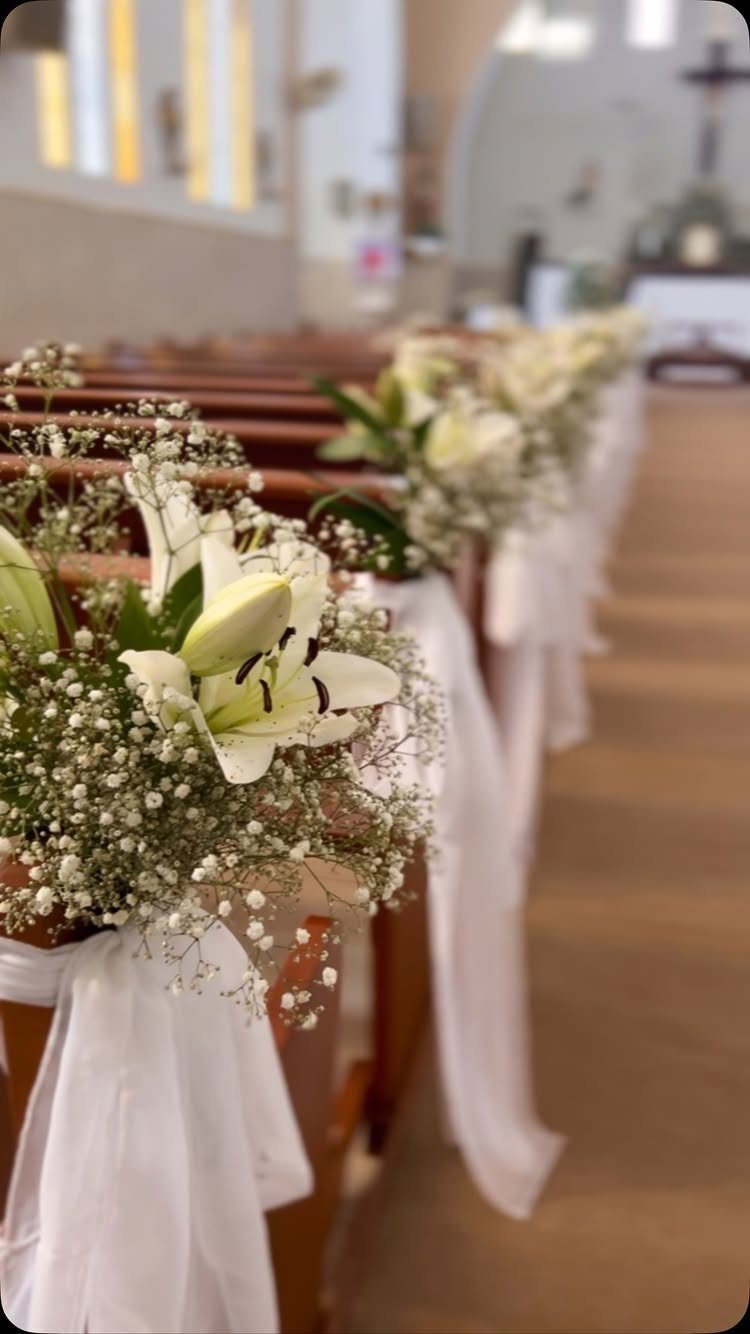
White lilies and baby’s breath, gathered small and tied with trailing fabric, mark each pew down the aisle. The fabric hangs to knee height, moving when guests shift or air circulates.
Alternating rows keeps the look spare, which suits a church that already has stained glass or carved wood you do not want to compete with. Every pew would feel like a flower shop; every third loses the rhythm.
Secure arrangements with pew clips or weighted hooks, never adhesive that warms with body heat and slips. Check whether your church permits fabric near candles; even battery versions can tangle in long ribbons during procession.
Check Church Decoration Rules
Call your church’s office before you buy a single ribbon or sign. Ask which spaces are open to decoration, which materials are permitted, and how many hours you have for setup and teardown.
Some churches limit decorating to the morning of; others let you in the night before. That window shapes everything you can attempt.
Ask specifically about adhesives, standing water, open flame, and weight on floors. The answers will eliminate some ideas and save you from last-minute substitutions.
Bring a written checklist to the final walkthrough, covering entrance, aisle, pews, altar, and cleanup. Assign each area to one person so nothing gets doubled or missed.
Test battery lights before you pack them. Bring boxes for quick collection after the ceremony; most churches need the space clear within an hour or two.