
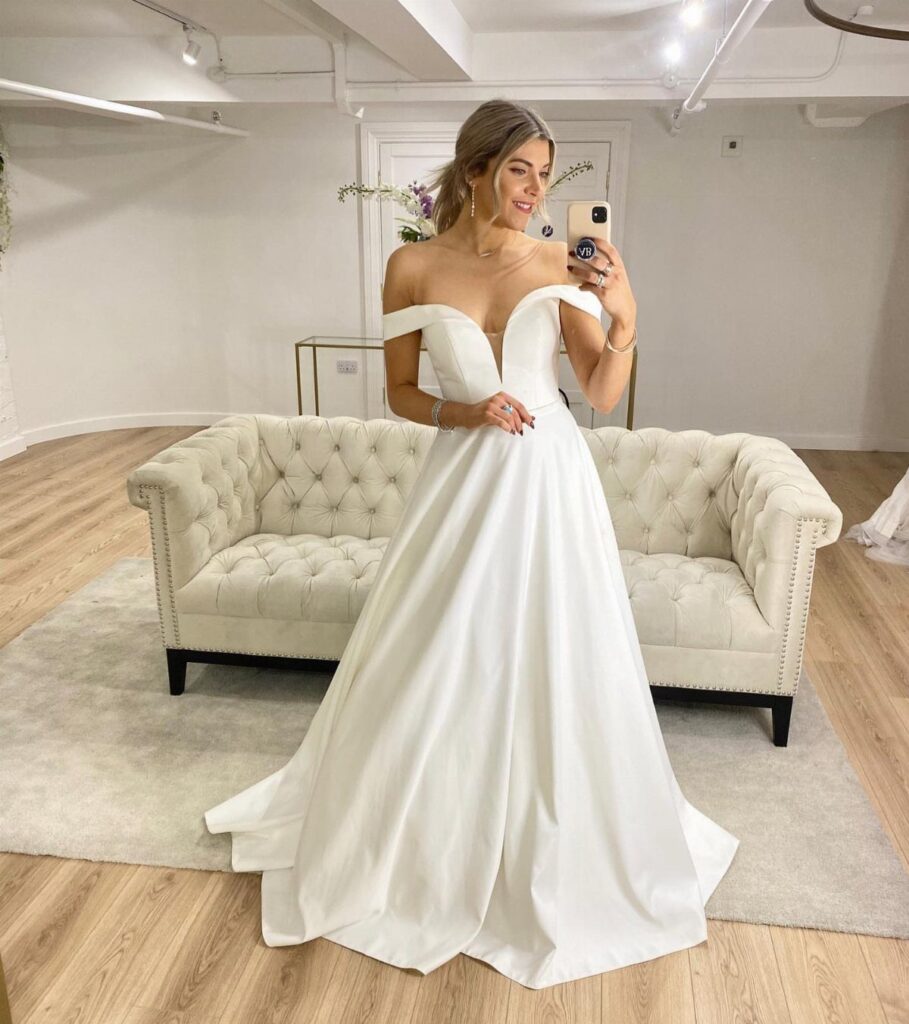
The cream white wedding dresses below run from a satin gown that catches the light to a simple lace shift, and the real decision usually comes down to fabric weight, skirt shape, and how much detail you want carrying down the aisle.
A satin gown holds that warmth in a candlelit chapel, while chiffon keeps it soft under afternoon sun, and the dresses below show where each fabric lands in a real lineup of cream white options.
1. Cream White Satin Gown
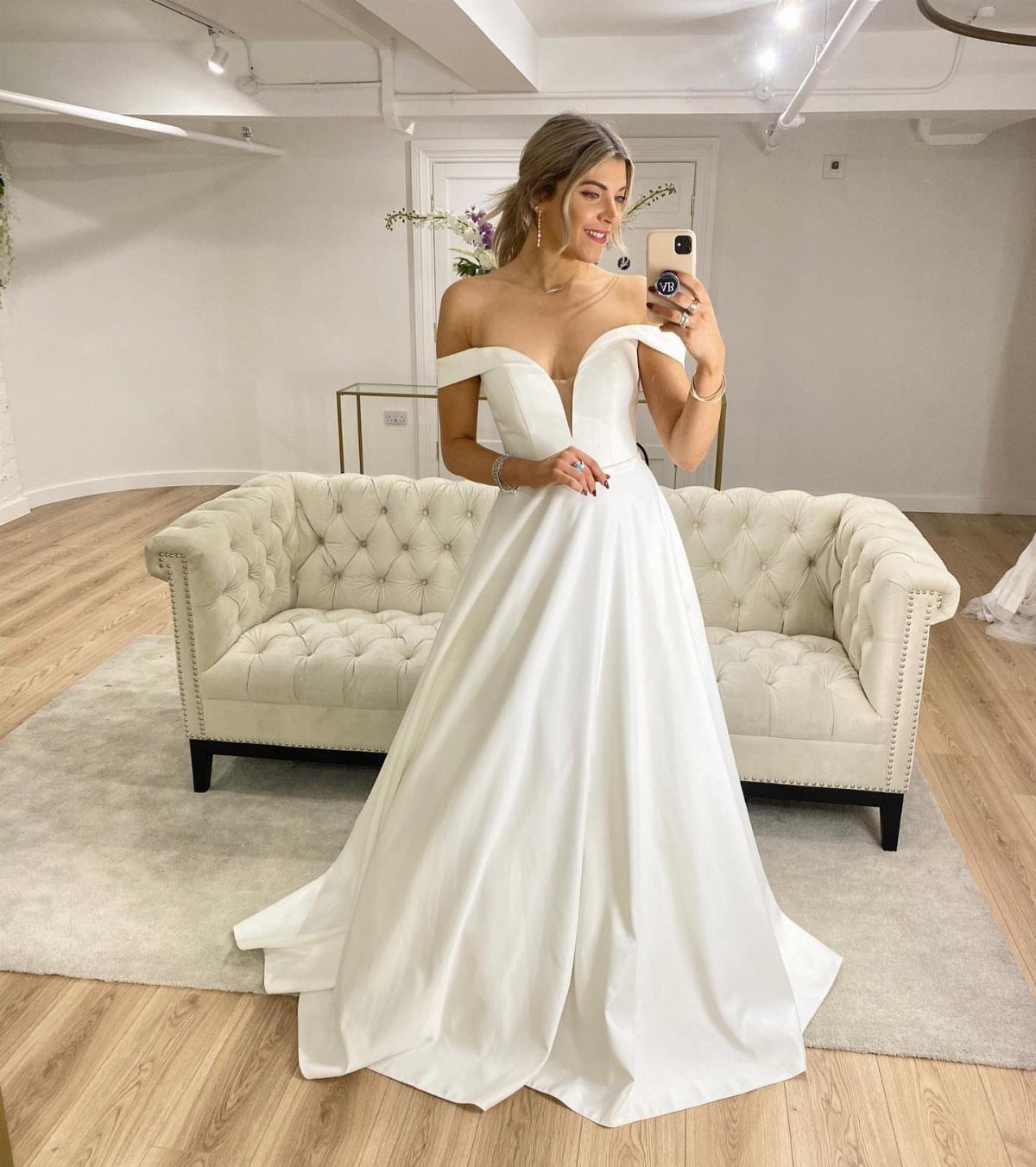
Satin in cream white reads warmer than stark white under reception lighting, and the fabric’s natural sheen does the work of jewelry.
A strapless sweetheart neckline with a pleated bodice gives structure without boning that digs in after hour three.
The draped skirt falls clean, no crinoline required if you prefer lighter weight. I would ask the salon about a halter version with a keyhole back; the same satin reads more modern and leaves shoulders free for movement.
Off-the-shoulder sleeves suit narrow frames but can slip during dancing, so test the grip in your fitting.
Dry clean only, budget for that in your total.
2. Cream White Lace Bodice and Tulle Skirt
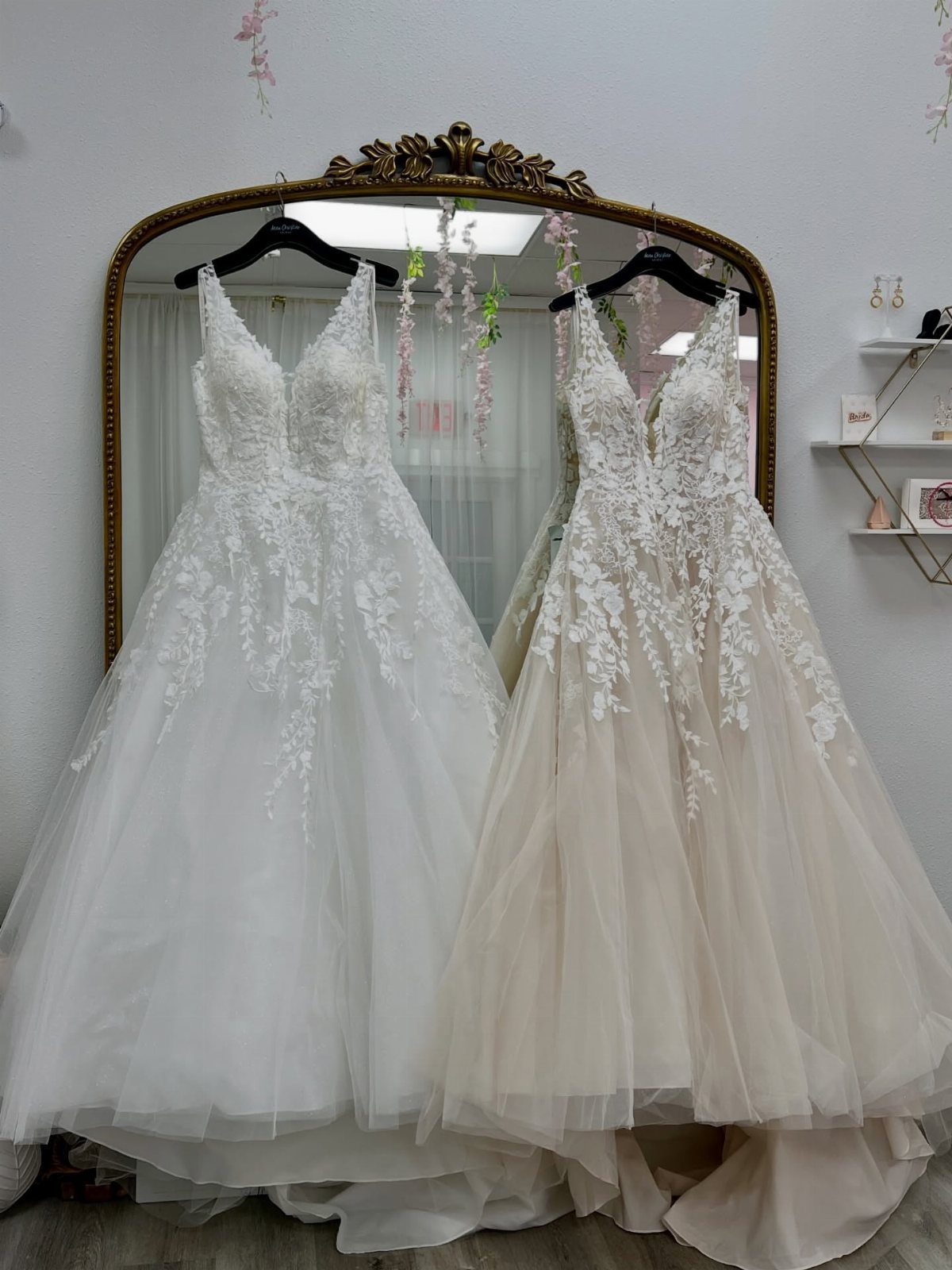
Lace over a structured bodice and tulle below gives two textures in one dress, which photographs well from a distance and rewards closer looks during the reception.
The combination works best when the lace carries through to the sleeves in some form: cap, long sheer, or the flutter version I have seen on vintage cuts.
A corset closure in back, rather than a zip, lets you adjust tension if the lace has no stretch.
This build runs warmer than all-satin, so consider it for fall or a church with heating that runs high.
3. Cream White A-line Gown
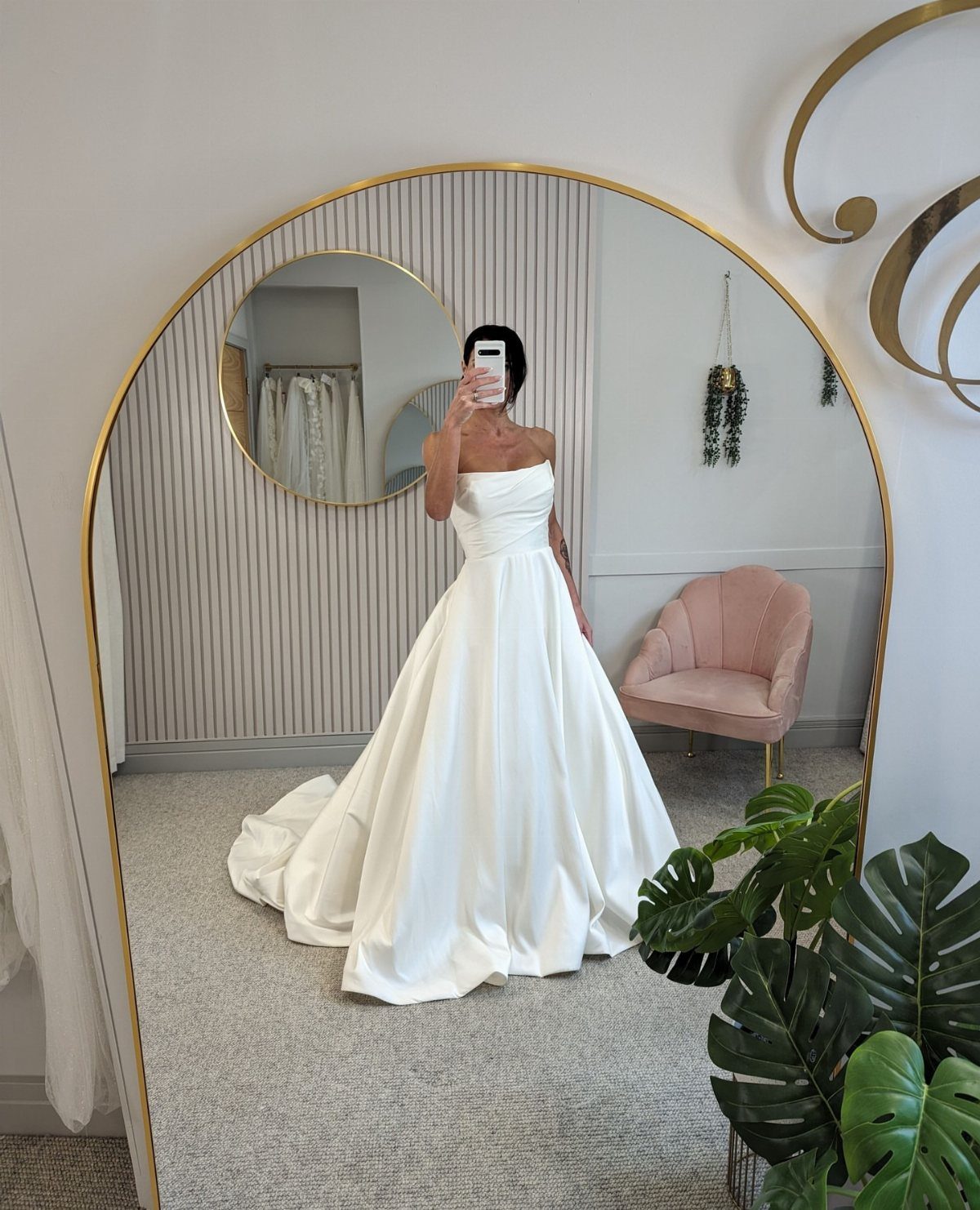
The A-line in cream white satin carries a vintage association without the cost or fragility of true antique pieces.
Sheer long sleeves in matching tulle or organza, finished with floral lace appliqués, solve the church-coverage question without a separate bolero.
The sweetheart neckline stays visible underneath. I would check that the sleeve seam sits at the shoulder point, not dropped, to keep the line clean.
Chiffon versions with a V-neck and flutter sleeves read more casual; for a formal venue, satin with a straight neckline stays closer to tradition.
Order early. A-line hems need exact length with your shoes, and salons rarely stock multiple lengths in cream.
4. Cream White Chiffon Dress
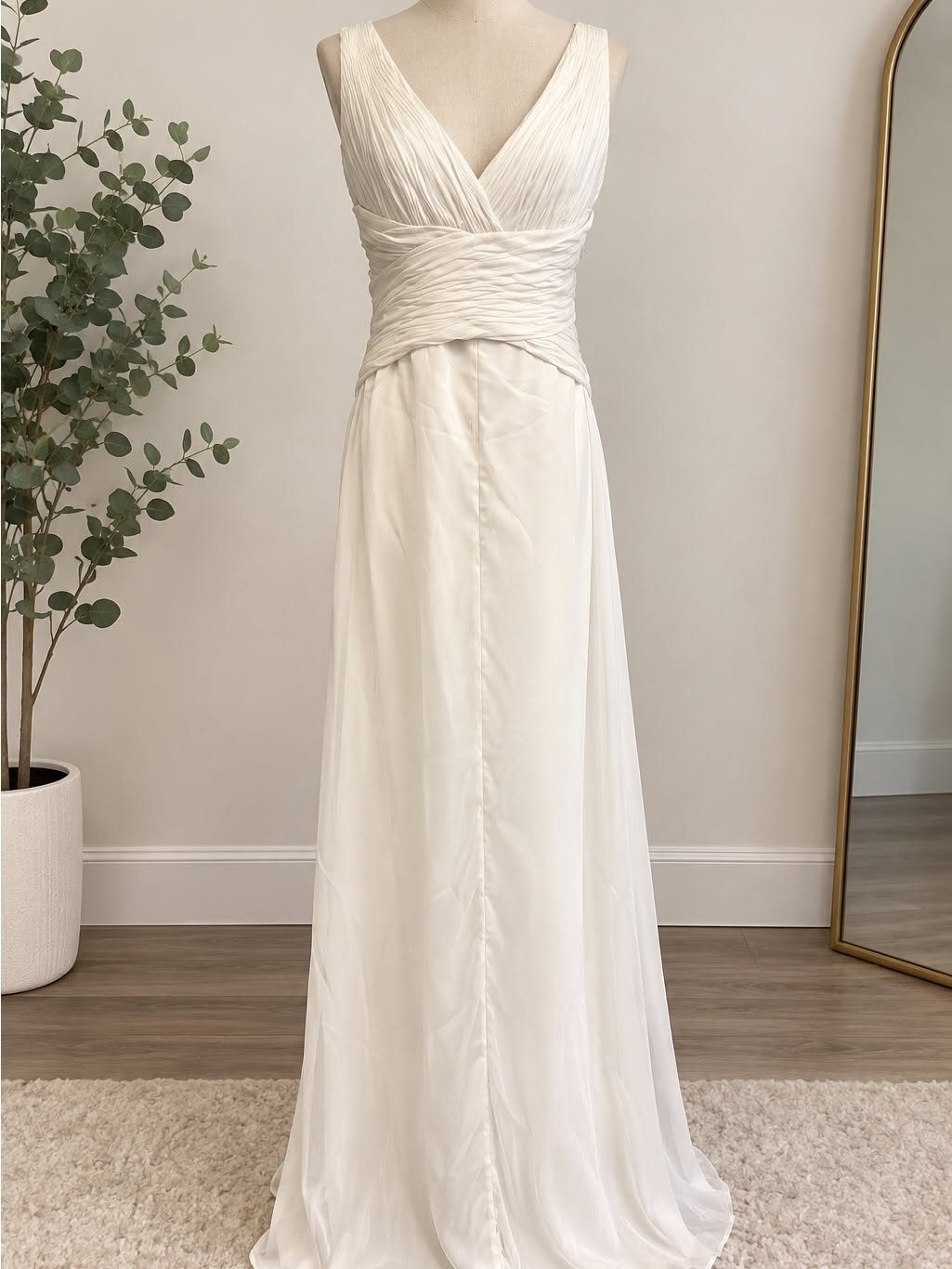
Chiffon in cream white floats where satin falls, which matters if your ceremony involves grass, sand, or stairs.
A pleated bodice gives shaping without weight; paired with a flowing skirt, the whole dress moves in still air.
For sleeves, 2 paths work: flutter for coverage that stays cool, or long bell sleeves with embroidery at the bodice and waist for a more finished look.
The sleeveless version suits outdoor summer weddings, where any extra fabric becomes damp quickly.
Beaded embellishment at the waist adds cost and weight; a simple self-tie or thin ribbon keeps the chiffon’s advantage.
5. Vintage Cream White Wedding Dress
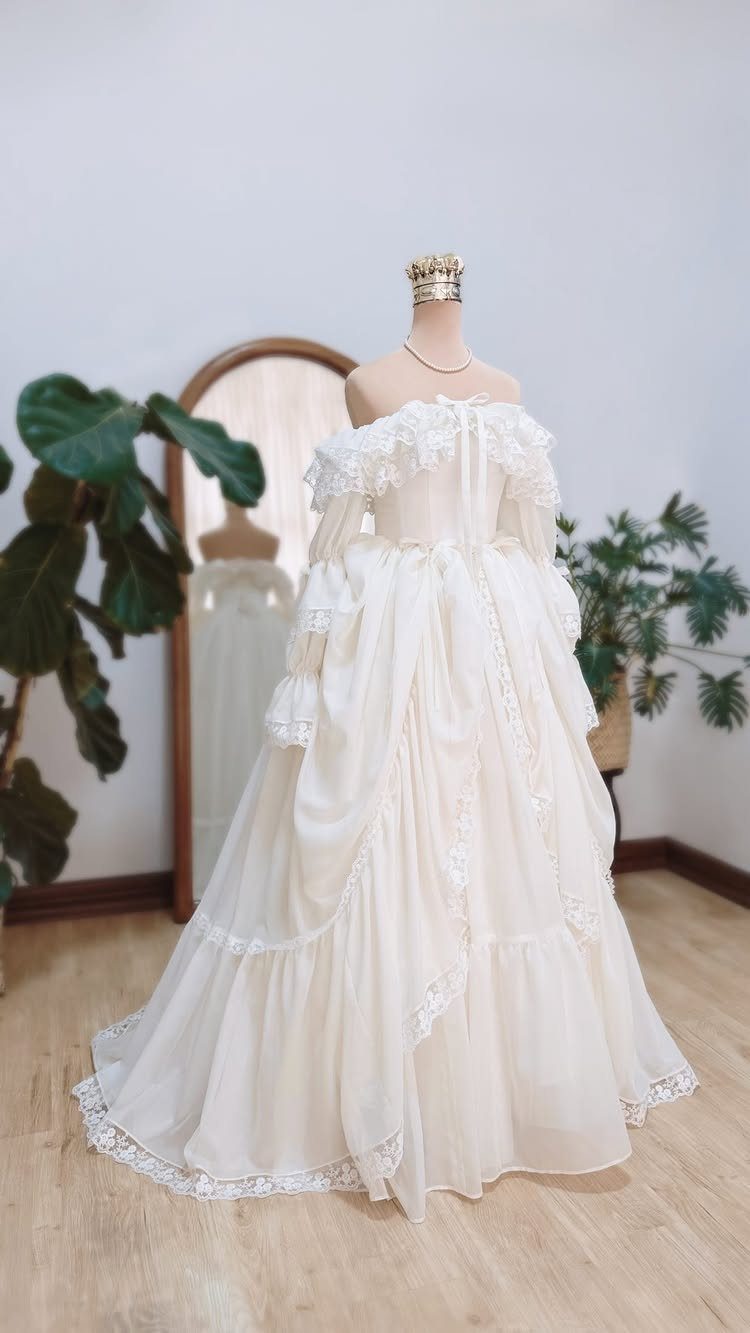
A vintage cream white dress borrows details from a specific decade rather than replicating a costume.
A high lace neckline with sheer capelet overlay recalls earlier decades, while a deep V in silk satin reads more old-Hollywood.
Lace ruffles at the shoulder require a strapless underlayer to sit right; ask if the lace is attached or separate. Intricate embroidery adds dry-cleaning cost and weight, so hold the skirt out at your fitting to feel the true load.
I would look for a train that buttons or loops up for the reception. Full vintage trains drag and tangle in modern spaces.
6. Short Cream White Wedding Dress
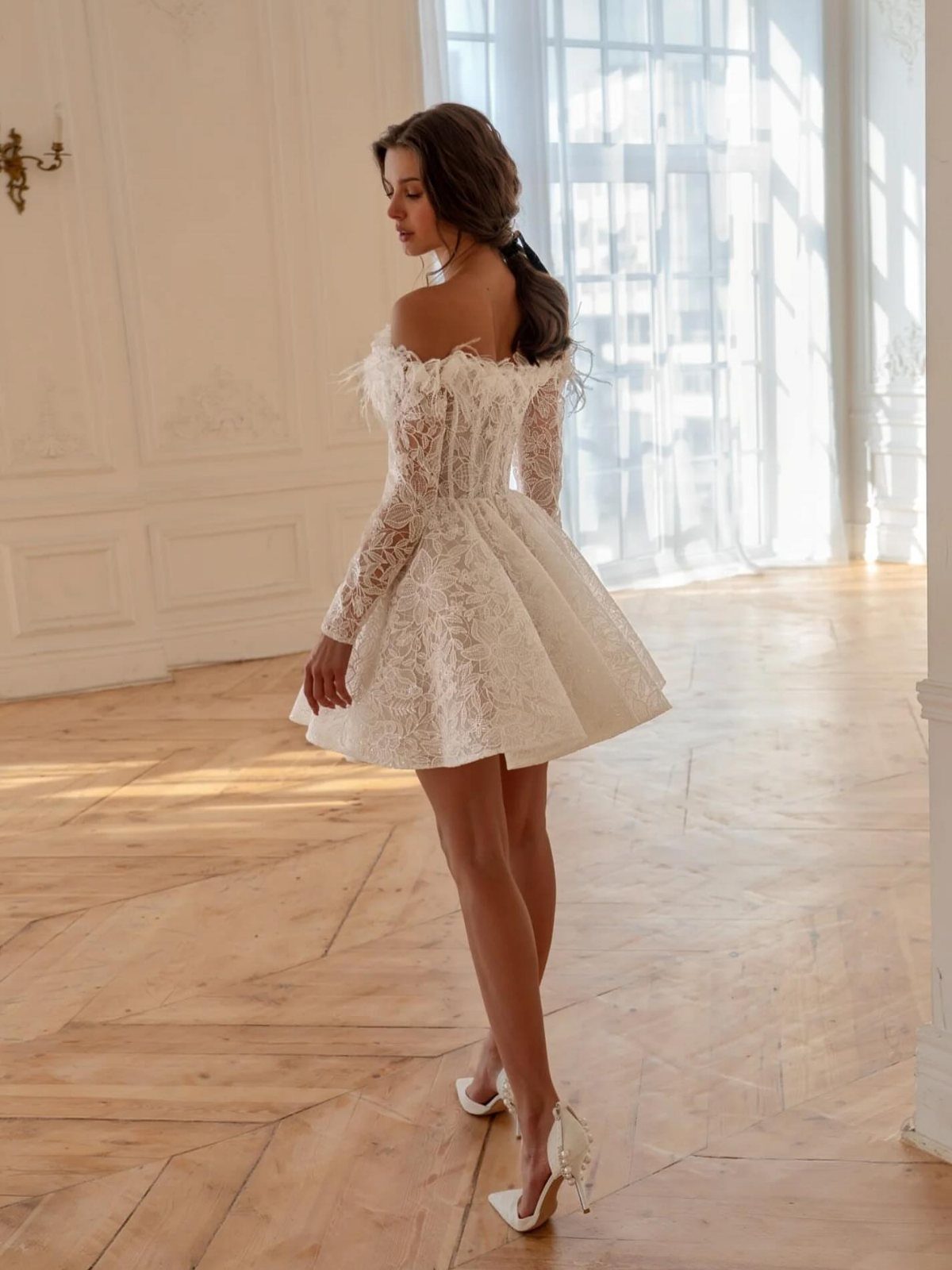
Short cream white dresses suit courthouse ceremonies, city hall appointments, and outdoor receptions where a hem in the dirt loses its charm fast.
Off-the-shoulder with feather trim is a party-dress move that reads bridal because of the color.
A sheath in lace with a high neck and short puff sleeves works for a dress you might wear again; the front slit keeps it from reading too junior.
Sheer long sleeves with floral overlays, another option, give more coverage for a church requirement without the heat of a full gown.
Feather trim and lace overlays both need hand-finishing, so check seam allowances and spot-cleaning instructions before you buy.
7. Simple Cream White Wedding Dress
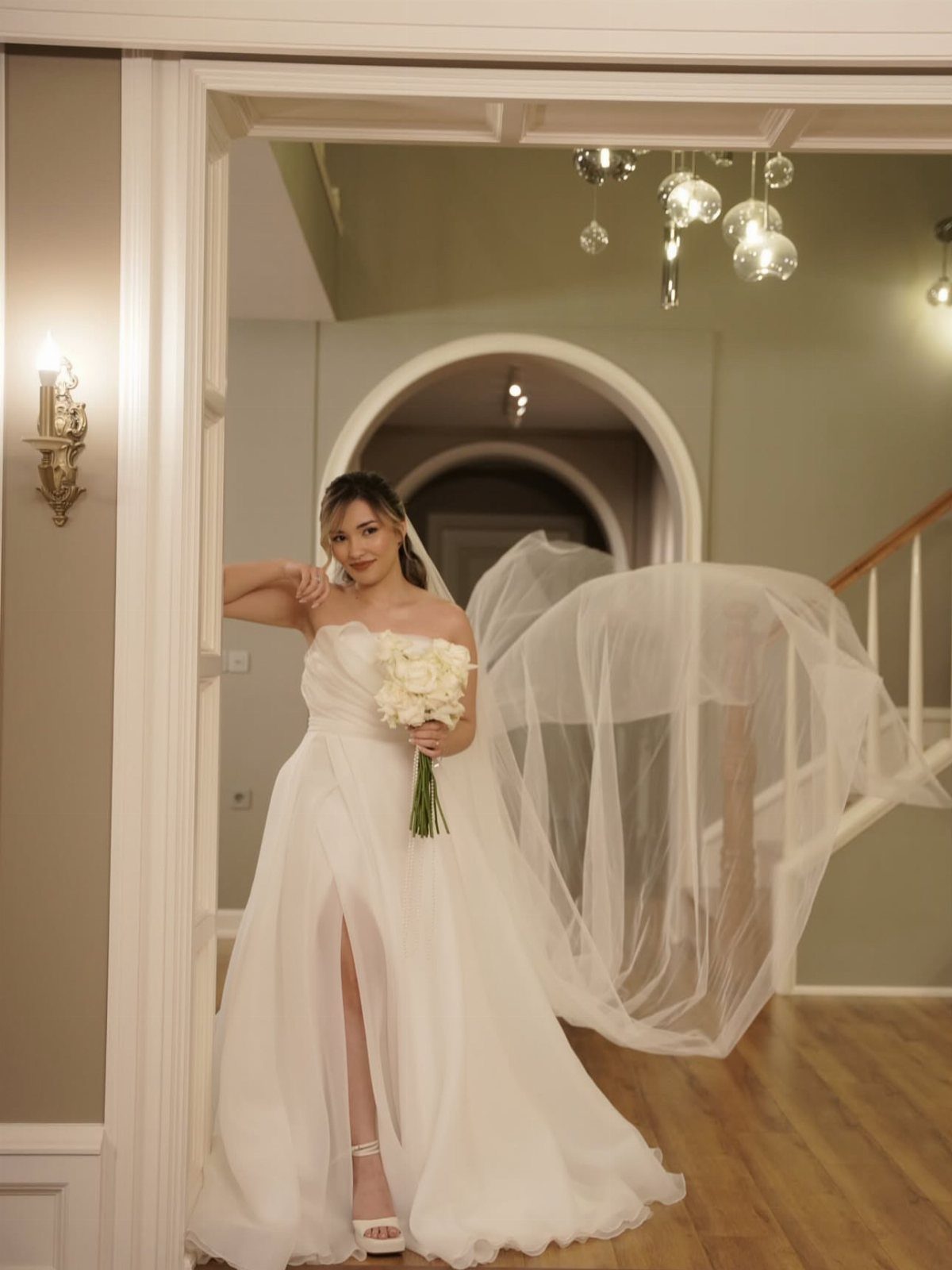
A simple cream white dress lets the color carry the statement so the cut can stay quiet.
A strapless A-line in cream white keeps the line clean with one slit to move in; skip the necklace and let a long veil and hand-tied bouquet do the work.
Satin holds this shape best, though chiffon would soften further. I would ask about a high halter neckline with a keyhole back for a second look that still reads simple, not plain.
The danger is under-accessorizing. One piece, chosen with intention: pearl studs, a thin bracelet, or the veil, but not all three.
Dry clean before storing; cream shifts toward yellow faster than white in sunlight.
Embellishments and Details
Floral embroidery works best when it carries a theme through the dress rather than sitting scattered. Lace appliqués at the neckline and sleeve edge frame the face and hands, where guests tend to look most.
A structured bodice with boning gives shape under embroidery that would otherwise sag; without that structure, the detailing competes with the fabric instead of finishing it.
Beading at the waist pulls the fabric down more than you expect; try sitting down before you decide. Hold the sample up at arm’s length to feel what an afternoon of standing will mean.
Sheer puff sleeves with lace floral embroidery at the neckline need structure underneath so the upper body does not disappear into ornament.
The zipper back on this build shows; ask about covered buttons or a fabric panel if the rear will face guests during the ceremony.
Choosing the Right Fabric
Satin reflects light in sheets, which flatters under chandeliers and washes out under direct sun. Cream white satin warms further in incandescent venues; test the swatch under the actual bulbs, not the salon’s fluorescents.
The same quality means it needs closer fitting; chiffon in cream white can read as nightgown without enough structure at the bodice.
Lace varies most by backing.
Sheer lace over a solid underlay gives the intricate design at full strength. Lace appliquéd onto tulle or organza softens the pattern and lowers weight, though the seam where lace meets plain fabric needs careful pressing or it ridges.
A dress combining 2 fabrics, satin bodice with chiffon skirt for instance, solves the lighting problem for ceremonies that move from outdoor to indoor. The transition line sits at the natural waist, which most figures tolerate.
Dress Length Options
Long dresses need hem clearance figured with shoes on and off. A sweep train, the shortest formal length, still requires a hand or wrist to manage stairs.
Anything longer needs a bustle, loop, or button system; confirm the hardware matches the dress color, as ivory hooks on cream white read as error.
Short dresses suit city hall and courthouse settings where seating is fixed and aisles narrow.
The same lace bodice with floral appliqués from a long gown reappears in short and midi cuts; the proportions shift, with more visual weight at the bodice because the skirt ends higher.
Tee length, falling between knee and ankle, works for civil ceremonies and backyard receptions.
The hem clears grass and uneven ground without the full exposure of a true short dress. Pair with heels that show; the look depends on leg line, and flats or boots underneath break the intention.
Midi skirts in tulle need more frequent pressing than satin; the crumple shows at mid-calf where a long skirt would hide it in folds.
Style Preferences
A-line suits most figures because the flare starts at the natural waist, not the hip.
The same cut in cream white reads softer than stark white, which can look graphic against skin. Vintage A-line pieces from earlier decades often run narrow through the ribcage; size for the waist measurement and plan alterations at the bust.
Mermaid and trumpet styles hold closer through the hip and thigh, then release below the knee. Cream white in these cuts needs careful undergarment choice, as the color shows seams and edges that white might blur.
The structured bodice required here, with boning and often a corset back, demands a longer fitting to confirm you can sit.
Vintage styling borrows from specific decades: high lace necklines from earlier periods, deep V satin from the mid-century. The capelet and ruffle details from vintage sources tangle in modern spaces; test movement before committing.
Frequently Asked Questions
What does an ivory wedding dress symbolize?
Ivory carries the same associations as white, purity and new beginnings, but the warmer tone softens the statement. Cream white reads as approachable rather than formal, which fits modern weddings where the couple often greets every guest personally.
What skin tone does ivory look best on?
Cream white flatters warm skin tones because the yellow undertone in the fabric echoes the skin rather than competing with it.
Stark white can read as harsh or cast a gray shadow on complexions with gold or olive undertones, while cream reflects light back more gently.
How much does a white wedding dress typically cost?
Vintage styling in a cream white dress gives the look of an antique piece without the antique price tag, while hand-beaded embellishment is where the cost climbs fast.
Budget separately for dry cleaning, which every fabric mentioned requires and which salons rarely include in the quoted price.