
Christian wedding traditions are the ceremonies, symbols, and readings drawn from Scripture that frame a marriage in the church. What most couples do not realize until they start planning is that almost none of these are required; a Christian wedding needs only the vows and a witness, and everything else, from the white dress to communion at the altar, is chosen or skipped based on what the couple wants to say. Queen Victoria’s 1840 wedding to Prince Albert made white the standard for the dress, but the color’s link to Revelation 19, the bride of the Lamb clothed in "fine linen, bright and clean," is what gives it staying power in the church.
White Wedding Dress
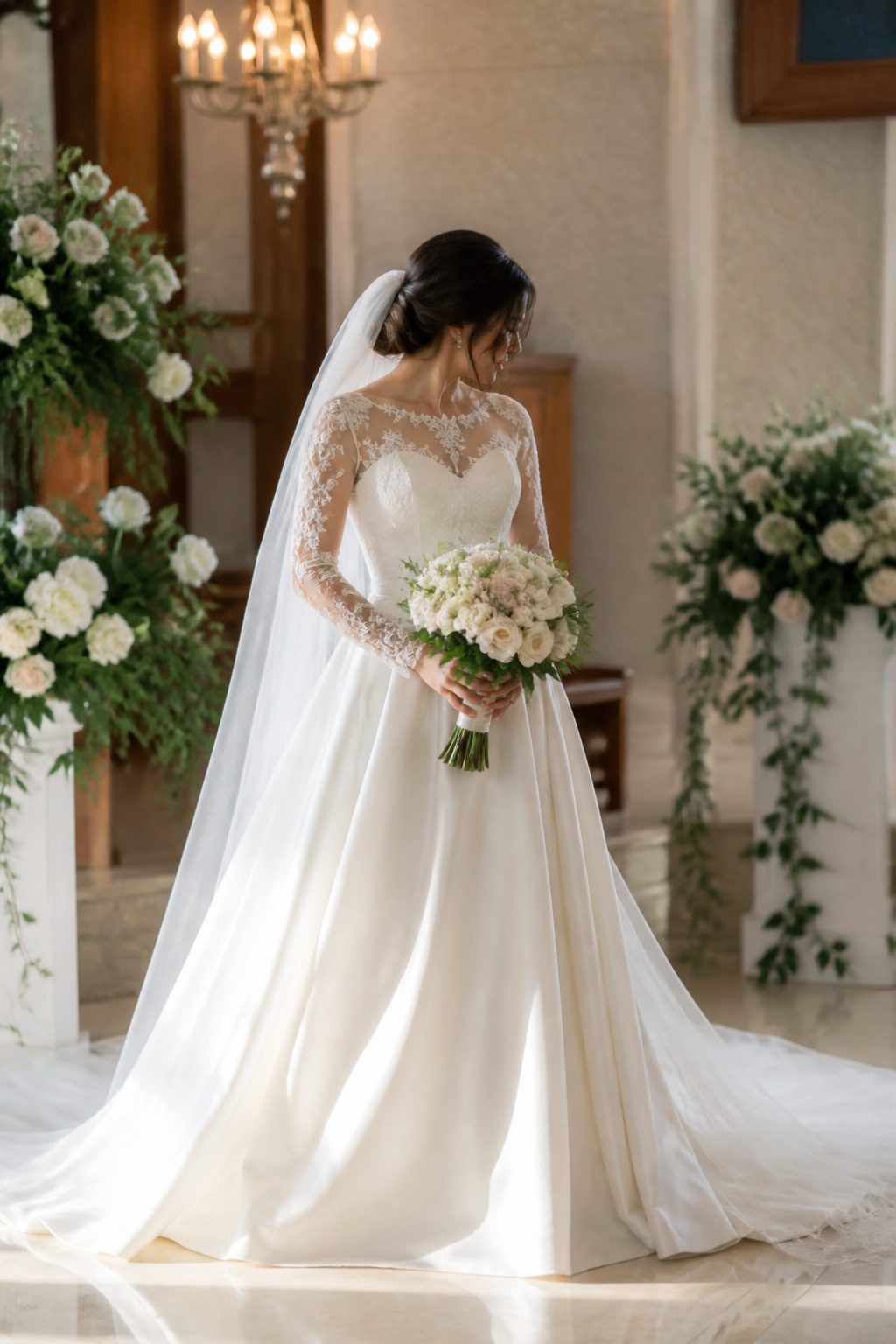
The white wedding dress carries a meaning most brides feel before they ever hear its history: purity and innocence, rooted in a specific verse from Revelation 19 that describes the bride of the Lamb clothed in "fine linen, bright and clean." Godey’s Lady’s Book made the connection explicit in 1849, calling white "an emblem of the purity and innocence of girlhood, and the unsullied heart she now yields to the chosen one."
Before 1840, a bride simply wore her Sunday best. Queen Victoria’s wedding to Prince Albert that year changed the standard entirely. She commissioned a new white gown, the world took notice, and the tradition spread fast enough that within a decade the fashion press was already treating it as settled custom.
Some sources tie the white dress to an expectation of virginity for both bride and groom; others read it more broadly as righteousness and a clean start. The two readings coexist now, which is why second-time brides sometimes choose another color without anyone treating it as a break from faith.
Either way, the white wedding dress has become one of the most recognized Christian wedding traditions in the world.

Sexy Curves -- Mermaid dress is adorned with delicate lace shell, eyelash lace details and off shoulder design.

Lace babydoll lingerie is made of elastic lace mesh material, no-worries scratch the skin

High Quality: The Delicate Heart-shaped is very exquisite and elegant, made of high-quality polyester fabric, often used as an edge finishing, decorative element on garments or gift wrapping, add a touch of elegance and sophistication to your creations! Each white lace ribbon gift ribbon is 0.5 inch width, total 30 Yards in length, enough to meet your daily needs.
Bridal Veil
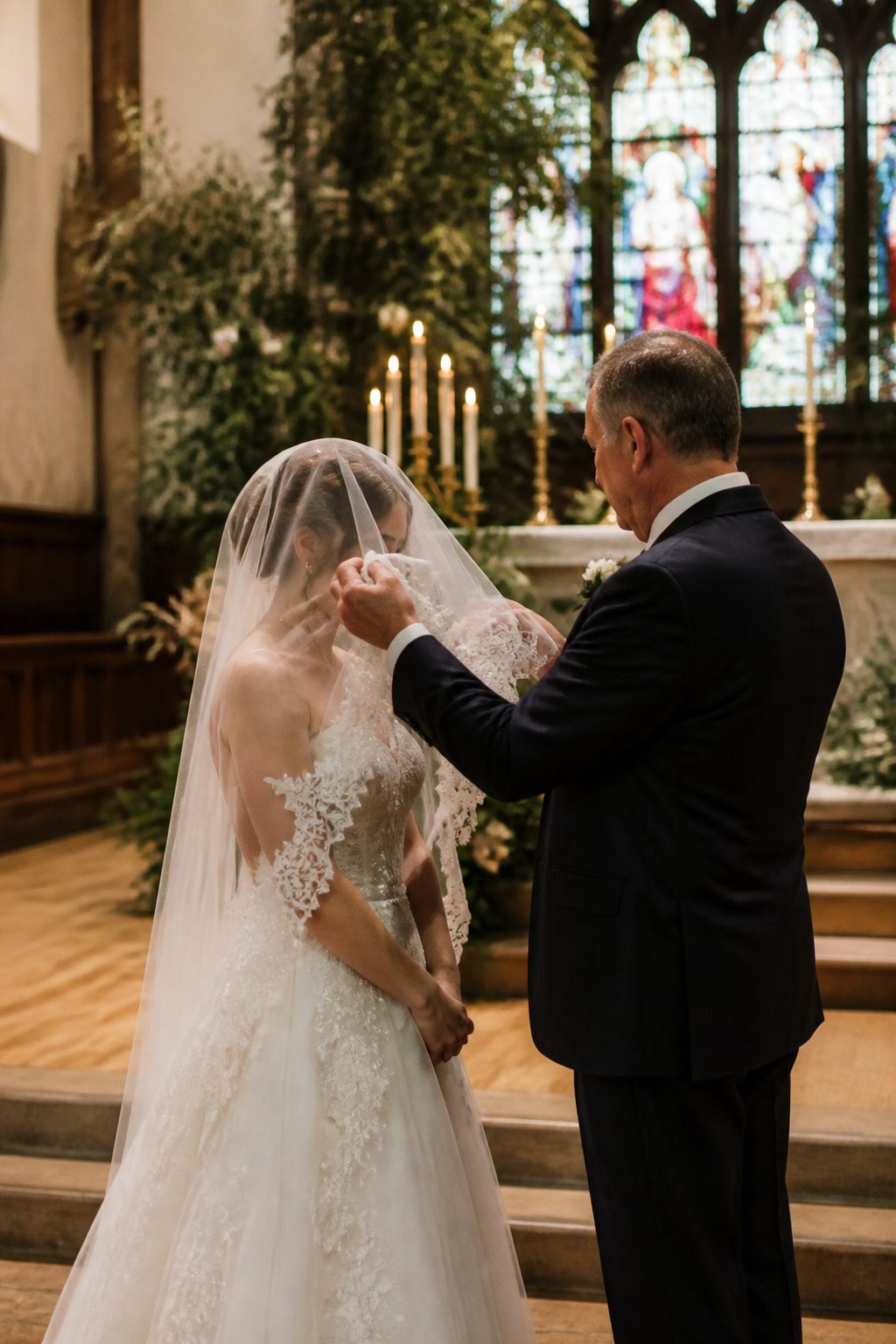
The bridal veil carries two meanings that flow straight into the moment when the father gives his daughter away. On the surface, it signals modesty and purity, a visible sign of reverence that has marked Christian weddings for generations. But the deeper thread runs through Scripture. The veil echoes the Temple veil torn at Christ’s death, the barrier between God and humanity removed so believers could enter His presence. When the groom lifts it, the gesture mirrors that removal, the couple’s union made complete.
The father typically removes the veil himself as he places his daughter’s hand in the groom’s, or the groom lifts it at the altar. Either way, the act seals the transfer the father has just performed: his blessing given, his care handed over. Some ceremonies weave prayer directly into this moment, the father covering both their hands with his as he speaks a blessing over the marriage he is releasing her into. The veil becomes the last thing separating bride from groom, and its removal marks the settled matter, the covenant made visible.

Short Wedding Veil - 2 tiers bachelorette party veil, first layer length about 22.5 inch, second layer length about 30 inch. you may put the bridal veil over your face or just wear it behind. When wearing the veil, it will dangle naturally to your waist or elbow.

【Classic Bridal Veil】This short veil is specially designed for the bride, the classic one layer design is simple but elegant, and would be a great complement to your dress.

Father Giving Away the Bride
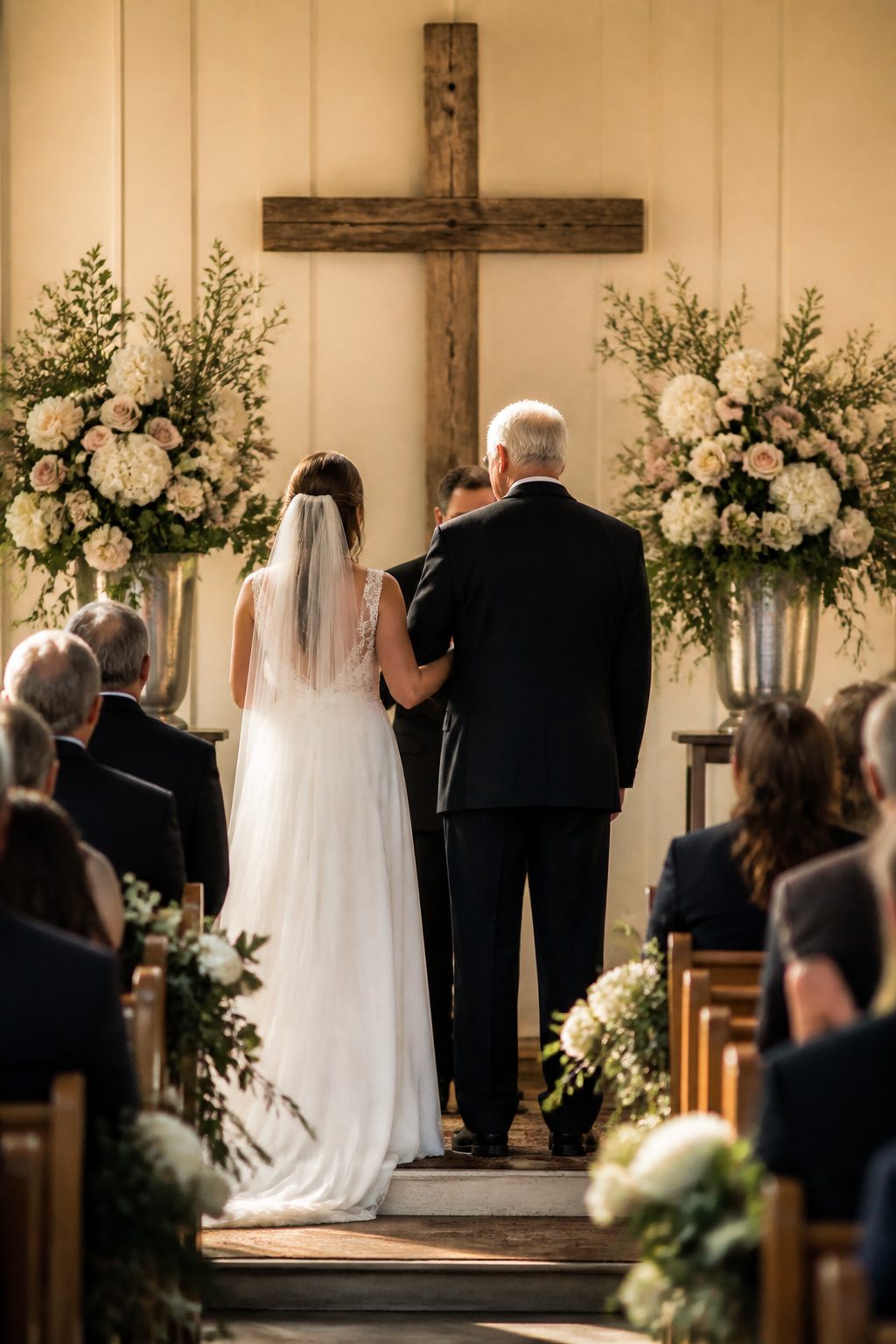
The father giving away the bride reaches back to the Jewish roots of Christianity itself. When the minister asks who gives this woman away and the father answers, he is doing more than filling a ceremonial slot: he is publicly endorsing the bride’s choice and formally transferring care of her from one household to another. As head of his household, the father has held covering and protection over his daughter; that headship passes to her husband at the altar.
This is not a detail every couple keeps unchanged. Some brides today feel the symbolism sits oddly with their own sense of independence, and sources note that if a bride does not see herself as under her father’s care or her husband’s keeping, performing the act anyway can ring hollow. The compromise many settle on is wording: "Her mother and I do," which brings both parents into the moment and softens the single-transfer feel without dropping the tradition entirely.
Another option growing common is to have both sets of parents stand and voice their blessing on the union, widening the circle of approval without centering it on one man’s authorization. What matters is that the ceremony says something true about the couple’s actual beliefs, not that it preserves a form for its own sake.

ELEGANT: Soft and silky fabric adds a touch of class to this satin padded hanger, perfect style bride hanger for wedding dress

SATIN DRESS ACCENT: This bridal neck scarf adds a satin sheen and a flowing line to your dress. Made of wrinkle-resistant polyester satin with stitched edges for a clean finish, it keeps its shape after handling and drapes smoothly.

Luxurious Shawl Wrap – Effortless Elegance for Every Occasion: Draping yourself in sophistication with our ultra-lightweight satin shawl (78.7" x 27.5") ,whether you're attending a wedding, cocktail party, prom, or a formal office event, this silky wrap adds a touch of polished glamour to any outfit. Effortlessly elevate your evening gown, goth dress, or bridal look—then fold it neatly into your clutch for a chic, on-the-go accessory that's as practical as it is stunning.
Reading of Bible Verses
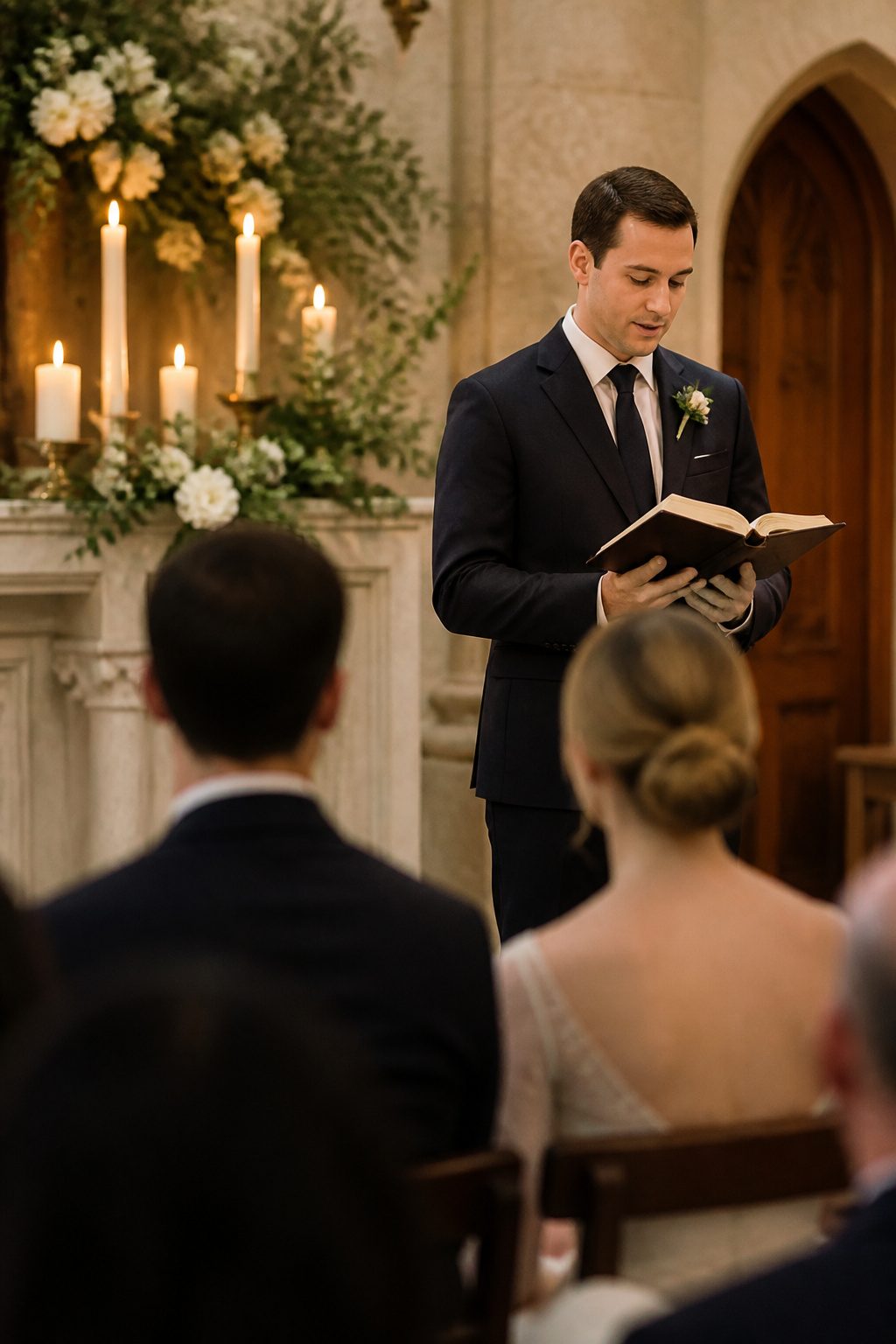
The reading of Bible verses is the most consistently documented tradition across Christian weddings, with six separate sources noting its place in the ceremony. 1 Corinthians 13:4-8 remains the passage couples request most often, the one that opens with "Love is patient, love is kind…" and walks through what agape love actually looks like in practice. Genesis 2:24 runs a close second, the verse about a man leaving his parents and becoming one flesh with his wife, which speaks to the commitment itself rather than its daily texture.
A minister sometimes weaves these scriptures into a ceremony message tailored to the couple’s own story, and couples often ask a family member or close friend to step forward and read. The translation matters more than people expect at first. The NIV renders 1 Corinthians 13 with "love is not self-seeking," while other translations shade that toward "does not seek its own," and the difference in tone can shift how the vow lands in the room.
Ecclesiastes 4:9-12, the passage about the cord of three strands, shows up regularly too, especially for couples who want to emphasize that marriage draws strength from something beyond the two of them. Colossians 3:14, Proverbs 3:5-6, and Ruth 1:16-17 round out the list of what you are most likely to hear, though the specific choice usually traces back to which verse first caught the couple’s attention in their own reading or in a sermon they sat through together.
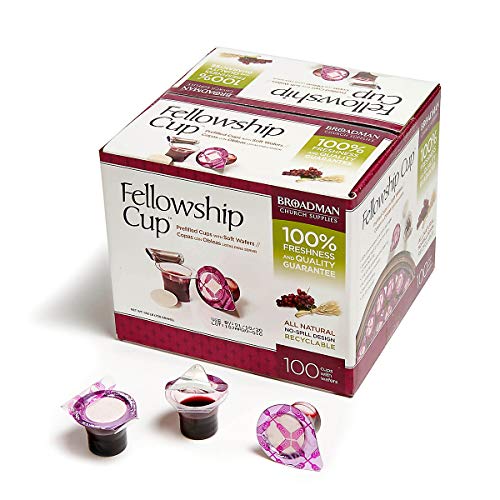
The Fellowship Cup is a prefilled communion cup which contains 100% Concord Grape Juice Blend and Unleavened Wafer

What You’ll Receive:An "In Remembrance of Me" altar frontal, made from a durable blend of polyester and cotton. These quality fabrics offer both comfort and long-lasting use, making the frontal reusable for many occasions

Double-Sided Versatility The clergy stole features a design with reversible pastor stoles allowing for versatile use during church ceremonies and liturgical occasions while showcasing intricate gold cross embroidery to enhance spiritual ambiance of any sacred event
Taking Communion
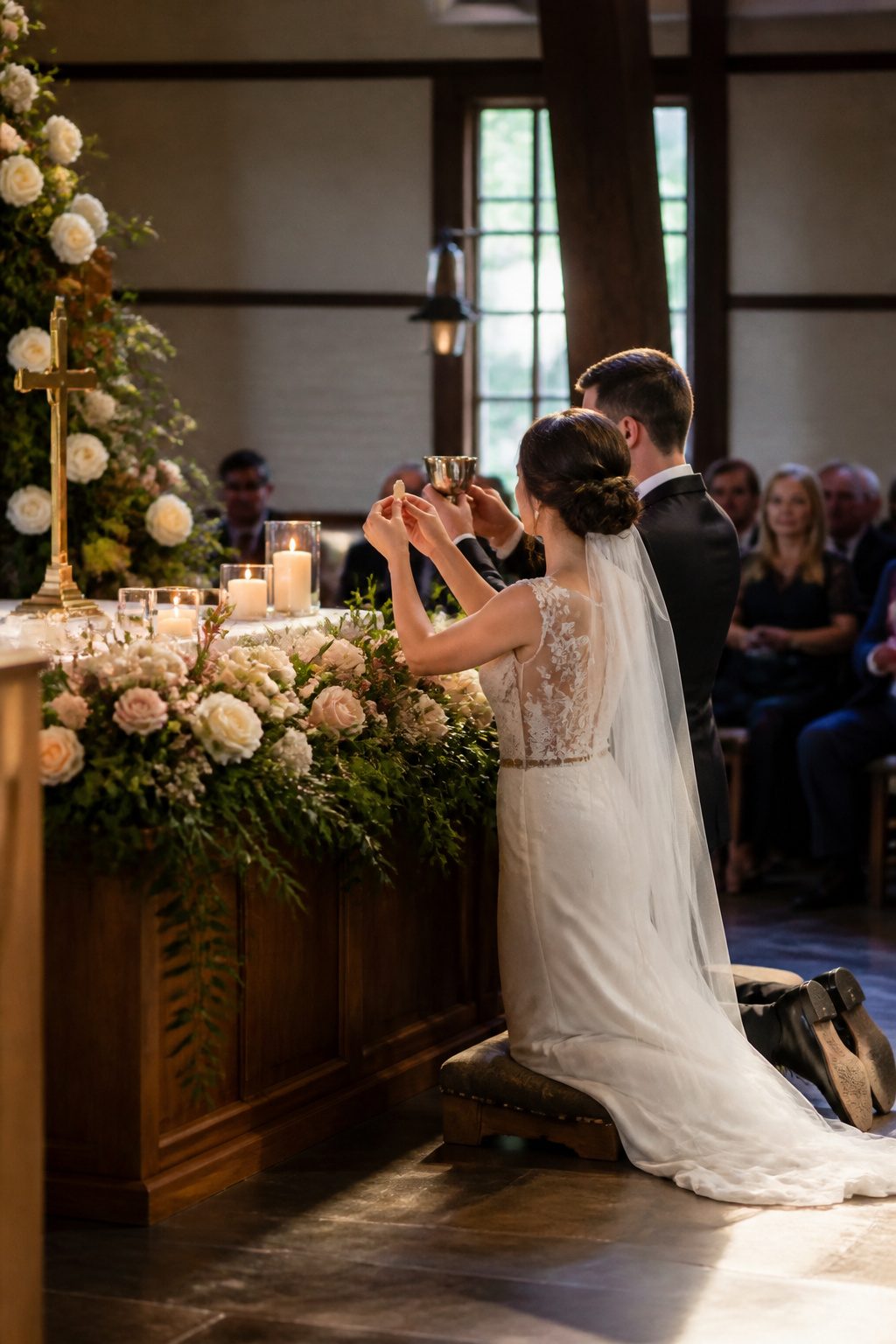
Communion within a Christian wedding ceremony carries a weight that other unity symbols rarely match. The bread and wine represent Christ’s sacrifice, and when a couple receives them together, they are making their first act of worship as husband and wife a direct acknowledgment of the covenant by which Christ obtained His bride. That parallel is why many pastors encourage it.
Timing varies, and the choice matters. Some couples take communion before they speak their vows, framing the entire ceremony under the sign of sacrifice. Others prefer to receive it after, so their first shared act as a married pair is one of thanks. Either placement is valid; what changes is the emotional arc of the service.
The decision of who else participates is just as consequential. A couple can receive alone, making the moment intimate, or invite the entire congregation to the table. The latter turns the wedding into a full corporate act of worship, but it also extends the ceremony length and requires logistical coordination with the officiant.
One caution from Scripture deserves attention. Paul’s warning in 1 Corinthians 11:26–29 calls believers to examine themselves before partaking. A wedding day is joyful, but flippancy here undermines the symbol. The pastor leading the service should prepare the couple for this, not simply hand them the elements as a pretty gesture. The communion wine symbolizes a covenant, not a custom, and treating it as such is what separates a meaningful inclusion from mere decoration.
Unity Candle
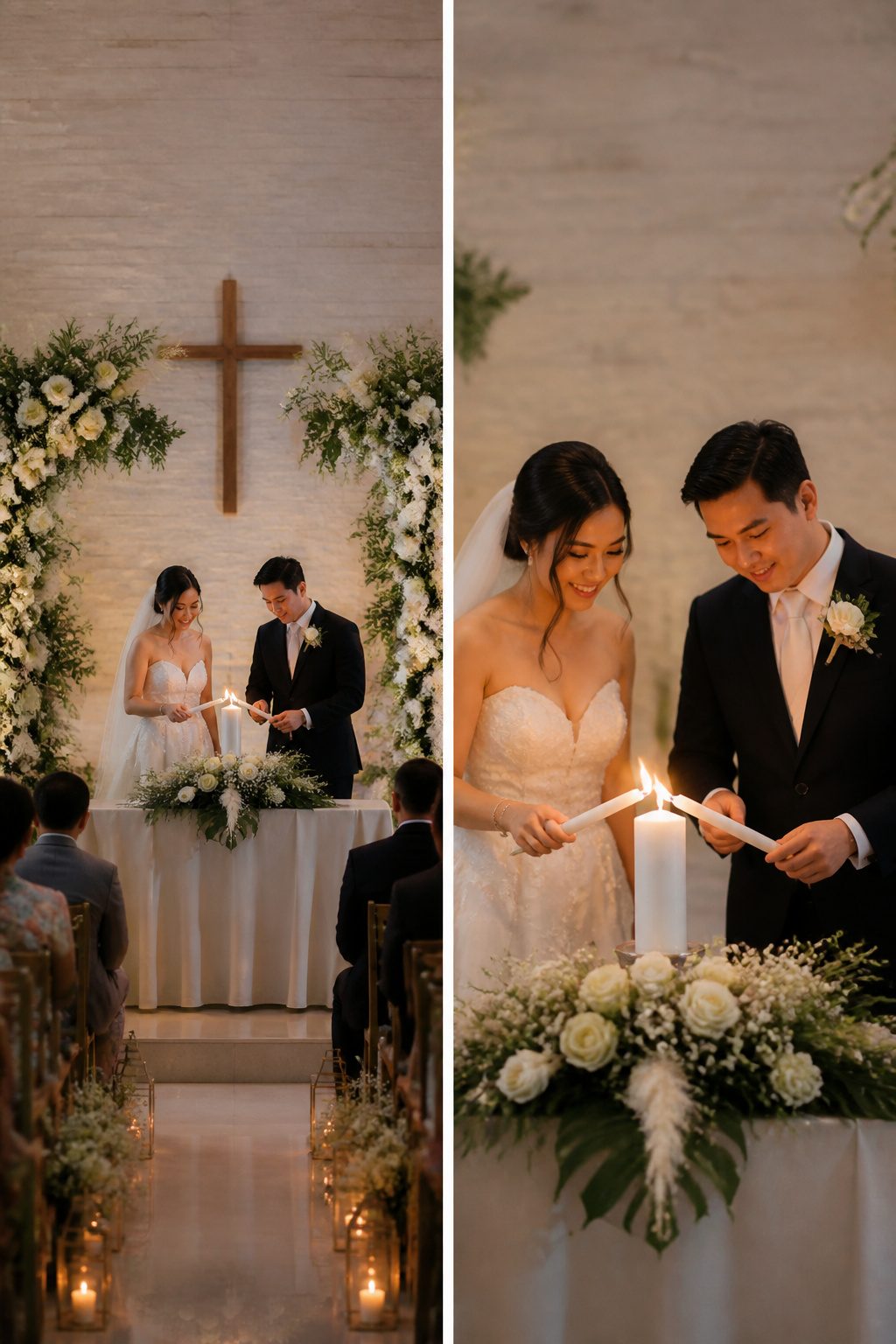
The unity candle ceremony is one of the most recognizable moments in a Christian wedding, and it works the same way across most denominations. Two taper candles, usually lit by the mothers of the bride and groom, represent each family and the life each person brings into the marriage. The couple then takes those two flames and lights a single pillar candle together.
What happens next carries the meaning. The couple extinguishes their individual tapers, leaving only the new flame burning. That act is drawn straight from Genesis 2:24, the "two becoming one flesh" passage read at nearly every Christian wedding. Some couples keep the individual candles lit to show they still exist as persons within the union, but the more common practice, and the one that makes the symbolism land, is to blow them out. The single remaining flame is the marriage itself, something neither family could have produced alone and neither spouse sustains alone.
The setup is simple enough to work in a chapel or a backyard, which is part of why it has spread so widely. No special vestments or denominational approval needed. The candle itself is just wax and wick; the weight is in what the couple does with it, in front of everyone they know.

Built-In Support & Streamlined Silhouette: This cocktail dresses for womnen features internal contouring panels that offer gentle waist definition, creating a smooth silhouette. The all-in-one design provides the seamless look of a shapewear dress without the need for extra undergarments

US Size: Small=(US 4-6), Medium=(US 8-10), Large=(US 12-14), X-Large=(US 16-18), XX-Large=US 20, soft and high quality eyelash lace fabric, lightweight and breathable. Comfortable to wear and touch.

Material - Crafted from 100% Polyester, this soft, medium-stretch fabric is breathable and wrinkle-resistant. Structured floral motifs deliver an elegant, layered look while high durability guarantees all-day comfort from the office to celebrations
Exchanging Rings
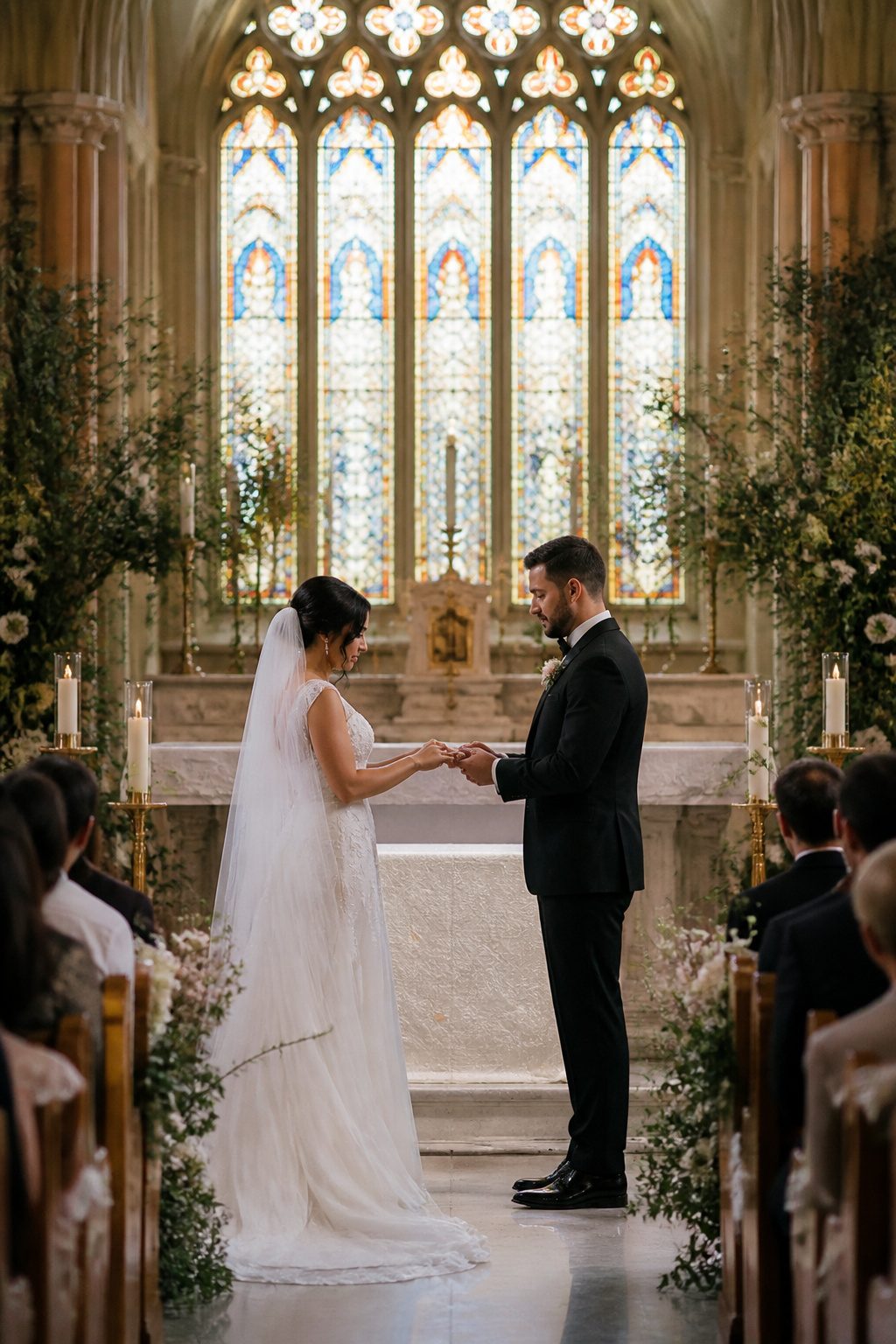
The circle of a wedding ring carries weight because it has no break. That unbroken line represents the eternal quality of the promises made, a shape that mirrors what Christian theology describes as God’s unending covenant with His people. When a bride and groom slide rings onto each other’s left hand, they are making faithfulness visible.
This gesture ranks among the most universal elements in Christian weddings worldwide, recognized across denominations even where no church law requires it. The ring serves as a public signal worn throughout marriage, a quiet announcement that this person has made a commitment that excludes other intimate relationships.
Some couples speak additional promises during the exchange; others let the rings themselves carry the full statement. The ring is worn as a reminder of vows, not a replacement for them. Its power is in the daily glance down at your hand, the physical prompt that outlasts the ceremony’s emotions.

1. Premium eyelash lace mantilla veil with delicate scalloped edge, vintage elegant texture, available in white and black.
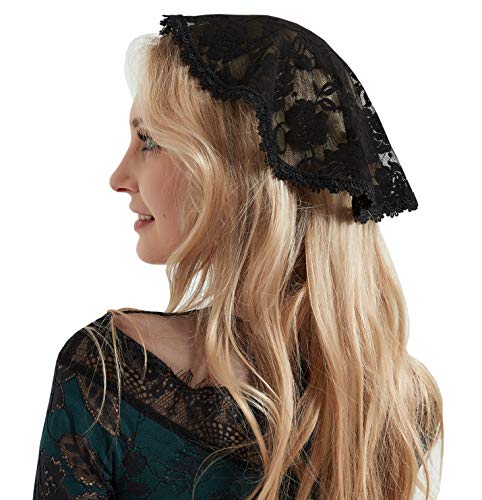
Simple Rose Pattern with Softness Lace Material

Elegant Design: This Catholic veil features a distinctive floral lace pattern, adding a touch of sophistication to your attire
Foot Washing Ceremony
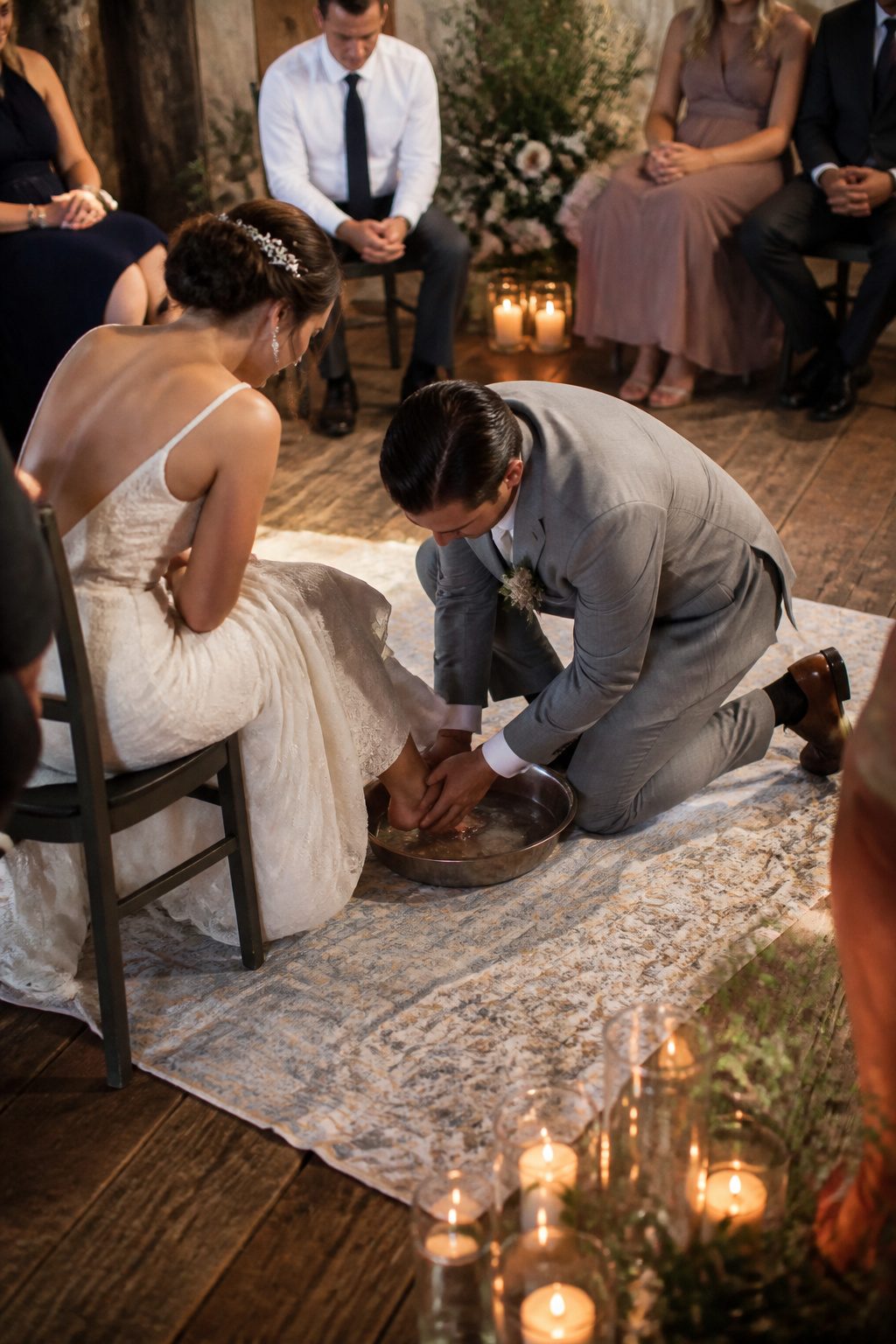
The foot washing ceremony rarely appears in modern Christian weddings, yet it carries one of the most direct biblical anchors of any tradition. John 13 records Jesus kneeling before his disciples with a basin and towel, an act so startling that Peter initially refused it. Couples who include this moment are reenacting that scene of deliberate humility between spouses, not toward guests or officiants but toward each other.
Only two of the major guides to Christian wedding traditions even mention foot washing, which tells you how uncommon it remains. Susan Shek, who has photographed the rite, notes that some guests find it odd to watch a bride or groom remove shoes mid-ceremony. The couples who choose it, though, treat that vulnerability as the point. The water and towel become the physical language of a marriage built on service rather than performance.
Practically, this works best with advance warning to your venue about water and seating sightlines, and with a second pair of hands to manage the basin discreetly. It also pairs poorly with a cathedral-length train.
GREAT MATERIAL: Made of 90% Polyester and 10% Spandex, stretchy and easy to put on.

WHAT IS INCLUDED - 1 Yard Satin Fabric, the length is 1 yard/ 36 inches and the width is 55 inches. P Pothuiny's shiny satin fabric is sold by the yard in separate pieces, providing flexibility and convenience for different projects. Available in 3 different lengths, such as 1 yard/ 36 inches, 3 yard/ 108 inches, 5 yard/ 180 inches, all yards are 55 inches wide.

COMPLETE CORSET KIT ZIPPER REPLACEMENT: This corset back kit includes two pre-looped fabric strips, a matching satin modesty panel, and an extra-long lace. Designed to convert a dress zipper into an adjustable lace up back; sewing is required
Unity Cross Ceremony
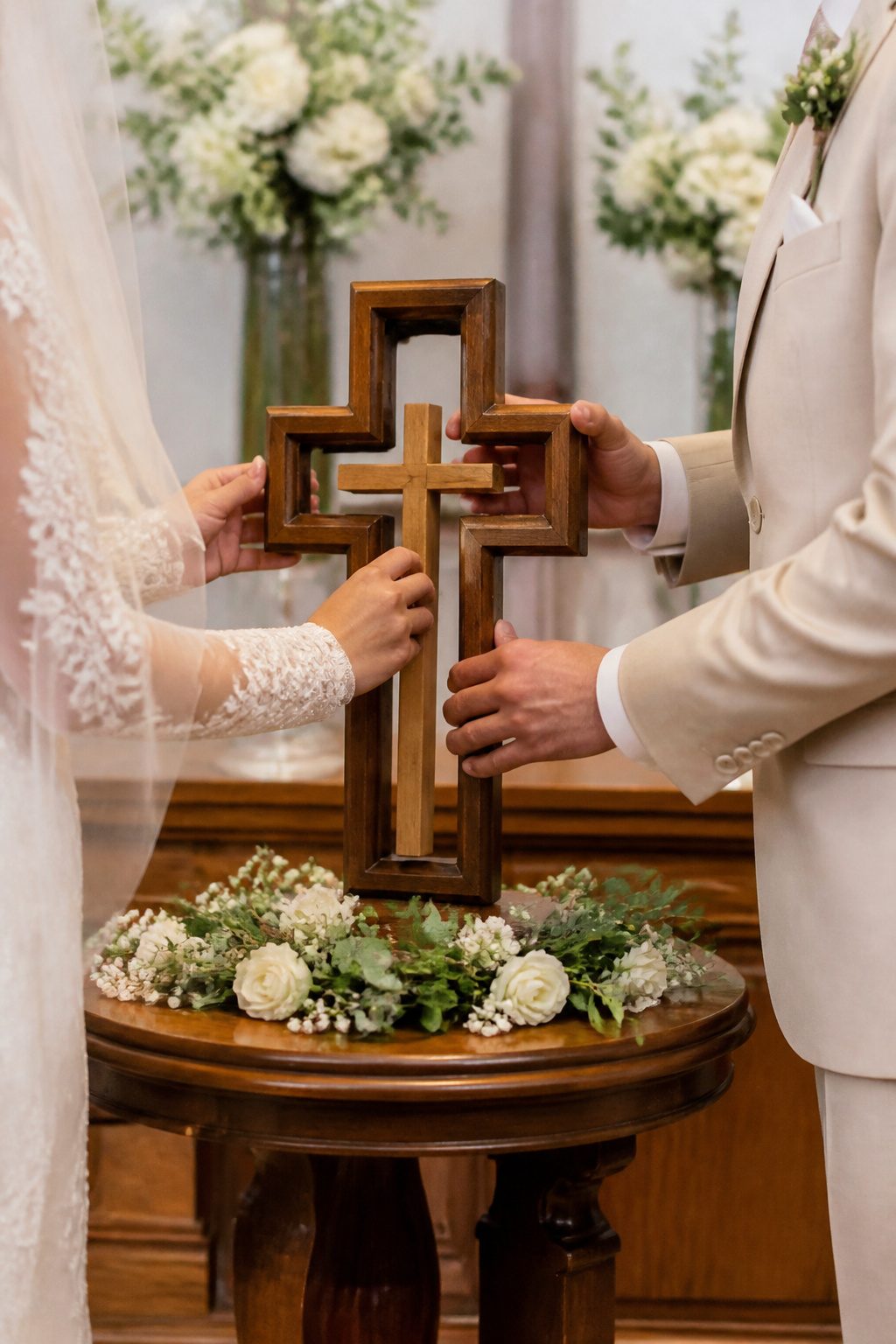
The Unity Cross ceremony asks a couple to assemble a wooden cross together during the service, locking two interlocking pieces into one structure. What drew me in, reading through the scattered references, is how directly the symbolism names Christ as the foundation rather than leaving it implied. One spouse holds the outer cross, the other slides in the inner piece that completes it, and the officiant frames this as the couple building their marriage on the cross itself.
I kept looking for older liturgical roots and found almost nothing. The ceremony appears in only two published sources I could trace, which places it either as a recent innovation or as a tradition specific to a handful of congregations that simply have not documented it widely. That scarcity matters for couples choosing it: you are not tapping into centuries of shared Christian practice so much as adopting a newer symbol that happens to resonate.
For couples working within a modest budget, the practical advantage is cost. A wooden Unity Cross runs roughly $30–$80, far less than the engraved unity candle sets that can push past $200. The trade-off is explanation. Guests unfamiliar with the ritual will need the officiant to spell out what the assembly means, whereas even non-churchgoers usually recognize a unity candle. Two ways to play this: embrace the teaching moment and let the officiant walk through it slowly, or pair it with a printed program note so the symbol speaks visually without slowing the service.

ILLUMINATE PERFECT MOMENTS: Elevate your candlelight service, wedding, or first communion with our 4.25" x 1/2" white prayer candles. Perfect for centerpieces, our white candle is ideal for religious ceremonies, Shabbat, and devotional settings, providing a serene glow for any altar supplies or table.

Gluten Free: These communion wafers are made with potato starch and are gluten free for those with gluten allergies.

Comfortable Material: our altar table cloth is made from a blend of cotton and polyester, resulting in a durable yet incredibly soft; Ideal for all your sacred and special occasions
Singing Worship Songs
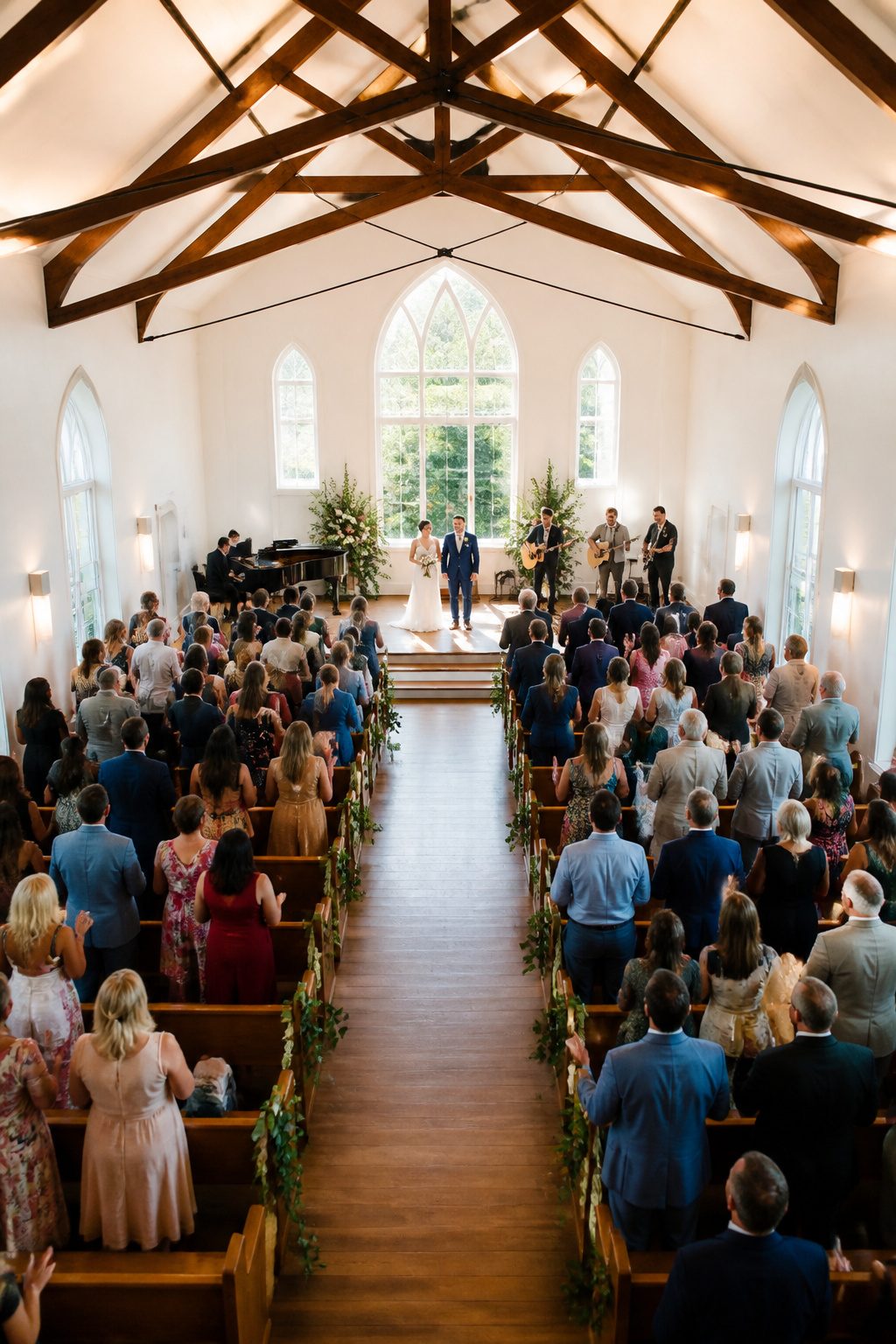
Congregational singing turns the wedding itself into a shared act of worship rather than a performance the couple watches. Everyone present, not just the wedding party, raises their voice together in praise and thanksgiving, which is the point: the gathered community participates directly in honoring God, not only witnesses two people making promises.
Some couples appoint musicians to lead this portion while guests stand and join in. Others choose a hymn or worship song as a thread running through the entire ceremony, working the lyrics into the spoken parts or framing the sheet music as a guest book for people to sign around the border. Friends or family sometimes sing during moments like communion or the unity candle, though that shifts the moment toward featured performance rather than full congregation participation.
The songs themselves range from older hymns such as "Be Thou My Vision" and "Great Is Thy Faithfulness" to contemporary pieces like "In Christ Alone." What matters is selecting something that speaks to the couple’s own faith while still being accessible enough that guests can actually sing it. A room of people stumbling through unfamiliar words loses the communal aspect that makes this tradition work.


Prayer in the Ceremony
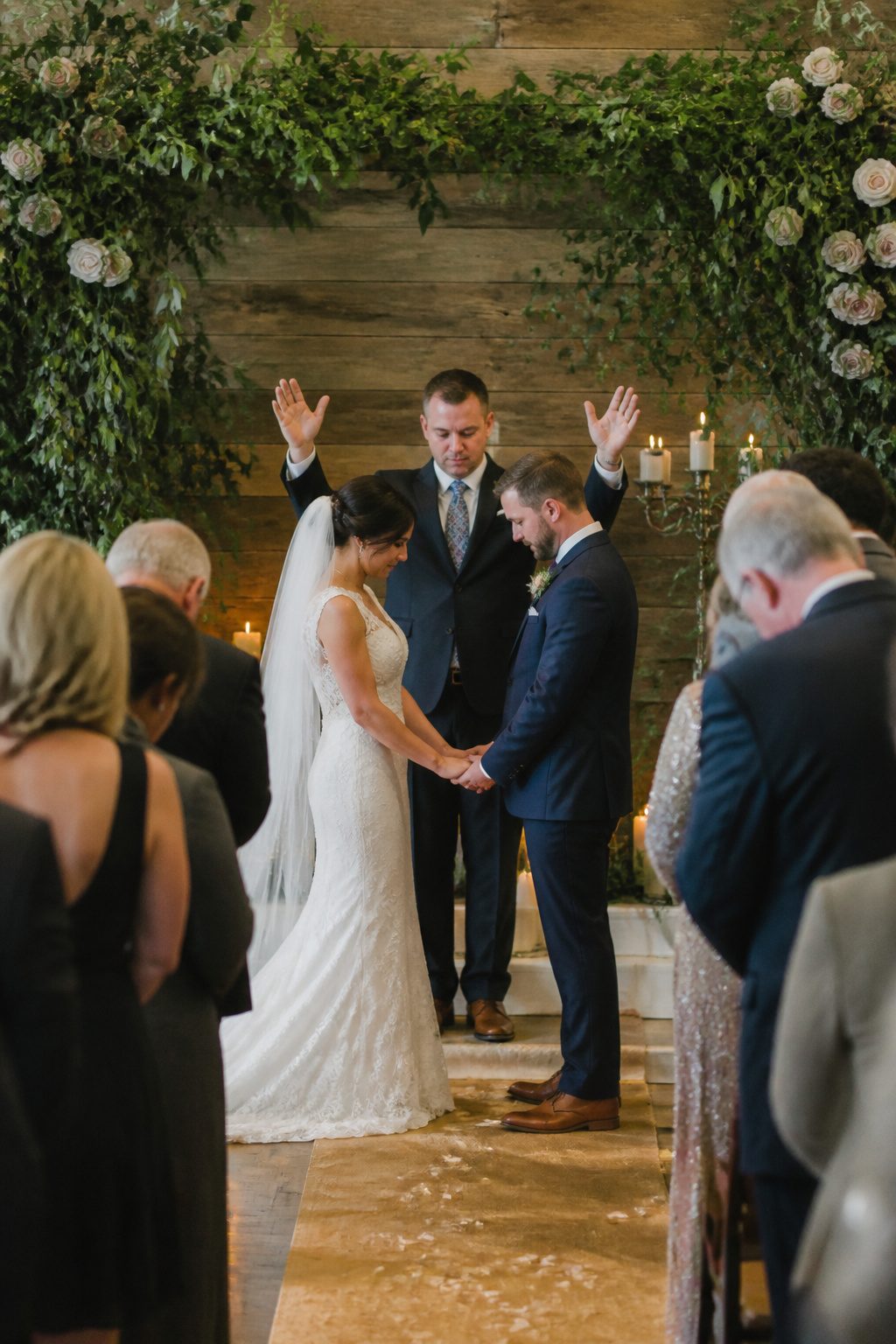
Opening a Christian wedding ceremony with prayer sets the tone for everything that follows. The prayer invites God’s presence and blessing over the marriage from the first moment, not as an afterthought slipped in between readings.
Couples have more options here than many realize. The officiant usually leads the main prayer, which is the most common arrangement and the one guests expect. But the ceremony gains weight when a parent or grandparent steps forward to pray, and some couples write their own prayer to speak in their own words.
A congregation-wide blessing brings everyone in physically. Guests stand, sometimes holding hands or extending their hands toward the couple while the prayer is spoken. Other ceremonies keep guests seated and ask them to stretch a hand forward in a symbolic gesture of support.
For blended families, the prayer should name any children entering the marriage along with the couple. The names matter; leaving a child unmentioned in a moment meant to bless the new family unit is an oversight that registers, even if no one says so aloud.
Scripture Readings Couples Choose
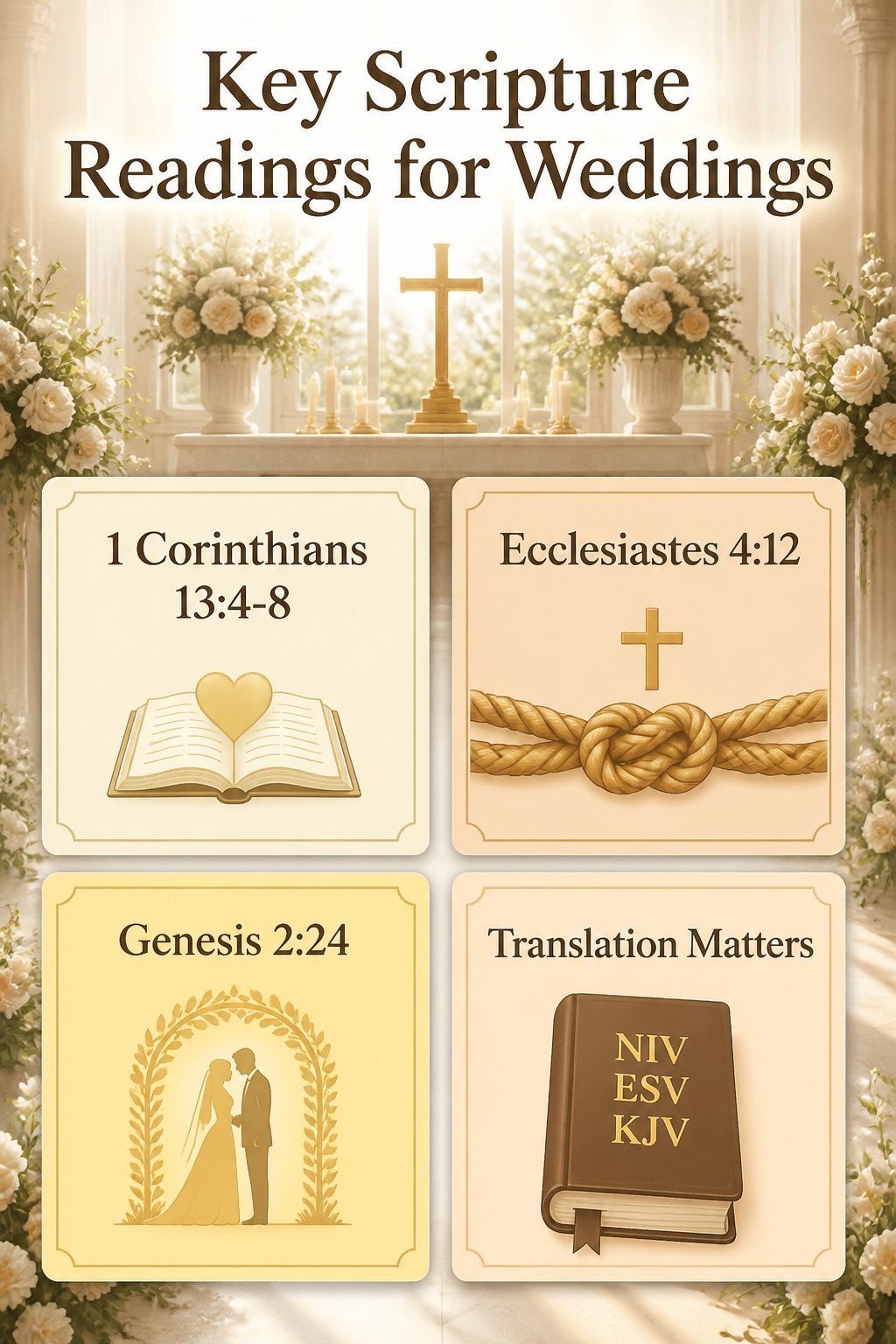
1 Corinthians 13:4–8 lands in nearly every Christian ceremony I plan, and couples rarely need convincing once they hear it aloud. The passage builds its definition of love through action: patient, kind, not self-seeking. It gives guests something to hold onto during the vows that follow, a standard the couple is publicly signing up to.
Ecclesiastes 4:12 works differently. The three-strand cord, not easily broken, shifts the focus from romance to endurance. Couples choosing this one usually want God named as the third strand explicitly, a reminder that the commitment outlasts the wedding day.
Genesis 2:24 frames the structure itself: leaving, cleaving, becoming one flesh. It answers the "why" of the ceremony format rather than the feeling of the moment. I have seen this read by fathers of the bride more often than by the couple themselves, which layers its own meaning onto the text.
Translation matters more than couples expect. The "love is patient" phrasing everyone recognizes sits in the NIV or ESV; switch to the KJV and the cadence changes, sometimes jarringly. My recommendation is to read the verse aloud in the version your officiant will use, not the one you remember from childhood.
Unity Ceremonies Beyond the Candle
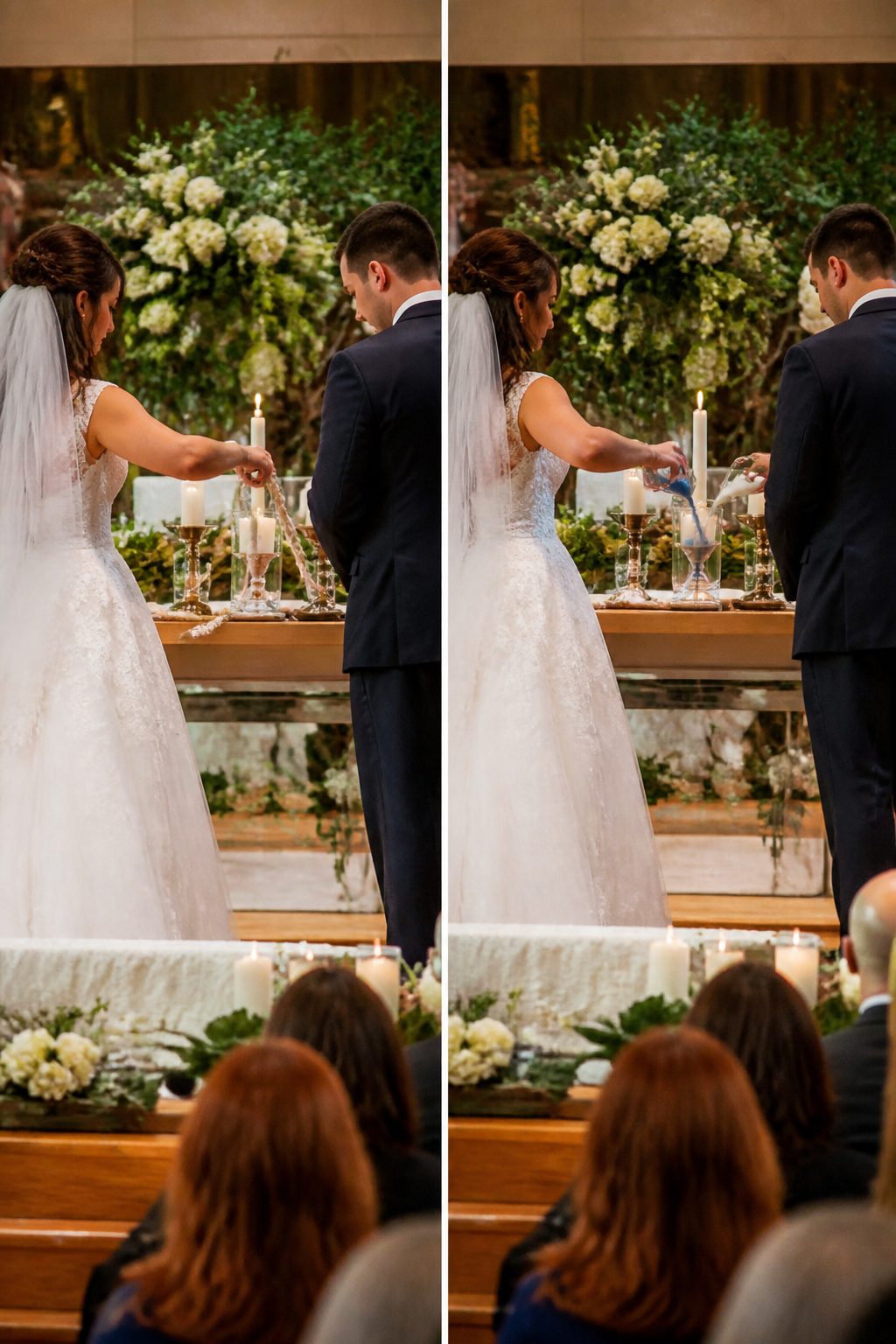
A unity ceremony marks the moment two people stop moving as separate lives and start moving as one. The unity candle does this with three candles on the altar: two tapers, usually lit by the couple’s mothers, and one pillar the bride and groom light together from those two flames. Some traditions then blow out the individual tapers to show two becoming one flesh, while others leave all three burning to honor the individuality each person still keeps inside the marriage. The cord of three strands works the same idea differently, braiding one rope for God, one for the husband, and one for the wife into a single cord the couple takes home. A cord braided this way is stronger than any single strand, which is why some couples build it right into the vows. Sand pouring and feet washing show up too, depending on the church and the region, and none of these are required. What matters is picking a symbol that actually means something to the two of you, not just adding a candle because the venue includes it in the package.
How Denominations Differ
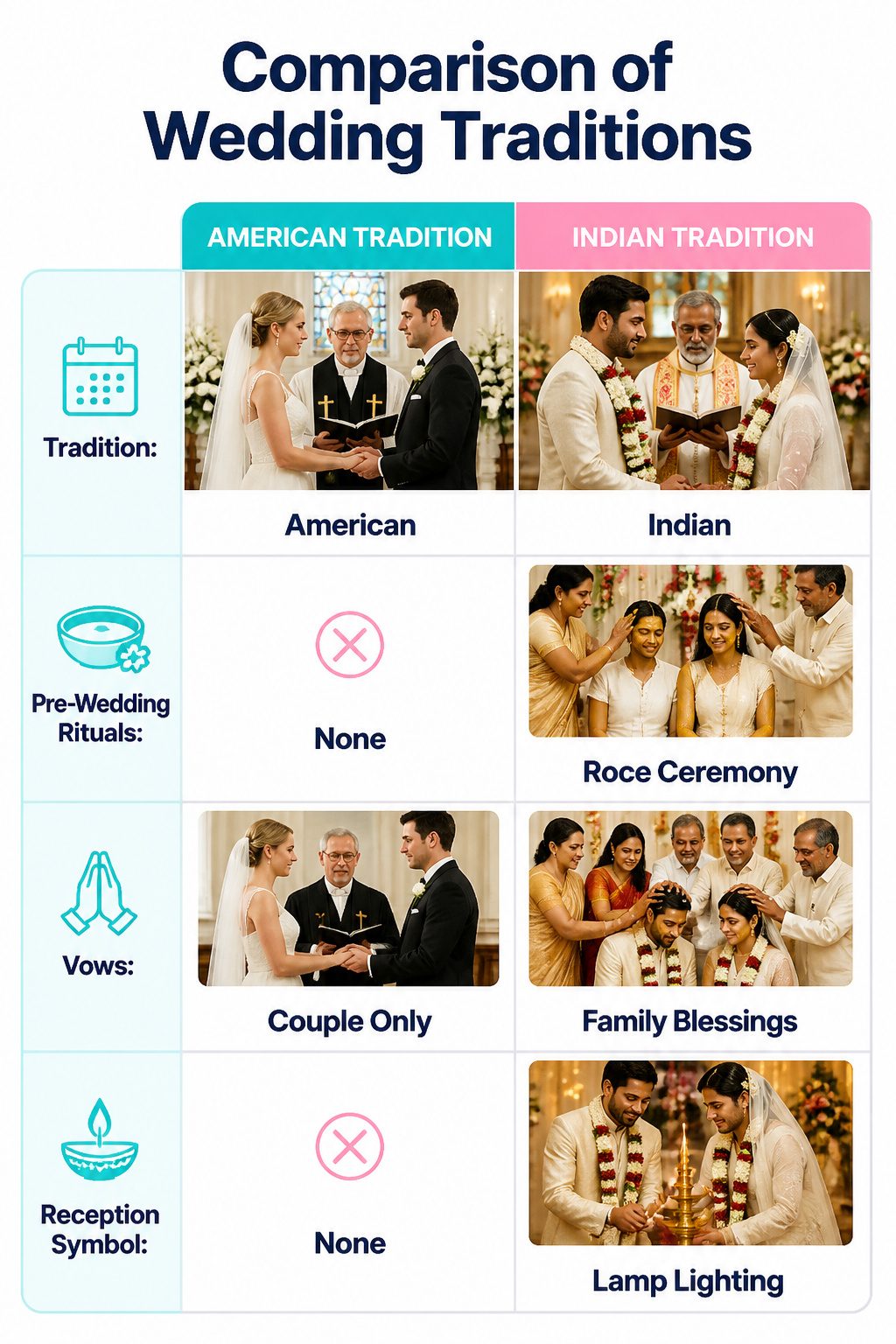
Christian wedding traditions shift noticeably once you move past the familiar Western format. An Indian Christian wedding keeps the church ceremony and white dress, but layers in rituals you would not see at a typical American service. The night before the wedding, parents anoint the couple with roce, a blend of coconut milk and oil, then pray over them. The next morning brings separate blessings at each family’s home before anyone leaves for the church.
The reception carries its own distinct marks. The couple lights a lamp to symbolize keeping Christ’s light in their marriage, then drink sweet milk presented by both mothers as a sign of nourishment and welcome into each new family. The bride often changes into a saree given during the ceremony itself, something a Western bride would rarely plan for.
These variations matter if you are attending or blending traditions. Catholic, Orthodox, and Protestant orders already differ in length and symbolism; add cultural heritage and the program you receive may need a brief explanation, not an apology. The core stays familiar enough that guests recognize the commitment being made, even when the surrounding customs are new to them.
Frequently Asked Questions
What are the most popular Christian wedding traditions?
The most widely recognized Christian wedding traditions include the white wedding dress, the bridal veil, the father giving away the bride, readings of Bible verses, exchanging rings, the unity candle, and taking communion. Scripture readings and prayer appear in nearly every ceremony, while elements like foot washing and the Unity Cross remain less common but carry deep biblical roots. Most couples choose a handful of these rather than including every option.
Can you have communion during a wedding ceremony?
Yes, many couples take communion together during the service, either before or after their vows. The bread and wine represent Christ’s sacrifice, and receiving them together makes the couple’s first act of worship a direct acknowledgment of that covenant. Some invite the full congregation to participate, while others keep the moment intimate. Pastors typically prepare the couple to approach it with appropriate reverence rather than treating it as decoration.
What Bible verses are commonly used in Christian weddings?
1 Corinthians 13:4-8 remains the most requested passage, the one opening with "Love is patient, love is kind." Genesis 2:24 and Ecclesiastes 4:9-12 run close behind, the first for its language about leaving and cleaving, the second for its image of the three-strand cord. Colossians 3:14, Proverbs 3:5-6, and Ruth 1:16-17 also appear regularly. Translation matters, couples should hear the verse read aloud in the version their officiant plans to use.
How long is a Christian wedding ceremony?
Most ceremonies last between 20 and 45 minutes, depending on which elements the couple includes. A service with multiple scripture readings, communion for the congregation, and several unity ceremonies will run longer than one with a single reading and brief vows. The article does not specify exact timing for individual components, so actual length varies with each choice.
What makes a wedding venue ideal for a Christian ceremony?
An ideal venue provides flexibility for faith-based elements and supports family-centered celebrations. The article notes that the unity candle works in a chapel or a backyard, suggesting adaptability matters more than a specific building type. Venues that accommodate prayer, scripture readings, communion logistics, and space for congregational singing allow couples to include the traditions that matter to them without forcing compromises on symbolism.