These poses run from a blindfolded first look to a rope swing over open air, with a cliffside veil shot in between that makes the drive and the wind worth it.
What picks one over another is how much performance you are willing to give the camera, because the best frames come either from real tension or from forgetting the lens entirely.
1. Blind Folded
A blindfolded approach turns the minutes before the first look into something you will actually remember. One partner covers the other’s eyes, and the photographer catches the grin before the reveal.
This pose works because the tension is real, not performed.
The person waiting knows what is coming; the blindfolded one does not. That gap is where the good shots live.
When the bride is blindfolded, her ring hand still faces the camera without looking forced.
A soft fabric blindfold photographs cleaner than a necktie or sleep mask, which can read as costume. Keep the walk short so the pose stays playful rather than awkward.
2. The First Look
The first look is the shot most couples already know they want, which makes it easy to rush through and miss.
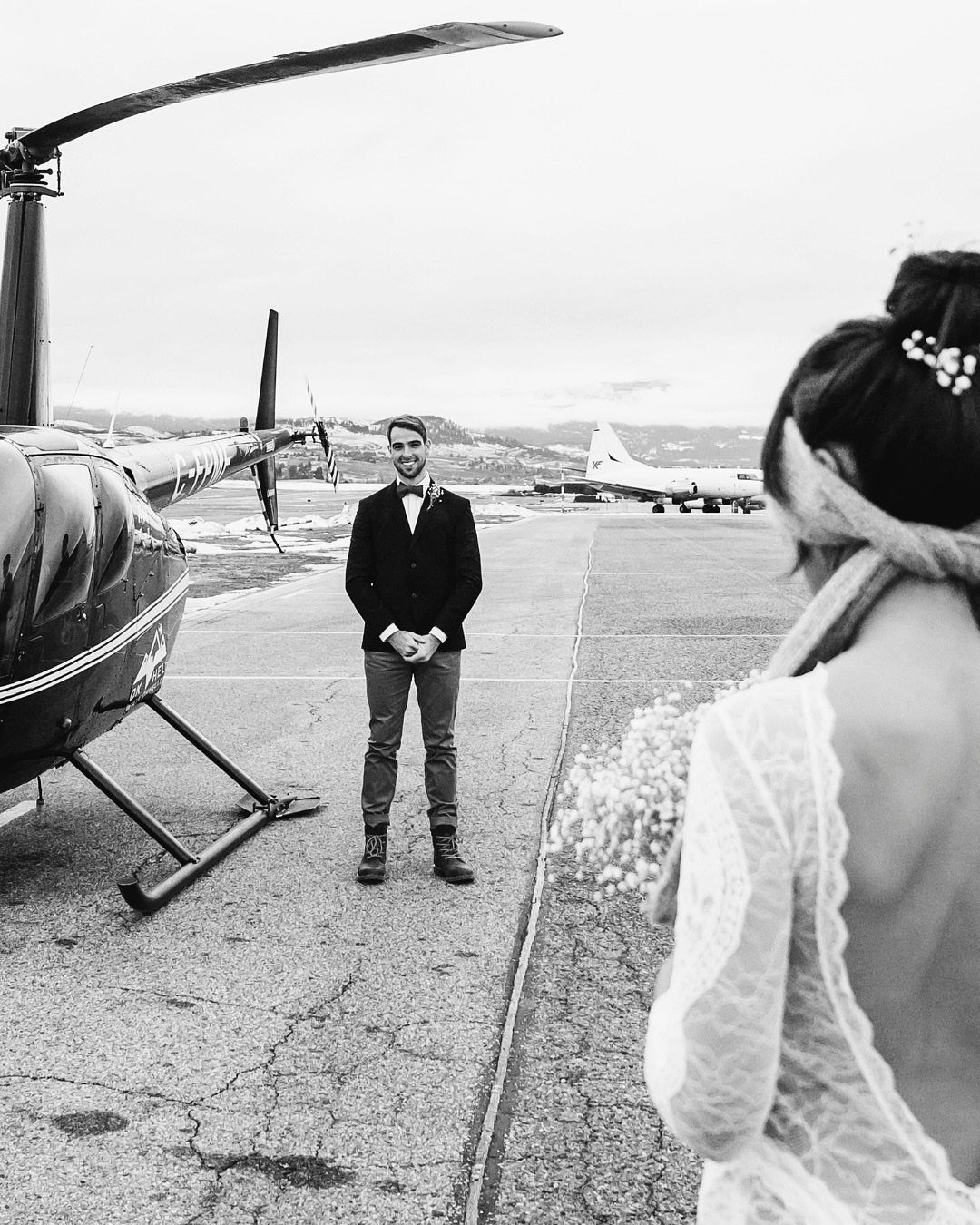
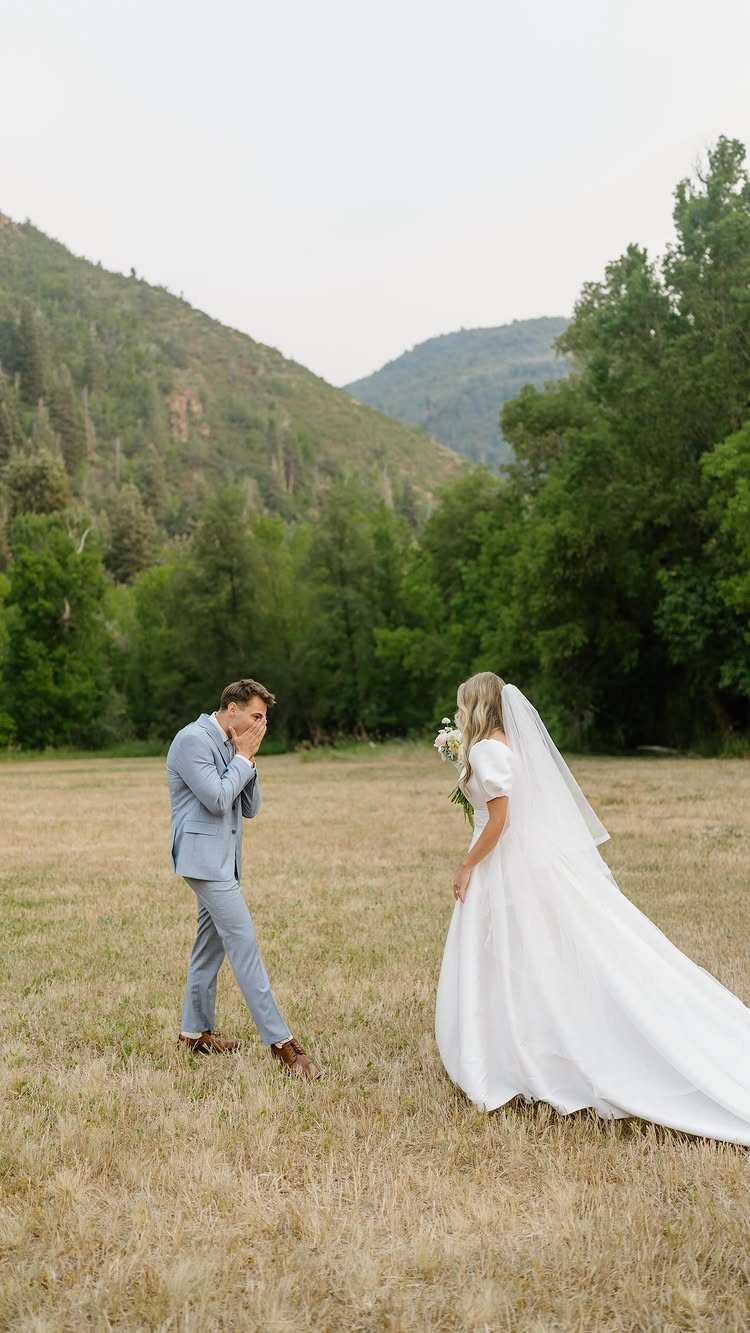
The groom waits with his back turned.
The bride walks up, taps his shoulder, and the photographer stays fixed on his face for the turn. That reaction, the hand to the mouth or the half-laugh, is what you are paying for.
What separates a usable first look from a great one is the setup. A private spot matters: not a corridor where guests peek, not a corner with event staff walking through.
A little time alone is enough. A wide open space works because nothing competes with the couple in it.
Ask your photographer to shoot the approach too, not just the turn. The bride’s face, the dress in motion, the last steps before he sees her, those fill out the album.
3. Final Kiss
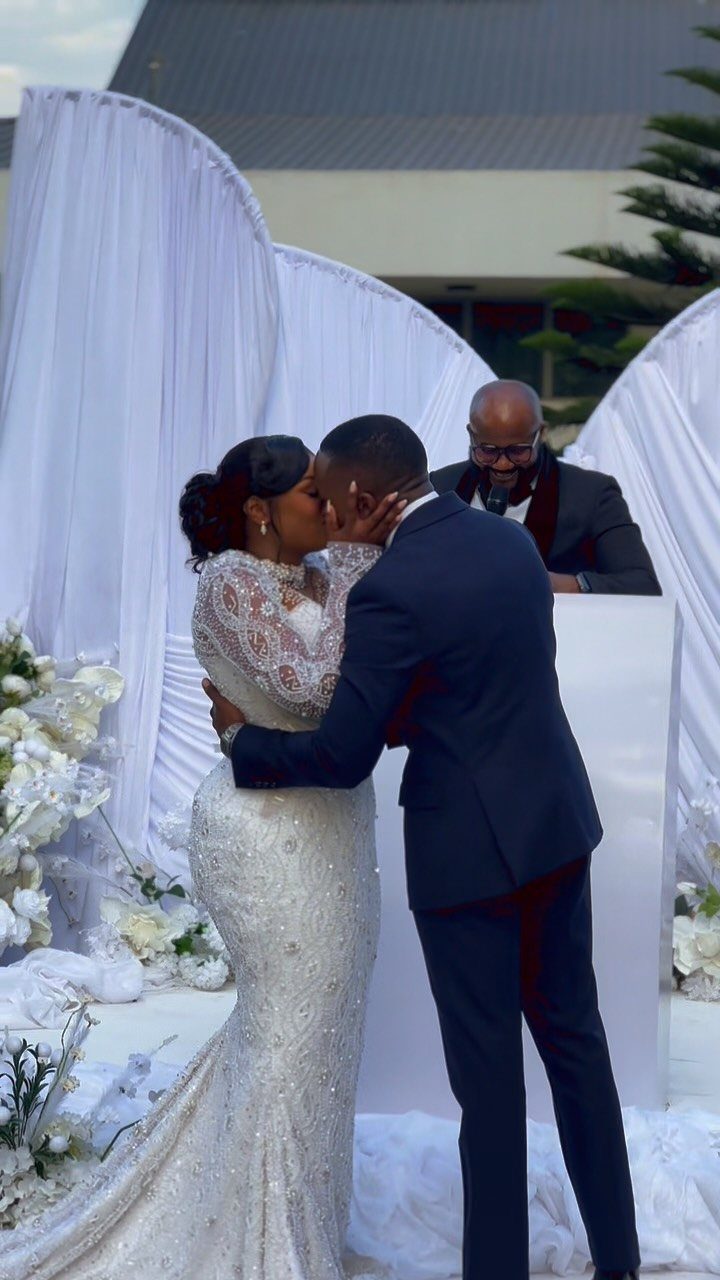
The ceremony kiss is nonnegotiable, but the final kiss after you have both relaxed is where the photographer gets options.
By then the formal weight has lifted. You can try a dip, the groom’s hand at the bride’s back, her weight shifted to one foot.
Shoot more than one version.
A dip looks wrong on some body pairs; a veiled kiss can obscure faces. Having both lets you choose later, when the pressure is off and you can see what actually looks like you.
4. Movement to Showcase the Dress
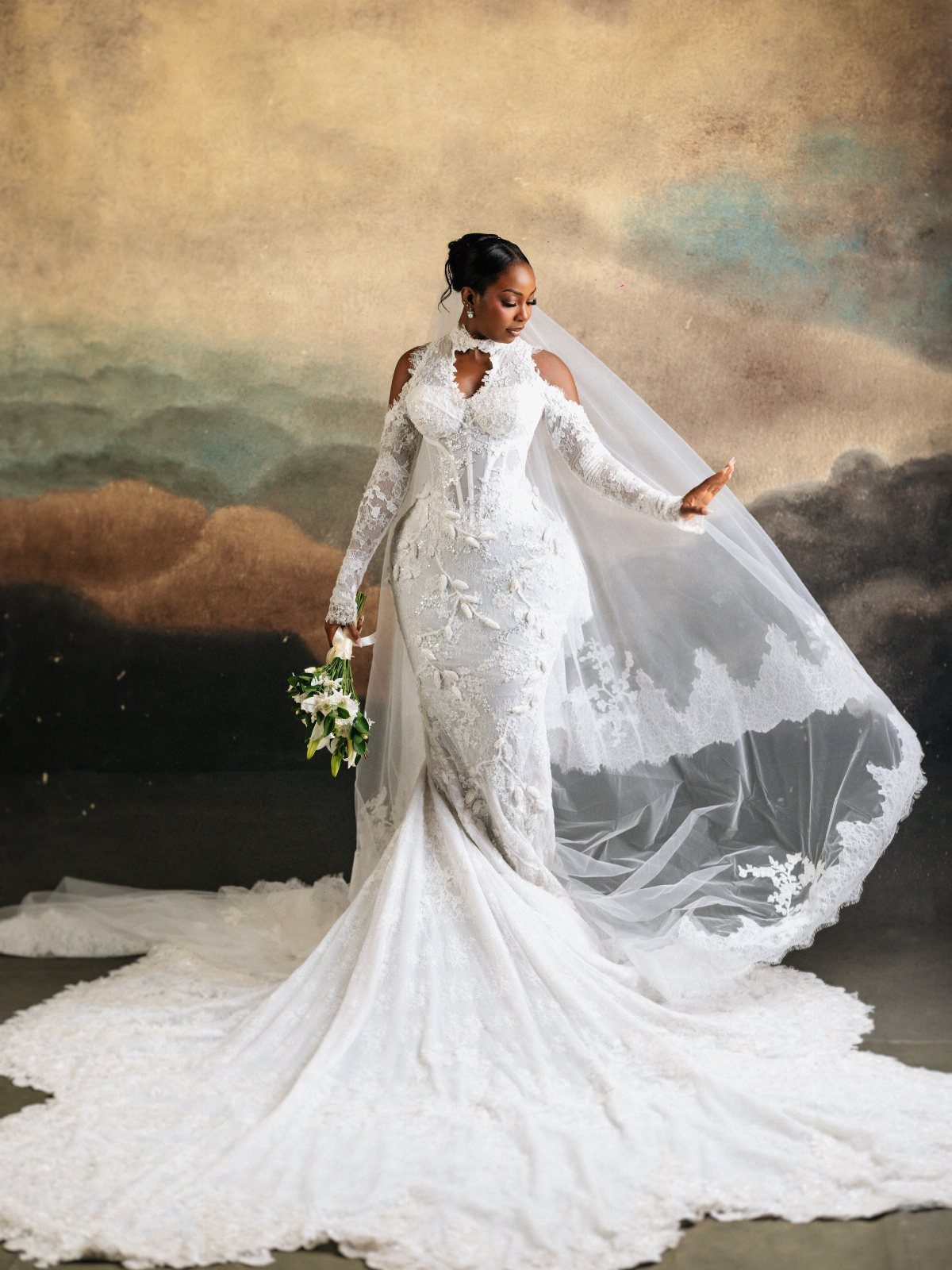
A dress that cost thousands deserves more than standing still in it.
A twirl or a walk toward the camera lets the fabric move and catch the light, which takes coordination, and it is worth practicing once in the dress before the day.
Angles matter. A three-quarter turn flatters most gown silhouettes better than straight-on.
For hands, let them fall naturally or rest at the hip; clutching the skirt bunches the material. A slow twirl, not a spin, lets the photographer catch the dress at its fullest without motion blur.
The backdrop helps. A painted landscape, a plain wall, even open sky, anything that does not compete with the detail you are trying to show.
5. Highlighting Your Best Features
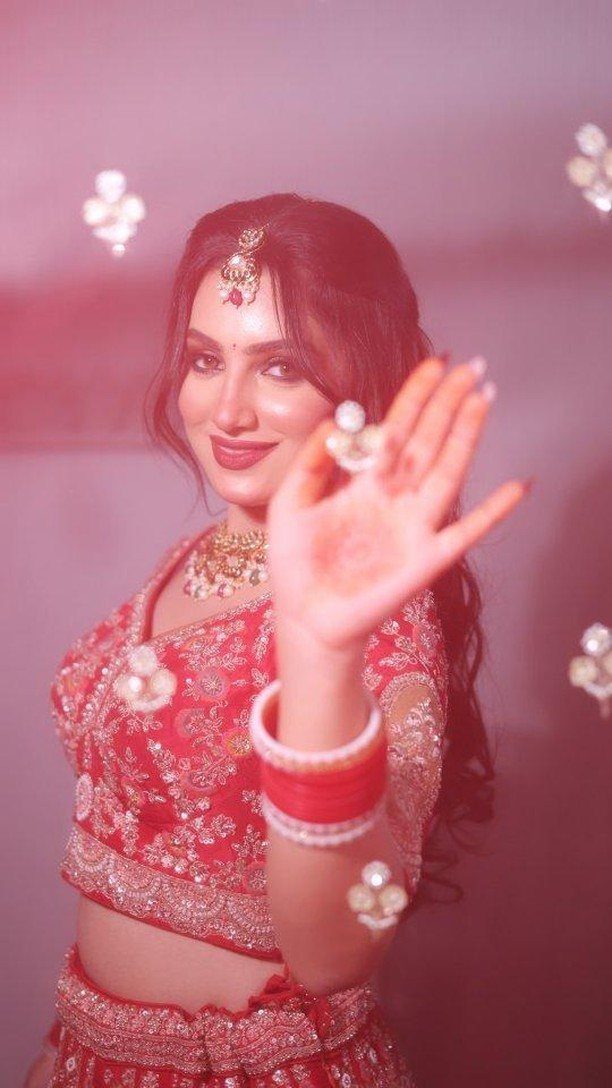
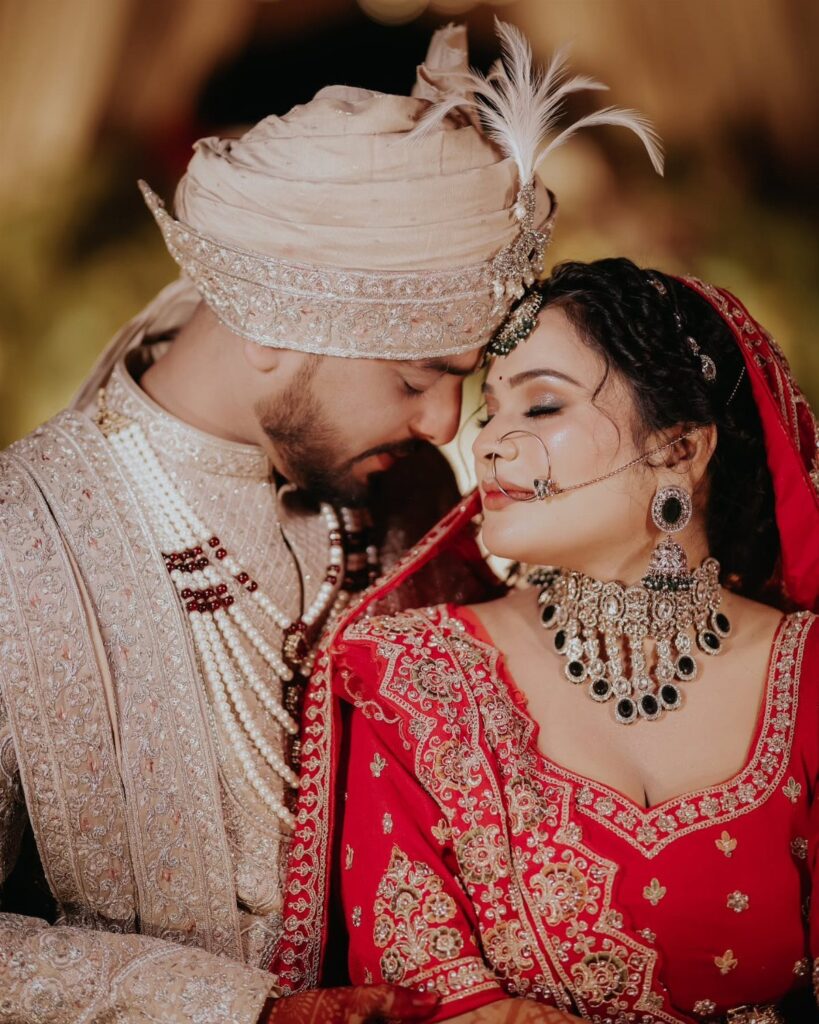
This pose is built around what the bride wants seen: the lehenga’s embroidery, the jewelry, the hand mehndi, all in one frame.
The bride’s face stays sharp, her expression direct. It is a magazine composition adapted for a real wedding, and it works because it is specific rather than generic.
To set this up, know your angles before the photographer asks.
Practice in a mirror which side of your face you prefer, whether your smile shows more naturally with teeth or without. The eyes matter more than the mouth; a relaxed gaze reads better than a forced grin.
6. Relaxed and Natural Expressions
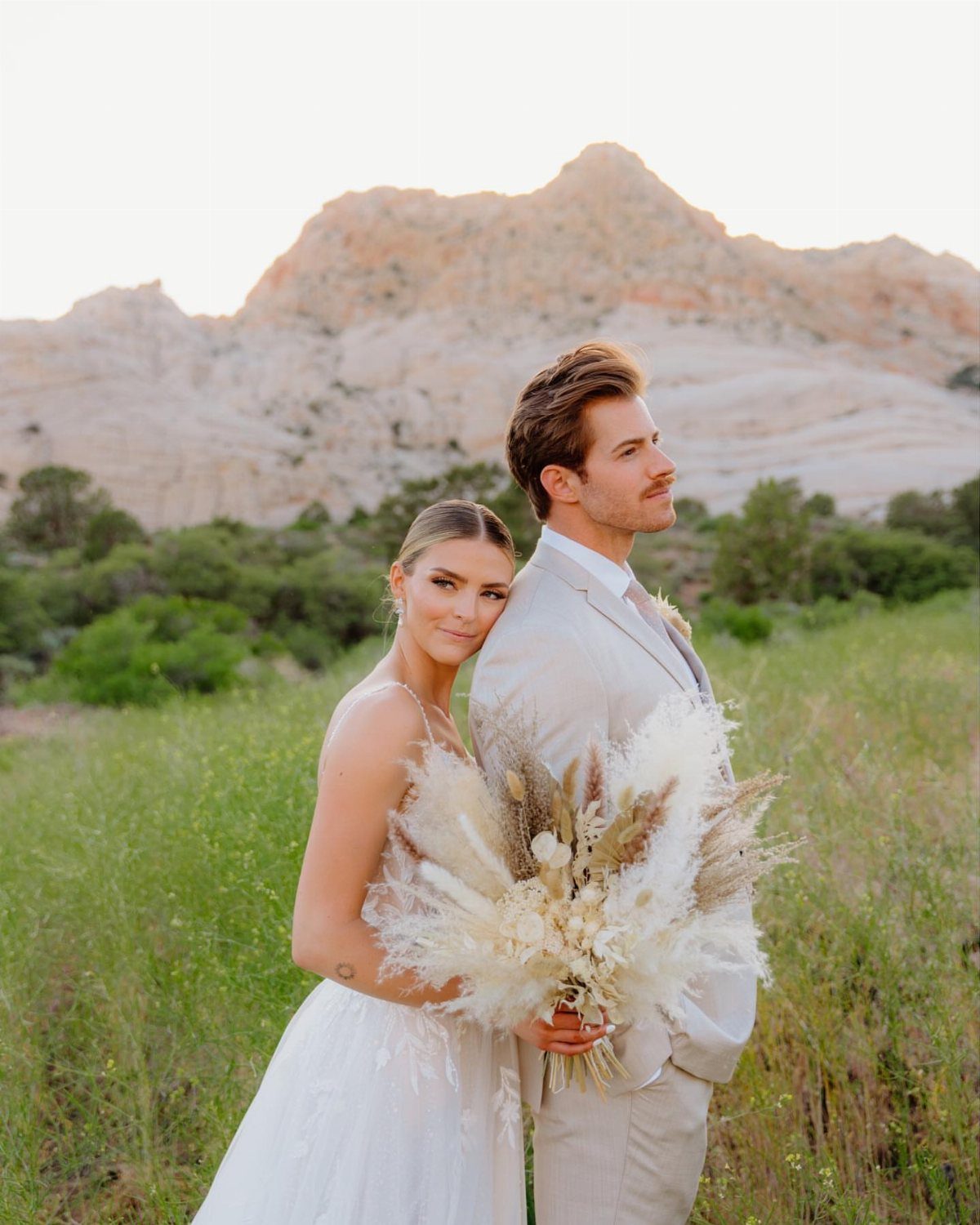
A back-to-back stance looks posed but does not feel posed, which is the balance most couples miss.
Standing this way removes the question of where to look.
The bride rests her cheek on the groom’s shoulder; both face away from the camera, so there is no performance in the expression. The dried bouquet gives her hands something to do, which matters more than people think.
Before photos, shake out your limbs.
Tension collects in the jaw and the shoulders, and it shows. Breathe slowly, in through the nose, out through the mouth, right before the shutter clicks.
Engage with whatever is actually there, the grass, the heat, the person standing with you. The photographer catches what is happening, not what you are trying to make happen.
Some of my favorite shots from weddings I have planned came from the moments between poses, when the couple forgot they were being photographed.
7. Seated Bride Beside Standing Groom
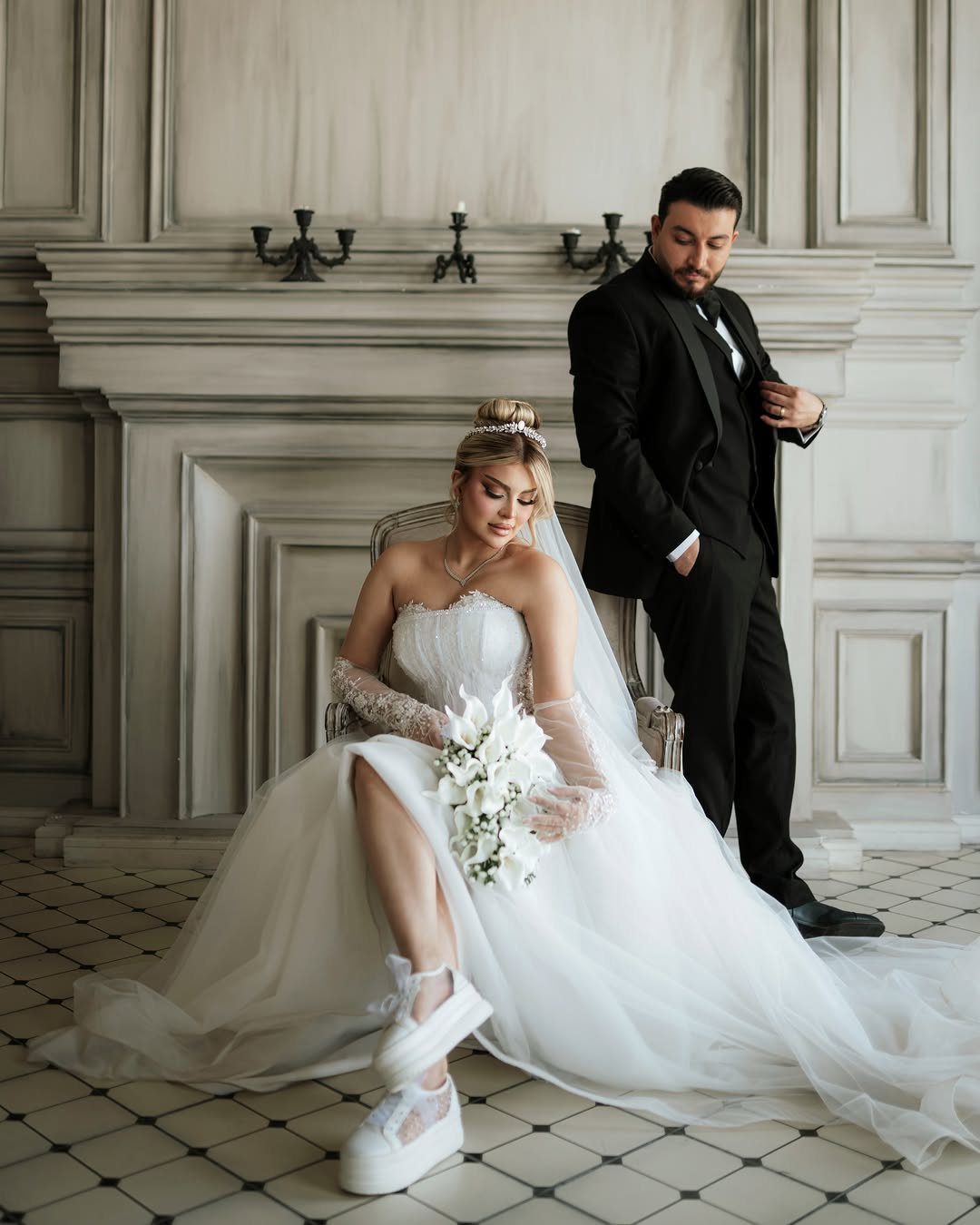
This pose breaks the standing-couple default without looking like you tried too hard.
The seated bride lets the dress pool at her feet, which shows the full shape of the gown in a way standing rarely does.
The groom standing beside her gives the frame vertical balance and creates a natural spotlight effect, his height drawing the eye down to her.
A chair with lines that match the dress shape, or contrast it on purpose, does more work in this pose than most couples expect.
An armchair with lines too ornate competes with the dress; something simple lets the couple stay the subject. The bride’s bouquet rests in her lap, visible but not held high like a trophy.
Clean white sneakers under the gown read as personality rather than accident; scuffed ones just look like you forgot dress shoes.
If your shoes are meant to show, plan for it. If not, the dress hem should clear the floor sitting down.
Check the room temperature.
8. Scenic Cliffside Landscape Pose
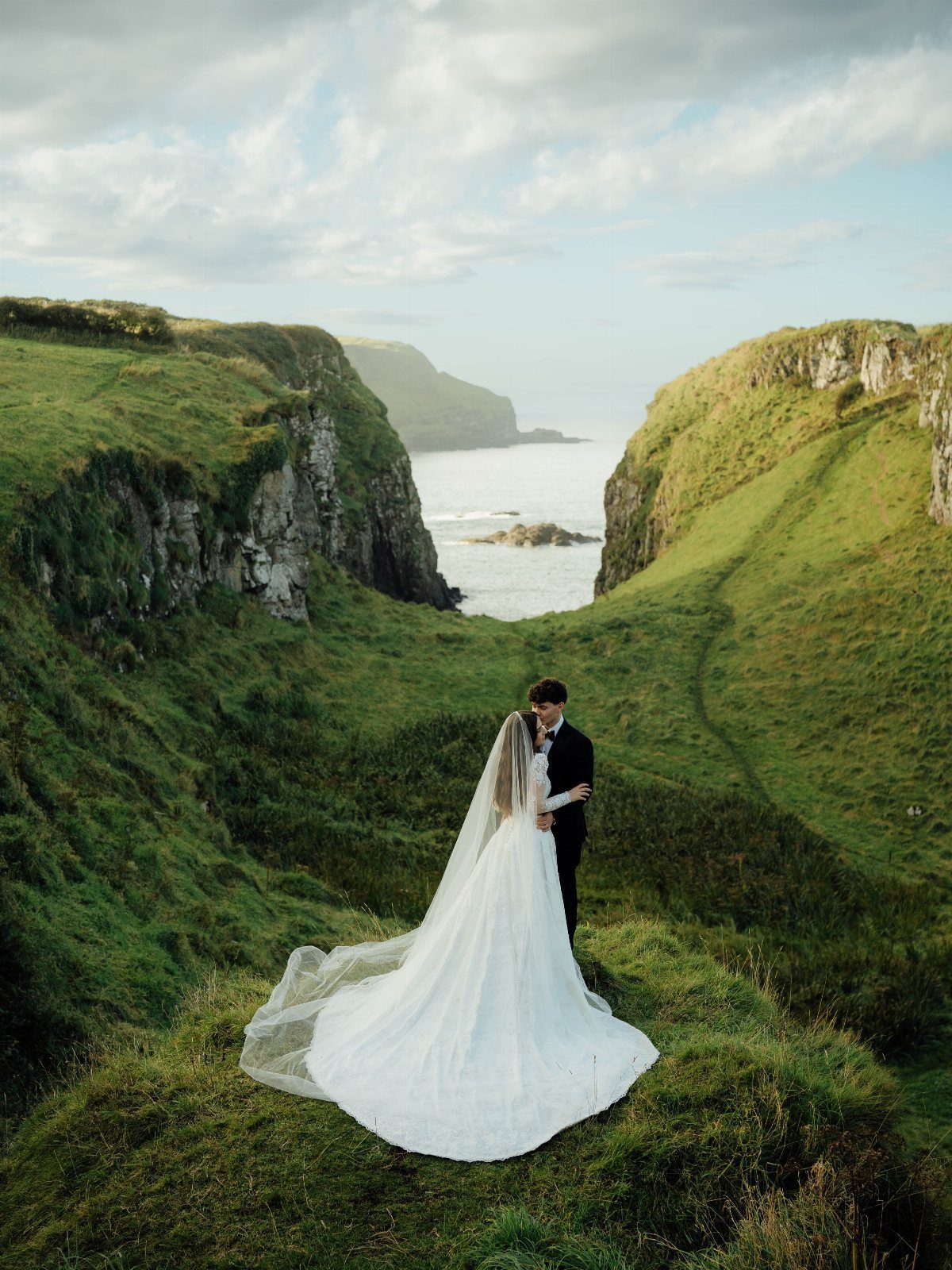
A cliff overlooking water gives scale no ballroom can match.
A long veil lifting in wind against open sky gives the eye something moving to follow, which is worth the drive and the hair risk. Wind at a cliff edge is predictable; use it.
A veil too heavy falls flat, too light tangles. Mid-weight fabric holds the shape the photographer catches.
The grass underfoot is uneven, which means heels sink.
Bring flats for the walk out, or plan to be carried. The groom in a full tux reads formal against the wild setting; that contrast is the point.
Timing matters for the light.
An hour before sunset turns the ocean metallic, but fog rolls in fast on some coasts. Scout the day before if you can, or trust your photographer’s local knowledge.
This pose trades the controlled backdrop for something alive. A scenic cliffside landscape pose suits pairs who want the place remembered as much as the people.
9. Playful Rope Swing Pose
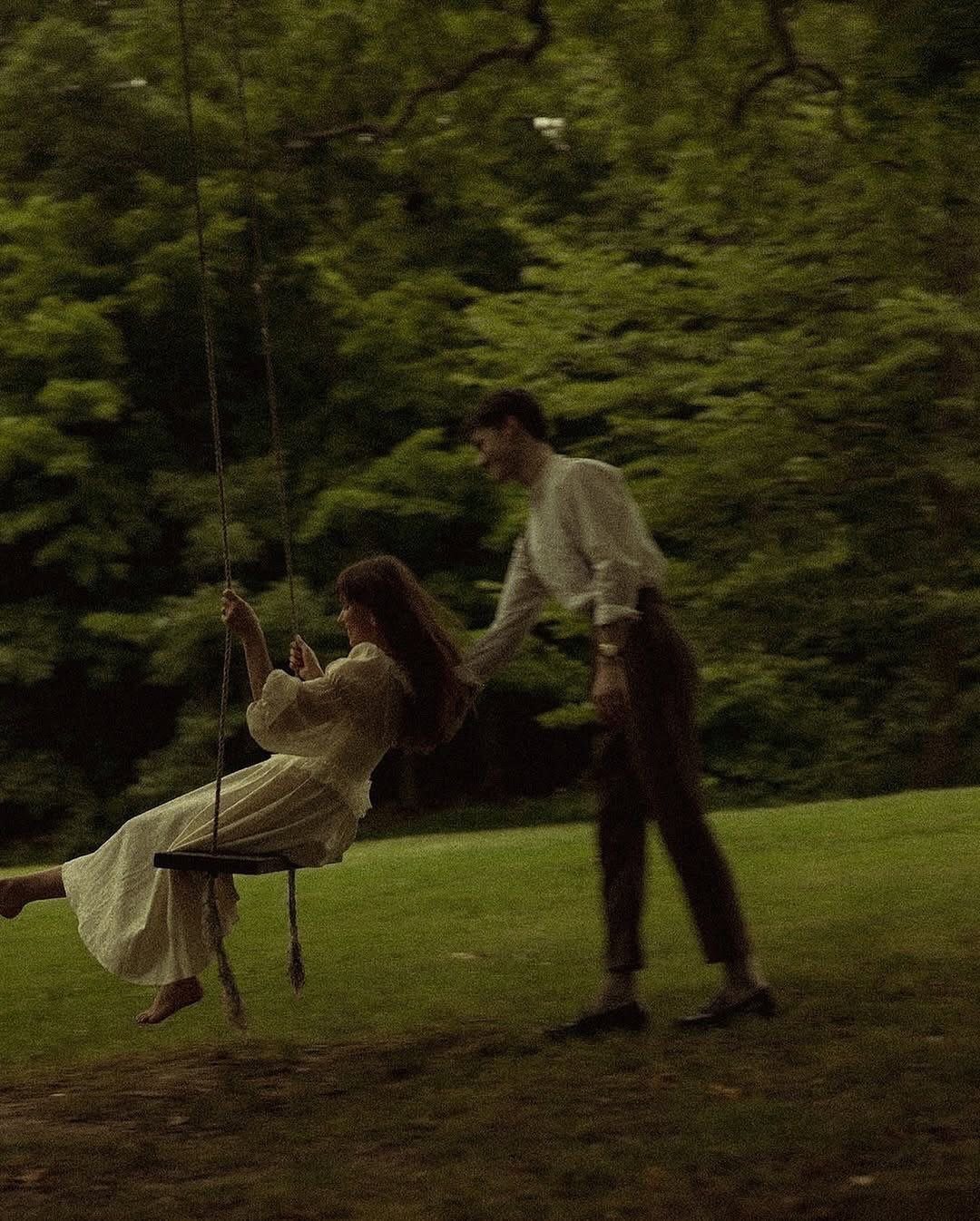
A rope swing in a tree turns the couple into something from a storybook, which sounds romantic until you consider the physics.
The bride is barefoot, which is practical for grip and for the ground she will push from.
The groom stands behind, hands at her back, controlling the motion. That division of roles, her seated and facing forward, him standing and hidden, makes this a bride-forward shot in a way that still includes him.
The swing itself needs checking. A wooden plank seat stays still under shifting weight and photographs without the busy tread pattern a tire brings.
Test the rope height before the dress goes on; a seat too low drags the hem, too high and the push looks strained.
Forest light is patchy. Morning shoots even out the shadows better than midday, when dappled sun lands hard on faces.
This pose asks for movement, which means multiple takes.
Budget the time, and bring someone to reset the swing between shots. The playful part is in the expression, not the speed; a slow arc catches cleaner than a high launch.
Capturing Authentic Moments
The best wedding photos come from comfort, not choreography.
Before the posed shots start, give yourself time with a drink and the people you actually like. Your shoulders drop, your jaw unclenches, and the photographer gets something real to work with.
Talk to your photographer before the day about what makes you self-conscious. They cannot avoid angles you hate if they do not know them.
Build extra time into the photo schedule; a rushed timeline shows in every frame. When everyone is watching the clock, you perform instead of relax.
Let the photographer catch you mid-laugh, mid-step, mid-conversation. The shots between poses are the ones couples usually want enlarged.
Choosing the Right Background
A background should do work without demanding attention. The venue you chose already carries your taste; let it show rather than compete.
Match your formality to the setting.
A full tux against open cliffs reads intentional, not mismatched. The same tux in a plain hotel corridor looks like you forgot to scout.
If the venue is ornate, keep the pose simple. If the space is bare, your expression and the dress detail carry the frame.
Season shapes what is available.
Flexibility in Posing
No pose works for every couple. The dip that flatters one pair looks strained on another; the blindfold grin that feels playful to some reads as costume to others.
Your body shapes, your height difference, your actual comfort with being looked at, all of this matters more than the pose’s popularity.
What photographs beautifully in motion may feel ridiculous in your body. Trying a pose at home first beats discovering it does not work in front of family.
Give your photographer license to abandon the shot list if something better is happening. The rigid plan gets the safe photo; the flexible one gets the one you keep.
Importance of Movement
Stillness is the enemy of a good wedding photo.
Movement also solves the expression problem. When you are focused on walking, on pushing a swing, on not tripping in grass, you forget to perform for the lens.
Coordinate the motion with your photographer.
A fast spin gives them nothing usable. Talk through the speed before the shutter starts.
Frequently Asked Questions
What are the top poses for a photoshoot?
The poses that work best for weddings include the blindfolded approach before the first look, the first look itself with the groom’s turned back, a final kiss after the ceremony when you’ve relaxed, movement shots that show the dress in motion, and a seated bride beside a standing groom for variety.
Each works because it captures real tension or real comfort rather than performed emotion.
What are the posing points?
The key points are keeping your back straight and shoulders relaxed, placing hands naturally rather than letting them dangle, and smiling from an actual thought rather than forcing it.
For couples, a back-to-back stance removes the pressure of where to look, and shaking out tension in your jaw and shoulders before the shutter clicks makes the difference between stiff and real.
What is the most flattering way to pose for pictures?
A three-quarter turn flatters most gown silhouettes better than facing straight on.
Figure out which side of your face you like and whether you look more like yourself smiling with teeth or closed lips; a calm look beats a strained smile every time.
Let your hands hang easy or settle them on your hip, because gripping your dress will wrinkle it and pull eyes where you do not want them.