These venue ideas run from a historic ballroom that holds 200 down to an intimate garden capping well below that number, and the right match depends on whether your guest count sits at the top or the bottom of that range.
1. Historic Venues
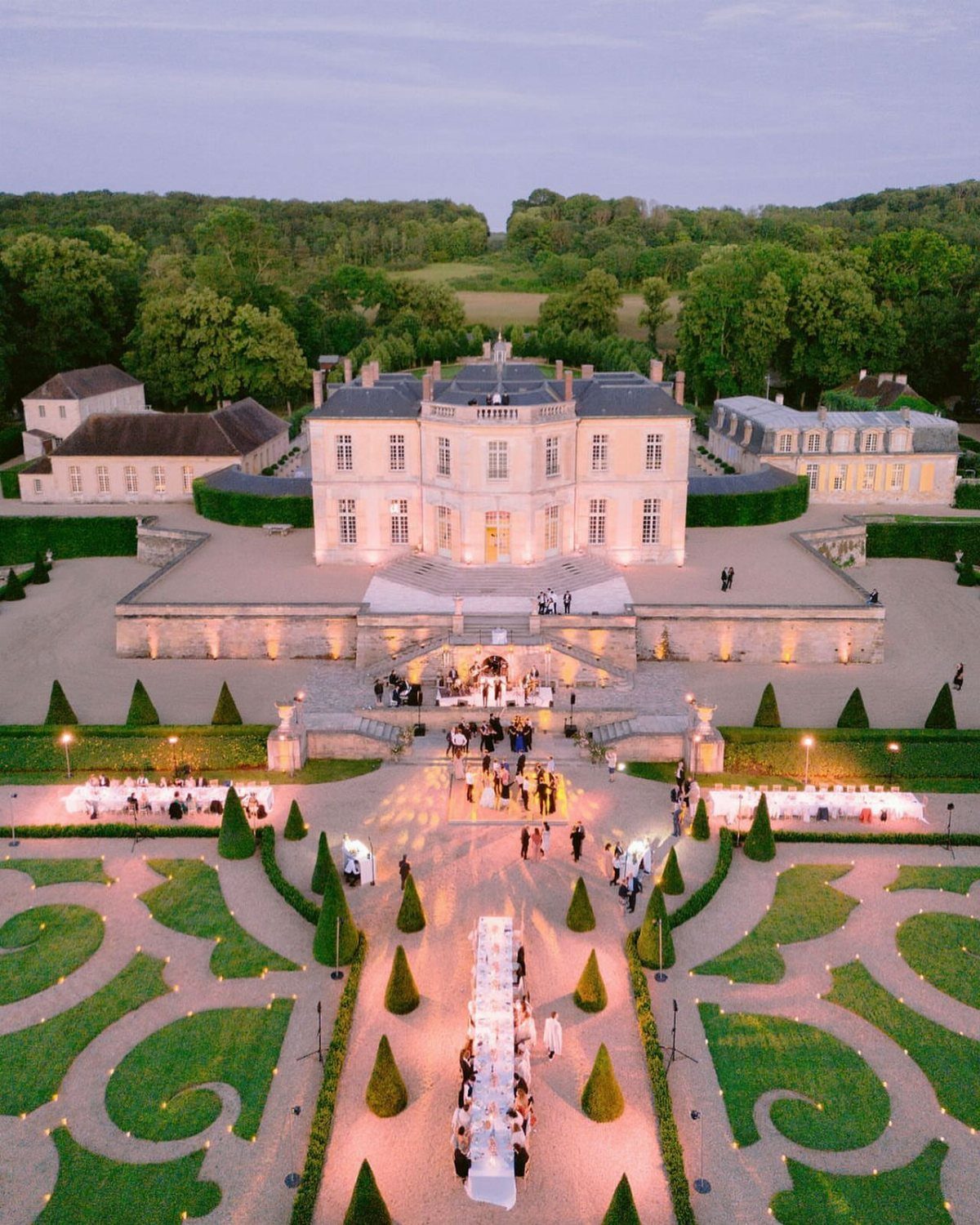
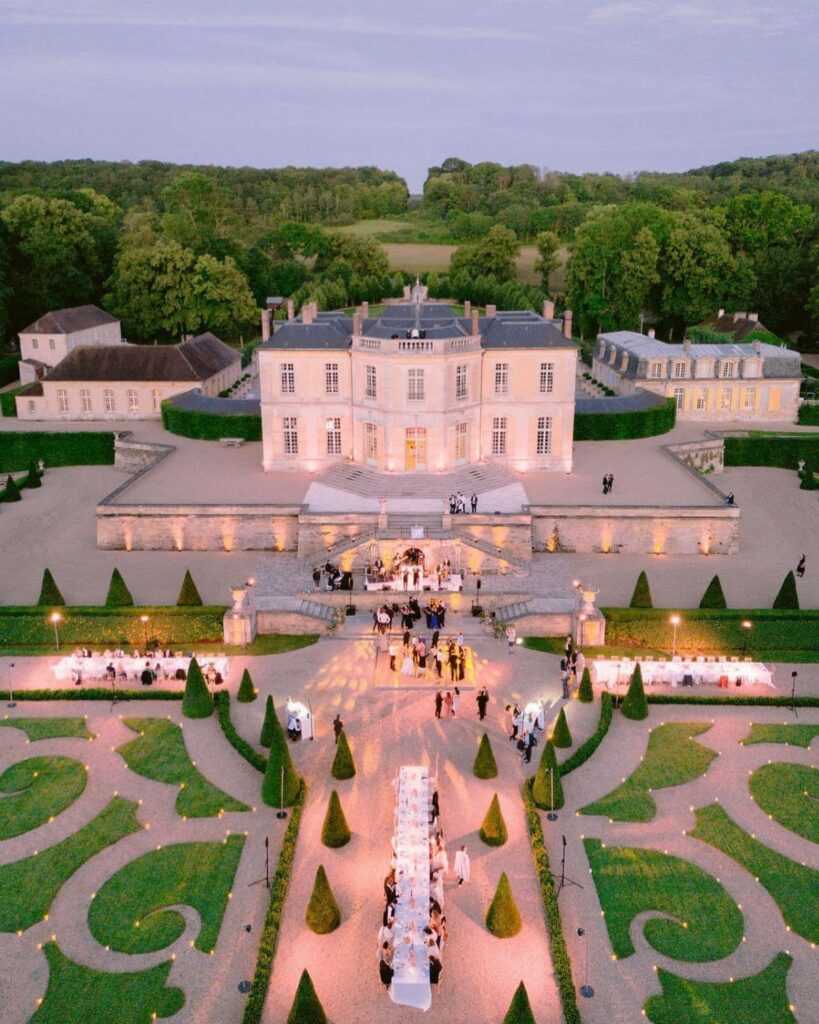
A historic venue carries the weight of every couple who married there before you, and that sense of continuity is hard to replicate in new construction.
Loose Mansion and OceanCliff both layer formal gardens against architecture that has aged into its setting, which means your florist spends less budget filling in blank walls and more on what actually shows.
I have seen couples try to force modern minimalism into a space built for grandeur, and the result feels apologetic.
Let the venue lead: choose linens and lighting that read as belonging to the era, not commenting on it. The trade is fewer customizable surfaces, but the photographs gain a depth that fabric alone cannot buy.
2. Rustic Farm Venues
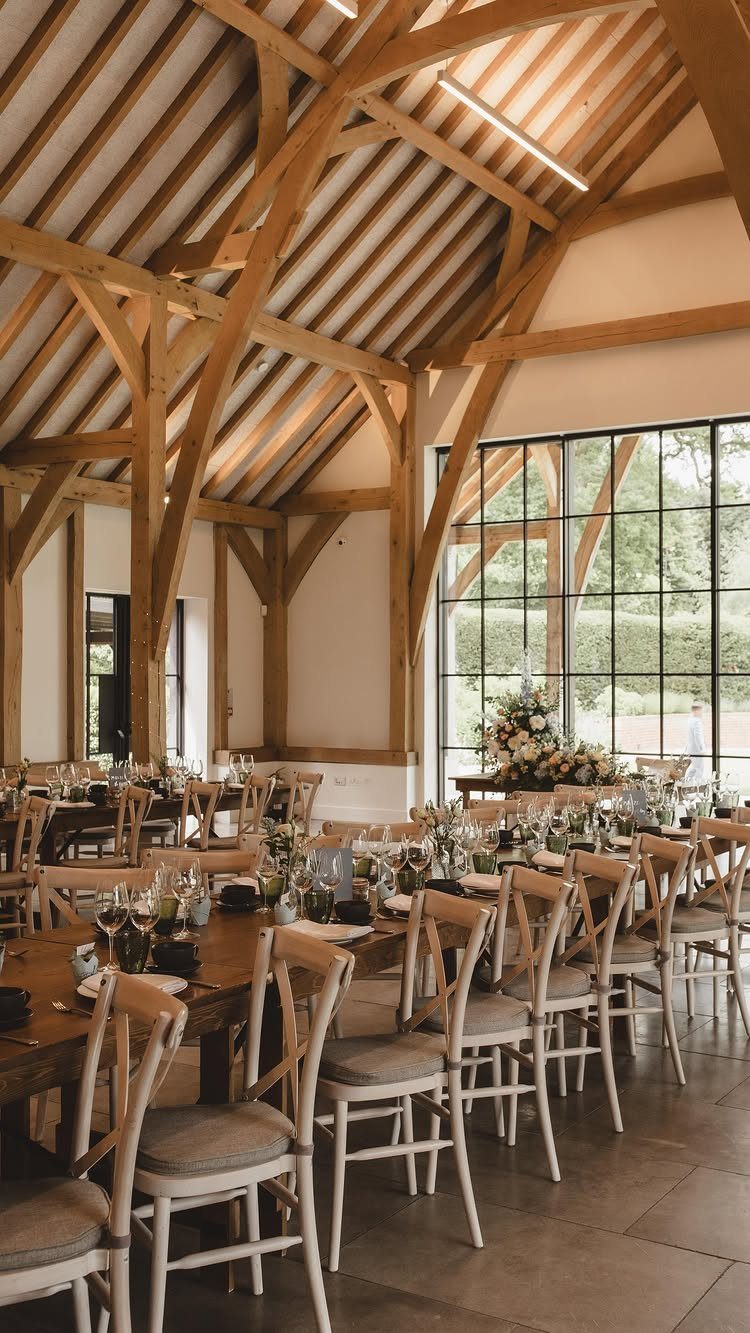
Timber framing and cross-back chairs signal rustic without requiring you to source from scratch.
Round Barn Farm in Vermont and Sweet Hill Farm in New York both charge for what time already did: hand-hewn beams, plank walls darkened by age, morning light falling through factory windows in a grid.
That matters because the rustic look can turn expensive fast when you are importing barn wood to a hotel ballroom.
Here, the venue does the aesthetic work. I would confirm what the rental includes, some barns hand you a blank field and others arrive table-ready, and that gap changes your budget entirely.
One honest check: ventilation for summer heat, because romantic in October can mean stifling in July.
3. Outdoor Ceremonies
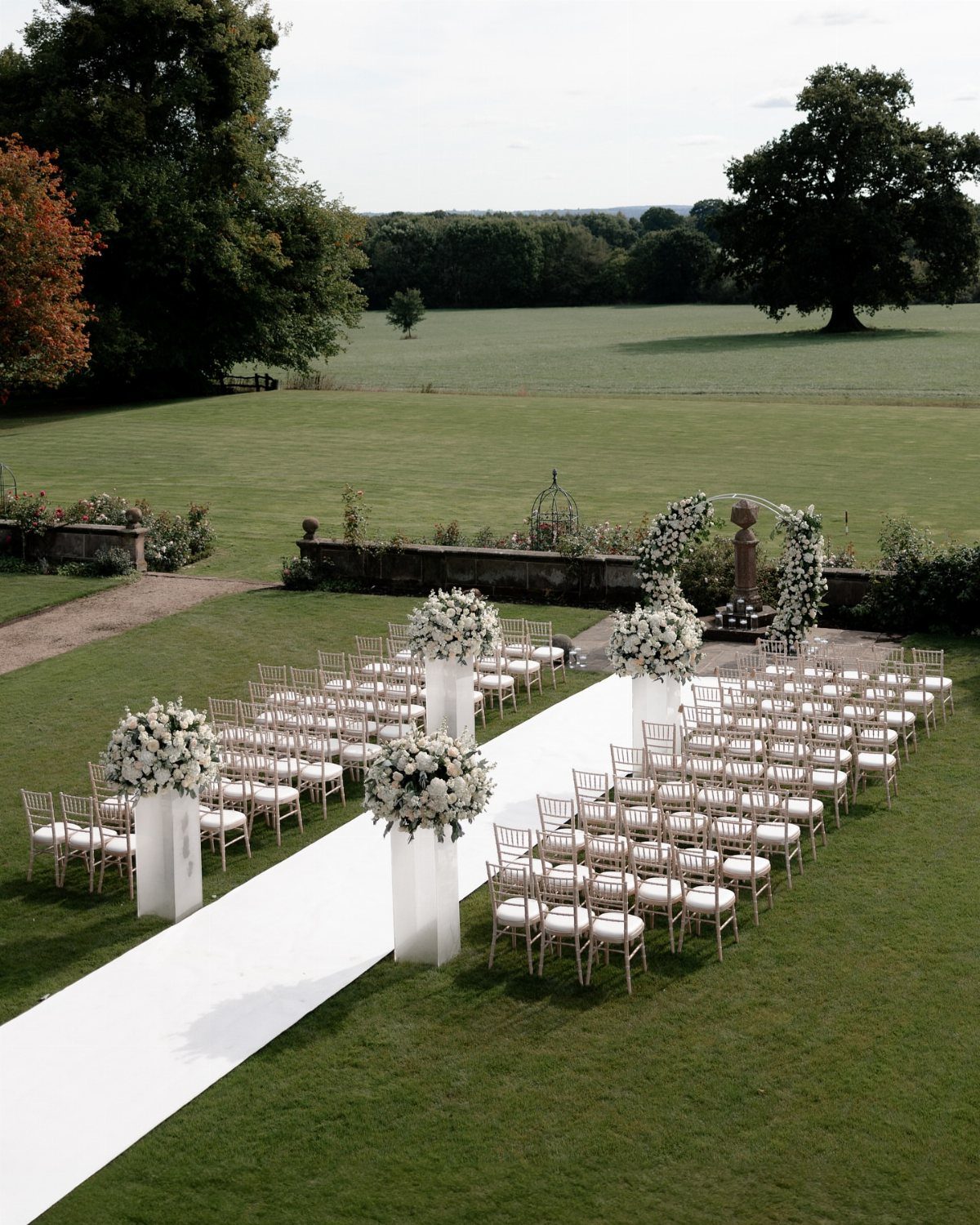
Grass, sky, and an aisle runner that will show every heel mark by cocktail hour. The Beachmere Inn and The Goldfinch Room both offer outdoor ceremony space, which sounds simple until you plan for weather you cannot control.
My recommendation is to book the indoor backup simultaneously, not as a maybe, and to walk the sun path at your ceremony time, not at the venue tour.
The open-air cathedral at Stowe Mountain Resort, mentioned in my notes for mountain views, works on the same principle: natural backdrop, minimal decoration, maximum dependence on conditions.
Budget for heaters or fans depending on season, and for a sound system that carries over wind.
4. Unique Indoor Spaces
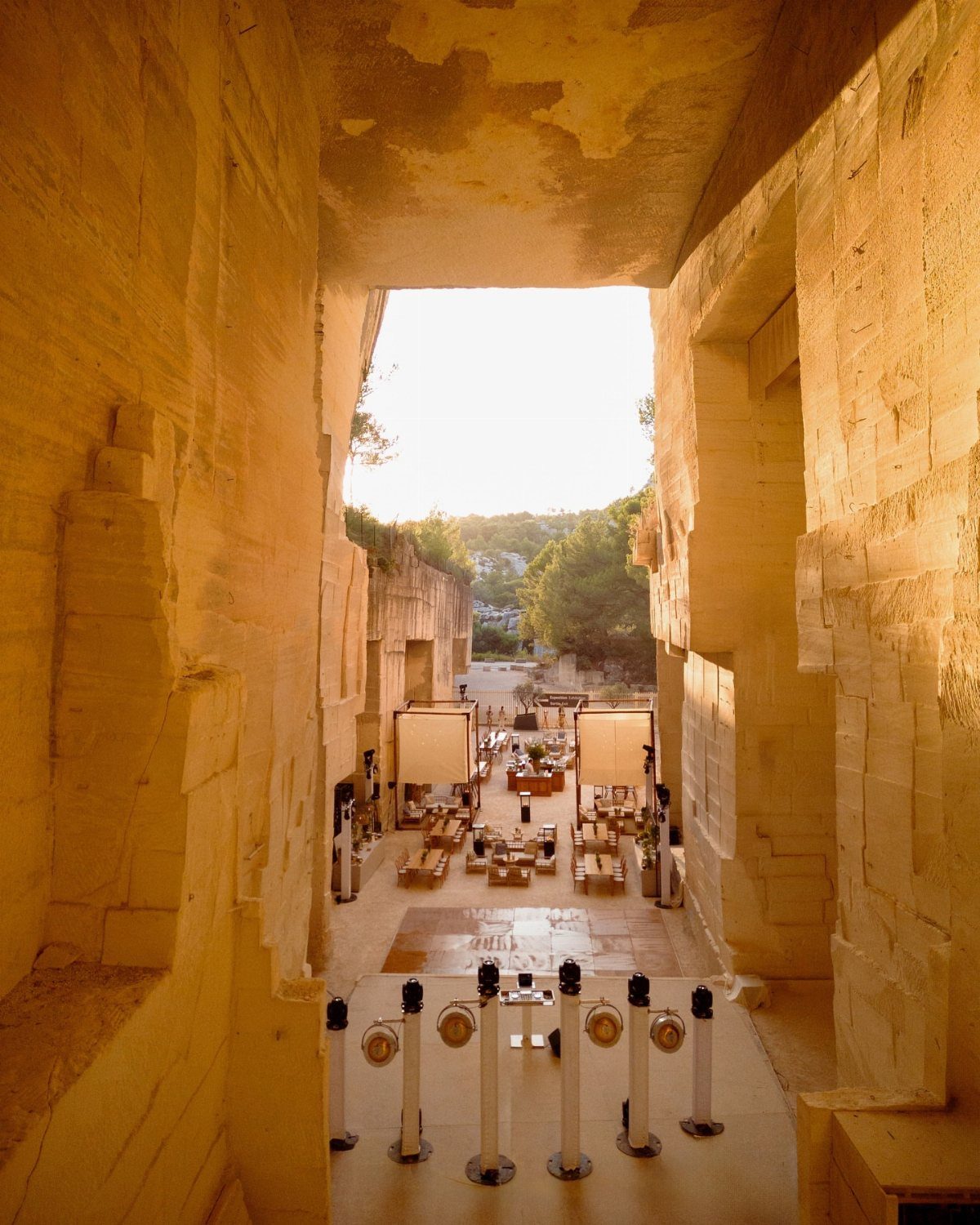
A stone quarry turned event space reads as discovery, not decoration, and that distinction matters for couples who want guests to remember where they were.
The Vox Theater in Kansas City works on this principle: the building is the statement, your choices amplify rather than create it. The how-to here is restraint.
One bold element, a colored glass installation, a single dramatic floral piece, and then step back. What I would avoid: draping the stone to soften it.
Stone is what you are paying for. Confirm load-in access for vendors, because industrial or converted spaces often have freight elevators or narrow passages that standard wedding timelines do not account for.
5. Waterfront Ceremonies
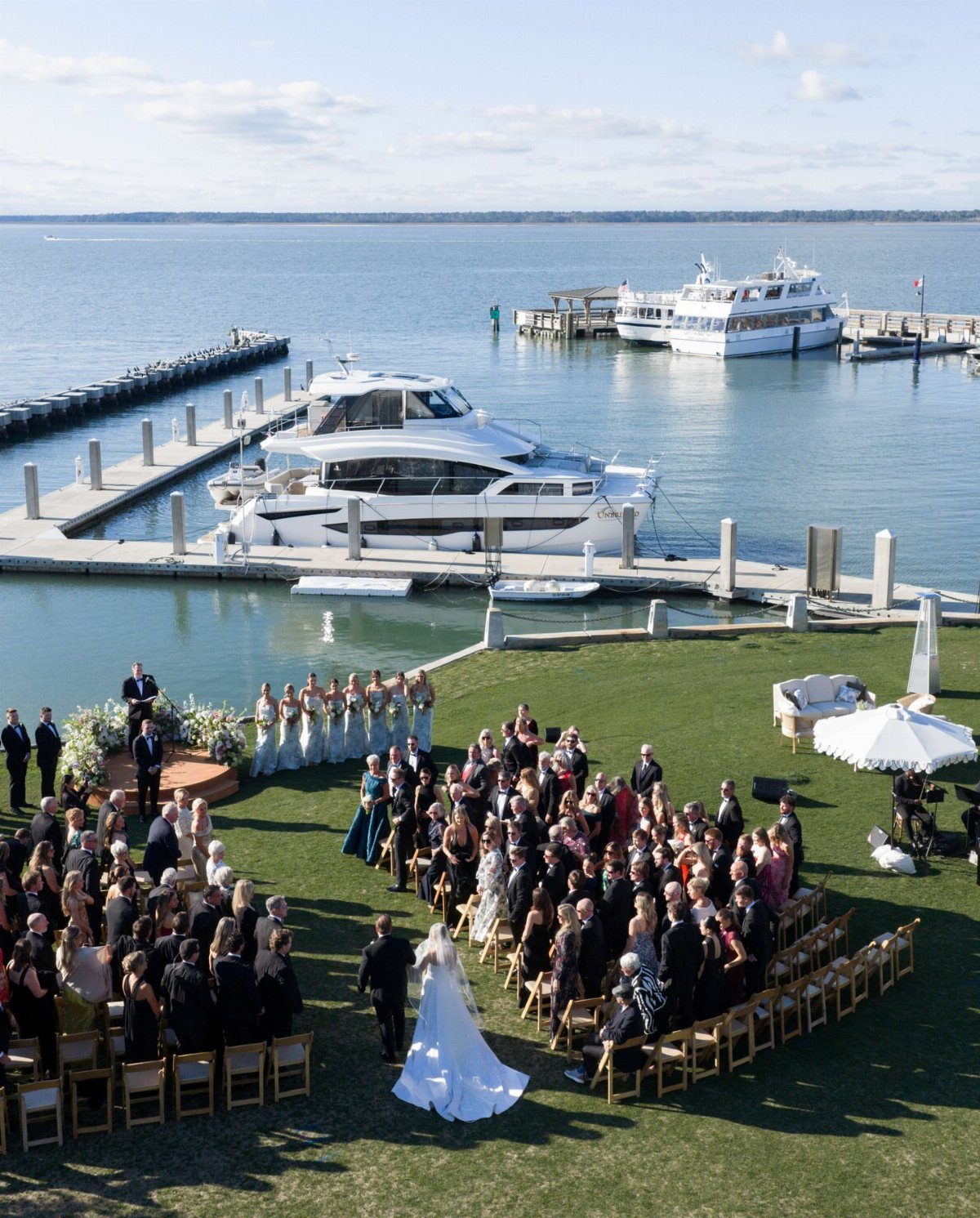
Waterfront ceremonies carry their own light, literally, reflecting off harbor and yacht surfaces in ways that flatter every hour of the day.
Regatta Place in Newport positions you among working boats, not a staged backdrop, and that authenticity is what separates memorable from pretty.
The practical concern is tide and dock traffic, not just weather. I would ask about marina activity schedules, because a regatta departure mid-ceremony is a noise and visual interruption no planner fully prevents.
Footwear is another real consideration: grass that reads as lawn in photos may be damp or sloped. Tell guests, or choose a surface they can walk in.
6. Venues with Mountain Views
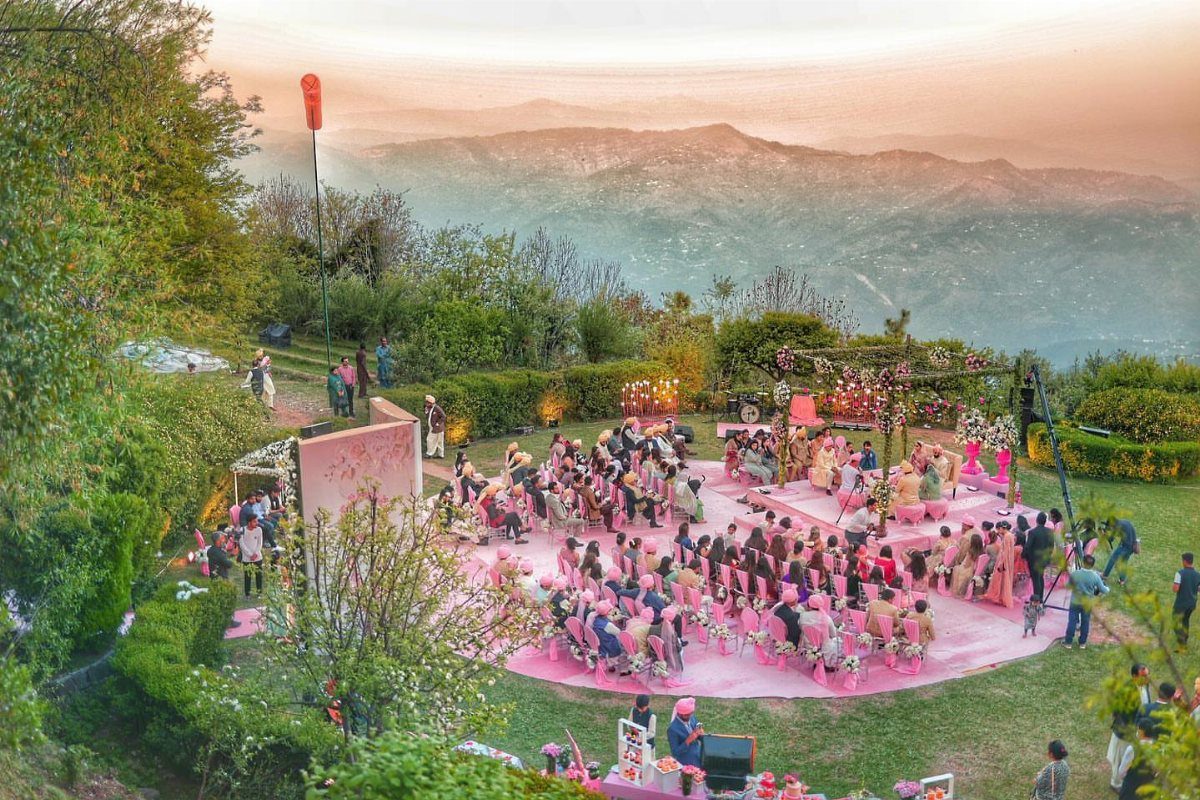
Pink chairs against mountain range at sunset sounds like a color choice, but the elevation itself is doing the work.
Stowe Mountain Resort offers the open-air cathedral and the Great Room with its stone fireplace and slope-side patio, which gives you ceremony and reception without leaving the view.
The altitude means cooler temperatures even in summer, and thinner air affects how long elderly guests comfortably sit outside.
My preference would be the Great Room for dinner with the patio open for cocktails, so the view stays present without committing to it for the full event.
Photo timing matters more here than at sea level; golden hour arrives differently, and your photographer needs to know the mountain horizon, not just the clock.
7. Intimate Gardens
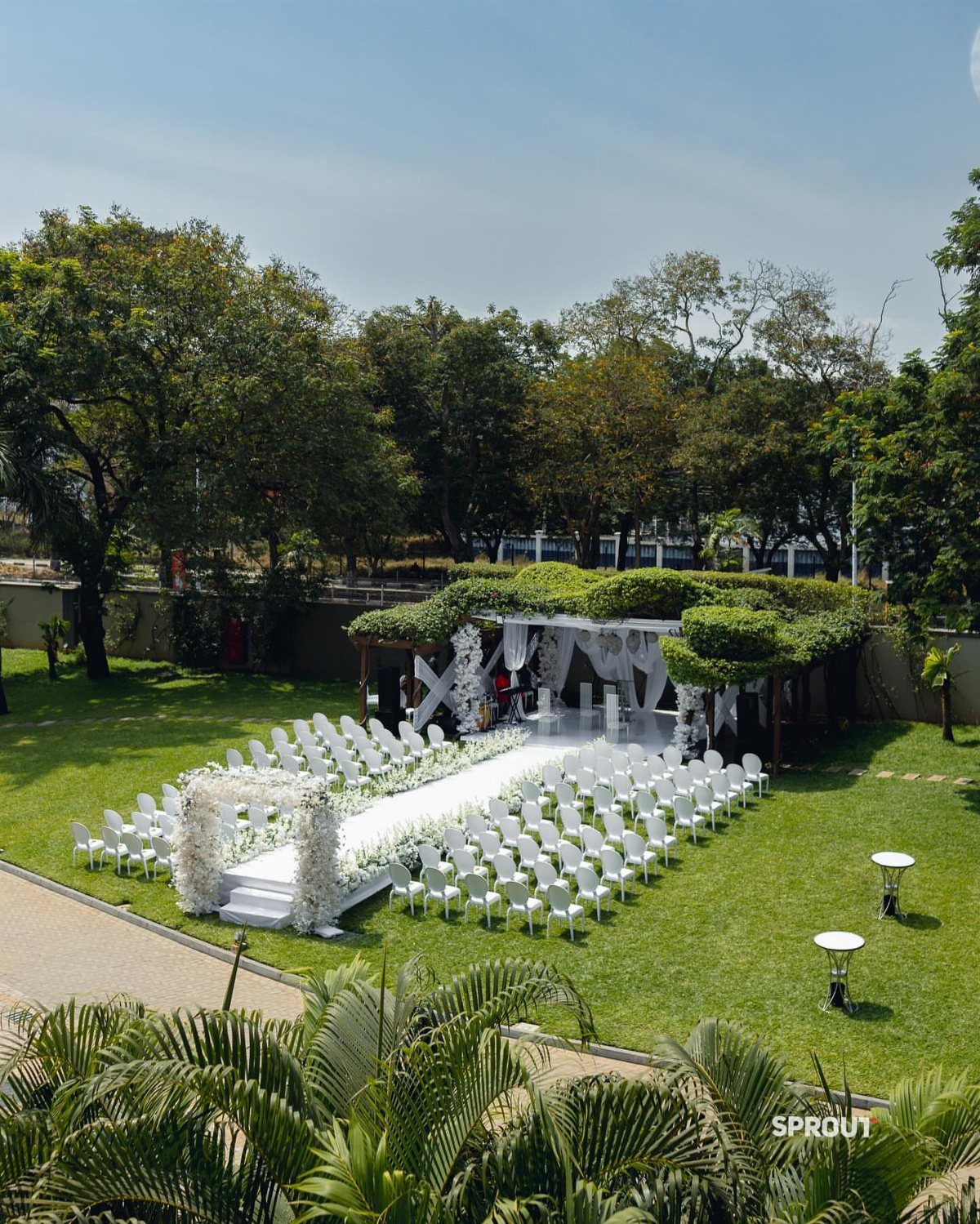
A garden wedding scales to your guest count rather than fighting it.
The Simpson House and similar venues build their atmosphere on hedges, pergolas, and lawn paths that already exist, so your budget covers chairs and flowers, not walls and ceilings.
I would book a garden that includes the tent or covered pavilion in the base rate, because weather backup priced separately can double your venue spend.
Ask about sprinkler schedules and maintenance windows; a Tuesday mow that runs long can leave Saturday’s lawn soft underfoot. The trade is capacity, most gardens cap well below a ballroom, but the guests who fit will remember where they sat.
8. Venues with Ocean Views
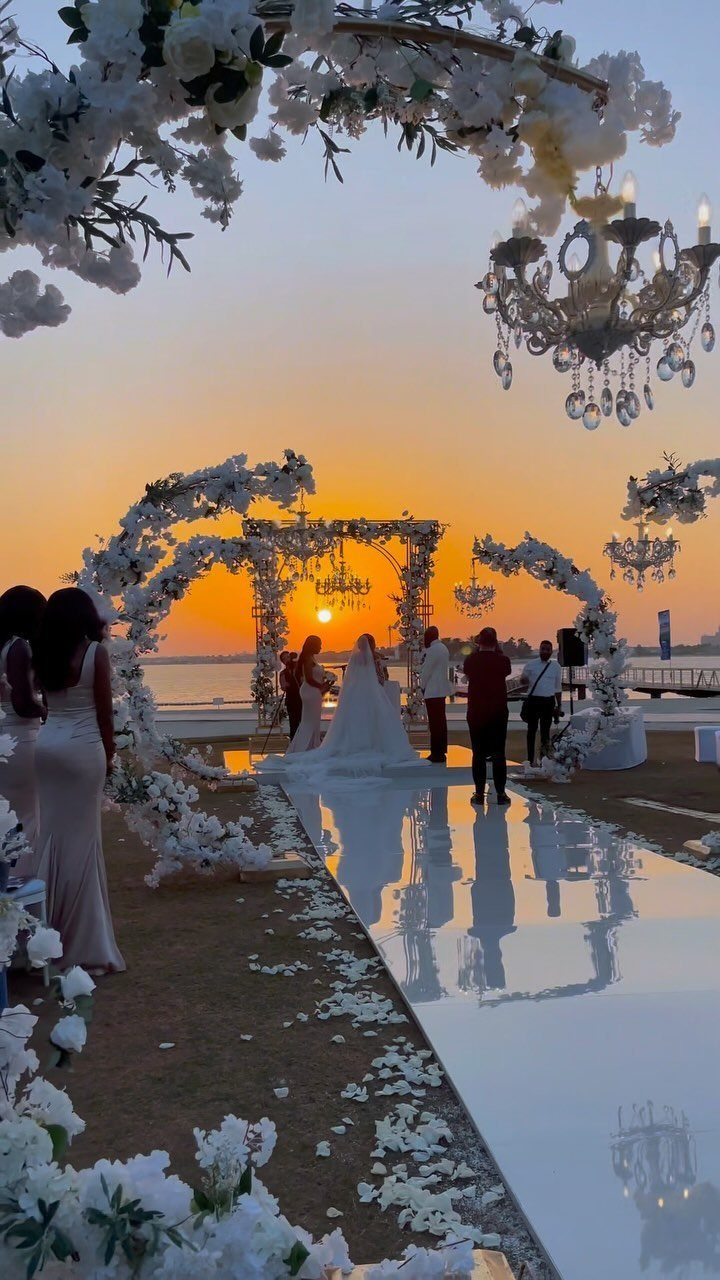
Salt air and horizon light do what uplighting cannot. The Beachmere Inn sits on the Marginal Way in Ogunquit, a family-run inn where the ceremony faces working coastline, not a painted backdrop.
I would time the ceremony for the hour before the light turns, not after, because ocean haze diffuses sunset faster than inland venues.
The Rotunda fire pit and bistro lighting mentioned for cocktail hour suggest the inn understands the chill that follows; plan layers or wraps for guests who stay outside.
Sand and grass eat stilettos alive. If the ceremony overlooks the water, I either warn guests to pack wedges or I budget for a temporary deck surface that keeps everyone upright during vows.
The sound of working boats and tide is part of what you pay for; embrace it rather than fighting with amplified music.
9. Glasshouse Wedding Venues
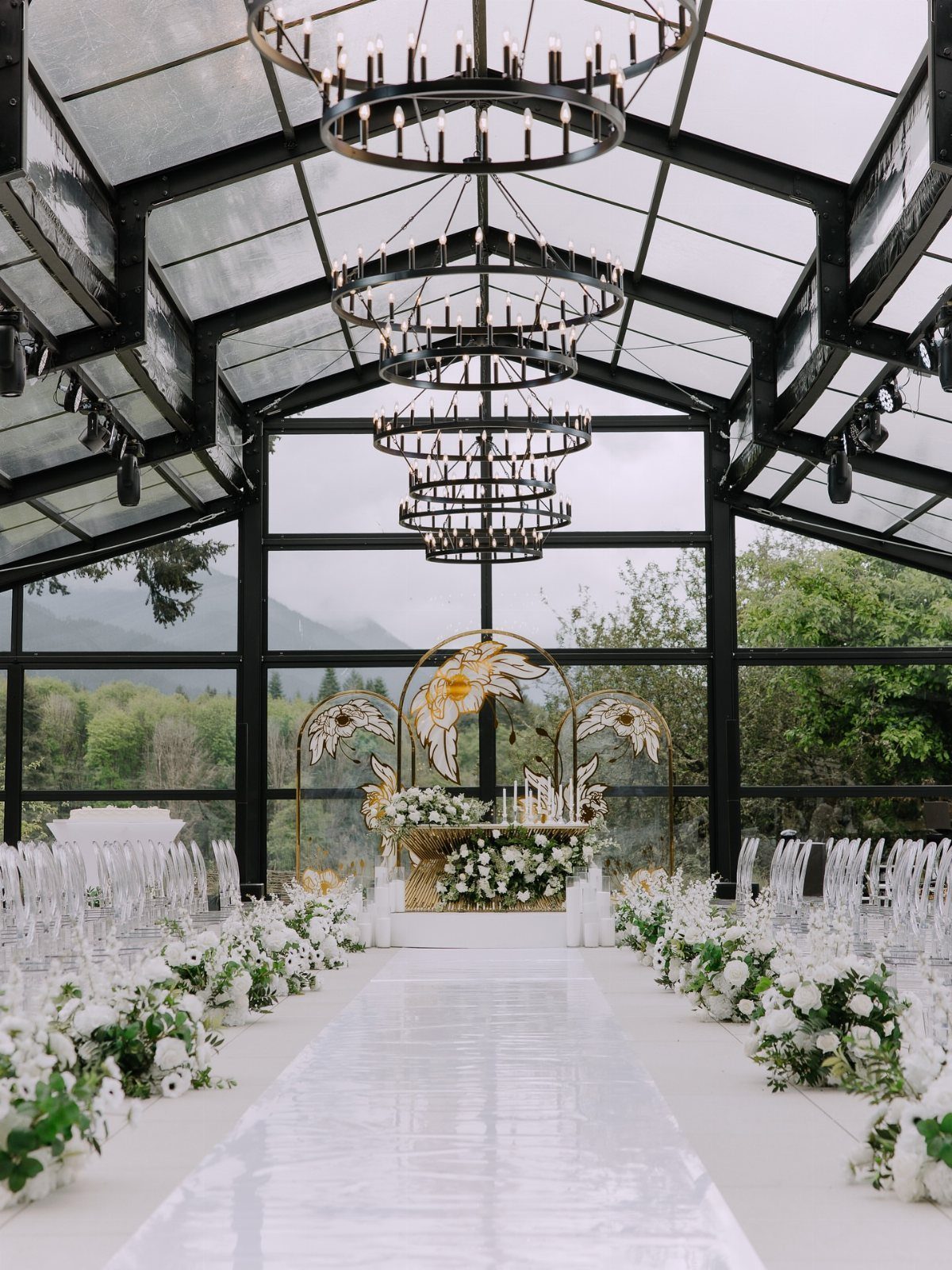
A glasshouse gives you the garden and the climate control in one structure.
The black framing and clear ghost chairs in the visible setup keep sightlines open to the trees and mountains beyond, which is the point: you are renting the view, not hiding it.
I would check heating and cooling capacity for your season, because glass amplifies both sun and cold.
The circular chandeliers add warmth that the structure itself does not; confirm they are included or budget for lighting that fills the vertical space without blocking the walls.
The clear chairs read as minimal until guests sit for an hour; test them yourself before committing. The risk is glare and reflection in photographs, so walk the space at your ceremony time and note where the sun hits.
Wedding Planning Tips
Guest count shapes everything else. A historic ballroom that holds 200 feels cavernous with 75, and an intimate garden that caps at 80 will not stretch.
I would nail down the number before touring, because venues size their packages around capacity tiers and falling between them means paying for chairs you will not use.
Budget splits into venue fee, catering minimum, and required rentals.
Some places quote a base rate that triples after mandatory vendors. Ask for the all-in number, not the teaser.
Atmosphere is where couples overspend correcting a mismatch. A barn reads rustic whether you add burlap or not; a glasshouse already gives you garden and structure.
I would choose the venue whose natural character moves toward your vision, not away from it, and spend the decoration budget on one or two things that matter.
Catering Options
In-house catering simplifies the timeline. One contract covers kitchen, service, and cleanup, which means one point of contact when the salad course runs late.
Menu rigidity is the risk with hotel ballrooms: 3 packages and no deviation, while a private estate with an exclusive caterer sometimes negotiates.
I would ask whether the venue allows a tasting before you sign, and whether the per-person minimum applies to children or vendors who eat. Some contracts count every head the same; others discount under-12 plates.
Outside catering opens more flavor options but adds coordination. The venue may charge a kitchen fee or require a licensed caterer with insurance certificates you must chase.
Compare the total, not just the menu price. An in-house plate against an outside caterer plus the venue fee can be a wash, and the in-house team already knows where the breaker box is.
Venue Flexibility
Layout freedom matters most when your ceremony and reception share one space.
A venue that flips the room during cocktail hour needs storage for ceremony chairs, a crew that works fast, and a timeline with buffer built in. I have seen 20-minute turnovers advertised that assume perfect conditions; they do not happen.
Ask what restrictions come with the rental. Historic venues sometimes ban candles or confetti for preservation reasons.
Waterfront docks may limit tent staking. Industrial spaces often have fixed columns that dictate table placement more than any floor plan you draw.
Service flexibility is the other half. Can you bring your own bar package, or must you use theirs?
Does the venue require a listed DJ, or will they accept a playlist and a friend with a microphone? The more specific your vision, the more you need these answers in writing before the deposit clears.
Unique Features
A venue with built-in character needs less of your budget to feel finished.
Historical significance operates similarly. Guests remember standing in a space that existed before they were born, and photographs gain context no rental prop provides.
Art installations function like views. They give guests something to circle back to during cocktail hour, a visual anchor that starts conversation.
Competition is the risk with bold murals or sculpture: they can fight with floral choices rather than framing them. I would choose one dominant element and let the rest recede.
The honest check is maintenance burden. A historic venue may require preservation-friendly vendors.
An art collection may restrict flash photography or guest proximity. Ask what rules come with the feature you are paying for, because those rules shape what you can actually do on the day.
Frequently Asked Questions
Is $10,000 a lot for a wedding venue?
It depends on location and what the package includes. A modest wedding budget can run under 5 figures total, so a venue eating most of that would be steep no matter how pretty the photos look.
Some historic ballrooms or waterfront locations charge more for the setting itself, while barns or gardens may include tables and chairs that keep the total lower.
The real figure to compare is the all-in cost after catering minimums and required rentals.
What is the cheapest wedding venue?
Rustic farm venues and intimate gardens tend to stretch a budget furthest, since time and nature have already done the decorative work.
Timber framing, aged plank walls, and existing hedges mean you spend less importing aesthetic elements to a blank space.