The wedding decor tent ideas below run from simple greenery on the poles to a full stage-backdrop build, and the one that fits yours depends on whether you are dressing structure you already rented or choosing a tent type for what you want to hang inside.
A fabric draped sailcloth tent changes silhouette; a clear top needs ceiling draping and lighting or it goes black mirror after sunset.
1. Tent Ceiling Draping and Lighting
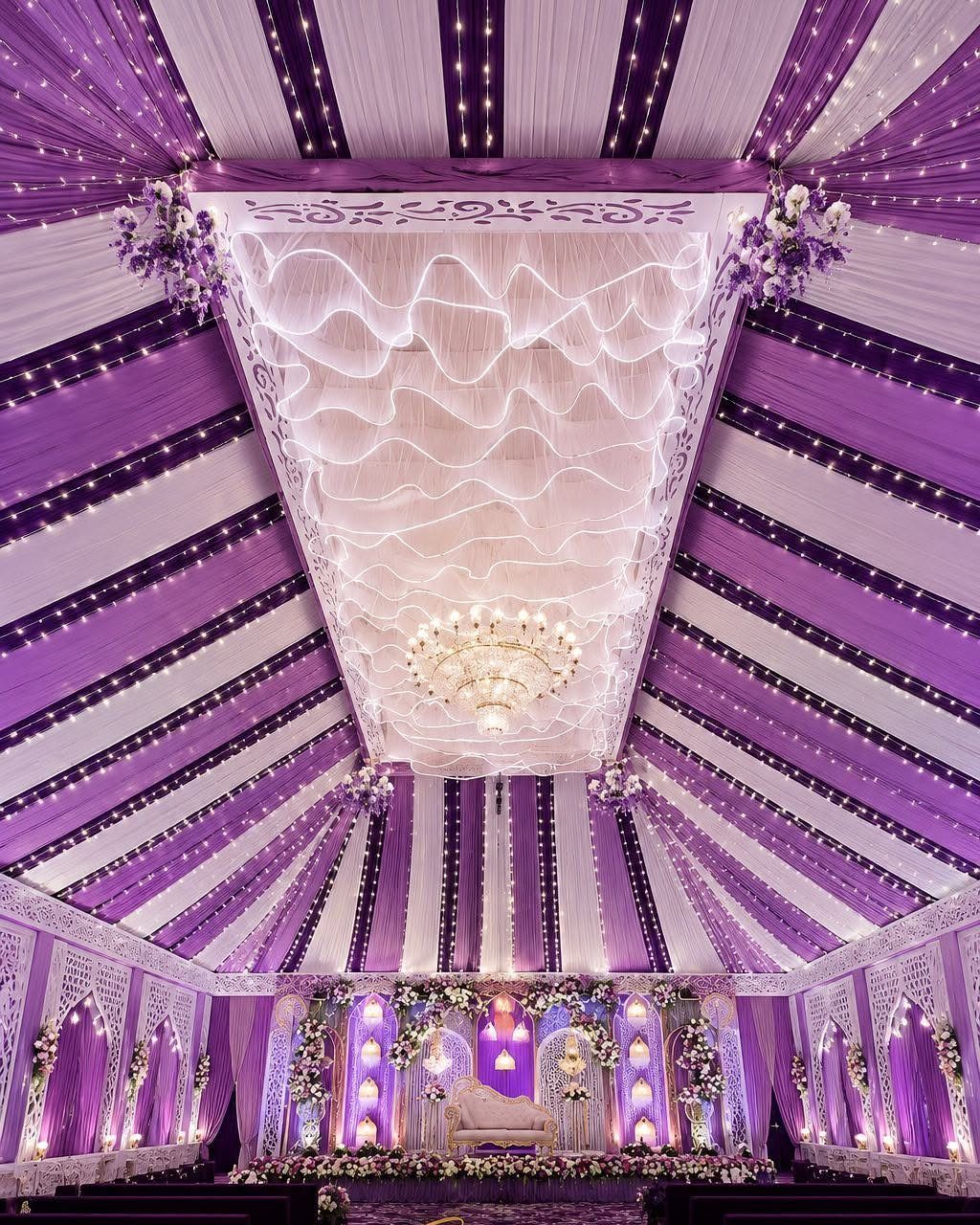
The ceiling in a tent is dead space until you make it something else.
Fabric panels in purple and white, hung in stripes from the peak, give guests something to look up at instead of blank canvas, and a crystal chandelier dropped through the center turns the whole thing into a room with a roof.
String lights between the drapes matter as much as the drapes themselves. Without them the fabric goes flat after dark; with them the ceiling keeps working through the reception.
Match whatever hangs overhead to the table settings below, one color pulled through both places, so the tent reads as one design instead of a box you filled with stuff.
2. Simple Wedding Tent Decorations
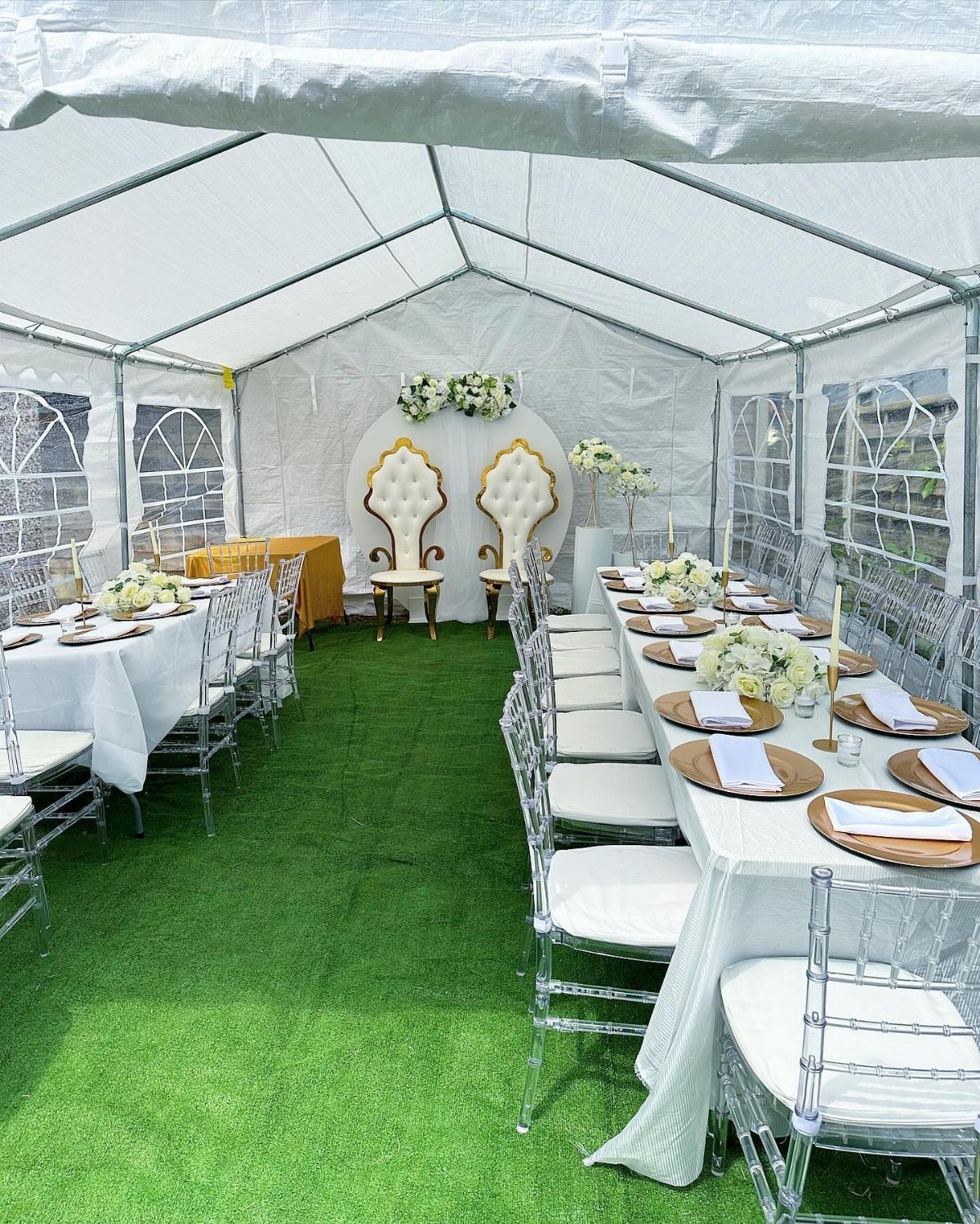
A white tent with nothing but tables, chairs, and flowers can feel finished if the proportions are right.
Sheer fabric at the walls softens the light without blocking it, and greenery laid straight down the center of each table does the romantic work without a single suspended installation.
This is the version for couples who looked at ceiling-drape quotes and felt their stomachs drop.
The trade is real: guests remember the food and the company more than they remember whether you hung chiffon overhead. Spend the saved money on better wine or a longer photographer package.
3. Wedding Tent Pole Greenery
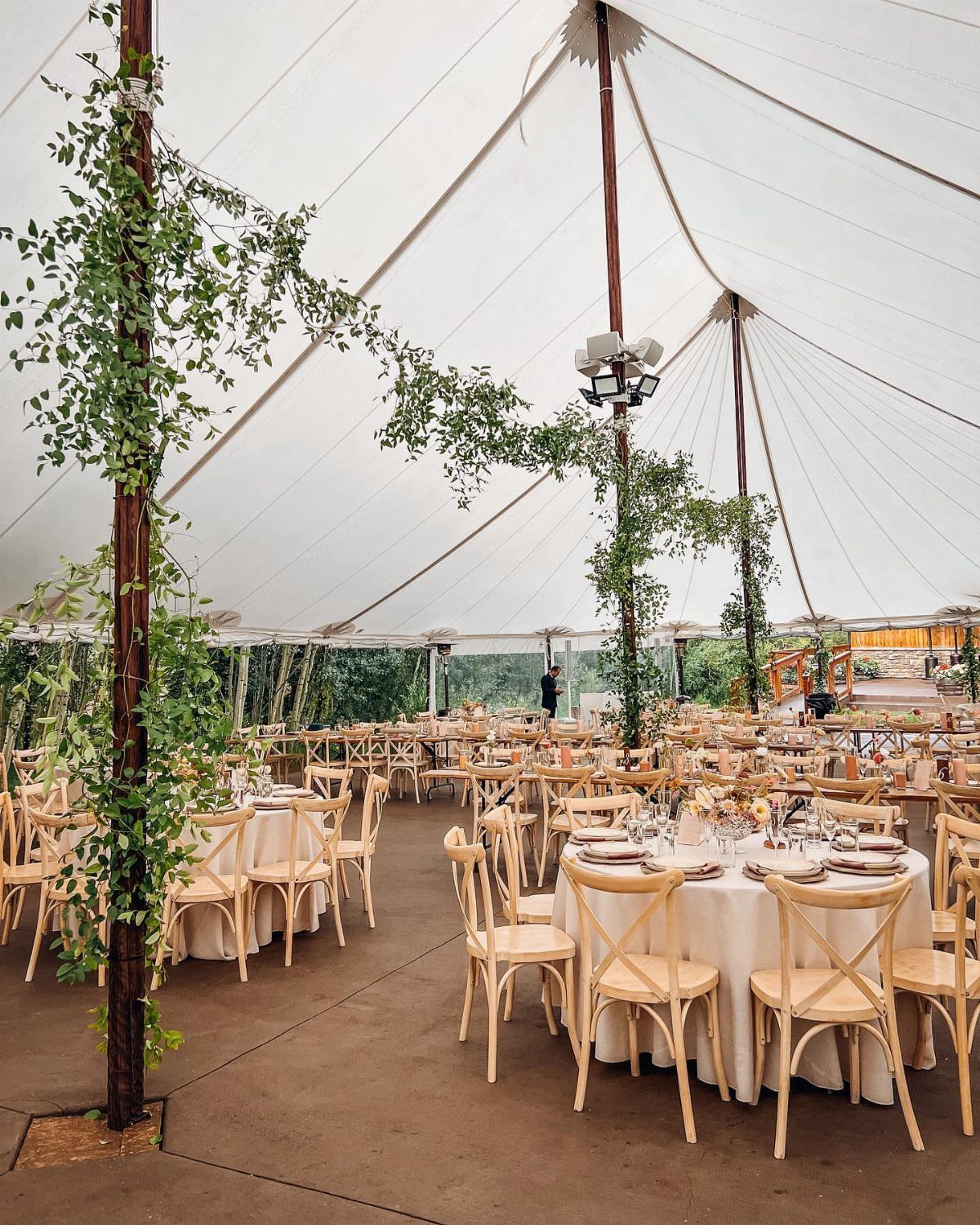
Those center poles every pole tent needs?
They do not have to look like hardware. Wrapping them in trailing vines, real or fake, turns structural necessity into something that looks intentional, almost like the tent grew there.
Fresh greenery needs water tubes or it browns by hour three of the reception.
Artificial vines cost less and travel better, though up close the difference shows. Either way, start the wrap at the base and spiral upward so the attachment points hide underneath, not at eye level where a zip tie glares.
4. Clear Top Wedding Tents
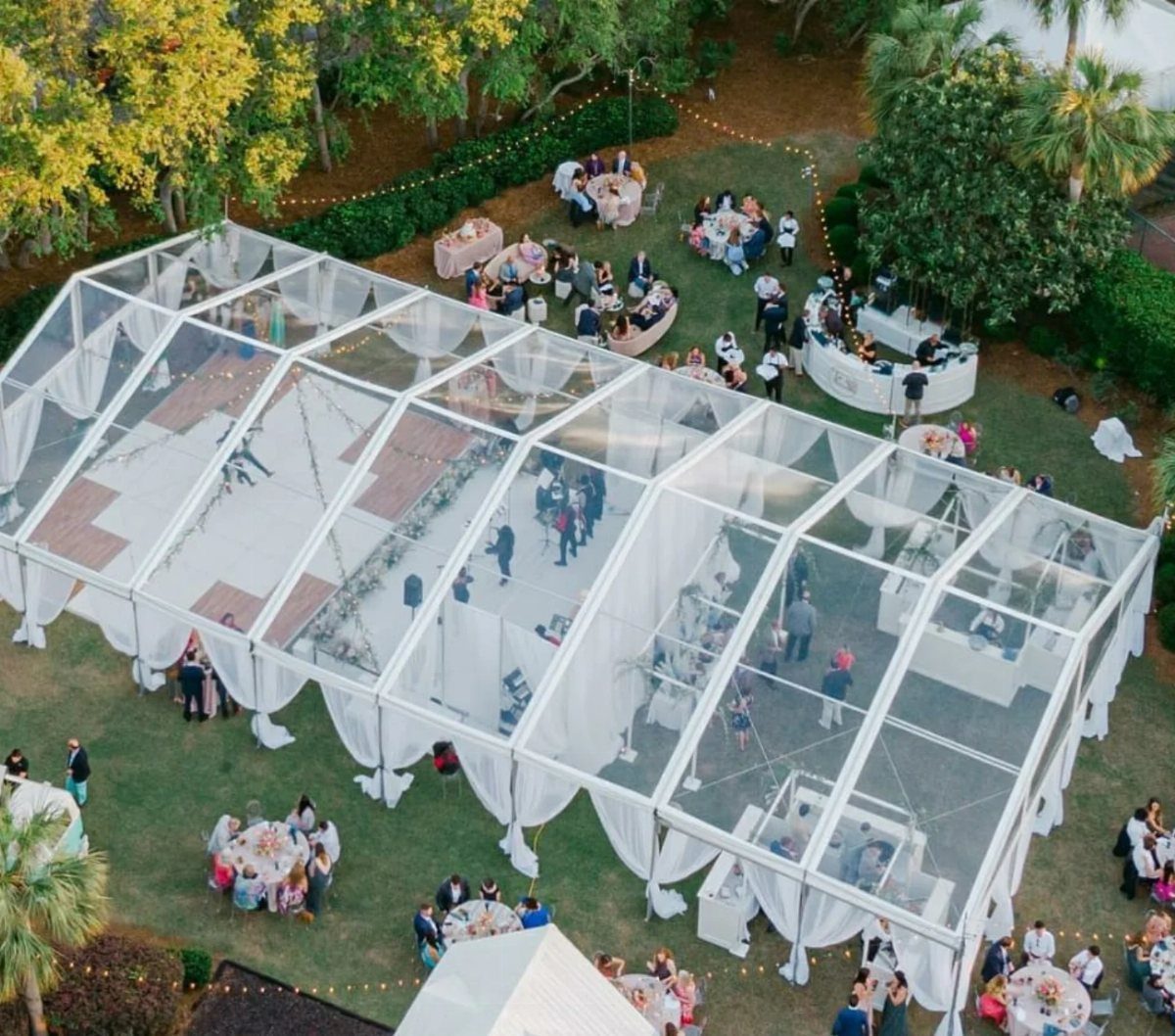
A clear top trades the tent ceiling for the sky, which is the point until the sky turns against you.
Sun beating through transparent vinyl turns the space into a greenhouse by mid-afternoon; these work best for evening ceremonies or spring and fall dates when the sun drops early.
String lights inside are non-negotiable. Without them the tent goes dark as soon as the light fades, and the clear top becomes a black mirror instead of a window.
Lanterns or fairy lights, hung dense enough to read a menu by, keep the effect alive after dark.
5. Draping Patterns at the Entrance
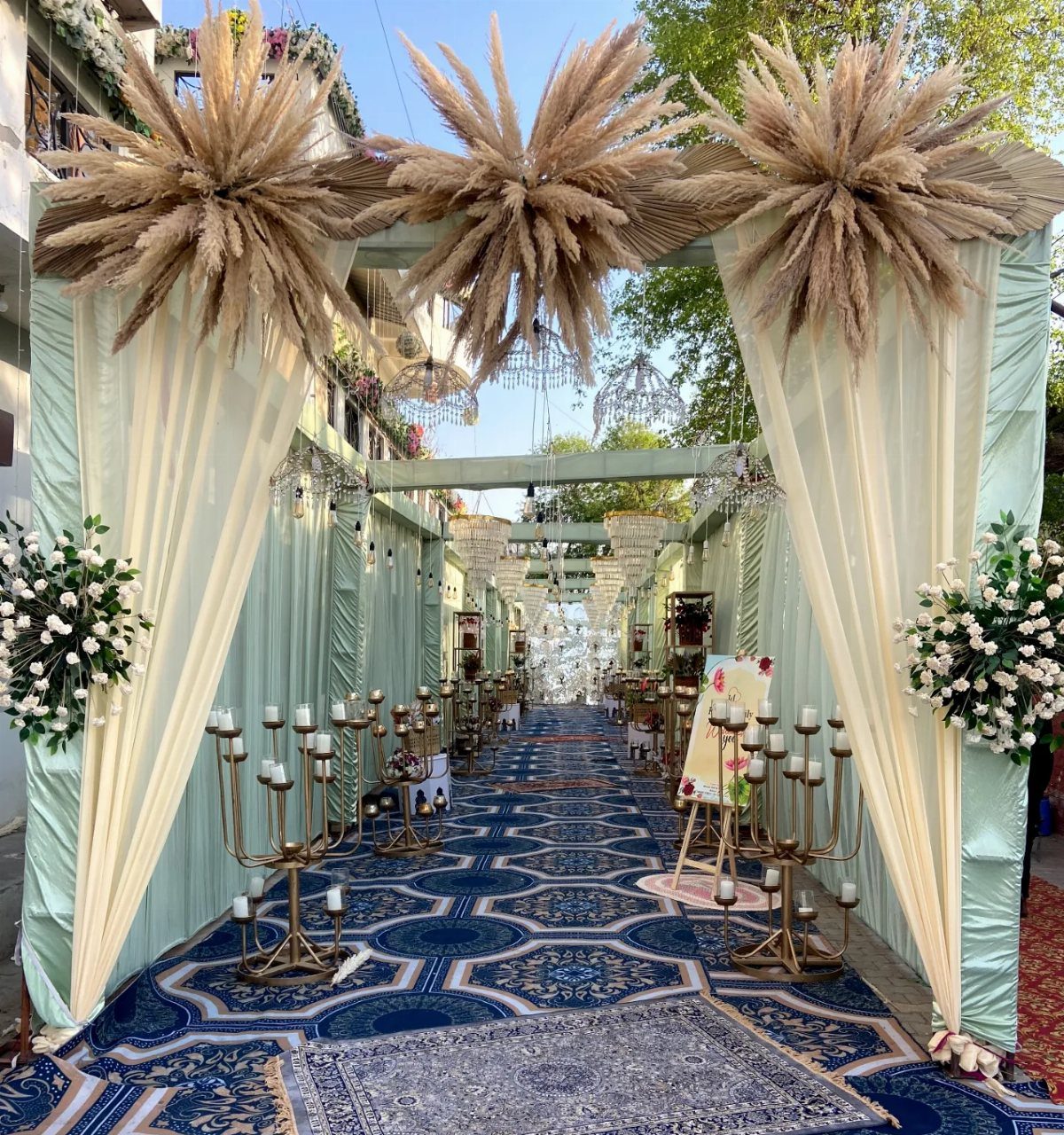
Guests need to know where to walk in, and a tent with walls on every side offers no natural clue.
Draped fabric arches at the entry, topped with pampas grass, mark the threshold and set the tone before anyone reaches a table.
Patterned carpet running from the lawn into the tent does the same job for feet that the draping does for eyes.
It also keeps heels from sinking, which matters more than it sounds for outdoor spring and fall weddings. Coordinate the entrance design with whatever hangs inside so the first impression and the main room speak to each other.
6. Tent Flooring
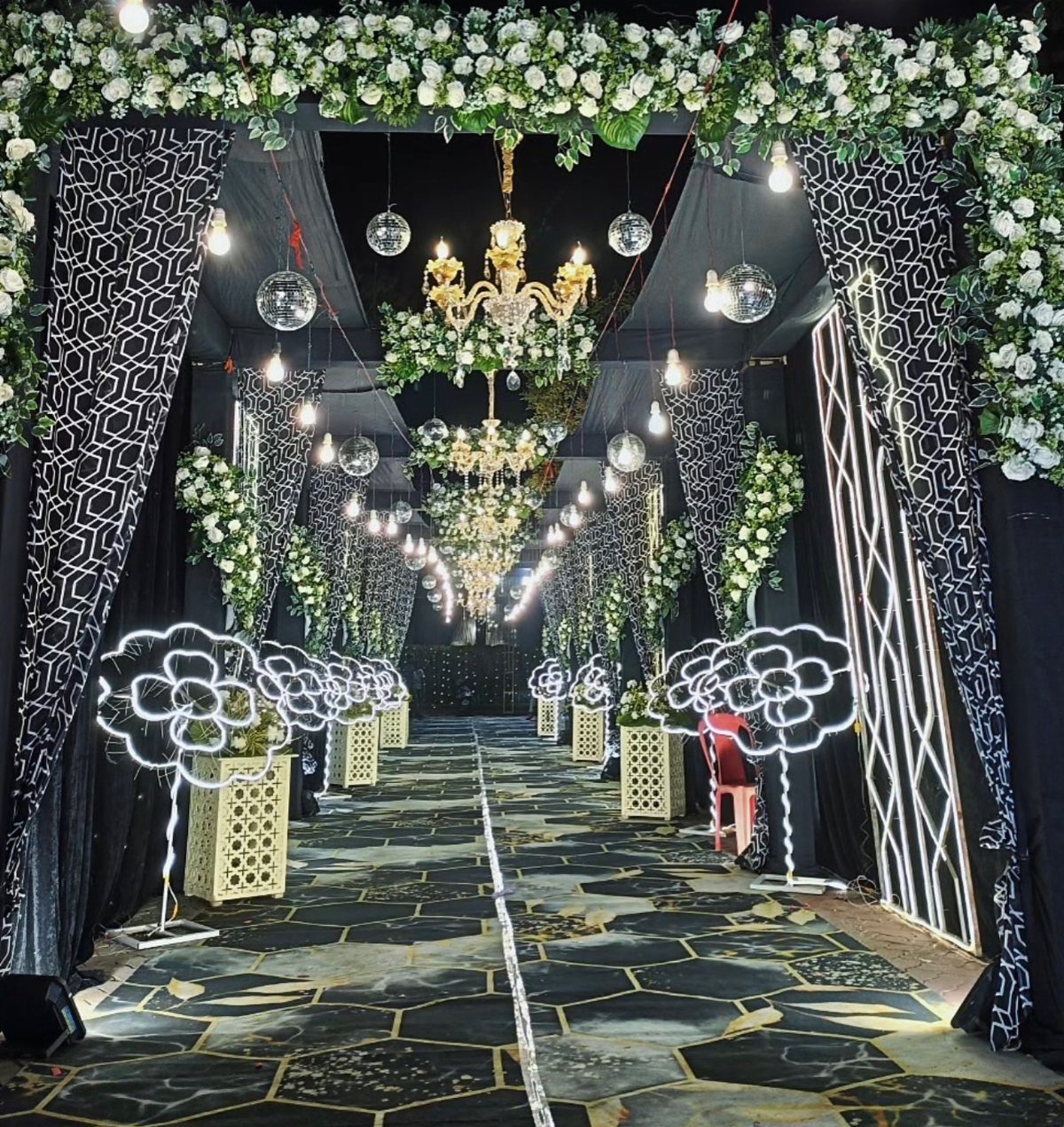
Grass underfoot is free and wrong. It soaks, it sinks, it stains hems, and it tells guests you ran out of budget at the ground.
A patterned floor, wood or carpet or tile, makes the tent feel like a venue built for the night rather than a shelter dropped on a field.
The geometric pattern visible here works because it repeats at scale. Small patterns get busy fast under tent lighting, and busy reads as cheap.
Check the subfloor too; a pretty surface on uneven ground still rocks under a dance floor. Leveling matters, and leveling costs extra, and skipping it is a choice you will notice at the first slow song.
7. Rustic Bohemian Tent Wedding
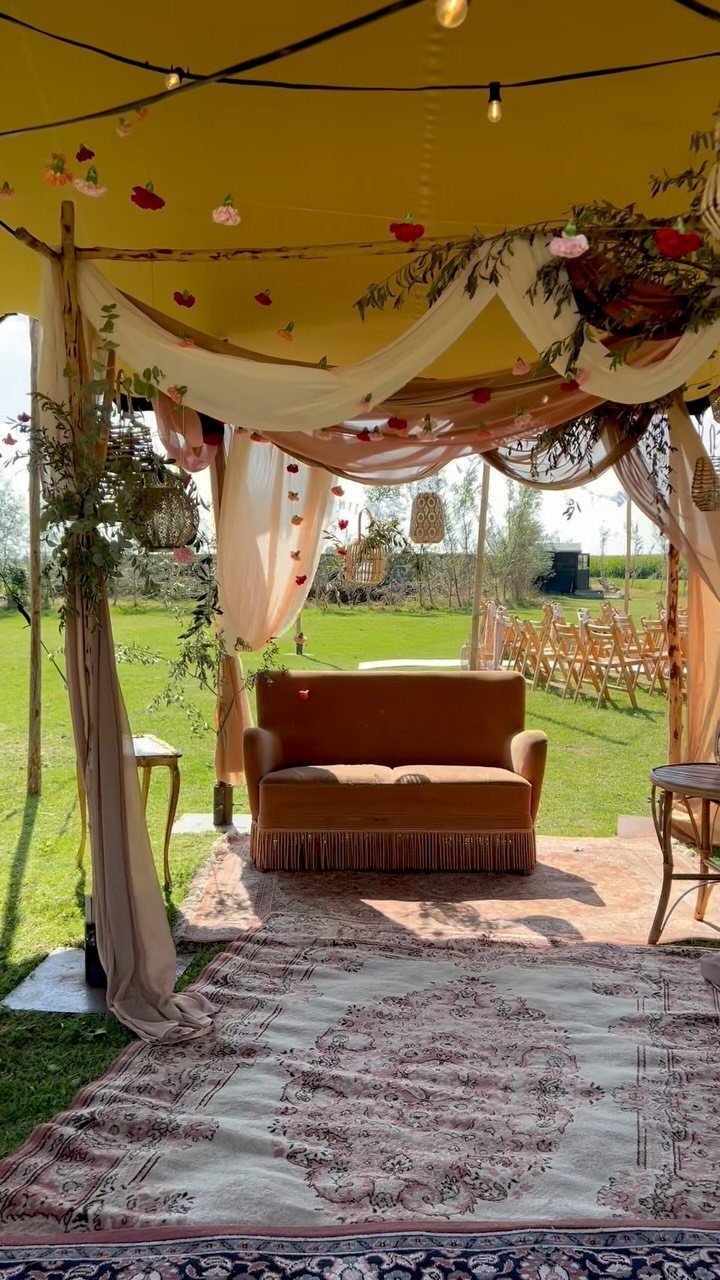
A fringed loveseat on vintage rugs, under canvas with the sides rolled up, turns a tent into someone’s grandmother’s porch if that grandmother had excellent taste.
Macramé hangs where chandeliers might go, and the whole thing breathes easier than formal setups because nothing matches too hard.
The grass showing at the edges is intentional, not a budget shortcut. Wooden cross-back chairs or a found loveseat cost less than chiavari rentals, and natural fiber rugs can be bought used and resold after.
Hanging florals and vintage rugs set the mood under this frame, with a velvet loveseat tucked beneath them that gives the space its own quiet corner.
This is the version for couples who want guests to kick their shoes off, or at least feel like they could.
8. Sailcloth Tent with Floral Accents
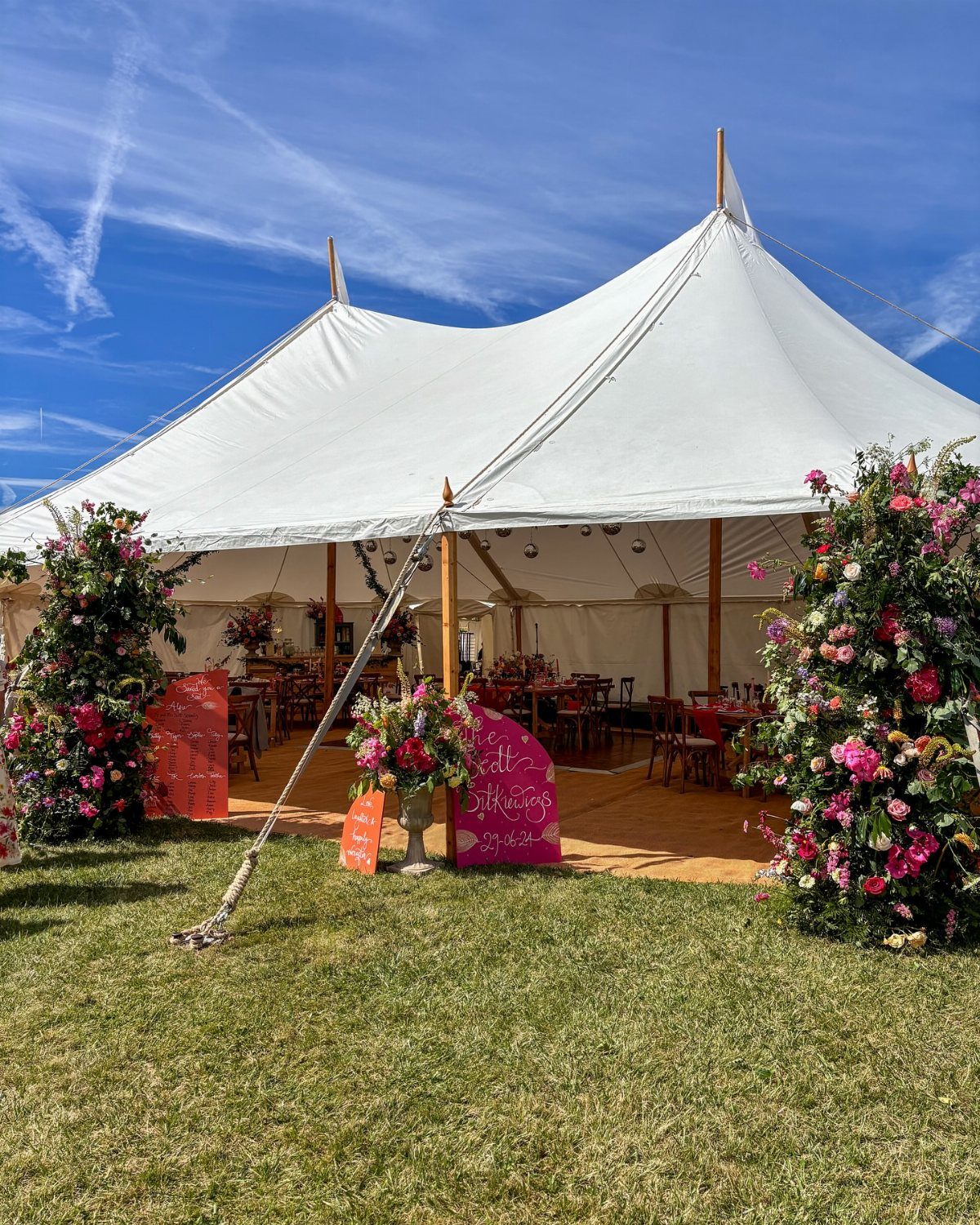
Sailcloth tents already look like sails, which is half the joke and most of the charm. Adding flowers at the entrance just names the party; tall arrangements on plinths or urns mark where the tent begins and the field ends.
The translucency that makes sailcloth pretty also makes it hot. Plan for afternoon shade or a late ceremony, and check whether your rental company includes sidewalls for weather that turns.
Bright pink against white reads celebratory, not subtle; choose flowers that hold up out of water for the hours they will sit, or go silk and stop worrying.
9. Fabric Draped Sailcloth Tent
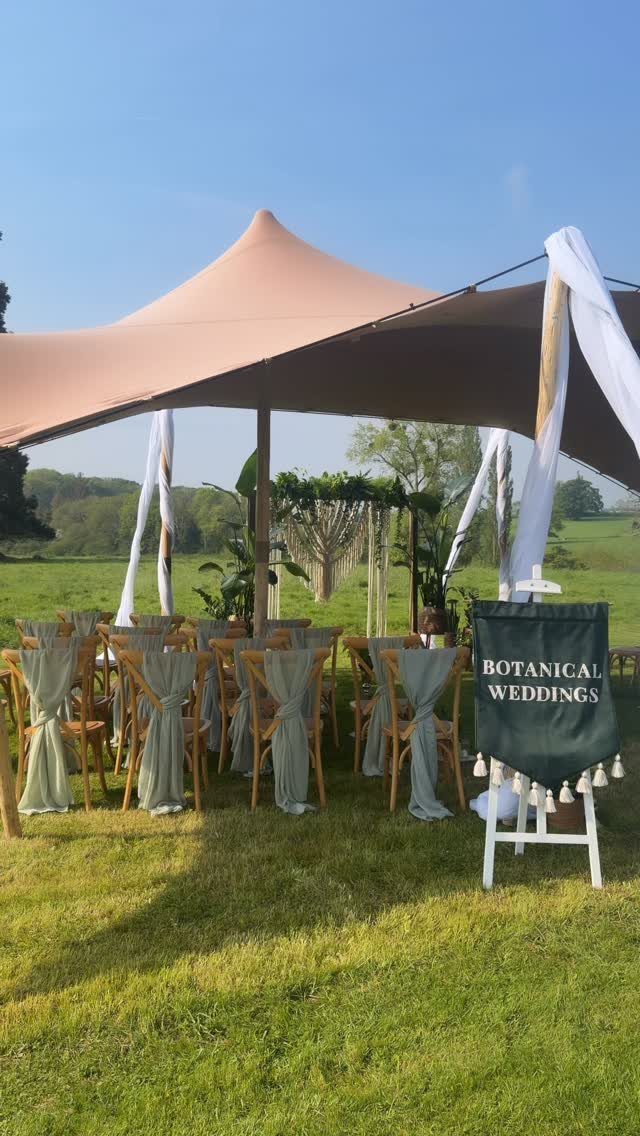
Tan sailcloth with white drapes is a quieter combination than the usual white-on-white, and the wooden chairs with sage fabric sashes keep the palette earthy without going full barn wedding.
Draping fabric along the tent poles instead of across the ceiling costs less and still softens the structure.
Stretch tents like this one need tension to hold their shape, so the drape attachment has to cooperate with the rigging. Ask your rental company where fabric can clip or tie without interfering with the engineering.
Sage dye on cotton or linen sashes is easy to source; match it to the napkins or the table runners, one gesture repeated, rather than spreading the color everywhere.
10. Indoor Trees Inside Tent
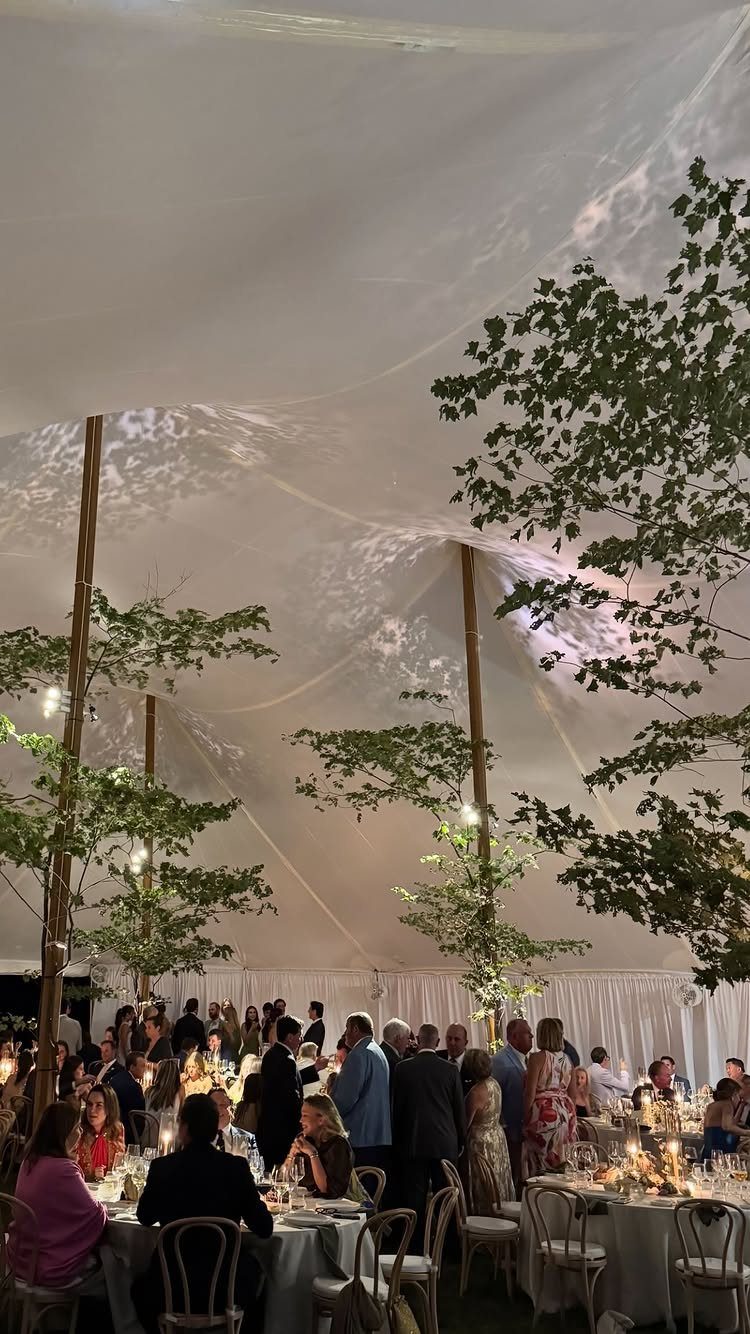
Potted trees inside a tent sound absurd until you see the shadows they throw across white ceiling drapes, and then they seem inevitable.
Ficus or olive trees, tall enough to reach past seated guests’ sightlines, turn a box into a garden that happens to have walls.
Real trees need real weight in their pots or they tip when guests brush past. Renting from a nursery that does events includes delivery and pickup, which matters because a tree in a ceramic pot is not your trunk’s problem.
Either way, check ceiling height before you commit: a tree that grazes the drapes looks like a mistake, and one with room above it looks like architecture.
11. Floral Garlands Along Tent Edges
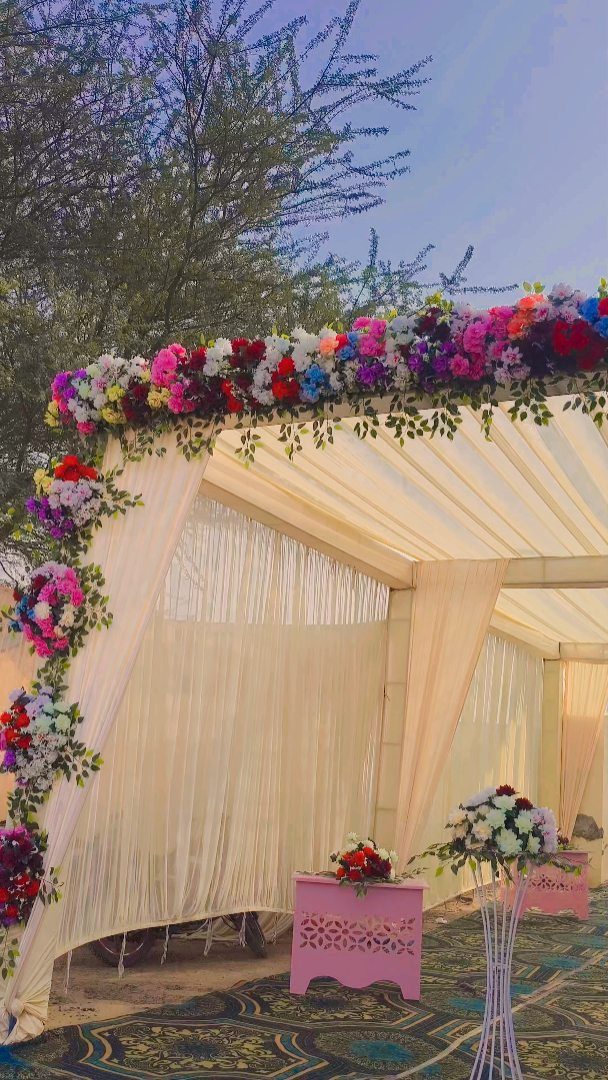
A garland running the roofline does what ceiling drapes do at a fraction of the cost, because gravity works with you instead of against.
The flowers here are bright and artificial, which means they survive August humidity and the rental company can use them next weekend.
Fresh garlands need refrigeration until the last hour and look wilted by cake cutting; silk or high-quality polyester solves that and lets you choose colors no June bloom comes in.
Attach at the tent frame where the fabric meets the poles, not to the fabric itself, which sags under weight.
One focused gesture beats scattered arrangements; the garland here is the single decorative line, and the rest of the tent stays plain enough to let it read.
12. All-White Reception Decor
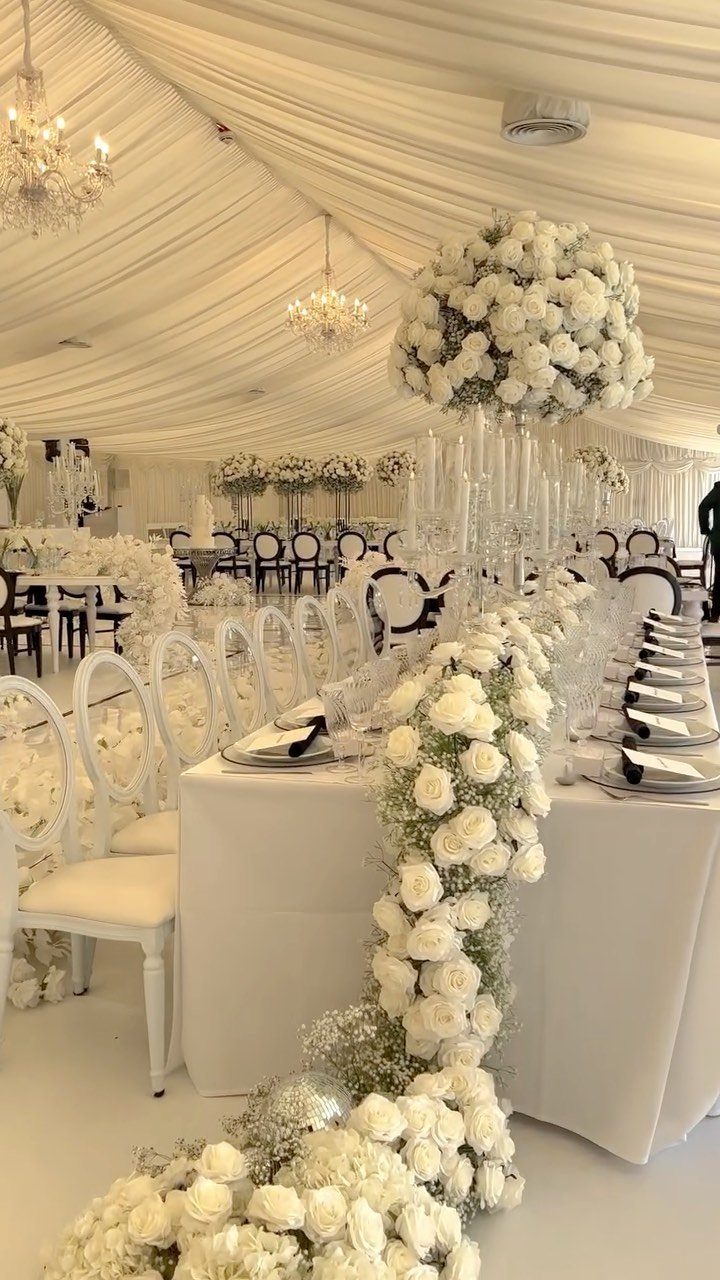
White on white on white is a choice that either looks expensive or looks like a hospital, and the difference is texture.
Velvet or heavy linen table runners, crystal catching light, and flowers with actual dimension, not flat white disks, keep the look from going sterile. Without those variations the eye slides off the scene and finds the exit.
The cost is in the fabrics, not the color. Cheap white polyester reads as disposable; cotton velvet, heavy silk, or good paper lantern material earns the monochrome.
Ivory warms the room more than optic white; choose based on skin tone and the time of day, because candlelight shifts everything toward amber anyway.
13. Stage Backdrop Inside Tent
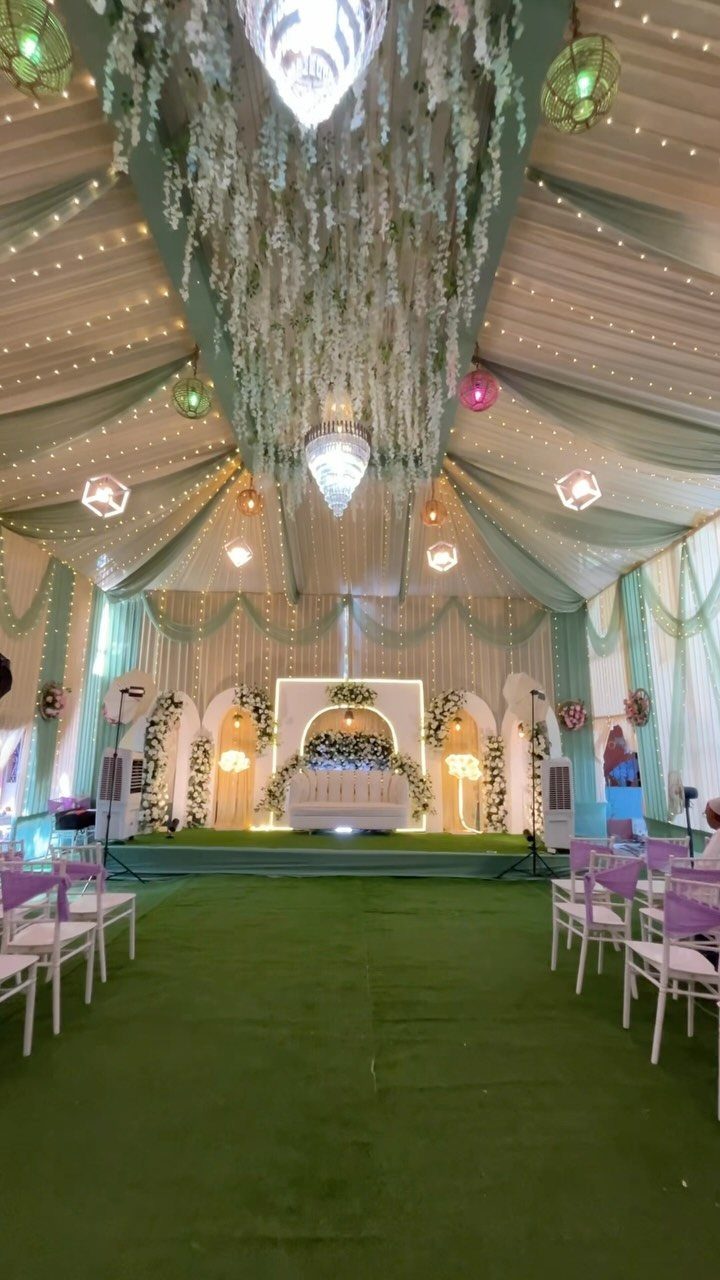
A stage inside a tent gives the couple a place to sit, not just a place to stand, and the arch behind them frames every photo the photographer takes from the front.
Draped fabric walls, chandeliers overhead, and a curved white sofa turn a corner of the tent into a room within the room, which matters when the tent is the only architecture you have.
Green carpet on the stage platform reads as intentional flooring, not an afterthought, and it hides the grass stains that plain white would show by hour two.
The floral installations here hang from the ceiling rigging, not the tent fabric, because fabric that heavy pulls and sags. Check load limits with the rental company before you commit to suspended weight above seated guests.
This setup trades dance floor square footage for a dedicated photo and resting zone. It suits couples who want the reception to feel like a lounge they happen to be marrying in, not a ceremony with dinner attached.
Choosing the Right Tent
Frame tents skip the center poles that block sightlines and limit layouts, though the perimeter frame they use instead takes some work to disguise or decorate.
Guest count drives square footage first. A seated dinner needs more floor per person than cocktail spacing, and the dance floor, stage, or lounge areas from the list entries each subtract from the dining footprint.
Most rental companies size by a standard formula; ask whether theirs includes service aisles and cake table space or if those sit on top of the quoted capacity.
Grass, asphalt, and concrete each need different anchoring, and some surfaces require a city permit before the crew can even stake the frame.
Grass takes stakes; asphalt or concrete needs water barrels or drilled anchors, and some venues forbid the holes. Check before you choose tent type, because a frame tent on weights handles wind differently than a pole tent on straps.
Weather Considerations
Sidewalls are the first adjustment, and the list assumes you have them. Solid walls block rain and cut wind; clear panels keep a view; rolling them up entirely turns shelter into pavilion.
Sidewalls may come with the base package or cost extra per foot, and that difference changes how you budget the draping and lighting overhead.
Sun angle matters as much as rain. The list notes clear tops become greenhouses by mid-afternoon; white vinyl heats slower but still traps warmth.
Position the tent’s long axis to minimize southern exposure during peak hours, or plan ceremony timing when the sun has dropped behind tree lines or buildings.
Ground conditions after rain turn grass into the hazard the flooring entry describes.
Even with a subfloor, drainage underneath keeps the surface from floating or seeping. Ask your venue about grading and French drains in the tent area, not just whether the field looks flat in dry weather.
Customization Options
Load limits at each point should come from your rental company before you plan suspended decor, and you need to know whether their crew installs rigging or leaves it to your florist.
Power distribution shapes what lighting you can run. String lights add up in amperage fast, and a chandelier or 2 pushes the total higher.
Most tent packages include a basic electrical allowance; exceeding it means a generator or additional distribution, which the venue may require to be silent or diesel-free.
The list’s sailcloth and clear-top entries each trade weather protection for aesthetics.
Customization means knowing which trade you are making: sidewalls on a sailcloth tent change its silhouette, and heaters under a clear top fight the very transparency you paid for. Match the add-on to the tent’s character, not against it.
Frequently Asked Questions
What size wedding tent do I need for 100 guests?
A seated dinner for 100 guests needs about 10-12 square feet per person, which puts you at roughly a 30′ x 60′ or 40′ x 40′ frame.
That figure has to include the dance floor, any stage or lounge areas, and the aisles the caterer needs to move through; rental companies sometimes quote capacity without those, so ask specifically what their number covers.
Is it better to buy or rent a wedding tent?
Renting is the practical choice for a single wedding. A commercial tent purchase only pays for itself if you will use it three or more times, which is why venues and planners own them and couples almost never do.
Rental also shifts the liability for weather damage, proper anchoring, and breakdown to the company that knows the local wind codes.
Can wedding tents be used in rain or wind?
Yes, though with limits. Heavy-duty vinyl with welded seams handles ordinary rain, and frame or pole designs are engineered for moderate wind.
The tent should be evacuated during severe storm or high-wind warnings; no rental contract covers the liability of keeping guests inside when weather turns dangerous.
Sidewalls, water barrels or stakes, and proper drainage underneath all matter as much as the tent fabric itself.