
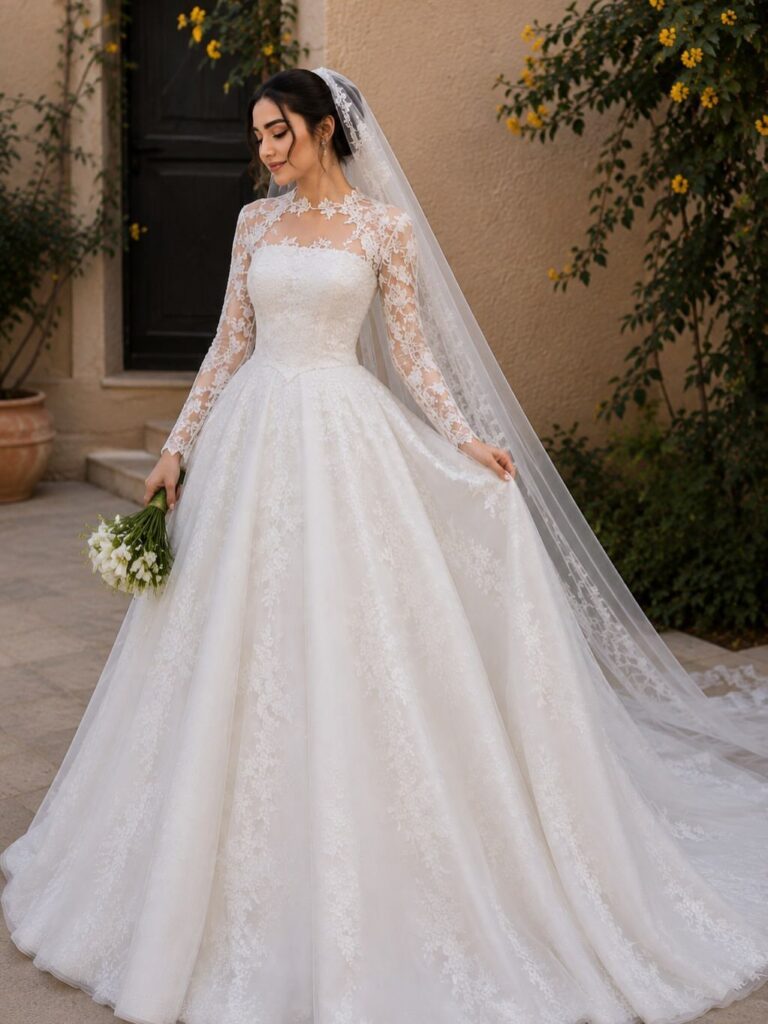
Classic bride dresses run from resale Allure Bridals under retail to full-price Elie Saab, and the right one depends on whether your venue calls for a train you bustle or a clean line you move in.
Satin catches light differently than tulle or chiffon, and the way it drapes tells you fast whether a dress reads classic or costume; that single detail is where most of my brides start.
1. A-Line Ball Gowns
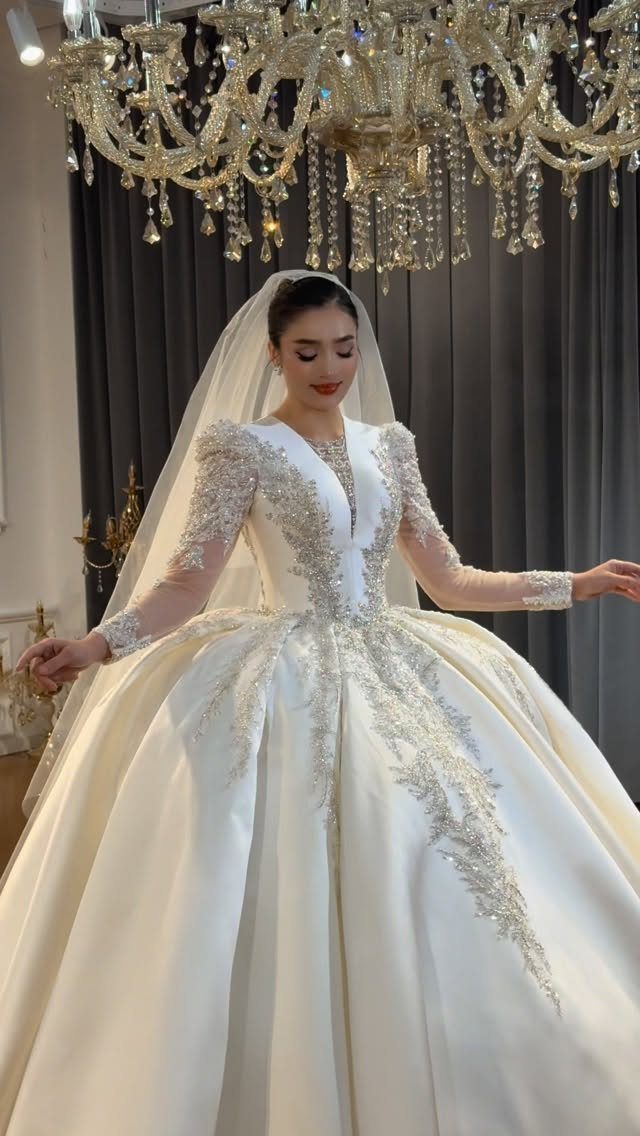
A-line ball gowns start fitted at the bodice and widen gradually toward the hem, which is why the shape reads princess without reading costume.
The cut works on nearly every frame because the waist sits where you need it and the skirt does the rest.
I look for a bodice that holds structure on its own so you are not pulling it up in every photo. Allure Bridals and their sister lines build these with enough interior support that you can actually move.
Satin with silver embroidery catches light from a chandelier without looking like it belongs on a stage. If you want the full effect, ask about a hoopskirt or petticoat layer that keeps the silhouette round even after hours of sitting.
2. Satin Wedding Dresses
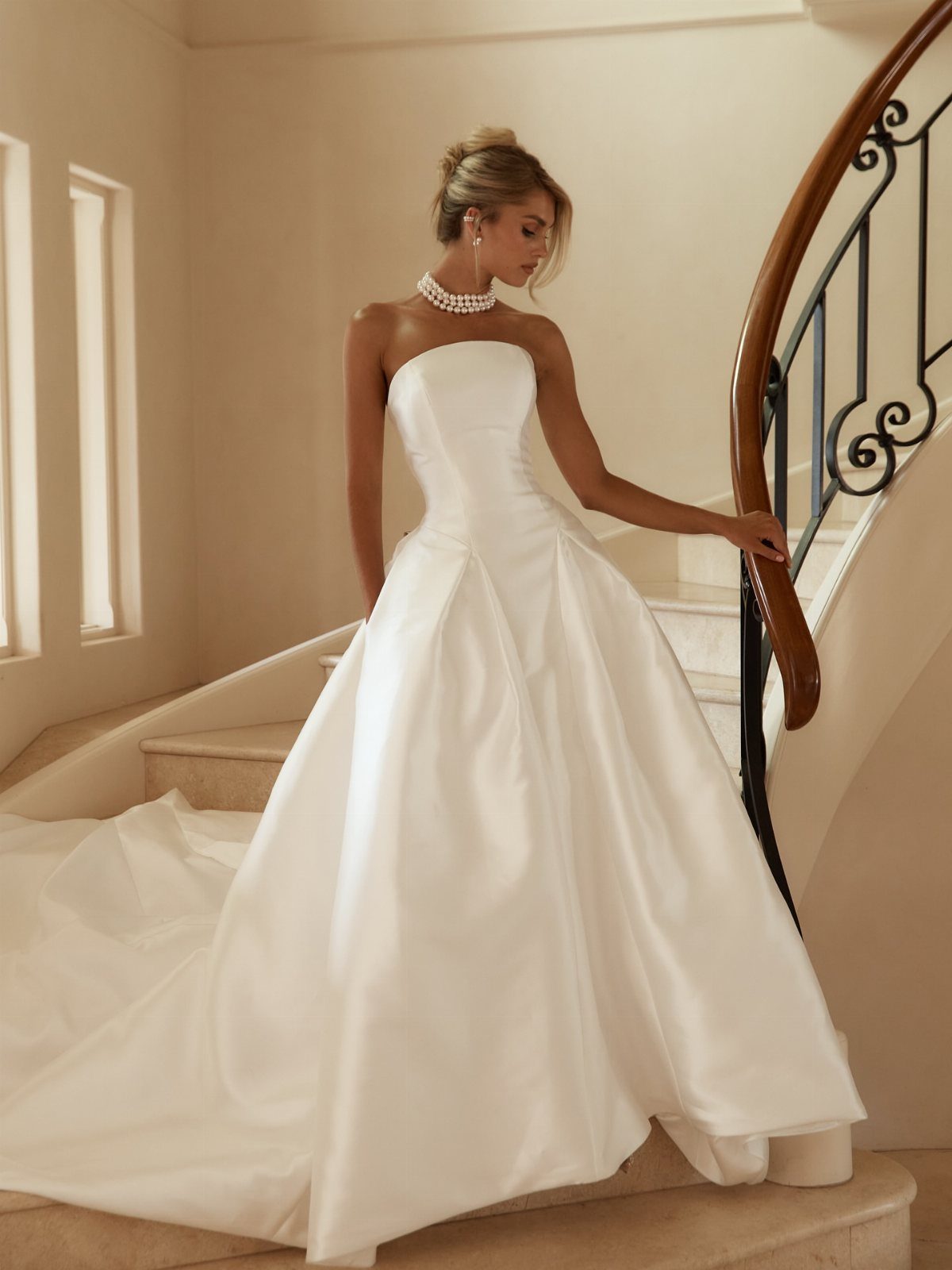
Satin reads expensive even when the price tag is not, which matters when your fabric choice is doing a lot of the work.
I like satin for brides who want clean over busy; the material has its own texture, so heavy beading can fight it.
Pockets are showing up in more satin gowns now, and I am for it, your lip balm and phone belong somewhere without wrecking the line.
Stillwhite has lace-and-satin combinations if you want one detail instead of many. For a reception change, a shorter satin dress with the same weight of fabric keeps the look consistent without the train to manage.
3. Off-the-Shoulder Styles
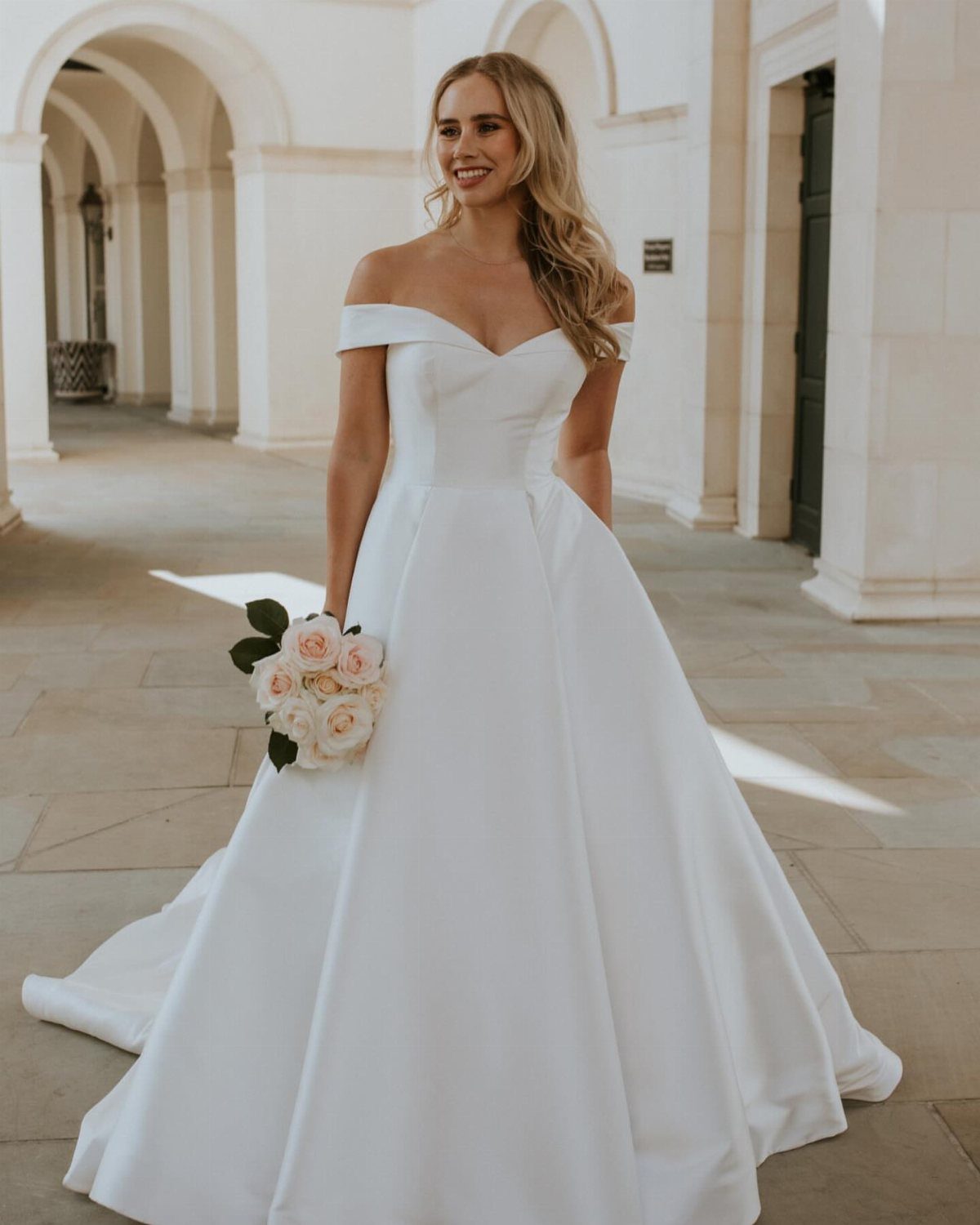
Off-the-shoulder necklines frame the collarbone and keep the focus up, which photographs well and feels formal without a high neck.
The style works in lace or satin, and the sleeves can be structured or soft depending on how much arm you want to show.
What I watch for is how the sleeves attach; if they are detachable, like the Allure A1478 with its draped beading, you get 2 looks and your movement back for dancing.
The Elie Saab reference is apt; this shape has read Grace Kelly since the mid-century and still does.
For a modern bend, peaked or sculpted necklines keep the line clean without going strapless. Check that the bodice boning is substantial enough that you are not held up by sleeve tension alone.
4. Lace Detailing
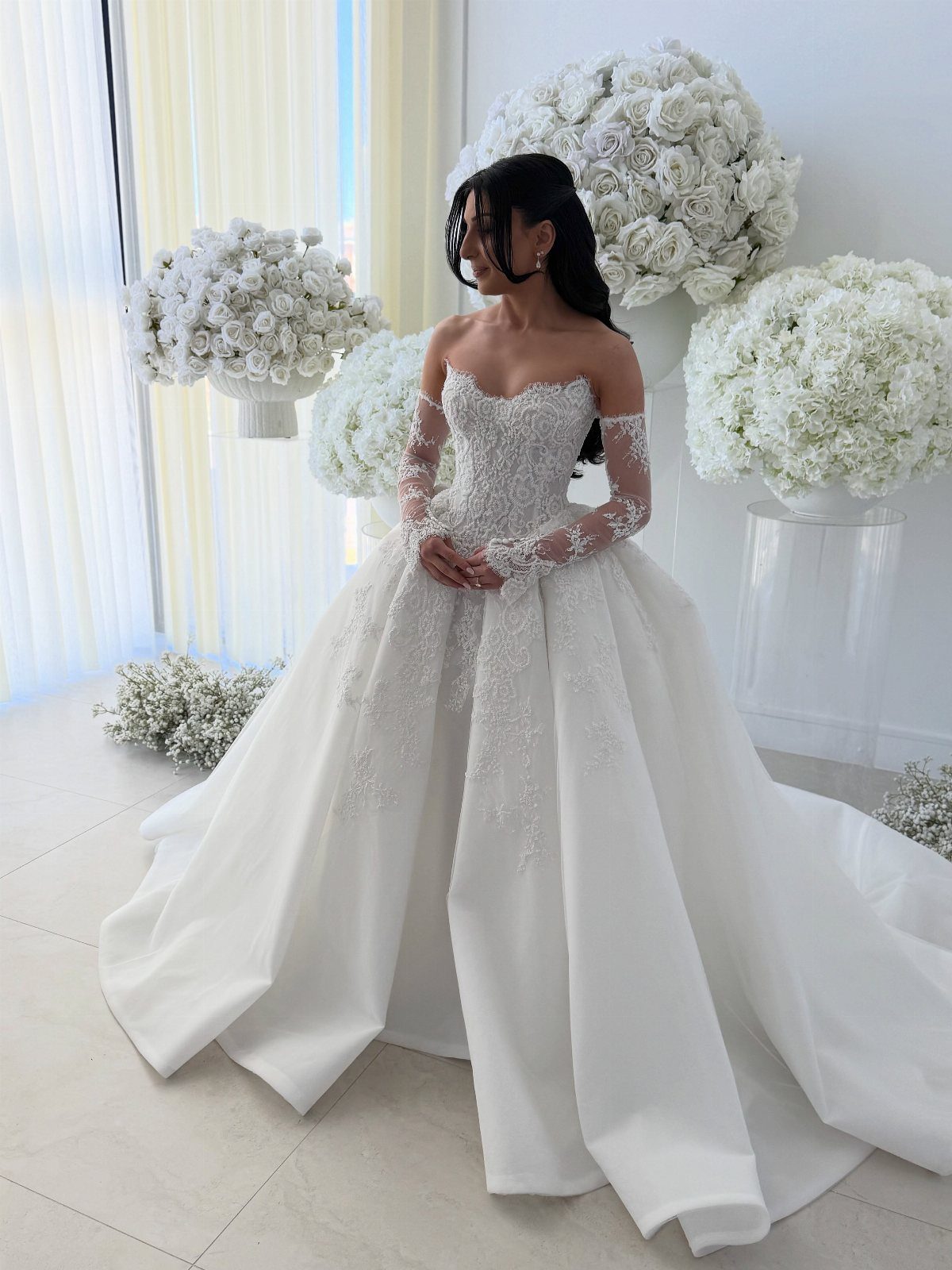
Lace can carry a whole gown or just trim one, and the difference in cost and weight is significant.
Lace across bodice, sleeves, and skirt works when the pattern is consistent and the underlayer is matte enough to let the lace read as texture, not clutter.
I like a full lace gown for daytime or garden weddings where the light comes through; for evening, lace as trim on a solid bodice keeps the formality.
Spaghetti straps and a low back in lace read delicate without being fragile. If you are adding a veil, match the lace weight or go plain; 2 competing patterns flatten in photos.
5. Fit-and-Flare Silhouettes
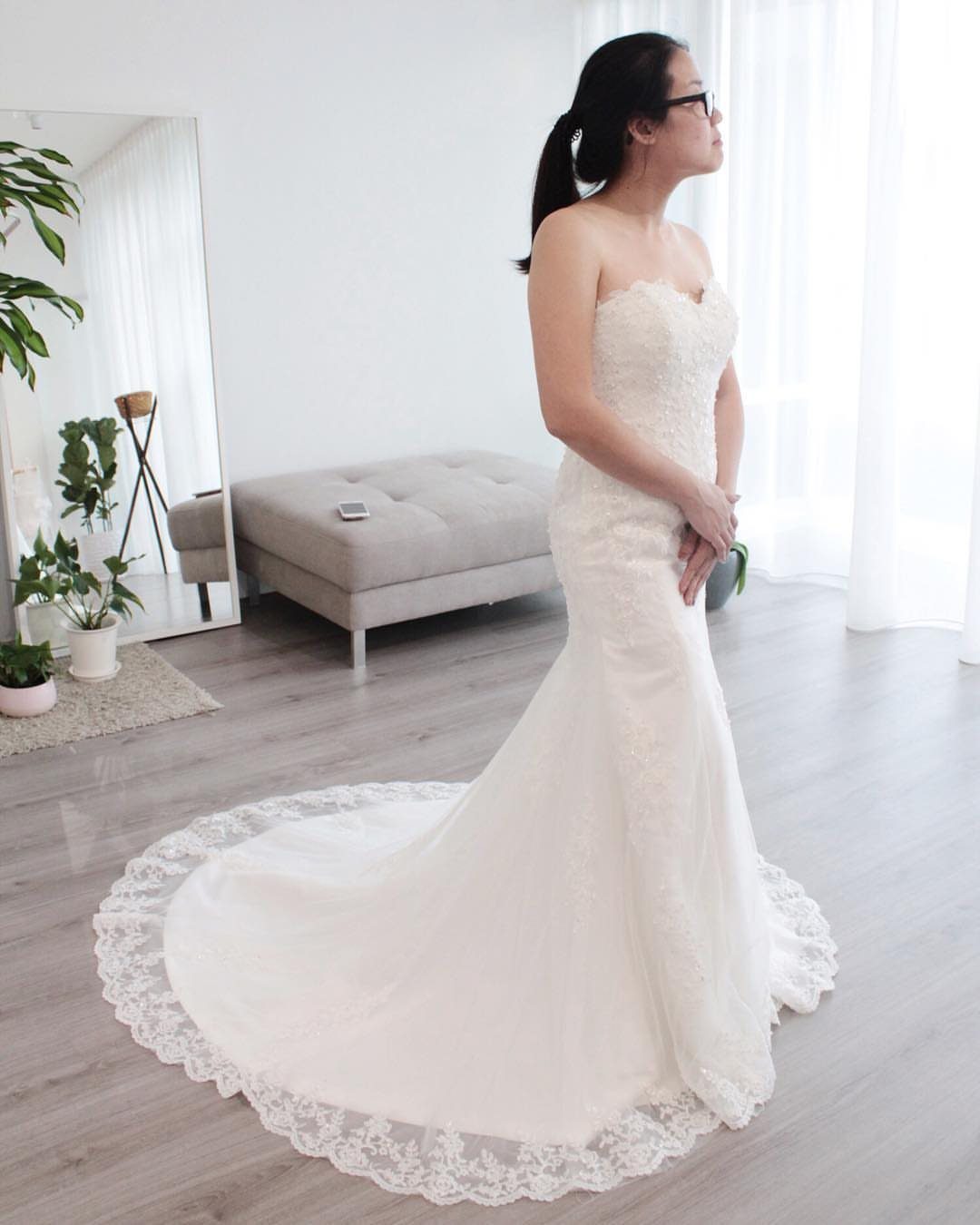
Fit-and-flare hugs through the torso and releases around the hip or mid-thigh, which gives shape with less drama than a mermaid that flares lower, at or below the knee.
Lace with a train works for brides who want movement but not a ballgown to manage.
Jenny Yoo does this shape with enough structure that it holds after dinner; the Allure A1472 uses layered sparkle tulle under lace so the contour catches light as you move.
I find this silhouette suits brides who want definition at the waist and hips but not restriction below.
The train adds formality; for a beach or outdoor wedding, ask about bustling options before you buy, or choose a floor-length version without the extension.
6. Timeless Bridal Styles
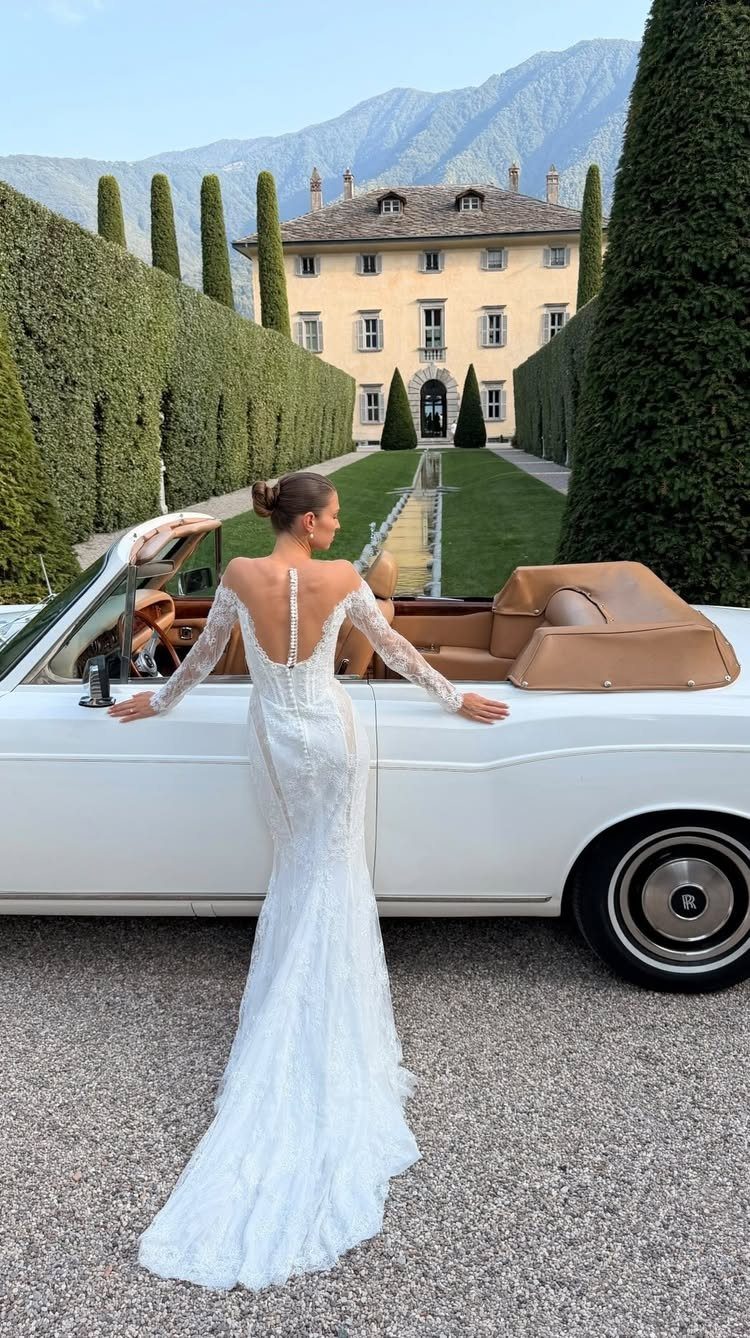
A style that still looks right in twenty years usually comes down to restraint: clean lines, no single trend element that dates the photo, fabric that was good before the season and stays good after.
Lace and a simple silhouette get you there; the combination ages so slowly a photo gives away only the hair and the car.
Emilia Wickstead’s duchesse satin pieces work the same way, crisp structure without ornament that needs explanation. I think of timeless as a subtraction exercise; when you are tempted to add one more thing, stop.
These gowns do not need the context of their year to make sense. If you are unsure whether a dress qualifies, imagine your mother or your daughter in it, and trust the answer.
The aesthetic of a minimalist wedding gown will withstand the test of time; the hope is, when you review the photographs of your big day in years to come, the dress will still be as relevant as it was when you tried it on.
— Vogue
7. Pearl Accents
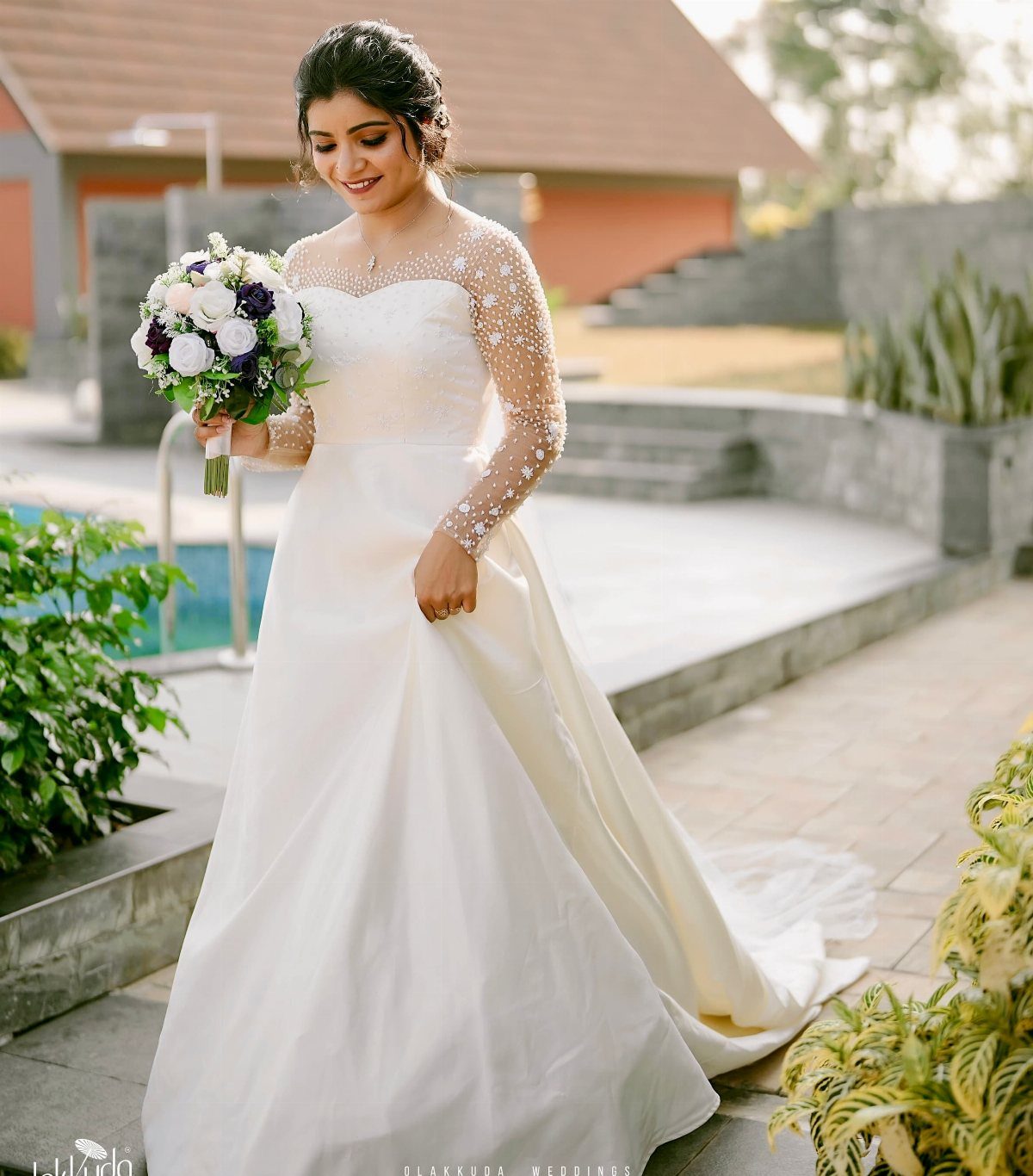
Pearl accents sit on the surface of fabric rather than sinking in, so they catch light at every angle without shouting for attention.
Cap sleeves or trim lines work best; scattered across a whole bodice, pearls read as texture from a distance and reward closer inspection.
The Savannah Miller approach keeps the detailing narrow so the gown stays classic rather than costume. I like pearl on illusion sleeves for outdoor summer weddings, where natural light does the work of a spotlight.
If your venue is dim, check that the pearls have enough luster to read in low light or consider a smaller cluster at the neckline instead.
Match pearl tone to your jewelry; warm cream against cool white fights itself in photos.
Choosing the Right Dress
Your frame does the narrowing, not the dress. A ballgown skirt on a petite figure can overwhelm, but that same shape on a tall, narrow frame reads elegant rather than swallowed.
I start with where the waist hits and whether the bodice holds itself up without constant adjustment.
Interior boning and built-in cups matter more than any outer detail; you will feel the structure after hour three, and so will your posture in photos.
Eye color and hair length matter less than most brides think, though a high neckline with long hair can erase your face in pictures.
Budget compatibility is real. Stillwhite and resale sites carry previous seasons of lines like Allure Bridals well below retail, and the construction holds.
Do not copy a runway look piece for piece; borrow one element and let a seamstress model the rest to your measurements.
A proper fitting runs less than replacing a gown that never sat right, and for a classic dress you will wear once, sitting right is what matters.
Materials Used
Satin carries light differently than guipure lace, chiffon, organza, or tulle, and each fabric changes how a classic line behaves on the body.
Satin holds shape and photographs glamorously but shows liquid streaks and stains; I schedule a steamer on-site, not the morning before.
Chiffon drapes softly and rarely wrinkles, though it can pleat if crushed in a garment bag. Tulle and organza build volume without weight; tulle is the stiffer of the two and electrostatic in dry hotel air.
Guipure lace, the raised pattern type, wears at the edges over years of storage. Mixing materials gets you originality; one fabric head to toe flattens unless the cut is exceptional.
Ribbons, bows, and metallic thread trim add expression without adding layers.
I have seen silver embroidery on satin catch chandelier light exactly as intended, and I have seen gold thread read as yellow under LED. Test your fabric under your venue’s actual lighting, not just the boutique’s.
Accessorizing Classic Styles
A clean dress is an invitation to choose one accent rather than many.
The Narciso Rodriguez approach, restrained and streamlined, proves that simple endures. One bold piece, a pair of earrings or a cathedral veil, outlasts the temptation to add one more thing.
When you are unsure, stop. That subtraction is what reads as confidence.
Timelessness of Styles
A dress that lasts in photographs comes down to restraint.
The historical pressure toward display, stones and gold thread and layered volume as status signaling, still tempts. I see it in the Baroque impulse to accumulate.
Modern classic design answers that impulse with bold silhouette and decisive detail rather than ornament that needs explanation. Refined simplicity is the harder achievement.
Trust it. A dress that does not need the year around it to make sense will not need your wedding year either.
Frequently Asked Questions
What are some classic traditional bridal dresses?
A-line ball gowns, satin wedding dresses, and lace gowns all read as classic. An A-line gown narrows at the bodice and flares toward the hem, which flatters most bodies without requiring alterations to the structure itself.
Satin catches light in a way that looks costly even when it is not, and lace can cover a whole dress or edge a sleeve depending on how formal the event runs.
What type of dress should an older bride wear?
A timeless style with clean lines and restraint flatters any age better than trend-driven details. Fit-and-flare or A-line shapes give definition at the waist without restriction, and off-the-shoulder necklines keep the focus up toward the face.
Older brides do well with shapes that would have looked right thirty years ago and will still look right thirty years from now.