These 23 indoor wedding decorations run from a single balloon garland to a suspended ceiling floral wave that needs rigging hardware, so the right pick depends on whether your venue offers anything to build on or nothing at all.
A bare ballroom ceiling becomes finished with sheer fabric swags for less than most centerpieces cost, while a room with existing architecture might only need warm uplighting to glow.
The cream runners that line one aisle can dress a guest book table or layer under centerpieces later, which matters when the modest budgets on this list force every yard of fabric to earn its keep twice.
1. Reception Table Settings
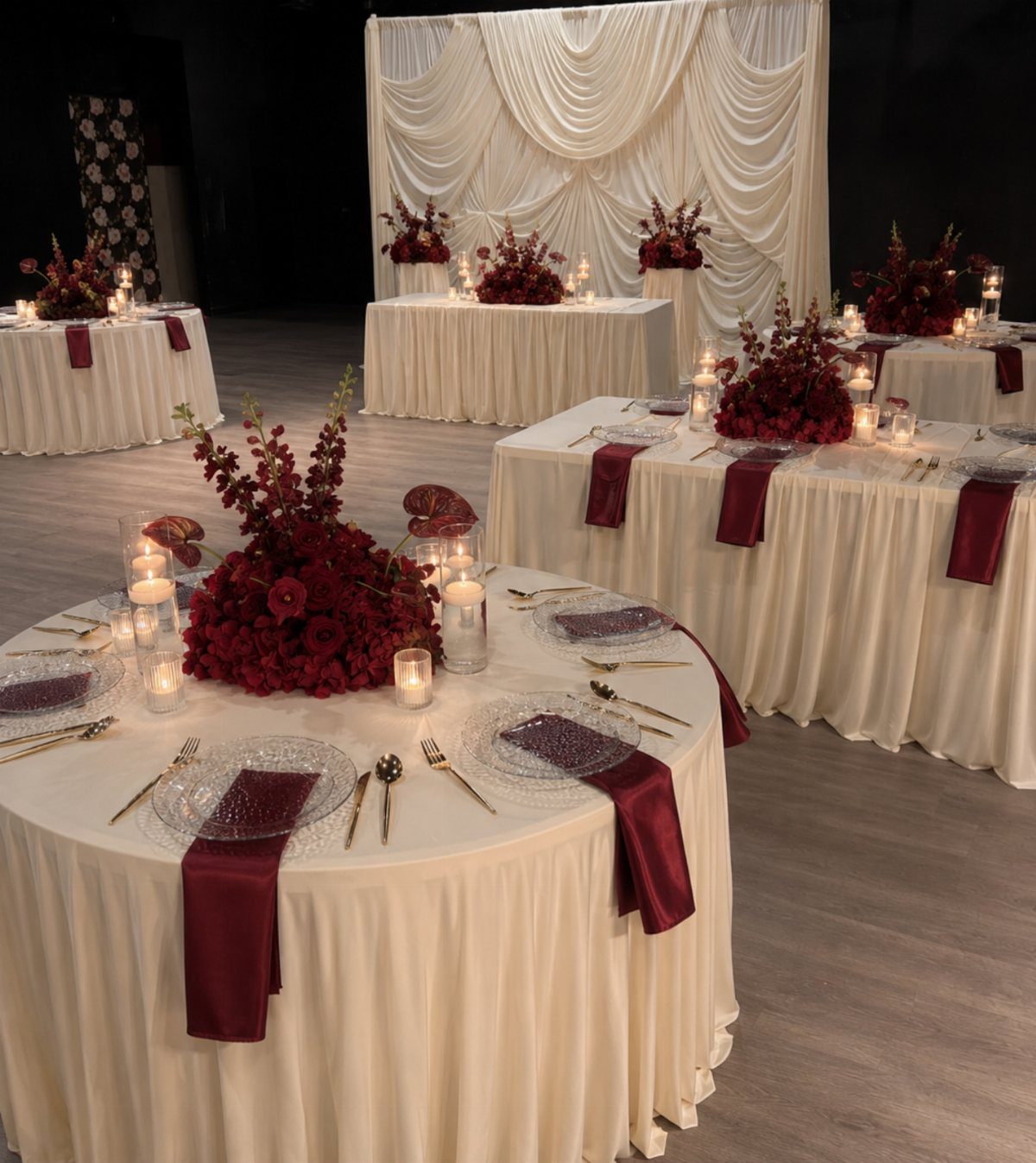
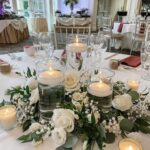
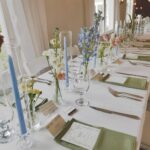
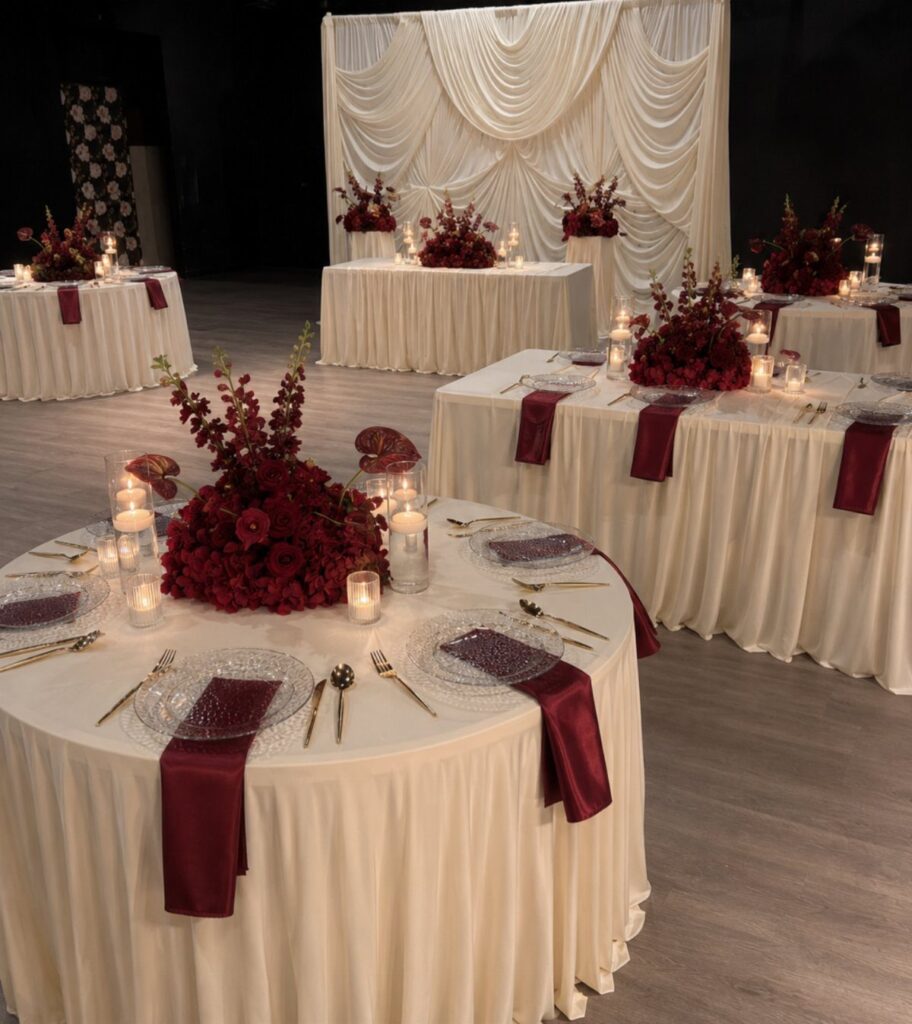
Cream tablecloths with burgundy napkins and glass charger plates give a reception its color story in one glance.
I like this approach for budget-conscious couples because the linens do the heavy lifting; flowers can be smaller when the table itself already carries the palette.
Match your overlay to the venue’s existing tones so you are not fighting the walls.
A marine theme calls for turquoise textiles and shell accents, while an exotic style pairs bright cloths with palm leaves and fruit. Keep centerpieces low enough that guests can see across the table without leaning.
2. Unique Seating Arrangements
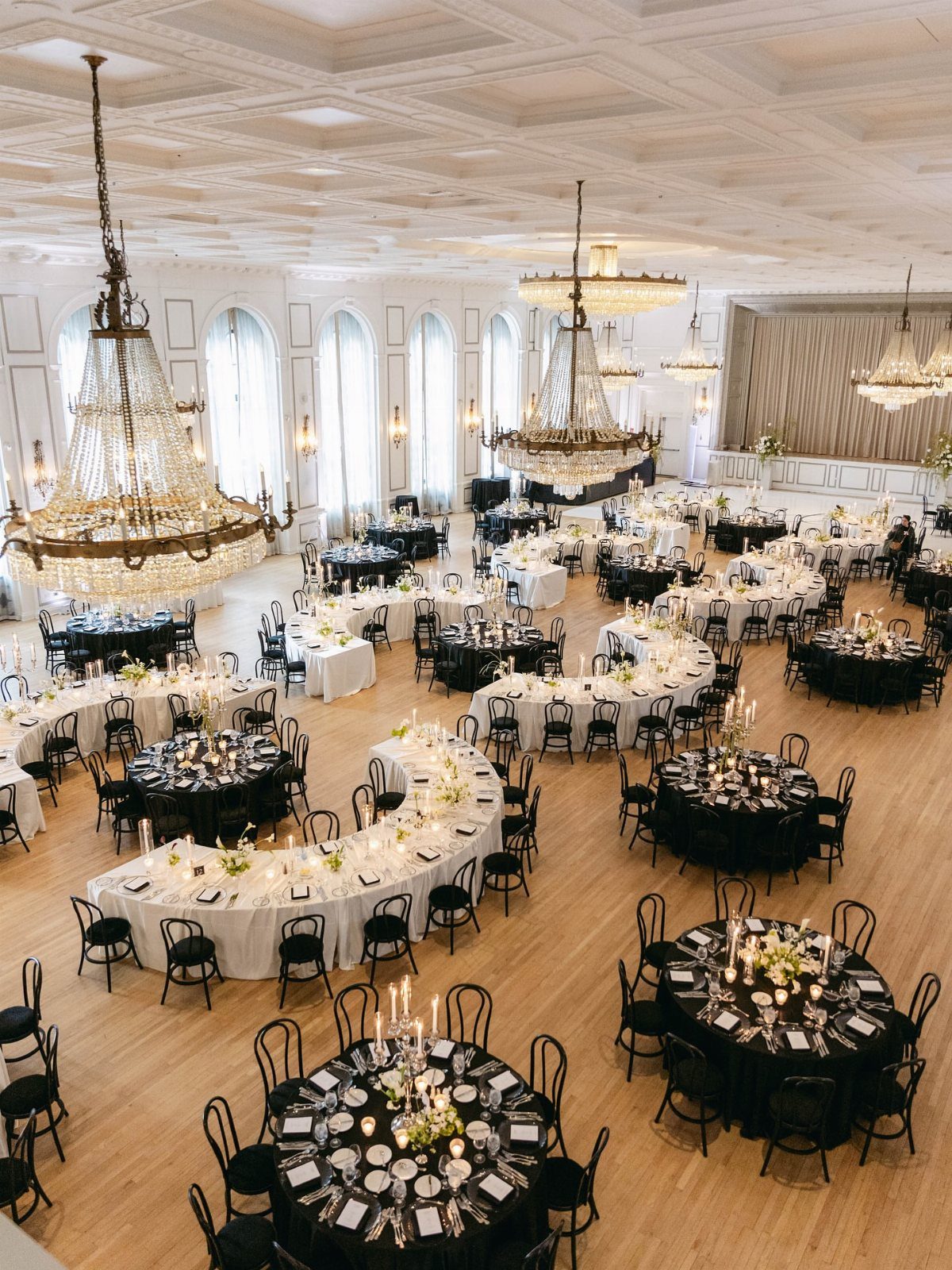
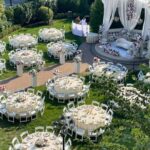
Curved white tables mixed with round black ones break the grid of identical rounds that most venues default to.
The shape change alone shifts how guests circulate and where conversations start; no one is stuck at the edge of a long rectangle or lost in a sea of ten-tops.
Pair the tables with coordinated chair covers and sashes so the experiment looks intentional, not leftover. This suits couples who want a lounge feel without renting separate furniture.
3. Entrance Decorations
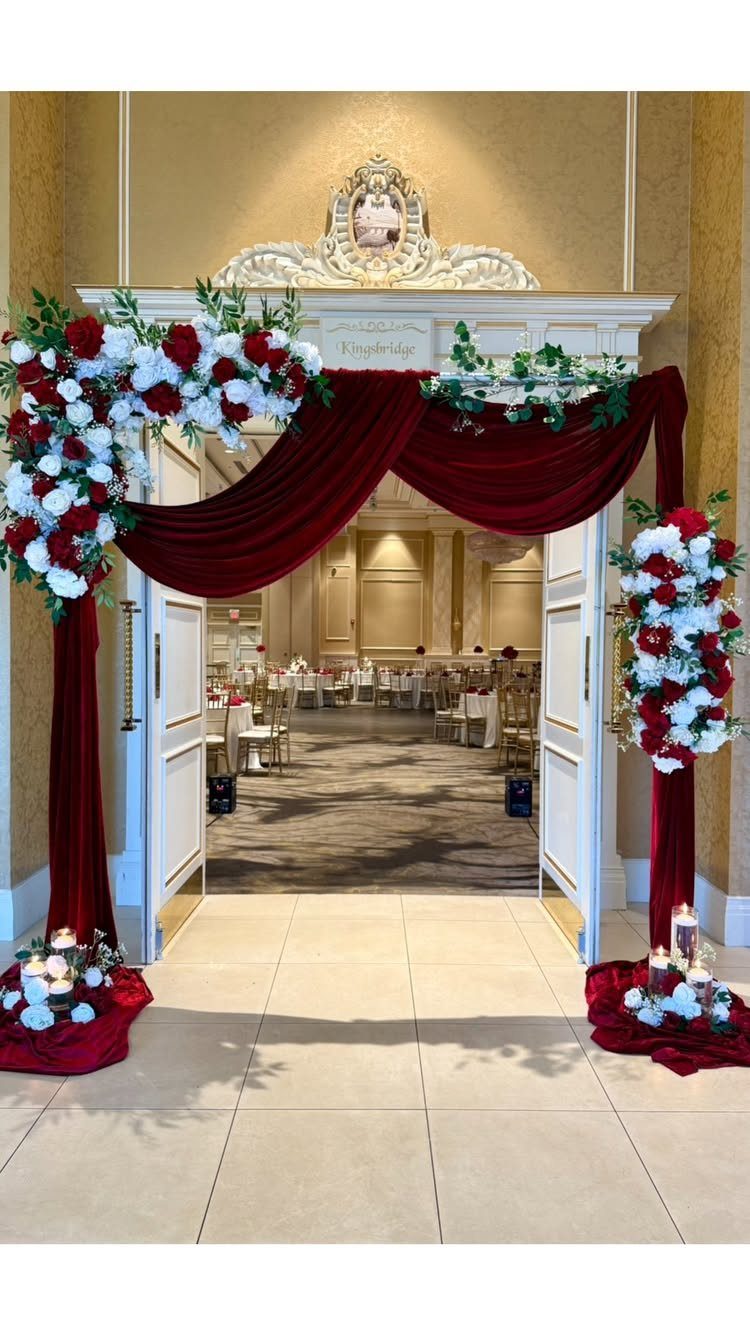
Deep red drapery and floral arrangements at the entrance tell guests they have arrived at something specific, not wandered into a corporate banquet.
I would rather see a small, styled welcome table here than a sparse corner with a guest book no one uses.
A runner, low arrangement, and matching tablecloth tie the entry to the reception design without demanding its own budget tier. Candle-lined pathways work when the venue allows open flame; otherwise, battery pillars in glass sleeves give the same glow.
4. Geometric Backdrops
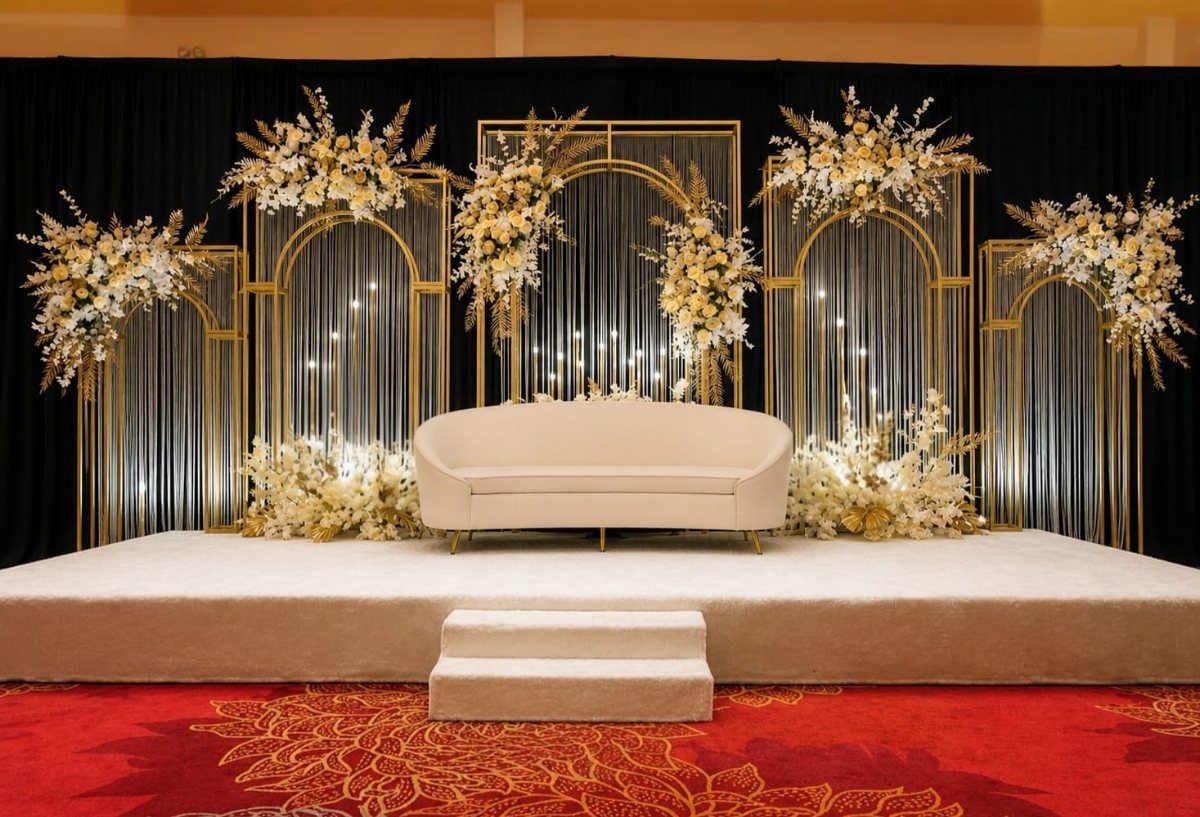
Gold arched metal frames with white and yellow flowers take the backdrop idea out of fabric and into sculpture.
The geometry reads modern without being cold; the flowers soften the lines and fairy lights add the warmth that metal alone would lack.
I would use this for a couple whose venue has little architectural interest, since the frame becomes the architecture. Position it where the ceremony meets the wall, not floating in the room, so it has something to anchor against.
5. Photo Backdrops
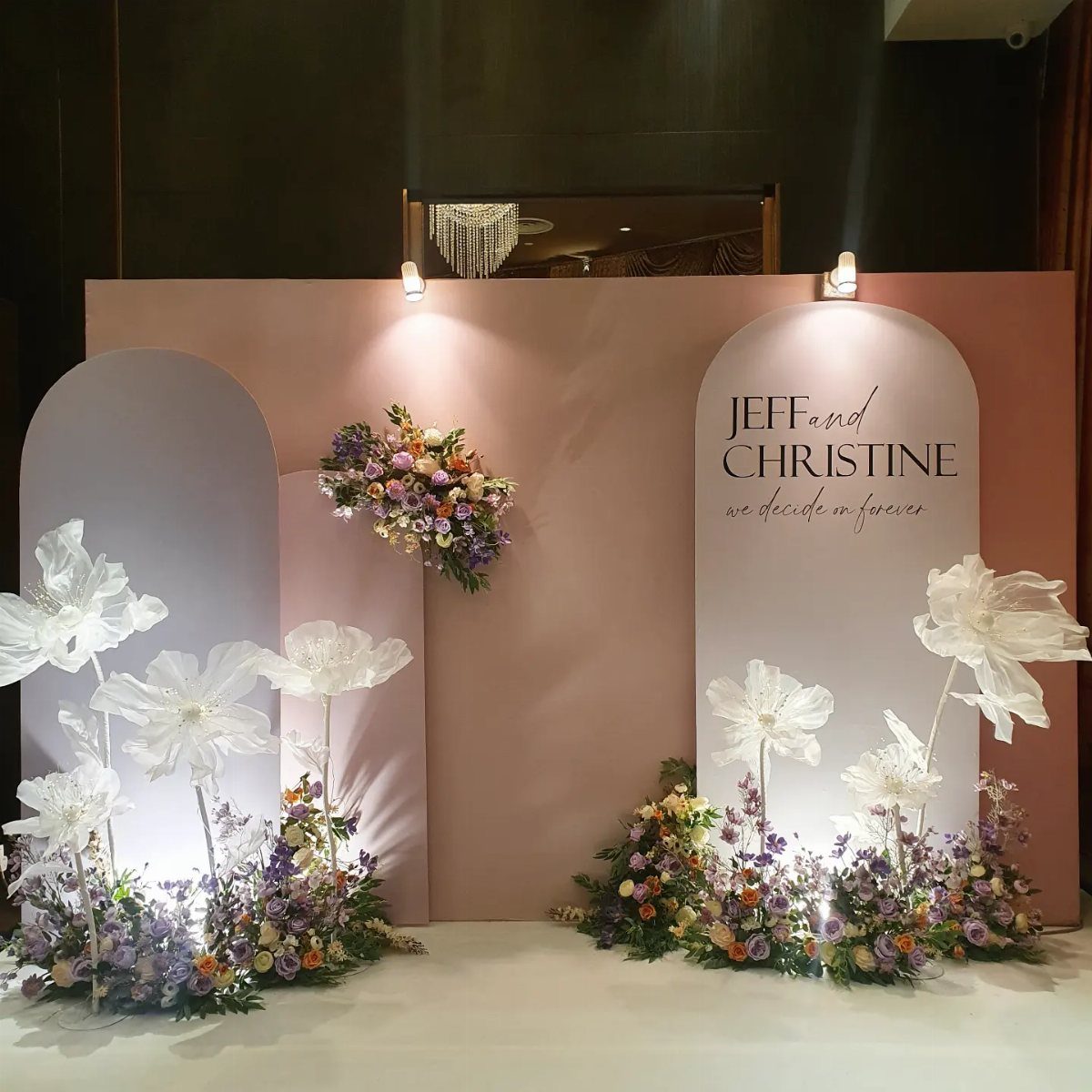
A photo backdrop with the couple’s names in script gives guests a reason to pause and a memory that is not just the dance floor.
Layer sheer panels with florals if you want dimension in photos, or keep a single flat panel in a solid fabric to keep attention on the people.
Setup time is the hidden cost: a multi-panel build needs someone to level and secure each piece.
6. Stage Decoration
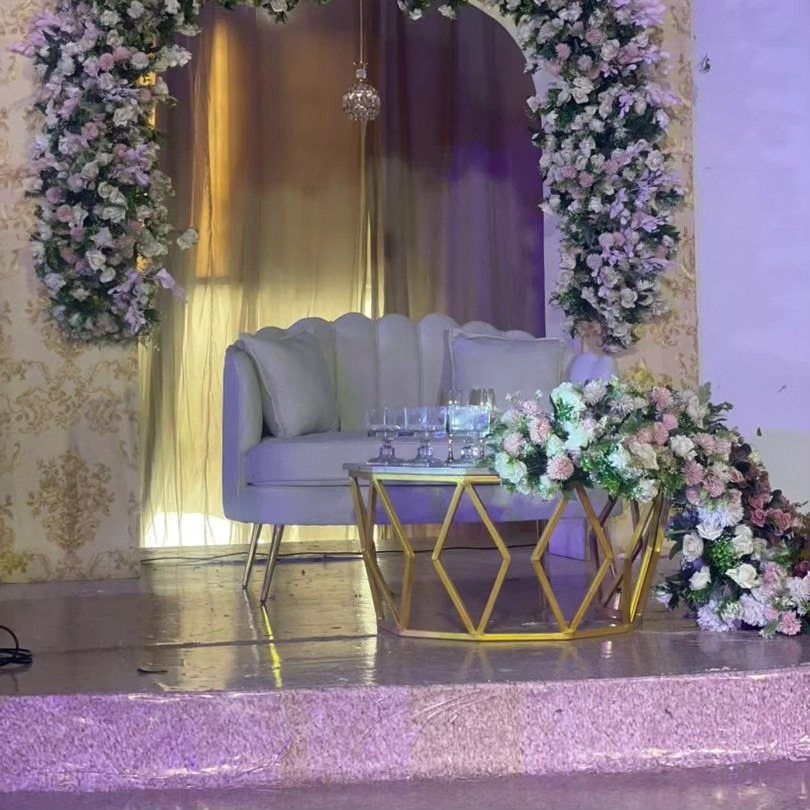
An elevated stage with scalloped upholstery and gold geometry puts the couple literally above the crowd, which matters in a large ballroom where guests in back might otherwise see only heads.
The light blue loveseat and cascading flowers create a focal point that photographs cleanly from every angle.
A gobo projector throwing initials onto the dance floor below extends the stage branding into the room, though it needs a white or light floor surface to read; carpet swallows it.
This setup suits venues with existing raised zones, since building a platform from scratch is a different expense entirely.
7. Candle-lined Aisle
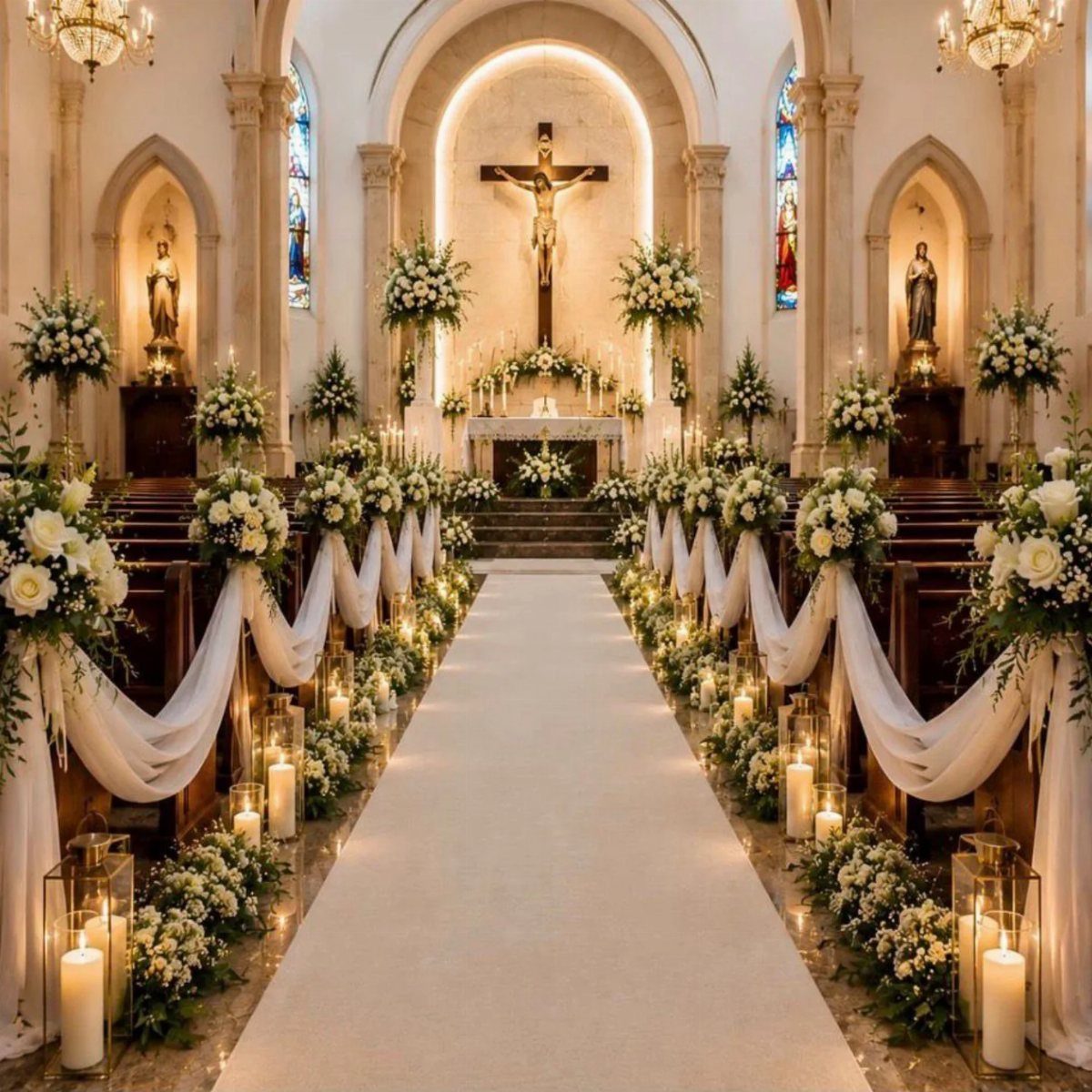
Glass lanterns with pillar candles set along a white aisle runner give the ceremony its light source and its mood in one move.
The glow reads intimate without demanding dimmed house lights; it works in a church with tall windows at noon or a hotel ballroom after dark.
I would keep the arrangements low and spaced every few rows rather than crowding the walk path; the goal is framing, not obstacle course.
Battery pillars in glass sleeves trade some warmth for safety when open flame is restricted, and most venues have that rule now.
8. Backdrop Draping
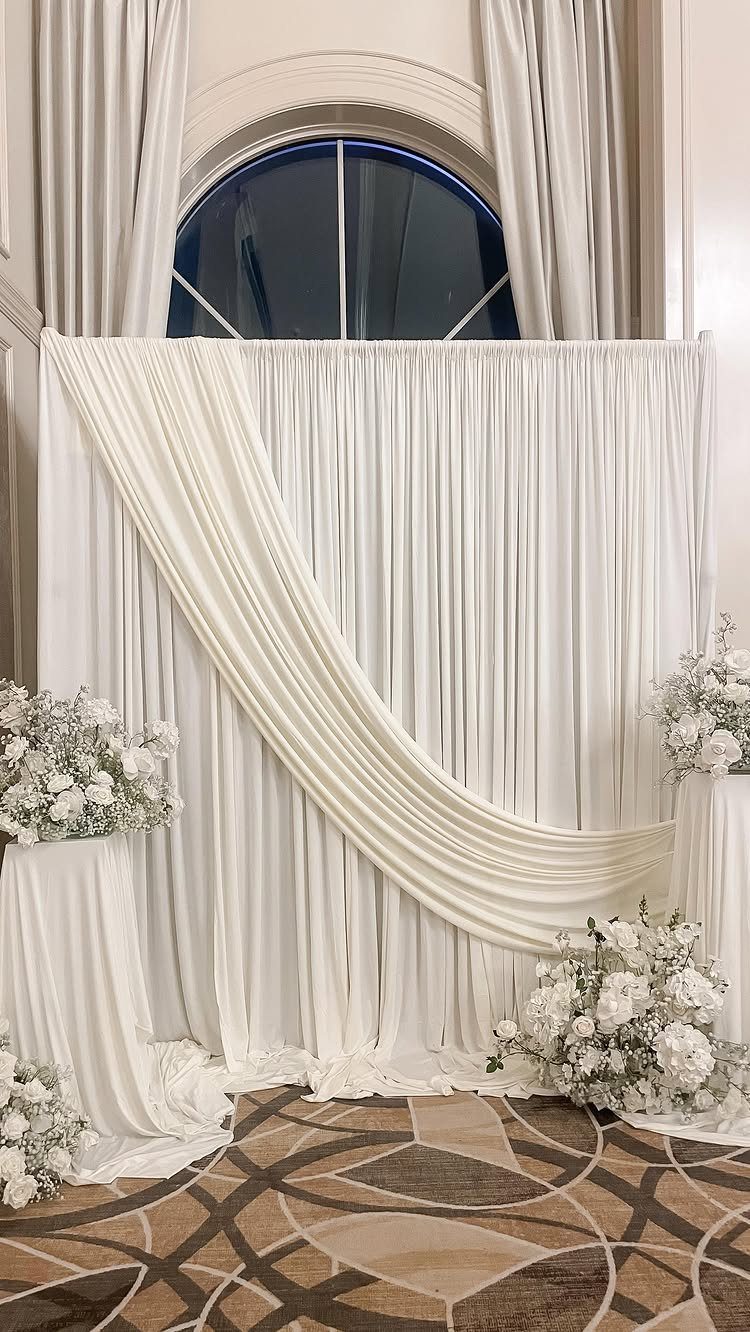
Asymmetrical swags of cream fabric across a white panel backdrop add movement that a flat wall lacks, while pedestal florals at the edges give it weight and ground.
Sheer layers photograph with more depth than a single solid drape; the camera catches the overlap and the light coming through.
Match the fabric tone to the arch and aisle so the ceremony reads as one connected space, not three competing color statements.
A solid backdrop keeps attention on the couple, which suits smaller rooms where guests sit close; layered sheers need more distance to read properly.
9. Floral Arrangements
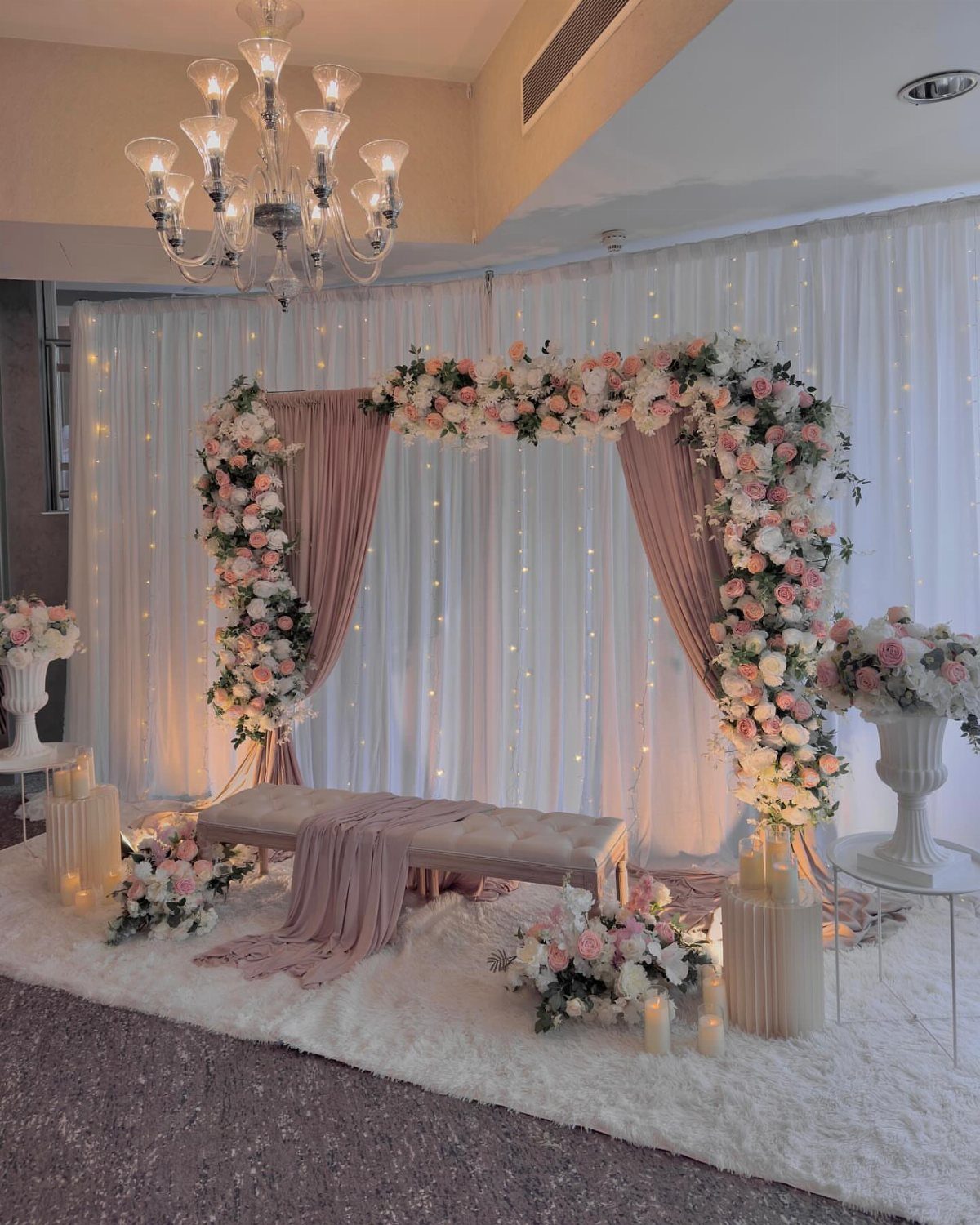
Fresh flowers on the arch, in urns at its base, and wired into fairy light curtains behind create a single floral moment rather than scattered accents.
Buying stems yourself and building garlands drops the floral budget, though it trades your time for the savings.
I would hang greenery from ceiling fixtures rather than installing new hardware; the existing framework for pendant lights or chandeliers gives you anchor points that hold weight without touching anything electrical.
Dried flowers extend the season if your bloom is out of market, and they travel better for a destination setup.
10. Autumn Leaves
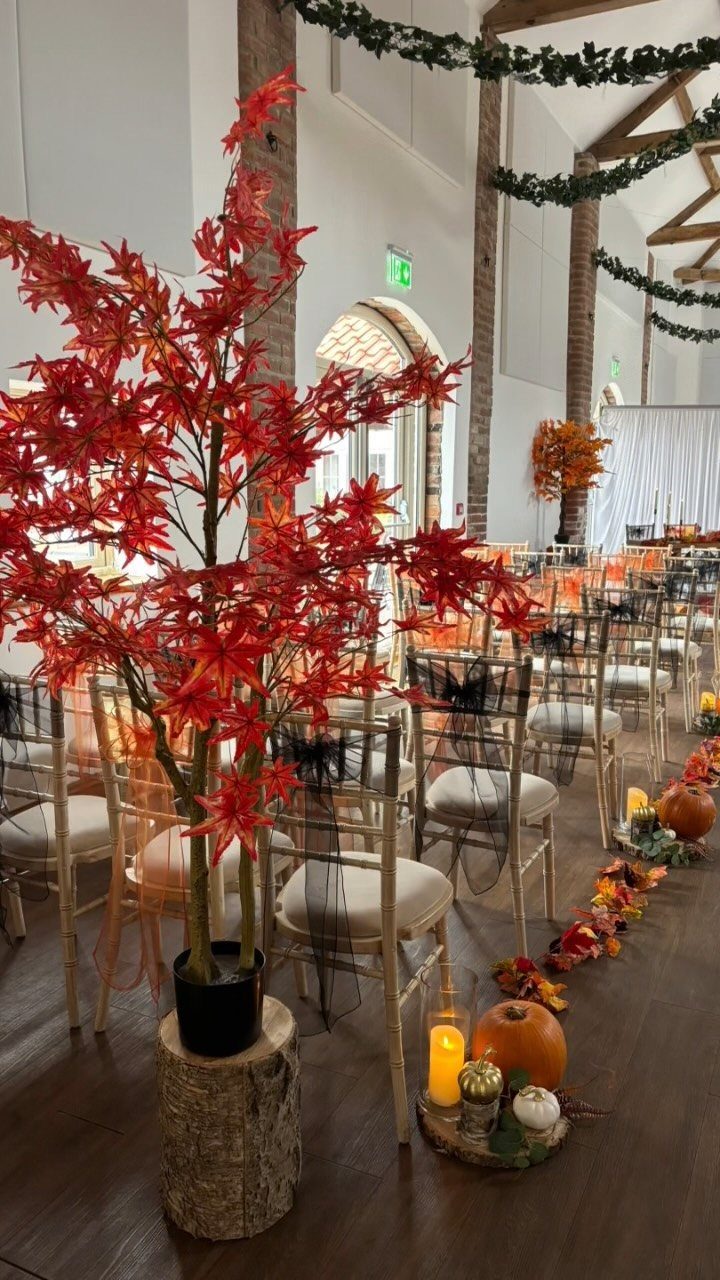
A faux maple tree on a wooden stump turns the aisle into a seasonal statement without waiting for peak foliage or gambling on weather.
The artificial element reads as intentional when the color is saturated and the placement is singular; one bold tree beats scattered real leaves that flatten underfoot.
Pair it with tulle bows on the chairs and small pumpkins at the aisle edge so the motif carries through without becoming costume. This suits couples marrying in late October when fresh options are slim and prices spike.
11. Balloon Decorations
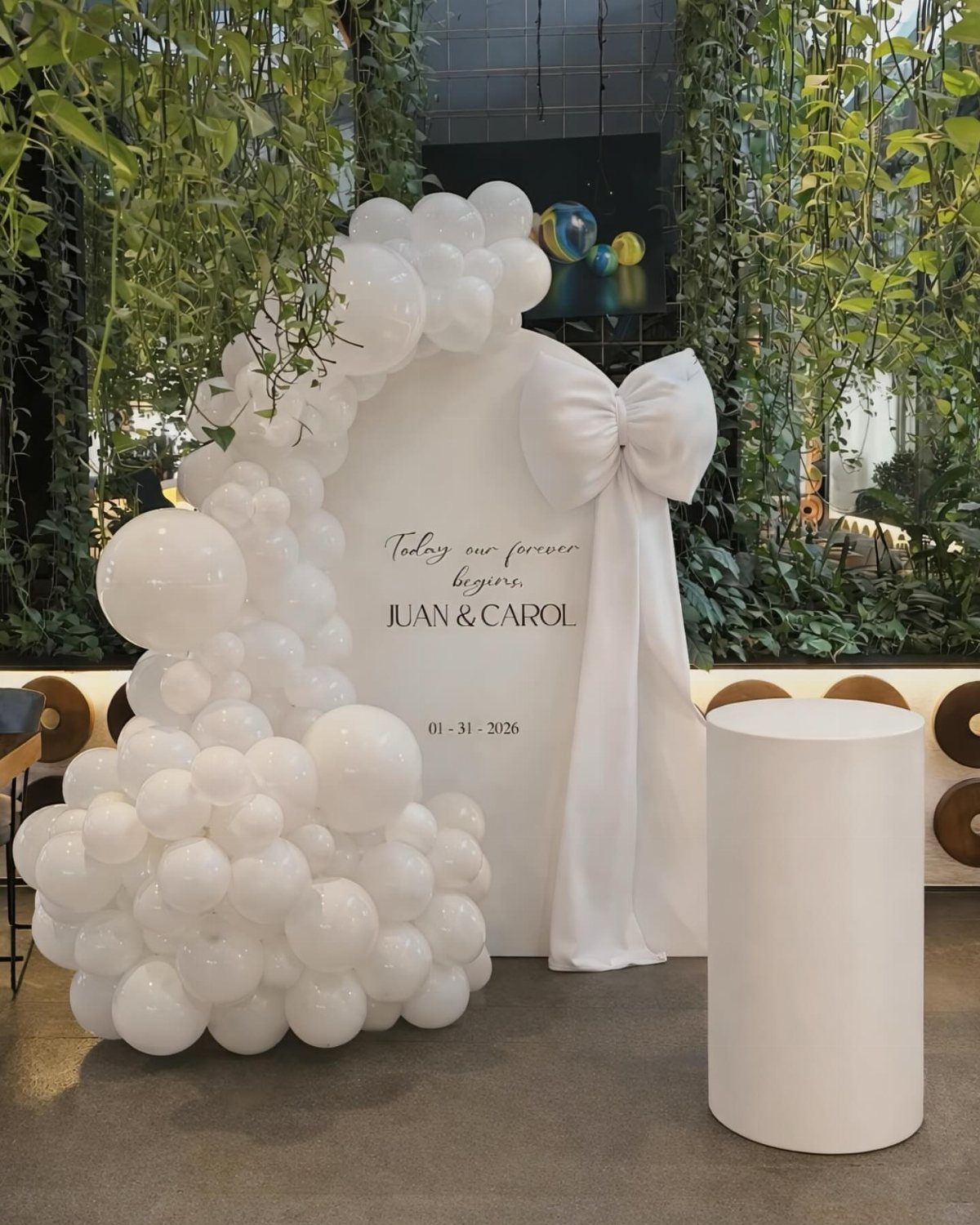
A white balloon garland framing a printed backdrop gives the welcome moment a party energy that fabric alone rarely achieves.
The scale is the point: balloons read as architecture when they fill a doorway or arch, not as table decor escaped its post.
I would anchor the garland to a fixed frame rather than freestanding; air-filled latex needs structure or it sags by hour two.
A large fabric bow at the center breaks the balloon texture and adds the handmade note that keeps the install from feeling store-bought.
12. Round Tables and Vertical Draping
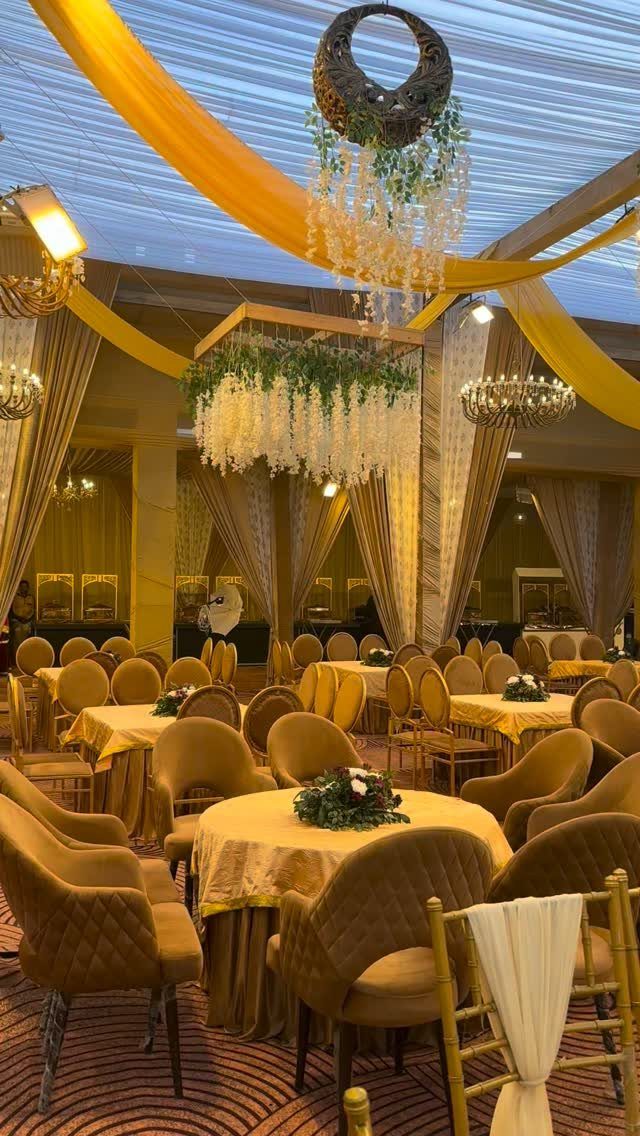
Vertical draping above round tables softens a boxy banquet hall and makes the room feel larger than its footprint; gold linens and velvet chairs warm the space without adding clutter.
Vertical wall draping draws the eye up and out, which matters in intimate venues where guests might otherwise feel stacked.
The round tables improve circulation compared to long rectangles; no one is stranded at a corner seat. Neutral tones on the tables let the ceiling color carry the design, so you are not decorating every surface from scratch.
13. Personalized Signage
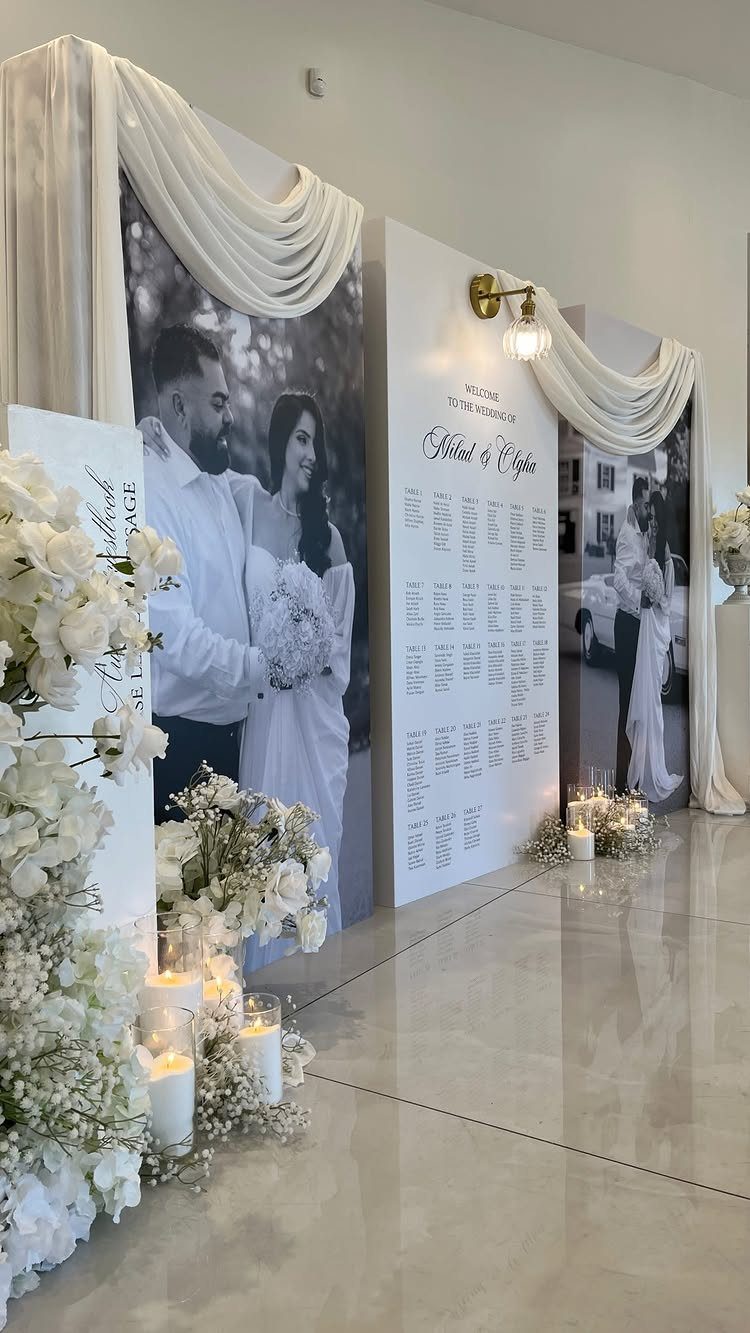
Custom backdrops with your names and photos turn a blank wall into the handshake guests remember.
A bold welcome sign can carry the whole room when the space itself has nothing to show. Match the frame metal to your table settings so the entry does not read as a separate event.
Directional signs and menu boards in the same hand keep the voice consistent through the room, though one strong welcome piece beats scattered plaques that fight for attention.
A seating chart on matching stock, pinned to the same backdrop style, carries guests from foyer to table without design whiplash.
14. Suspended Ceiling Floral Wave
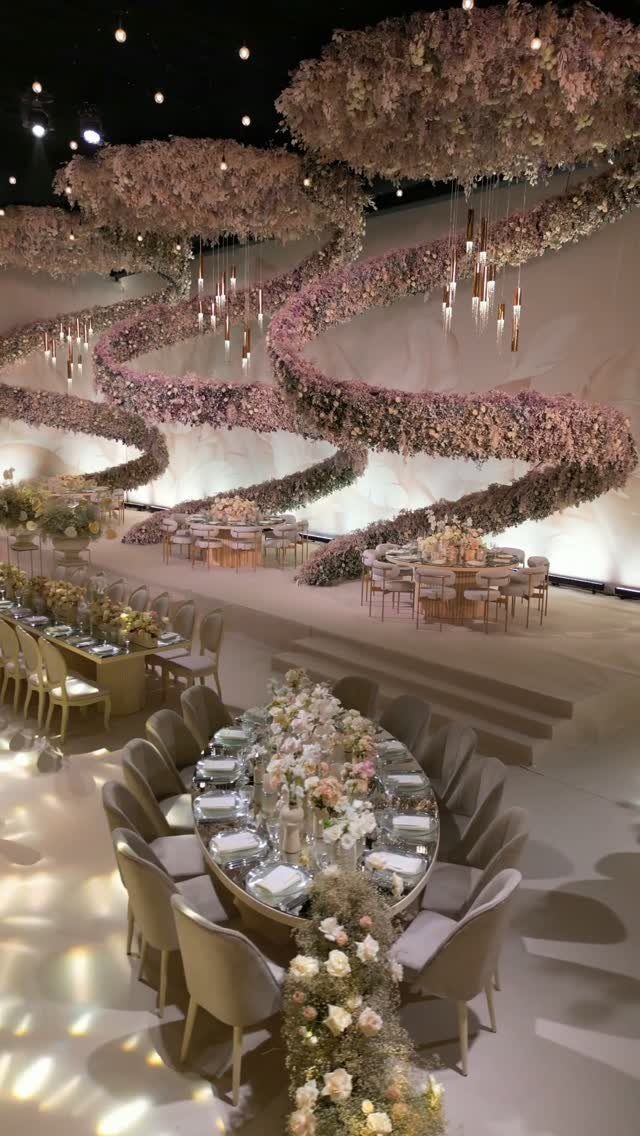
A spiral of stems overhead turns the ceiling into the main event and lets you keep tables almost bare.
This is the most dramatic move on the list and the one most couples should skip; rigging needs a structural beam rated for weight, a lift rental, and a florist who has done it before.
Dried or faux stems cut both cost and petal drop, and they travel lighter for destination setups. Nothing hangs over guests until the rigging passes inspection.
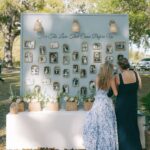
15. Arched Mirror Seating Chart
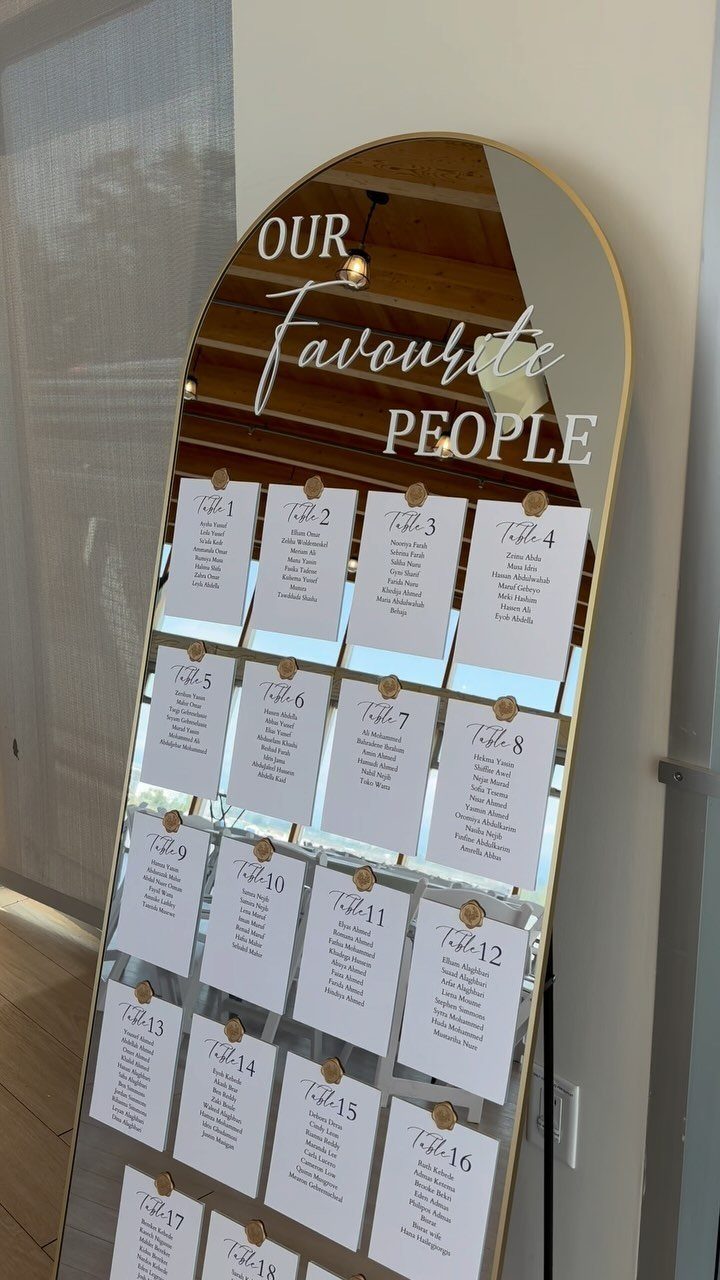
An arched mirror with hand-lettered cards and wax seals gives guests their table number and a keepsake photo in one stop.
The mirror itself is rental; the cards are paper stock matched to your invitations so the foyer feels like a continuation, not an afterthought.
Arrange alphabetically, not by table, so no one reads every card hunting for their name. A single stem or sprig marking each row is enough to show the breaks without blocking the names.
16. Draped Fabric Ceiling Canopy
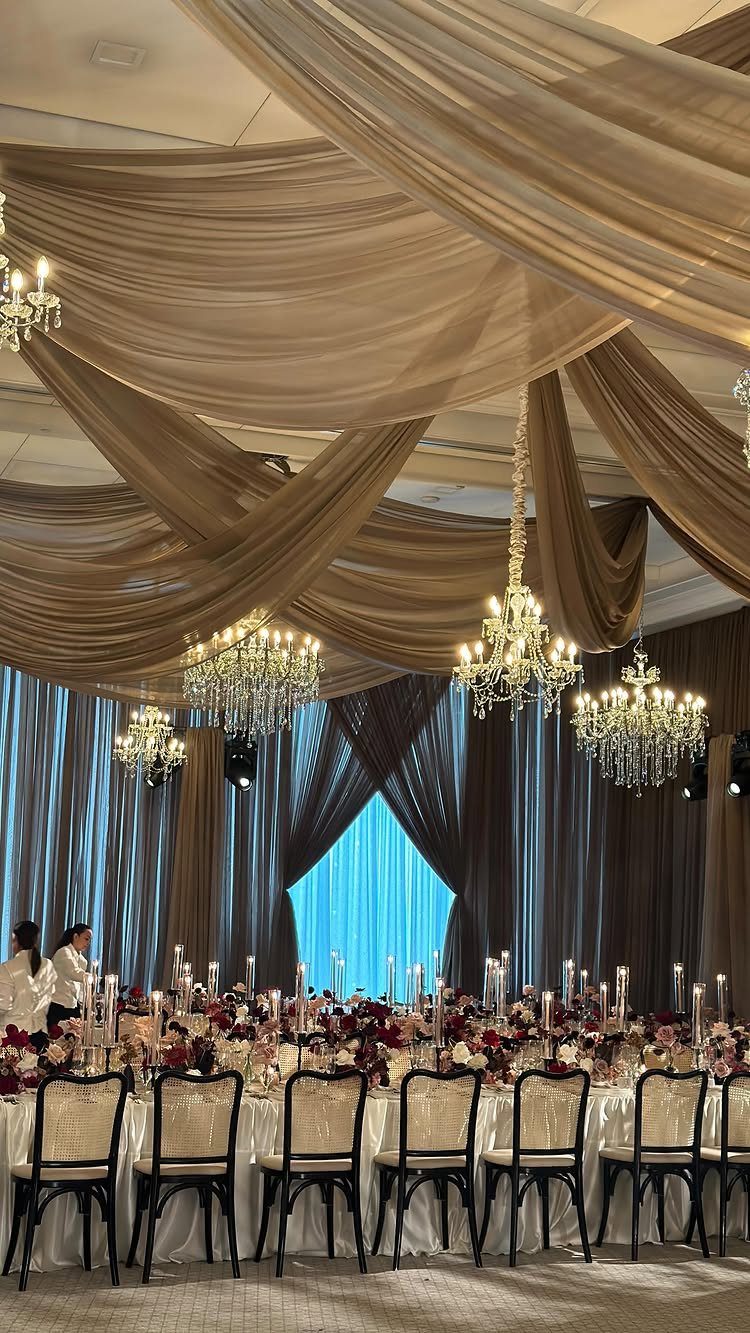
Sheer fabric swags across a bare ballroom ceiling make the room feel finished for less than most centerpieces cost.
Never hang from sprinkler pipe. The draping draws the eye up, which matters most in the boxy hotel ballrooms that Florida couples often inherit.
17. Illuminated Architectural Arch Walkway
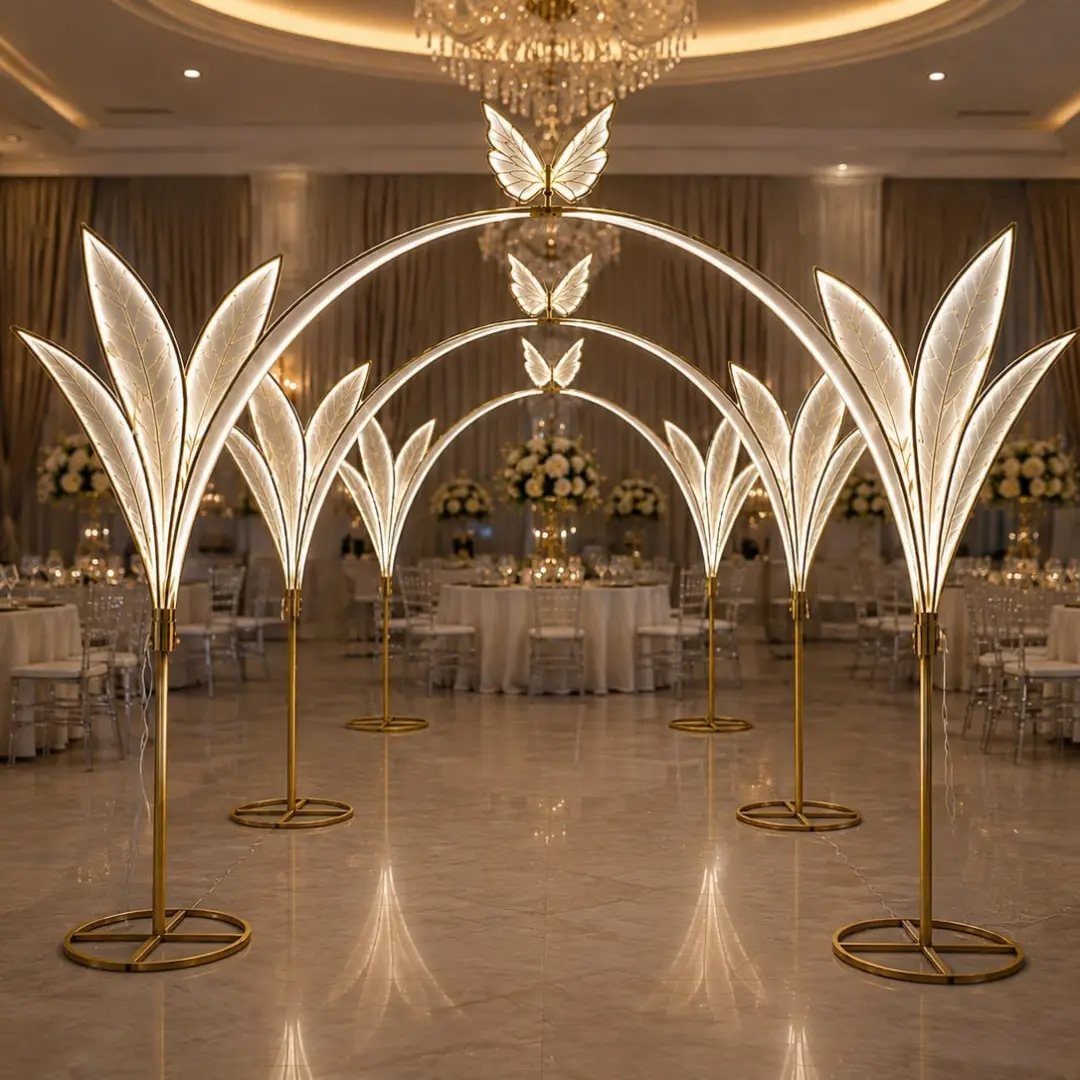
Illuminated golden arches with leaf and butterfly motifs turn a plain aisle into a processional moment.
The light source is built in, so you are not running cords across carpet or gambling on outlet placement. Check arch width against your aisle; these read best with space to breathe between them, not squeezed shoulder-to-shoulder.
The stylized metalwork suits a couple whose taste runs ornate rather than rustic. Rent rather than buy; storage and resale of metal arches is its own project.
18. Floral Hoop Bouquet Accessory
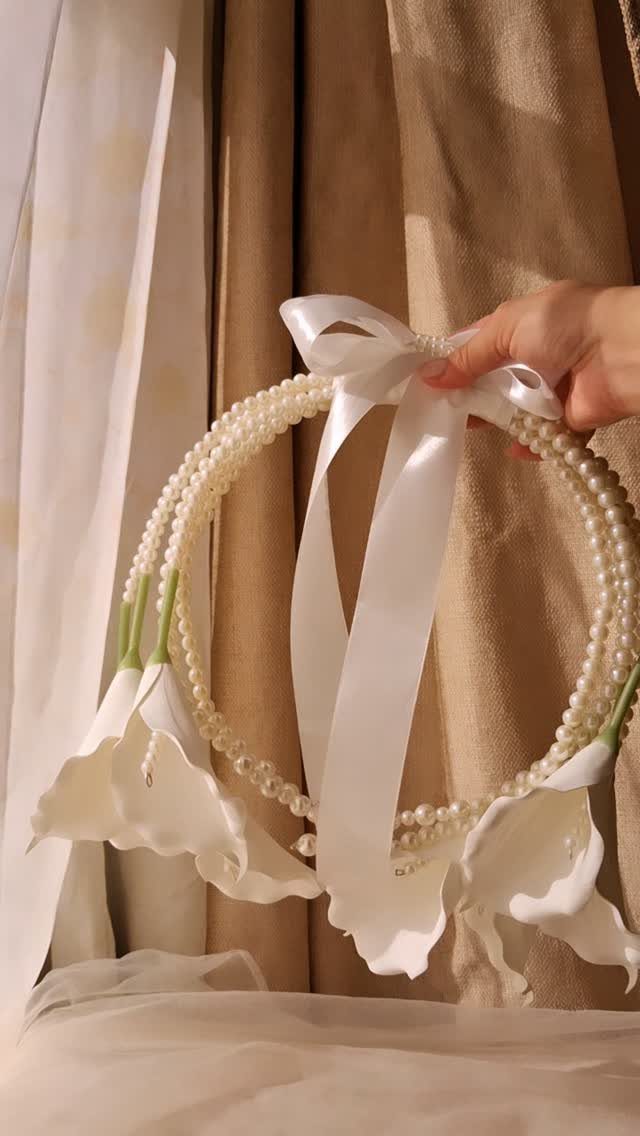
A beaded hoop replaces the traditional bouquet handle for a bride who wants something sculptural in hand.
The pearl wire and satin ribbon keep the palette clean; calla lilies face outward so the shape reads from the aisle, not just from above.
This suits a dress with clean lines, since the hoop competes with lace and ruffle. The weight sits differently than a wrapped stem; practice the hold in fittings so the arm position looks natural in photos.
19. Canopied Aisle Drapery
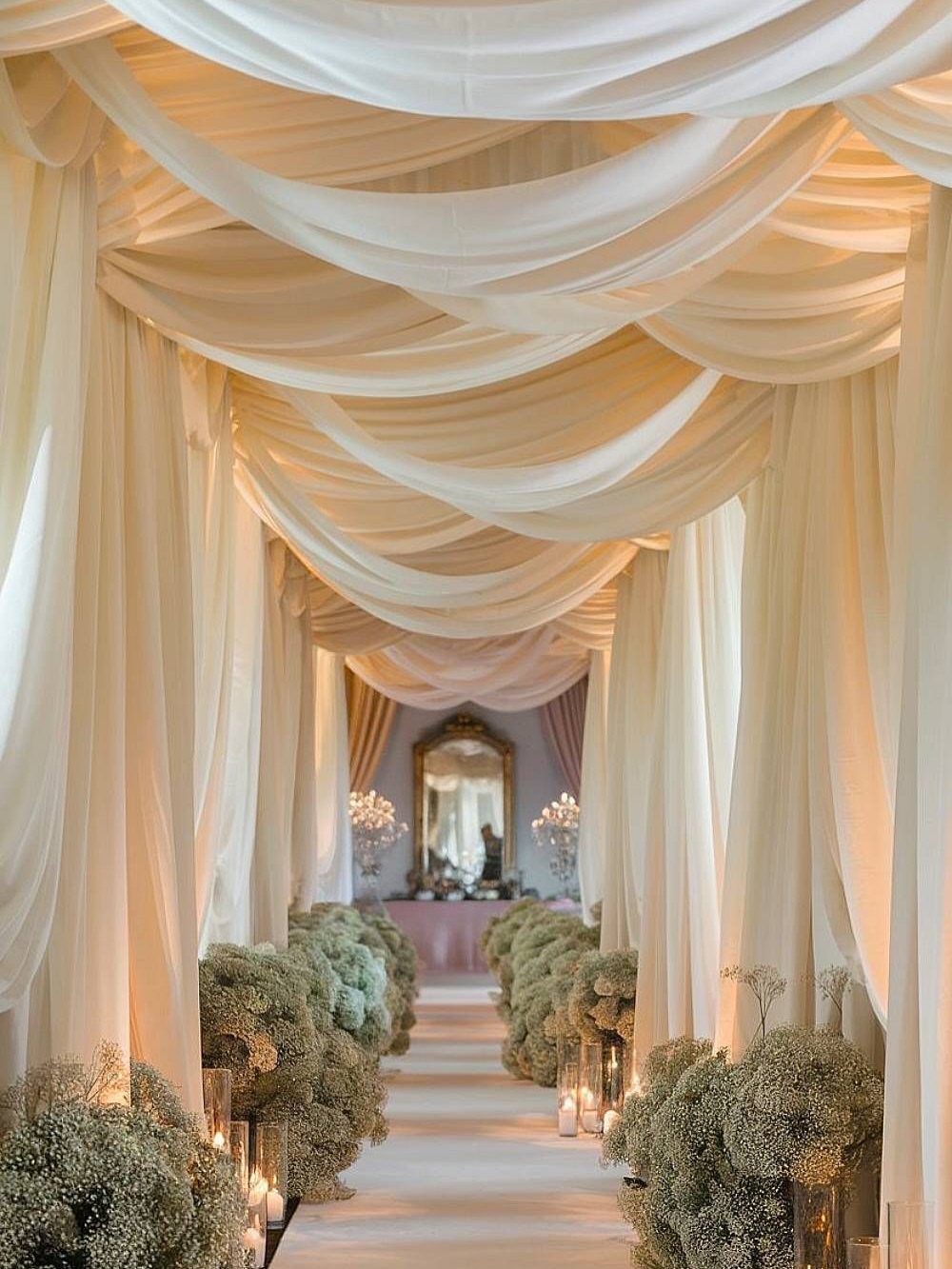
Baby’s breath mounds at chair height and candles on the floor build a cloud-like aisle under draped cream fabric overhead.
The canopy needs anchor points rated for weight; ordinary ceiling tiles will not hold it. A mirror at the aisle end doubles the light and gives the processional a destination, though it needs cleaning the morning of.
This suits venues with high ceilings and little character of their own, where the draping becomes the architecture. Keep the fabric tone within one shade of the runner so the aisle reads as a single volume, not separate layers competing.
20. Floral and Fabric Mandap Canopy
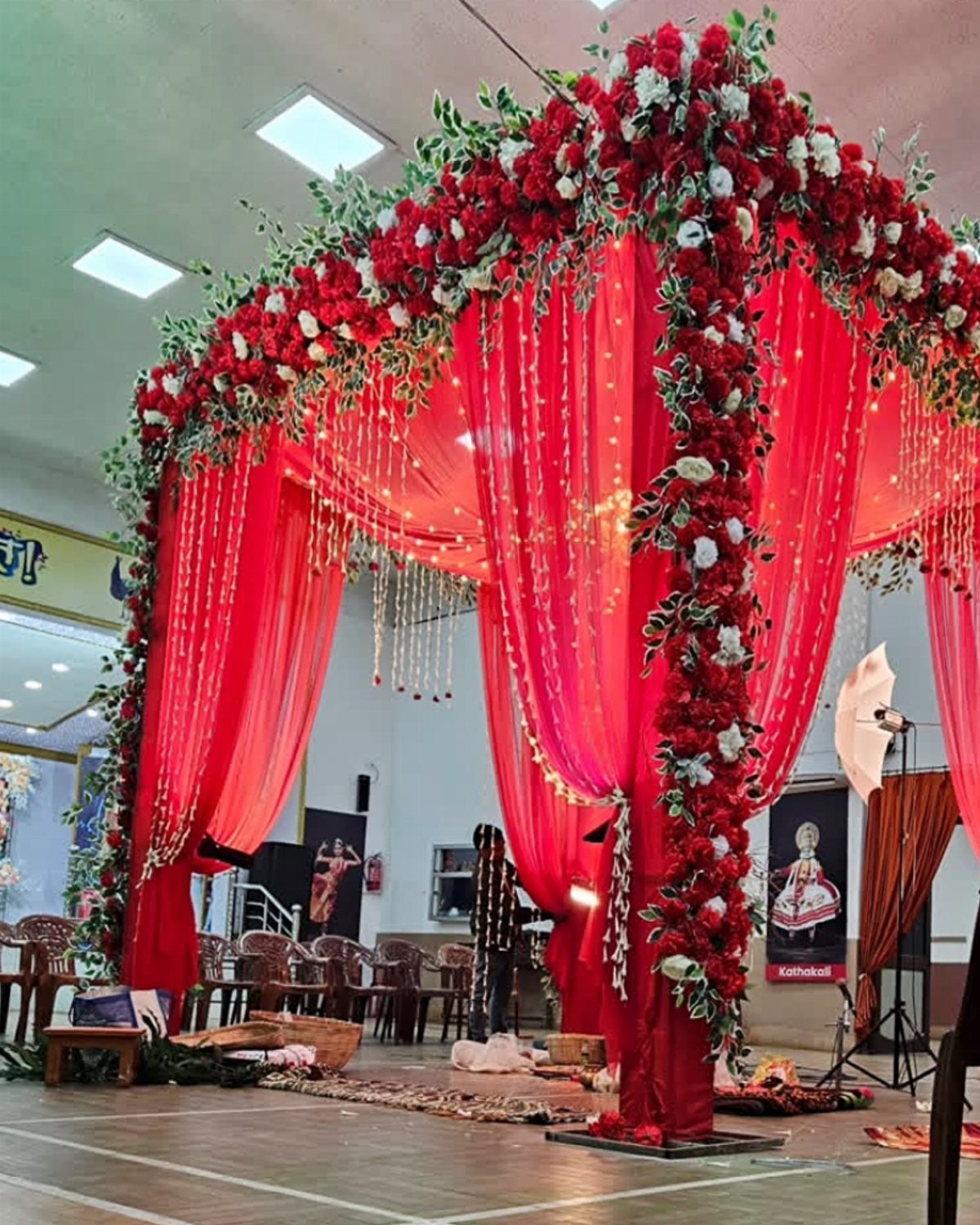
A four-pillar mandap draped in red with rose garlands and fairy lights creates a ceremonial canopy that defines the space without walls.
The structure needs overhead clearance and room around each pillar for the couple to circle, if that is part of the ritual.
Fresh roses photograph brighter than silk, though silk travels lighter for a destination setup. This demands the most floor space of any ceremony structure on the list; confirm square footage before committing, since a cramped mandap defeats its own purpose.
21. Circular Arch with Draped Fabric
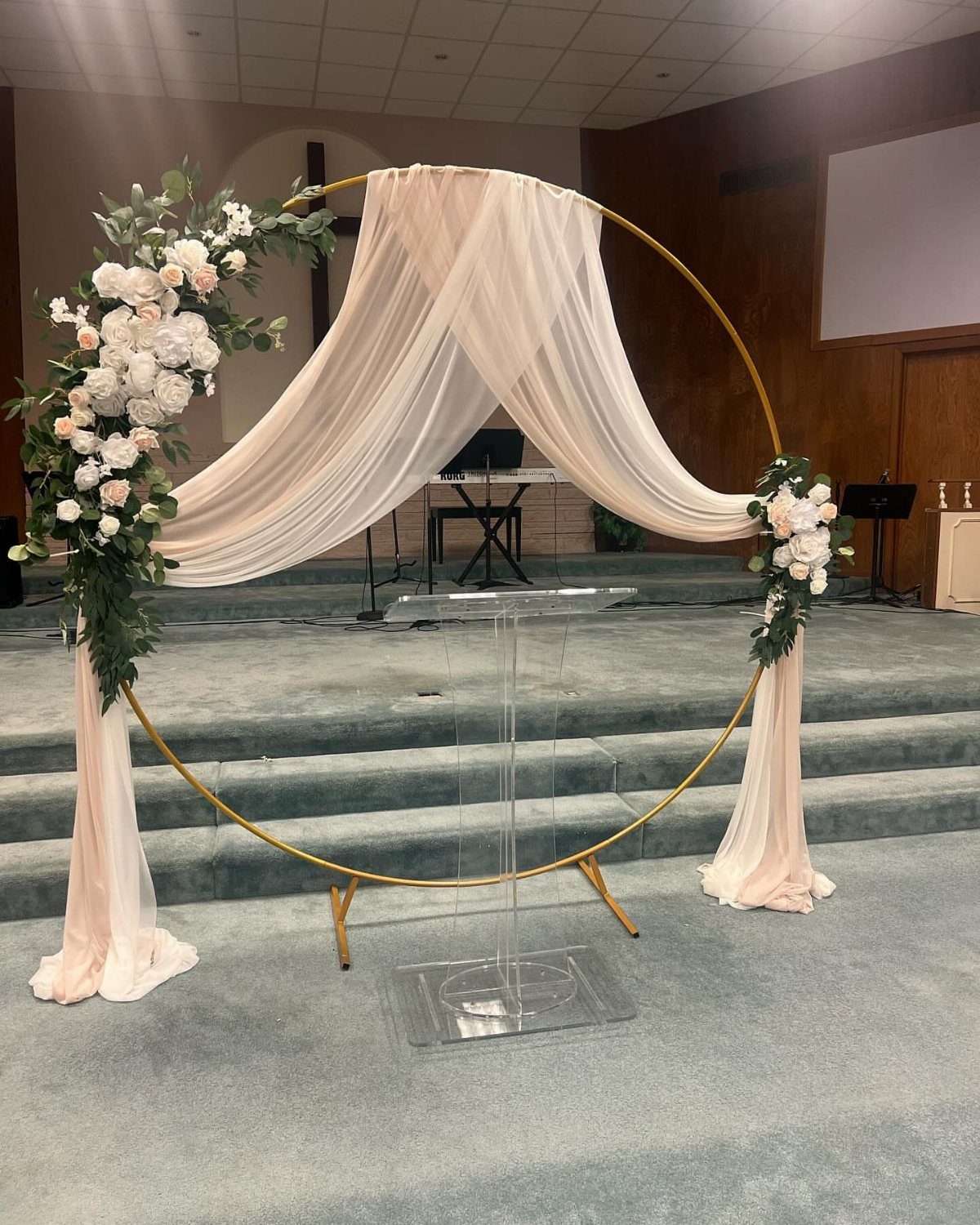
A circular gold arch with blush fabric and florals behind a clear podium gives the officiant a frame and the couple a target.
The round shape reads softer than squared corners, though it needs more width to avoid looking like a portal. A freestanding circular arch draped with flowing fabric suits carpeted church stages where the existing architecture offers nothing to build on.
22. Pleated Fabric Arch Panels
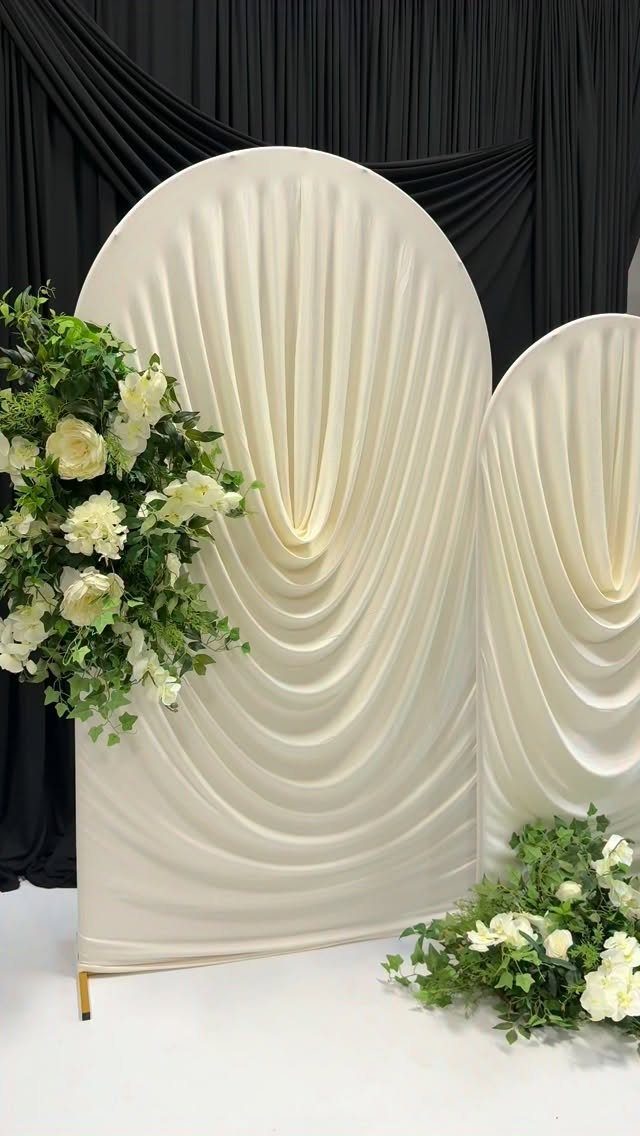
Freestanding arched panels in pleated cream fabric with white florals give a ceremony backdrop that breaks flat walls into sculptural planes.
The pleating adds texture that smooth drapes lack, though it costs more in fabric yardage and setup time. Two panels create depth against a black curtain; one panel against a busy wall competes rather than focuses.
Keep the floral accents low and at the panel edges so the couple’s faces stay clear in photos. This works when the venue supplies nothing but dark curtains and a white floor, turning the negative space into a deliberate choice.
23. Wedding Guest Book Table Display
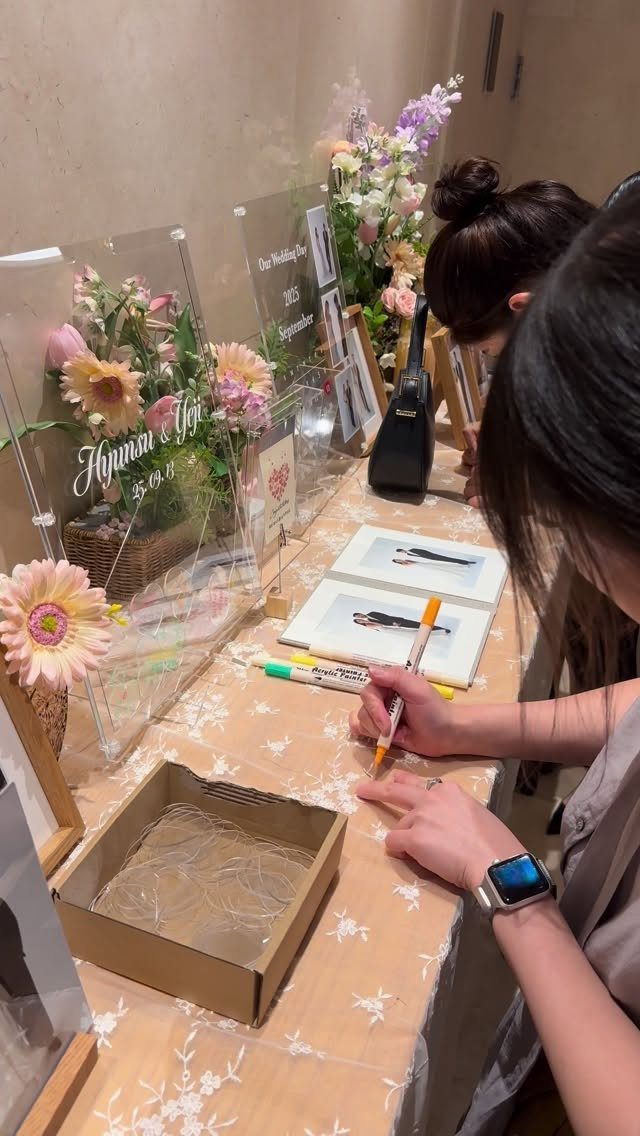
A guest book table with patterned linen, framed photos, acrylic signs, and soft florals turns a functional stop into a vignette guests pause at.
Two working pens, not one; a tray keeps them from rolling. The couple’s names on acrylic carry the branding from entry to exit without extra design cost.
Budget-friendly Decor Options
Versatile pieces earn their keep when they move from ceremony to reception without a second rental fee.
The same cream runners that line the aisle can dress the guest book table or layer under centerpieces later; the burgundy napkins from the list work just as well at the welcome station as at dinner.
I would rather see one fabric family repeated across three zones than three separate looks that never speak to each other.
Lighting comes before any of it. A room washed in warm uplighting reads as finished even with modest table settings, while the same tables under flat house fluorescent look bare no matter what you spent.
Allocate to light first, then fill in with linens and accents where the budget allows.
Importance of Lighting
Plan lighting before you lock in any decor. The arch florals and gold geometry from the list depend entirely on what hits them; warm tones make cream and blush glow, while cooler fixtures flatten gold into brassy yellow.
Review your actual venue under the bulbs they will use, not in afternoon daylight.
Build in layers. Warm ambient light carries dinner, pin spots isolate the centerpieces without adding more physical pieces, and a shift to moving light or fairy strings signals dancing without anyone moving a chair.
Same room, same furniture, same flowers; flip the lights from afternoon sun to sunset amber to midnight candle and you have 3 different weddings.
Battery pillars and built-in arch illumination avoid the cord runs that most venues restrict anyway. Check their open-flame policy before you commit to real candles in glass sleeves.
Hosting an indoor wedding often presents some décor challenges. However, an indoor affair allows the couple to start with a blank canvas, rather than only having to add a few accessories to a gorgeous natural setting.
Theme Consistency
Think in zones, not in scattered accents. Carry one color story through all of them.
The marine turquoise that appears on reception textiles should also surface at the welcome table; the exotic palm and bright cloth from the list should reappear at the guest book display so guests sense one event, not several pasted together.
The core categories do the work.
Arch draping, backdrop fabric, and table linens are where the theme lives; everything else is commentary. Start there, match their tones within one shade family, and let the motif carry itself without extra signage or themed props at every turn.
Maximizing Small Spaces
Long rectangles strand guests at corners and edges, while rounds pull everyone into the conversation.
Soft, subdued lighting completes the expansion, since bright overhead fixtures make walls feel closer than they are. Keep the palette light and the light warm, and the same room reads larger without moving a single wall.