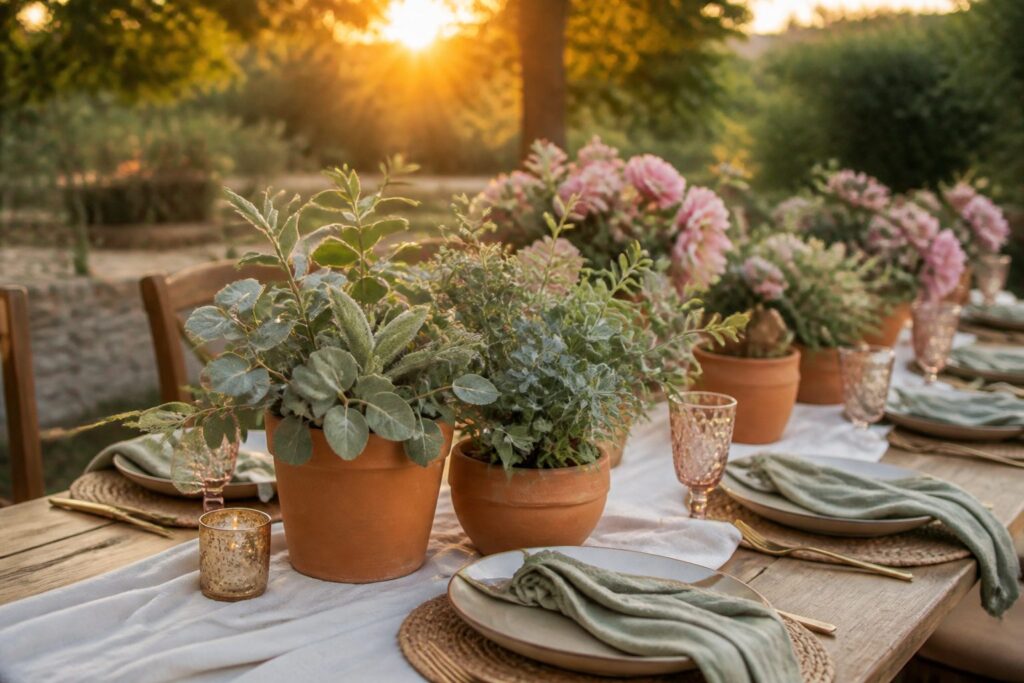
Terracotta pots win first for centerpieces because a 6-inch unglazed piece costs $2–$4 against $15 and up for ceramic, and the dusty orange against sage foliage is the whole reason this palette works.
Skip them only if your tables wear linen you care about; unglazed clay is porous, and water from floral foam will seep through in minutes and leave a ring that will not lift.
A quick coat of clear acrylic sealer on the interior, or a glass liner dropped inside, fixes this.
I learned that the hard way at a styled shoot years back; the rental company was not amused, and my deposit was gone.
1. Terracotta Pots for Centerpieces and Displays
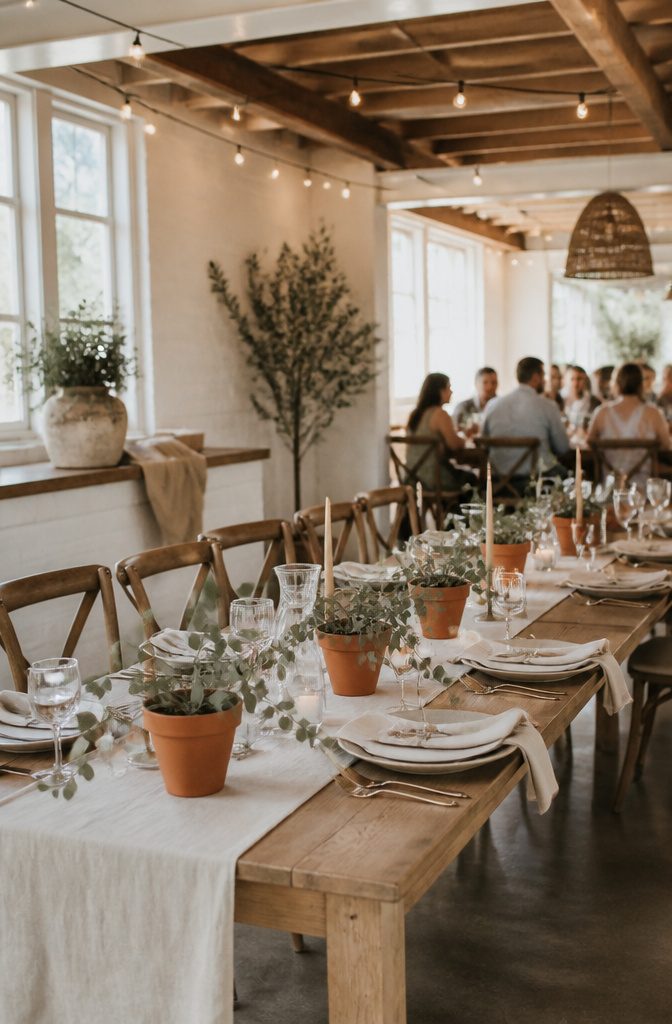
Terracotta pots do more heavy lifting than most couples expect when they first start pricing centerpieces.
A 6-inch unglazed pot runs about $2–$4, while a ceramic vessel of the same size starts at $15 and climbs fast from there. That gap matters when you need twenty tables covered and the floral quote already stung.
The sourcing is straightforward.
Garden centers and hardware stores stock these year-round, and the patina only improves with age. For table centerpieces, the 4-inch to 6-inch sizes sit low enough that guests can talk across them without craning.
The 8-inch and 10-inch pots belong on the ground flanking an entrance or framing the bar, where height reads as welcome rather than obstacle.
The mistake that will cost you a tablecloth is skipping the sealant.
Unglazed terracotta is porous. Water from fresh floral foam or a direct pour will seep through in minutes, leaving a ring on linen that will not lift.
A quick coat of clear acrylic sealer on the interior, or dropping a glass liner inside, fixes this. I learned the hard way at a styled shoot years back; the rental company was not amused, and my deposit was gone.
Leave the pots raw on the outside. That dusty orange against sage foliage, maybe a sprig of seeded eucalyptus trailing the rim, is the whole reason this palette works.
2. Sage Green Table Linens
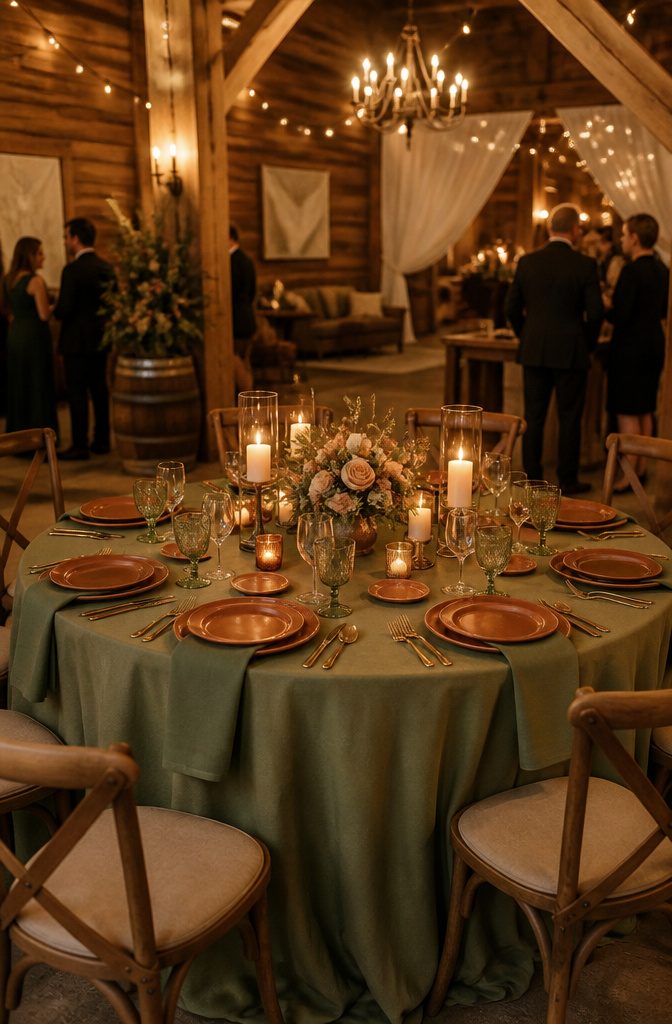
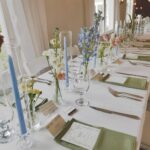
Sage green table linens do the quiet work of tying a reception together.
They sit under every plate, every centerpiece, every flicker of candlelight, and the wrong shade turns the whole effort flat. Order a shade too light and the color collapses into gray once your venue’s warm bulbs hit it.
I learned that the hard way at a downtown loft wedding where the "sage" I’d chosen read like dirty dishwater in the overhead spots.
Now I request fabric swatches mailed to the actual venue when I can, or at minimum I test them under bulb temperatures matching the reception space.
Fabric choice matters for budget and for look. Pure cotton wrinkles the moment a guest breathes near it; polyester holds its press through teardown but can look thin and slap against the skirt.
A linen blend, usually around 55 percent linen mixed with cotton or a touch of synthetic, gives the texture couples want for this palette without the four-dollar-per-napkin rental of full European linen.
For a hundred-guest round-table setup, plan tablecloths for 10 to 15 tables plus a few spares for the cake display, signing table, and the backup that always ends up covering the vendor snack station in the green room.
I rent for events over seventy-five people, price out purchase only for micro-weddings where storing thirty pounds of fabric afterward sounds manageable, and I skip anything labeled "sage" that doesn’t look distinctly green under a 2700K bulb.
3. Terracotta Candles for Ambiance
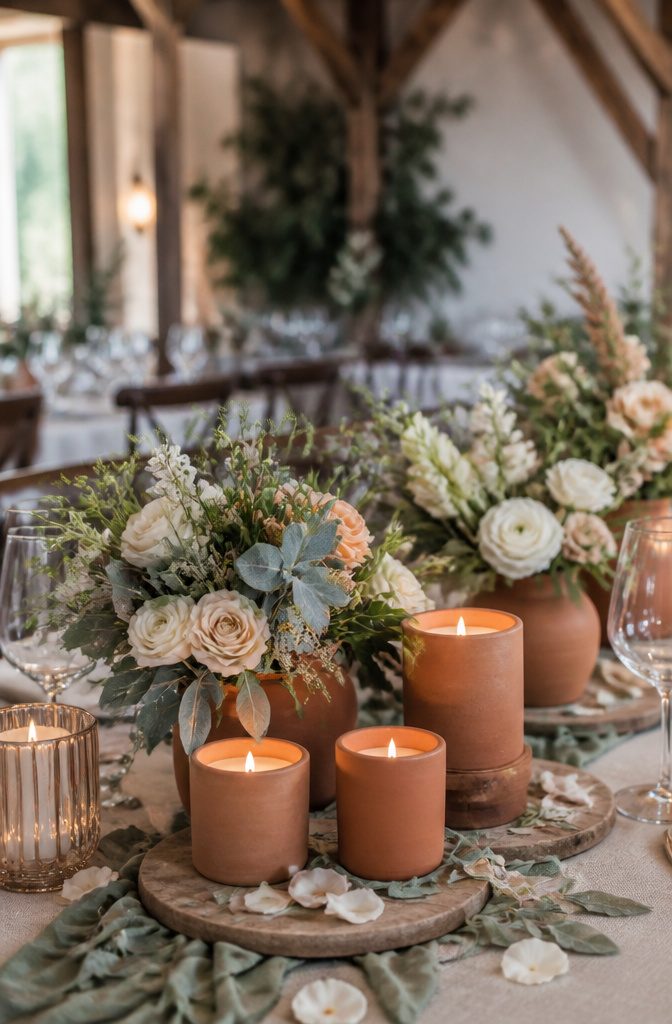
Terracotta candles come in two forms, and the difference matters more than most couples expect. Poured container candles sit inside actual terracotta vessels that warm slowly and throw a muted, earthy glow.
Terracotta-hued wax candles, by contrast, are standard wax dyed to match the color; they read the same in daylight photos but disappear into darkness once lit. For evening receptions, actual terracotta vessels win every time.
Bulk buying starts around $8–$12 per piece for simple poured containers, with minimum orders of 24–36 from most wedding supply wholesalers.
Plan on two to three per round table for pooled light without clutter, or cluster five at varying heights on long farm tables. Votives work tucked between larger pieces; pillars need breathing room.
The mistake that still makes me wince happened at a fall wedding where I specified cinnamon-vanilla scented candles to match the season.
The fragrance hit the dining room at the same moment the plated salads arrived, and every bite tasted like potpourri. Unscented is the only safe choice once food is involved.
4. Sage Foliage in Bouquets and Centerpieces
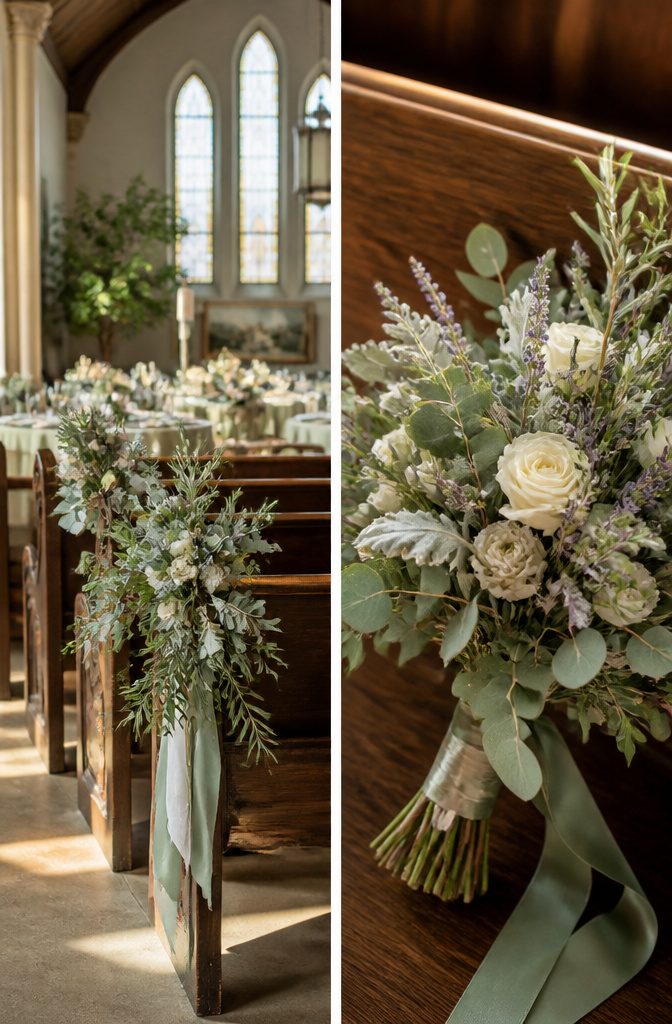
Silver dollar eucalyptus, dusty miller, and olive branch read sage in a bouquet; true green like Italian ruscus or leatherleaf fern fights the palette and cheapens the whole arrangement.
I learned this standing in a Gainesville florist’s cooler last October while she held a stem of each under the skylight.
The difference between sage and mint only shows in natural light, she told me, and the fluorescent showroom had steered me wrong on my first visit.
In Gainesville, October brings local olive branch and eucalyptus at lower stem counts; April forces dusty miller up from south Florida growers and adds freight that shows in the per-bunch pricing.
For centerpieces, olive branch gives height without bulk, but its leaves drop after three days out of water. Eucalyptus holds longer and ships better, so I use it for bridal bouquets and reserve olive for same-day installations.
The florist warned me off seeded eucalyptus, which browns to rust rather than sage, and pointed me to the true dusty miller with its gray-felt underside.
That variety costs more than the common type but photographs the color your Pinterest board promised.
5. Terracotta Place Cards
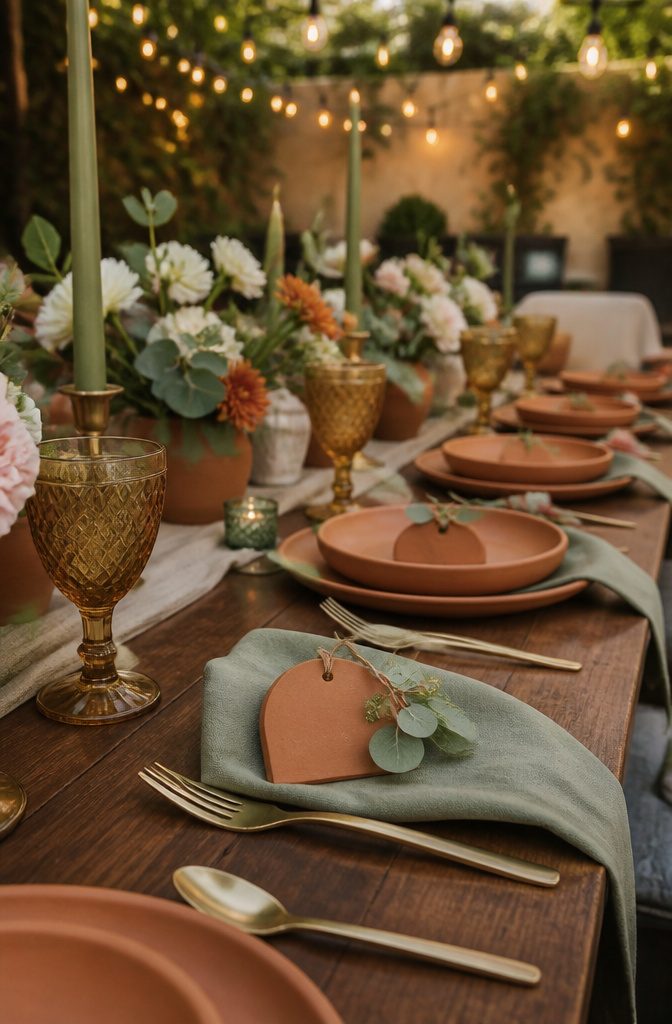
Terracotta place cards bring the palette straight to each guest’s seat, and the range of ways to make them means most budgets can find a fit.
Clay tags shaped and stamped while the terracotta air-dry clay is still soft run about $0.80–$1.20 per piece if you buy the clay in bulk and bake them yourself.
Painted wood slices cost slightly less, roughly $0.50–$0.90 each, though the grain can fight a fine pen. Printed paper mounted on terracotta cardstock lands around $0.30–$0.50 and saves the most time, which matters more than couples expect.
Hand-lettering 120 place cards for a seated dinner two years ago took eleven hours across three evenings, and the wrist cramp by the end was real enough that I now route anyone with over eighty guests toward printing or hiring a calligrapher.
Skip place cards entirely for seated dinners under forty guests; guests at that scale find their own seats without chaos, and the money stays in the floral budget where guests actually notice it.
6. Sage Bridesmaid Dresses
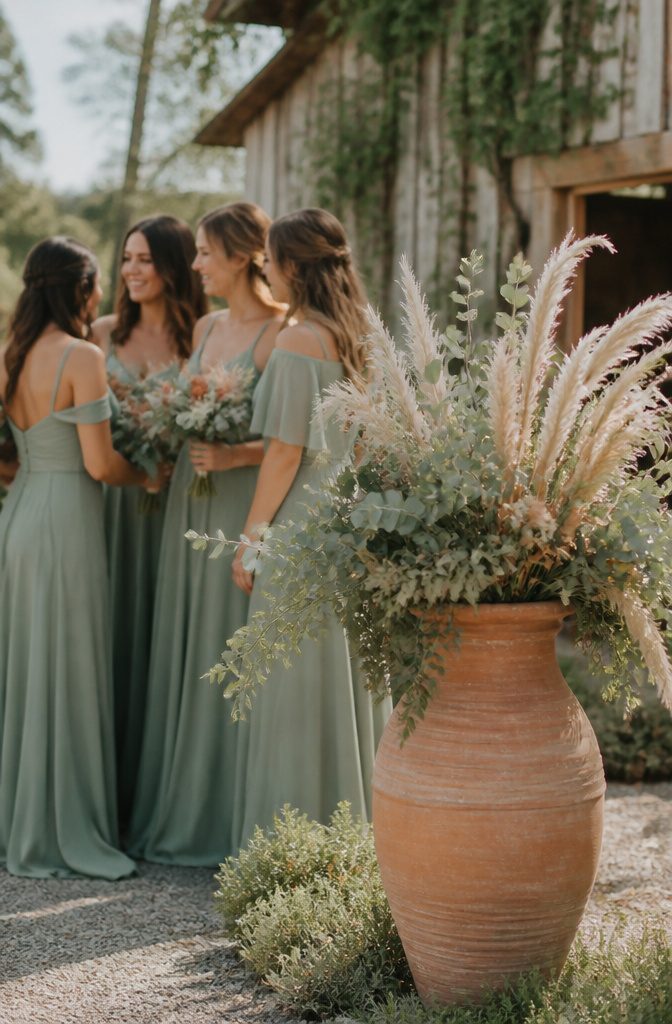
Sage green bridesmaid dresses carry the palette straight into the wedding party, which sounds simple until you try to match the color across chiffon, satin, and velvet.
I have ordered from Azazie, Birdy Grey, and David’s Bridal for different weddings, and the same hex code looks like three different greens once the fabric catches light.
Budget around $100–$150 per dress for mid-range lines, or closer to $200–$250 if you want something with structure that photographs cleanly against terracotta accents.
The real headache is timing.
Off-the-rack sage can look dusty rose-adjacent under warm bulbs or go full forest in daylight, so I always tell couples to order fabric swatches six months out and have every bridesmaid pick from the same dye lot.
Most of these brands need eight to ten weeks for production, plus alteration time, which means you are looking at late fall orders for a spring wedding.
Skip this route if only one or two people in the party actually need new dresses.
The coordination headache is not worth it for a mismatched group where someone already owns navy or burgundy they love. Sage works best when it is the unifying choice, not the compromise.
7. Terracotta Centerpieces with Seasonal Blooms
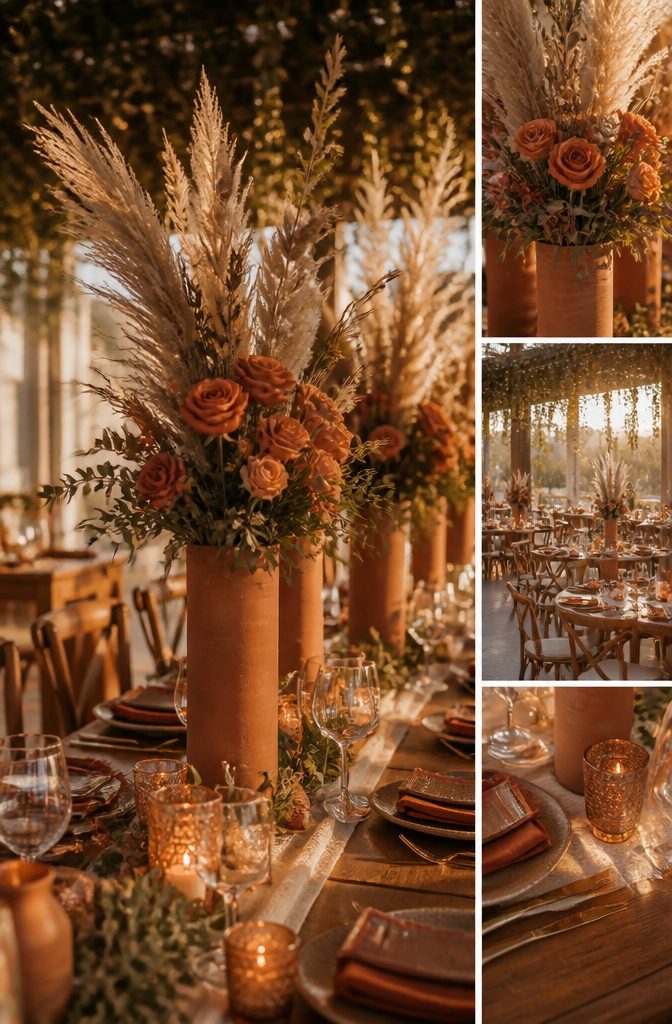
The terracotta in these centerpieces comes from the vessel itself, not from pottery you fill.
Satin-wrapped glass cylinders in that dusty clay tone, or ceramic bases glazed to match, give you the color without the rustic weight of an actual pot.
In 2019 I spent an afternoon watching a florist build these foam-free, and the method stuck with me: a grid of clear tape across the vase mouth, stems threaded through at angles so they lean on each other.
No green block sweating in the heat, no synthetic base to hide.
Copper roses and rust ranunculus read terracotta even from across a table. Dried pampas does the same work for less, and it lasts the full reception without wilting under tent heat.
Fresh blooms win for the ceremony and the first hour of dinner, when guests are close enough to notice the difference. Dry materials take over for outdoor summer weddings or any table that sits in direct afternoon sun.
The mix I saw that day was three stems of dried to every two fresh, enough to keep the arrangement reading alive without gambling on fragile flowers.
8. Sage Green Napkins
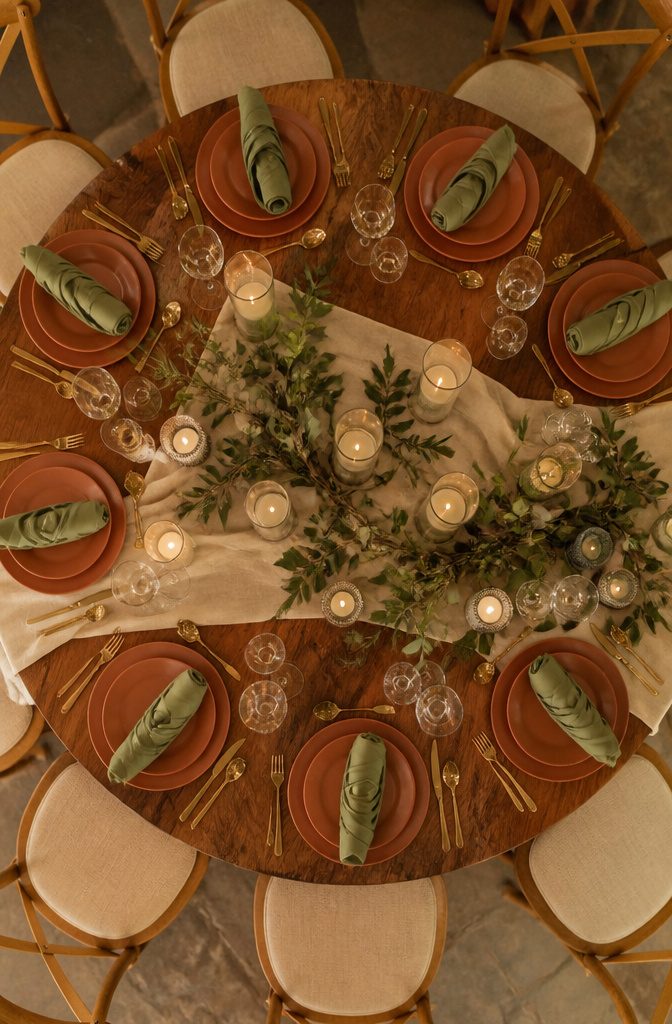
Sage green napkins do more work than most couples expect. The right fold keeps the color visible across the table; the wrong one buries it against a sage tablecloth and turns the whole setting into one blurry wash of green.
For a terracotta and sage wedding decor scheme, napkins need enough contrast against the linen to read as their own layer, not as shadow.
I learned this at a Gainesville vineyard wedding where the bride chose napkins just two shades darker than her tablecloths.
From ten feet away the tables looked flat. The palette needed that mid-tone break, and the napkins had failed it.
Rental companies typically charge around $0.75 per cotton napkin, which puts 150 guests at roughly $110 with delivery.
Buying polyester sets online runs closer to $60 for the same count, but the fabric slides on the plate and refuses the structured folds that show color best.
Cotton holds a French pleat or a simple standing roll. Polyester slumps.
The rental math wins for one event, and the texture difference is immediate under hands and flatware.
For couples keeping the sage green napkins against terracotta linens, the contrast handles itself. Against sage linens, a standing roll or diagonal corner fold keeps enough surface catching light to register as a deliberate choice.
9. Terracotta Vases for Floral Arrangements
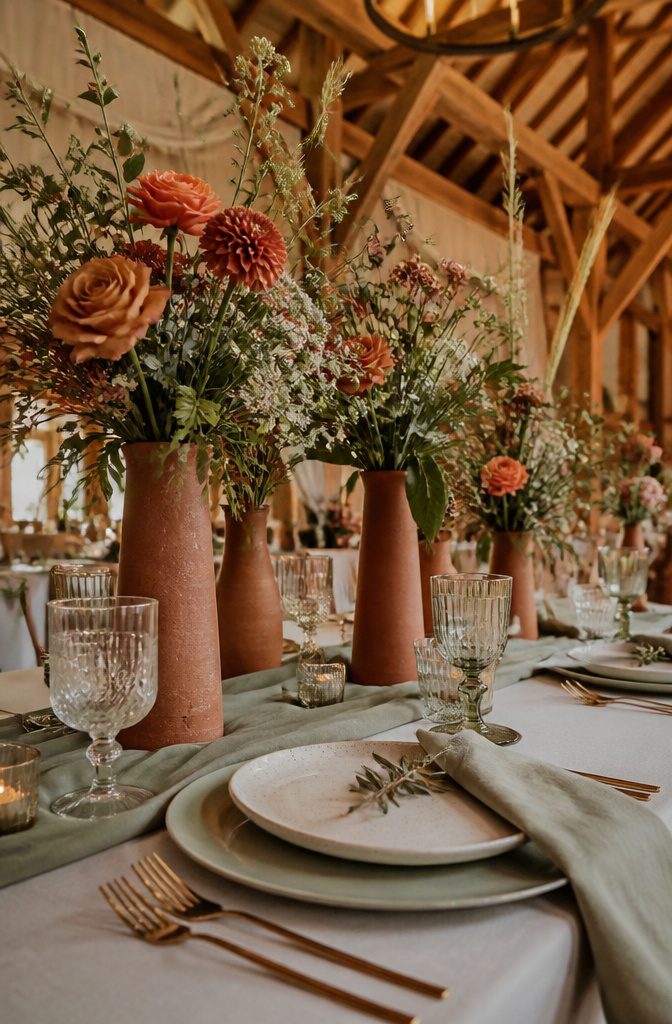
Terracotta vases read differently than the pots most couples grab first. They run taller and narrower, built for stems rather than soil, and that shape changes everything about how you use them.
Glazed finishes catch candlelight across a dinner table; unglazed clay soaks up the sage greens around it and softens the whole palette.
I hunt these at wholesale floral suppliers when I need volume, but some of my best finds came from estate sales where mid-century Danish pieces sat ignored beside the silver.
IKEA’s discontinued terracotta lines, particularly the 2018–2020 run of tall cylinders, still turn up in resale groups and cost half what specialty wedding retailers charge.
Weight the base before you build the arrangement.
A narrow vase with a 14-inch stem of pampas grass or dried fan palm becomes a lever waiting to tip. Floral clay on the bottom helps; so does a hidden steel disc dropped inside before the stems go in.
I learned that after watching a centerpiece take out a water glass during a rehearsal dinner. The couple laughed; their planner did not.
10. Sage Table Runners
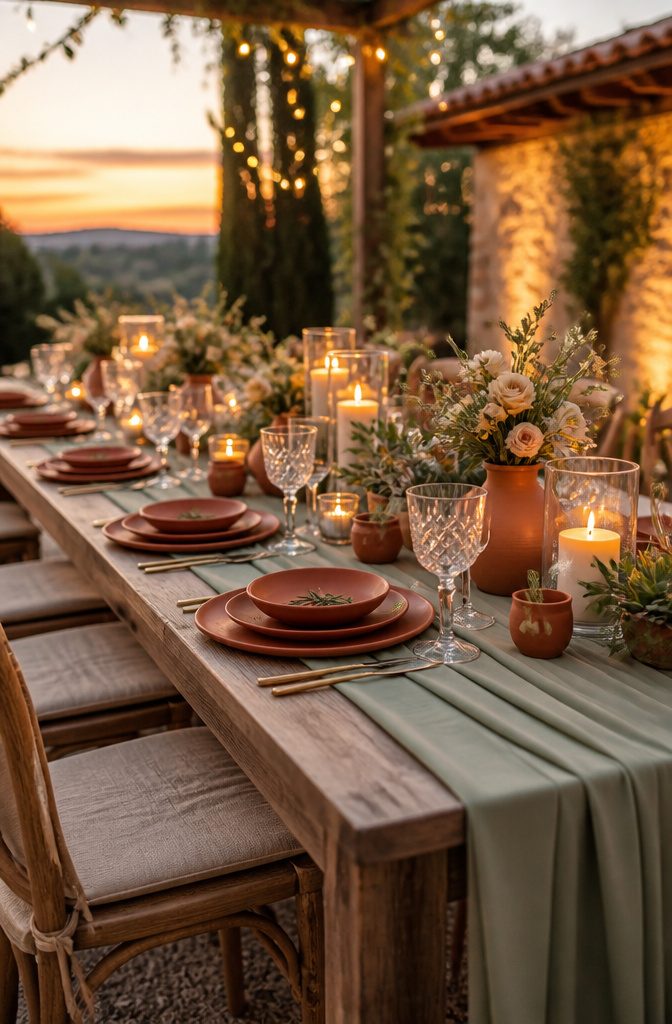
A 12-inch runner is the standard width for round or rectangular reception tables; it frames the place settings without crowding the center. For long farmhouse tables, 15 inches fills the extra surface and keeps the color proportionate to the wood.
I layer sage gauze over white linen when the table itself needs brightening, but bare wood lets the terracotta elements ground the palette instead.
Runner length runs 12–18 inches past the table edge on each side; measure your table, add that drop, and order accordingly.
Gauze wrinkles the moment a elbow rests on it, a lesson from a spring wedding where the runners looked slept-on before the first glass of wine. Cotton or a cotton-linen blend holds its press through dessert.
How I Choose the Supporting Colors
Terracotta and sage look beautiful on a mood board and chaotic on a table without something to quiet them down.
Both colors carry weight, the warm clay pulling toward orange-brown and the sage settling into gray-green, so they need neutrals to keep them from turning the reception into a shouting match.
White, cream, and sand do that work without disappearing; they give the eye a place to rest between the stronger tones and let the earthy palette read as intentional rather than accidental.
I use a three-palette rule: two main colors plus one neutral, or two main colors, one neutral, and one accent that stays below ten percent of the visual field.
Go past that and you are not designing anymore, you are collecting.
I learned the hard way at a wedding where the couple loved terracotta and sage but also loved burgundy and navy. Each color made sense in isolation.
Together on one table, with burgundy napkins and navy candles against terracotta runners and sage glassware, the result looked like a color wheel exploded. Nothing read; everything competed.
We stripped the burgundy and navy out for the reception and moved them to the welcome bags and the exit confetti, where they could live on their own terms. The table needed the restraint.
What Rustic, Bohemian, and Garden Themes Change
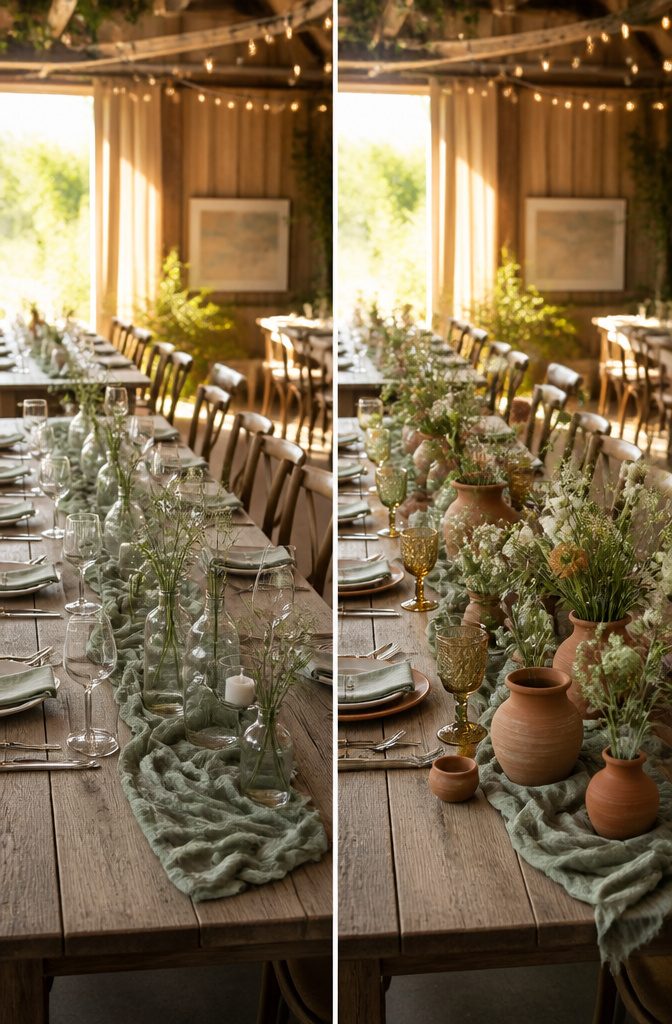
Rustic, bohemian, and garden treatments all start from the same two colors but push them toward completely different feelings.
Raw terracotta and sage work best bare and weathered in a rustic setting: unglazed pots, chipped edges, wild sage clipped from whatever grows nearby.
That look favors barns and the older timber venues around Gainesville’s outskirts, places where polished would feel out of place anyway.
Bohemian pulls the same palette into macrame hangers and vessels that do not match on purpose, a collected-over-years look that takes more hunting than buying.
The budget gap shows up in time more than money at first, though mismatched antique glass and brass eventually cost more than uniform rental pieces. It suits converted warehouses and the looser indoor spaces where structure already does the work.
Garden styling keeps both colors lighter and airier: pale sage linens against softer terracotta, more negative space, everything feeling temporary and breeze-blown.
That wants actual outdoor space or at least windows worth the name, the kind of venue that charges a premium for the view.
Couples running under $10K usually find rustic the easier reach; garden asks for the setting to cooperate, and the setting rarely comes cheap.
Building Your Own Terracotta and Sage Pieces
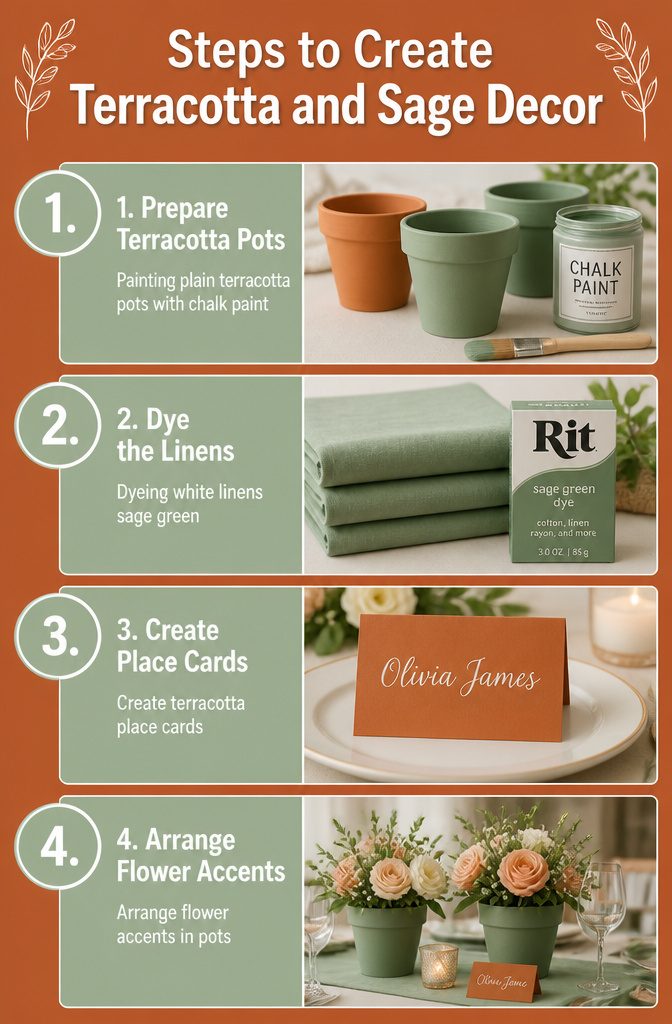
Painting plain terracotta pots with chalk paint takes about twenty minutes per piece plus drying time, and the paint runs roughly six to eight dollars a jar.
One jar covers six to eight small pots, which makes this a clear save only if you need more than a dozen. Below that, the craft-store pots in the finish you want cost about the same without the weekend lost.
Dyeing white linens sage green follows the same math. Rit or Dylon fabric dye costs three to four dollars a packet, and each packet dyes roughly two yards of cotton or linen.
A standard 120-inch round tablecloth needs three yards, so a full reception of fifteen tables means twenty-three dollars in dye against sixty to ninety dollars for ready-made sage cloth.
The problem is the washing-machine time and the risk of streaking on polyester blends, which most rental linens are. If your venue supplies white poly linens, buying pre-dyed replacements saves the labor and the ruined-test-run panic.
Terracotta cardstock for place cards sits in the opposite corner. A pack of fifty sheets costs about the same as a pack of white cardstock, and printing at home avoids the per-piece markup of custom letterpress.
The only labor is the cut, which a paper trimmer handles in seconds. Ready-made terracotta place cards cost three to four times the raw paper, so this is the one project where even a single table of eight sees savings.
When These Colors Work Best
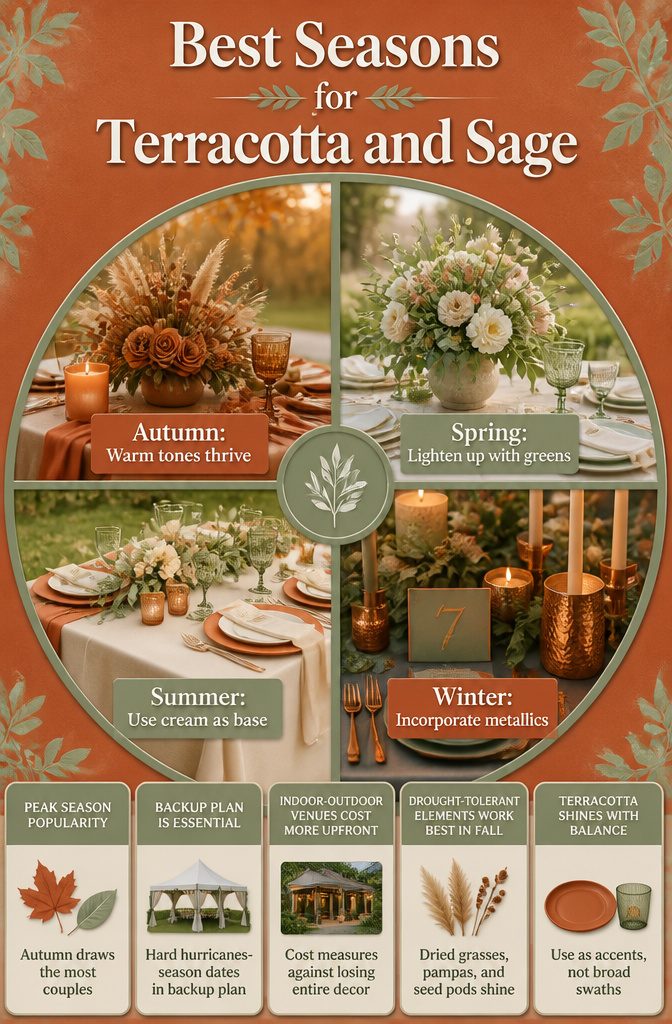
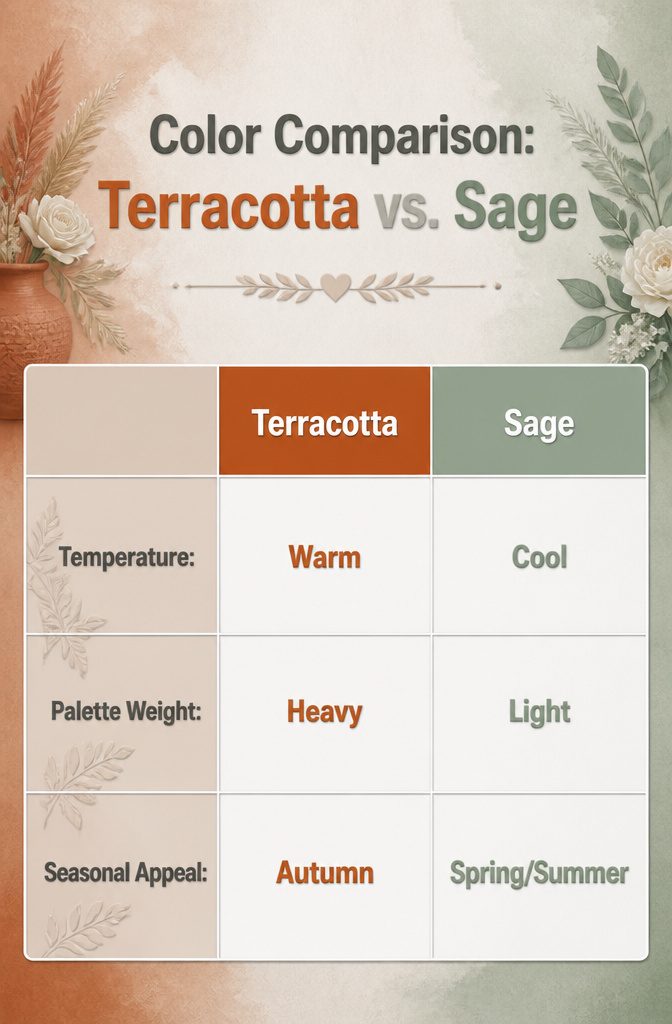
Terracotta and sage draw most couples in during autumn, and the pairing earns that attention honestly.
Fall light flatters both colors at golden hour, and dried grasses, pampas, and seed pods fit the palette without looking forced. I have seen this combination sell out at three florists in late September alone.
For spring and summer receptions, the same two colors can feel heavy unless you pull them back. Cream or ivory tablecloths replace raw linen as the base.
Cut the terracotta to accents, candle vessels, and a single bloom variety rather than broad swaths. Swap dried elements for fresh greenery; sage reads cooler and more alive when it is living foliage breathing under open air.
A June wedding I consulted on kept terracotta only in the charger plates and votive holders. The effect still photographed warm but did not fight the season.
Winter changes the math again. Sage goes flat against gray skies, and terracotta alone can look sun-faded rather than intentional.
Copper became the bridge for a January reception in Orlando: flatware, metallic ink on menus, and hammered table numbers caught candlelight and held the warmth that terracotta could not carry alone.
Florida couples working this palette outdoors need hard hurricanes-season dates in their backup plan. An October backyard reception with pampas and terracotta runners?
Stunning. The same setup in peak September without a tent company on retainer?
The couple spent their cocktail hour watching uplights drown in sideways rain. Indoor-outdoor venues with permanent coverage through late November cost more upfront; that cost measures against losing the entire decor investment to a named storm.
Frequently Asked Questions
What are the best decor items for a terracotta and sage wedding?
Terracotta pots, sage green table linens, and terracotta candles form the core of this palette.
Pots in the 4-inch to 6-inch range run $2–$4 each and pair naturally with sage foliage. Candles in actual terracotta vessels rather than dyed wax hold their color after dark, which is when most receptions happen.
What themes work well with terracotta and sage?
Rustic, bohemian, and garden themes all start from the same two colors but push them in different directions. Rustic favors bare, weathered terracotta and wild local sage in barn or timber venues.
Bohemian leans into collected mismatched pieces and macrame. Garden styling keeps both colors lighter and airier, which needs actual outdoor space or strong windows to work.
Do sage and terracotta go together?
They do, but they need a neutral to keep them from competing. White, cream, or sand gives the eye a place to rest between the warm clay and gray-green tones.
What colors go with terracotta for a wedding?
Sage green is the natural partner, and white or cream prevents the combination from feeling heavy. In winter, copper can bridge the gap when terracotta alone looks sun-faded against gray skies.
What color goes well with sage green for a wedding?
Terracotta provides the warm contrast that keeps sage from going flat or gray.
The dusty orange of raw clay against sage foliage, especially with a sprig of seeded eucalyptus trailing the rim, is the specific pairing that makes this palette photograph well.
Add cream or ivory as the neutral base to keep the two main colors from overwhelming the space.