
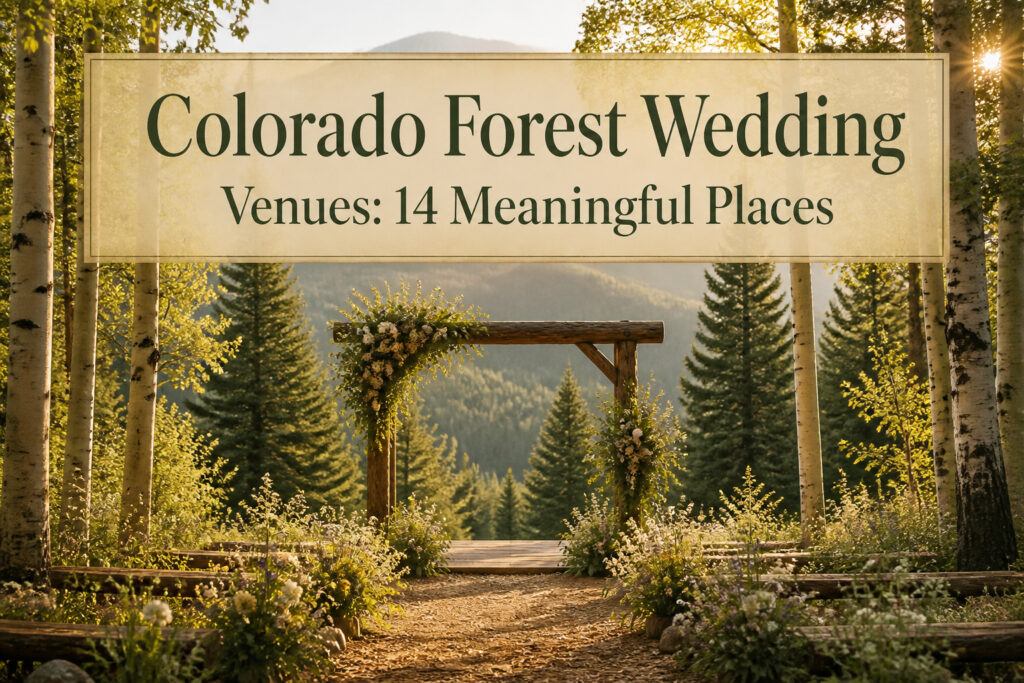
A Colorado forest wedding puts you inside dense pine and aspen at altitudes where the light changes fast and the season dictates everything. The catch is the cost spread: Dunton Hot Springs runs $38,000 per night for a full buyout, while Piney River Ranch starts at $7,500 if you can book a weekday in the narrow June-to-September window. That $30,000 gap tracks whether you are renting a ceremony lawn or an entire restored ghost town with thirteen cabins and hot springs that will pull your guests away from every scheduled event.
Dunton Hot Springs
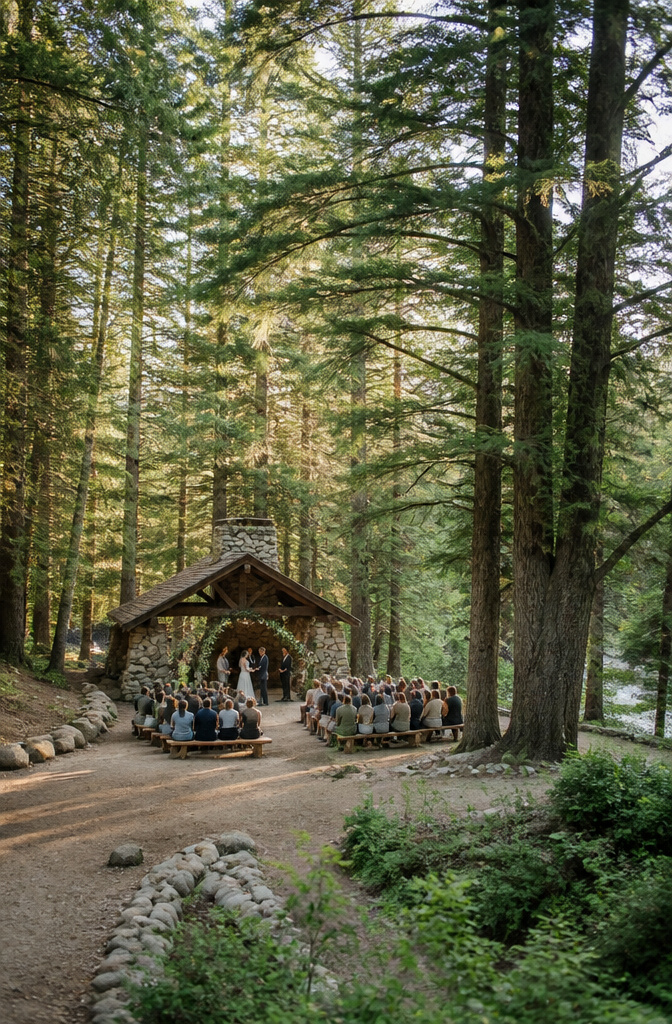
A full buyout at Dunton Hot Springs starts at $38,000 per night and gives you an entire restored ghost town in the San Juan Mountains. Thirteen luxury cabins house up to 52 guests, or 68 if you add the River Camp, though the ceremony spaces themselves fit up to 100. That split matters: some of your people sleep elsewhere, which works fine for a Friday arrival but means planning Saturday morning logistics.
The setting reads as two moods at once. Dense forest and a creek run through the property, so a ceremony in the trees feels private and dampened by pine. The Dancehall & Saloon, still standing from the mining days, handles dinner with the slight unevenness of a floor that has seen a century of boots. Meals and drinks come included in the buyout, which softens the sticker shock if you were already pricing catering at mountain resort rates.
The hot springs own the weekend. Guests will want them morning and night, and the practical question becomes whether you schedule any formal event around them or let people drift in. My read, comparing enough of these buyouts, is that the springs do more for the experience than the photos suggest. They give the wedding a reason to stretch across three days instead of one. Someone in your group will skip the rehearsal dinner dip and regret it; someone else will treat 6 a.m. soaks as the main event. Build the time in, not around.
※【Package】Fold 1 Pics Decoration Backdrop. Lightweight and easy storage for photo studio.

※【Package】Fold 1 Pics Decoration Backdrop. Lightweight and easy storage for photo studio.
Wild Basin Lodge
Wild Basin Lodge sits just outside the boundary of Rocky Mountain National Park, and that proximity matters more than most couples realize when they first tour. The property runs on a full solar array and composts every scrap of organic waste from events, down to the floral arrangements. Water comes from its own wells, treated on-site, and the lodge restricts vehicle traffic to a single access road to cut emissions. What convinced me, reading through a dozen venue portfolios, was the specificity: they publish actual tonnage diverted from landfills, not vague green branding.
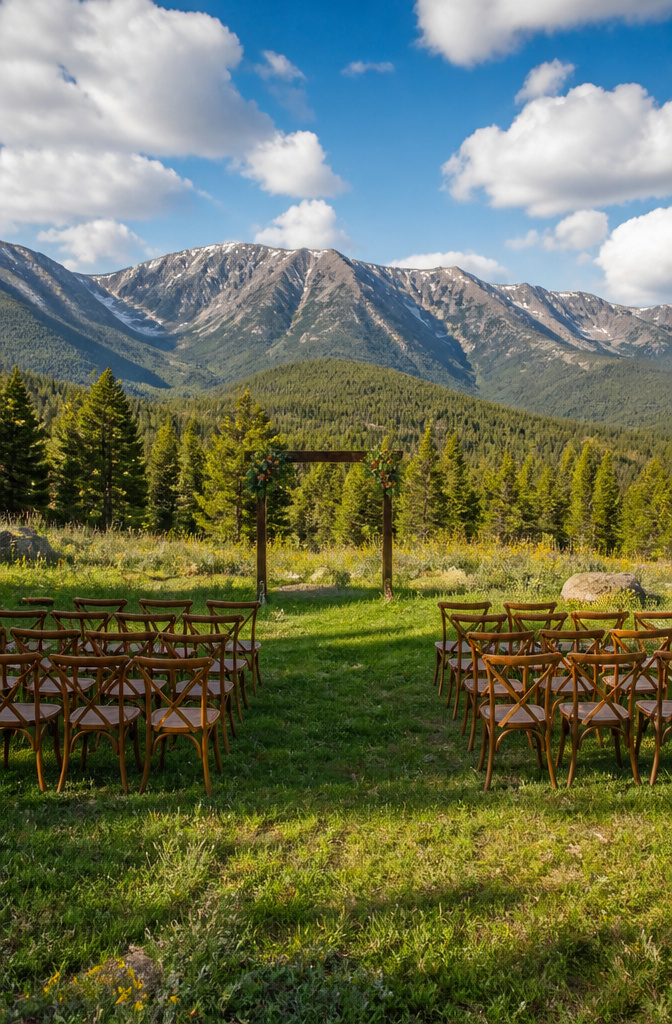
Ceremony spots shift with the season. The riverside clearing stays usable through early fall, but once snowpack builds, the lodge moves ceremonies to an upper meadow with park ridgeline visible behind the altar. That backup plan is written into the base contract, not sold as an upgrade. Packages start at $13,500 for up to 200 guests, which puts it mid-range for park-adjacent venues but includes the coordination required to shuttle guests from Estes Park without private cars clogging the access road. The trade-off is lodging: no on-site guest rooms, so the block booking at partner hotels becomes essential, not optional.


Diverse Size Choices for Customized Wall Decoration: Our minimalist tapestry provides five to fit all wall specifications: 30"×40"(75cmx100cm), 40"×60"(100cm×150cm), 50"×60"(130cm×150cm), 60"×80"(150cm×200cm), 70"×90"(180cm×230cm). Featuring a sleek elegant design and manufactured from premium lightweight fabric, it needs easy maintenance and installation without professional tools; ideal for bedroom headboard backgrounds, living room sofa walls, entryways, dormitories and studio walls.
Piney River Ranch
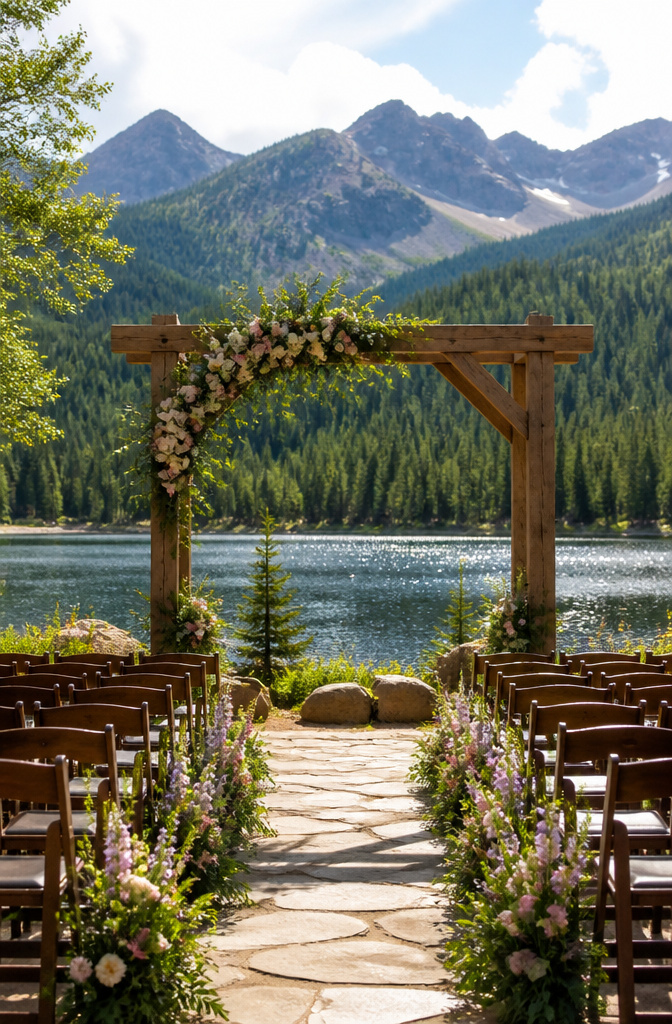
A beautiful forest wedding at Piney River Ranch sits right on the lake with mountain views rising behind the ceremony site. Weekday packages start at $7,500, which puts it within reach for couples who can flex their date.
The catch is the season: June through September only. Four months of availability means every Saturday books fast, and guests with school schedules already have summer packed. What convinced me, reading through the calendars on these mountain venues, is how the off-season shapes everything. Piney River Ranch closes October through May, so there is no shoulder-season discount, no winter elopement rate. You either pay the summer price or you do not get in.
That hard cutoff has a flip side. Guests who clear their schedules for a July wedding tend to make a weekend of it. The ones who cannot commit early self-select out, which actually trims the guest list before you send save-the-dates. For a couple already hoping to keep numbers modest, the limited window does half the filtering work.

Blackstone Rivers Ranch
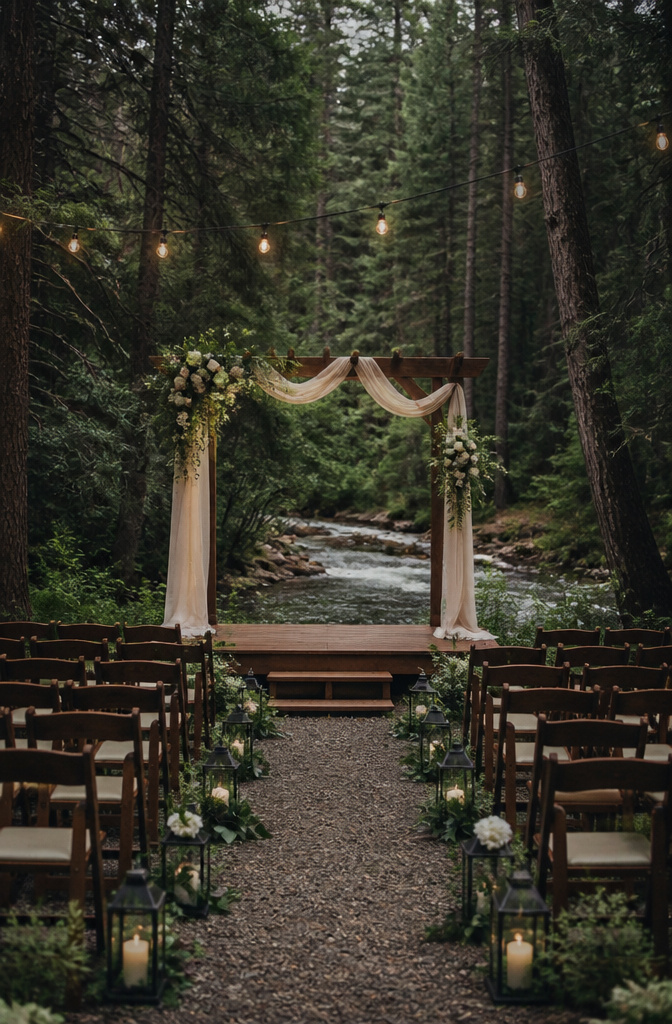
Blackstone Rivers Ranch runs small enough that "intimate" stops being a buzzword and starts being a hard guest count, probably somewhere between thirty and fifty people. The creek sits behind the ceremony space, close enough that the water sound covers the silence while you read vows, and far enough that your guests won’t hear it over dinner unless the windows are open. That same water becomes the backdrop in photos, the kind of blue-gray that reads as moody rather than rustic.
The limited headcount changes how the reception moves. A caterer used to plating two hundred will feel cramped in the kitchen; a team that specializes in micro-weddings will flow through the space like it’s built for them. The dance floor, if there is one, might hold fifteen people comfortably, which means the party either stays seated and conversational or spills onto the lawn. I have seen couples try to split the difference and end up with a playlist nobody dances to because the energy never concentrates.
Ask for the exact guest ceiling before you tour, not after you’ve fallen for the creek view. The number dictates every vendor choice that follows.
※【Package】Fold 1 Pics Decoration Backdrop. Lightweight and easy storage for photo studio.


T-Lazy-7 Ranch
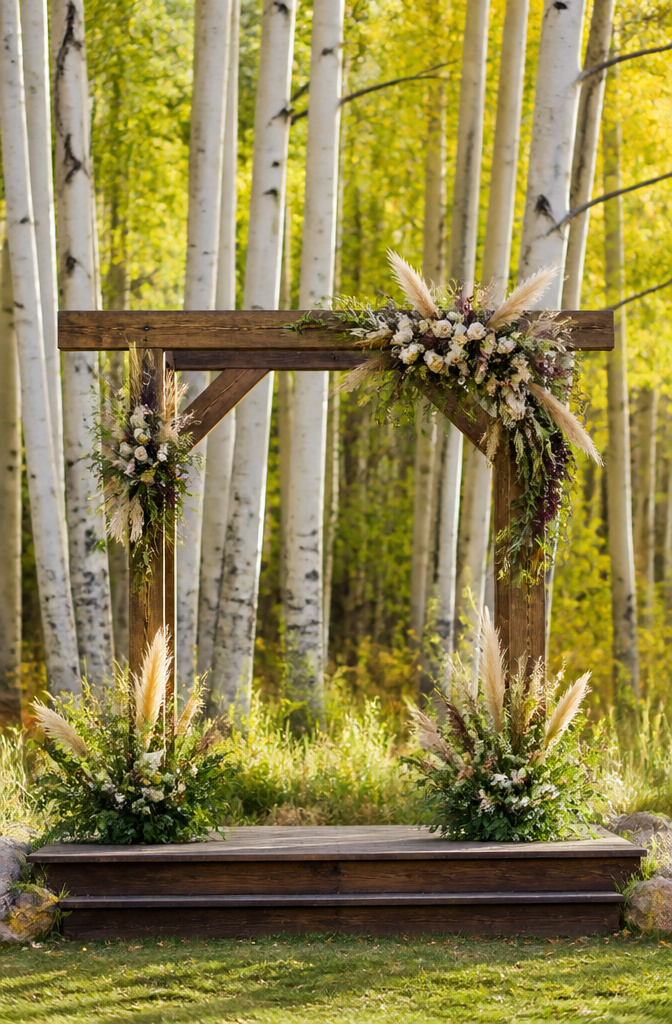
Aspen groves read differently than pine or spruce. Their pale trunks catch the afternoon light in vertical stripes against darker slopes, and the leaves turn a specific gold in early fall that Colorado photographers have been framing for decades. That contrast, white bark against black-green forest, is what "classic Aspen backdrop" actually means on a wedding invitation. The T-Lazy-7 Ranch sits inside this look, not pasted onto it.
The ranch still runs as a working operation, which matters more than most couples expect. You will smell horse and hay somewhere on the property during your weekend. The barns that hold your rehearsal dinner might have held livestock the week before. This is not a cosmetic choice, board-and-batten siding applied to a conference center. The rough edges stay in place because the ranch earns its keep outside the wedding season, and that continuity shapes what your guests feel.
A venue that rents its rustic character by the hour tends toward the same staged details: mason jars, burlap runners, Edison bulbs whether the building ever had wiring or not. At T-Lazy-7, the uneven floors and weathered timber come from use, not a design package. Your guests sense the difference in how the space smells, in the drafts, in the absence of climate control smoothing everything into hotel neutrality. You trade polish for credibility, and for some couples that trade is the whole point of leaving a city venue.
Diverse Size Choices for Customized Wall Decoration: Our minimalist tapestry provides five to fit all wall specifications: 30"×40"(75cmx100cm), 40"×60"(100cm×150cm), 50"×60"(130cm×150cm), 60"×80"(150cm×200cm), 70"×90"(180cm×230cm). Featuring a sleek elegant design and manufactured from premium lightweight fabric, it needs easy maintenance and installation without professional tools; ideal for bedroom headboard backgrounds, living room sofa walls, entryways, dormitories and studio walls.

Diverse Size Choices for Customized Wall Decoration: Our minimalist tapestry provides five to fit all wall specifications: 30"×40"(75cmx100cm), 40"×60"(100cm×150cm), 50"×60"(130cm×150cm), 60"×80"(150cm×200cm), 70"×90"(180cm×230cm). Featuring a sleek elegant design and manufactured from premium lightweight fabric, it needs easy maintenance and installation without professional tools; ideal for bedroom headboard backgrounds, living room sofa walls, entryways, dormitories and studio walls.
Della Terra Mountain Chateau
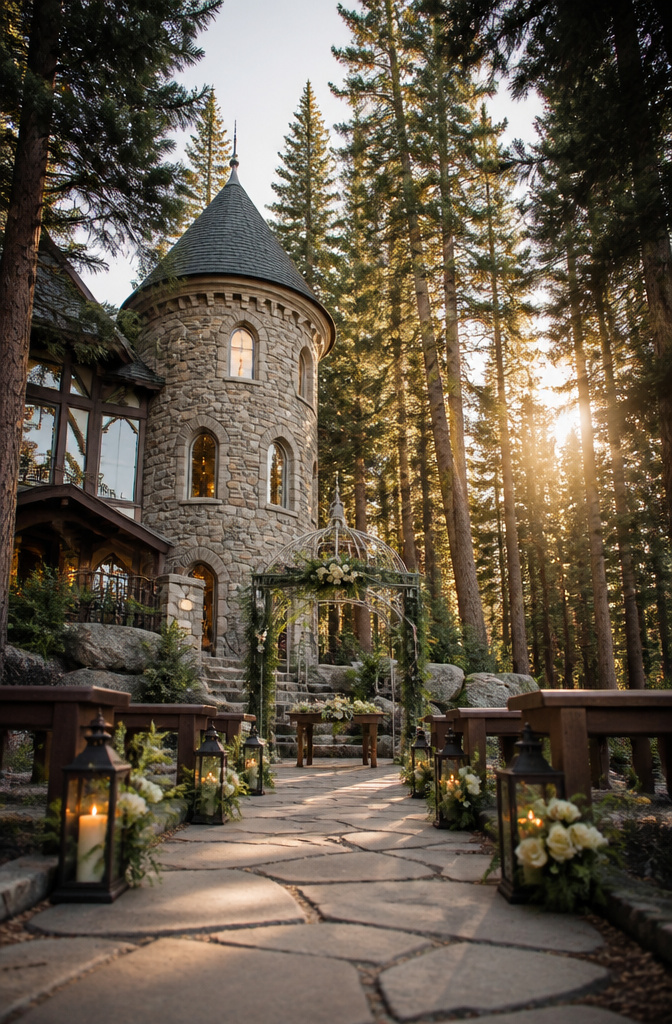
The stone turrets and timber framing at Della Terra Mountain Chateau earn that fairytale label honestly. You arrive through dense evergreen forest and find a building that commits to the fantasy: arched windows, steep rooflines, and enough Old World detail that the surrounding pines feel like stage dressing rather than afterthought. The forest presses close on all sides, so the transition from outdoor ceremony to indoor reception never breaks the mood.
What separates it from Wild Basin Lodge is proximity to Rocky Mountain National Park. Wild Basin sits practically at the park’s eastern boundary, with hiking trails that spill directly into wilderness. Della Terra keeps more distance, about fifteen minutes by car, which means you trade immediate park access for seclusion. No through-traffic, no hikers wandering past your ceremony site. For couples who want the mountain backdrop without feeling like they’re sharing the day with every sightseer on Trail Ridge Road, that trade reads as advantage rather than compromise.
Stone Mountain Lodge
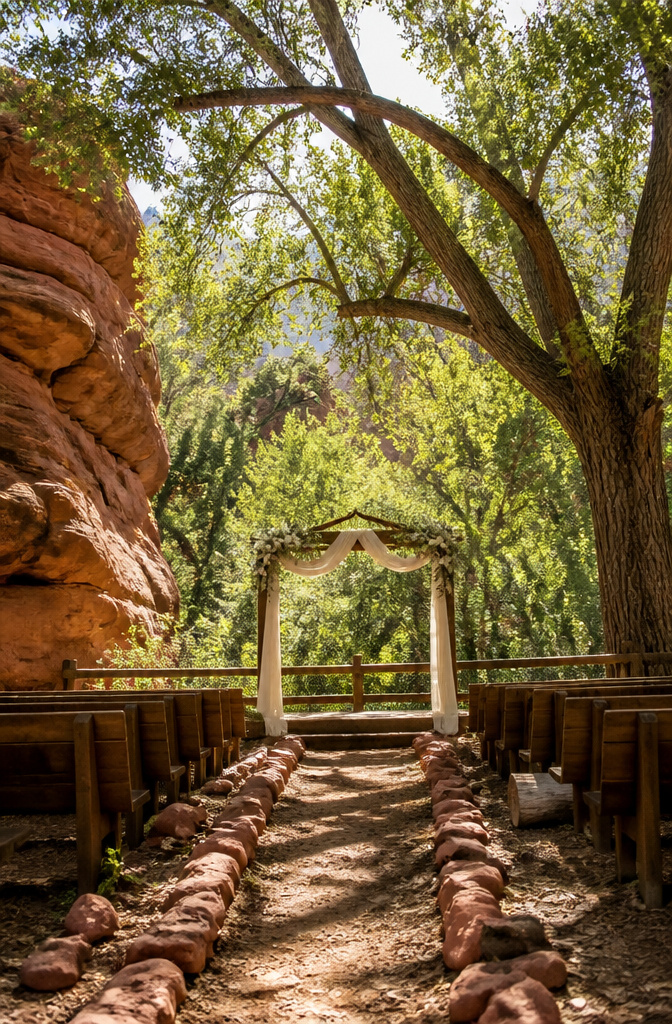
Red rock cliffs and cottonwood groves sit side by side at Stone Mountain Lodge, a pairing that sounds mismatched until you see it. The forest here is soft and shaded, the sandstone formations raw and sun-warmed, and the contrast lets you shoot a morning ceremony against red rock drama and slip into tree-filtered light for portraits an hour later.
That mix defines what laid-back actually means for your timeline. Structure stays minimal: you are not shoehorned into a ballroom flip or a hard vendor list. The open vendor policy lets you book a taco truck for dinner and a friend for cupcakes, stretching a modest budget without the venue padding its cut. An outdoor reception strung with twinkle lights under those same cottonwoods winds down when the crowd thins, not when hourly overtime kicks in.
On-site lodging turns the evening into a full weekend, which matters for out-of-town guests who already drove from Denver or Boulder. Packages start around $4,500 for smaller weddings and scale with headcount, so the format works for the couple at $8,000 just as it does for the one hoping to land nearer $12,000 with a full guest count. Capacity tops out at 150, enough for family-plus-friends without the pressure to invite twice that. Wheelchair accessibility is built in, a detail that saves real awkwardness when a grandparent arrives.
Who belongs here? The pair who wants mountain scenery without the three-hour haul to the high country, and who would rather spend their budget on a live band or an extra night for the wedding party than on a venue that dictates both caterer and cake flavor.

【Double Sided Covering】 Our premium arch backdrop cover features a unique double-sided design: one side with elegant printed patterns for visual depth, the other side a crisp solid arch cover for minimalist elegance. This versatile backdrop arch cover lets you create two distinct looks with one purchase. The 4-way stretchy fabric conforms tightly to arch curves, eliminating bunching and delivering a seamless professional finish from all angles.
【Double Sided Covering】 Our premium arch backdrop cover features a unique double-sided design: one side with elegant printed patterns for visual depth, the other side a crisp solid arch cover for minimalist elegance. This versatile backdrop arch cover lets you create two distinct looks with one purchase. The 4-way stretchy fabric conforms tightly to arch curves, eliminating bunching and delivering a seamless professional finish from all angles.

Lyons Riverbend
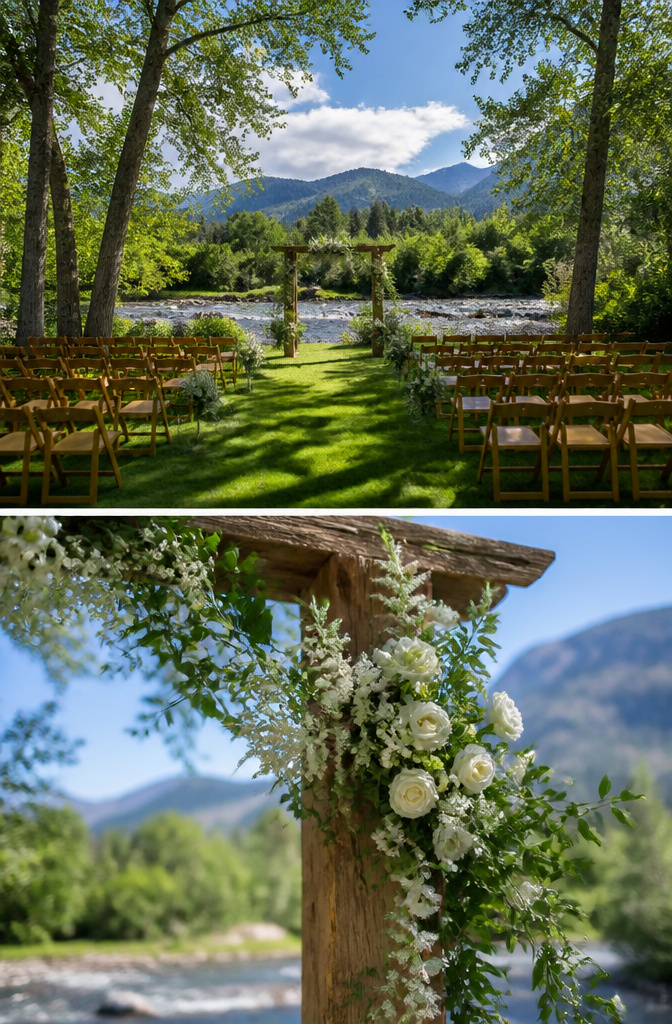
A grassy lawn by the St. Vrain River sets the ceremony here, with the Rockies filling the background and the water audible through the vows. That sound is the detail that changes how you plan: on a breezy afternoon, the river does some of the work a string quartet would otherwise do, and a microphone becomes less optional than it might feel.
What "modern amenities" means at a forest wedding is worth spelling out. Wheelchair accessibility matters on uneven riverbank ground, and Lyons Riverbend has it. The reception tent runs rustic wooden beams overhead, or you can move inside to full-height windows that keep the river and mountain views in sight. A new modern barn is coming online for 2025, which gives indoor-reception couples a cleaner backdrop than the typical converted farmhouse.
Packages start around $5,000 and shift with guest count and season. The venue caps at 150 guests, and full-weekend rentals are an option if you want people settled in rather than driving back to Boulder.
Lyons itself sits just outside Boulder and a short drive from Estes Park. Guests get a small mountain town with enough going on that the weekend does not revolve entirely around your Saturday. For couples weighing budget against immersion, the full-weekend rental is where this venue earns its keep: the per-night cost drops against a single-day rate, and guests who traveled for your forest wedding actually experience the forest rather than a parking lot and a ceremony.
Diverse Size Choices for Customized Wall Decoration: Our minimalist tapestry provides five to fit all wall specifications: 30"×40"(75cmx100cm), 40"×60"(100cm×150cm),...
Planet Bluegrass
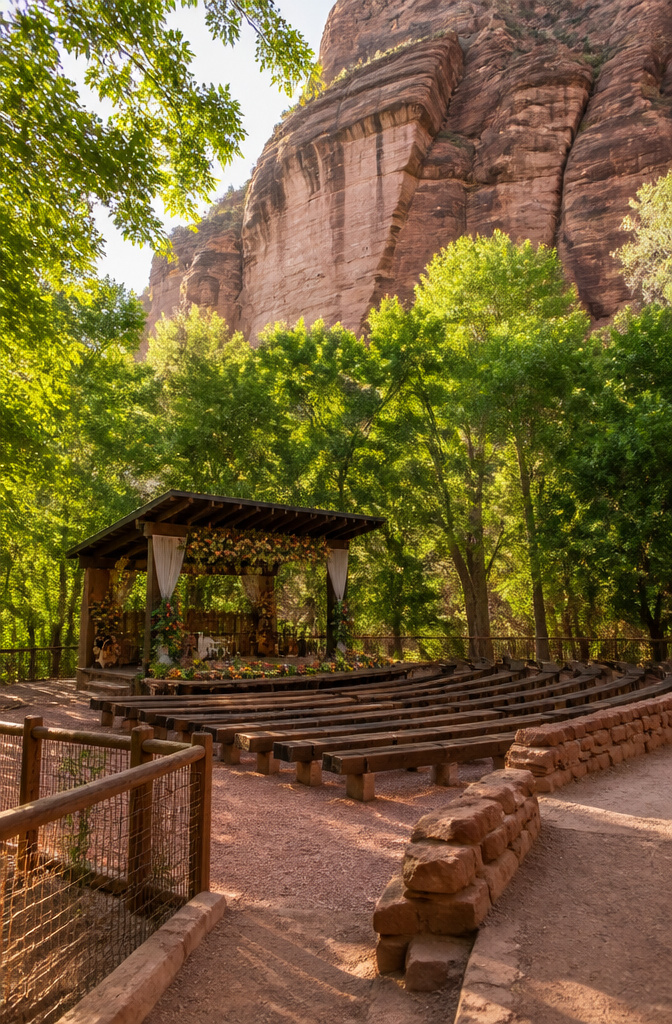
A music festival grounds in Lyons, Colorado, offers a beautiful forest wedding setting that comes with stage wiring, permanent restrooms, and a concession infrastructure most outdoor venues lack. The main meadow sits between red sandstone cliffs and cottonwoods along the St. Vrain River, with the sound barn itself converted for ceremonies or covered receptions. I kept wondering whether the concert legacy helps or hurts. The power and water hookups save thousands in rental costs, and the staff knows crowds. The downside is aesthetic residue: festival signage, gravel worn hard by thousands of boots, and a layout designed for ticket gates and beer lines rather than a processional. Most couples lean into it with acoustic ceremony music and local craft beer at the bar, or they fight it with draping and rented greenery that never quite hides the rigging. My read, after looking at how other festival venues handle the same tension, is that Planet Bluegrass works best for couples who genuinely like live music culture, not those hoping for a blank forest canvas.
The Woodlands
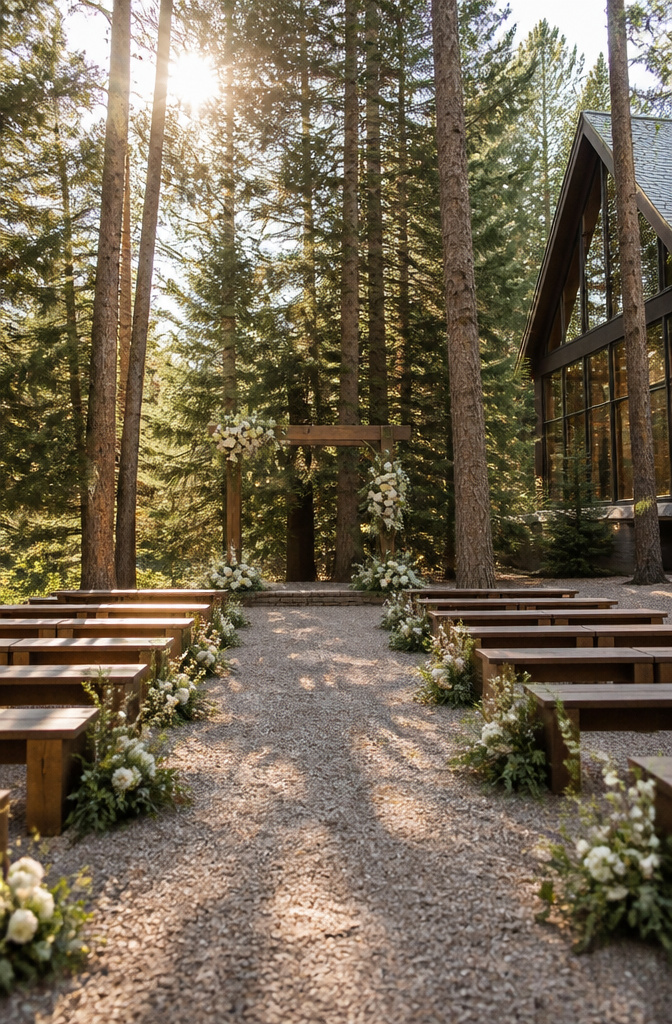
Elegance in a forest setting usually dies the moment someone rolls out a white aisle runner over pine needles. The Woodlands in Colorado Springs sidesteps that mistake by letting the trees do the heavy lifting. Ceremonies happen beneath the canopy itself, no artificial arch required, and the indoor backup still frames the same greenery through large windows rather than replacing it with draped fabric and chandeliers.
The reception space keeps the balance with exposed beams and those same windows pulling the outside in. What saves it from lodge-cliche territory is flexibility: you bring your own catering, your own music, your own decor. The venue supplies the bones and gets out of the way.
Packages start around $6,000 and scale with guest count and season, with capacity for up to 200. Wheelchair accessibility is built in, not retrofitted. For couples who want a beautiful forest wedding that reads as intentional rather than rustic-by-default, the restraint here is the selling point.

Package & Size: This package comes with 1 piece of 4x1.65ft(HxW) wedding arch cover, and the ARCH STAND IS NOT INCLUDED. The Arch Cover Stretchy Backdrop are ideal for...
Donovan Pavilion
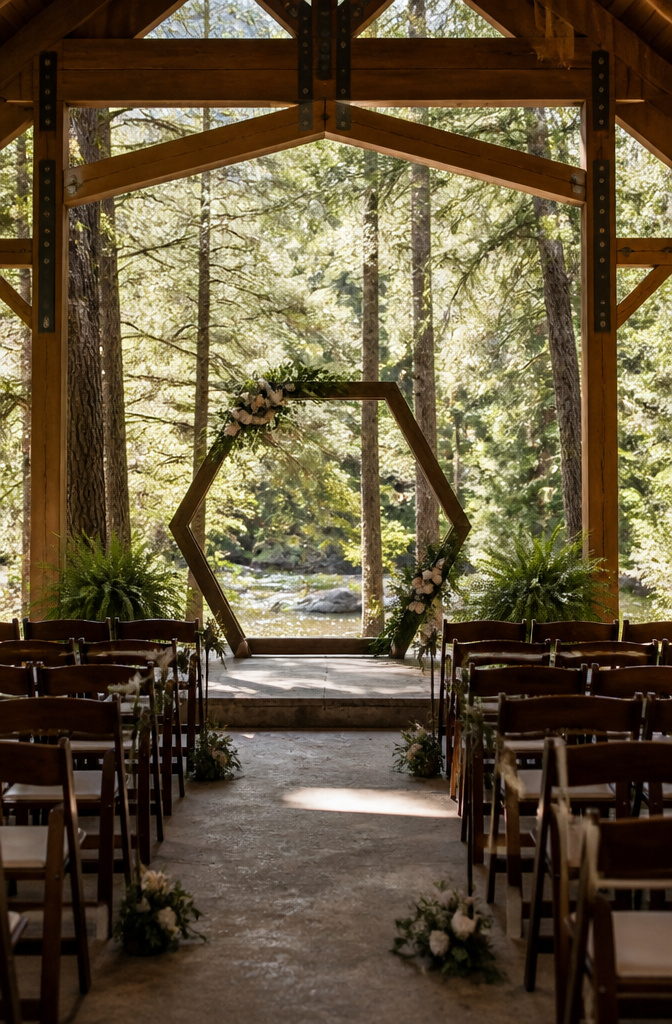
The pavilion at Donovan Pavilion sits back from the creek rather than over it, which matters more than most couples realize when they first tour. You get the sound and sight of moving water through the trees, but the actual bank stays a short walk away, so muddy shoes and uneven ground never become part of your ceremony logistics. That distinction between creek views and creek access is worth weighing against how much you wanted those barefoot-in-the-water portraits.
The structure itself gives you a weather contingency that open-air forest ceremonies simply don’t. A sudden mountain shower that would send guests scrambling under ponchos at an uncovered site becomes a minor inconvenience here. The roof and partial walls keep the ceremony dry without sacrificing the surrounding pine and aspen framing. I tend to think of it as the compromise that doesn’t feel like one, though couples set on being fully surrounded by forest on all sides may find the built structure too present in their sightlines.
For the reception, you’re moving inside a connected space rather than renting a separate tent, which keeps the timeline tighter and the rental bill shorter. The trade is less flexibility in layout; the pavilion dimensions set your floor plan more than poles and canvas would.
Beaver Creek Resort
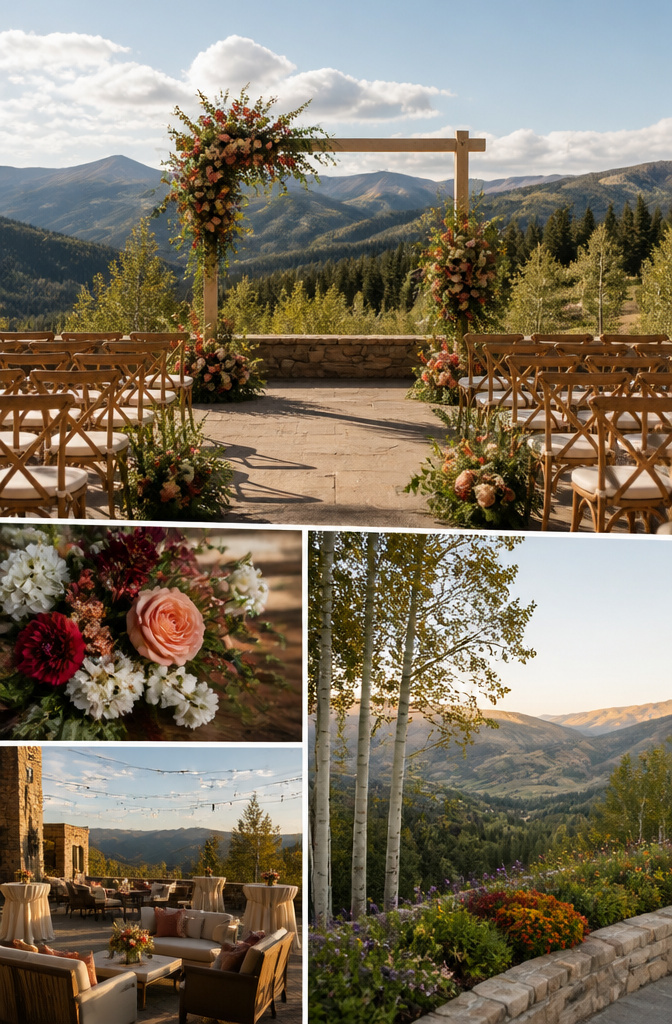
A resort operation like Beaver Creek handles weddings as one thread in a much larger weave of lodging, dining, and mountain recreation. That scale creates flexibility you will not find at a dedicated venue. Indoor ballrooms with floor-to-ceiling glass sit beside terraces that open onto aspen groves, and the staff moves between a rehearsal dinner at one restaurant, a ceremony at a mid-mountain overlook, and a reception back at the base village without anybody renting separate shuttles.
The trade-off is intimacy. Your coordinator at a dedicated venue knows the oak tree where afternoon light lasts longest; at a resort, you are more likely to work with whoever is assigned that month. What convinced me, reading through a dozen of these setups, is that couples who treat the resort’s breadth as the feature, not the bug, plan better. They book the ceremony at one altitude, the cocktail hour at another, and let guests ride the gondola between them.
Guest lodging folds directly into the contract. Rooms block at group rates, and the people flying in from Tampa or Dallas sleep in the same building where they danced the night before. That convenience costs: resort nightly rates run high, and the minimums for catering and room blocks can push a modest budget past its limit. For a forest wedding where nobody drives after drinking and the morning-after brunch happens without taxis, the math often works anyway.
Camp Hale
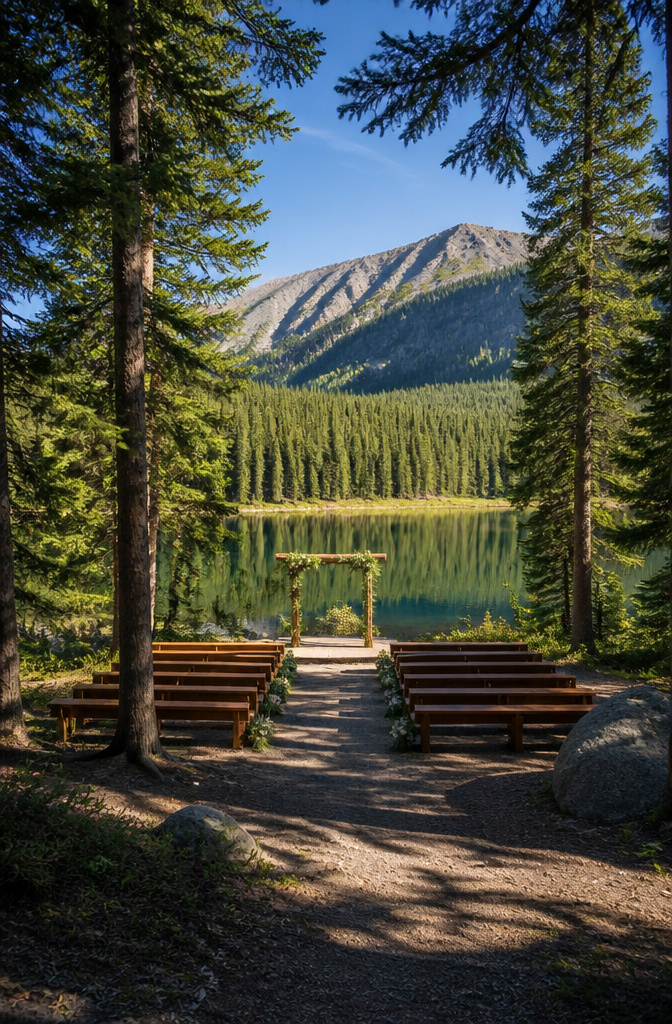
Camp Hale sits at the intersection of two very different ceremonies. The property carries the remains of a World War II mountain training camp, stone foundations and open meadows where soldiers once learned winter warfare, now softened by decades of regrowth. That history matters less for decoration than for the way it shaped the land: flat, cleared areas sit beside dense forest and a small lake without much transition between them.
A forest ceremony here runs quieter, hemmed in by spruce and fir that block wind and swallow echoes. The lake option opens the same wedding to sky, reflection, and the kind of light that changes hourly. I have seen couples try to use both in one day, and the problem is practical more than aesthetic. The settings are close enough that guests walk between them, but the mood shifts sharply, from enclosed to exposed, from green light to silver. One usually has to serve as the supporting space, cocktail hour or portraits, while the other carries the ceremony itself. The venue permits the choice, but the land itself pushes toward a decision.
The Pines by Wedgewood Weddings
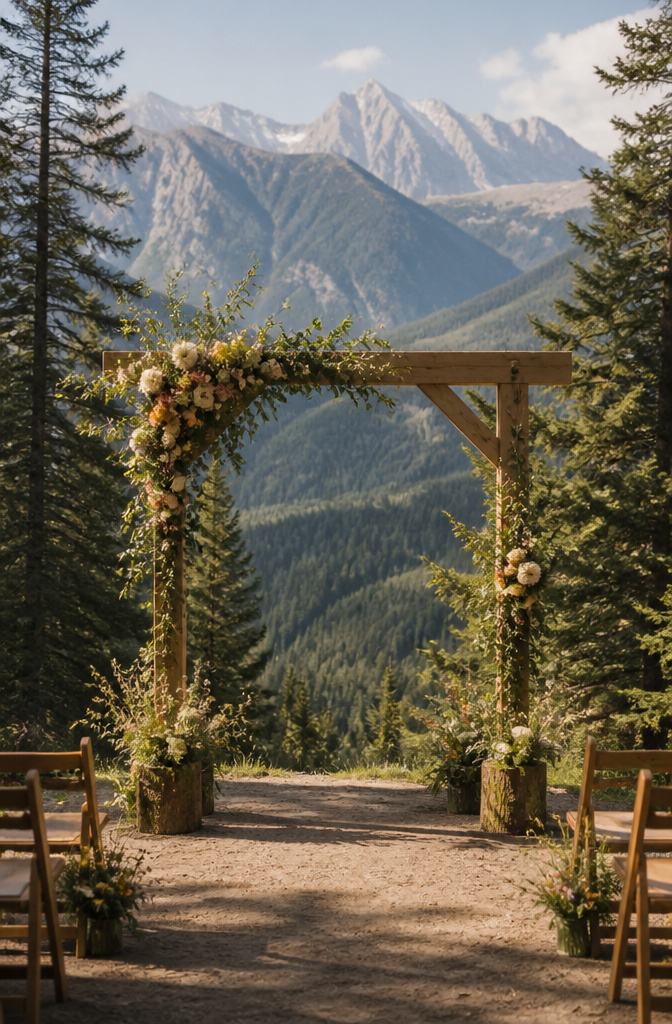
The forest at The Pines is thick enough to feel enclosed, but the clearing where the ceremony happens opens west toward the ridge line. That pairing matters more than I expected when I first looked at venue photos. Wedgewood Weddings runs the operation as an all-inclusive package, which means the catering, bar, and coordination come from them rather than vendors you hunt down separately. For a couple working against a deposit timeline and a guest list that keeps shifting, that structure removes the week of phone-tag that independent venues require.
The mountain view functions as a backdrop rather than the main event. The trees do the framing; the peaks sit behind them like a horizon you notice once the vows start. It keeps a forest wedding from feeling too dim or too enclosed, which is the risk with venues where the canopy closes overhead completely. What I would watch for is the time of day: afternoon light drops fast behind those ridges, so the photographer needs to know the property well enough to move the portrait session before the glow disappears.
Venue Investment

Forest weddings in Colorado run a wider spread than most couples expect until they start calling. Dunton Hot Springs asks $38,000 for a full buyout, while Wild Basin Lodge lands at $13,500 and Piney River Ranch drops to $7,500 if you book a weekday. The gap is not random; it tracks guest count, season, and whether you’re renting a single day or an entire weekend.
| Venue | Starting Cost | Capacity | Season/Notes |
|---|---|---|---|
| Dunton Hot Springs | $38,000 (full buyout) | n/a | Exclusive retreat, San Juan Mountains |
| Wild Basin Lodge | $13,500 | n/a | n/a |
| Piney River Ranch | $7,500 | n/a | Weekday rate |
| Planet Bluegrass | ~$5,500 | 300 | Scales with guest count and season |
| The Woodlands | ~$5,000 | 150 | Weekend rental available |
The lower end of this range, around $5,000–$7,500, typically gets you the venue shell: ceremony lawn, tent pad, mountain views. The upper end buys seclusion and infrastructure that keeps guests on-site for days. What separates a $5,500 Planet Bluegrass package from Dunton’s $38,000 is not just prettier trees; it is the difference between renting a stage and owning the valley for a weekend. Weekday discounts at Piney River can cut your venue spend by half if your circle can travel midweek. That trade, money against guest convenience, is the first real decision in a Colorado forest wedding budget.
Guest Capacity
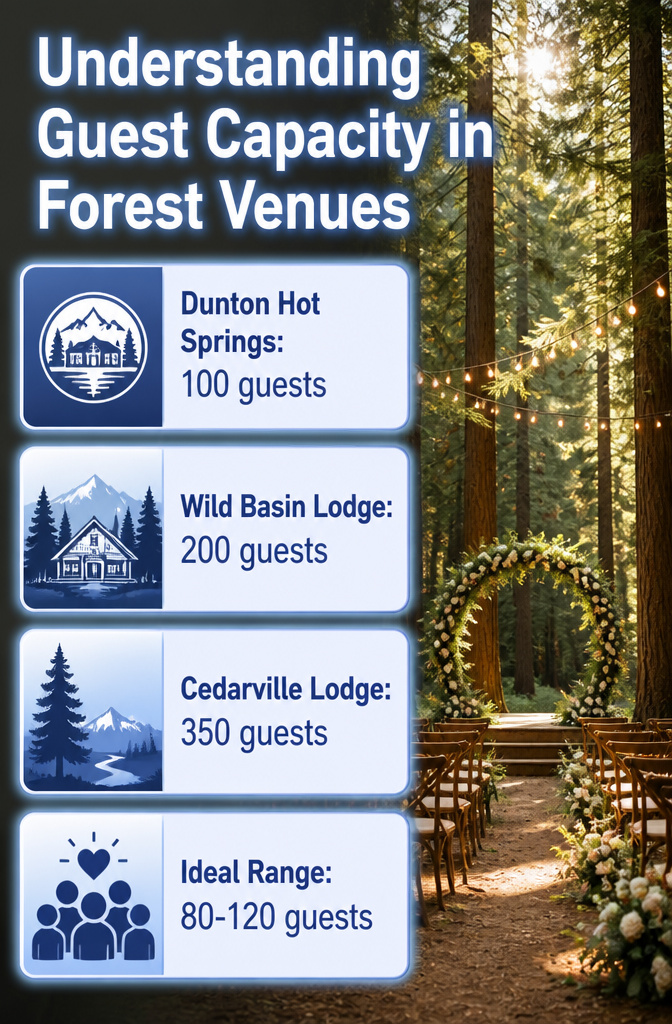
A forest canopy changes the whole equation for how many people feel right in the room. At Dunton Hot Springs, the hard ceiling sits at 100 guests, and that number includes everyone from the ceremony through the late-night dancing in the historic Dancehall & Saloon. Wild Basin Lodge runs larger, topping out around 200, while venues like Cedarville Lodge stretch to 350 before extra charges kick in. Most Colorado forest venues I’ve looked at fall somewhere between 100 and 350.
The number on the contract shapes more than your guest list. It sets the energy of the evening. Fifty people in a grove of old-growth cedar can feel like a full house; the trees close in and the sound stays intimate. Push past 150 and you need more infrastructure, more lighting, more staff keeping guests oriented in a space without walls. The sweet spot for a beautiful forest wedding, in my view, lands between 80 and 120. Enough voices to lift the celebration, few enough that everyone still fits inside a single clearing without breaking the spell of being surrounded by woods.
Ceremony Settings
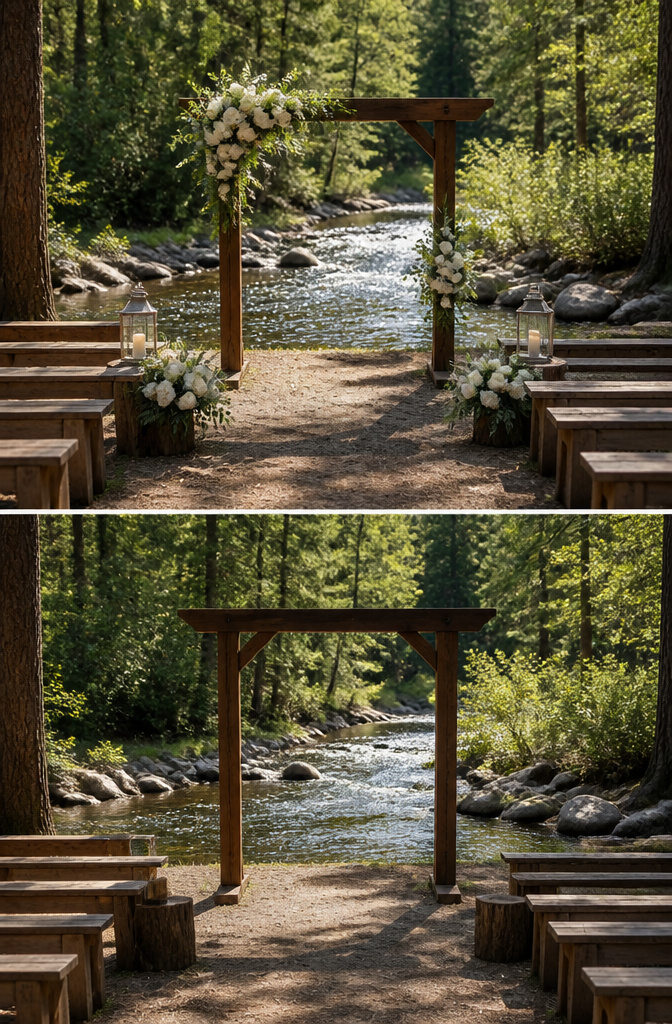
A riverside ceremony spot changes the whole rhythm of the day. Water behind the couple softens every photo, but the trade-off is real: guests squint against reflected light, and heels sink into soft bank. The creek-side setup at Cedarville Lodge runs $5,000–$6,000 for peak-season Saturdays, with indoor backup included if Oregon rain shows up. That backup matters more than couples think; I’ve watched outdoor-only timelines collapse when weather turned.
Forest clearings give you dappled light that needs no decoration, though timing is everything. Mid-afternoon sun through canopy creates patchy exposure that frustrates photographers. Morning or late-day slots fix this, but venues with only one clearing often can’t shift you. Reber’s Riverside in Yamhill offers full-grounds exclusivity for 2–3 days at $6,500, which lets you scout light patterns the day before rather than guessing.
Scenic overlooks deliver the drama guests remember, yet wind and altitude discomfort kill the mood fast. Beaver Creek Resort positions mountain-top ceremonies with indoor alternatives, and the indoor option with floor-to-ceiling windows isn’t surrender; it’s where guests actually hear vows instead of holding programs against gusts. Packages there start near $7,000.
The honest call: prioritize guest comfort over backdrop intensity. A slightly less dramatic view where everyone can focus on the ceremony beats a stunning overlook with shivering, distracted attendees.
Reception Perks
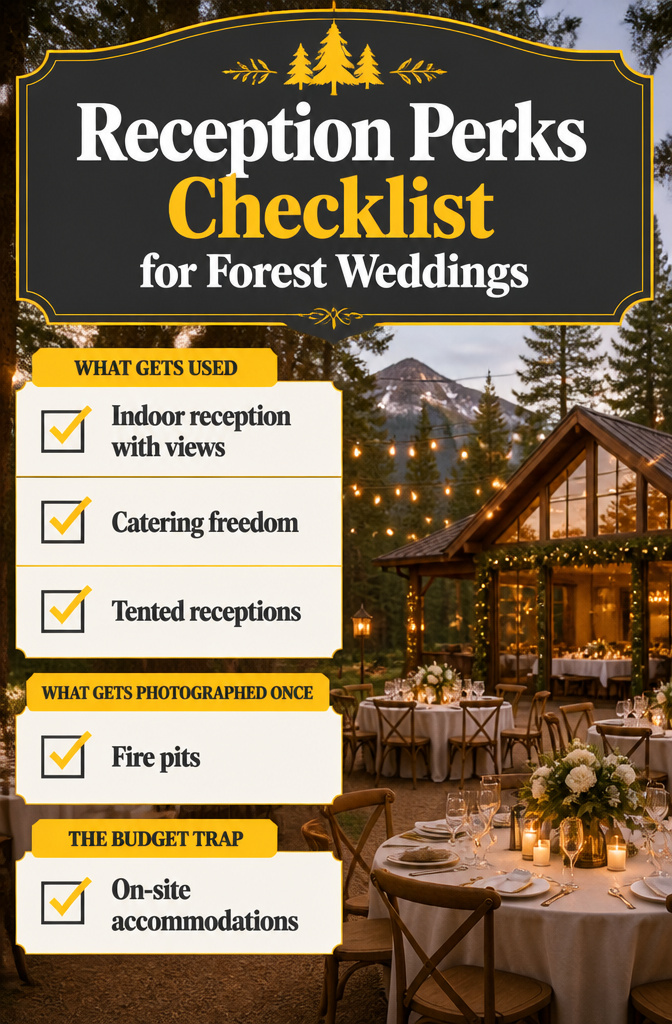
Reception perks at Colorado forest venues split cleanly into what gets used and what gets photographed once. The fire pit sounds romantic until your guests are shivering in October and the catering tent is two hundred yards away.
- Indoor reception with full windows keeps mountain views in sight without the weather gamble; the open-air pavilion works in July and August, but June and September evenings turn cold fast.
- Catering freedom matters more than the brochure admits. Venues that lock you into a single caterer often charge plate prices that eat a modest budget; the ones that let you bring your own team or choose from a list save real money.
- Tented receptions with rustic wooden beams photograph beautifully and shelter guests from sun, not from cold. A tent with sides and heaters rents higher, but guests stay at the tables instead of retreating to their cars.
- Fire pits and bonfire areas get used at summer weddings when the party runs past ten and the temperature drops to sixty. At fall weddings the same fire becomes a crowd bottleneck; guests hover for warmth instead of dancing.
- On-site accommodations sound like a guest convenience, but they turn into a budget trap when the room block minimum sits at twenty rooms and half your list lives in Denver.
The perk that actually wins is the one that matches your season, not your Pinterest board.
Accessibility
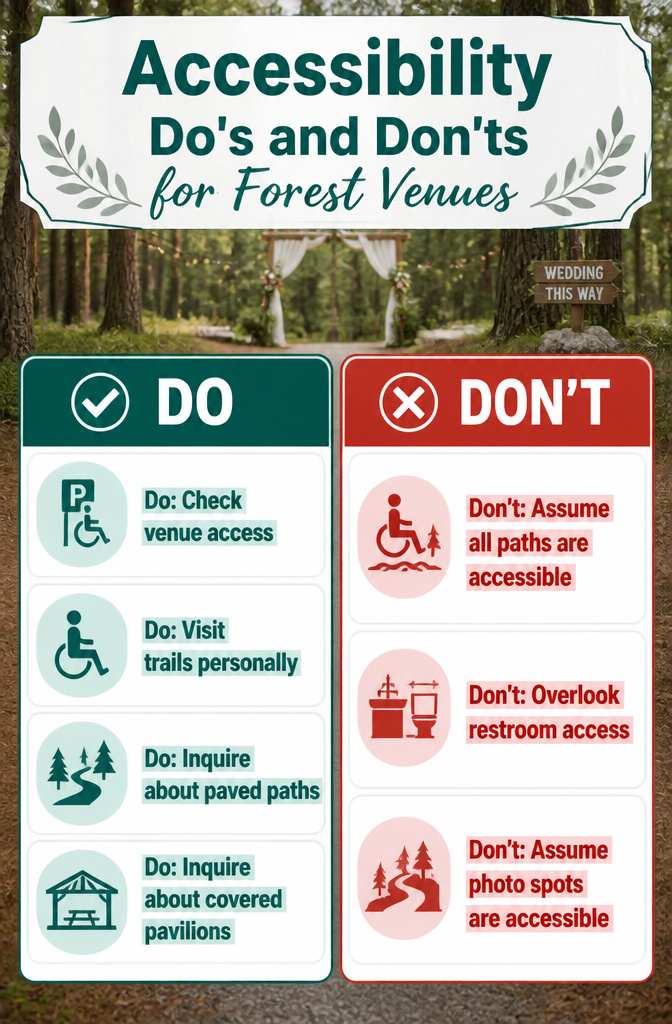
Forest venues promise a beautiful forest wedding, but the gap between "wheelchair accessible" on a website and what that means on pine-needle ground can be wide. At one Colorado ranch I looked into, the ceremony site sat at the bottom of a gravel path that would have sent a standard chair sliding. The lodge itself had a ramp, yet the restrooms inside were too narrow to turn around in. That is the split to watch for: parking and the main building may comply while the actual forest experience does not.
Ask to roll the route yourself, or have someone do it during your site visit. A packed-earth trail reads as flat until you hit the root ridge or the three-inch step the venue staff stopped noticing years ago. Covered pavilions help, since rain turns accessible paths into mud slicks fast. Beaver Creek Resort and Della Terra Mountain Chateau both list full wheelchair access, which in practice means graded approaches and interior spaces that match; smaller ranches may mean well but lack the grading budget. If your guest list includes anyone who uses mobility aids, the ceremony location is not negotiable, and the photo spot five minutes up the trail probably is not either.
Frequently Asked Questions
What are the best forest wedding venues in Colorado?
Fourteen meaningful places stand out across the state, from Dunton Hot Springs in the San Juan Mountains at $38,000 per night to more accessible options like Stone Mountain Lodge starting around $4,500. The list spans working ranches, restored ghost towns, chateaus tucked into evergreen forest, and festival grounds along the St. Vrain River. Each carries a distinct mood: some trade polish for credibility, others seclusion for convenience, and a few let you book an entire valley for a weekend.
How much do forest wedding venues in Colorado cost?
Costs run from roughly $4,500 at Stone Mountain Lodge to $38,000 for a full buyout at Dunton Hot Springs. Mid-range options cluster between $5,000 and $13,500, with Wild Basin Lodge at $13,500 and Piney River Ranch at $7,500 for weekday packages. The gap tracks guest count, season, and whether you rent a single day or an entire weekend. Weekday discounts at some venues can cut the venue spend by half if your guests can travel midweek.
What should I consider when choosing a forest wedding venue in Colorado?
Start with season and access. Piney River Ranch closes entirely October through May; Dunton Hot Springs books only by full buyout. Check the hard guest ceiling before touring, since a count of thirty to fifty at Blackstone Rivers Ranch dictates every vendor choice that follows. Ask about on-site lodging, wheelchair accessibility, and whether the venue restricts you to a preferred caterer or lets you bring a taco truck. Finally, weigh how much you want guests immersed in the forest versus moving between built spaces: a pavilion keeps you dry but puts a roof in your sightlines.