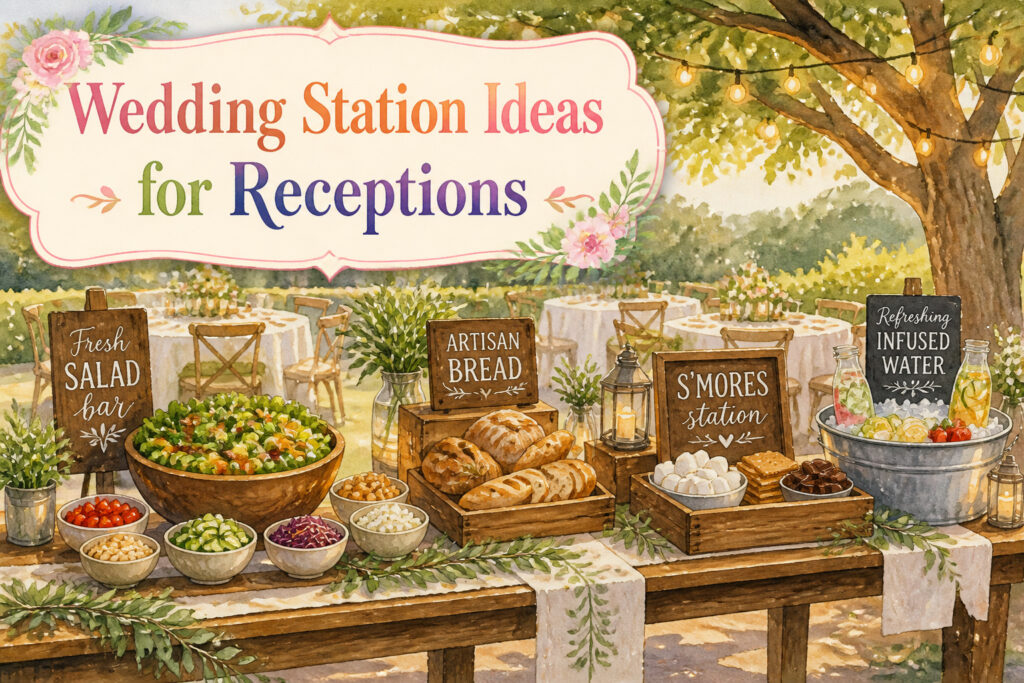
Wedding stations range from a $10 popcorn bar to a staffed raw bar over crushed ice, and the deciding factor is usually how much service your venue can support, not how much you want to spend. A wood-fired pizza truck sounds festive until you learn the driveway cannot handle the weight, and that same limitation kills half the ideas on this list before the tasting menu ever opens. The station that actually fits your reception is the one your caterer can refresh in real time without a kitchen pass that bottlenecks at hour three.
1. Customizable Poke Bowl Station
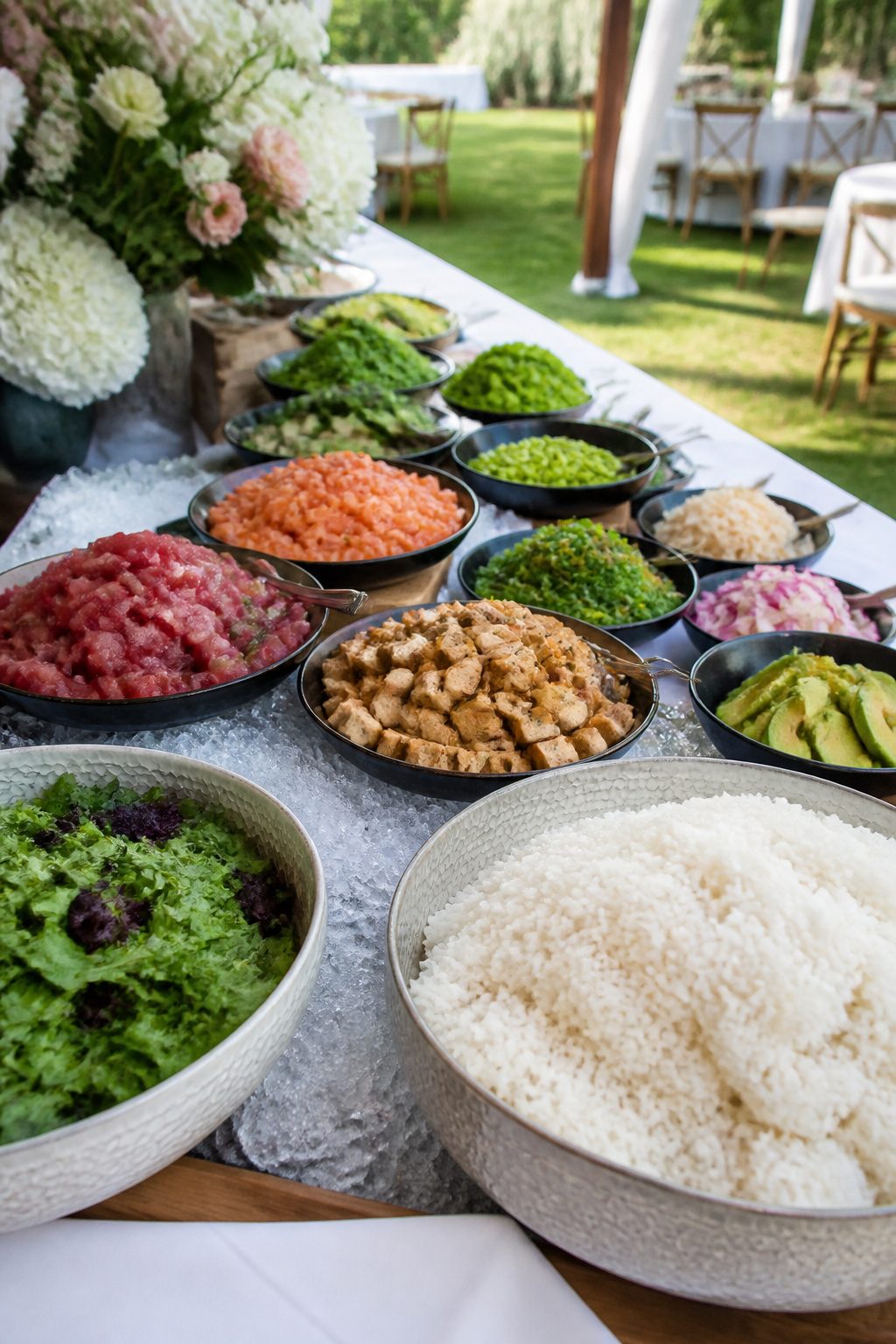
A build-your-own poke bowl station lets guests start with jasmine rice, brown rice, or mixed greens, then layer in ahi tuna, salmon, or marinated tofu. The visual payoff comes at the end: edamame, seaweed salad, pickled ginger, mango, and avocado arranged in chilled rows. Label every ingredient clearly so guests with shellfish allergies or gluten concerns can move through the line without hunting for a server.
The format handles dietary variety without a separate menu. One person builds a protein-heavy bowl; the next loads up on tofu and greens. That flexibility is why this station works for mixed guest lists where you do not know every restriction in advance.
The risk is choice overload. Three bases, three proteins, and five or six toppings is plenty; more than that and the line slows, the ice melts, and the bowls turn soggy. Keep the proteins iced below 40°F and refresh the display in batches rather than laying everything out at once.

★ Highly visible (18”w x 24”h) corrugated plastic sale sign is sure to catch the attention of anyone who passes by, making it the perfect sign to promote your store!...
2. Gourmet Taco and Nacho Bar
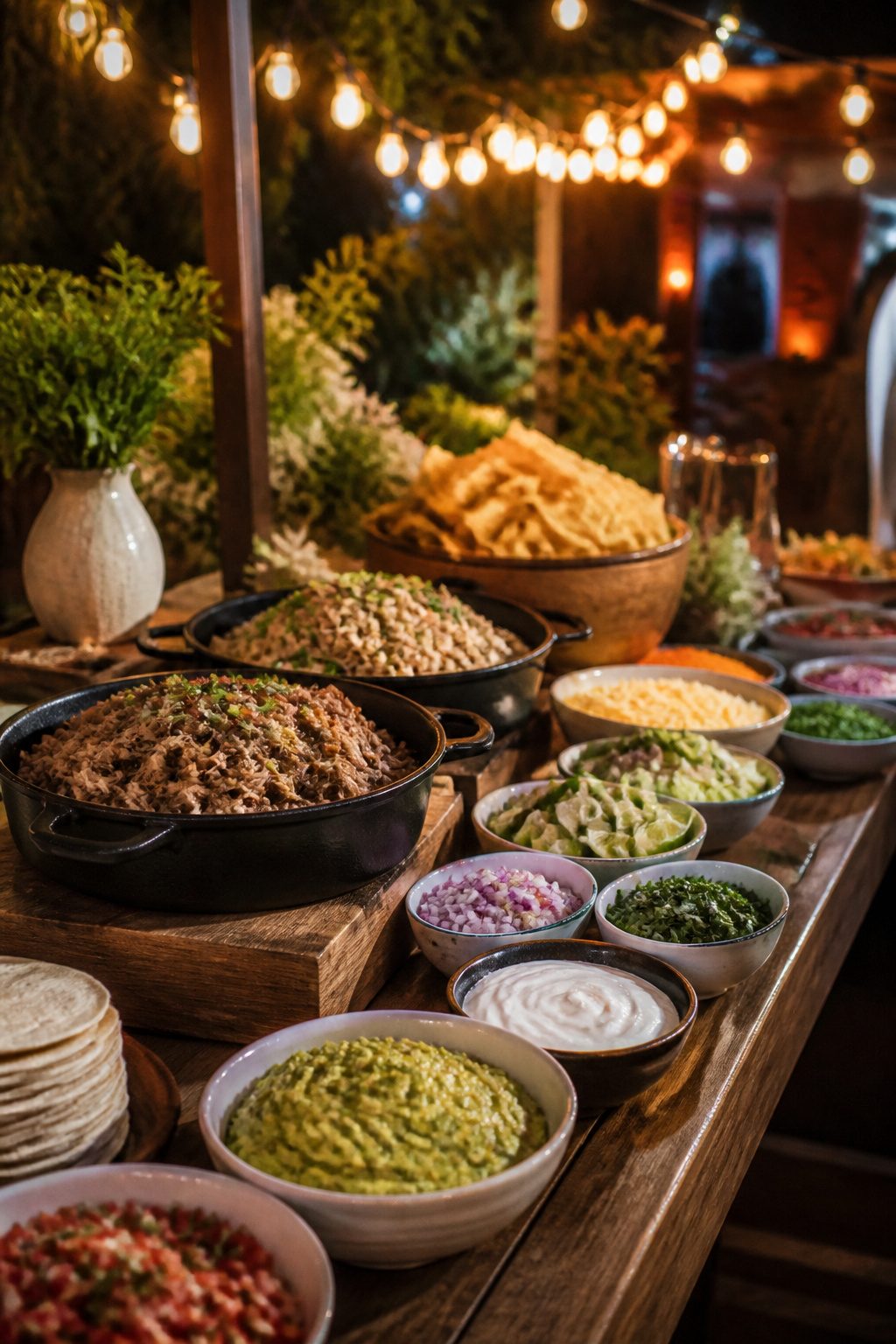
A gourmet taco and nacho bar built around slow-cooked carnitas and grilled cilantro-lime chicken gives guests the control that makes stations work for weddings. They pick their protein, choose between warm tortillas or crispy chips, and load up from a spread that typically runs from mild pico de gallo to habanero salsa and house-made guacamole. The format handles mixed dietary needs without you micromanaging individual plates: a roasted sweet potato and black bean filling covers vegan guests, and the build-it-yourself setup lets anyone skip what they cannot eat.
The energy stays high because people are moving, choosing, and eating in rounds rather than waiting for a served course. In my experience coordinating receptions, this station draws the widest crowd and the fewest complaints. It also scales well: carnitas hold beautifully in a warmer, chicken grills fast in batches, and toppings stay fresh under simple covers. The one mistake I have seen is underestimating chip refills. Plan for more than you think, especially if guests start building loaded nacho plates instead of folding tacos.

Condiment Containers with Lids - Whether you're looking for bar accessories or a taco bar serving set for a party, there's a Cocktailor condiment organizer for you. The extra-spacious 6-tray garnish station measures 19" x 5.5" x 3.5" and holds over 12 cups of condiments and garnishes

CAPACITY: Taco plates can hold 2 tacos and 2 sides
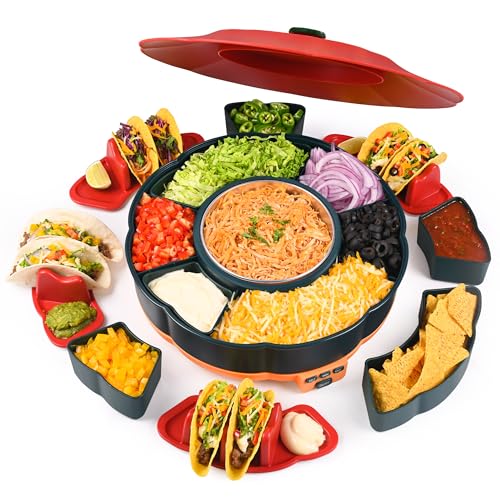
360° Rotating Taco Bar for Effortless Entertaining: The lazy susan taco bar’s smooth-rotating base lets guests access toppings effortlessly. Host unforgettable Taco Tuesdays, game nights or homewarming event (also suitable as a housewarming gift) with the AIBAOLAO Lazy Susan Taco Bar
3. Live Pasta and Gnocchi Station
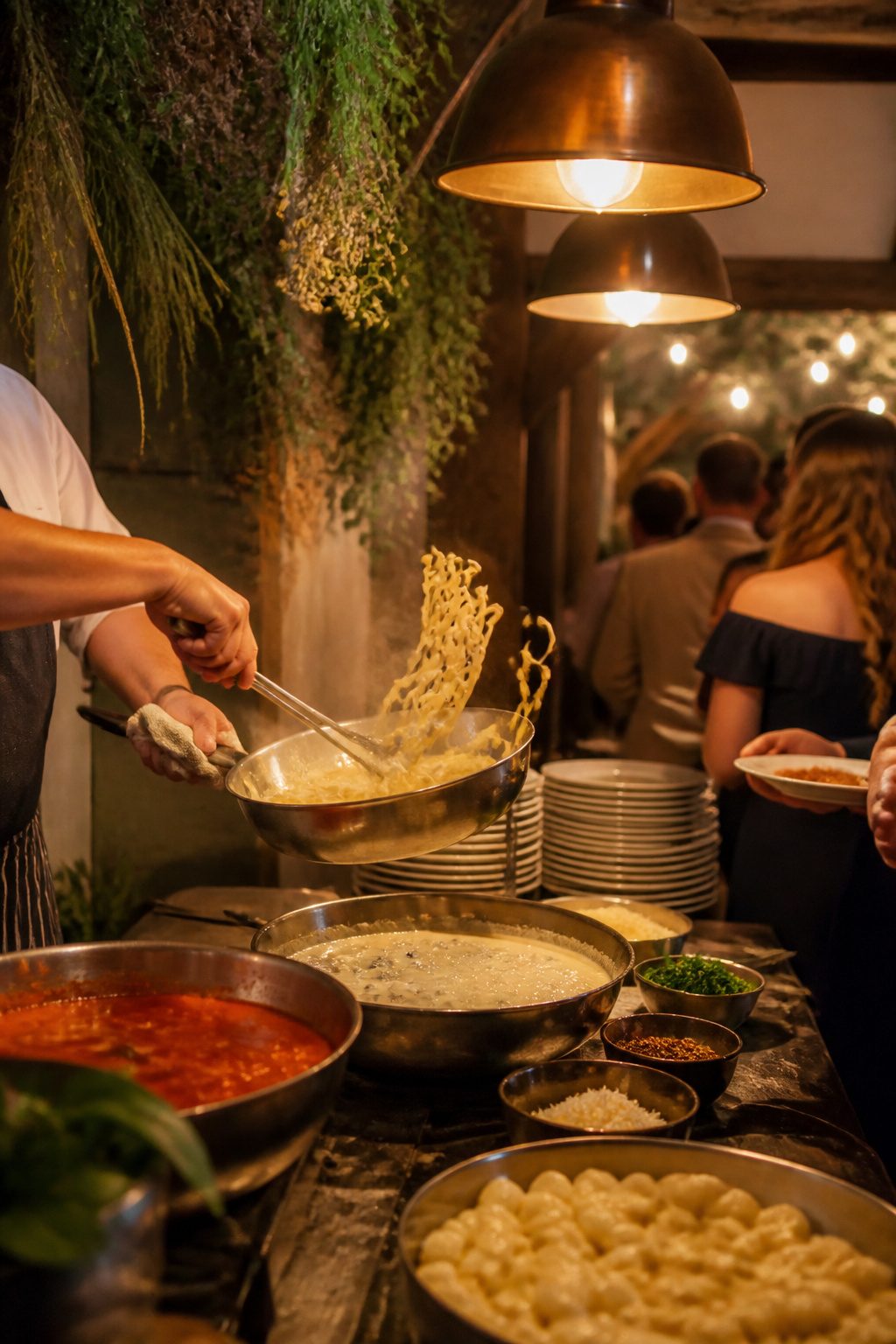
Fresh pasta at a reception already beats the dried-box alternative, but a chef tossing it to order turns dinner into the kind of moment guests actually remember watching. Ravioli, tortellini, and fettuccine hold up well under live heat, and the sauce choice matters as much as the noodle: a bright pomodoro, a heavy gorgonzola cream, and a basil pesto give three distinct directions without cluttering the line.
A gluten-free pasta swap and plant-based sauce bases handle most dietary needs without building a second station, which keeps the theater intact for everyone. The real risk is timing. One pan seizes or one sauce breaks and the line backs up fast, so this works best when your guest count leaves the chef room to breathe between orders. Skip it for a seated rush; bring it in for a cocktail-style reception where guests wander and the wait becomes part of the evening’s texture.

EASY TO TRANSFER: Transfer pasta from pasta maker to the drying rods or from drying rods to a cooking pot quickly and easily with transfer wand

PREMIUM MATERIAL: Made of high-quality bamboo and a heavy marble base noodle drying rack, this pasta drying rack stays steady even when fully loaded—perfect for home makers and serious enthusiasts who make batches of pasta and need pasta rack drying . The smooth surface prevents scratches on fresh noodles.

Comprehensive Pasta Making Set: Our 7 pcs pasta making set includes 1 threaded rolling pin, 1 long rolling pin, 1 rolling pin, 1 gnocchi board, 1 square pasta stamp, 1 round pasta stamp,and 1 ravioli cutter wheel 。This pasta making tool set in assisting with various handmade pasta creations. Let you enjoy the authentic pasta making experience at home.
4. Upscale Sushi and Dim Sum Bar
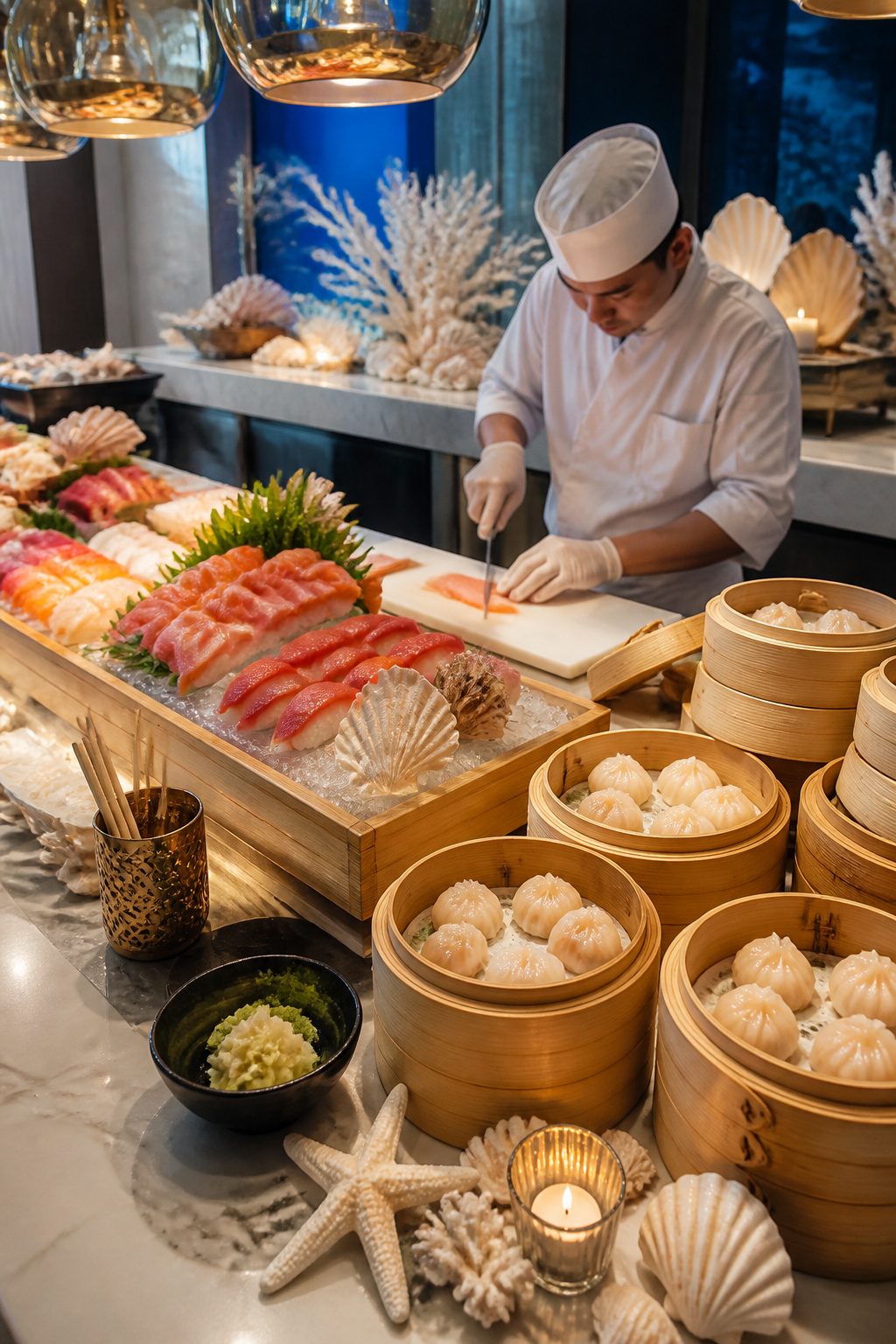
Fresh nigiri and sashimi arranged on crushed ice, with steam rising from bamboo steamers of shrimp har gow and pork buns beside it, does more than feed guests. The display becomes part of the room, a living piece of decor that happens to be edible. A skilled sushi chef slicing fish to order is what separates this from a catering tray that disappears in ten minutes.
The staffing cost is real. You need people who can plate with precision and talk guests through unfamiliar items, not just set out tongs and walk away. Mini bamboo steamers or sleek bento boxes let people carry a few bites back to their table without committing to a full seated course, which keeps the reception moving. Veggie rolls and vegetable-forward dim sum matter here; the station falls flat if every option is raw fish and your cousin’s date is pescatarian at best.
I have seen couples try to trim this by ordering platters in advance and skipping the live station. The fish still tastes fine, but the energy in the room changes. Guests cluster and watch a chef work. They take photos, they linger, they talk to strangers about whether they dare try sea urchin. That interaction is what you are paying for, and in a room full of people who may not know each other well, it earns its place.
5. Modern Carved Meat Station
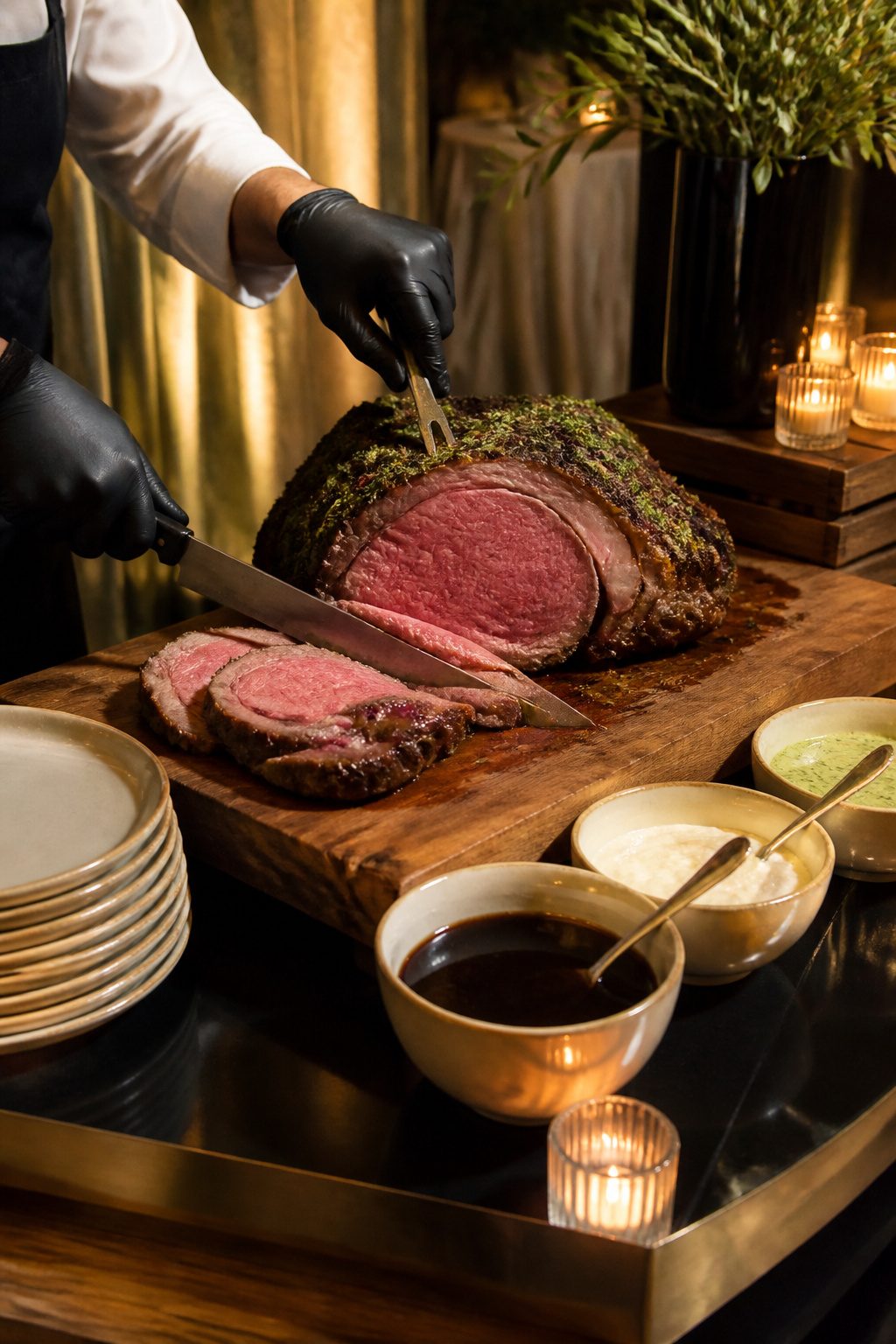
A carved meat station still carries the weight of hotel banquet chicken, but the right update turns it into something guests actually wait for. Herb-crusted prime rib or a honey-glazed pork belly, sliced to order, anchors the station with something to watch. The old steam-table setup gets replaced by a chef with a board, a knife, and small plates coming out warm.
The sauces matter as much as the cut. Horseradish cream and red wine jus are the expected pairings, but a chimichurri or a peppercorn reduction changes the conversation. A truffle-infused mash on the side pushes the whole thing toward the "plated dinner" feel without the plated dinner pace.
The risk is speed. One carver for a hundred guests means a line that kills the dance floor energy. Two stations, or a second cut running simultaneously, fixes that before it starts. The meat-and-potatoes crowd gets fed; everyone else gets a show.

Practical Size Nacho Sign for Table Display: Sized at 8.5 x 11 inches, this nacho bar sign for party provides simple visibility on food tables; display beside toppings as a nacho bar buffet sign that keeps stations organized; place with other nacho bar supplies for party to guide guests at receptions; style next to dips using a printed nacho board sign; pairs well with labeled nacho bar accessories; this nacho bar sign complements other rustic party signs

What You Will Receive: The package includes 50 Mexican paper food tray in 5 different color designs. These disposable food trays feature patterns that blend iconic Mexican motifs, such as maracas, cacti, and hats. These Mexican paper plates are perfect for Mexican-themed parties

ALL IN ONE: Make every night taco night with our fun taco bar. It works great for serving platters for entertaining and holds everything you need. The spinning lazy Susan design makes it perfect for sharing across the table with friends and family.
6. Comfort-Centric Mac and Cheese Bar
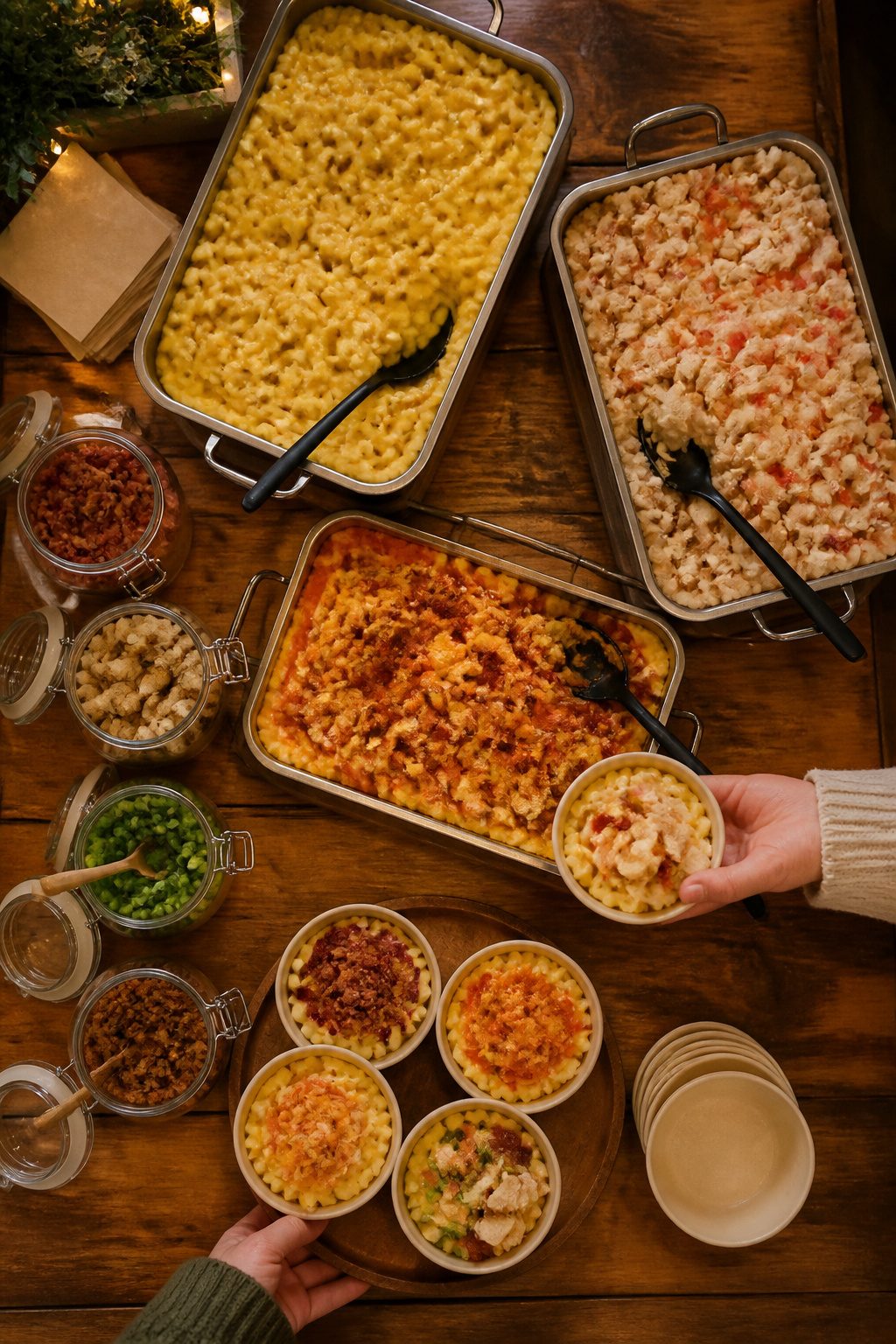
Ultra-creamy, three-cheese macaroni sounds simple until you watch guests hover over the toppings, suddenly eight years old again. The base does the heavy lifting. What makes it wedding-grade instead of cafeteria-grade is the tiered topping strategy.
Crispy bacon and buffalo chicken keep the station approachable, which matters more than couples expect. About a third of your guests will be children or adults who just want comfort food without ceremony. Lobster chunks, truffle oil, and caramelized onions sit at the other end for guests who came dressed up and want their plate to match.
I have seen this station work best when the couple positions it as a late-night drop, around 9:30 or 10 PM. By then the formal meal has settled, the bar has done its work, and a warm bowl of something familiar reads as generosity rather than budget stretch. One Florida outdoor reception ran it alongside a street taco stand and a mini pancake station; guests circulated all night instead of clustering at tables.
The real judgment call is the lobster. Fresh chunks spoil fast in outdoor heat, and truffle oil turns sharp when it sits under lamps. If your venue has a strong kitchen pass, run both. If service is limited, pick one luxury topping and keep it replenished in small batches.
7. Acai Bowl Station
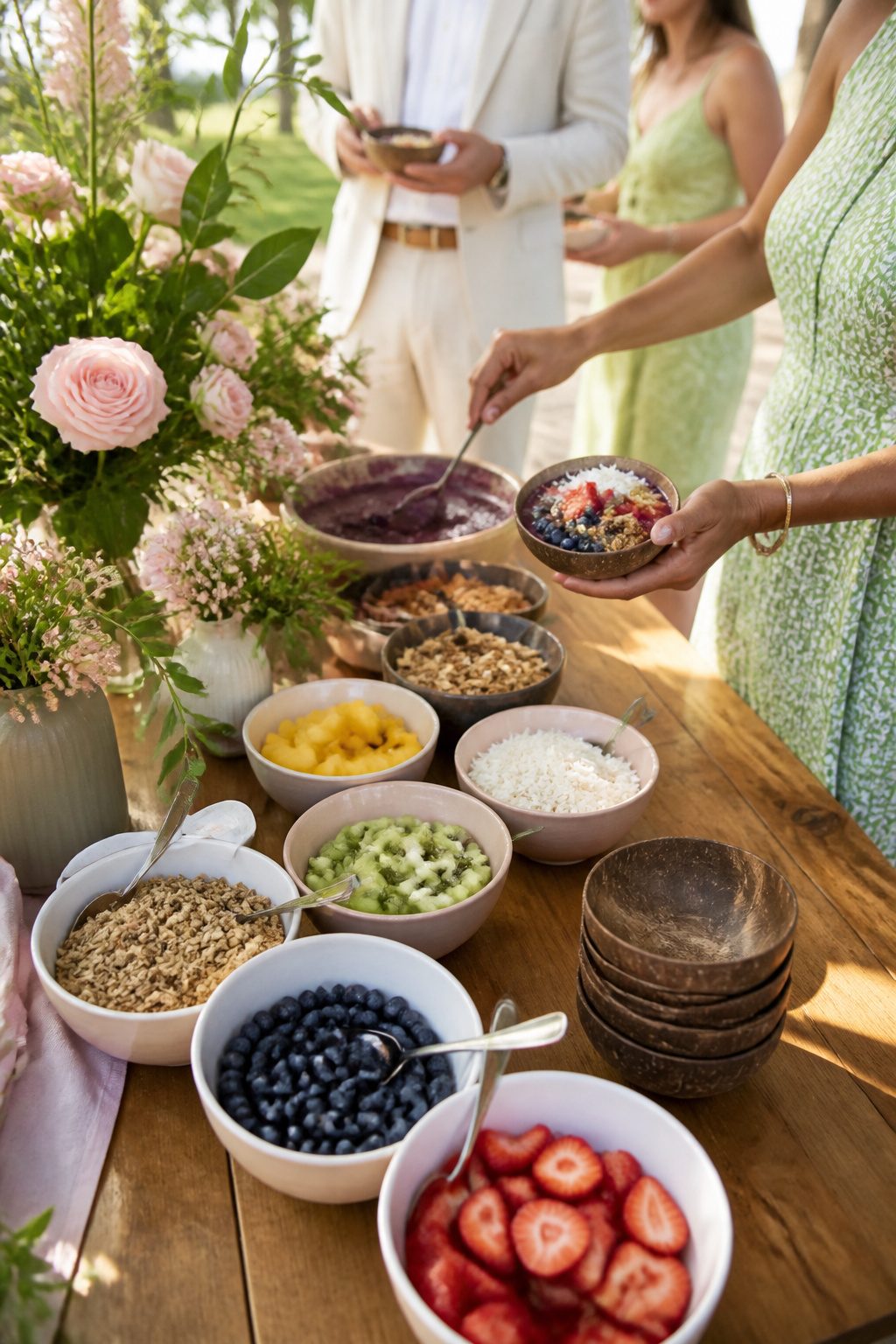
An acai bowl station lands best at brunch weddings or mid-afternoon receptions where guests want something sweet without the weight of cake. The setup runs chilled bowls of blended acai berry base alongside a spread of granola, chia seeds, shredded coconut, honey, and fresh berries. The build-your-own format keeps the line moving and lets guests calibrate their own sugar.
The photogenic purple base does most of the visual work for you, which matters when the station doubles as an Instagram moment. Fresh local berries carry the station better than out-of-season fruit shipped in bland; the difference shows up in both color and flavor.
Catering teams familiar with this station note it fills a gap for wellness-minded guests who might otherwise skip dessert entirely. The bowls read as indulgent while still scanning as healthy, which is a harder balance to strike than it sounds.
8. French Fry Bar
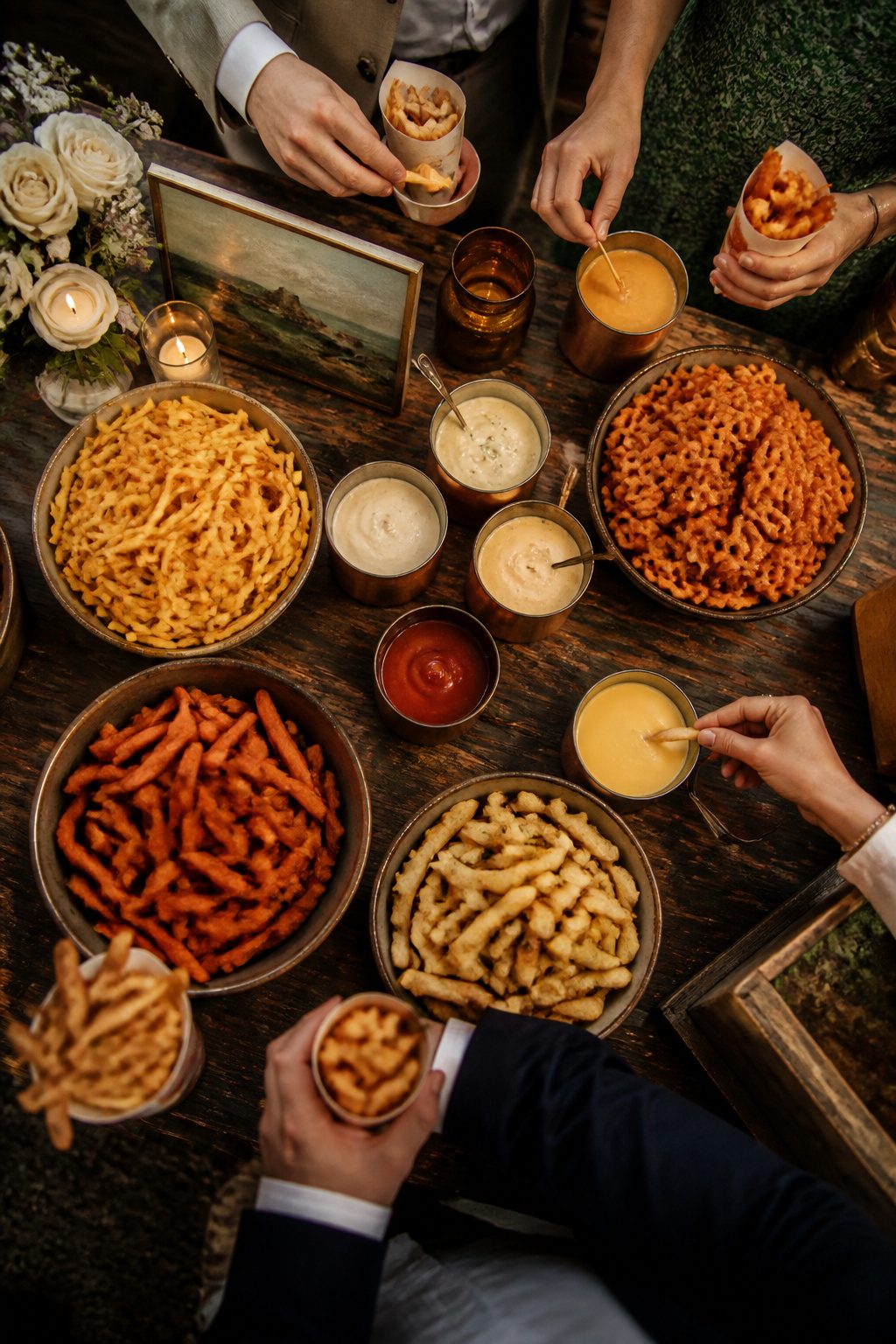
The French fry bar keeps surfacing as the most requested station across every roundup I read, and the reason is simple: fries hit the same notes at 11:00 PM that they do at a county fair. Guests are tired, they are hungry again after dancing, and a paper cone of something hot and salty feels like a reward.
What separates a memorable fry bar from a basket on the buffet is the cut and the toppings. Skinny fries, waffle cuts, and sweet potato all hold sauce differently, so offer at least two cuts so guests do not end up with gravy sliding off shoestrings or truffle oil pooled in waffle pockets. The sauces are where the money goes: garlic aioli, spicy sriracha mayo, beer cheese, and a gravy-and-curds "disco" option cover the range from cocktail-hour casual to late-night indulgence. Parmesan and truffle work for the earlier crowd; chili and cheese bring people back from the dance floor.
One decision I would make early: whether this station is a late-night snack or a cocktail-hour anchor. The same bar reads differently at 5:00 PM and 11:00 PM, and your caterer’s fry volume and holding setup change with the timing.

Ideal Size for Visibility: The 8x10 inch dimensions provide clear visibility and a substantial presence on your table without overwhelming the display.

LAZY SUSAN TACO BAR: Take your Taco Tuesday to the next level with the built-in lazy Susan ceramic serving platter! Spin the platter effortlessly to pass around your delectable creations, ensuring that everyone gets a taste of the action. It's not just a serving platter; it's a taco experience that will make your guests rave about your serving tray for party.

Package for Your Nacho Bar: the package includes 50 vibrant disposable tortilla chips snack trays, 6 sturdy salsa bowls, and an eye catching nacho table sign stand; Everything you need for a seamless Mexican themed party; Nice for nacho bar taco Tuesday supplies for a party atmosphere, this set ensures you're fully equipped to delight your guests
9. Grilled Cheese and Tomato Soup Station
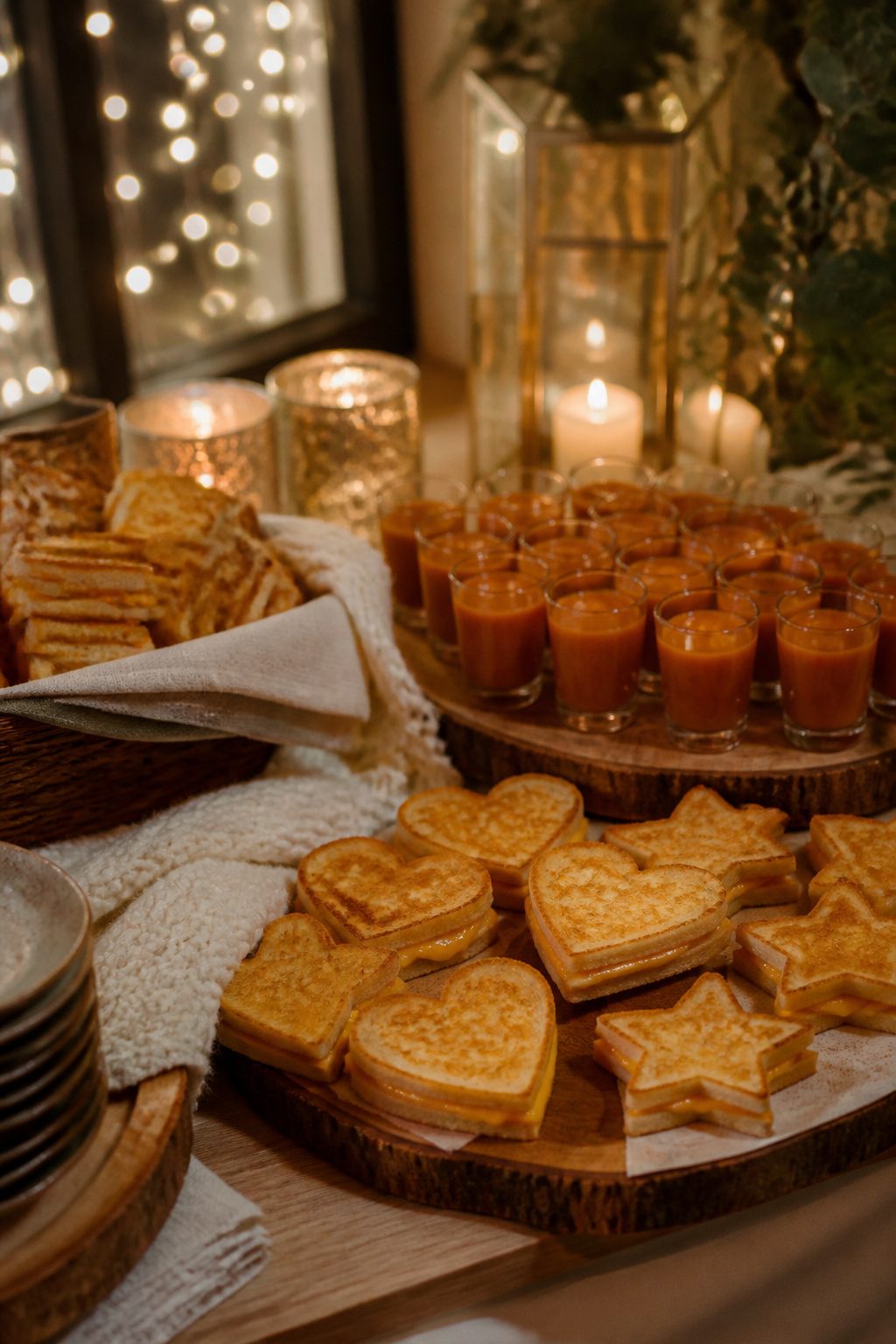
A grilled cheese and tomato soup station works best when you treat nostalgia as the starting point, not the whole idea. Sourdough and focaccia hold up better than standard white bread once you are serving at volume, and the swap from American singles to aged cheddar, brie, or gruyère is what makes this feel like a wedding rather than a rainy Tuesday. The tomato soup belongs in shooter cups, not bowls: guests dip the mini sandwiches without needing spoons, and the portion stays small enough that nobody fills up before the main course.
Fall or winter receptions are where this pays off. The warm, melted cheese and creamy bisque read as comfort against cold weather, and the timing matters because this station can feel heavy in July heat. One way to keep it from flattening into childhood memory is adding a sharp or salty counter: fig jam or prosciutto layered inside the sandwich wakes the palate back up.
10. Farm-to-Table Seasonal Station
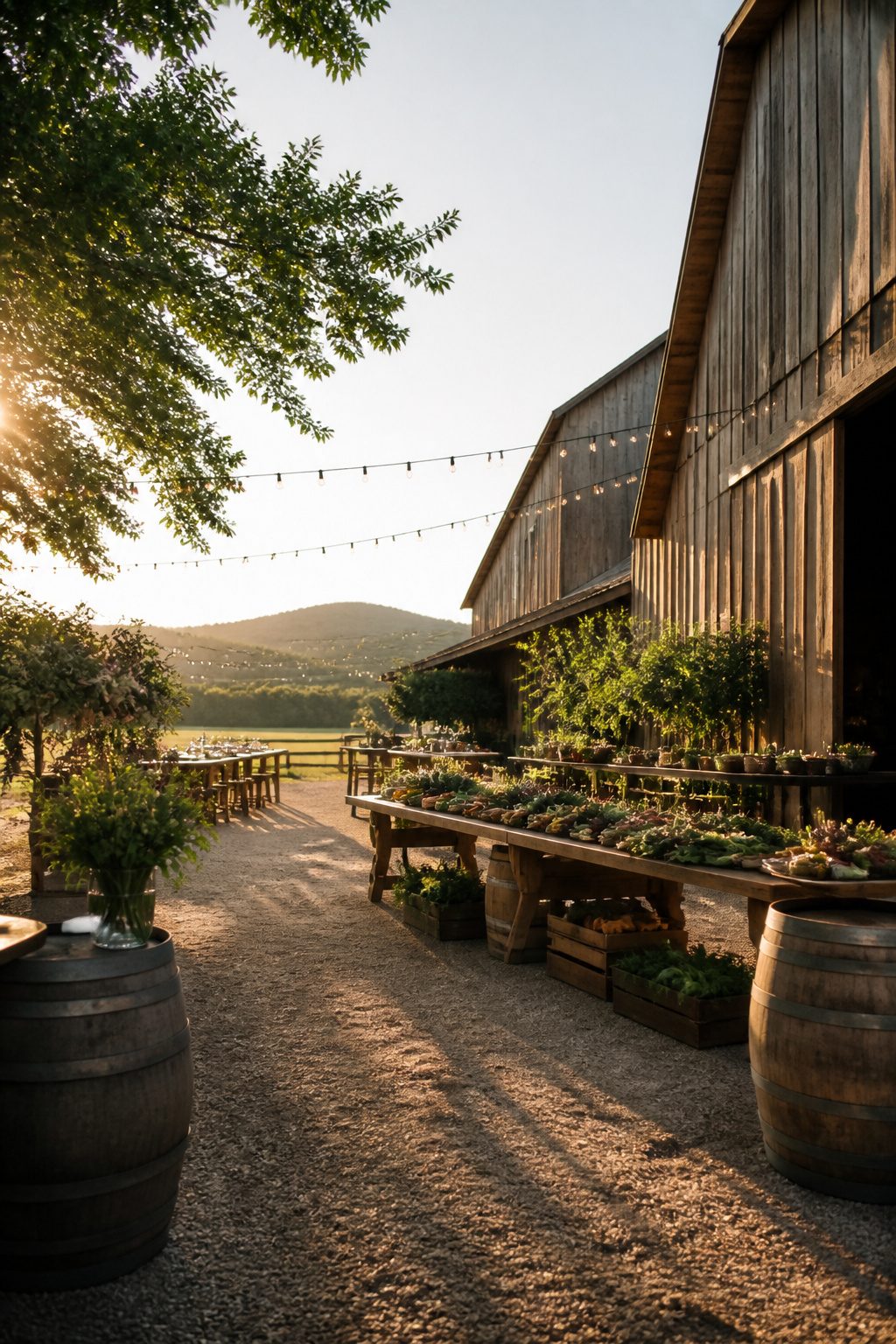
A farm-to-table station gives guests something they cannot get at a chain restaurant: the specific moment and place of your wedding, translated into what is actually ripe that week. I have seen this work best when the couple names the farms on small tent cards, so guests know the heirloom tomatoes came from thirty miles east, not a distribution warehouse.
Summer weddings in this region practically demand a build-your-own salad bar heavy on local tomatoes and peppers. Autumn receptions shift to roasted root vegetables, maybe with a warm grain base. The caterer handles the sourcing, but you need to lock in your date early: the best small farms allocate their harvests to restaurants and events months ahead, and a June wedding booking made in February gets the first pick of stone fruit.
The trade-off is flexibility. You cannot set your menu in stone at the tasting six months out because the farmer might have a bad melon year or an unexpected bumper crop of eggplant. If that unpredictability stresses you, this station fights you rather than serves you. For couples who treat the menu as part of the story they are telling, the slight gamble is exactly the point.
11. Coastal Seafood and Raw Bar
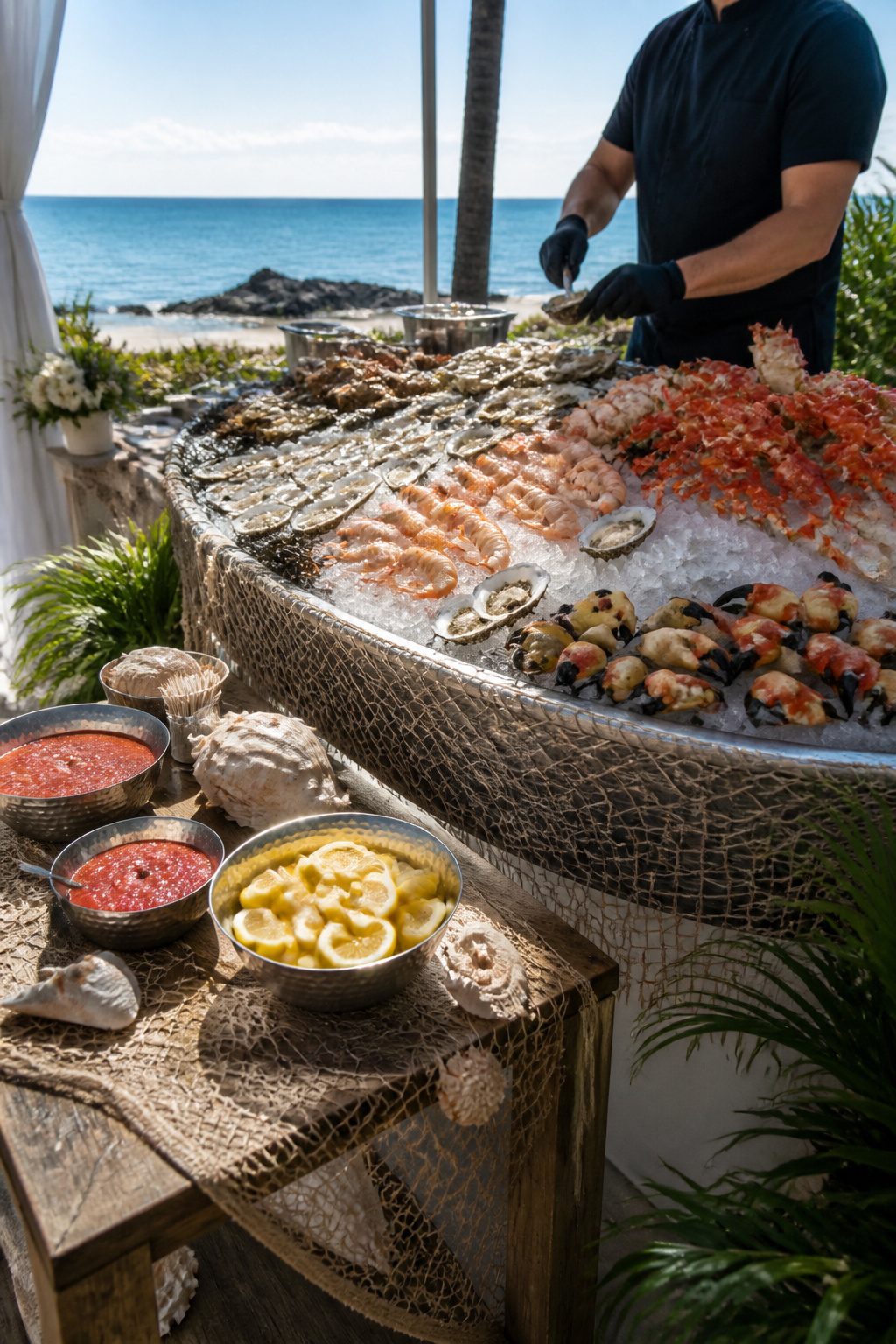
A raw bar over cracked ice is the kind of display guests photograph before they eat. Oysters on the half shell, jumbo shrimp cocktail, and crab claws arranged on shimmering ice draw people in faster than any passed appetizer can. The visual drama matters, but so does the temperature: seafood held above the ice line spoils in under two hours at room temperature, so the setup needs to stay chilled from the first guest through the last.
Coastal weddings and seafood-loving couples get the most from this station. Decorative fish netting, starfish, and seashells can read kitsch or elegant depending on restraint. One safer route is to let the ice do the work and keep the nautical touches to the serving trays or a single accent piece.
A mignonette bar with classic cocktail sauce, fresh lemon wedges, and oyster crackers turns the station interactive without adding labor. Guests build their own plate, which slows the line slightly but keeps the kitchen from plating individual portions. The tradeoff is worth it for the engagement, though you will need a staffer who knows shucking if you want oysters fresh rather than pre-opened.
12. Interactive Popcorn Station
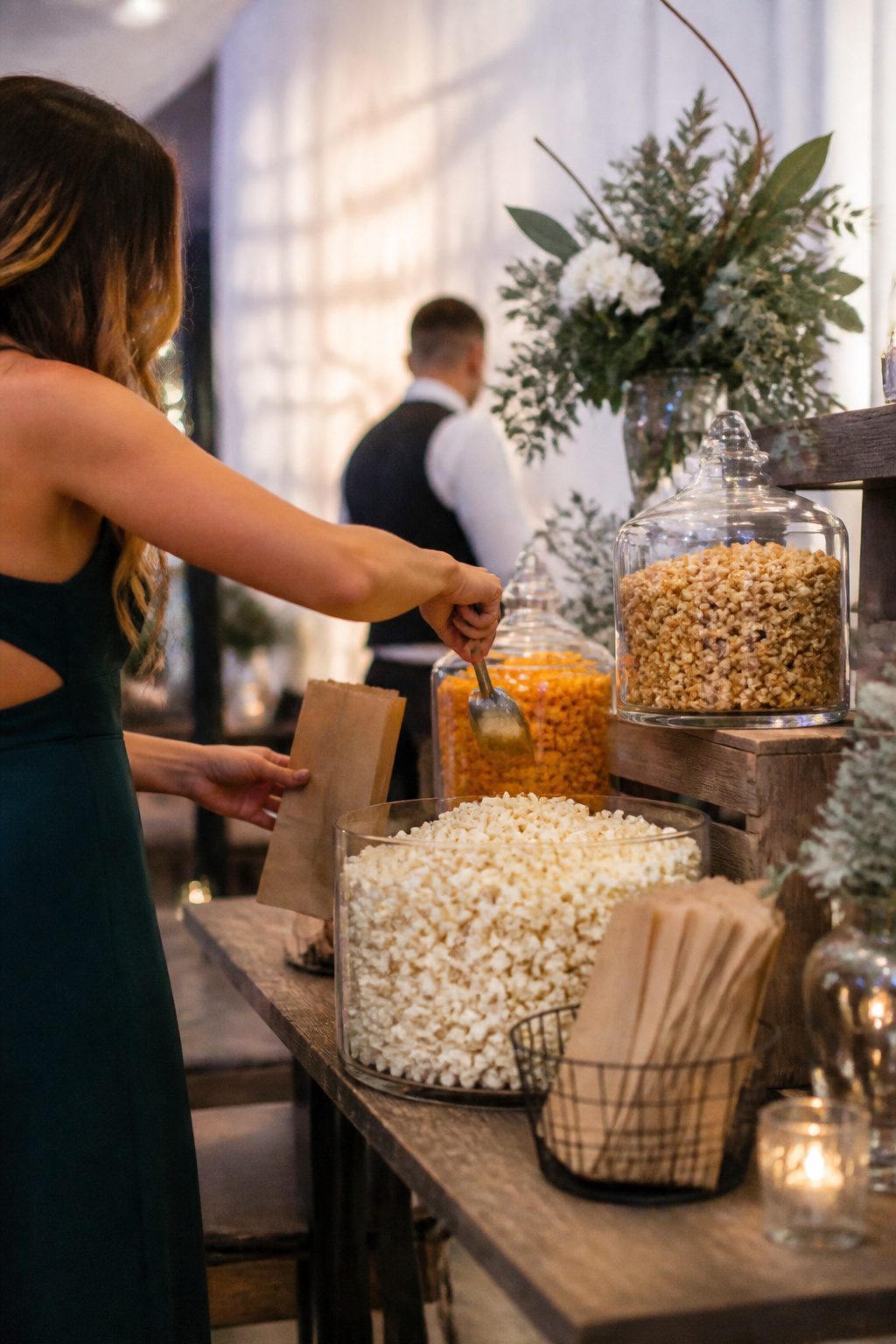
A popcorn station costs almost nothing to run and still gets people talking. I have seen guests cluster around the glass containers at the back of a tent, scooping fresh-popped corn into paper bags while the DJ sets up for the last set. Butter, caramel, and cheddar are the flavors that show up again and again, and most people end up mixing at least two.
The timing matters more than the setup. The same station works as a light snack before the ceremony starts or as fuel at midnight when the dinner has worn off. Scoops and small favor bags let guests portion their own, which keeps the line moving and the mess minimal. Gluten-free by nature is a quiet bonus for anyone tracking dietary restrictions.
Pre-packaged is an option if your venue insists on sealed food, though the open-barrel look is what sells the fun. Either way, this is the station I point couples toward when their budget is tight but the energy still needs to feel high.
13. Seasonal Pie and Tart Station
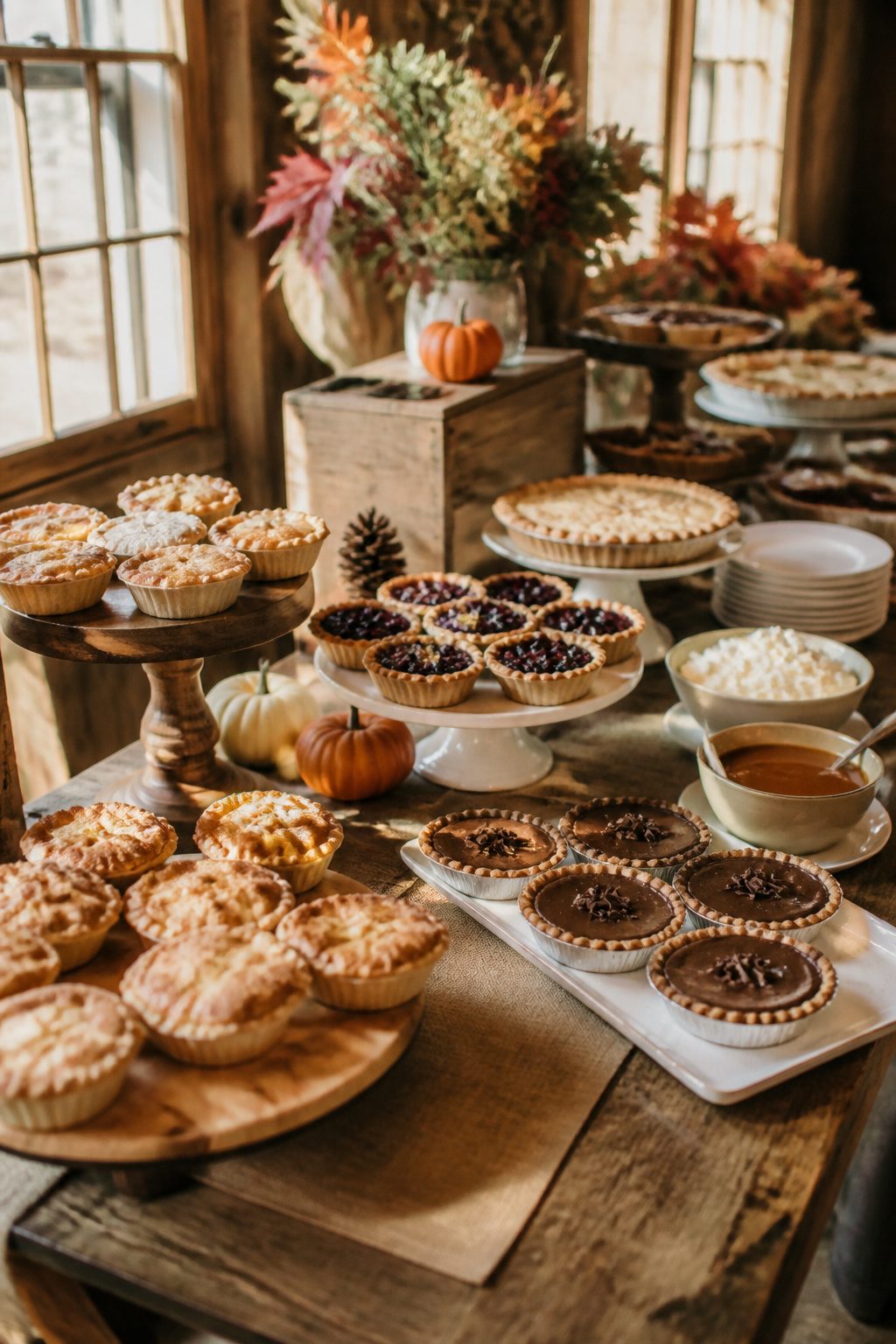
A pie station lands hardest when the fruit actually tastes like the month you are in. June peaches or September apples carry a local story that fondant flowers never will, and guests notice the difference between a tart that was trucked in and one that came from forty miles away.
The "top your own pie" setup with whipped cream, vanilla bean ice cream, and warm bourbon caramel sauce turns the dessert into something guests handle rather than receive. That hands-on part matters more than people predict; the same guest who forgets a cake flavor remembers building their own plate.
Mini apple pies, blueberry tarts, and chocolate silk pies stack the options without requiring anyone to commit to a full slice. One couple I planned for skipped the cake entirely and still had guests asking for to-go boxes at midnight, which is the real test of any wedding dessert.
Check whether your caterer can heat the pies and keep custard or ice cream at proper temperature through service. Cold caramel sauce is a mistake that reads as an afterthought, and warm ice cream defeats the point.
14. Soft Pretzel and Dip Station
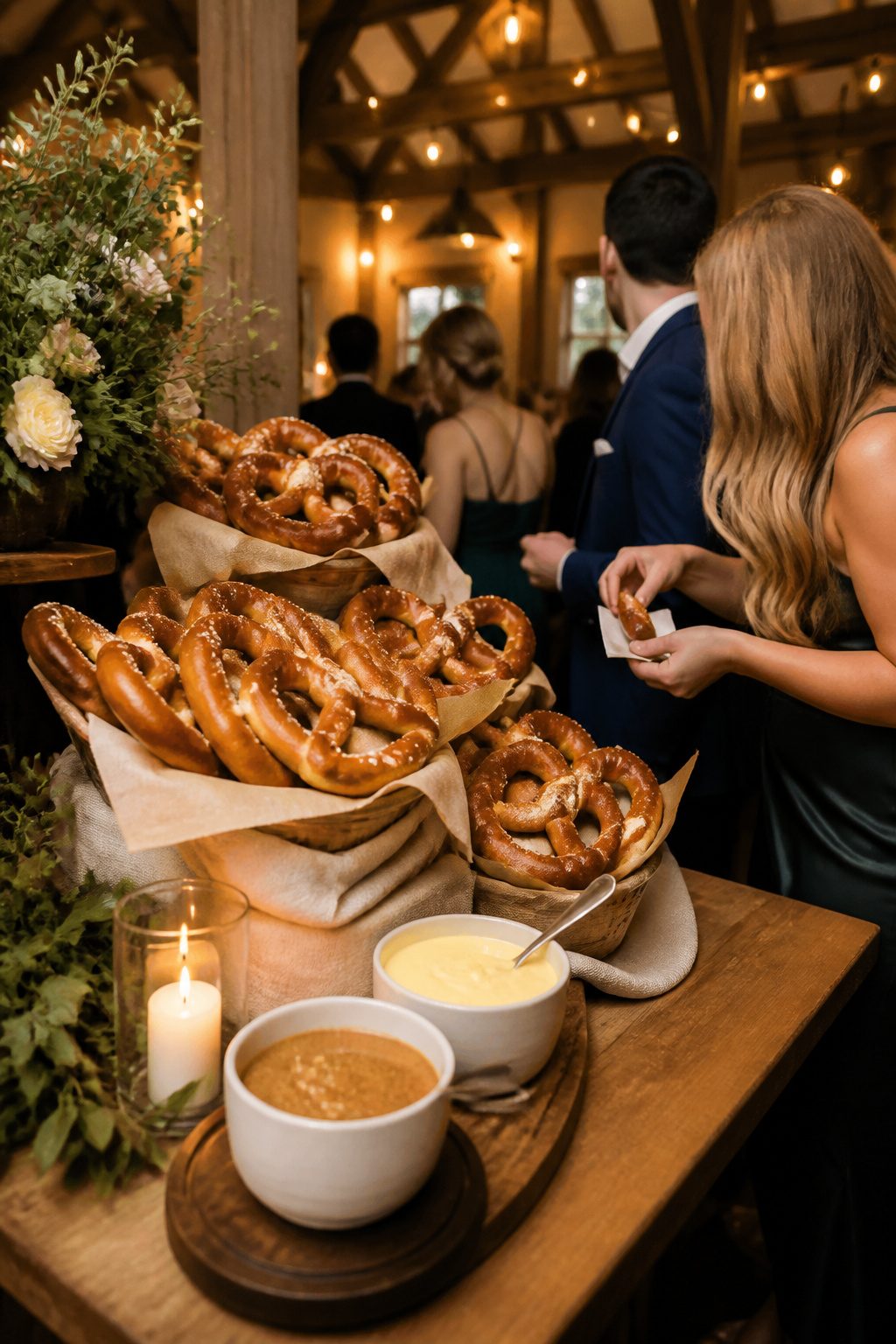
Warm pretzels pull guests toward the station faster than almost anything I have seen at cocktail hour. The smell does half the work. Beer cheese and spicy brown mustard are the dips that matter; the sources I trust keep those two front and center, and guests expect them. A sweet glaze, cinnamon sugar butter, or even chocolate ganache gives the people who skipped cake at dinner something to circle back for.
This started as a Pennsylvania and Midwest staple, but it travels anywhere because the setup is simple. A warming tray, parchment-lined baskets, and ramekins for sauce are all the hardware you need. I would skip the hard pretzels and sticks; they read as pantry snacks, not reception food, and they compete with the soft pretzels you paid for instead of complementing them. Pretzel bites work better than sticks, easier to grab and less crumb trail across a dance floor.
Late-night is where this station earns its keep. Guests who drank through dinner and danced through dessert will demolish warm carbs with queso at 10:30 pm. The budget stays modest because pretzel dough is cheap, the dips are mostly pantry, and you do not need staffed carving or live cooking. One attendant to refresh trays and wipe mustard drips is enough.
15. Charcuterie and Cheese Bar
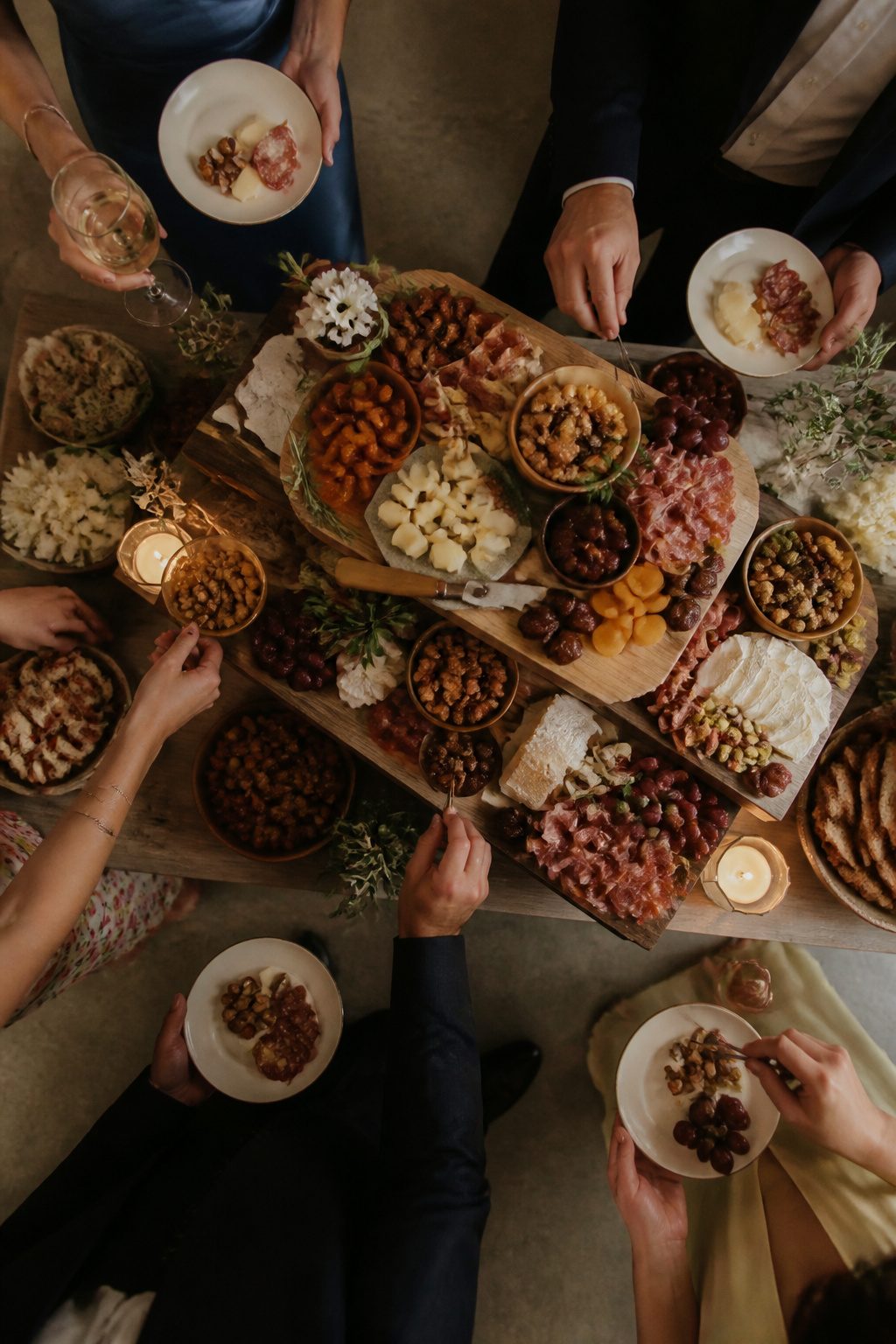
A charcuterie and cheese bar works at three moments in a reception without changing its setup. During cocktail hour, guests pick at artisan meats and local cheeses while the wedding party finishes photos. The same boards become a dinner supplement for guests who want something lighter than the main plate. After midnight, the station revives as a grazing spot for anyone still on the dance floor.
The display itself does the social work. Tiered wooden boards or a full grazing table stretched across linen give people a reason to move around and talk rather than queue in a line. Honeycomb, dried fruits, and candied nuts add color that photographs well, which matters more than it should in 2026.
The practical detail that saves this station is labeling for dietary limits. Gluten-free crackers and vegan cheese options belong on the same table, not off to the side where they read as an afterthought. Guests should graze without having to ask what they can touch.
For a budget under $10,000, this station earns its place by replacing passed apps entirely or shrinking the seated dinner. One planner I know runs it as the only food for a two-hour cocktail stretch, then brings out a single late-night protein. The charcuterie does not disappear; it sits there getting picked at until the last guest leaves.
16. Dessert Station
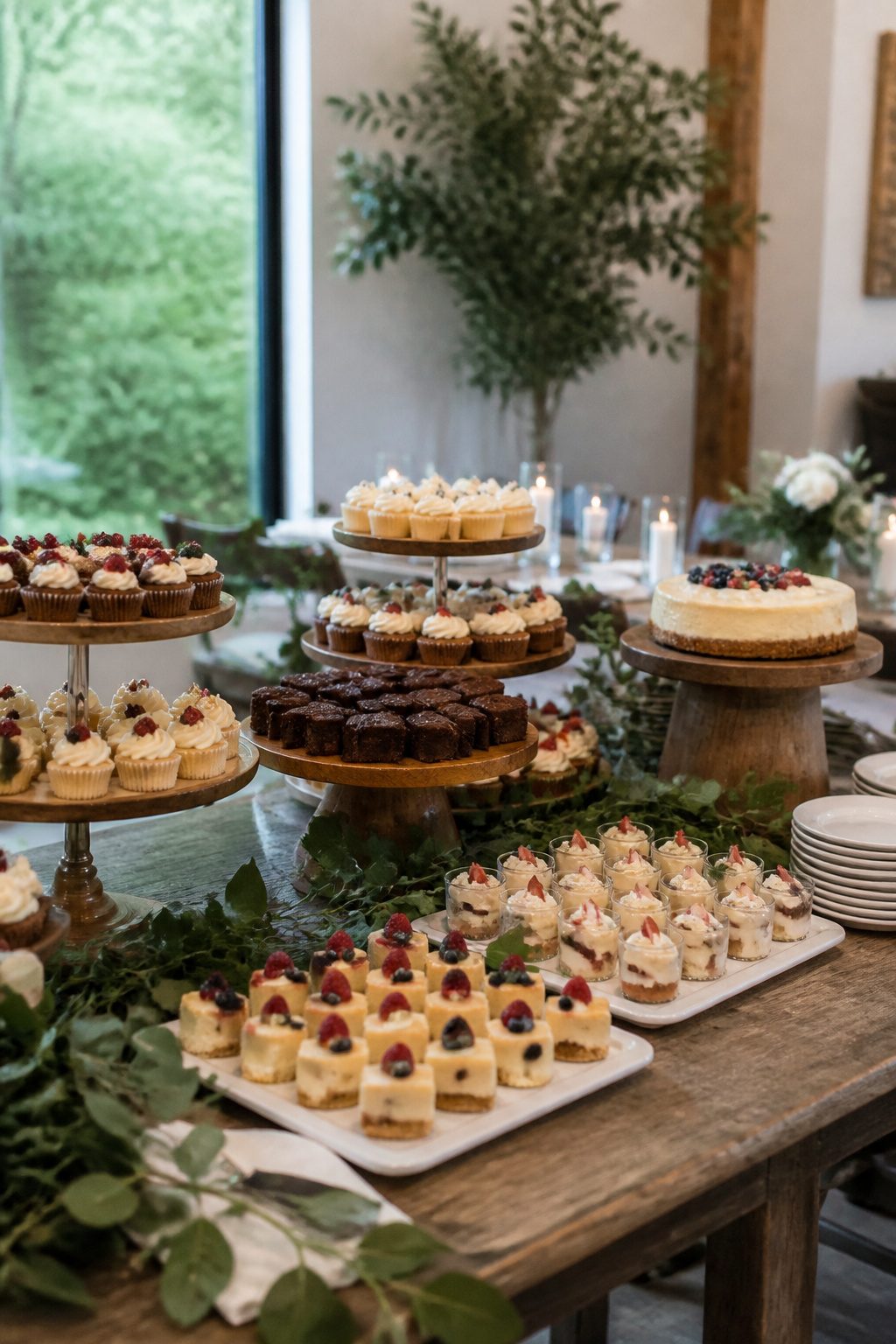
Cupcakes, brownies, and cheesecake can live alongside the cake instead of hiding behind it. A dessert station guests photograph most and remember longest is worth laying out so they circulate through it without a bottleneck. Bite-sized morsels next to regular-sized portions let guests graze or commit, and a mix of both keeps the line moving. Clear labels matter here more than at savory stations, since the guest with a gluten-free dessert bar in mind needs to spot it instantly without asking. A late-night dessert cart with churros and hot chocolate, like one couple used to close their outdoor festival-style reception, revives the room after hours of dancing. That same energy works earlier if you time the station to open right after the cake cutting, when guests are still seated and notice the shift.
17. Pizza Station
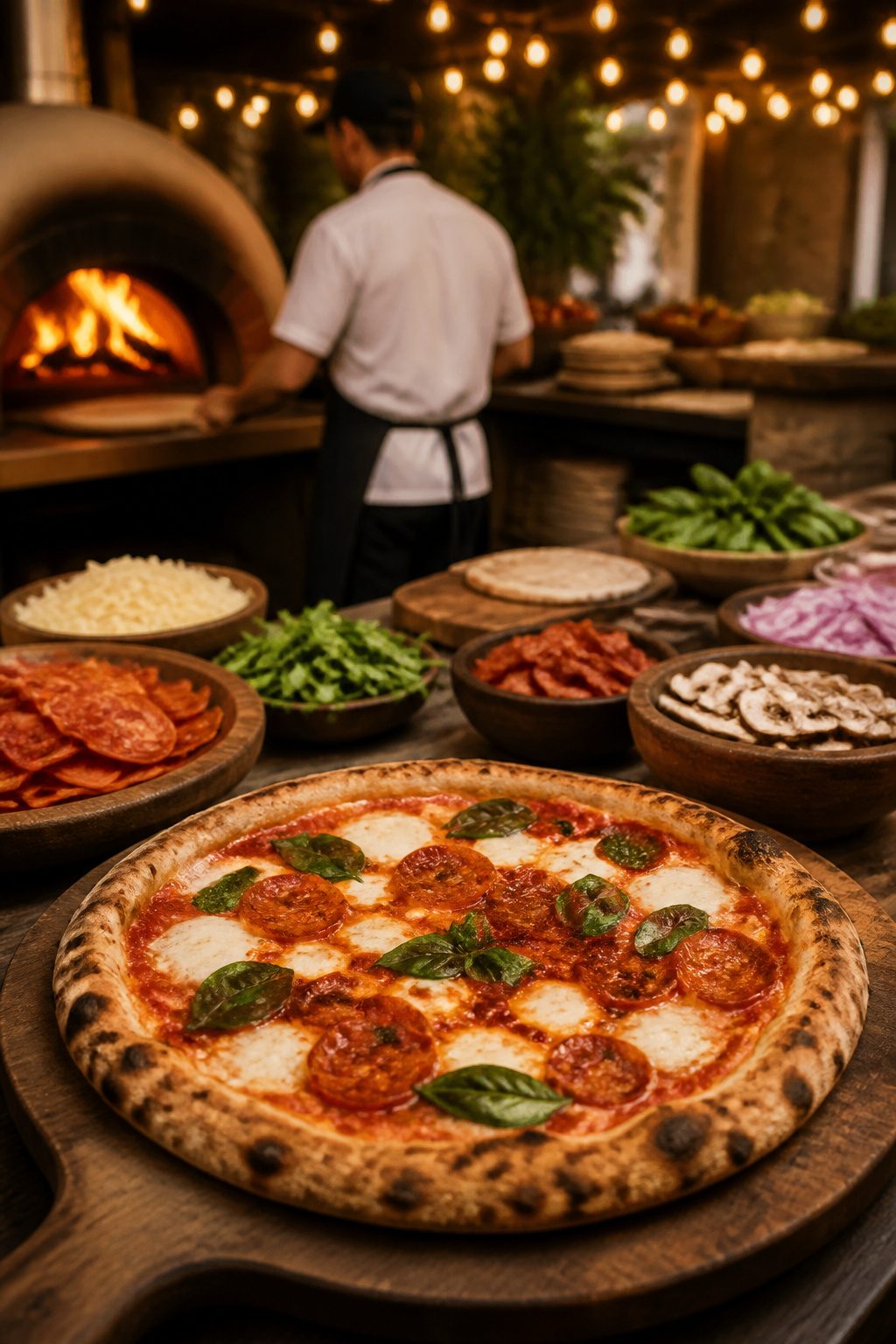
A pizza station solves the problem most couples hit around hour four of a reception: guests are dancing hard, the cake is hours away, and nobody wants a full plate. The most popular window for this kind of food is actually 11:00 PM, when passed trays feel skimpy and a hot slice lands exactly right.
The options run from elegant flatbreads on marble slabs to a wood-fired pizza truck pulling into the driveway for late-night service. Trucks need a paved access point and a venue that allows outside vendors, so that question belongs on your walk-through checklist, not the week before. Catered stations inside give you tighter control over crust specs and dietary splits, which matters when you have gluten-free or vegan guests in numbers too large to handle as one-offs.
Pizza feeds large groups fast. A single oven turns out slices quicker than a carving station manages plates, and the waste is lower because people take what they will actually finish. The mistake I see is treating the topping list like a personality test: three or four solid choices beats a dozen that sit half-eaten.
18. Donut Bar
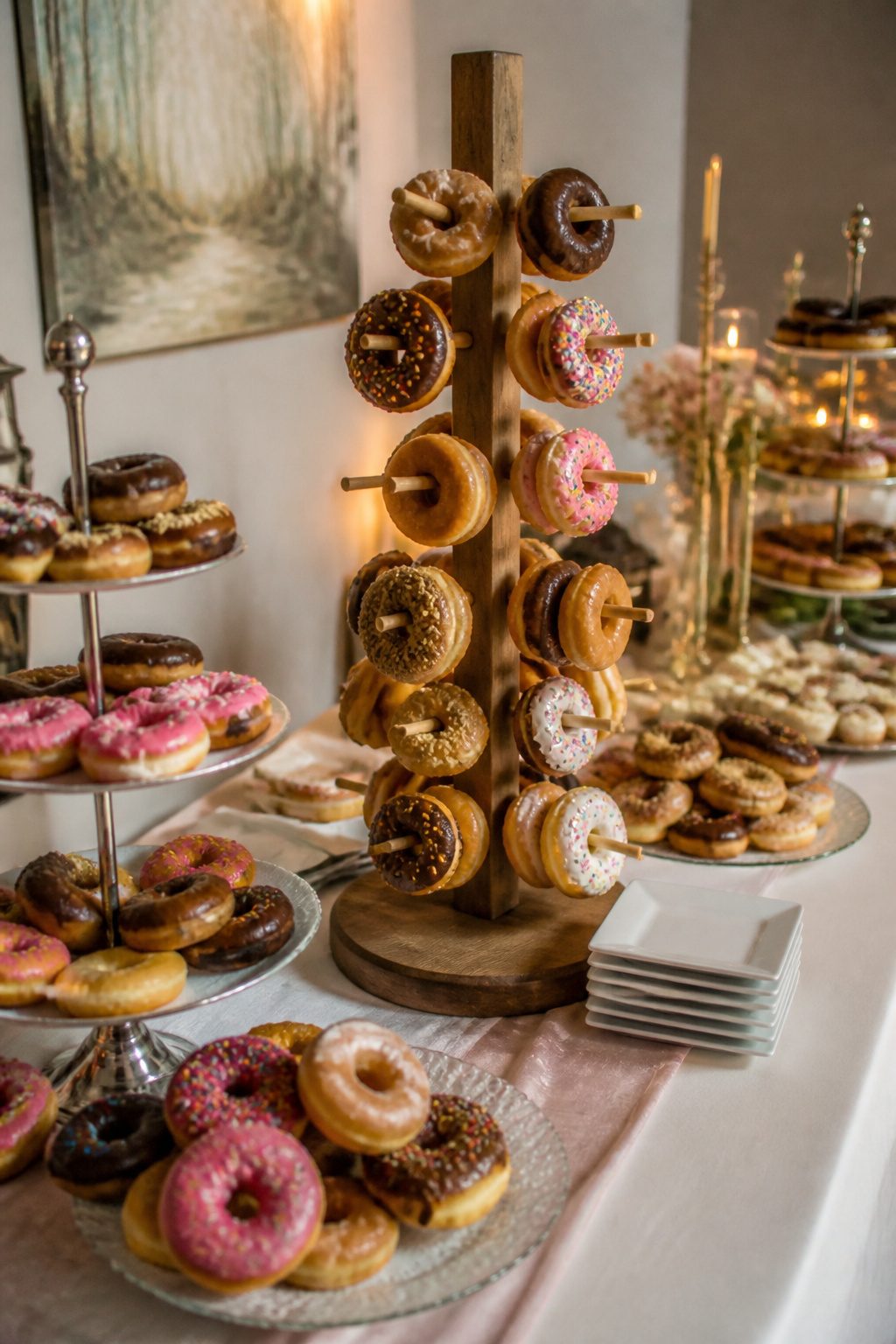
A donut bar lands with almost any crowd, and the setup is simpler than it looks. Stacks of glazed rings on multi-tiered platters or a wooden dowel tower give guests something to grab without waiting on a server. I have seen the dowel stack work as a centerpiece that doubles as dessert, and the whole display costs less than a modest tiered cake.
The real flexibility is in how you serve. A dairy-free, gluten-free, or vegan recipe keeps the station open to guests with dietary restrictions, and the glazes, sprinkles, and dipping sauces let people build their own plate. For a morning-after brunch or a late-night coffee companion, the same bar feels like a second event rather than leftovers.
If your budget sits under $10K, this is one of the easier stations to DIY. Buy from a local shop the morning of, arrange on borrowed stands, and skip the frosting labor entirely. The tradeoff is timing: donuts stale fast, so the display goes up close to service and empties just as quickly, which is not a bad problem to have.
19. S’mores Bar
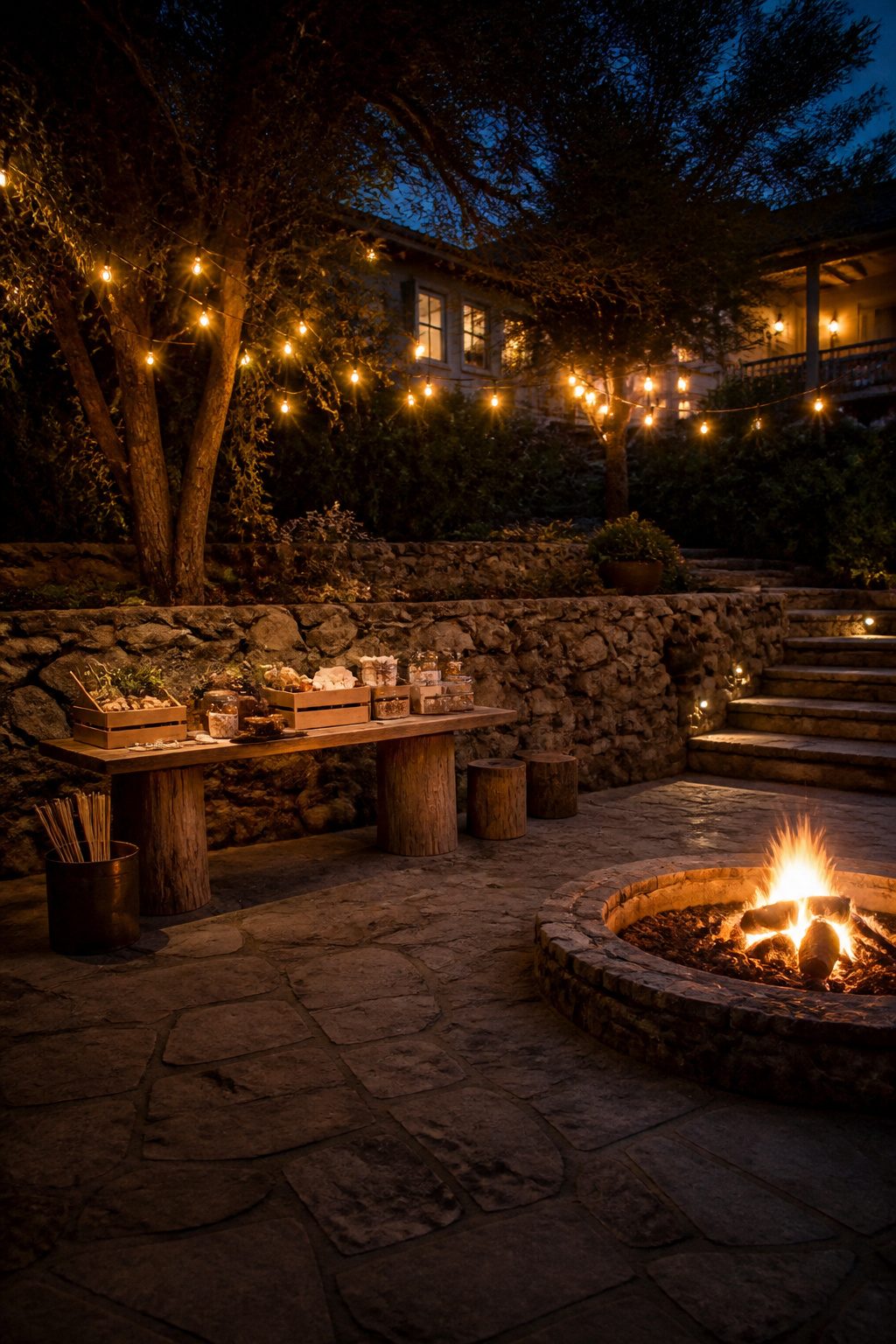
A s’mores bar needs live flame or a safe stand-in to work at all. Guests come for the toasting, not just the stack of graham crackers and chocolate. I’ve watched the line form around the fire pit at outdoor receptions while the plated dessert sits untouched on tables; the draw is the stick in hand and the browning marshmallow, not the finished bite.
Outdoor or rustic venues with an existing fire pit make this easy. For venues that won’t allow open flame, Sterno heat cans do the job with skewers or roasting sticks held close enough to warm and brown. The setup stays the same either way: graham crackers, chocolate bars, marshmallows, and something to toast them on. Peanut butter cups, dark chocolate, or handmade gourmet marshmallows stretch the idea beyond the campfire standard without complicating the station.
The safety piece is real and non-negotiable. Sterno burns steady and low, but any live flame near a tulle skirt or an open bar means someone has to mind the station. Assign that person, or the s’mores bar becomes the thing guests remember for the wrong reason.
20. Breakfast for Dinner Station
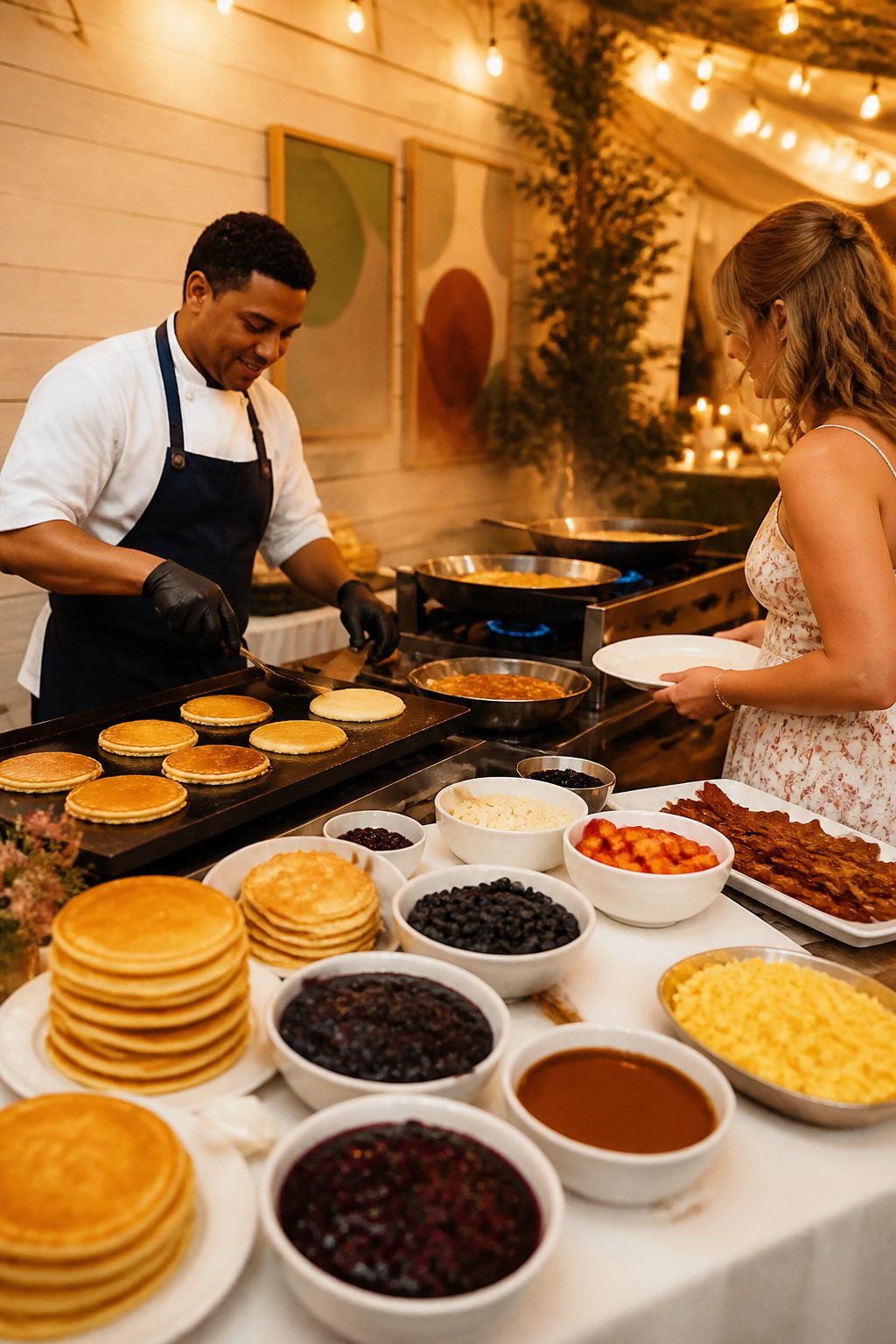
A guest who walked into a reception expecting salmon will blink twice at a pancake flipper working a griddle next to the bar, and that blink is exactly the point. Breakfast for dinner only works if you commit to the absurdity: short stacks with blueberry jam and maple syrup, omelets built to order by a station cook, biscuits under Cajun hollandaise or a porketta-and-poached-egg stack. Bacon flights make it sharable; candied strips and chocolate-dipped options let guests graze while they dance. Mimosas pull the whole thing toward brunch without apologizing for the clock.
This station shines when your timeline already bends the rules. Evening ceremony, nontraditional couple, guests who treat brunch as a personality trait: those are your people. The risk is lukewarm execution. A hotel coffee urn and a chafing dish of scrambled eggs reads sad, not playful. You need live cooking, visible flames, the smell of butter hitting a hot surface. If your venue lacks the exhaust or the square footage for a griddle station, the idea dies there. Budget-wise, eggs and flour cost less than beef tenderloin, but staffing a cook per omelet pan adds labor fast. Run the math against a simpler late-night option; sometimes a passed chicken-and-waffle bite at ten o’clock lands harder than a full dinner disguise.
21. Liquid Nitrogen Ice Cream Station
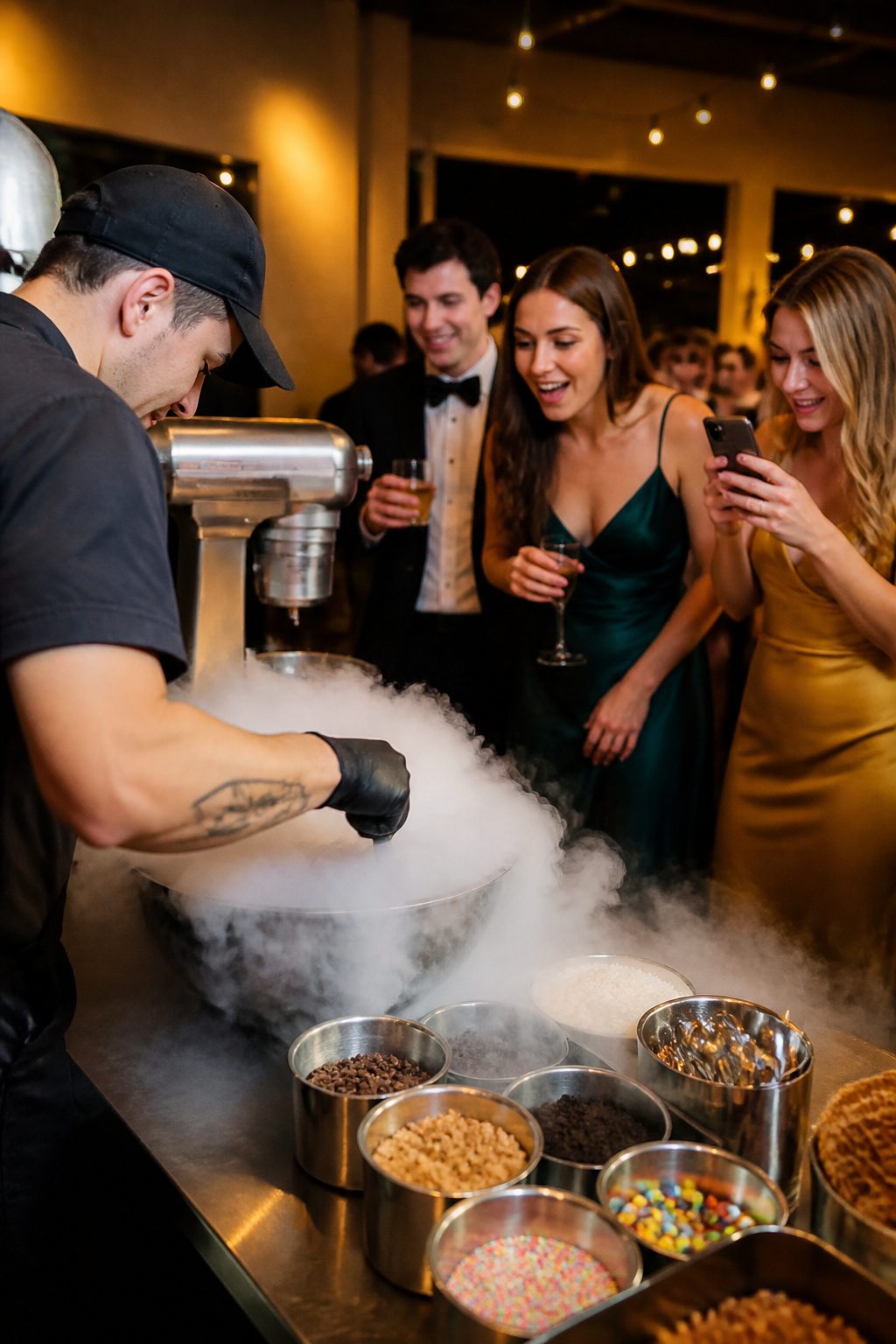
A cloud of white vapor rolls across the floor while a chef stirs a stainless steel bowl, and guests lean in to watch ice cream freeze in under a minute. Liquid nitrogen drops the temperature so fast that ice crystals stay microscopic, giving the finished dessert a texture you cannot replicate with conventional machines. The vapor itself becomes the show; it spills over the table edge and pools around shoes, turning the station into a brief science demonstration that happens to produce dessert.
You pay for that theater. Caterers with the equipment and trained staff charge a premium over standard dessert stations, and the cost climbs with guest count since each bowl is made to order. The tradeoff is memory: guests who have seen this once bring it up years later at other weddings, while the standard cake table rarely gets mentioned.
One practical note from the catering side: not every kitchen carries nitrogen or staff cleared to handle it, so availability varies sharply by region. If your venue’s preferred caterer does not offer it, you are looking at bringing in an outside vendor with their own insurance requirements and setup needs. The station works best when the caterer already owns the rig and has run it at events before.
22. Takeout Station
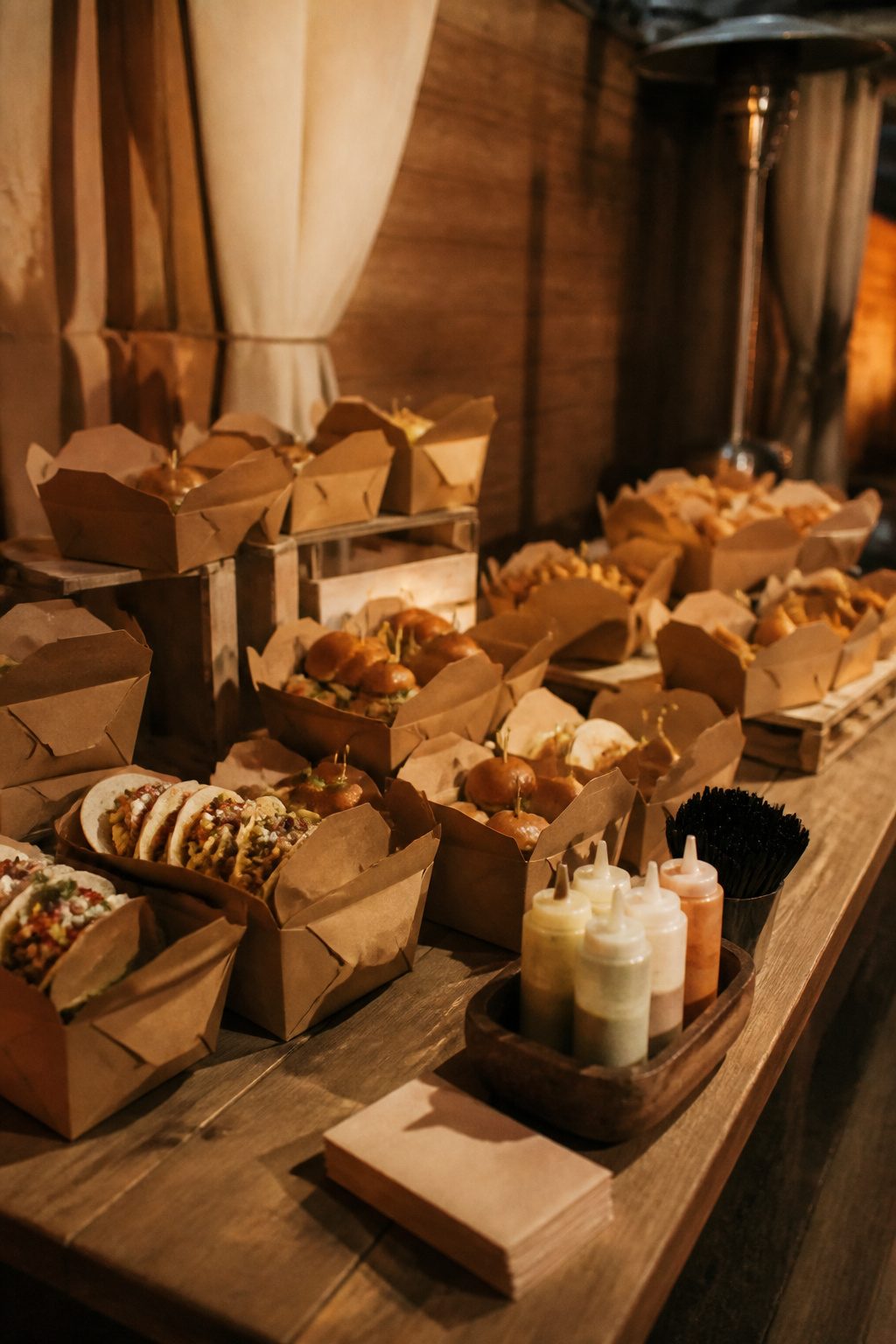
The clock slides past eleven and the dance floor is still full, which means your guests have burned through dinner hours ago. A takeout station lands right in that window when hunger hits but the party is not stopping. I have seen sliders, fries, and mini tacos packed into branded bags or boxes do the heavy lifting here, and the format matters as much as the food. The bag or box needs to close so a guest can tuck it under an arm, grab an Uber, and eat it in a hotel room or on the ride home without wearing it.
The trucks and carts that serve late-night food, wood-fired pizza or a fry bar with paper cones and a dozen dipping sauces, often run into venue rules. Some hotels ban outside vendors entirely. If your venue allows them, the paved access for service vehicles becomes the detail that saves your timeline. When trucks are not an option, a self-contained takeout station set up inside, with prepped food kept hot in chafing dishes and handed over in closed packaging, keeps the same 11:00 PM energy without the parking logistics.
A French fry bar works at a takeout station if you skip the cone and use a box that traps steam instead. The sauces, truffle aioli to spicy ketchup to beer cheese, travel better in sealed cups nested inside. The mistake I watch couples make is treating the takeout station as an afterthought, grabbing whatever containers the caterer has on hand. Branded packaging, even a simple stamp or sticker with your names, turns leftover catering into a remembered favor. It also signals that this food is meant to leave the room, which keeps the dance floor clear of wandering plates.
23. Coffee Bar
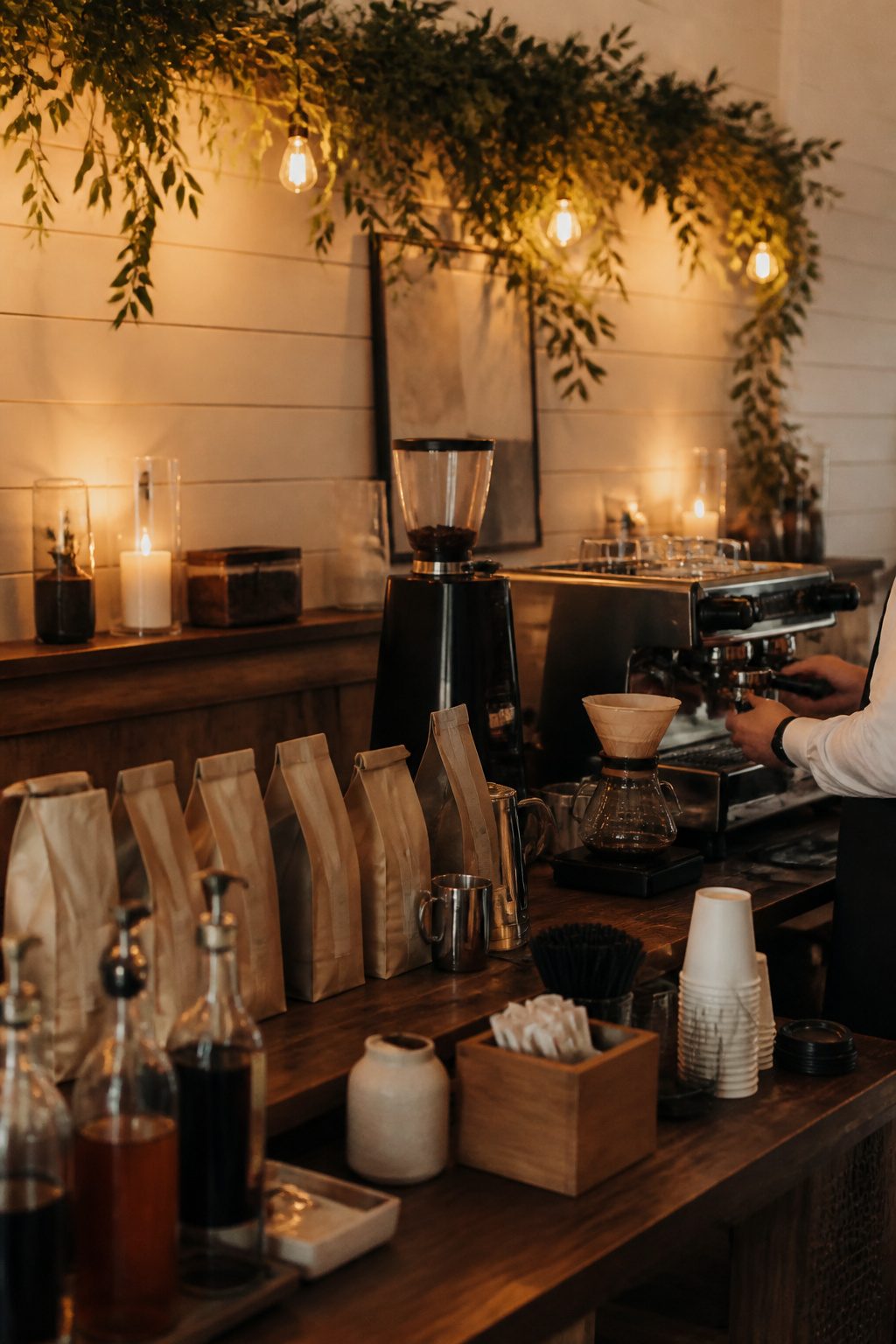
A coffee bar can pull double duty at a reception, either parked beside the dessert table for an after-dinner pairing or wheeled out at 11:00 PM when the dance floor starts flagging. Late night is when guests actually use it, not just admire it. The setup ranges from simple, a couple of insulated urns with cream and sugar, to a staffed bar pulling espresso shots and pour-overs with flavored syrups. A local roaster partnership adds regional credibility without extra decoration; their bags on display do the explaining. Skip the Keurig if you want anyone to remember it. The same couples who budget for a mac and cheese bar or churro cart often treat coffee as an afterthought, but the cost is modest against the payoff in guest stamina. Position it where the line won’t block traffic, and staff it if you’re doing anything more involved than self-serve urns.
24. Build-Your-Own Salad Station
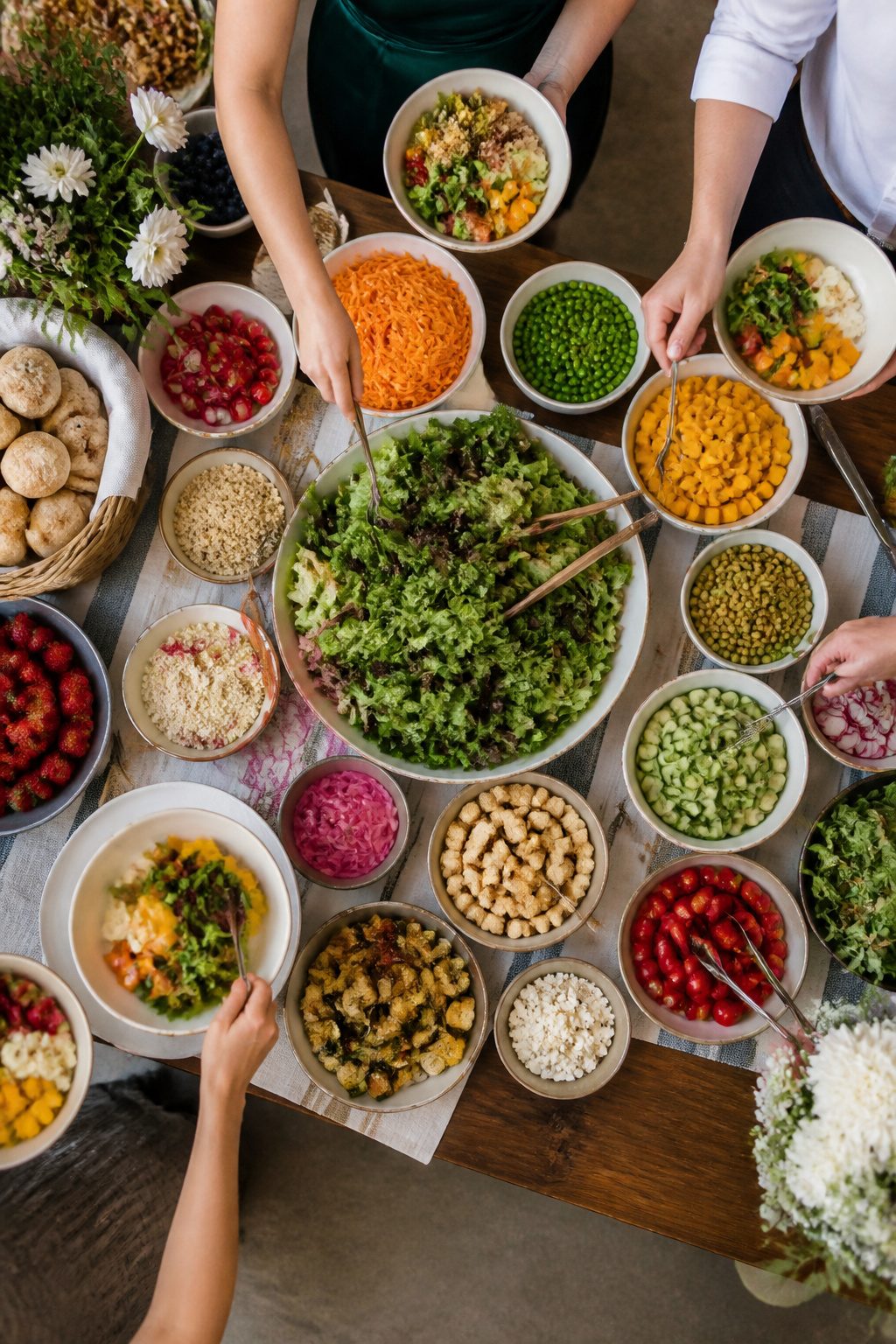
A build-your-own salad station gives guests full control over their plate, which matters when your list includes vegetarians, vegans, and anyone avoiding gluten or dairy. I set out greens and grains as the base, then lay out proteins and a minimum of three house-made dressings so no one is stuck with the one option they can’t eat.
The format that works best is letting guests build in layers: greens first, toppings second, protein third, dressing last. That order keeps the bowl from turning into a soggy pile before they sit down. Label every dressing and every topping that contains common allergens. A guest with a nut allergy should not have to guess whether those candied walnuts are in a separate bowl or sprinkled over everything.
The farm-to-table version of this station, built around local greens and whatever roasted vegetables are in season, tends to cost less than a full plated salad course because the kitchen is not assembling individual plates. The trade-off is table space. You need room for the components to sit without crowding, which means either a long station or fewer other stations nearby.
How Many Stations for Your Guest Count
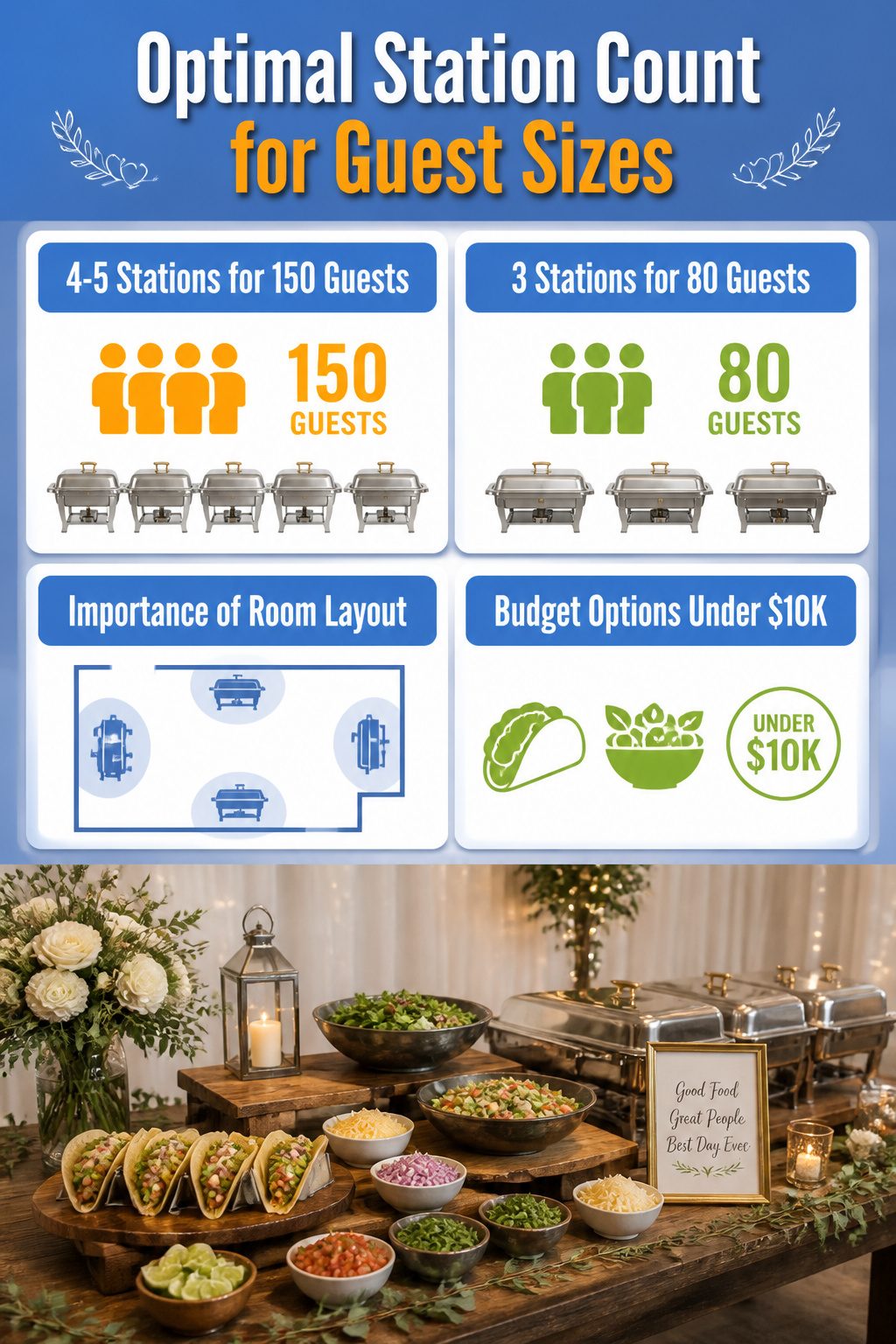
Four to five stations handle a crowd of 150 without choking the floor, and that ratio scales down better than most couples guess. A guest list of 80 feels generous with three solid stations; the same three for two hundred guests turns dinner into a queue.
The room layout matters as much as the headcount. Cluster every station in one corner and you have created a funnel, no matter how many carving boards you set out. Spread them to the unique zones of the space, a progressive flow, and guests drift through options instead of stacking up.
Smaller weddings gain something larger ones lose: time. Fewer people at each station means the pasta cook remembers your aunt’s gluten question, and the taco line does not outlast the first dance. For a tight budget under that $10K mark, three well-placed stations with customizable dishes, a taco bar or build-your-own salad station, can cover dietary needs without the cost of plated individual meals.
The sweet spot is variety that matches your floor plan, not your Pinterest board. Five stations sound impressive until your 90 guests wander past half-empty tables and wonder where everyone went.
Mixing Stations With Plated Dinner
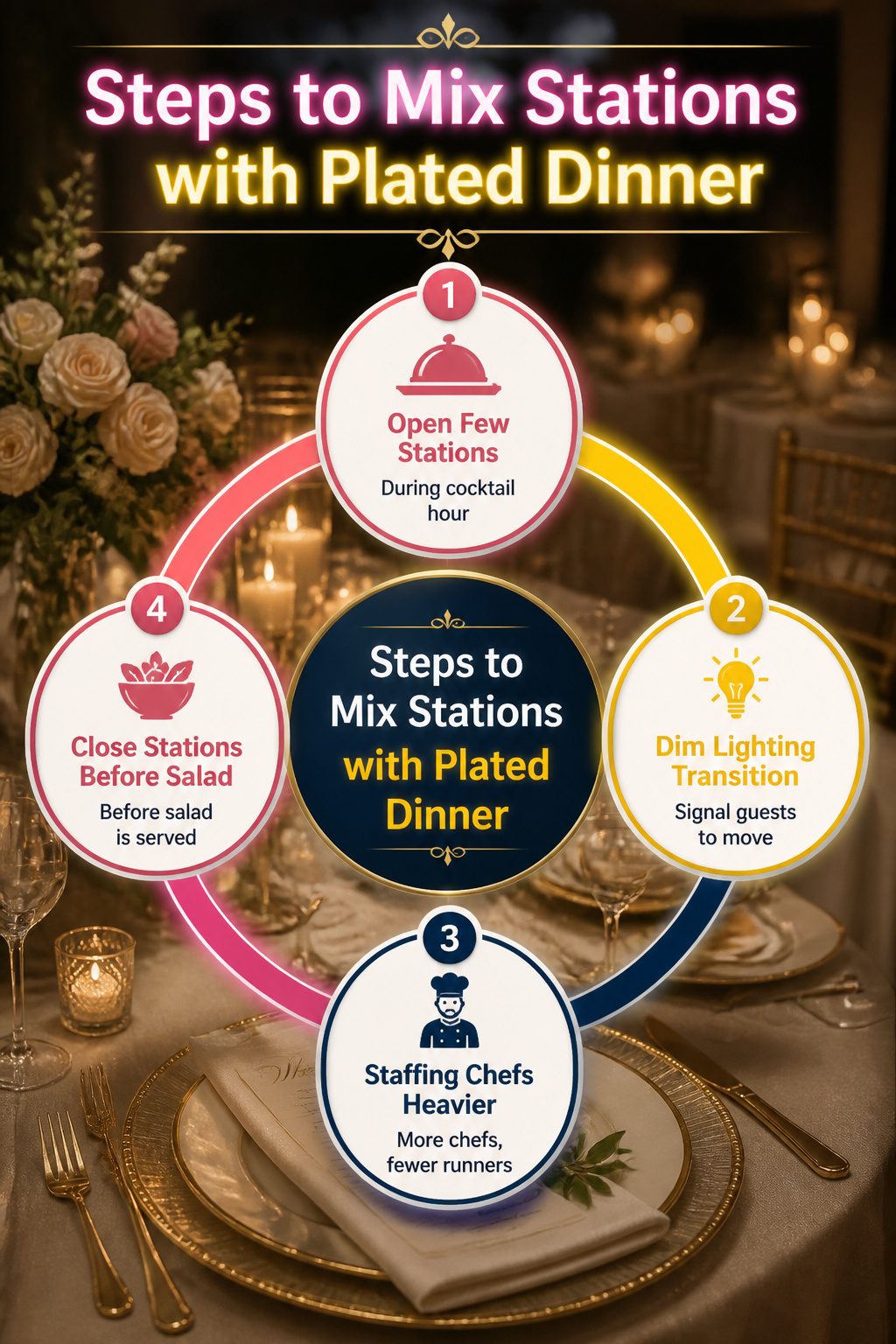
Opening fewer stations during cocktail hour keeps guests from wandering through too many choices before the main event even starts. Two or three interactive setups, something like a raw bar or hand-rolled sushi, give people something to do with their hands and talk about without spoiling their appetite for the plated dinner to come.
The signal to move is what makes or breaks the flow. I dim the station lighting and have staff shift from passing apps to pouring wine at seated places. Guests figure it out without anyone herding them.
Staffing runs heavier on chefs for those stations, lighter on runners once plates hit the table. The cost lands comparable to a full buffet, sometimes a touch higher, because guests take fresh plates each trip and tend to sample more when they serve themselves.
For a 150-person reception, four to five different stations would be standard if they carried the whole meal. Mixed with plated dinner, you cut that to two or three and run them only while cocktails last. Close them before the salad plate arrives, or keep one dessert station dark until after cake. That late-night pizza or pretzel setup comes back out when dancing starts, timed for the crowd that needs fuel at ten o’clock.
Labeling for Allergies and Dietary Needs
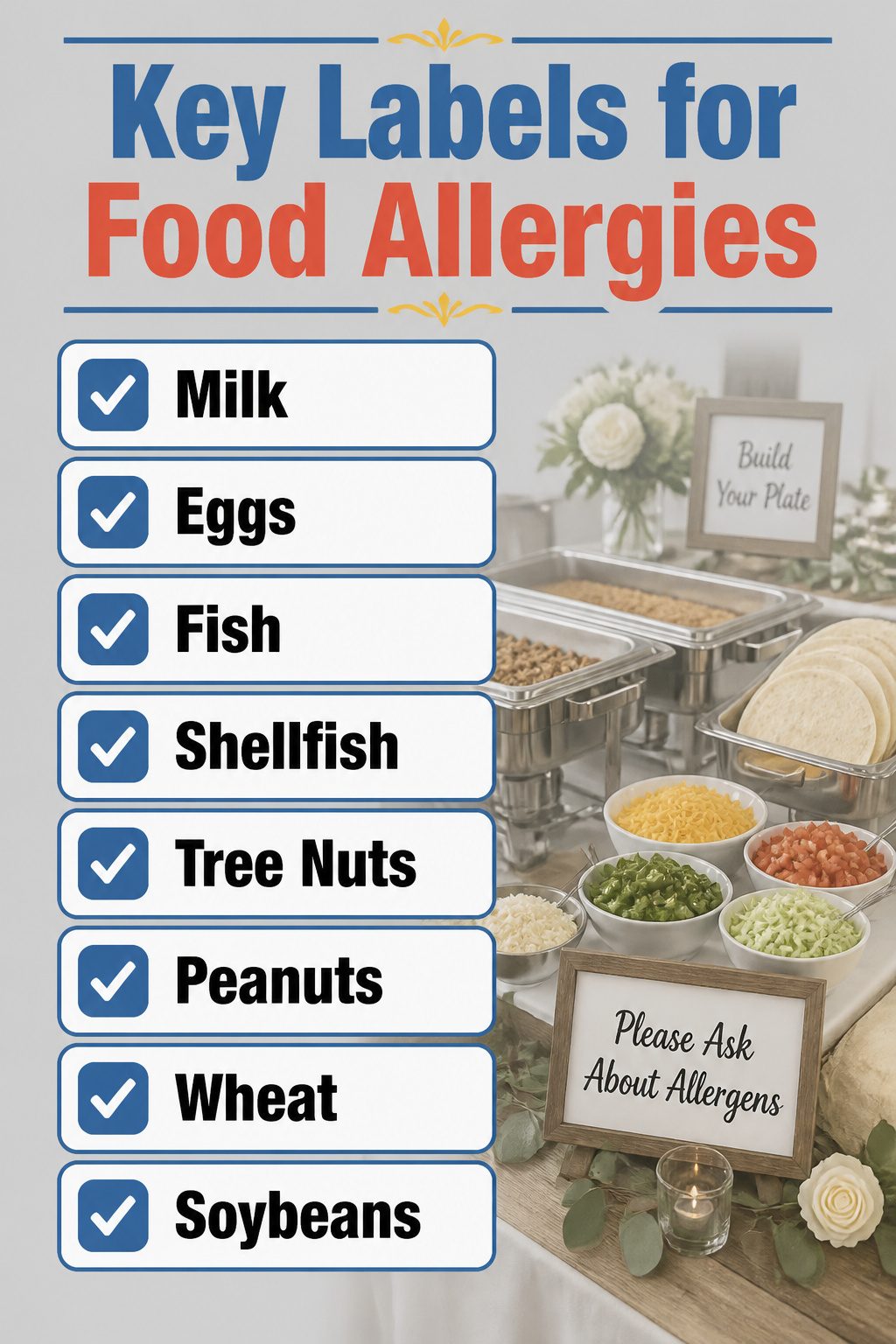
Labels at a food station are only useful if they say what a guest actually needs to know. List the eight major allergens recognized by the FDA: milk, eggs, fish, shellfish, tree nuts, peanuts, wheat, and soybeans. A card that reads "contains dairy" helps; one that only says "homemade" does not.
The card cannot cover every scenario. Staff stationed nearby should know preparation details that labels omit, whether cross-contact happened on shared equipment or if a dish can be plated separately. I have seen stations where a server could answer in detail and others where no one was assigned, leaving guests to guess. The difference is not the label; it is the person standing behind it.
Station formats already suit diverse diets because guests build their own plates. A taco bar or pasta station lets someone skip the wheat tortilla or cheese without needing a special meal prepared in advance. The label simply makes that choice informed rather than risky.
Station Budget Compared to Buffet
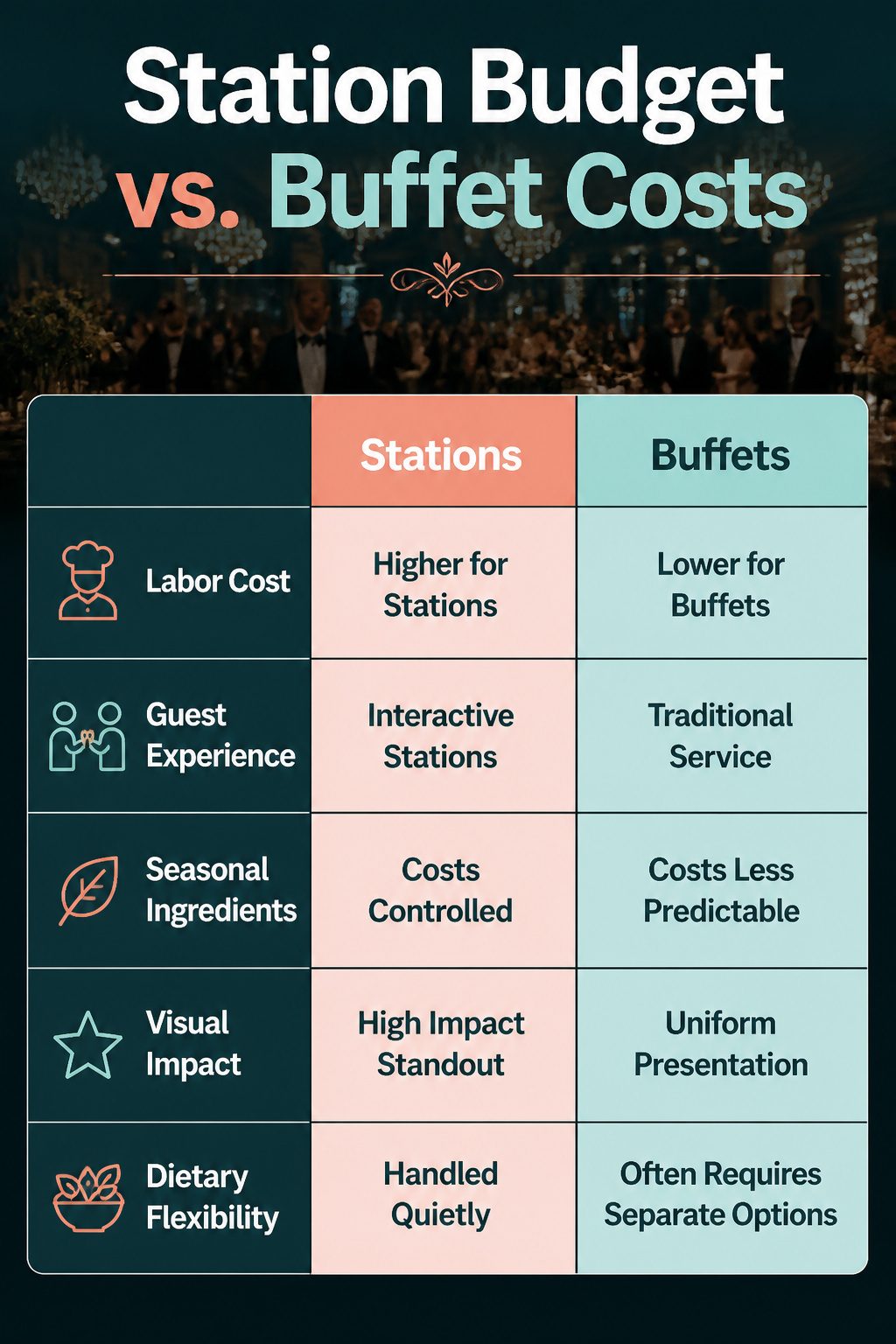
Chef-attended stations do run higher on labor, but the total bill often lands in the same neighborhood as a buffet because the menu itself bends to fit your number. Self-service options drop that staffing line to nearly nothing, and seasonal ingredients keep food costs from ballooning. What shifts the budget is where you choose to spend: three well-chosen stations beat ten scattered ones every time, and a single standout, like a live carving or pasta tossed in a parmesan wheel, carries the visual weight without requiring every station to match it.
The real difference is guest experience, not price tag. Stations spread people through the room, cut the chafing-dish aesthetic, and handle dietary needs quietly, without the separate "allergy plate" routine. A station layout can feel high-end without being high-cost if you splurge on one interactive moment and keep the others simple. The mistake I see couples make is assuming every station needs equal drama. One chef, one flame, one photo opportunity: the rest can be bread, cheese, and a good salad that guests assemble themselves.
Late-Night Snack Stations
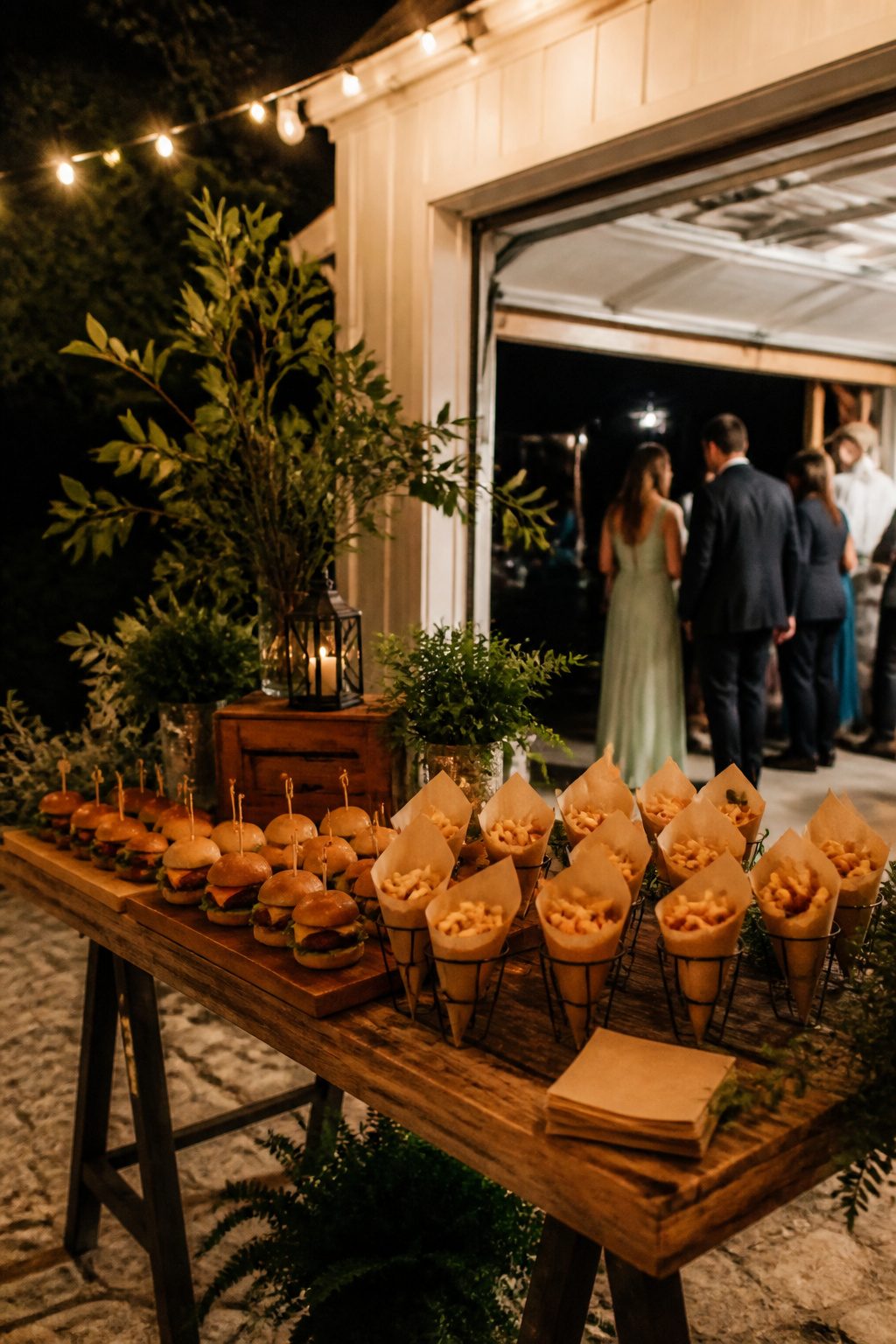
The 11 PM mark is when most guests hit a wall. After three hours of dancing, blood sugar drops and the older relatives start eyeing the exits. A late snack station resets the room. Pizza trucks pull right onto the driveway, the oven still hot from dinner service if you planned it that way. Sliders work the same trick, set up in a garage with the doors rolled open so people step out for air, eat, and come back in louder than they left.
Fries in paper cones with truffle aioli or spicy ketchup are the cheapest energy boost per guest. A churro cart does the same sweetness work as a full dessert table for a fraction of the setup. The key is timing: bring it out too early and people graze instead of dancing, too late and you have a line of tired guests waiting for one more reason to stay. Bring the station live around 10:30 PM, after the cake cut but before the older crowd thins. The stations that transition best are the ones that ran at cocktail hour and can reboot fast: the same pizza oven, the same fry oil, the same staff already on your clock.
Frequently Asked Questions
How many stations should we have for 150 guests?
Plan four to five different stations for a full meal with 150 guests. That count keeps the room moving and gives enough variety that lines do not bottleneck at any single table. The article’s stations range from poke bowls to late-night pizza, so spreading them across the reception rather than stacking them all at once also helps control crowd flow.
Can we mix food stations with a traditional plated dinner?
Yes, and many couples do exactly that. Interactive stations work well during cocktail hour, then the meal shifts to a plated main course. You can also reverse it, stations for dessert after a seated dinner, or keep stations running late-night when the dance floor is open.
How do you handle food allergies at interactive stations?
Label every ingredient clearly at the station itself. The article calls this out repeatedly: guests with shellfish allergies or gluten concerns need to move through the line without hunting for a server. A separate table or hidden menu reads as an afterthought; the label belongs on the display where the food sits.
Is a station-based layout more expensive than a buffet?
Not necessarily. Chef-attended stations can add cost, but the flexibility of building your own menu often lets caterers work within the same budget. The article notes that stations like popcorn, pretzels, or donuts can actually shrink costs by replacing passed apps or shrinking the seated dinner.