Garden wedding decor can run from a few dollars for pressed petals to the cost of a clear marquee tent with chandeliers overhead, and the ideas below span that whole range.
What separates one idea from another is not how pretty it looks on Pinterest but whether your venue has level turf, existing trees, or no outdoor option at all, and the list below accounts for all of those situations.
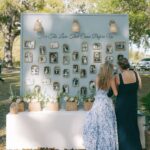
A wooden box filled with leaf-shaped cutouts for guest signatures travels well from a backyard to a rented hall, since it needs no lawn to anchor it.
1. Refreshing Drink Stations
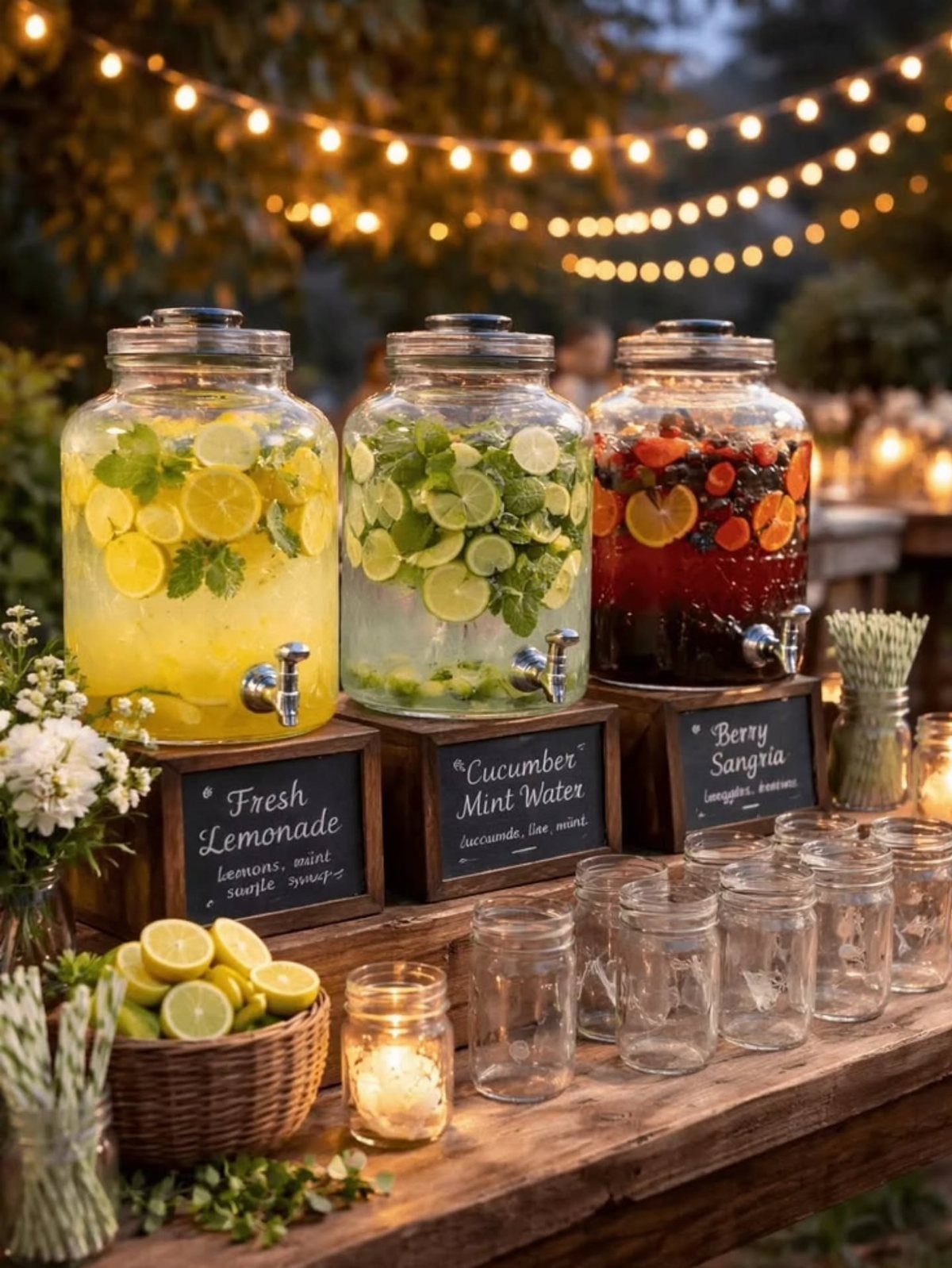
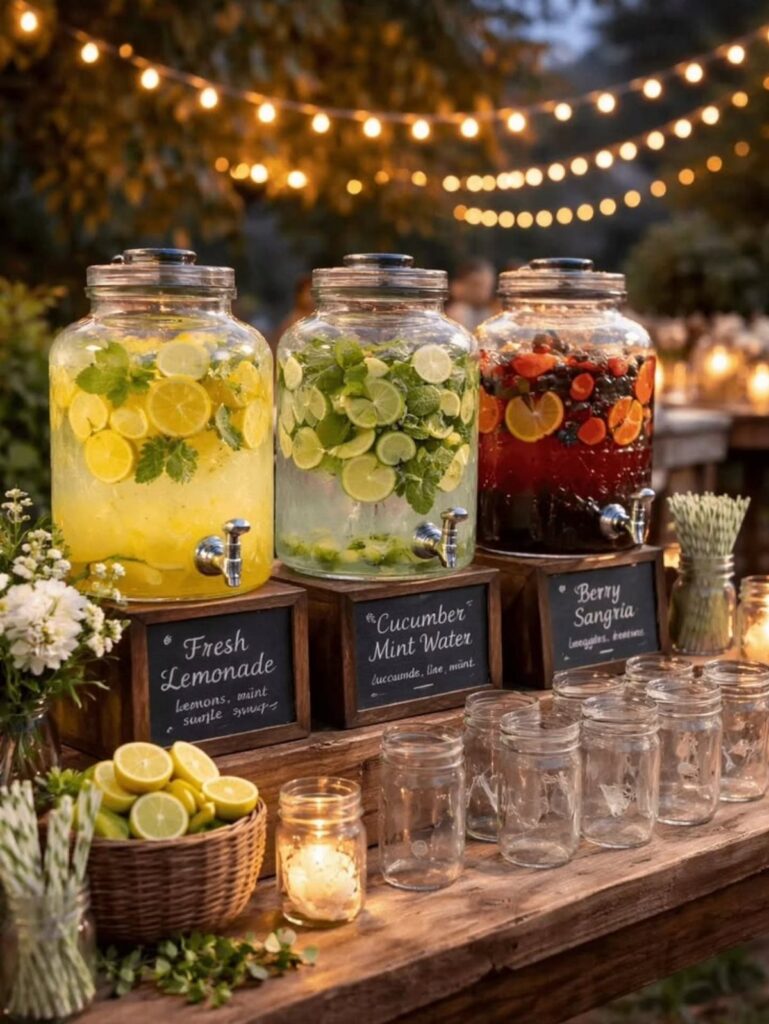
A drink station does more than quench thirst at a summer garden wedding; it becomes a gathering spot guests remember.
I like to place two or three spigot dispensers at different heights on wooden stands, each labeled with chalkboard tags so guests know what they are pouring.
Lemonade and cucumber water keep everyone hydrated through the ceremony, while a berry sangria or signature cocktail shifts the mood toward celebration as the afternoon turns to evening.
Set these near the entrance to the lawn or reception area, not tucked behind a tent flap where lines bottleneck.
Mason jars stacked beside the dispensers keep the look casual and save on glassware rental. For a grab-and-go option, add a cooler of labeled water bottles guests can carry back to their seats.
2. Garden Ceremony Arches and Backdrops
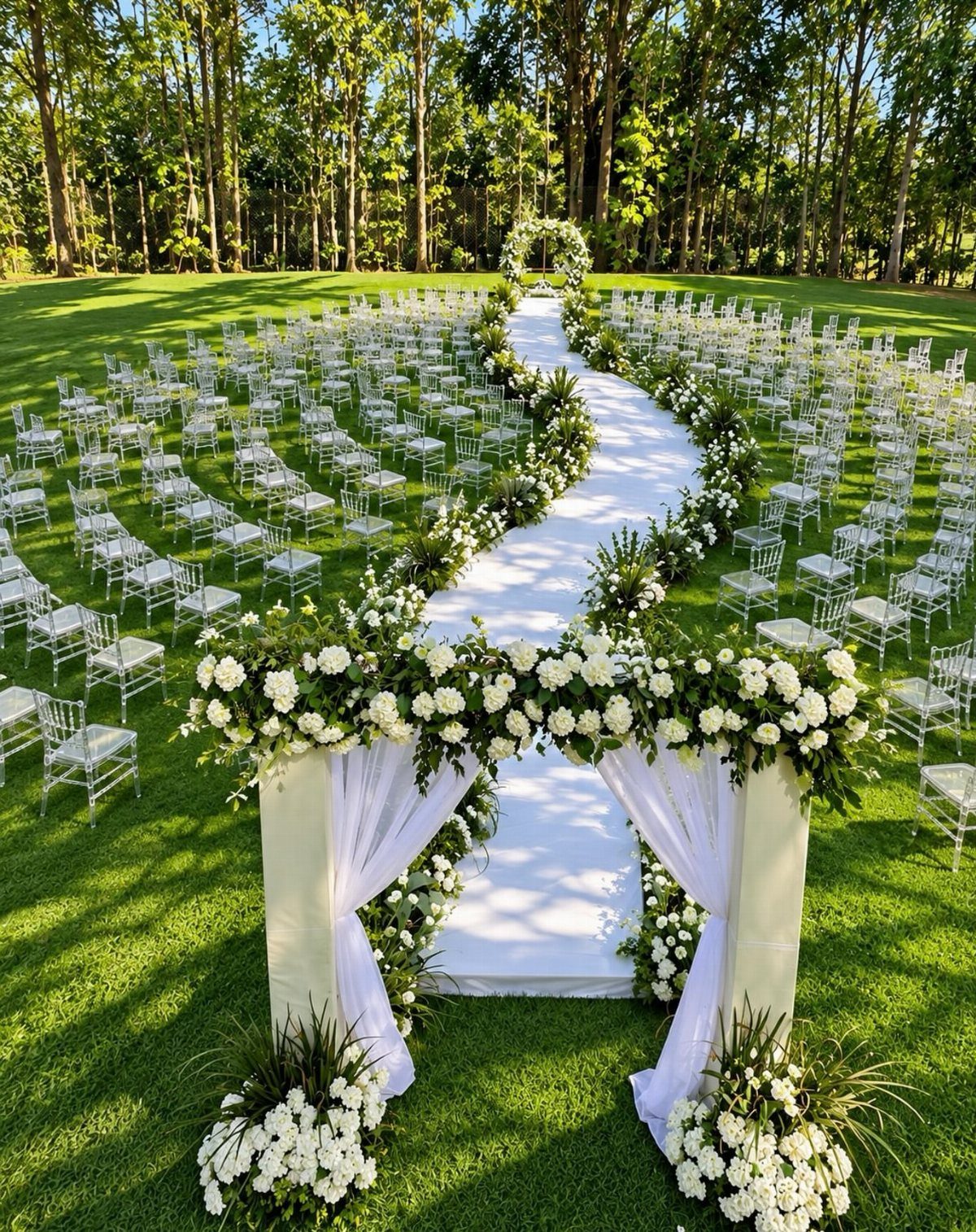
The arch you stand beneath frames every photo taken while you say your vows, so its shape matters as much as its flowers.
What I have seen work best is letting the garden do the heavy lifting: a simple metal or wooden frame dressed in greenery and seasonal blooms that echo what is already growing around it, rather than fighting it.
Clear acrylic chairs keep sightlines open through the ceremony, which matters more than people think when guests are photographing the moment on their phones.
For a dramatic option, place a second floral arch at the aisle entrance so the walk itself feels designed. For intimate weddings, a half-circle backdrop with the audience wrapped around you removes the distance of a traditional aisle entirely.
3. Indoor Garden Setting
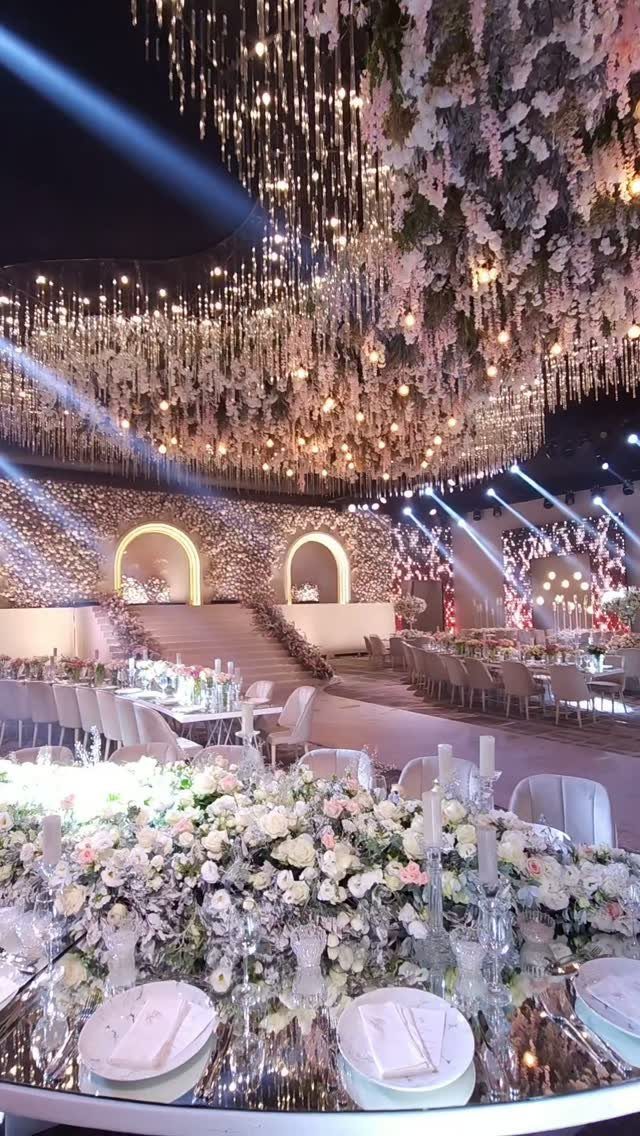
Bringing a garden indoors is less about volume and more about where the eye travels.
The ceiling is your sky: hanging installations of florals and crystals, spaced so guests seated at every table have something living above them, do what a single centerpiece cannot.
I have set these up in historic halls where rain made the outdoor plan impossible, and mixing heights is what keeps the space from feeling flat.
Low runners of greenery across the table keep conversation intimate, while the drama happens overhead where it does not block faces.
A stage or head table backed by an arched floral wall gives the couple their own garden moment for portraits.
The investment runs higher than outdoor decor because every element must be built from nothing, but for a February wedding or a venue with no lawn, it is the difference between theme and wishful thinking.
4. Unique Flower Arrangements
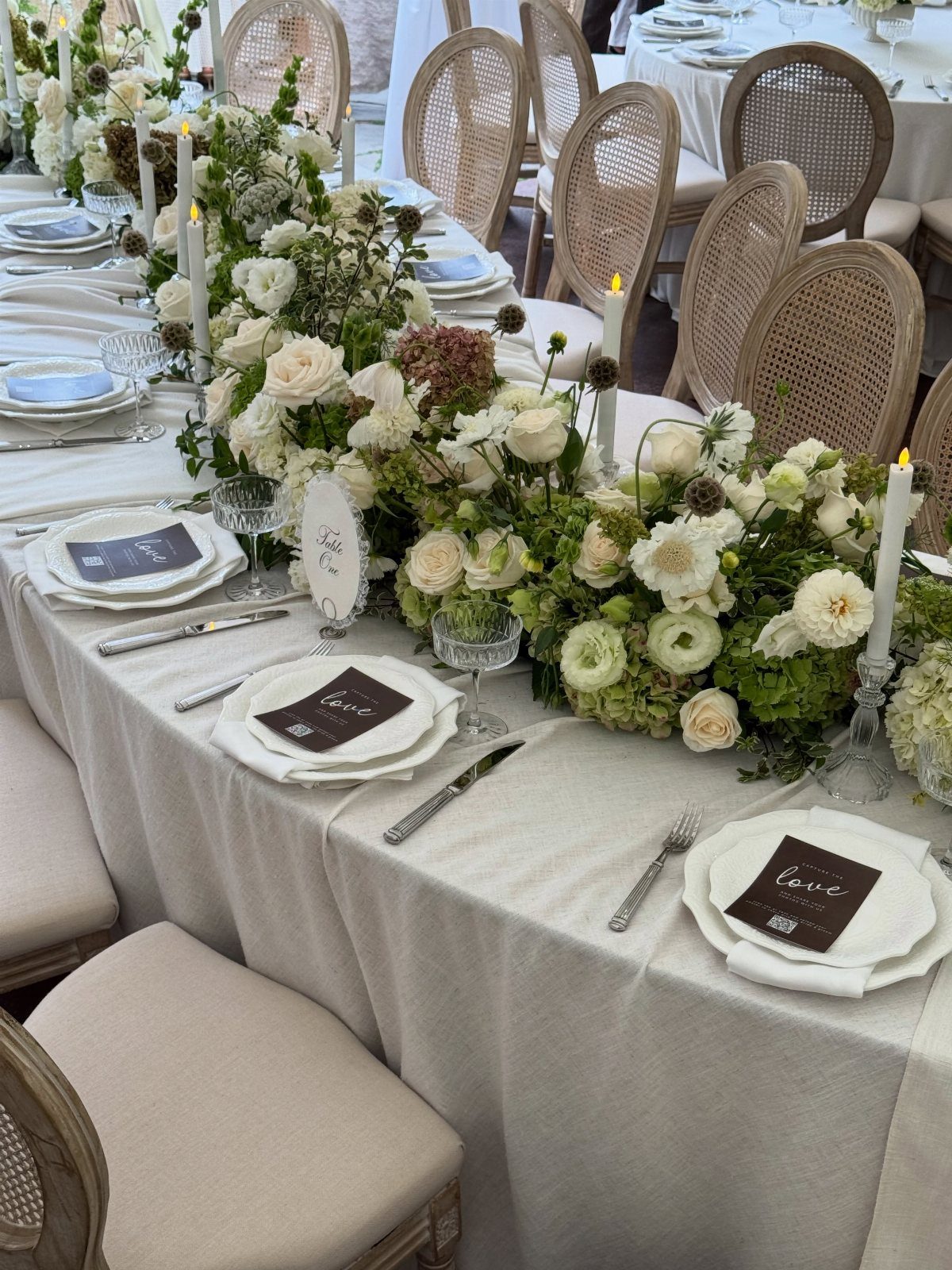
A table runner built from mixed blooms, not a single variety, reads as gathered rather than arranged, which suits a garden wedding where the setting itself is slightly untamed.
Roses with greenery form the base; adding something unexpected like lavender or daisies keeps the eye moving.
Vary the height with taper candles set in between, low enough that guests can see across the table.
Cane-back chairs, visible in the setup, keep the feeling light and period-appropriate without requiring a full vintage rental. For a tighter budget, concentrate the mixed arrangement on the head table and use simpler greenery runners elsewhere.
The bold versus soft choice depends on your season; spring gardens can handle brighter, more exotic blooms, while late summer calls for the softer palette the natural light has already begun to turn golden.
5. Vintage Decor Elements
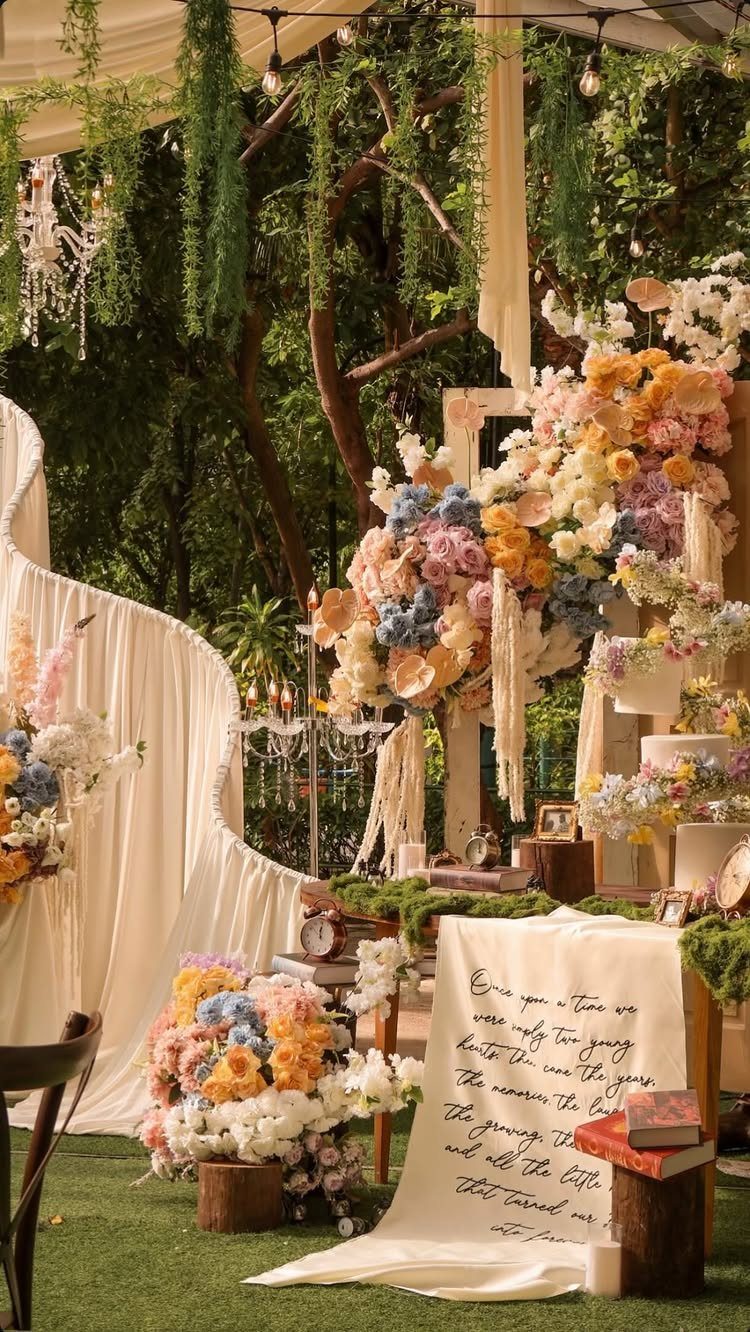
Vintage decor works in a garden when it looks found rather than rented, as though someone set down a life and started a party.
Alarm clocks and old books on tree stumps give that effect because they are specific and slightly odd; a dozen matching clocks would read as prop house inventory instead.
I would source lace tablecloths and antique dishware from family attics or estate sales rather than rental companies, which tend toward reproduction.
The fabric runner with calligraphy, starting where a story might, turns the table into a narrative surface guests lean in to read.
Crystal chandeliers hung from tree branches or shepherd’s hooks are the one splurge worth planning for, because they turn dusk into something you do not get with string lights alone.
Sepia and ivory tones keep the palette from competing with the green around it.
6. Circular Seating
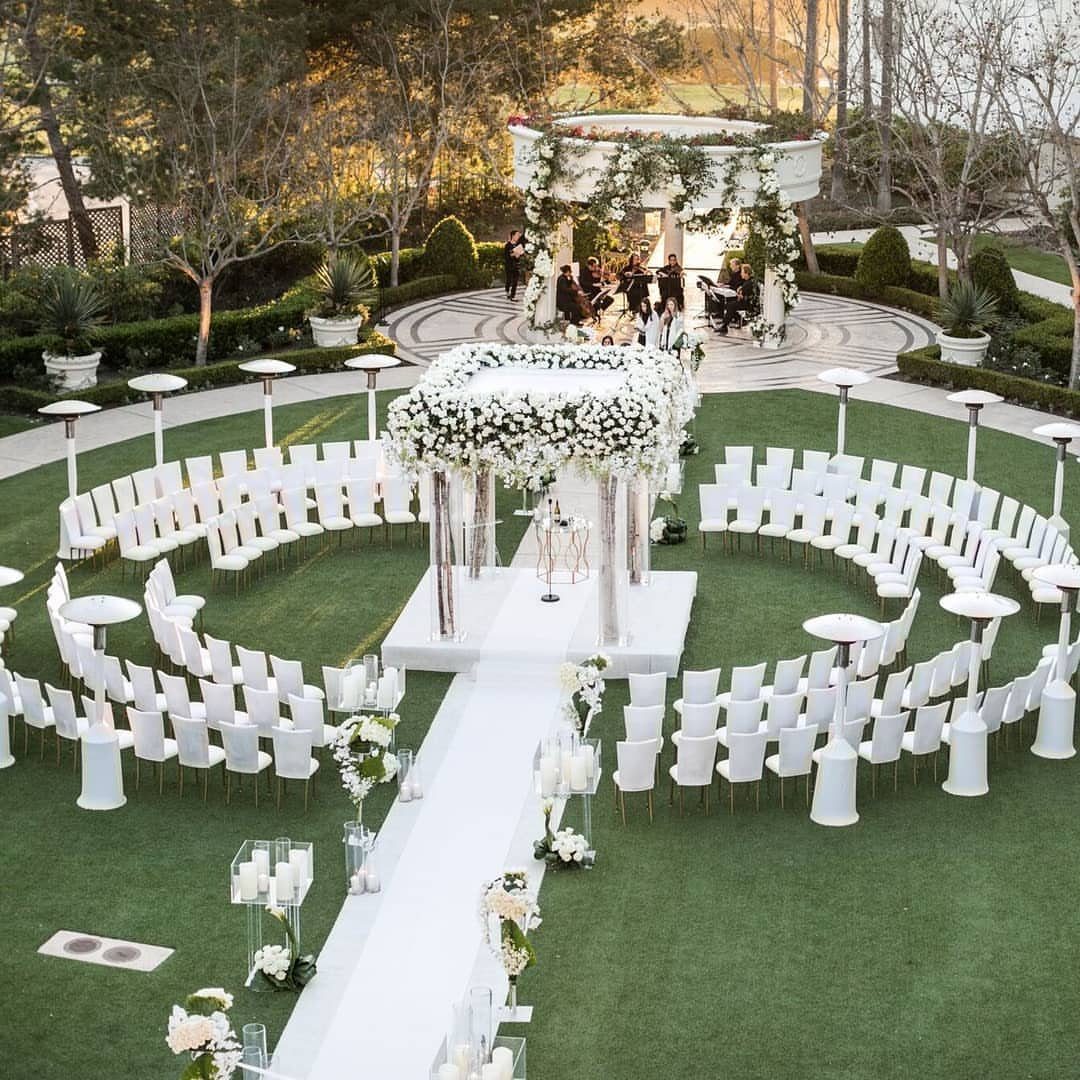
Circular seating rethinks who witnesses your vows: instead of staring at your backs, guests face each other and you, which changes the emotional register of the ceremony entirely.
Concentric rings built around a floral chuppah work for smaller guest counts; beyond a certain point, the outer rings lose intimacy.
Musicians placed inside the circle keep the sound central rather than drifting off toward a distant corner. What I would check before committing: the lawn must be level, or chairs tilt and guests spend the ceremony adjusting.
For a mixed indoor-outdoor space, a semi-circle against a garden wall or hedge gives the same inclusive feel without requiring the full round setup.
The trade is that processional order becomes less linear; I usually have the wedding party enter from different points around the perimeter rather than a single aisle, which guests find charming once they understand what is happening.
7. Personalized Signage
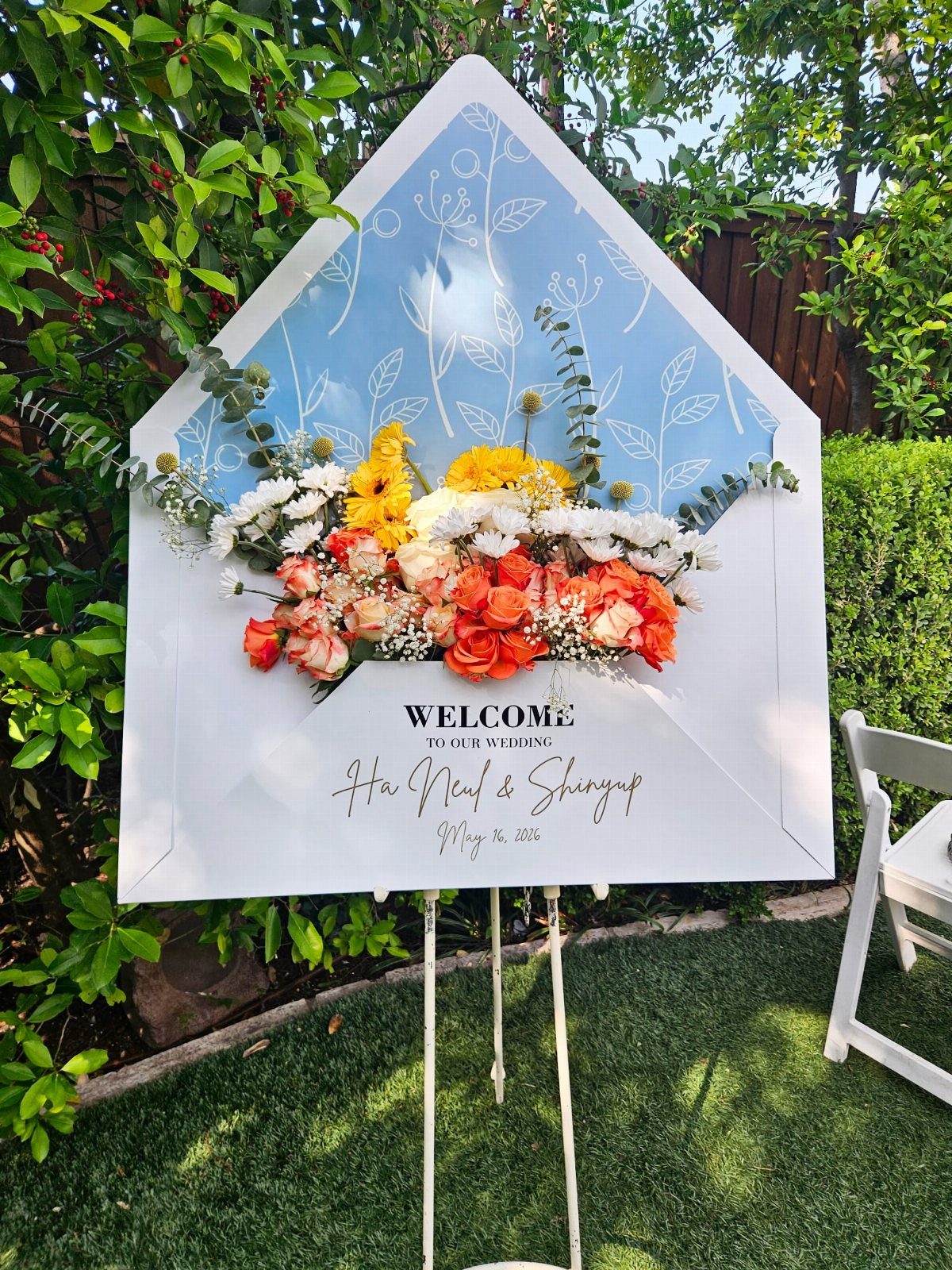
A welcome sign shaped like an open envelope, filled with fresh blooms, tells guests they have arrived at something intentional before they reach the ceremony lawn.
I would carry this through to directional signs pointing toward parking, the bar, and the seating area, each one dressed in the same greenery so guests never feel lost.
Eucalyptus garlands frame these well and tie back to the garden itself; using what is in season keeps the cost from ballooning.
Chalkboard tags or hand-lettered cards let you change wording last minute if the rain plan shifts. The seating chart or a single special message at the guest book table completes the set without overdoing it.
8. Mismatched Plates, Glasses, and Linens
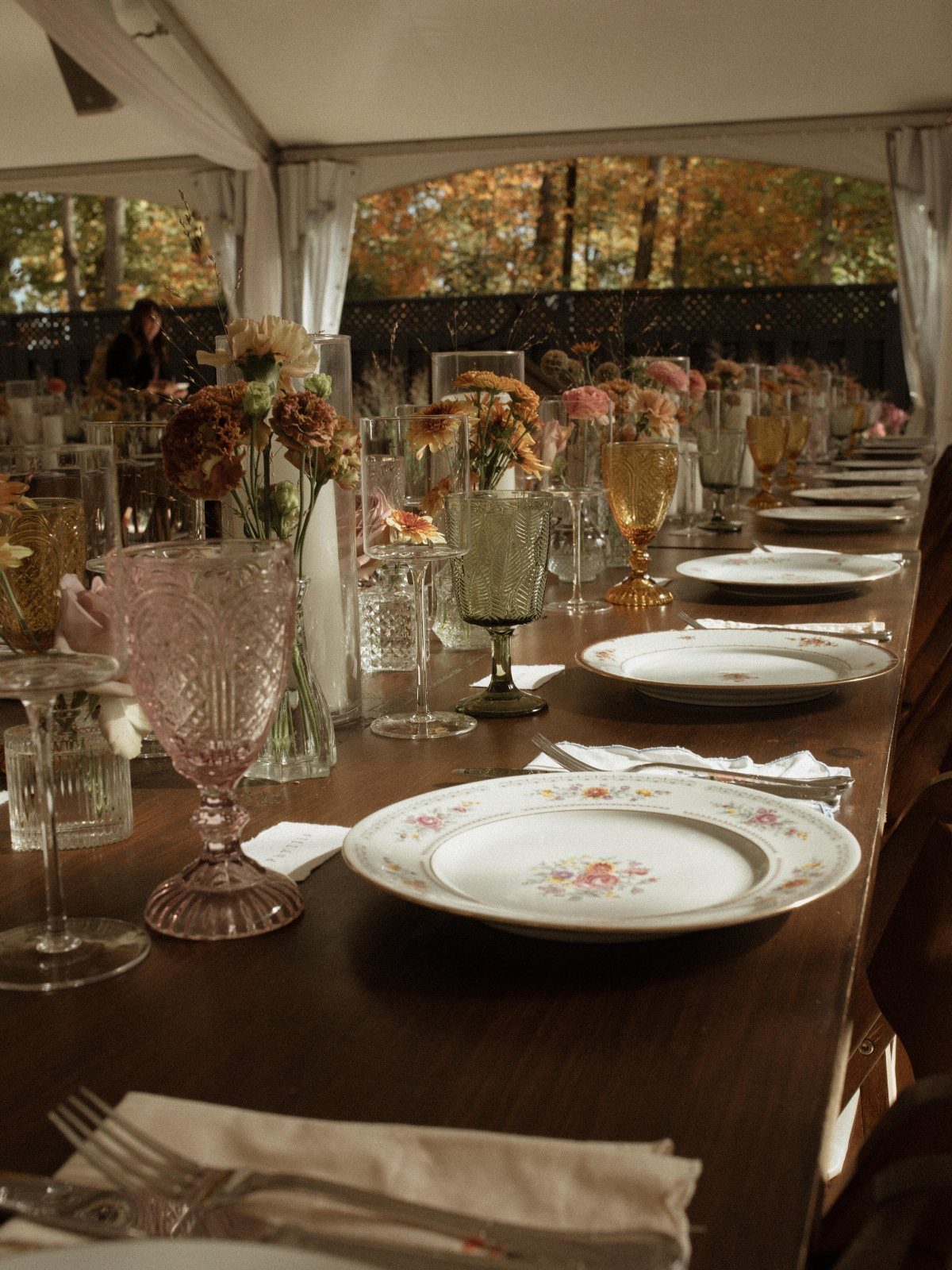
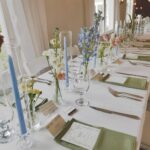
Mismatched china and colored glassware turn a rented tent into something that feels collected over years rather than ordered from a catalog.
Keep one element consistent so the eye has somewhere to rest: all floral plates, for instance, or all glasses in shades of amber and rose, rather than every piece fighting for attention.
I would source from estate sales or borrow from family before calling a rental company, which tends toward matching sets.
Mismatched vintage china, cutlery, and napkins arranged over bare wood bridge the formal and the casual. The trade is that setup takes longer; assign someone to arrange place settings the morning of, not the couple.
9. Garden-themed Wedding Invitations
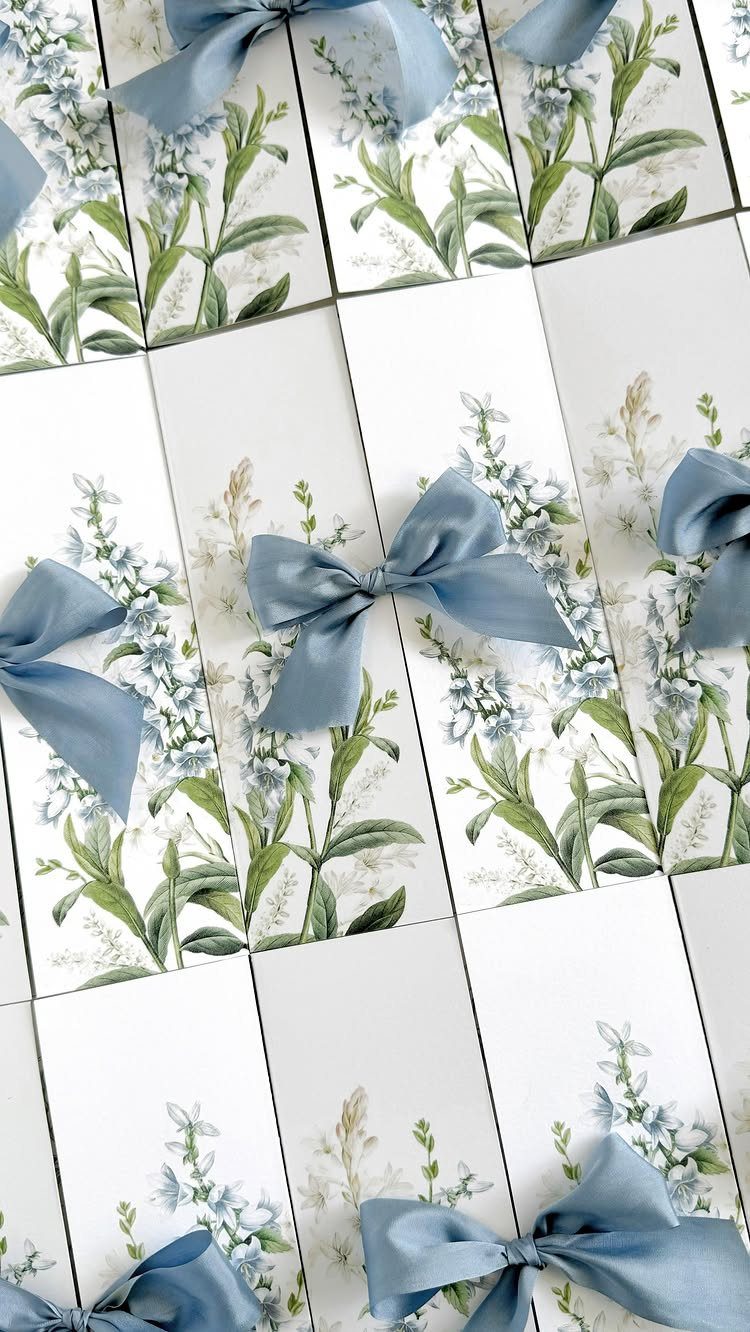
Botanical illustrations on thick cotton paper give guests their first sense of the garden waiting for them, and that preview matters more than people think for building anticipation.
I would extend the same artwork to programs, menus, and escort cards so the table settings do not arrive as a surprise.
Pressed flowers, real or printed, add dimension that flat graphics cannot; the cost runs higher, but for a guest count under 80 the difference is manageable.
10. Oversized Games Like Cornhole
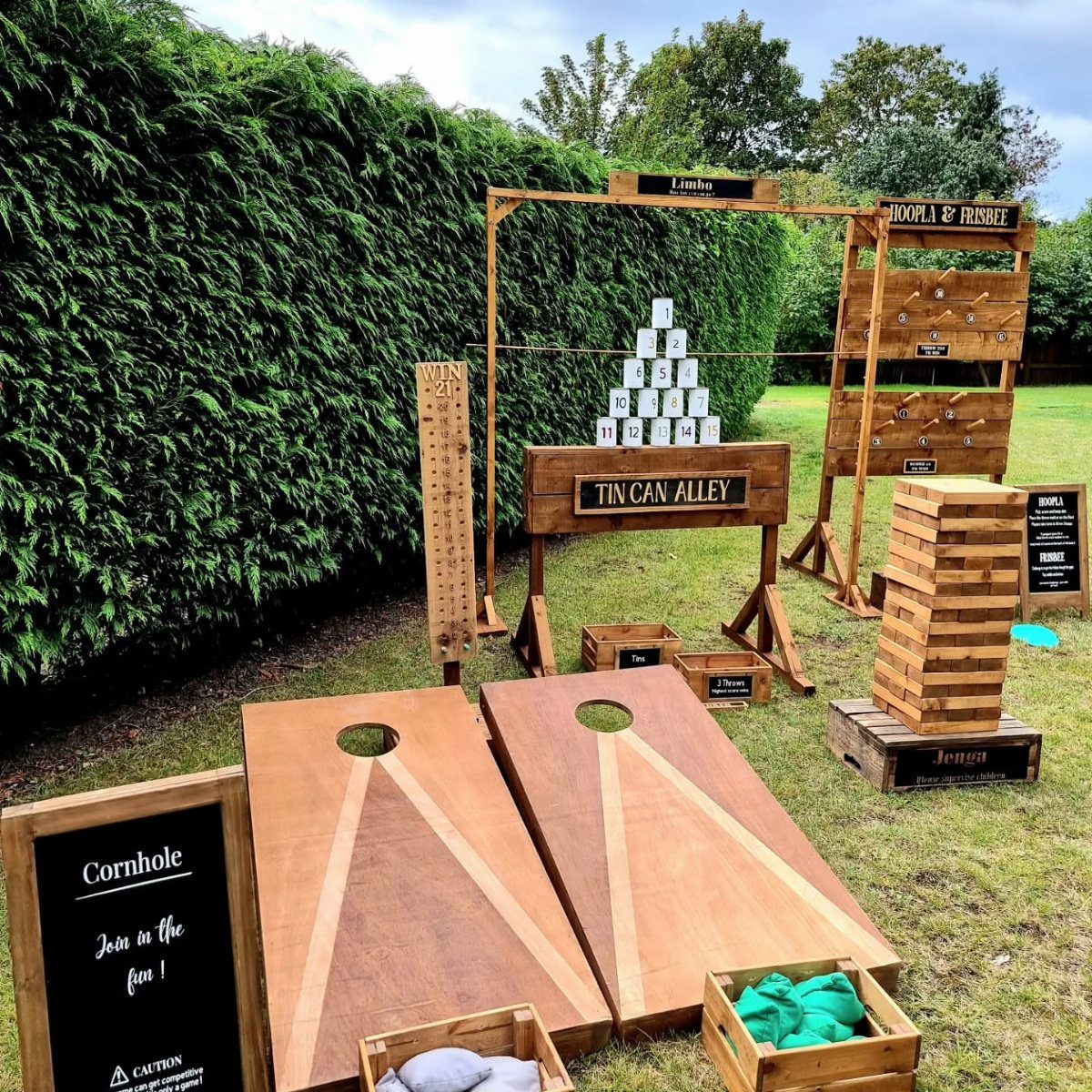
Cornhole and giant Jenga give guests who do not dance something to do besides stand at the bar, which matters at every wedding I have planned.
Wooden boards with painted team colors or the wedding date double as decor when not in play; store them near the lounge area so they do not interrupt the dining space.
Add enough games to keep lines short, and place them on level ground where heels will not sink.
Signs with clear names help guests find what they want without asking. The limbo and tin can alley in the same grouping suggest a range of energy levels, which keeps more people involved longer.
11. Flip-flops for Guests
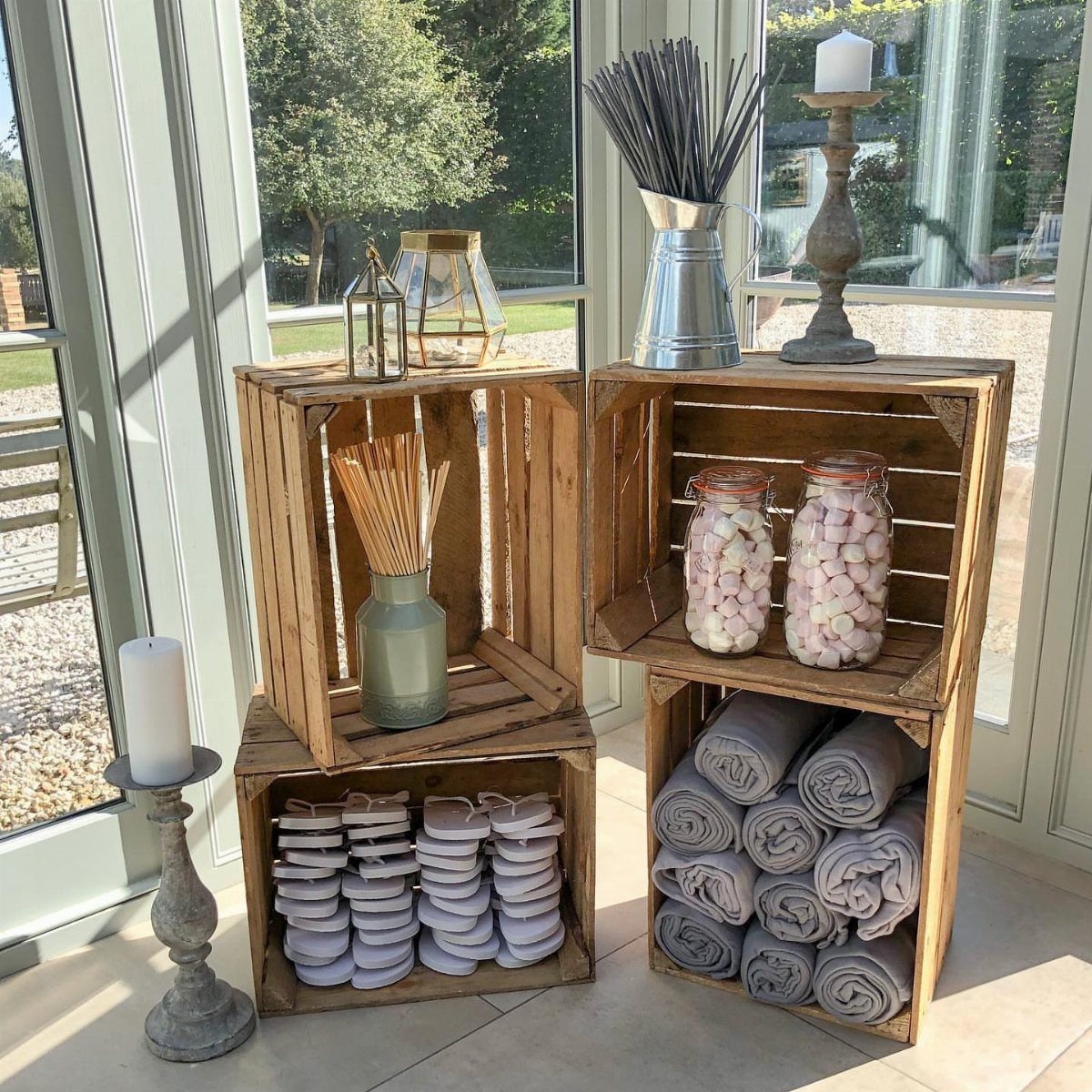
A crate of flip-flops near the dance floor or garden path lets guests choose comfort without disappearing to the parking lot for backup shoes.
White and grey neutrals, as visible here, stay clean longer than bright colors and photograph better against grass.
I would size the stock in advance by asking on the RSVP, or buy a range and donate the remainder.
The same station can hold rolled blankets for guests who stay past sunset, which turns a single corner into a hospitality moment.
The marshmallows and skewers nearby suggest this host carried the garden theme into the after-party; not required, but the instinct is right.
12. Candlelit Tablescapes
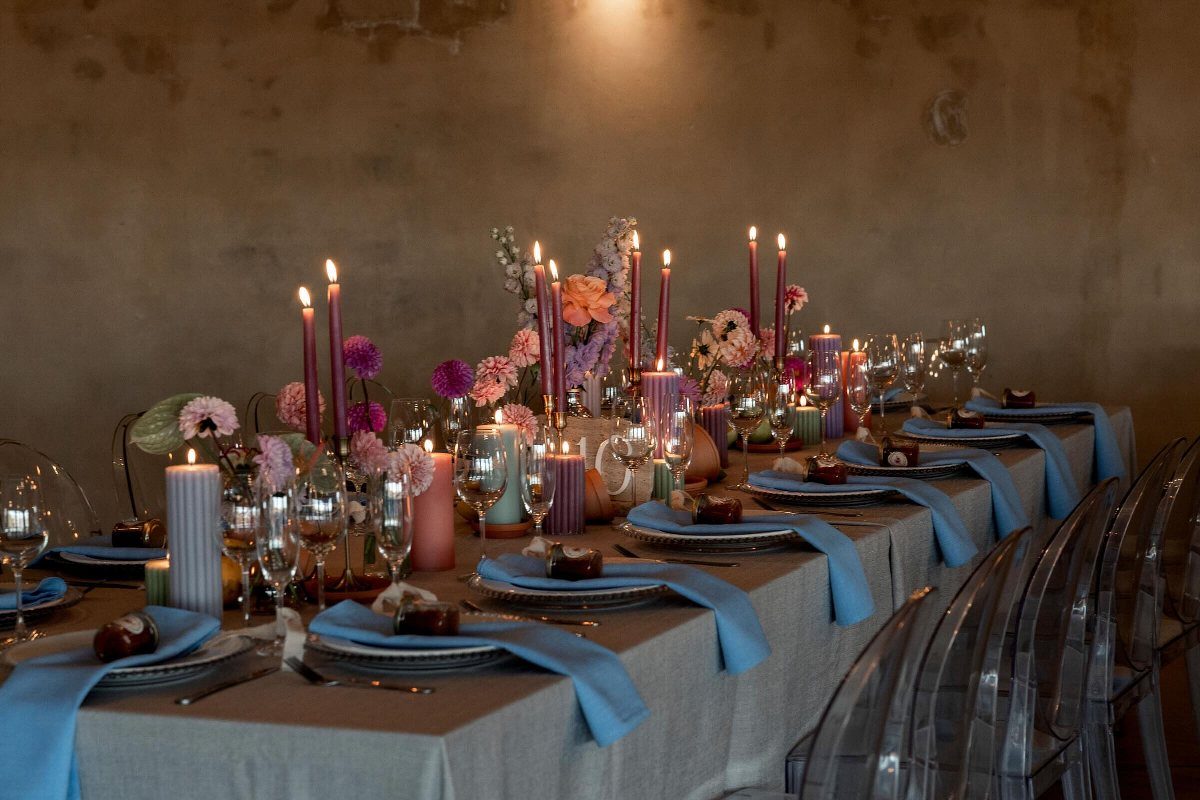
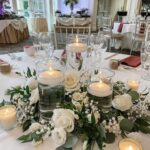
Taper candles in varied heights, set among low blooms, turn a long table into something guests want to lean into rather than shout across.
Color and surface matter as much as the flame itself; transparent chairs keep the light from being blocked at seat level.
I would use unscented candles so the food arrives without competition, and set them in holders heavy enough that a bumped elbow does not tip them.
Crystal or cut-glass holders catch and scatter the light, which is the effect you are after, but simple cups work if the budget is tight. The romantic register this achieves suits evening receptions where the garden has faded to silhouette.
13. Natural Table Runners
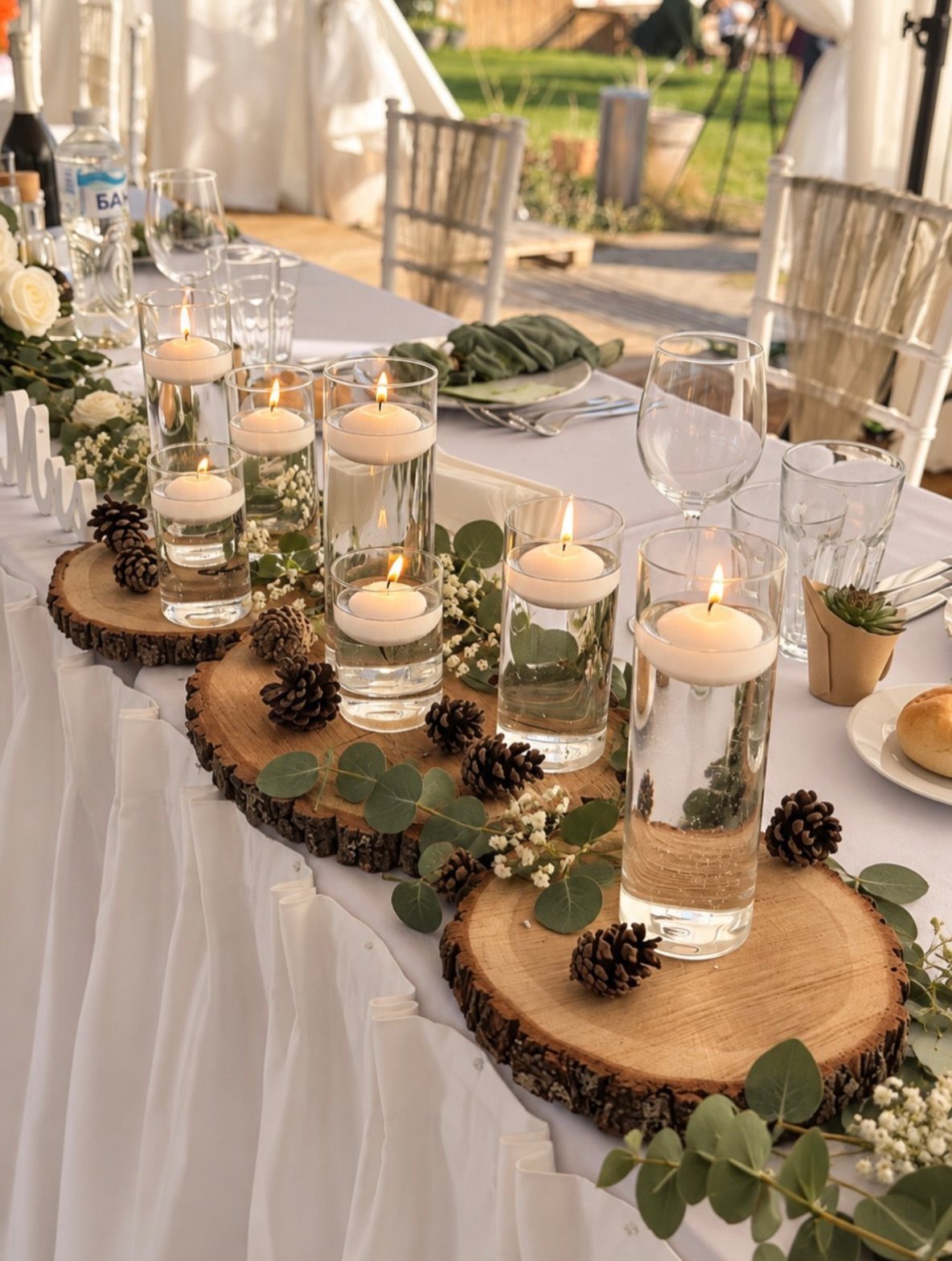
Overlapping wood slices, eucalyptus, and baby’s breath build a runner that looks gathered rather than manufactured, the look you want when bringing a garden indoors.
I would use moss or loose greenery between the slices to keep the wood from shifting during service, and skip a tablecloth entirely if the table surface is decent; the raw edge is part of the statement.
The scent of eucalyptus carries, so check that no guest at the table has a sensitivity.
14. DIY Garden Decorations
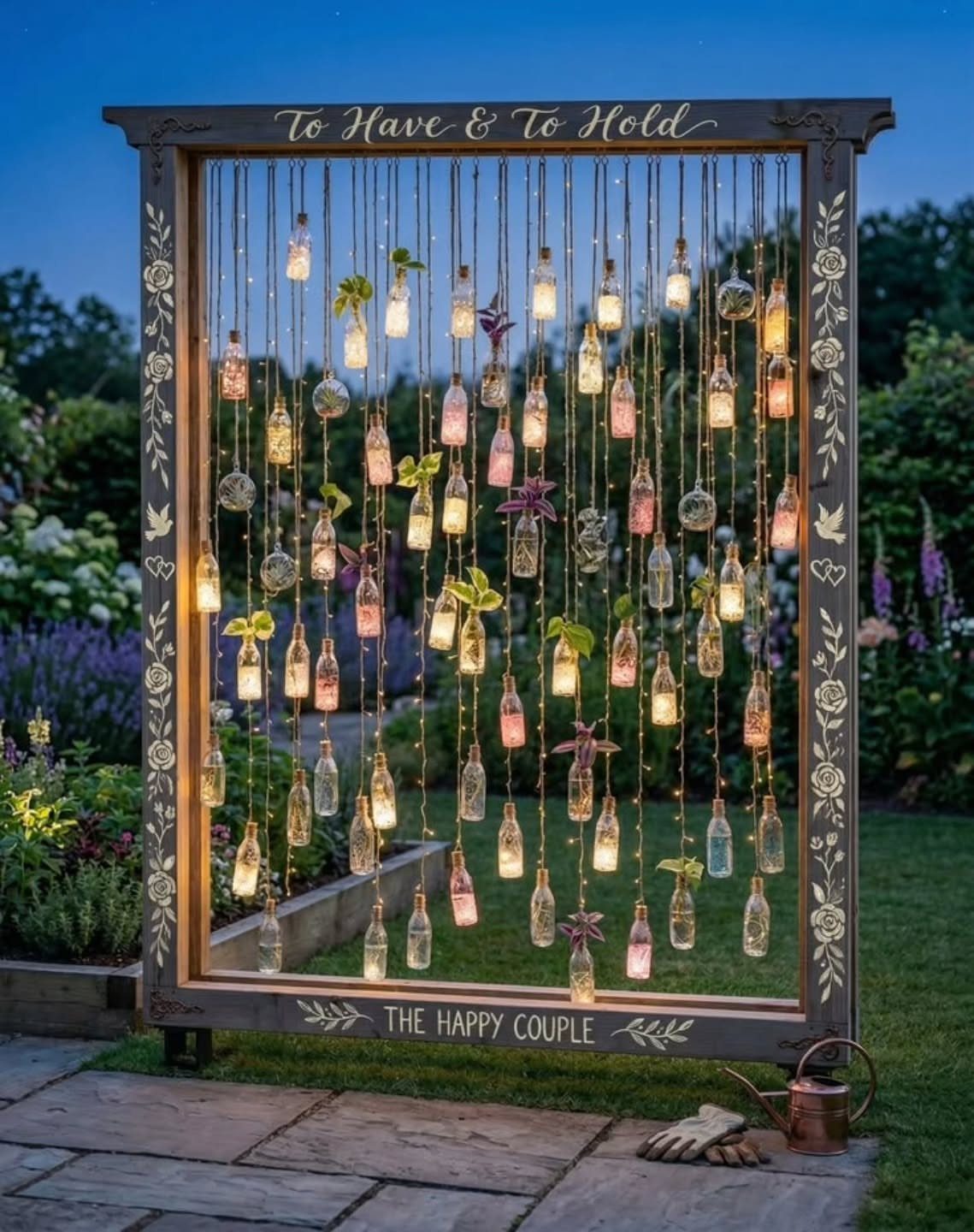
A wooden frame strung with illuminated bottles and trailing plants turns a corner of the lawn into a photo spot that doubles as your signature piece. The inscription makes it yours; the lights make it after dark.
Practical DIY in a garden wedding means information first: signs guests need, timelines they follow, seating they find without asking.
A framed chalkboard or painted wood panel for the seating chart, hung where the path forks, saves you from answering the same question forty times.
Bottle lights work because they are cheap in bulk and the wiring is simple; test the strand a week out and keep a replacement. The frame here is substantial, built from 2x4s or reclaimed timber, and anchored against wind.
15. Floral Wedding Cake
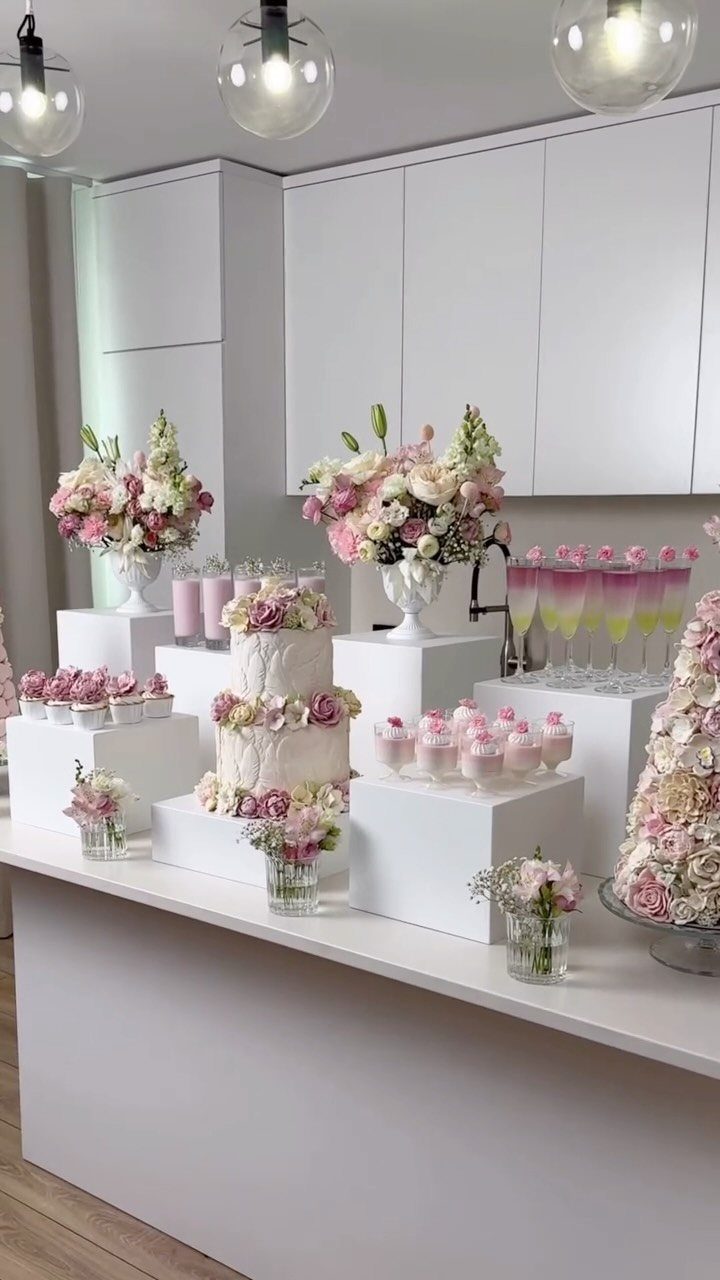
Fresh flowers on a cake signal garden wedding before a guest tastes a bite, but the placement matters more than the variety.
Loose, asymmetrical clusters that look dropped on rather than engineered keep the tone casual, which suits an outdoor setting where the wind might already be rearranging your plans.
I would ask the baker to leave gaps between blooms so the white frosting reads as negative space, and confirm that any flowers touching the cake are food-safe or separated by parchment.
Sugar flowers are the fallback when heat or budget rules out fresh, though they read more formal than this look intends. The cupcakes nearby extend the same floral logic without requiring another tiered cake.
16. Hairstyles with Floral Elements
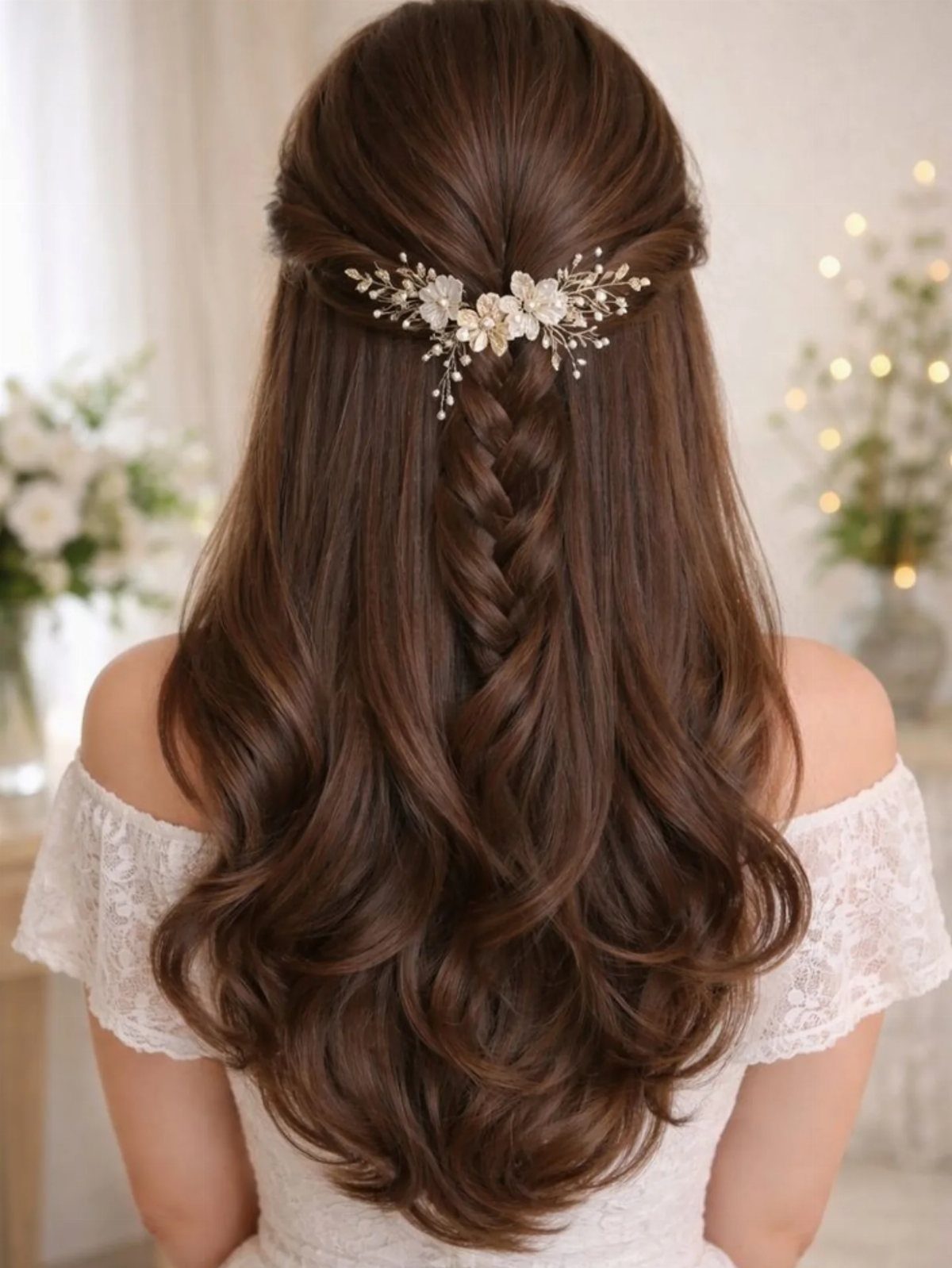
A single floral clip or braided-in bloom does what a full crown cannot: it reads as accidental, as though the garden itself offered something on the way to the aisle.
A half-up braid keeps floral pieces secure without the weight of a full updo, which matters for outdoor ceremonies where humidity undoes careful work.
Ask your stylist to anchor floral elements with pins that match your hair color, not the metal the salon stocks by default, and to finish with spray that holds against wind without turning stiff.
Fresh blooms wilt; silk or dried flowers last the full day and travel better between indoor prep and outdoor vows.
The pearl accents in this clip bridge garden and something slightly more formal, which is useful if your dress leans that direction too.
17. Lawn Reception Dining Setup
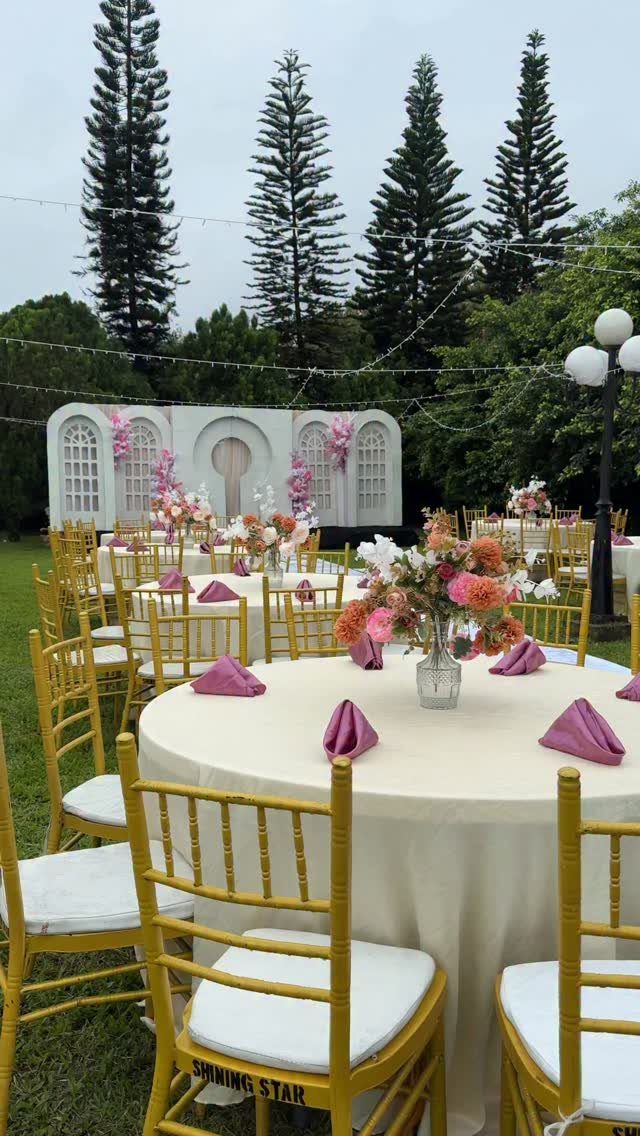
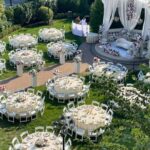
Round tables in cream and pink, set directly on turf with gold chairs, trust the pine backdrop to do what rented drapery cannot.
The arrangement reads as intentional because the linens are pressed and the napkins folded, not because the setting is controlled.
Level ground is the non-negotiable; a slight slope that guests barely notice in heels becomes obvious once they set down a water glass.
I would walk the lawn in the shoes you plan to wear, not sneakers, and mark low spots for the rental team to shim.
Trees become part of the design when you place the cake beneath one or string lights between trunks for dancing; working around existing growth costs less than clearing it and replaces what you would otherwise build from nothing.
The trade is weather, which a tent solves at the expense of this open view.
18. Open-air Fabric Canopy with Chandeliers
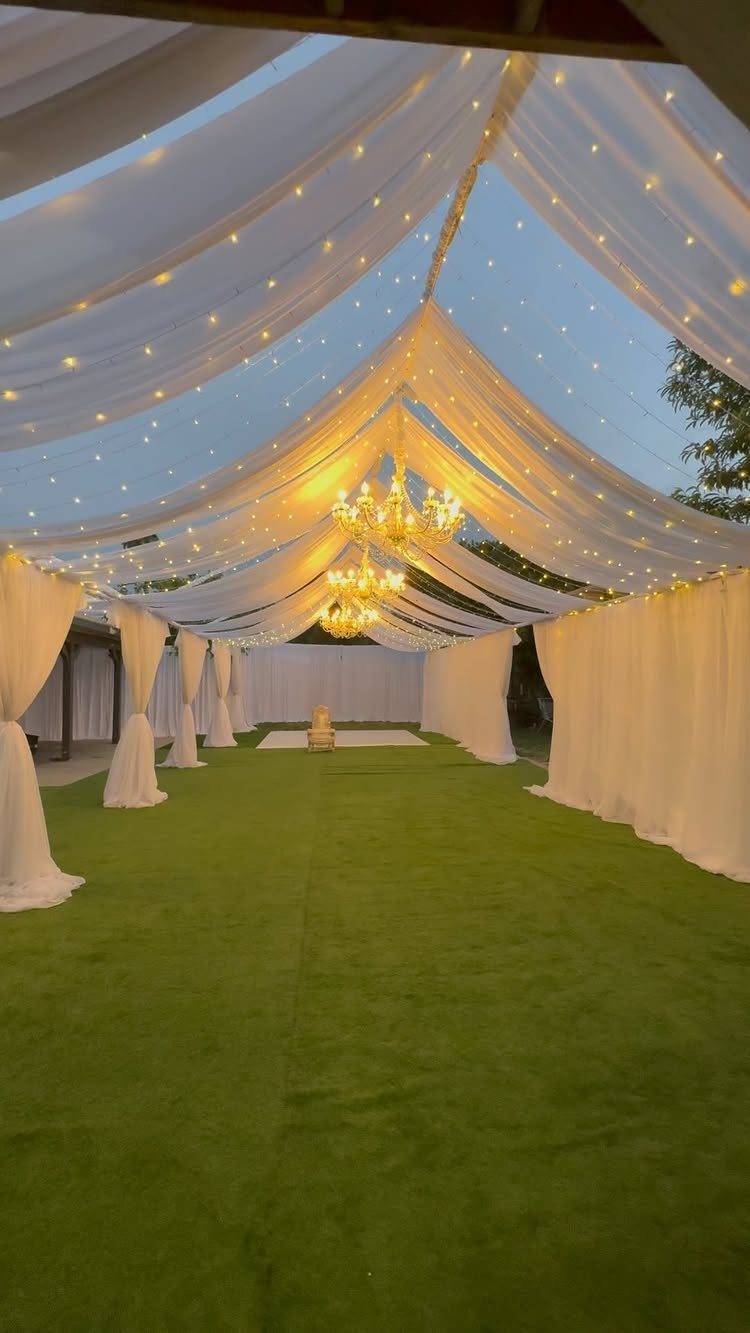
Draped white fabric overhead turns a bare lawn into a room, and chandeliers hung beneath it give the space an after-dark identity that string lights alone cannot manage.
The side curtains here suggest enclosure without demanding it; tied back, they frame the view rather than blocking it.
Check the load rating on every anchor point before the fabric goes up, and confirm the rental includes sandbags or stakes suited to turf, not just pavement.
Fabric catches wind, so a backup plan for gusts belongs in the conversation from the start.
The single chair at the far end reads as ceremony seating; for a full reception, scale the canopy to cover dining tables or risk the space feeling like a stage set waiting for actors.
Twilight is when this setup pays off, so plan your timeline to hit that hour.
19. Clear Marquee Tent Reception
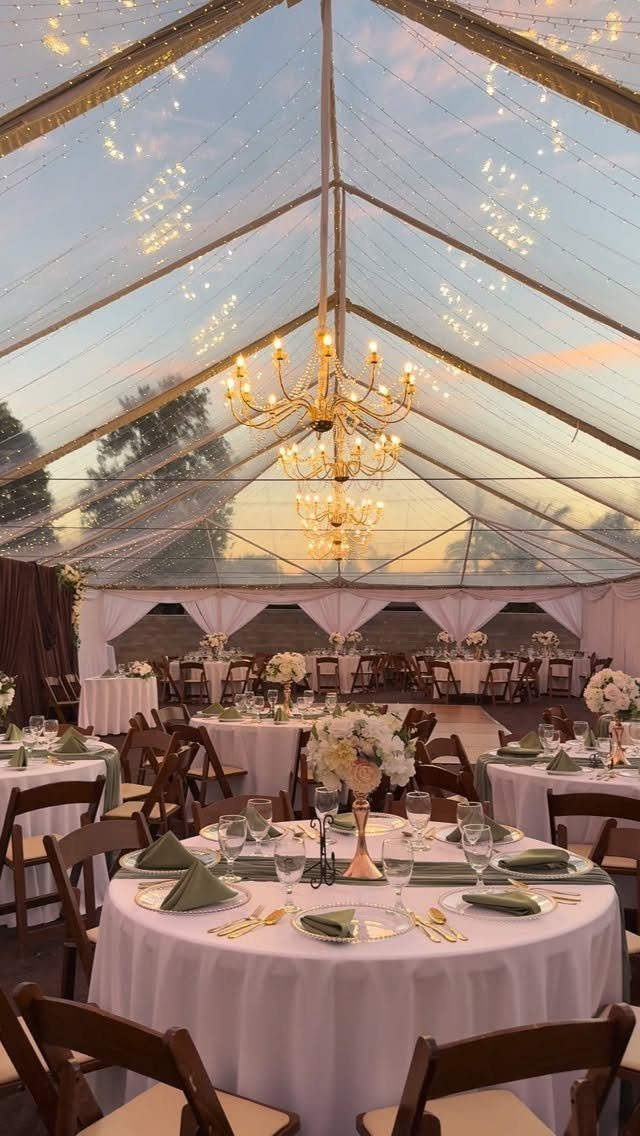
A clear-walled tent lets the sunset stay in view while chandeliers and fairy lights give the ceiling its own architecture. The garden does not end where the tent begins; it frames the whole evening.
Round tables inside keep sight lines open, and folding chairs let you reconfigure if the dance floor needs more space than planned.
The cost runs higher than opaque canvas, and temperature control is harder when the sun is still doing the work.
I would book this for a site where the view justifies the exposure, not as a default for every lawn. Check that your rental includes sidewall options in case the breeze becomes more than atmospheric.
20. Outdoor Lounge Area
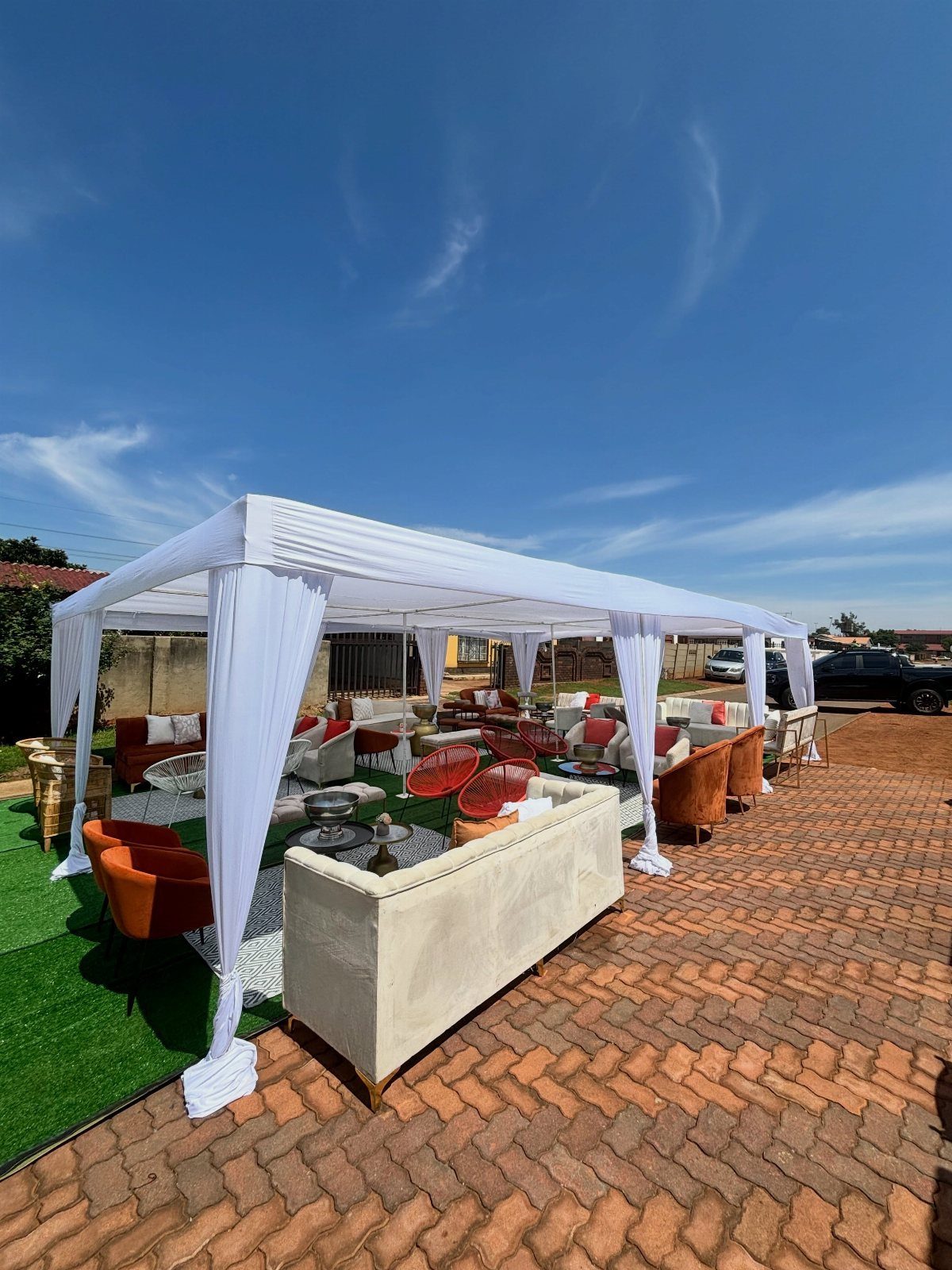
Plush sofas and armchairs under a white canopy give guests a place to settle that is not the dinner table and not the dance floor.
The artificial grass and brick paving visible here suggest a space that was not lawn to begin with, which saves the worry about heels sinking or chairs tilting.
I would keep the color palette restrained; the tent is white, the furniture varied, and too many competing patterns turn relaxed into cluttered.
Coffee tables need to be stable enough for actual drinks, not just styled for photos. A lounge area tucked behind the ceremony gives guests a quiet place to breathe, while one in full view becomes part of the visual story.
Decide which you want before you pick the spot. Placement shapes how guests use it.
21. Flower Petal Bar Station
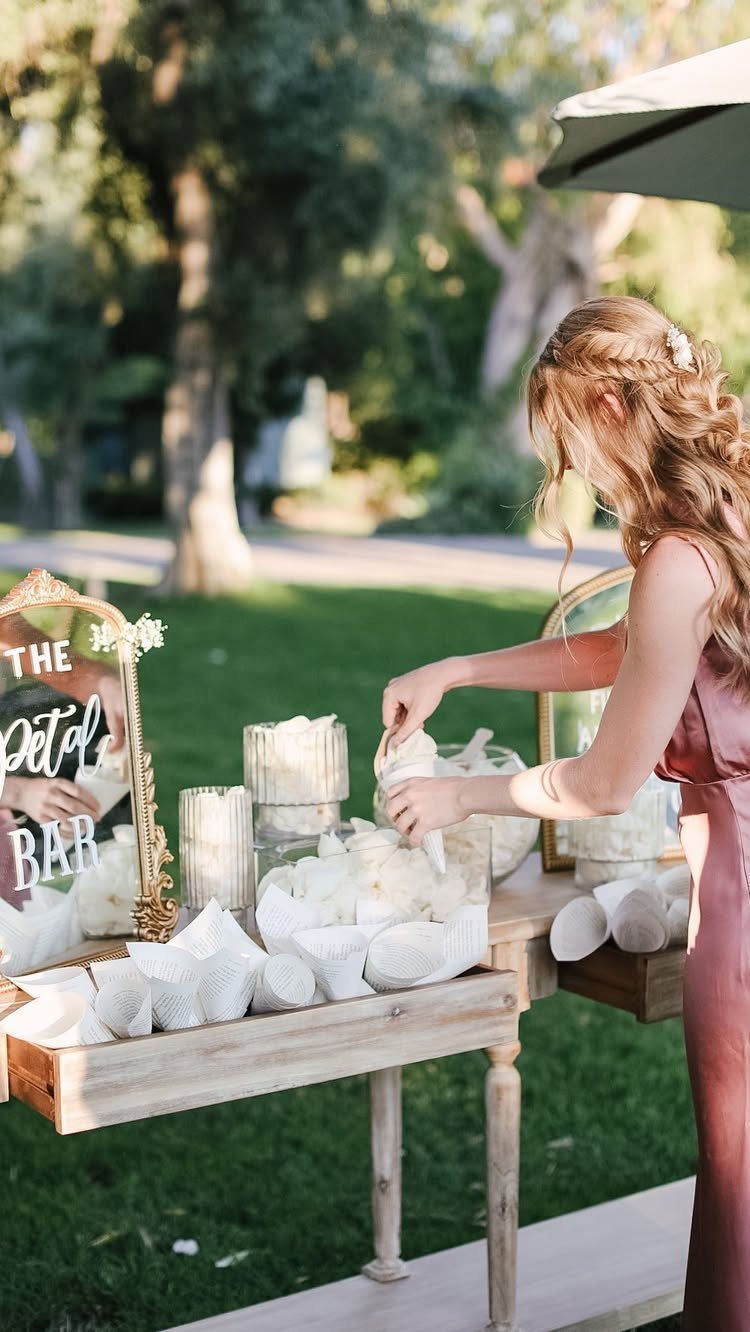
A wooden table labeled "THE Petal BAR" with paper cones and white petals lets guests fill their own toss for the recessional or departure.
The mirror sign is a detail I would borrow; it catches light and reads as intentional without extra framing.
The host here chose white petals, which photograph cleanly against grass and do not stain clothing the way darker blooms can. I would order more than the guest count suggests; cones fill fast and some guests take extras.
The table needs shade if setup happens before the ceremony, or petals wilt and the paper softens. Assign someone to refresh the supply during cocktail hour so the last guest finds as much as the first.
22. Rustic Wooden Guest Book Station
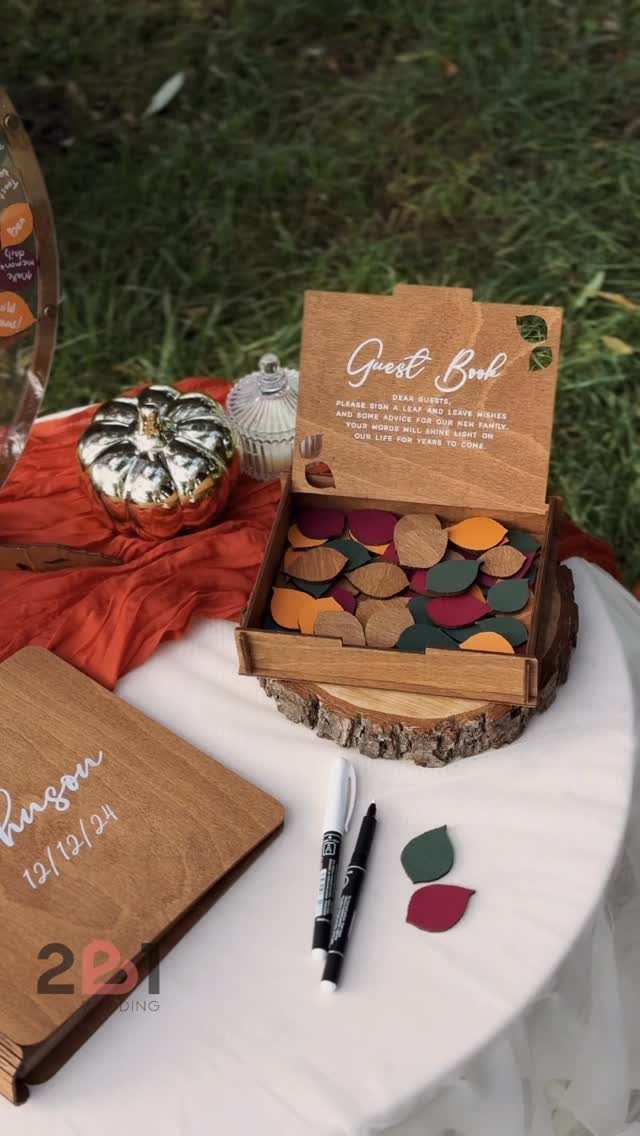
A wooden box of leaf-shaped cutouts, a wood slice base, and markers turn signing the guest book into something guests handle rather than just write in.
The metallic pumpkin nearby suggests fall, but the structure works for any season with different accents.
I would test the marker on the actual wood before the wedding; some bleed or fade, and a sealed surface needs a different pen than raw.
The wooden album visible here holds the finished leaves, which matters for storage after; loose pieces in a bag lose their shape.
A small sign with the date keeps the purpose clear without hovering. The "Guest Book" lettering on the box is direct, which suits the tone: this is not a place for cursive riddles.
Seasonal Considerations
Spring and summer remain the peak booking windows for garden venues, which means couples often compete for the same Saturday dates.
What grows on your actual wedding day depends on what the season delivers; a March bride in Gainesville might see azaleas at peak, while a June couple gets roses but also afternoon thunderstorms.
When the garden itself looks sparse, string lights or fairy lights hung from tree branches add warmth that compensates for thin foliage.
I have set up in venues where the loading dock sat around a corner from the ceremony space, which sounds minor until the rental truck idles through cocktail hour.
Check the access route during your site visit, not over the phone.
The natural backdrop you are paying for shifts constantly; ask the venue manager to show you photos from your specific month last year, not the brochure shots from peak bloom.
Budget-friendly Options
Vintage-style furniture rentals and vintage-inspired table runners or napkins carry the garden aesthetic without requiring heirloom purchases.
Pressed flowers on invitations or custom watercolor floral borders give the same botanical preview as pricier letterpress. For the cake, sugar flowers hold up in heat that would wilt the real thing.
Long wooden tables with terracotta pots and ceramic plates create a Mediterranean garden feel at a fraction of the cost of full place settings. The common thread: letting the actual greenery do the visual work rather than competing with it.
Guest Comfort Tips
A basket of bug spray near the ceremony entrance saves guests from mid-vow mosquito swarms, which in Gainesville humidity can start by late afternoon.
Heel stoppers or protectors belong at the same station, since grass and gravel ruin stilettos guests will wear again.
Sunglasses in a bowl near the programs, paper fans if the forecast turns hot, and the flip-flops already mentioned in the list cover the physical comfort basics.
I would place these items where guests see them before they need them, not across the lawn where no one walks back.
The basket itself is part of the decor; a vintage crate or galvanized bucket fits the garden setting better than a plastic tub. Check with your venue about open flame restrictions before counting on citronella candles as backup bug defense.
Frequently Asked Questions
What is a garden wedding?
A garden wedding can happen outdoors in an actual garden or indoors with decor that brings the garden in.
The defining quality is the atmosphere: greenery, florals, and natural light whether you are standing on turf or in a historic hall where rain sent you.
I have set up garden weddings in both places, and the indoor ones cost more because every leaf has to be built from nothing rather than borrowed from the landscape already there.
How to choose a garden wedding color palette?
Pull colors from what actually grows in gardens during your season, not from a paint deck. Soft pastels like blush and lavender read as spring; late summer light already turns everything golden, so the palette should follow.
I would save images of real gardens on a private board, step away, then see which colors still pull at you when you come back. Four or five colors gives you enough range without losing cohesion.
What are some unique garden wedding ideas?
Circular ceremony seating lets guests face each other and you, not your backs, which changes who witnesses your vows. For evening, crystal chandeliers hung from tree branches turn dusk into something string lights cannot manage alone.