The styles ahead run from a polished chignon to a high curly ponytail, with accessories and weather prep mattering as much as the cut itself, so the real work is matching what you want to what your day will actually allow.
The neckline of your dress is the first thing your stylist will ask about: a bare shoulder invites loose hair to fall where it may, while ornate fabric up top usually needs the neck cleared so nothing competes.
A rose-shaped low bun carries enough structured curl that spin pins, not standard bobby pins, become necessary; that is the level of specificity you are signing up for once you pick a style from this list.
1. Classic Chignon
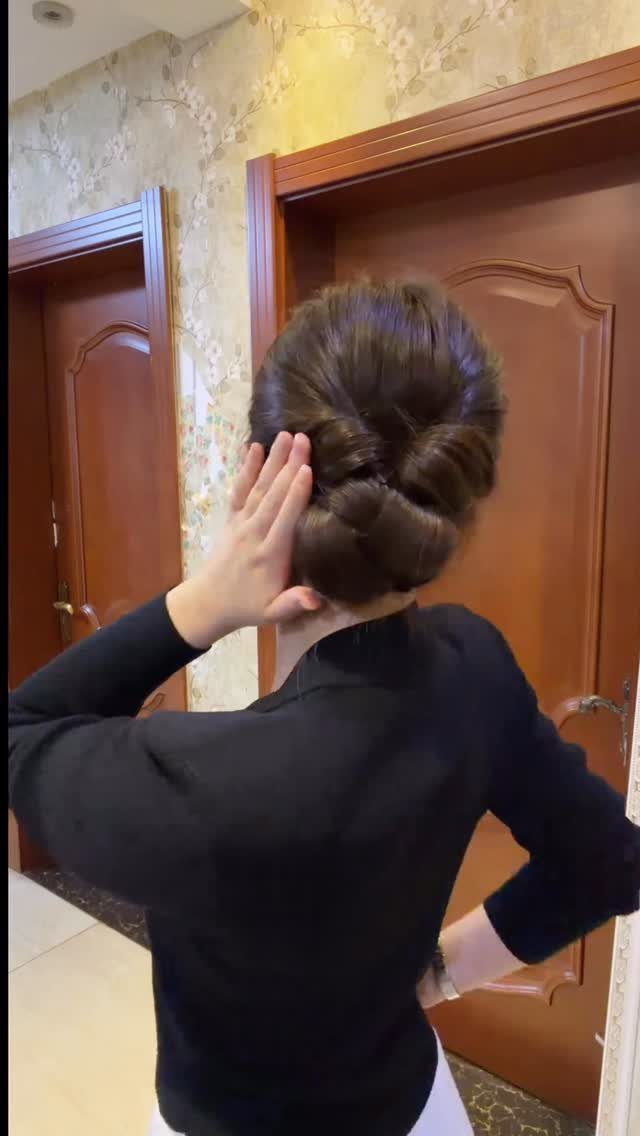
A low bun pinned at the nape holds steady through hours of dancing and hugging, which is why brides keep choosing it over flashier styles that come and go.
Twisting the sections before pinning gives the eye something to follow without making the style busy, and it photographs cleanly from any angle.
This updo tends to look as neat at the end of the night as it did when you walked down the aisle. It pairs naturally with veils, since the anchor point sits right where a veil comb needs purchase.
A chignon done well needs a bridal stylist who has done hundreds of them, not a few.
The stylist wraps and pins multiple sections with exact placement, and the final look rises or falls on that skill. Book someone who has done this specific style before, not just updos in general.
2. Sleek Straight Locks
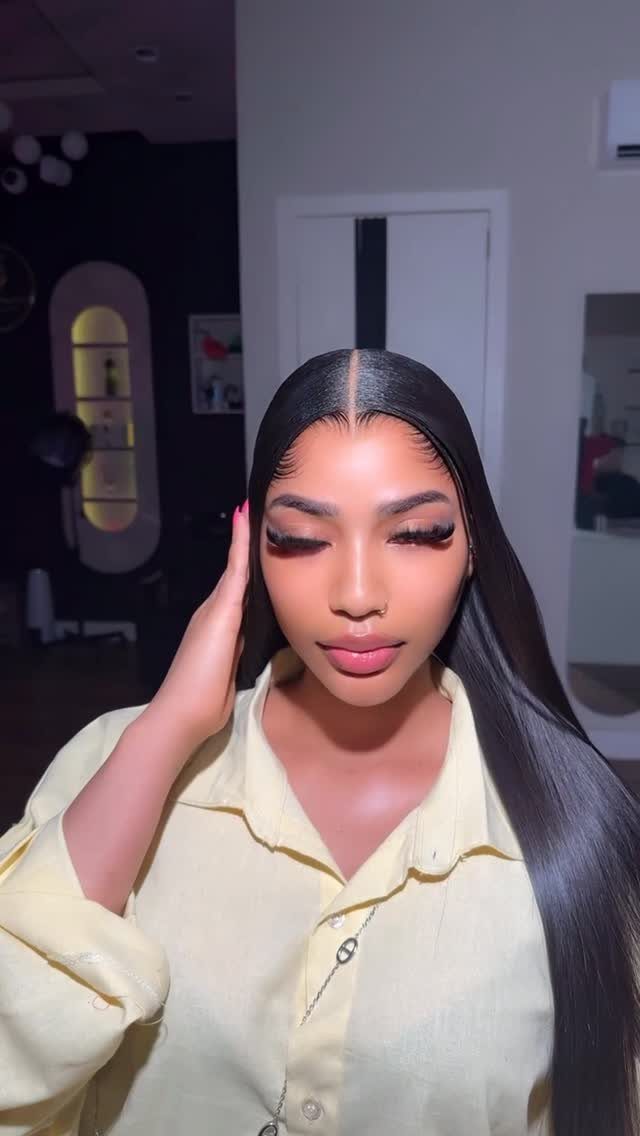
Hair worn perfectly straight looks intentional and fashion-forward rather than like you gave up, but only if the execution is genuinely flawless.
Thermal straightening, shine serum, and humidity protection all need to be in place for this to last the day.
A heat protectant is non-negotiable, and the budget needs room for products like Living Proof Restore Smooth Blowout Concentrate at $28 or Olaplex No.6 Bond Smoother at $30.
The minimalist look suits modern dress silhouettes and clean jewelry. It trades away softness for impact, so consider whether your venue and overall style can carry that starkness.
3. Cascading Curls
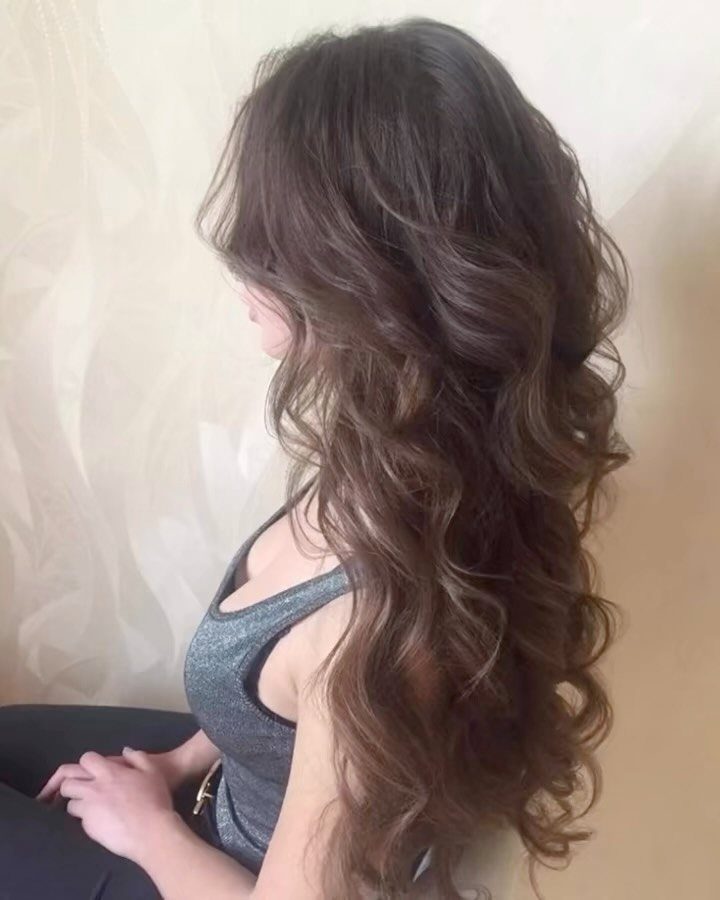
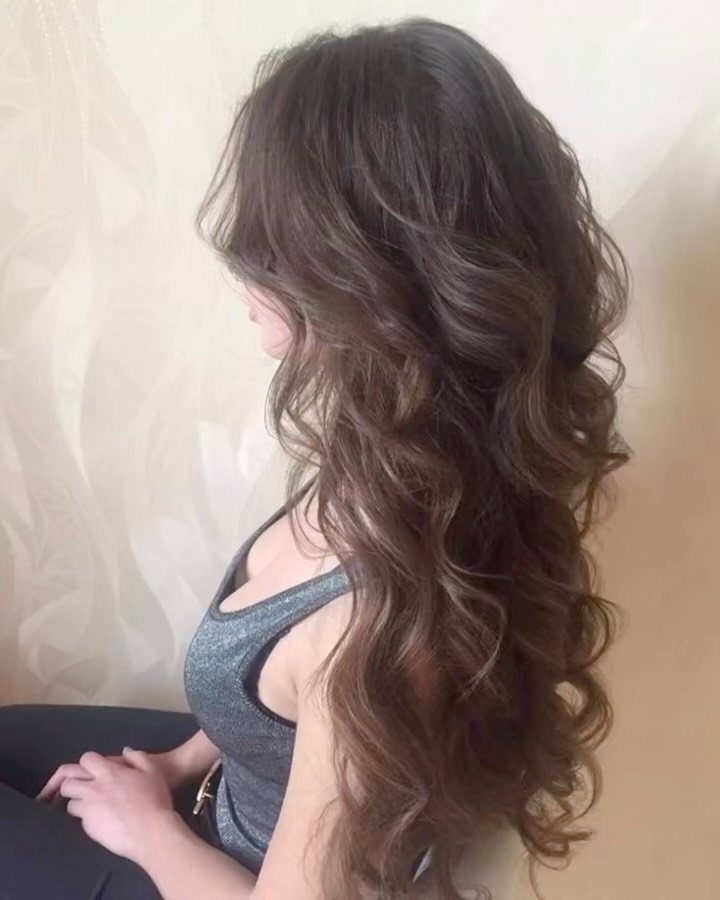
Soft curls falling over the shoulders work particularly well with open-back dresses, where the hair becomes part of the backdrop rather than competing with it.
Hot rollers create the volume more reliably than a curling iron for this specific drape, since the set needs to hold while you move.
Brush the curls out after cooling so they flow freely rather than holding rigid shapes.
Sweeping everything to one side and pinning it behind one ear creates one-shoulder drama that pulls the eye to your collarbone. This placement suits one-shoulder or strapless designs especially well.
4. Half Up Wedding Hairstyles
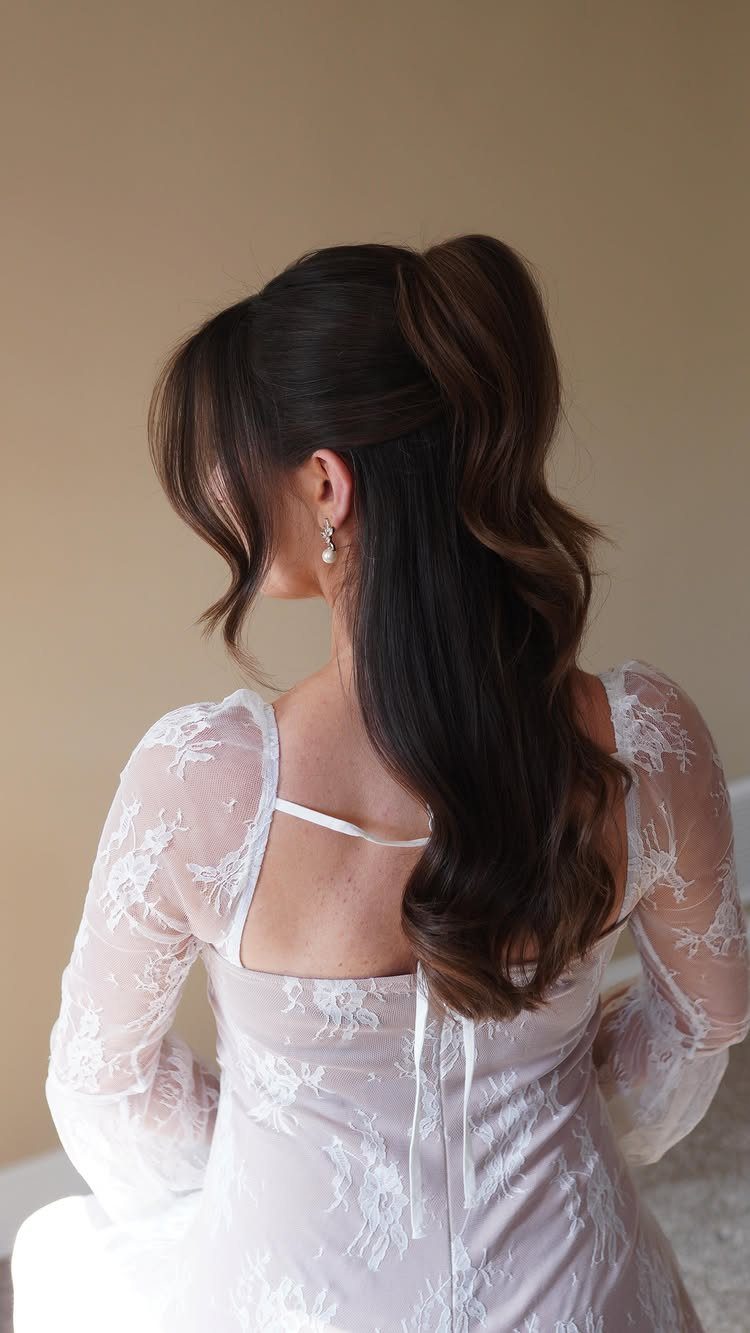
The pinned section should sit about level with the top of your ears; lower than that and it looks like a ponytail that lost its grip.
Pearl pins or decorative clips register as intentional styling where plain bobby pins would look like an afterthought. This balance, part structured and part flowing, photographs well from every angle and flatters most face shapes.
Outdoor ceremonies particularly suit this style, since the length can move with breeze while the front stays controlled.
Twist sections from each side and secure them at the base near the hairline for a clean anchor that holds through the day.
5. Deep Side-Parted Waves
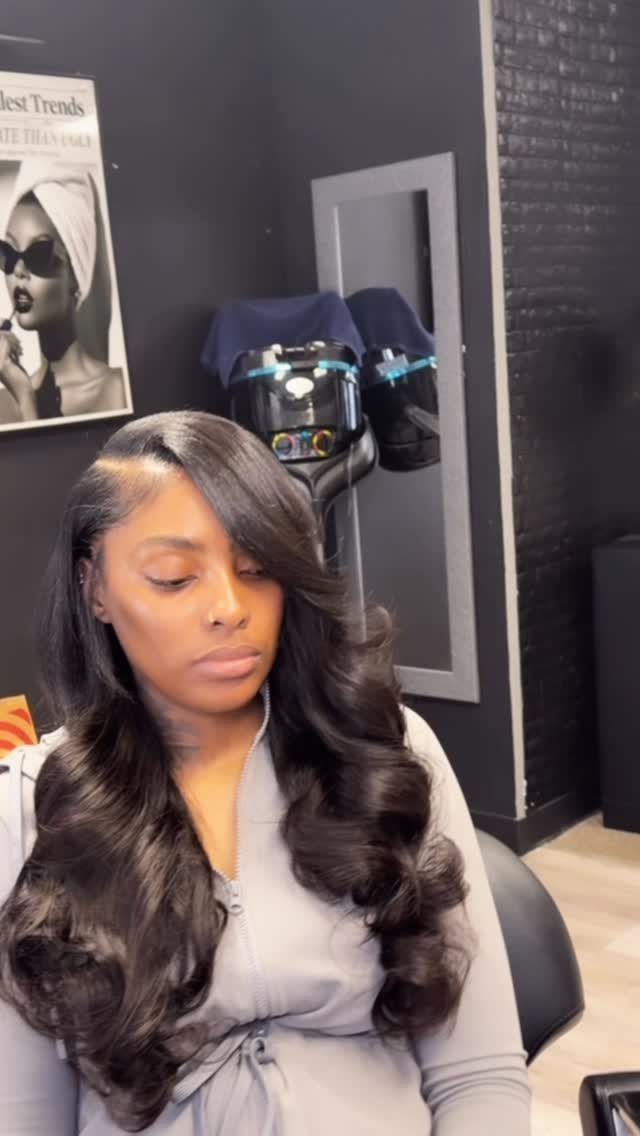
A deep side part pushes waves past pretty and into something dramatic and editorial.
Curl every section away from the face in the same direction so the waves layer into one continuous S-curve instead of colliding.
This is a different animal from modern bridal curls and needs a stylist with actual vintage training. Oribe Soft Lacquer Heat Styling Spray at $46 provides the premium hold this structured look needs.
6. Knotted Updo
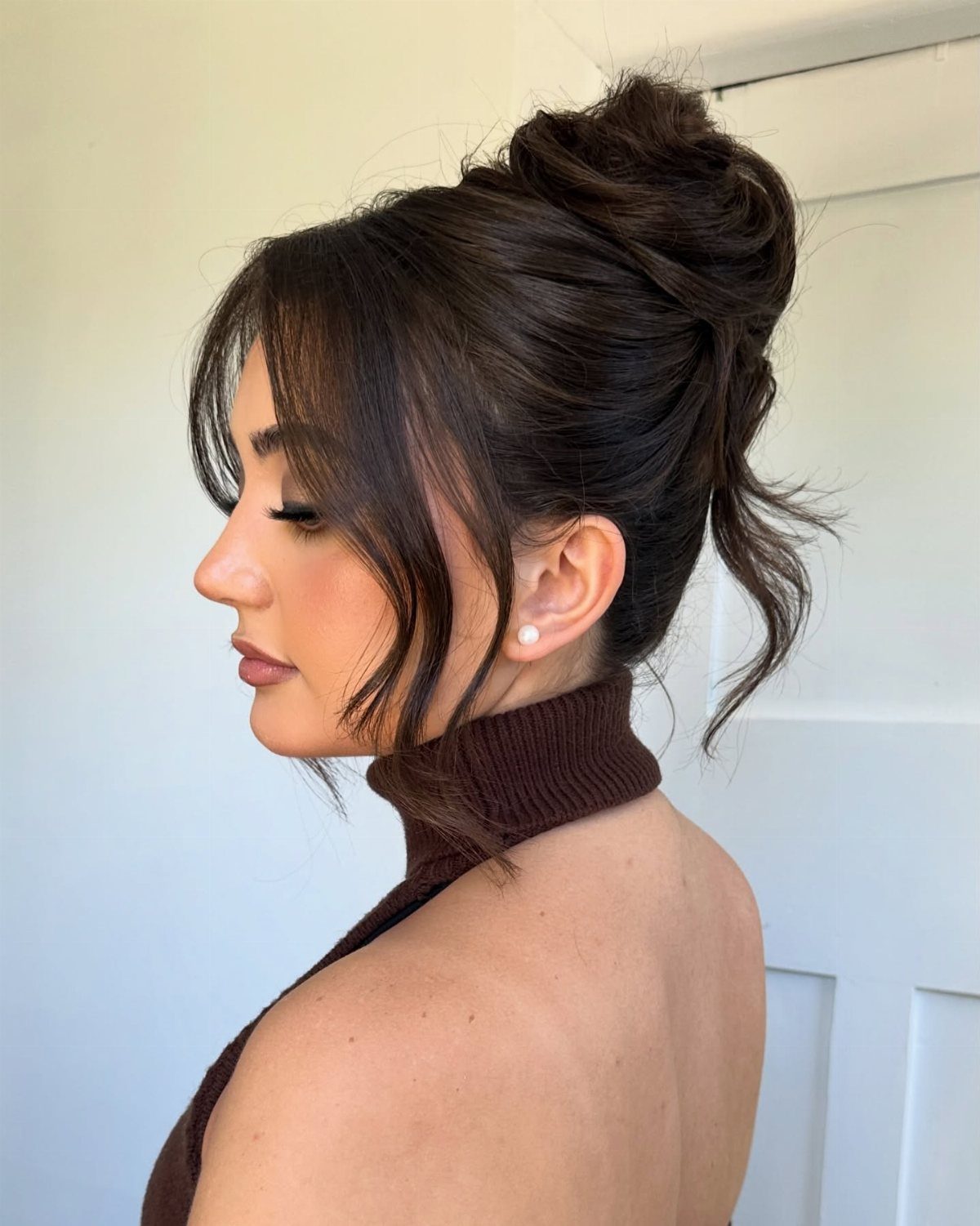
Knot-like loops and textured twists give the classic updo a modern edge without sacrificing the sophistication that makes it bridal. The architectural quality reads as skilled craftsmanship even when the construction is simpler than it appears.
A light backcomb on each section first adds grip and makes the rope braid look fuller than it would on clean, slippery hair.
A knotted updo with a few loose strands framing the face keeps the style from looking severe; those wispy pieces soften the whole thing more than you would expect.
The result balances durability with artistry, holding from ceremony through reception while still looking deliberately designed.
7. Hair with Delicate Accessories
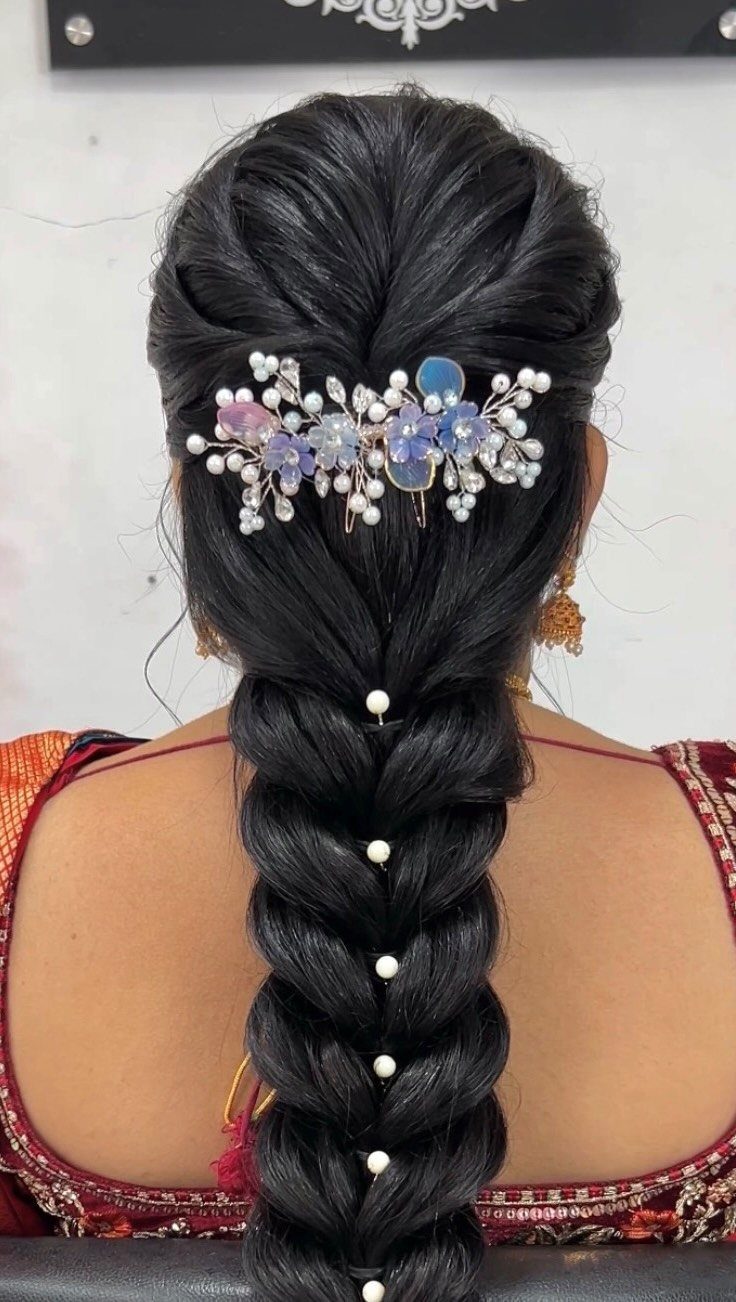
One jeweled floral comb and a few pearl pins scattered through a braid turn a simple style into something that looks considered without trying too hard.
The restraint matters more than the sparkle: a single repeated detail, like a pearl from your earrings or a crystal from your bracelet, ties the whole look together.
Place each piece on a section that has been backcombed or twisted, not on loose hair that will slide out by the first dance. The structure underneath does the actual work of holding; the accessory is the punctuation.
This approach suits brides who want embellishment without the weight of a tiara or the formality of a veil. The hair still moves and reads as yours.
8. Braided Updo
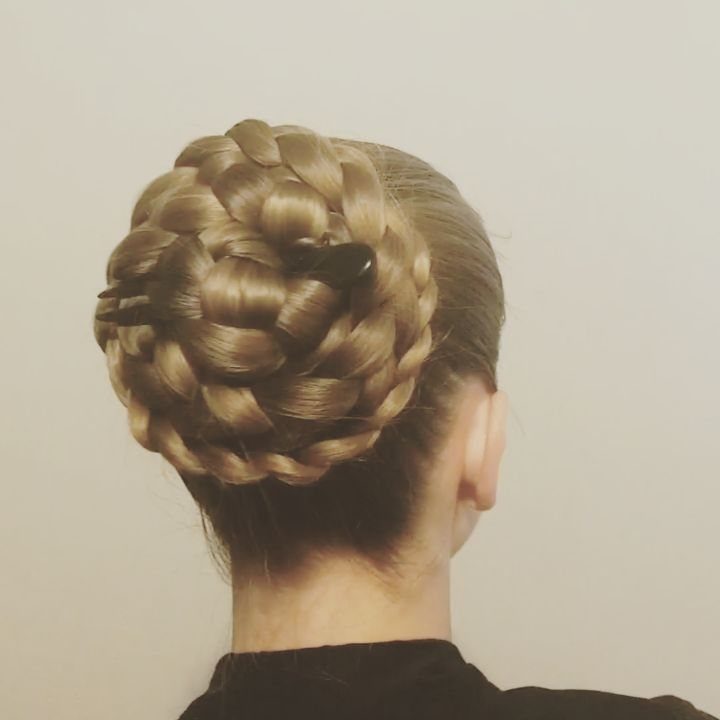
Loose side braids that meet in a soft bun carry the texture of a braid without the stiffness of a fully woven updo.
Loose pieces around the face soften the whole look so it feels intentional, not like you sat too long in the stylist’s chair.
The braided sections need to be anchored where they join, since braided hair is heavier than it looks and will sag if pinned only at the ends.
A small elastic at the meeting point, hidden underneath, saves the style from loosening by mid-afternoon.
Garden and outdoor venues suit this particularly well; the braids hold up against humidity better than clean curls, and the overall effect reads as intentional but not overdone.
9. Floral Accent Long Braid
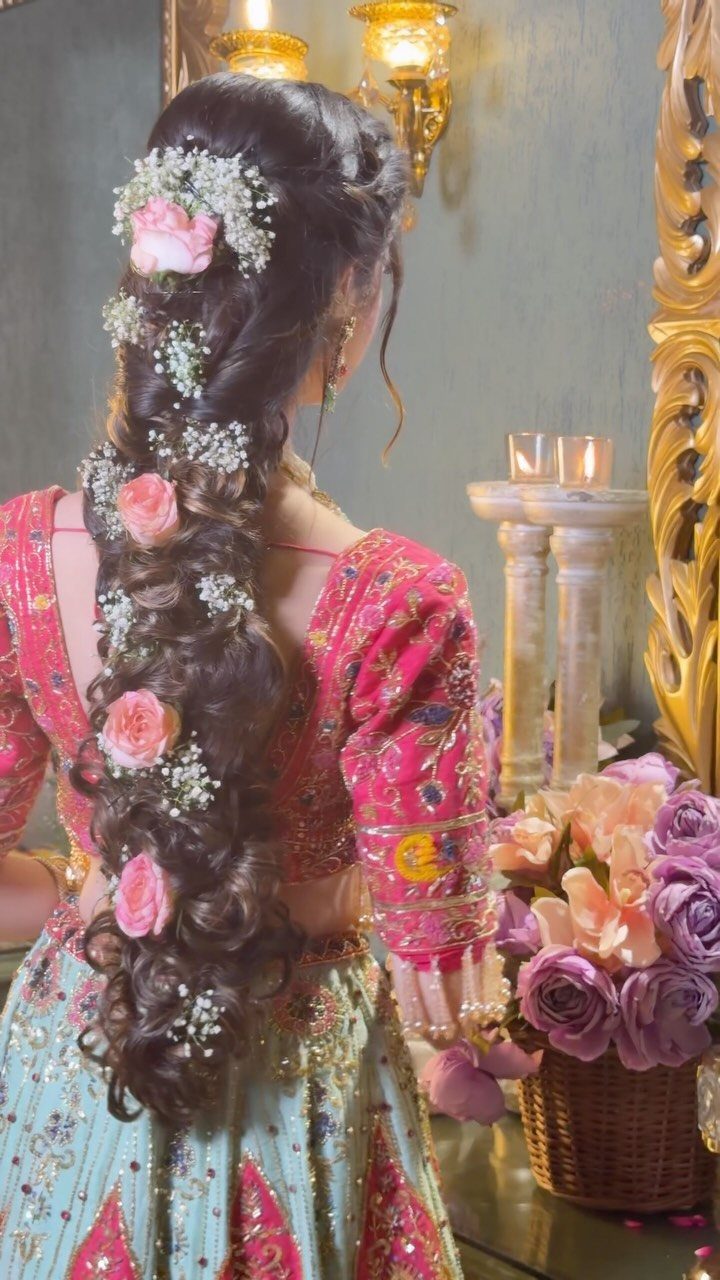
A thick braid woven with fresh flowers turns the hair itself into a bouquet that moves with you.
Baby’s breath and small roses thread in easily because their stems are thin and flexible; larger blooms need to be wired or pinned rather than woven.
The flowers should go in last, after the braid is secured, since fresh stems wilt faster once they are out of water.
Work with your florist to choose blooms that hold up out of water, or plan on a touch-up between ceremony and reception.
This style carries some risk: flowers can bruise, stems can slip, and the weight pulls on the braid. Have extra pins and a few backup blooms with your emergency kit.
10. Rose-Shaped Low Bun
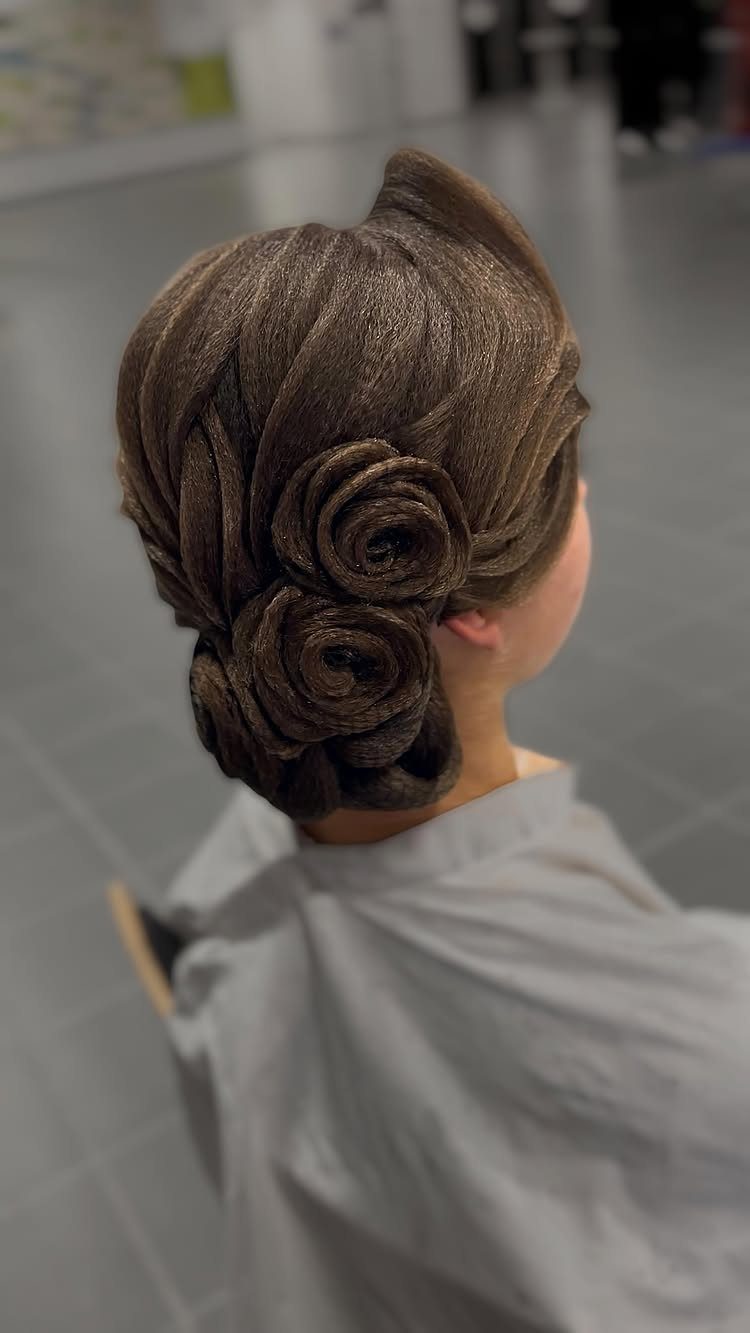
Sculpted rose curls at the nape look like fabric rather than hair, which is the point. Each swirl is pinned individually after setting, so the shape holds its dimension from every angle.
This construction needs more time than a standard chignon, so book a stylist who has done this specific technique before and pad your morning schedule. The rose shapes require exact placement; someone learning on your wedding morning will run late.
The low position pairs cleanly with veils, which attach just above the bun without competing for attention.
Spin pins, the spiral kind that screw into the hair, provide better security than standard bobby pins for the weight of this much structured curl.
11. High Curly Ponytail
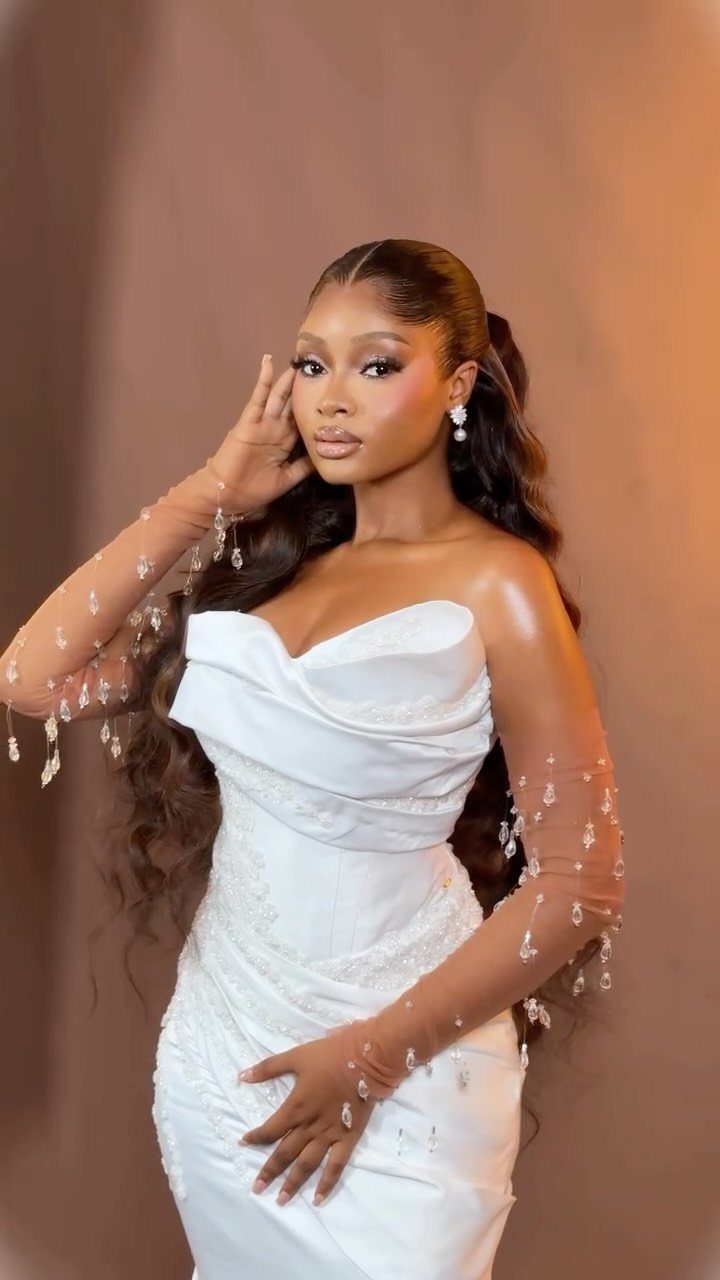
A high ponytail, smooth from root to base with one thin section wrapped around the elastic, reads as deliberate choice rather than last-minute fallback.
What the eye cannot see matters most: a boar bristle brush to eliminate bumps at the crown, strong elastic at the base, and a second small elastic a couple inches from the ends to prevent droop.
Statement earrings complete the look; with the hair pulled back, the ear becomes a natural focal point. This suits modern city venues and minimalist gowns that can handle the graphic line.
Choosing the Right Hairstyle
Your dress neckline should drive the decision more than any photo you saved.
A strapless or open-back gown gives you room to wear hair down in waves or a loose braid, while a high neckline or heavy lace detail at the shoulder usually calls for an updo so the two are not fighting.
Test the full combination at your trial, not just the hair alone. Bring your veil and your earrings, and move around in them.
A style that feels fine at minute five can pull or slip by hour three, and that is when you will know whether the crown volume or the face-framing pieces actually suit you.
Hair Preparation Tips
Hair washed a day earlier has just enough texture for pins and braids to bite into; same-day washing leaves it too slick. This matters more for long hair because the weight works against every anchor point.
If your hair is naturally silky or fine, a light texturizing spray at the roots before styling adds grip without visible residue.
For thick or curly hair, the opposite problem applies: the stylist needs to control volume rather than create it, so arrive with your hair in its natural dried state, not blown out straight.
That way the stylist can see the true texture and plan the support accordingly.
Weather Considerations
Outdoor ceremonies in Florida carry specific risks that indoor venues do not. Humidity swells the cuticle and turns smooth styles frizzy by cocktail hour; coastal wind lifts veils and loosens pins in updos that would hold fine in still air.
Ask your stylist which techniques they use for humidity, not just which products: a backcombed anchor structure survives moisture better than spray alone.
Bring a small emergency kit with extra pins and a travel-size humidity shield to the venue; your maid of honor should know where it is before the first photo.
Hair Accessories
One accessory placed well beats several scattered randomly.
Pick one accent piece, a pearl comb, a thin metal barrette, or a scattering of small crystal pins, and echo a shape or material from your gown or your earrings so the whole look feels chosen.
A comb pressed into loose hair will slide out before the first dance.
For a softer effect, scatter small pins through a braid or half-up style rather than clustering them.
One detail is enough: the eye should land on it, not fight through clutter to find your hair. If your dress has heavy beading or a dramatic neckline, keep the hair simpler so the two are not competing.
Frequently Asked Questions
What are the prettiest hairstyles for long hair?
Soft waves, a neat chignon, or a loose bohemian braid tend to work hardest for brides: they stay readable in photos and survive the full stretch of ceremony, dinner, and dancing.
A low bun at the nape keeps its shape from vows to last call, and curls falling past the shoulders line up well with an open-back dress.
The style that reads as prettiest in person and in photos is one your stylist has executed hundreds of times before.
What are the hottest wedding hairstyles for 2026?
Sculpted low buns, soft polished waves, and modern ponytails are the directions stylists are booking most right now.
The rose-shaped low bun, built from individually pinned swirls after a full set, is picking up steam for how its fabric-like dimension reads from every camera angle.
A high curly ponytail with the elastic wrapped in a thin section of hair also reads as deliberate rather than last-minute, especially for city venues and minimalist gowns.
How do brides wear their hair?
Most brides choose between 3 categories: updos like chignons and knotted styles that stay controlled all day, half-up looks that balance structure with flowing length, and fully down styles like waves or straight locks that move with the body.
The neckline of the dress matters more than any photo saved to a Pinterest board.